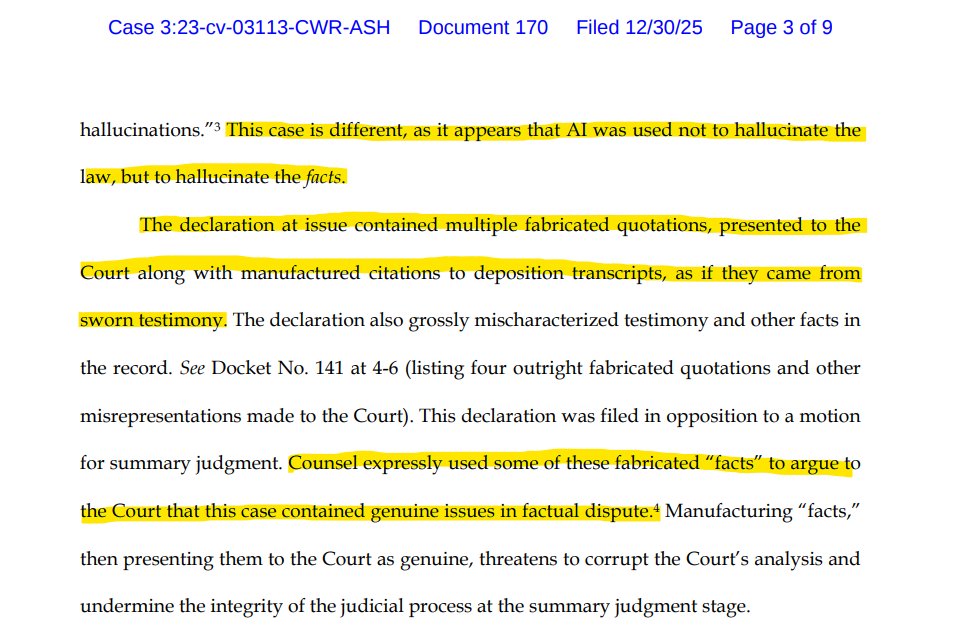
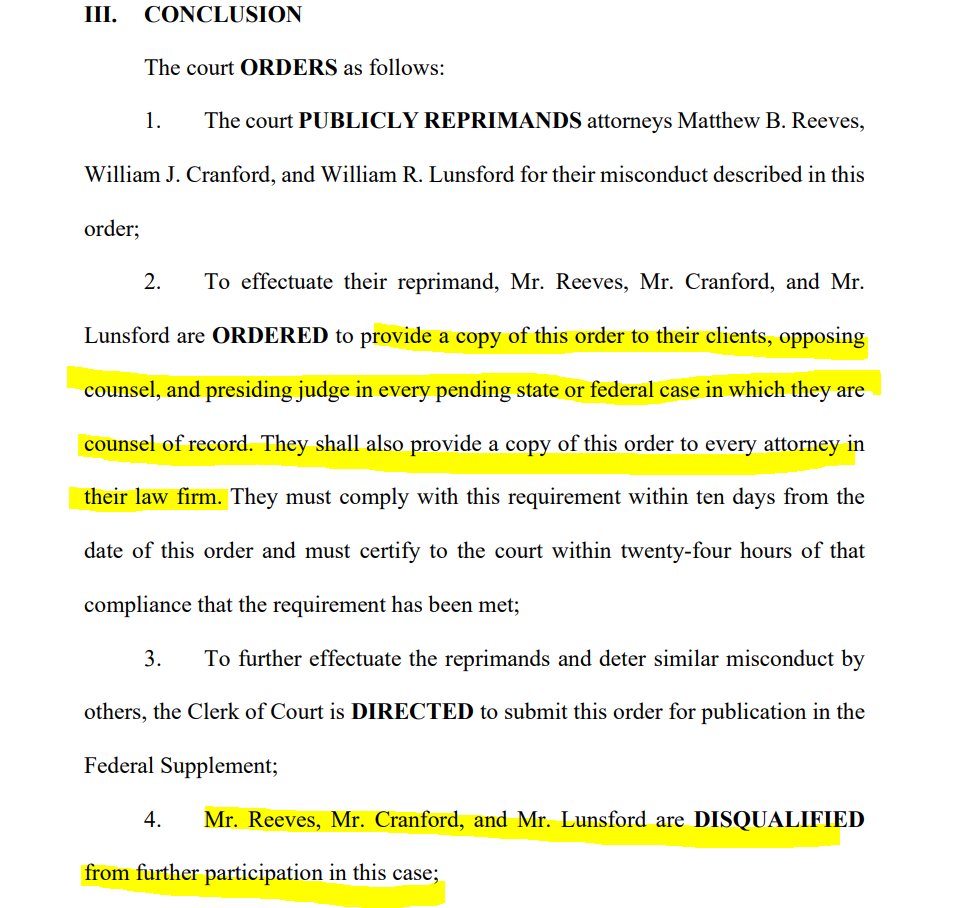
Lawyers who cited fake AI cases face some real sanctions this time:
-Disqualified from the case
-Ordered to provide copy of sanctions order to all
clients, opposing counsel, and judge in every pending case and every attorney in their firm
-Referred to state bar for discipline.
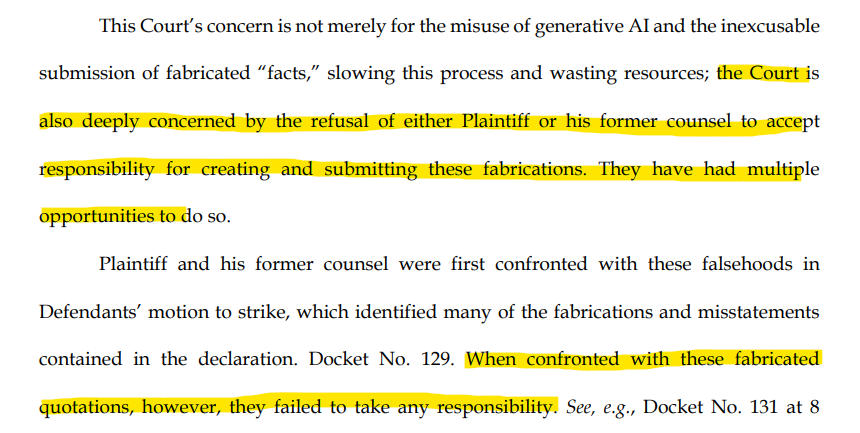
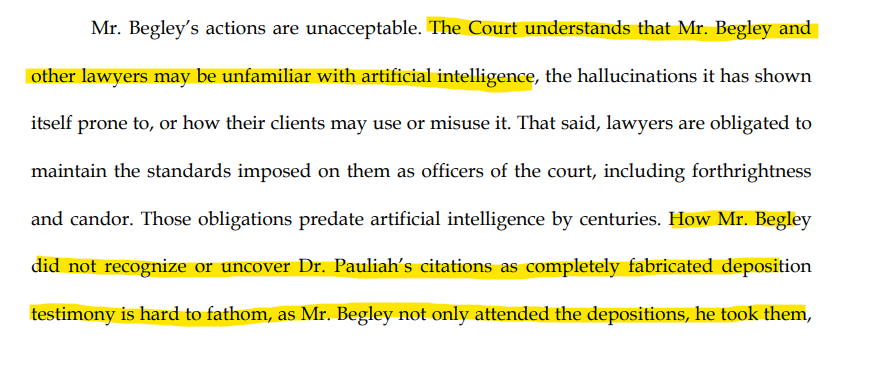
The order is chock full of good quotes from the court:
"[Making up citations] demands substantially greater accountability than the reprimands and modest fines that have become common as courts confront this form of AI misuse."
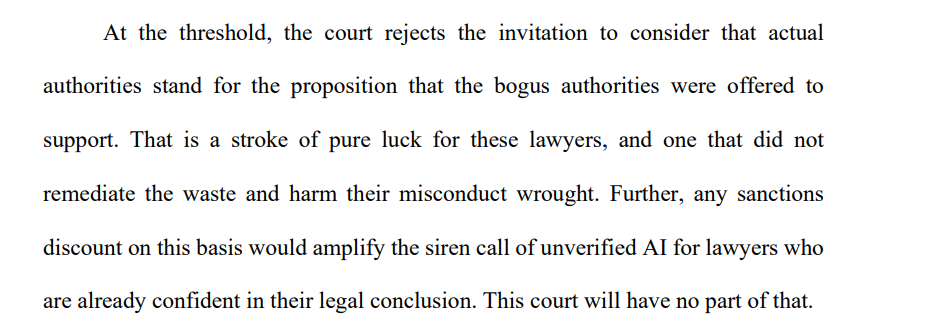
The fact that there are real cases supporting what the bogus ones said is "a stroke of pure luck" that doesn't help:
Elon Musk was sued today in a class action brought by signers of his America PAC petition "giveaway."
They say Elon fraudulently advertised that winners would be chosen randomly, when really they were pre-selected.
They allege that signers provided personal information as consideration for participating in the lottery, which was not conducted as promised, and that Musk benefited from the collection of personal information for political and commercial use.
You can have the best-drafted Terms of Service in the world, but if they just sit passively at the bottom of your site, you will not be able to enforce them.
It's as if you had no terms at all.
For ecom brands, the TOS is your first line of defense against consumer lawsuits. 1/
Having badly drafted and insufficiently presented terms is the biggest and most common mistake I see online brands make.
That's primarily because, done correctly, you can completely eliminate class action exposure.
To enforce TOS, like any online contract, you need to
Valve is suing a law firm that it accuses of coordinating a fraudulent mass arbitration scheme to force big settlements by leveraging astronomical arbitration filing fees.
The complaint includes a leaked presentation from the law firm to litigation funders.
Posted in full below
I will include each slide in order here, but the gist is this:
Business prefer individual arbitration as an alternative to dealing with class actions. Or at least they usually do.
But when Uber was hit with ~60,000 individual arbitration claims, they faced the prospect of paying ~$180 million IN ARBITRATION FEES ALONE.
With an IPO on the horizon, they settled the mass arbitration for $146M, because that was less than the cost of entry to arbitrate.