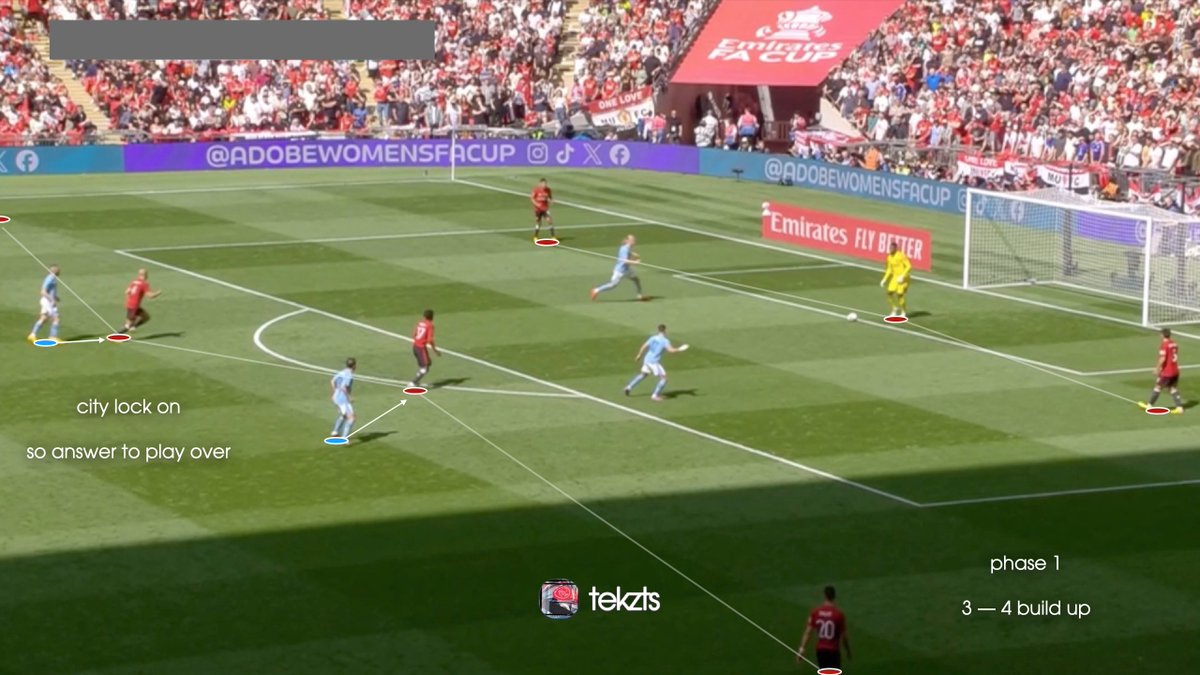
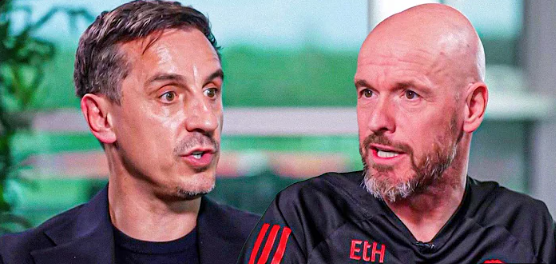
DNA is more deeply rooted than identity.
Thread🔻
Thread🔻
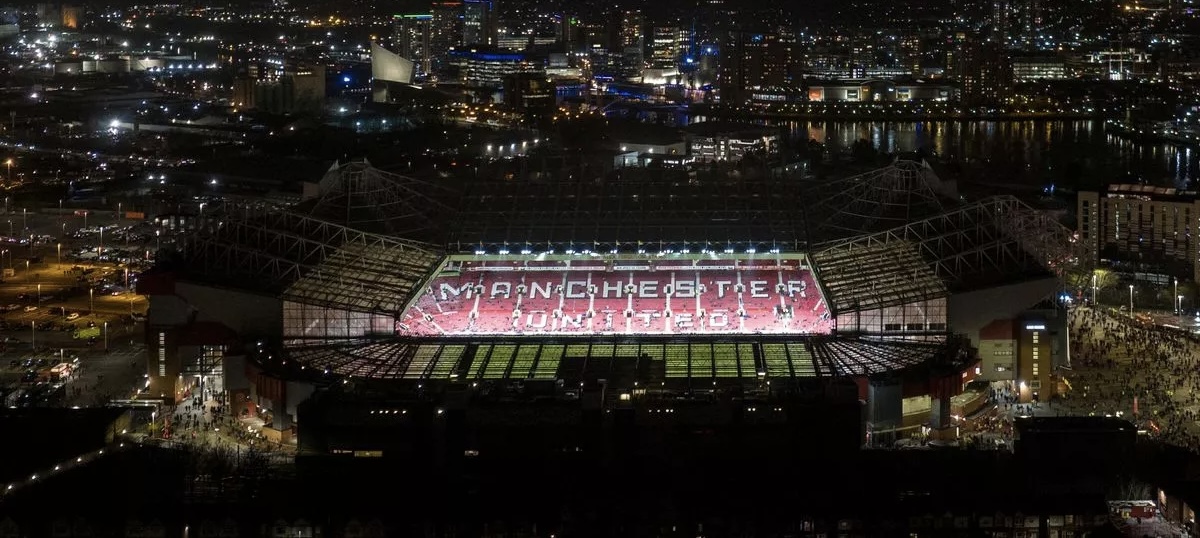
DNA (innate/subconscious tendencies) runs much deeper and forms the core of the club, manager, and players. It can ultimately be reduced to one fundamental check: proactive vs risk-averse.
Identity (conscious choices) is layered on top of the DNA, shaping how the team expresses itself on the pitch, while still remaining aligned to the club’s innate DNA: transitional vs possession based, minimal passes to last line vs slow circulation, 1v1s vs overloads, dynamic vs static.
Managers strategies to enact the club identity fall next on this structure: how are transitions, minimal passes to last line, dynamism, promoting 1v1s coached and showcased.
Identity (conscious choices) is layered on top of the DNA, shaping how the team expresses itself on the pitch, while still remaining aligned to the club’s innate DNA: transitional vs possession based, minimal passes to last line vs slow circulation, 1v1s vs overloads, dynamic vs static.
Managers strategies to enact the club identity fall next on this structure: how are transitions, minimal passes to last line, dynamism, promoting 1v1s coached and showcased.
A manager can hold a risk averse DNA while operating within either a transitional or possession-based identity (holding players back to maintain rest def). Likewise, a manager can be proactive while still favouring possession-based approaches (3rd man runs/1-2s/rotations).
United DNA will always be proactive and plays on the psychology of the opponent. Therefore, the selected manager must have ways of remaining proactive and aligned to the clubs core DNA (established), whilst understanding the game is suited to heavy transitions (modern day - due to increased athleticism - more on this later).
Game states require adaptability and movement on the proactive—risk-averse scale. But clashes at the DNA level, will express in many ways where match going fans, changing rooms, and media, will reject ideas way before the results do.
Therefore, DNA (innate) and identity (choice) are not the same thing, until they merge and form instincts. More commonly known as football principles.
United DNA will always be proactive and plays on the psychology of the opponent. Therefore, the selected manager must have ways of remaining proactive and aligned to the clubs core DNA (established), whilst understanding the game is suited to heavy transitions (modern day - due to increased athleticism - more on this later).
Game states require adaptability and movement on the proactive—risk-averse scale. But clashes at the DNA level, will express in many ways where match going fans, changing rooms, and media, will reject ideas way before the results do.
Therefore, DNA (innate) and identity (choice) are not the same thing, until they merge and form instincts. More commonly known as football principles.
United regime has developed a habit of going from one extreme to the next as the ‘fix’ for the prior ‘error’. They haven’t maximised the united DNA-identity via aligned recruitment.
In manager hire interviews - it's important to touch upon the coaches identity, but indirectly target the innate DNA of the candidate to assess if the manager/coach is a fit for united’s pre-established principles.
In the case of Amorim, they also wanted to change the DNA-identity of the club to a slower positional/possession based approach, with a strict style of play (identifiable patterns), which is where he ticked initial boxes - but his core (risk-averse) and Ineos opt for club DNA change, fundamentally clashes with United’s aggressive proactive nature.
In manager hire interviews - it's important to touch upon the coaches identity, but indirectly target the innate DNA of the candidate to assess if the manager/coach is a fit for united’s pre-established principles.
In the case of Amorim, they also wanted to change the DNA-identity of the club to a slower positional/possession based approach, with a strict style of play (identifiable patterns), which is where he ticked initial boxes - but his core (risk-averse) and Ineos opt for club DNA change, fundamentally clashes with United’s aggressive proactive nature.
This core was evident in OP, IP, and transitional game states.
OP - resorting to back 5/6 low blocks with minimum pressure applied to ball player.
IP - this showed through U-shape passing, playing around opponents rather than through leading to crosses (wingers or not), static positions.
Transitions - the same mindset appeared in tendency to retain players behind the ball, prioritising protection over exposure.
The clearest indicator of this DNA was a philosophical reliance on numerical superiority in every phase of the game. The innate idea was not to inflict risk on the opponent, but to protect against it.
OP - resorting to back 5/6 low blocks with minimum pressure applied to ball player.
IP - this showed through U-shape passing, playing around opponents rather than through leading to crosses (wingers or not), static positions.
Transitions - the same mindset appeared in tendency to retain players behind the ball, prioritising protection over exposure.
The clearest indicator of this DNA was a philosophical reliance on numerical superiority in every phase of the game. The innate idea was not to inflict risk on the opponent, but to protect against it.
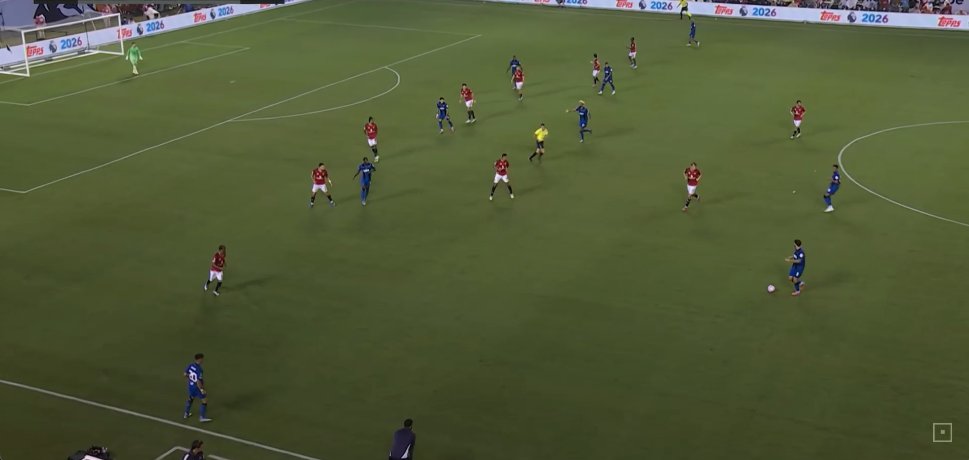
Whereas the pre-established united DNA is to be proactive within those same long possession spells or transitional moments where more players are thrown forward.
The united way (instincts):
- minimal passes to the last line
- passing in 3s (real automatisms/coaching)
- direct 1v1s (wingers - formations matter)
- dynamism
- rhythm changes
- unpredictability
- counter pressing
The united way (instincts):
- minimal passes to the last line
- passing in 3s (real automatisms/coaching)
- direct 1v1s (wingers - formations matter)
- dynamism
- rhythm changes
- unpredictability
- counter pressing
The manager is to also posses these instincts as their principles, with coaching staff able to coach them. These instincts won’t appear as clearly identifiable passing patterns/automatisms. They are the key components to making strategies click, allow different profiles (players are the tactics) to fit into a system, and align DNA-Identity-Strategy (game model).
It is not for a DoF to dictate a new identity of the club, as this identity (conscious) is layered closely with the DNA (innate). However, this attempted change was made to maximise the new data recruitment model, to flip players. Real scouts shouldn’t be replaced for data at United.
It is not for a DoF to dictate a new identity of the club, as this identity (conscious) is layered closely with the DNA (innate). However, this attempted change was made to maximise the new data recruitment model, to flip players. Real scouts shouldn’t be replaced for data at United.
It is important to remember, entertainment is the WHY for United managers. Therefore dynamic, direct, and open games (that promote counter pressing), are key factors to remain connected to the DNA-Identity.
However, they need to be merged with the modern era of playing out the back, manipulating m2m pressure, and breaking blocks. To win.
Winning (with wingers) is the only true culture at united.
However, they need to be merged with the modern era of playing out the back, manipulating m2m pressure, and breaking blocks. To win.
Winning (with wingers) is the only true culture at united.

Being aligned to the United DNA is a default reason for backing strategies and idea's despite poor recruitment during EtH's reign.
Those strategies and idea's (listed under the United way instincts above) became recent wishes and demands by multiple fans/analysts in Hto’s space (05/01/26).
Some examples of united pre-established instinct-principles merged with the modern era are in the following posts.
Those strategies and idea's (listed under the United way instincts above) became recent wishes and demands by multiple fans/analysts in Hto’s space (05/01/26).
Some examples of united pre-established instinct-principles merged with the modern era are in the following posts.

Playing out the back + minimal passes to the last line.
Rondos to attract opponents to promote rhythm changes.
Passing in 3s across the pitch + minimum width to promote counter pressing (transitional) if the ball is lost.
Ole passing in 3s.
There are clear similarities behind the style of play as both managers were aligned to United's DNA-Identity.
There are clear similarities behind the style of play as both managers were aligned to United's DNA-Identity.
To identify these instinct-principles, analysis shifts from formations to highlighting; passing in 3s, thinking in triangles/diamonds, counter pressing in small units, creating and attacking space.
Pre-defined passing circuits, automatisms, and patterns of play are not true indicators of 'good' coaching.
The smaller components (instincts) to make proactive strategies effective are often silent. True connectivity.
Pre-defined passing circuits, automatisms, and patterns of play are not true indicators of 'good' coaching.
The smaller components (instincts) to make proactive strategies effective are often silent. True connectivity.
The examples shown above, showcase the true United identity merged with modern day era.
As athleticism in football has increased in the past few years. It has granted the lesser teams the ability to apply m2m presses (that can negate overloads). This allows the pressing opponents to start and stay closer to the ball player which then, affects predefined patterns of play, automatisms. This ultimately breaks pre-defined passing circuit rhythms and connectivity.
[Theory] Athleticism has also affected strict positional play, as the opponent can close down player-zones faster.
Therefore, United needed a base level jump in athleticism (due to poor recruitment) but more so in technical aspects to bypass m2m pressure.
As athleticism in football has increased in the past few years. It has granted the lesser teams the ability to apply m2m presses (that can negate overloads). This allows the pressing opponents to start and stay closer to the ball player which then, affects predefined patterns of play, automatisms. This ultimately breaks pre-defined passing circuit rhythms and connectivity.
[Theory] Athleticism has also affected strict positional play, as the opponent can close down player-zones faster.
Therefore, United needed a base level jump in athleticism (due to poor recruitment) but more so in technical aspects to bypass m2m pressure.
From a technical standpoint, United has been held back from apply 1v1 strategies mainly in central areas, where they require an overload to bypass m2m pressure.
United hasn't dominated central 3v3's effectively enough which calls for others players to help progress the ball.
In 2023/24, exposing and breaking the overload as a necessity (which led to individual error's), was the true transition to reach higher levels.
Explained here in 2024.
United hasn't dominated central 3v3's effectively enough which calls for others players to help progress the ball.
In 2023/24, exposing and breaking the overload as a necessity (which led to individual error's), was the true transition to reach higher levels.
Explained here in 2024.
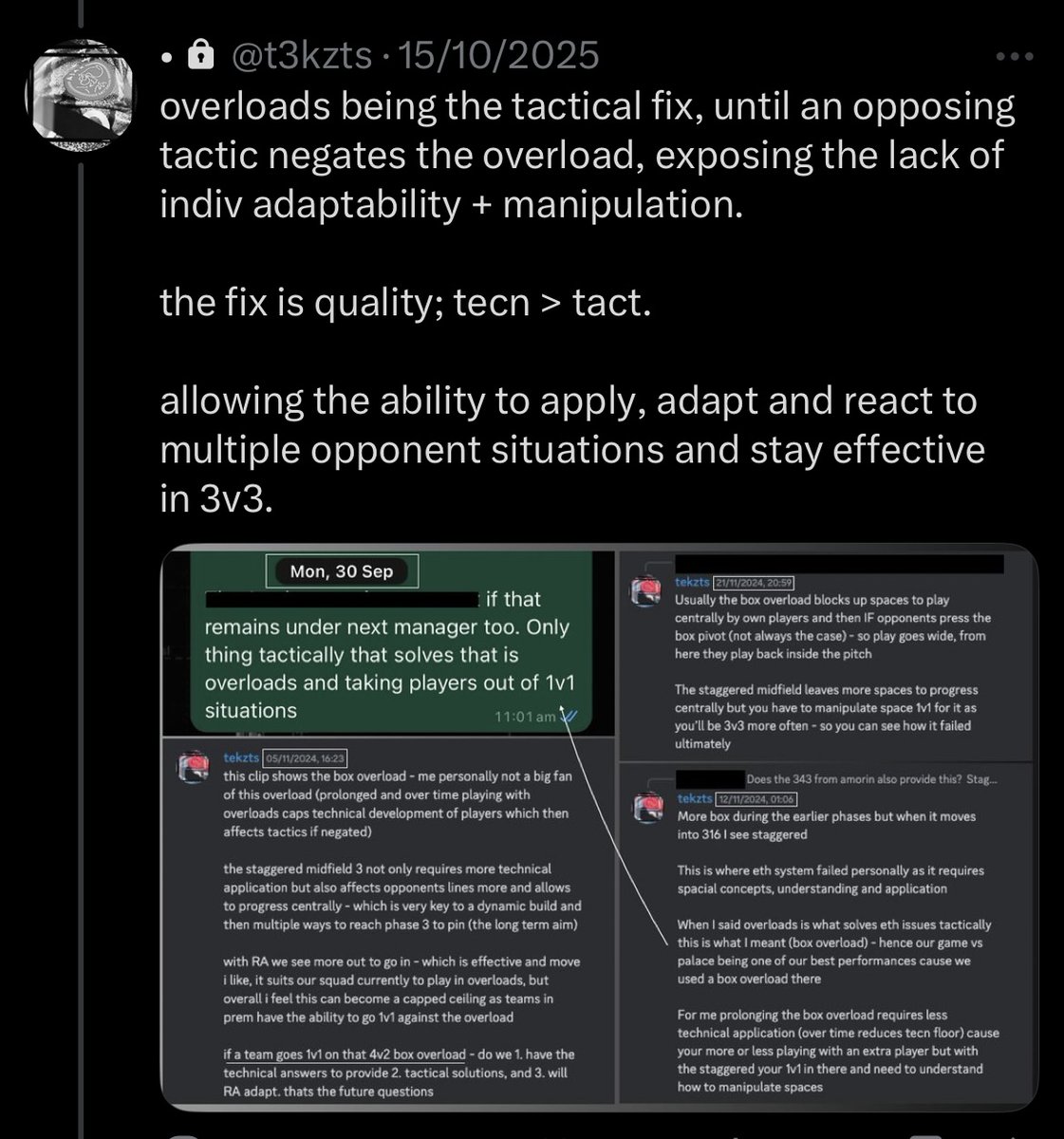
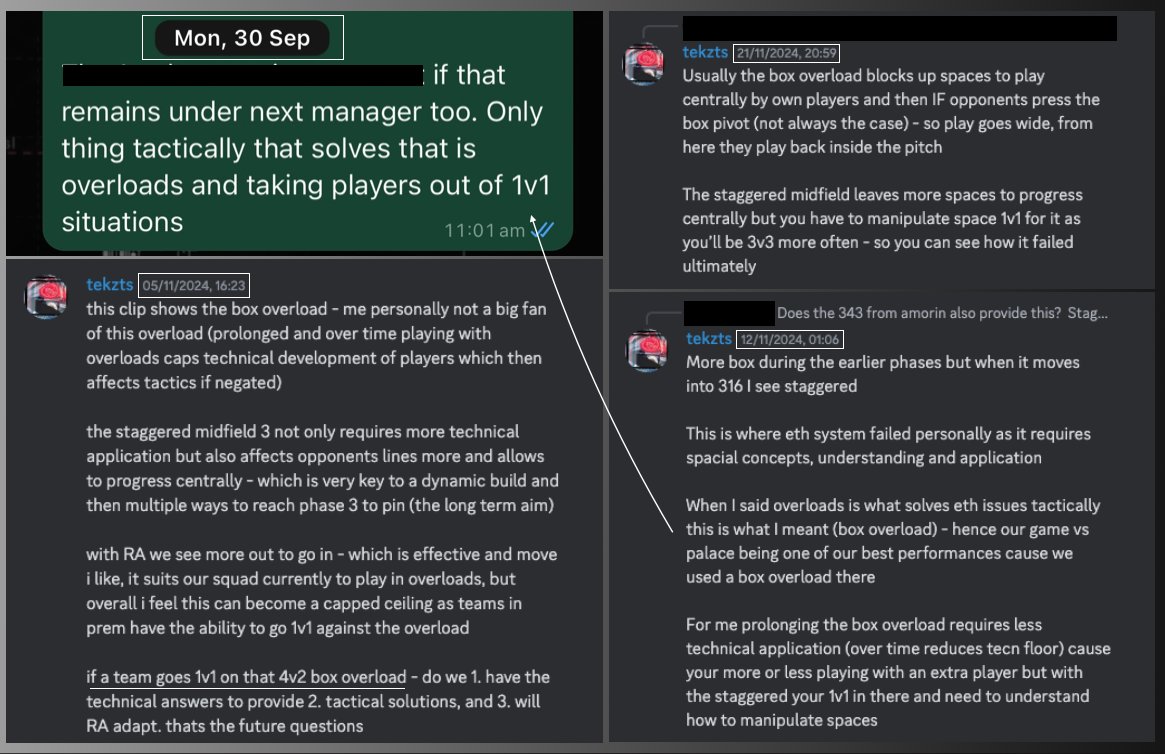
Amorim's philosophy which is derivative from his core DNA, used that tactical solution as a base idea, which not only benefitted technical limitations but also the opponent.
Ultimately adding automatisms on top of this, is papering over the technical deficiencies as m2m presses can negate pre-defined numerical advantages.
Ultimately adding automatisms on top of this, is papering over the technical deficiencies as m2m presses can negate pre-defined numerical advantages.

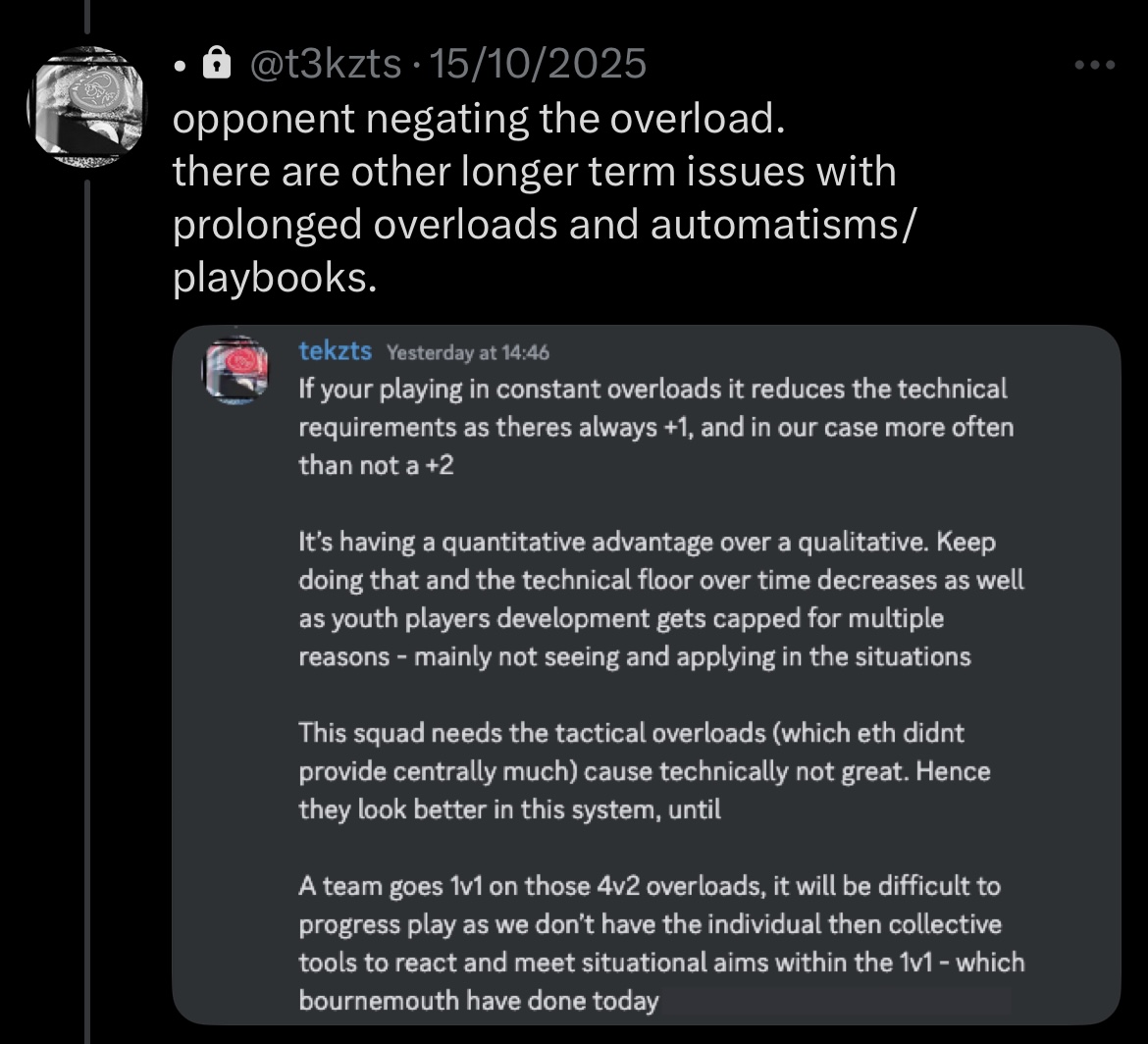
Finding numerical advantages are key to being effective in games. At United though, it has been the key dependancy to challenge.
To reach T2 standards, first a break away from depending on static overloads (installing principles), then secondly allowing recruitment to catch up (alignment).
Maximising 1v1 and dynamic superiorities is the clubs game model. In this era, more chance creation concepts are required to be truly tactically adaptable.
Changing formation, moving player around - is not true adaptability.
Applying and selecting from a range of concepts is flexibility. Real transition (storm).
To reach T2 standards, first a break away from depending on static overloads (installing principles), then secondly allowing recruitment to catch up (alignment).
Maximising 1v1 and dynamic superiorities is the clubs game model. In this era, more chance creation concepts are required to be truly tactically adaptable.
Changing formation, moving player around - is not true adaptability.
Applying and selecting from a range of concepts is flexibility. Real transition (storm).
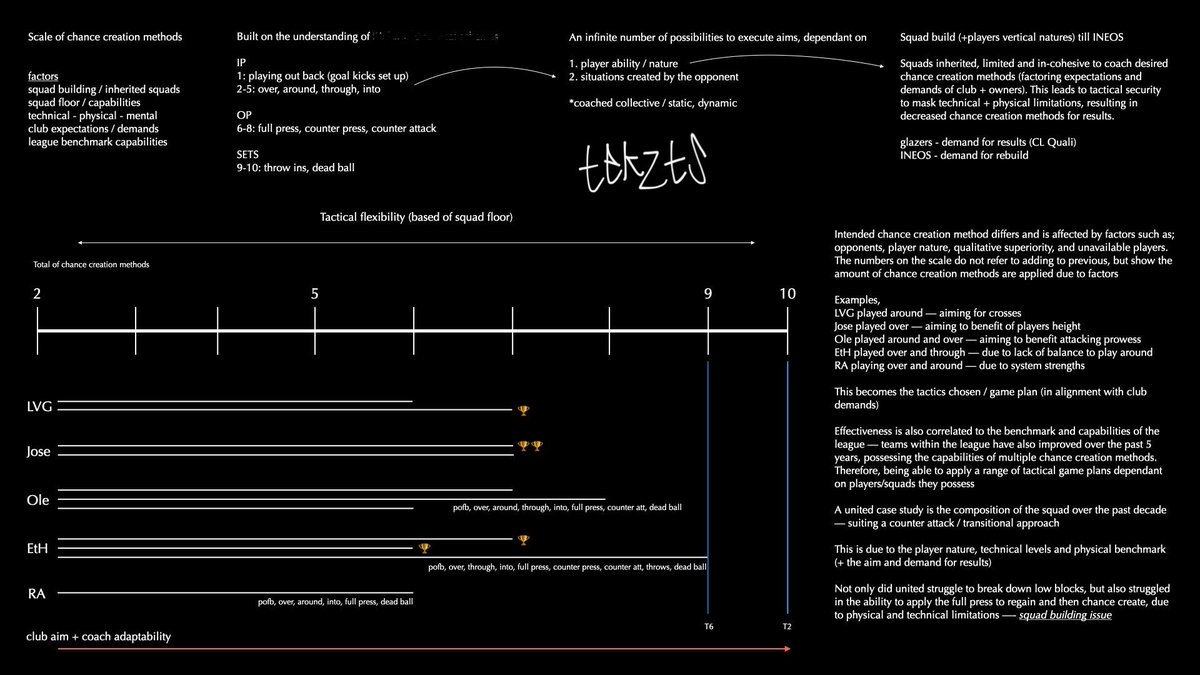
A key time frame in United past was a window where Ander Herrera was sold. In this period, United had a proficient attack but needed to upgrade:
1. The defence + GK to meet evolving league standards of m2m pressing + playing out.
2. Aerobic base for repeated attacks and technical actions including duelling (PHYSICALITY is a skill).
Not replacing Ander (6/8) resulted in #10s playing deeper (Pogba, McT, Fred) to numerically protect the back line. As a result this also pulls the wide outlets deeper, till you end up with a once proficient attack building/bursting from deeper areas after low blocks regains.
Lower blocks become byproduct of a below standard aerobic base team benchmark, which means the team cannot perform repeated/high/counter presses for long duration at this level, form added chance creation.
1. The defence + GK to meet evolving league standards of m2m pressing + playing out.
2. Aerobic base for repeated attacks and technical actions including duelling (PHYSICALITY is a skill).
Not replacing Ander (6/8) resulted in #10s playing deeper (Pogba, McT, Fred) to numerically protect the back line. As a result this also pulls the wide outlets deeper, till you end up with a once proficient attack building/bursting from deeper areas after low blocks regains.
Lower blocks become byproduct of a below standard aerobic base team benchmark, which means the team cannot perform repeated/high/counter presses for long duration at this level, form added chance creation.
In the past decade after 20-25mins, front end of the team starts to fatigue, arriving late to presses and opening gaps. With players not recruited for club instinct-principles, they resort to type (nature) during fatigue which ultimately results in kicking long and opting to drop off during pressurised moments.
Both issues paired, places higher demand on a transitional and counter attacking as a team, but upgrading at the right time (ander window) allows to adopt multiple chance creation concepts both IP and OP - ultimately reducing strain on transitional aspects.
Therefore, the best option for results and club demands (UCL), low block with high impetus on counter attacking approaches becomes the adaptation for manager.
Both issues paired, places higher demand on a transitional and counter attacking as a team, but upgrading at the right time (ander window) allows to adopt multiple chance creation concepts both IP and OP - ultimately reducing strain on transitional aspects.
Therefore, the best option for results and club demands (UCL), low block with high impetus on counter attacking approaches becomes the adaptation for manager.
United's silent killer.
The past decade has poor preseasons, due to travel, duration, not having the full squad from the start of tours, and late recruitment in windows.
EtH + Brailsford attempted to change preseason planning in 2024.
Amorim also attempted, but commercial requirments.
With the UCL demands, packed fixture schedules, training to recover, the DNA-Identity to apply repeated/counter presses with unfit United players is still carried out.
The past decade has poor preseasons, due to travel, duration, not having the full squad from the start of tours, and late recruitment in windows.
EtH + Brailsford attempted to change preseason planning in 2024.
Amorim also attempted, but commercial requirments.
With the UCL demands, packed fixture schedules, training to recover, the DNA-Identity to apply repeated/counter presses with unfit United players is still carried out.
Amorim this season, had a full preseason with players breaking off at the end of last season earlier (no international call ups) and returning earlier in much better shape.
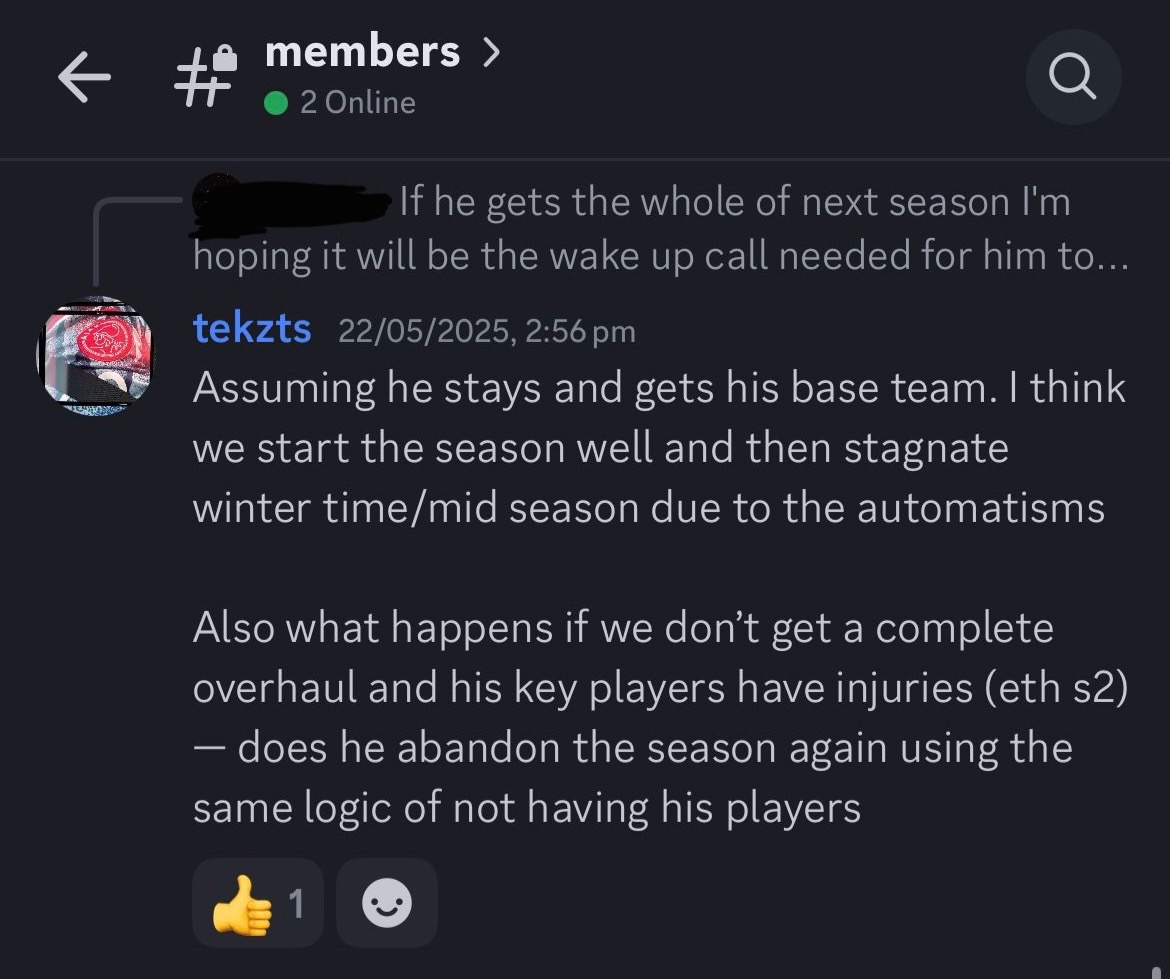
This early increase in fitness allowed united to hold a physical advantage against teams in preseason and early fixtures - but ultimately once teams caught up (after first international window) paired with the lack of adaptability and limited concepts to break opponents (pre-defined automatisms) - results stagnated and injuries picked up.
This early increase in fitness allowed united to hold a physical advantage against teams in preseason and early fixtures - but ultimately once teams caught up (after first international window) paired with the lack of adaptability and limited concepts to break opponents (pre-defined automatisms) - results stagnated and injuries picked up.
The next step is simple.
Hire DNA aligned coaches with aligned club recruitment towards a dynamic 1v1 approach.
Technical solutions first.
Hire DNA aligned coaches with aligned club recruitment towards a dynamic 1v1 approach.
Technical solutions first.
The topics discussed are a small fraction of many conversations over the past 2 years that helped refine this piece.
Appreciate you @ftblnatt
Appreciate you @ftblnatt
• • •
Missing some Tweet in this thread? You can try to
force a refresh