It has become fashionable to say that Indians lack 'civic sense'. However, that is a misdiagnosis.
Civic behaviour is not instinctive. It is taught by the State to consciously build citizens.
Civic behaviour is learnt, and the Indian State never took the initiative.
THRD
Civic behaviour is not instinctive. It is taught by the State to consciously build citizens.
Civic behaviour is learnt, and the Indian State never took the initiative.
THRD
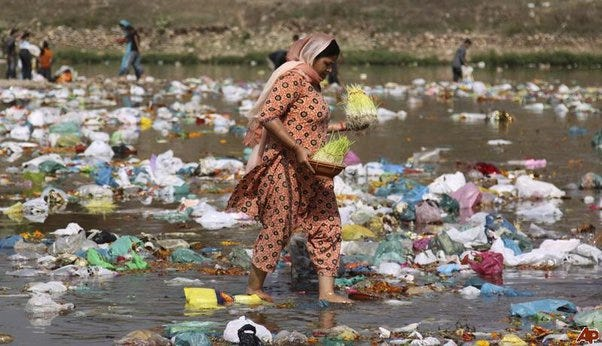
Every single modern country treats citizen formation as a core responsibility of governance. Civic education is made mandatory, formal, and continuous, not as moral preaching, but as practical instruction in how to live together. This binds people around good civic values.
India never undertook this project with seriousness. Civic education remained fragmented, abstract, and largely informational. It explained institutions, but it did not shape behaviour. The everyday habits required for collective life were assumed rather than taught.
As a result, we now describe civic failures as cultural defects. Littering, disorder, poor hygiene, and disregard for public space are attributed to mentality. This shifts responsibility away from the state and places it on an imagined flaw in the citizen.
Hygiene is not a matter of aesthetics or class signalling. It is a public obligation. Maintaining cleanliness, respecting personal space, and caring for shared surroundings are civic duties. When these duties are not formally taught, they do not emerge evenly.
In societies where civic education is taken seriously, children are trained through practice. They learn responsibility through action rather than instruction alone. Shared spaces are treated as extensions of the self, not as anonymous property.
In Japan, for example, students clean their own classrooms. This is not symbolic. It creates a direct relationship between the individual and the collective environment. Ownership precedes discipline, and discipline precedes order.
India avoided explicit civic formation. We are only taught about our civic institutions and rights, but never on what it means to be an Indian. This happens to be the primary flaw in our education system, let alone the absolute abysmal state, our public education system is in.
In the absence of a shared civic curriculum, behaviour is inherited unevenly. Some acquire civic habits through family and environment. Many do not. This creates friction, resentment, and moral judgment in place of policy analysis. Hence, the entitlement.
When citizens are scolded without having been trained, public discourse becomes accusatory rather than corrective. The state critiques outcomes while refusing to acknowledge its own abdication of formative responsibility. No one wants to take responsibility ultimately.
India requires a mandatory, secular, and serious civic education program. This program should focus on everyday citizenship rather than abstract ideals. It should teach cleanliness, personal space, care for public property, discipline, and shared responsibility.
Civic education must be practical and embodied. Students should participate in maintaining their surroundings. They should learn respect for time, queues, silence, and common space. Citizenship is learned through habit, not slogans.
Every successful nation invested in citizen formation before demanding civic virtue. India reversed this sequence. It demanded outcomes without building foundations. The correct question is why the Indian state never treated civic behaviour as something that must be taught.
@threadreaderapp unroll
• • •
Missing some Tweet in this thread? You can try to
force a refresh