Civitas Sameer Profile picture
Jan 20 14 tweets 3 min read Read on X
It has become fashionable to say that Indians lack 'civic sense'. However, that is a misdiagnosis.

Civic behaviour is not instinctive. It is taught by the State to consciously build citizens.

Civic behaviour is learnt, and the Indian State never took the initiative.

THRD Image
Every single modern country treats citizen formation as a core responsibility of governance. Civic education is made mandatory, formal, and continuous, not as moral preaching, but as practical instruction in how to live together. This binds people around good civic values.
India never undertook this project with seriousness. Civic education remained fragmented, abstract, and largely informational. It explained institutions, but it did not shape behaviour. The everyday habits required for collective life were assumed rather than taught.
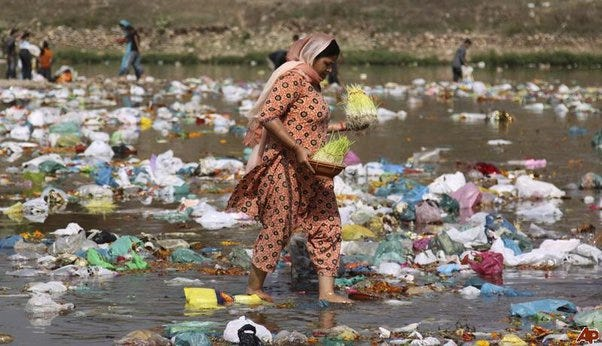
As a result, we now describe civic failures as cultural defects. Littering, disorder, poor hygiene, and disregard for public space are attributed to mentality. This shifts responsibility away from the state and places it on an imagined flaw in the citizen.
Hygiene is not a matter of aesthetics or class signalling. It is a public obligation. Maintaining cleanliness, respecting personal space, and caring for shared surroundings are civic duties. When these duties are not formally taught, they do not emerge evenly.
In societies where civic education is taken seriously, children are trained through practice. They learn responsibility through action rather than instruction alone. Shared spaces are treated as extensions of the self, not as anonymous property.
In Japan, for example, students clean their own classrooms. This is not symbolic. It creates a direct relationship between the individual and the collective environment. Ownership precedes discipline, and discipline precedes order.
India avoided explicit civic formation. We are only taught about our civic institutions and rights, but never on what it means to be an Indian. This happens to be the primary flaw in our education system, let alone the absolute abysmal state, our public education system is in.
In the absence of a shared civic curriculum, behaviour is inherited unevenly. Some acquire civic habits through family and environment. Many do not. This creates friction, resentment, and moral judgment in place of policy analysis. Hence, the entitlement.
When citizens are scolded without having been trained, public discourse becomes accusatory rather than corrective. The state critiques outcomes while refusing to acknowledge its own abdication of formative responsibility. No one wants to take responsibility ultimately.
India requires a mandatory, secular, and serious civic education program. This program should focus on everyday citizenship rather than abstract ideals. It should teach cleanliness, personal space, care for public property, discipline, and shared responsibility.
Civic education must be practical and embodied. Students should participate in maintaining their surroundings. They should learn respect for time, queues, silence, and common space. Citizenship is learned through habit, not slogans.
Every successful nation invested in citizen formation before demanding civic virtue. India reversed this sequence. It demanded outcomes without building foundations. The correct question is why the Indian state never treated civic behaviour as something that must be taught.
@threadreaderapp unroll

• • •

Missing some Tweet in this thread? You can try to force a refresh

 

Keep Current with Civitas Sameer

Civitas Sameer Profile picture

Stay in touch and get notified when new unrolls are available from this author!

Read all threads

This Thread may be Removed Anytime!

PDF

Twitter may remove this content at anytime! Save it as PDF for later use!

Try unrolling a thread yourself!

how to unroll video
  1. Follow @ThreadReaderApp to mention us!

  2. From a Twitter thread mention us with a keyword "unroll"
@threadreaderapp unroll

Practice here first or read more on our help page!

More from @CivitasSameer

Dec 17, 2025
This article, published by The Print and written by Karanjeet Kaur, is a prime example of how Boomers and Millennials fundamentally misunderstand Gen-Z! This thread shall serve as our generation's perspective on this topic, and I hope someone from The Print comes across this
🧵 Image
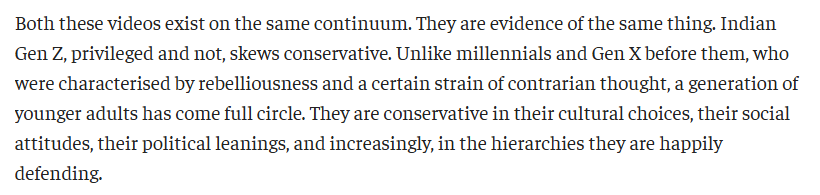
The article assumes that because Gen Z is showing interests in trends like "Bhajan Raves", somehow we are skewing towards conservatism. This point is accurate objectively, but completely misunderstands the context, and subjective reasoning behind it. Image
Gen-Z is not returning to religious orthodoxy. Far from it. Gen Z is simply embracing Indian culture in a prouder manner than Boomers and Millennials have ever done. We are sick and tired of being told that our culture is embarassing and backward. As simple as that.
Read 18 tweets
Dec 14, 2025
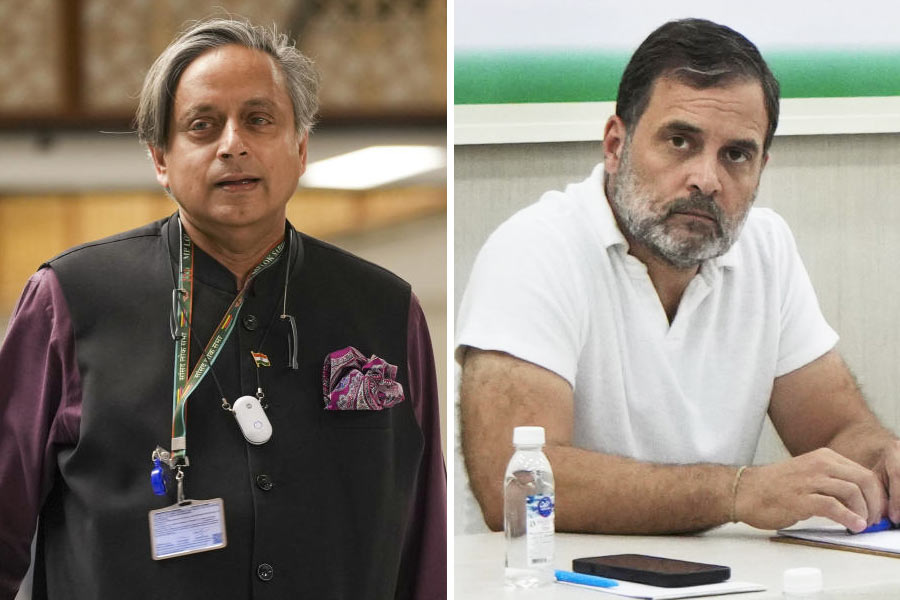
The contrast between Shashi Tharoor and Rahul Gandhi reflects two ideological tendencies that have existed within Congress. The problem is not their coexistence. The problem is Congress’s inability to choose, integrate, or execute either coherently.
(Neutral analysis thread) Image
Tharoor broadly aligns with a 90's era Congress tendency that was urban-facing, institutionally oriented, and reform-compatible. This orientation emerged during economic transition and elite-led governance, not as virtue, but as a historical circumstance.
Figures like P.V. Narasimha Rao, Manmohan Singh (Fin. Min. term), S.M. Krishna, and Montek Singh Ahluwalia operated within this framework. Their politics relied on policy, institutions, and administrative competence, not mass mobilisation or cultural embedding.
Read 13 tweets
Jul 8, 2025
English Poses a bigger threat to South Indian languages than Hindi does. Explained using science (THREAD)
First, let’s talk structure.

Languages are either:
>Head-final (like Kannada, Tamil, Telugu, Hindi etc)
>Head-initial (like English)

This means:
Kannada: “I rice ate”
English: “I ate rice”
That’s not a small difference. It affects how we process reality.
South Indian languages are deeply head-final.

Not just in verbs — but in:
>Postpositions (not prepositions)
>Embedded clauses
>Modifier order
>Question structures

In contrast, English is violently head-initial. The cognitive patterns are totally different.
Read 10 tweets
Jun 23, 2025
Most Indians spend the first 20 years of their life inside an education system that prepares them neither for public life nor for personal depth. It produces anxious competitors, not confident citizens. The tragedy is not its failure, but that it succeeds-at the wrong thing.
We mistake education for instruction. But instruction is mechanical. Education is moral. Instruction teaches you to perform. Education teaches you to decide. One makes you eligible. The other makes you responsible. This difference is not minor. It is civilizational.
The modern Indian school was not built for responsibility. It was not built for citizenship. It was built for obedience. To maintain order. To produce predictability. To service systems designed elsewhere, for ends never questioned.

We call it “merit.” But it is submission.
Read 19 tweets

Did Thread Reader help you today?

Support us! We are indie developers!


This site is made by just two indie developers on a laptop doing marketing, support and development! Read more about the story.

Become a Premium Member ($3/month or $30/year) and get exclusive features!

Become Premium

Don't want to be a Premium member but still want to support us?

Make a small donation by buying us coffee ($5) or help with server cost ($10)

Donate via Paypal

Or Donate anonymously using crypto!

Ethereum

0xfe58350B80634f60Fa6Dc149a72b4DFbc17D341E copy

Bitcoin

3ATGMxNzCUFzxpMCHL5sWSt4DVtS8UqXpi copy

Thank you for your support!

Follow Us!

:(