Geoengineering Info Profile picture
Jan 21 15 tweets 3 min read Read on X
🚨Is carbon dioxide removal (#CDR) in the Arctic really feasible?

A new peer-reviewed study systematically assessed proposed Arctic CDR pathways and finds that feasibility is far more limited than often assumed.

DETAILS🧵1/14 Image
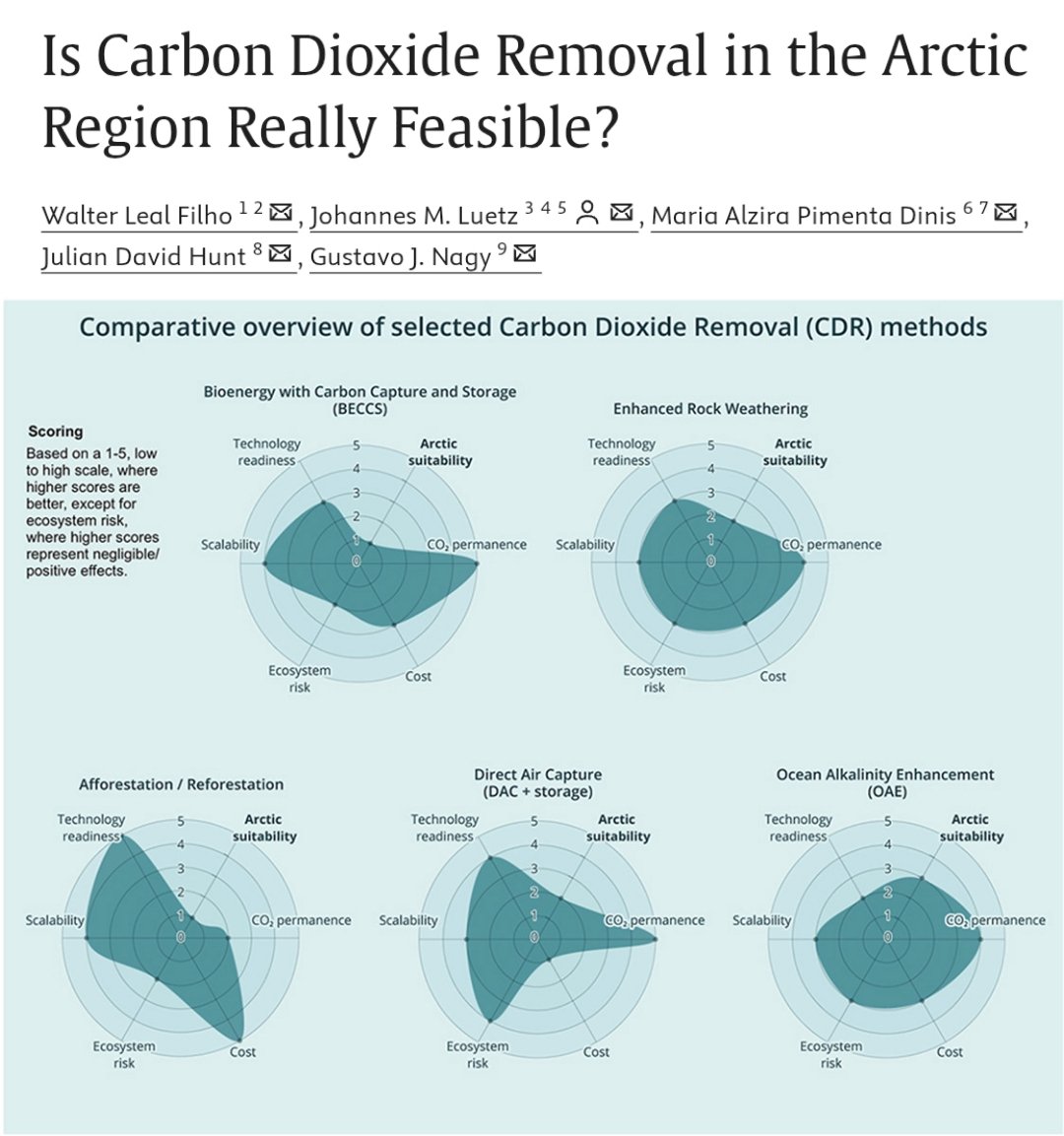
2/ As Arctic warms rapidly (4x) & attracts attention for climate interventions, can it host CDR at meaningful scale?

To answer this, authors conducted a comparative assessment of major CDR approaches proposed for Arctic regions, spanning both nature-based & engineered methods. Image
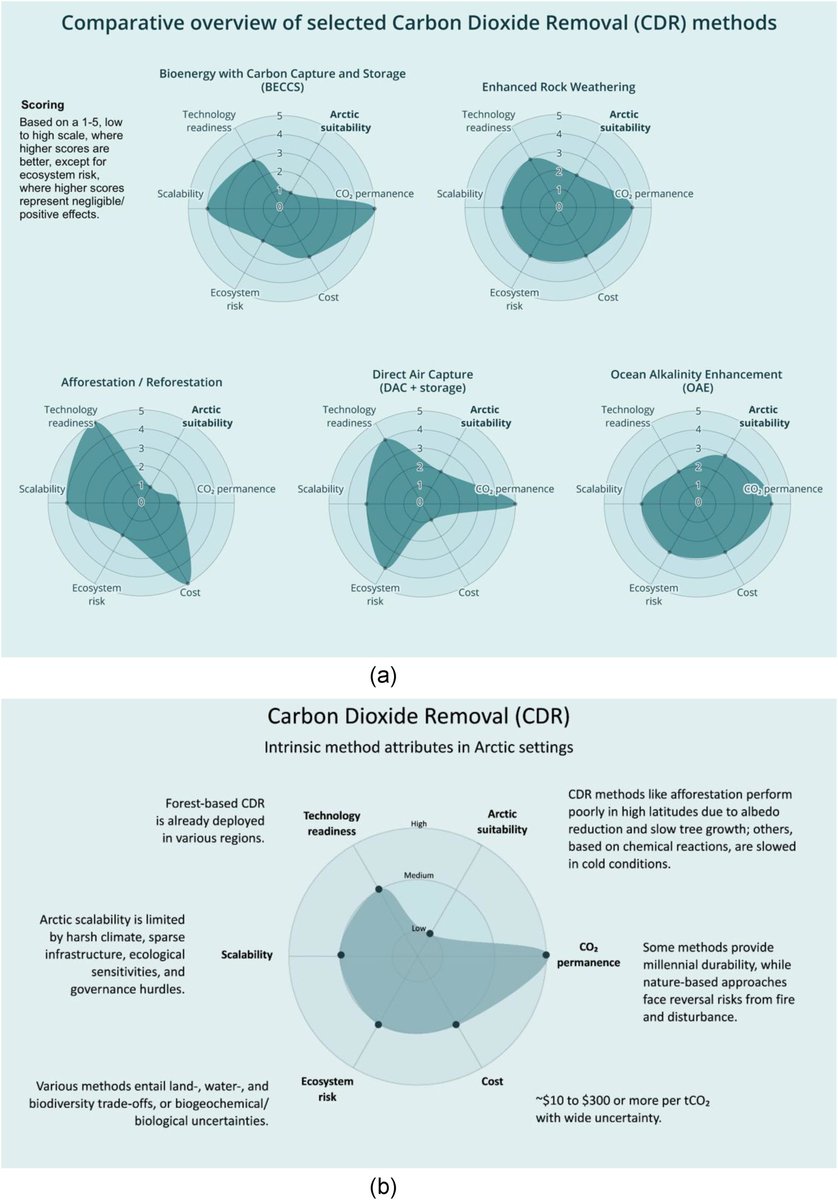
3/ The analysis draws on existing empirical studies, pilot projects, and modeling literature, evaluating each CDR pathway against biophysical constraints, technical readiness, environmental risks, and governance requirements. Image
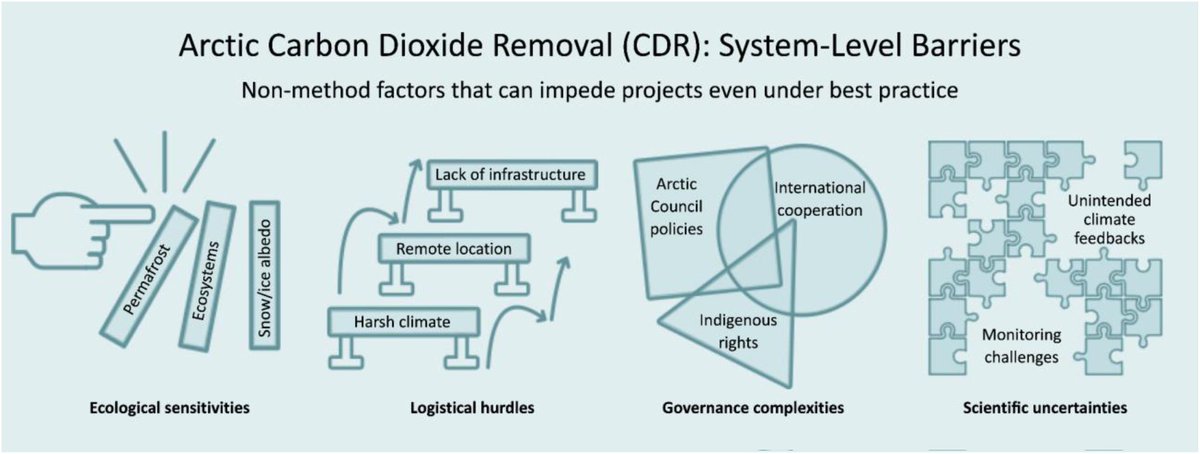
4/ The researchers examined nature-based options first, including peatland restoration, wetland conservation, and coastal blue-carbon ecosystems, which are often cited as low-risk Arctic CDR opportunities.
5/ They find that while these systems already store substantial carbon, their additional removal potential is limited and highly variable, constrained by short growing seasons, permafrost dynamics, hydrology, and methane emissions. Image
6/ Importantly, the study notes that many benefits of nature-based approaches come from avoided emissions and protection of existing stocks, rather than large increases in net CO₂ uptake.
7/ The authors then assessed engineered CDR approaches, including direct air carbon capture and storage (DACCS), enhanced rock weathering, and ocean-based methods proposed for cold regions.
8/ Here, the findings are more restrictive.

Arctic conditions pose major challenges related to energy availability, infrastructure, transport, and long-term monitoring, all of which are essential for engineered CDR. Image
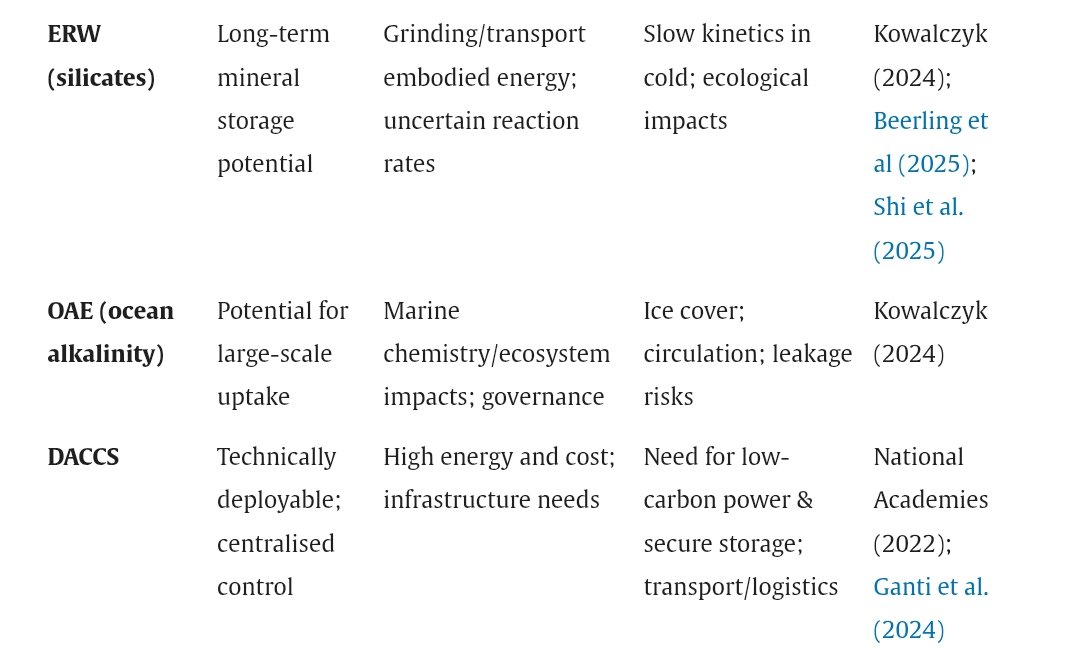
9/ While low temperatures may marginally improve capture efficiency for some technologies, the study finds that these gains are outweighed by logistical complexity, high costs, and operational risks.
10/ Across all pathways, the authors identify measurement, reporting, and verification as a central unresolved issue, given the remoteness, seasonality, and environmental sensitivity of Arctic systems.
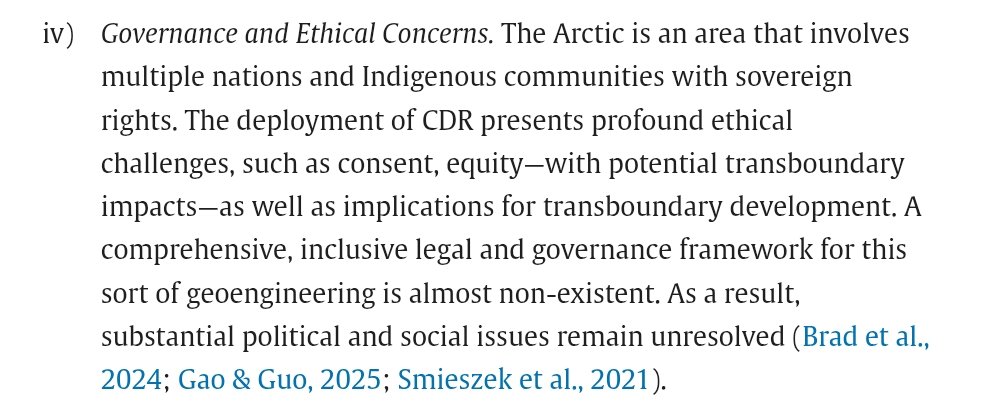
11/ Governance is another key finding.

The study highlights the absence of clear regulatory frameworks for Arctic CDR, particularly where projects intersect with Indigenous lands, shared ecosystems, and international jurisdictions. Image
12/ Taken together, the evidence leads to a consistent conclusion: no assessed CDR method currently demonstrates high feasibility for large-scale deployment in the Arctic under present conditions.
13/ The authors caution that Arctic CDR cannot substitute for emissions cuts, given its limited, uncertain & slow potential.

They argue near-term priorities should be protecting existing carbon stores, minimizing ecosystem disturbance, and strengthening governance & monitoring.
📝For more details, read the study entitled "Is Carbon Dioxide Removal in the Arctic Region Really Feasible?" here:


🧵14/14 #CDR #CarbonSequestrationsciencedirect.com/science/articl…
"unroll" @threadreaderapp

• • •

Missing some Tweet in this thread? You can try to force a refresh

 

Keep Current with Geoengineering Info

Geoengineering Info Profile picture

Stay in touch and get notified when new unrolls are available from this author!

Read all threads

This Thread may be Removed Anytime!

PDF

Twitter may remove this content at anytime! Save it as PDF for later use!

Try unrolling a thread yourself!

how to unroll video
  1. Follow @ThreadReaderApp to mention us!

  2. From a Twitter thread mention us with a keyword "unroll"
@threadreaderapp unroll

Practice here first or read more on our help page!

More from @geoengineering1

Jan 15
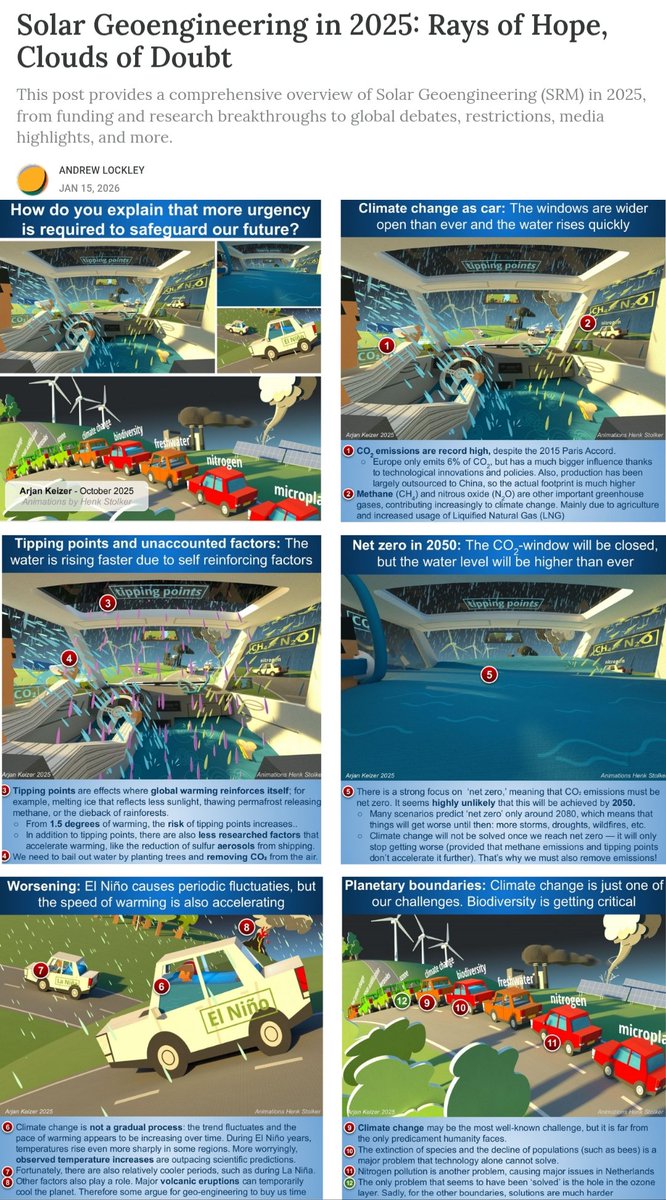
🚨2025 Year in Review: Solar Geoengineering Edition🚨

As we enter 2026, we’re excited to share our yearly summary for #SRM: "Solar Geoengineering in 2025: Rays of Hope, Clouds of Doubt."

Here’s what we cover in this comprehensive review:🧵1/11 Image
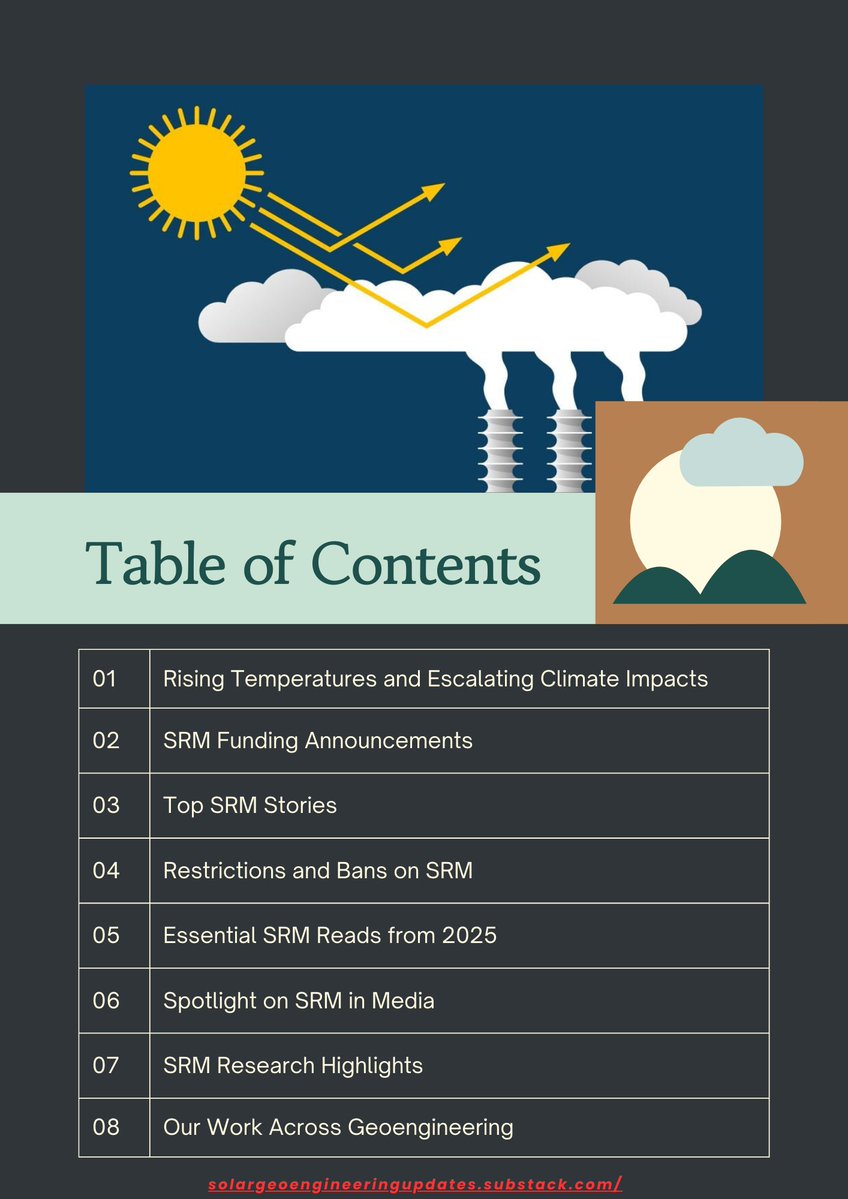
2/ 𝐖𝐡𝐚𝐭’𝐬 𝐢𝐧𝐜𝐥𝐮𝐝𝐞𝐝 𝐢𝐧 𝐨𝐮𝐫 𝟐𝟎𝟐5 𝐫𝐞𝐯𝐢𝐞𝐰?
1️⃣ Rising Temp & Escalating Climate Impacts
2️⃣SRM Funding Announcements
3️⃣Top SRM Stories
4️⃣Restrictions & Bans on SRM
5️⃣Essential SRM Reads
6️⃣SRM in Media
7️⃣Research Highlights
8️⃣Our Work Across Geoengineering Image
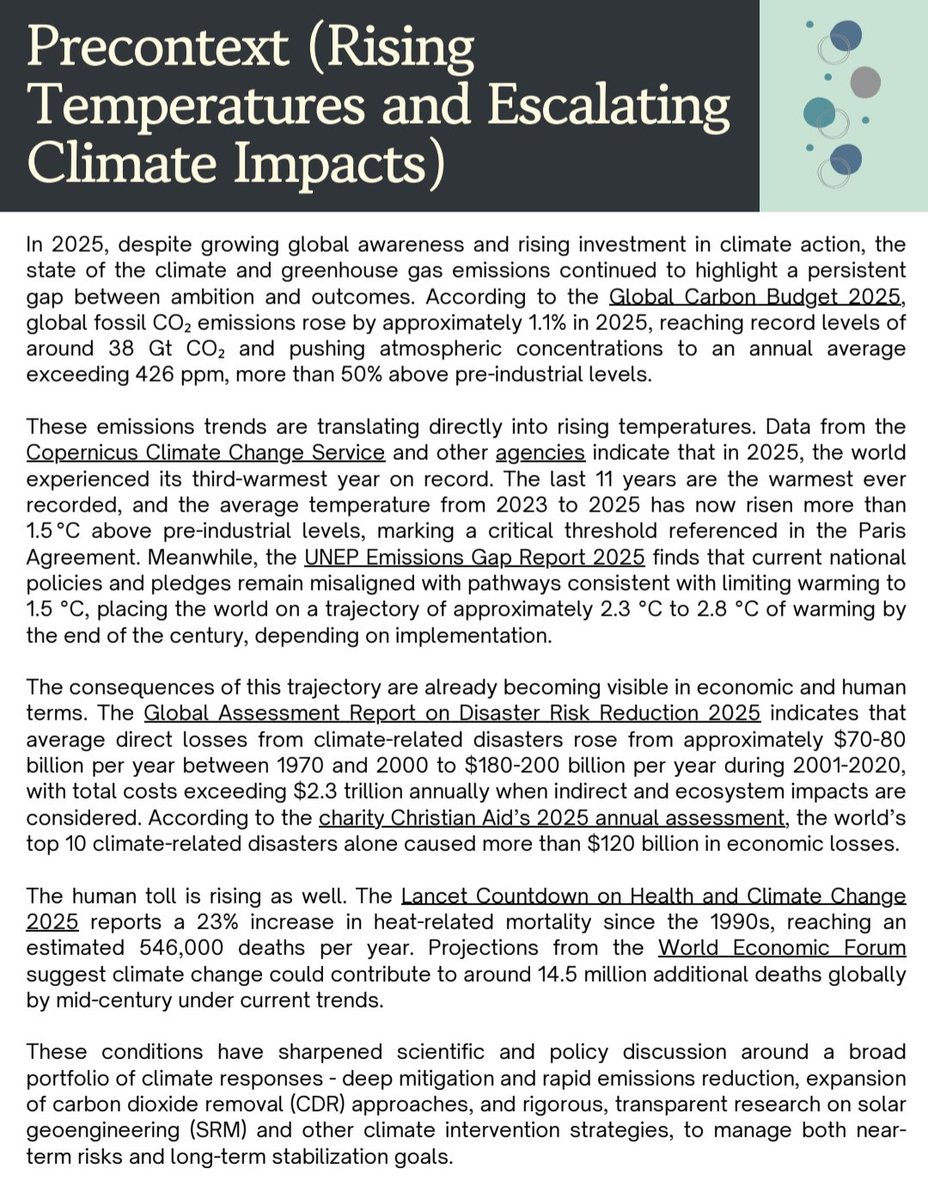
3/ 2025 was the third-warmest yr on record. @CopernicusEU shows the last 11 yrs were the warmest ever, with the global average temp in yrs 2023-25 exceeding 1.5 °C. Top climate disasters caused $120B+ in losses, intensifying debates over mitigation, CDR & SRM. Image
Read 12 tweets
Jan 8
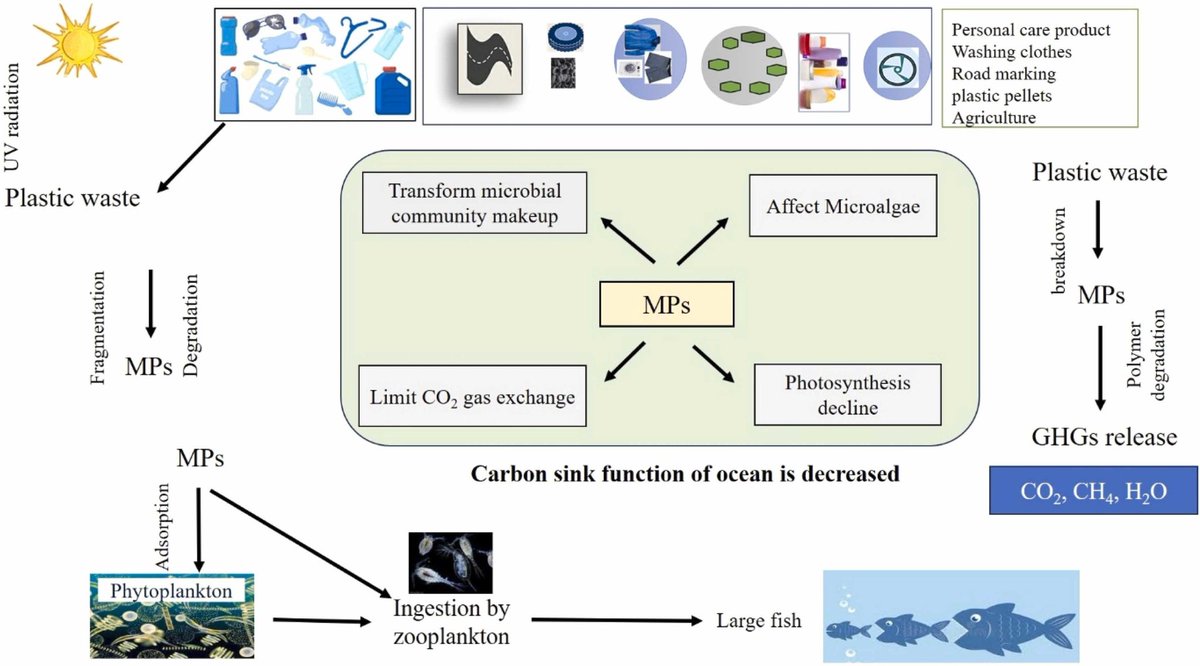
🚨Oceans struggle to absorb Earth's carbon dioxide as microplastics invade their waters, a new study finds.

#CarbonSink #CDR #CarbonSequestration

DETAILS🧵1/12 Image
2/ The ocean is Earth’s largest carbon sink, absorbing vast amounts of CO₂ from the atmosphere.

But tiny plastic particles under 5 mm (microplastics) are now everywhere, from deep sea to Arctic ice, disrupting this natural system. Image
3/ When microplastics enter the ocean, they interact with phytoplankton, the microscopic plants that absorb atm CO₂ through photosynthesis.

Even tiny plastic particles can shade, stress, or damage these organisms, reducing their growth and carbon-fixing ability. Image
Read 13 tweets
Jan 7
🚨Two recent engineering studies examine whether H2-powered aircraft can reliably deliver large payloads to the lower stratosphere for #SAI.

The papers compare a conventional tube-wing aircraft & a canard-wing alternative, analyzing design feasibility & performance limits🧵1/14 Image
2/ Delivering aerosols to these altitudes with large payloads is difficult using existing aircraft.

Both studies explore H2 propulsion b/c it offers high gravimetric energy density & zero CO₂e, potentially enabling long-duration missions without adding direct C emissions
3/ To enable comparison, both designs are evaluated against the same core mission:

• Climb and cruise at 65,000 ft
• Sustain flight for ~3.5 hours
• Deliver a ~50,000 lb aerosol payload
• Operate near aerodynamic and propulsion limits typical of the lower stratosphere
Read 15 tweets
Jan 1
🚨Agroforestry can lock away carbon and boost farmer livelihoods, but weak, costly measurement blocks smallholders from #carbon markets.

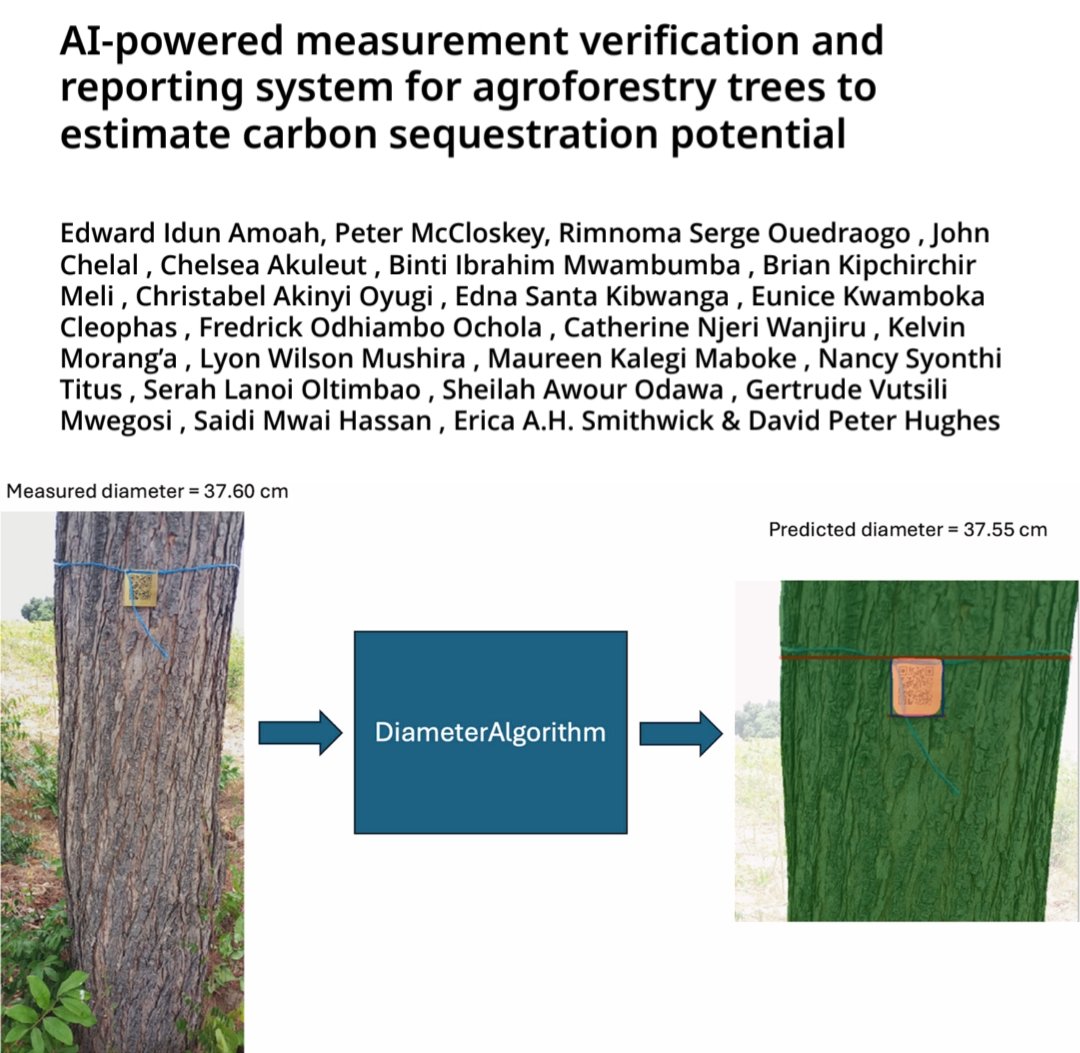
A new study introduced an AI-powered, smartphone-based MRV system that accurately measures tree carbon at scale.

DETAILS🧵1/11 Image
2/ Context: Carbon markets require precise Measurement, Reporting & Verification (MRV).

For smallholder agroforestry, traditional methods are labor-intensive, expensive & hard to scale. As a result, farmers are locked out of climate finance.
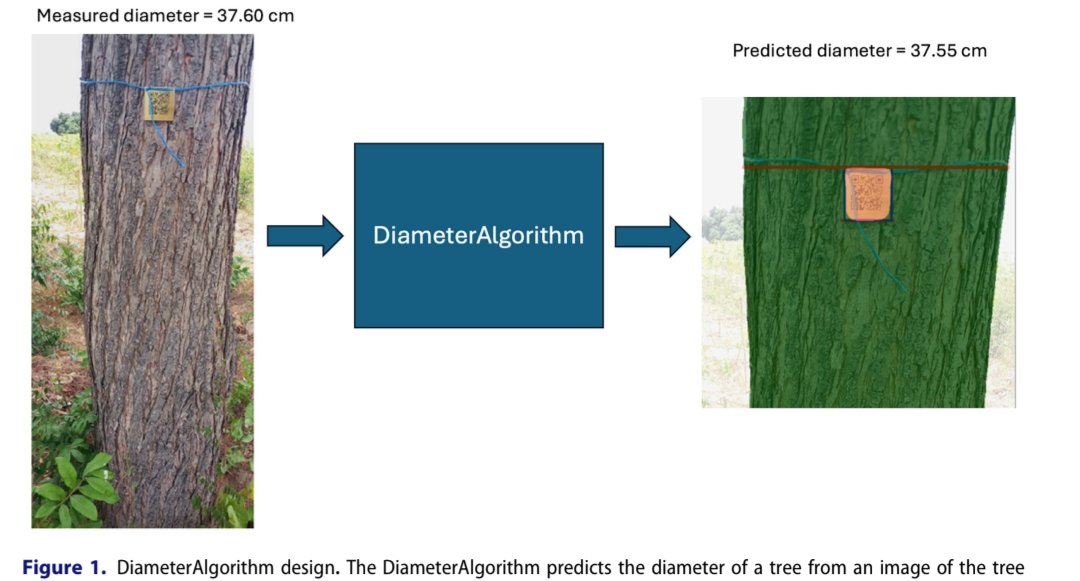
3/ So, in this study researchers used an approach "DiameterAlgorithm," a non-contact method that estimates tree diameter (DBH) from a single photograph.

Instead of manual tapes or costly sensors, it relies on computer vision and a simple reference tag placed on the tree. Image
Read 13 tweets
Dec 31, 2025
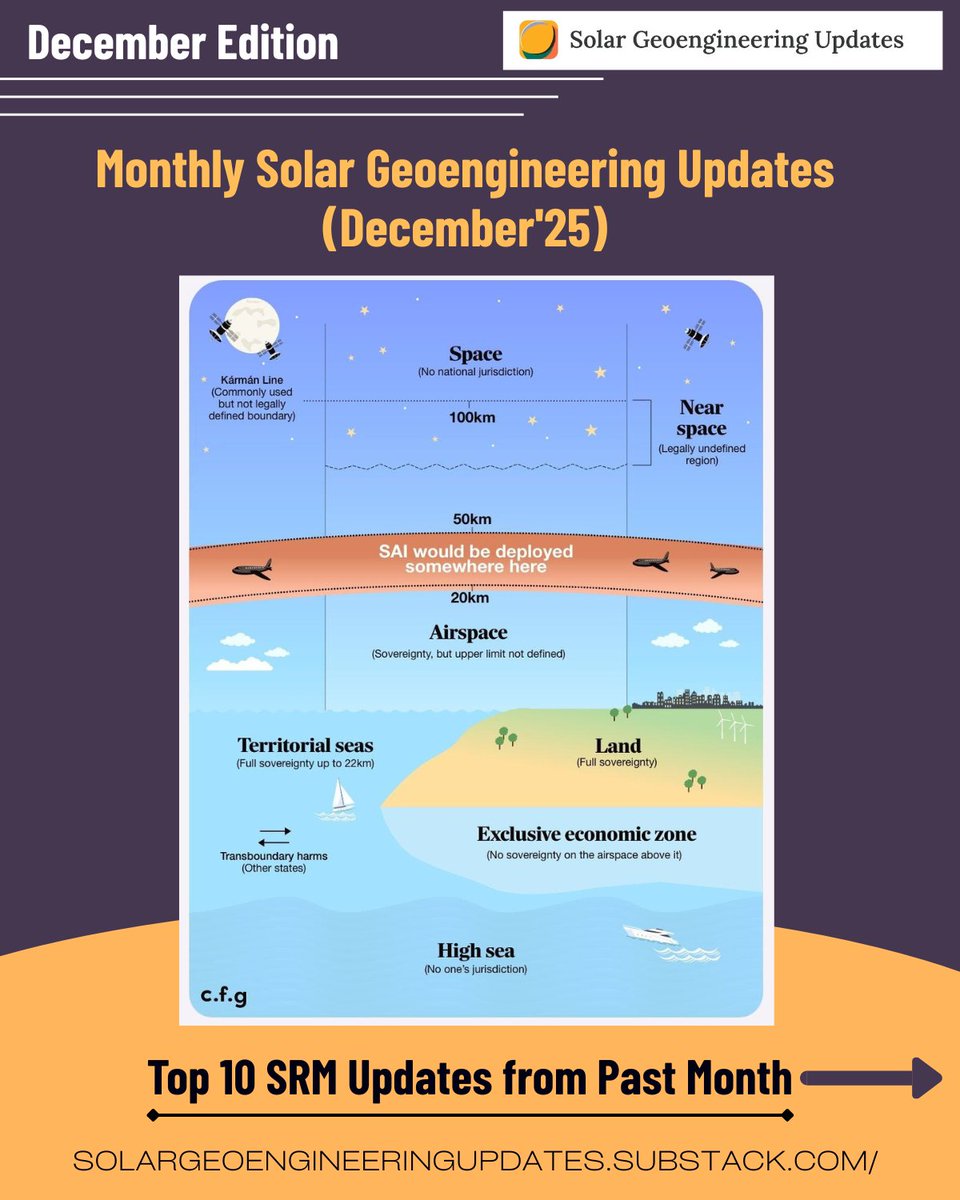
🚨Monthly Solar Geoengineering Updates (Dec Edition)

From NCAR’s possible shutdown & the Guardian’s sun-dimming debate to an African-led #SRM hub, the EU’s first governance conference & new studies, SRM dominated headlines and labs alike.

Top 10 SRM Highlights (Dec 2025)🧵1/8 Image
1️⃣ Trump administration plans to dismantle NCAR, a leading hub for climate & SRM research

2️⃣ Guardian editorial sparks debate, warning of “sun-dimming” under political control. In response, letters argue research shutdown stifles science & misrepresents African perspectives.

2/ Image
3️⃣ DSG launches SRM Governance Horizons, a project to assess institutional readiness and inclusive governance for solar radiation modification debates.

4️⃣ Sandro Vattioni wins China’s 2025 Pineapple Science Award for research on diamond dust as a potential SRM material.

3/ Image
Image
Read 9 tweets
Dec 24, 2025
🚨What if old clothes could power cities & remove CO₂?

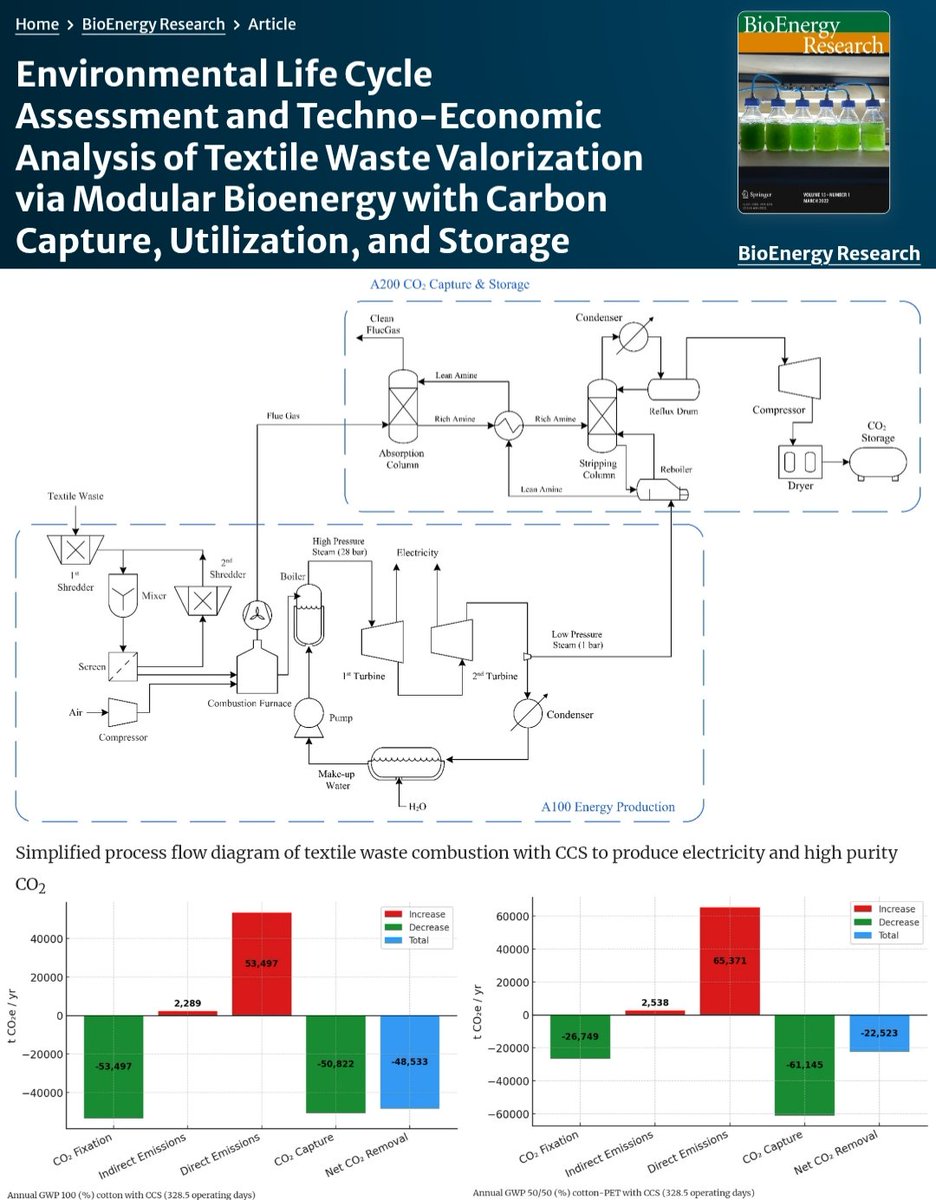
New study shows that modular bioenergy with carbon capture (#BECCS) using discarded textiles can cut emissions, beat landfilling on env impacts & deliver durable #CDR at costs competitive with today’s CDR markets.

🧵1/10 Image
2/ ~92 Mt of textile waste are generated globally each year. Roughly half is biogenic (e.g., cotton), meaning it already represents stored atmospheric CO₂ captured by plants during growth.

Yet ~66% of US textiles are landfilled, releasing GHGs & pollutants over time.
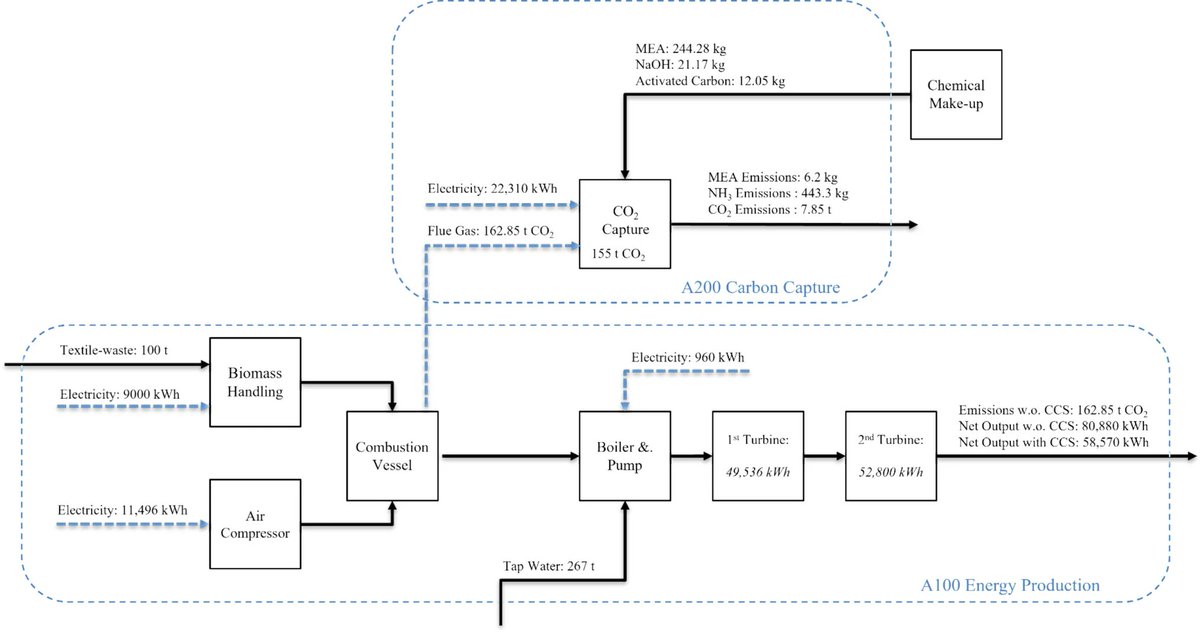
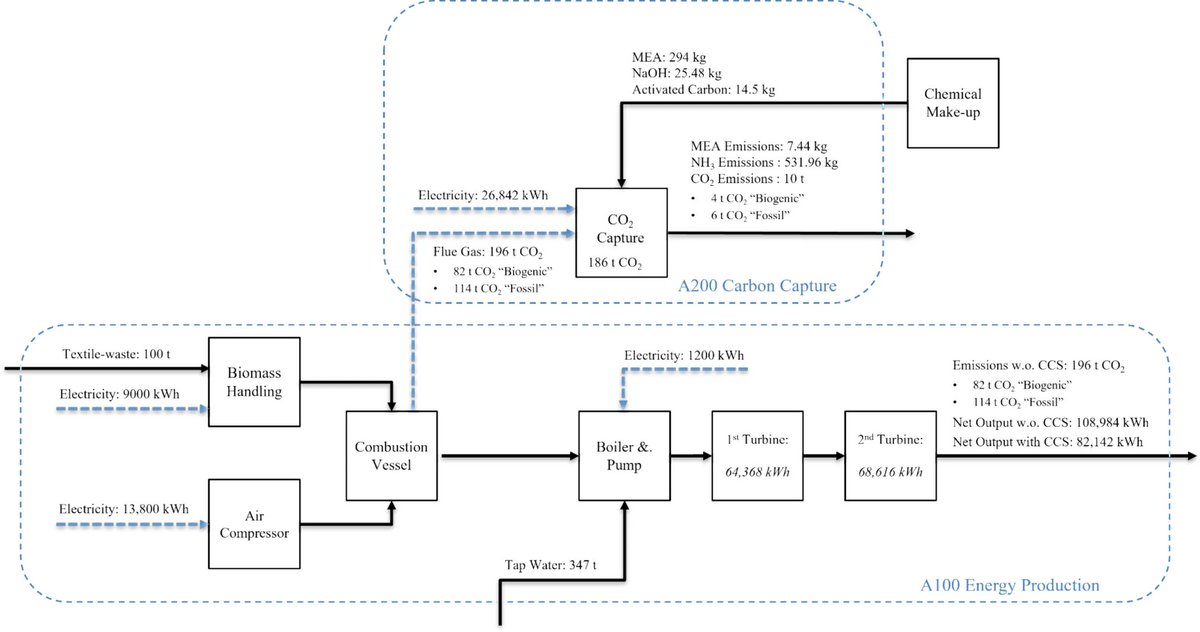
3/ In this study, researches model a 100 t/day modular waste-to-energy plant using:

• 100% cotton textiles
• 50/50 cotton–PET blends

Each case is assessed with and without CCS and compared to landfilling using full LCA + techno-economic analysis. Image
Image
Read 11 tweets

Did Thread Reader help you today?

Support us! We are indie developers!


This site is made by just two indie developers on a laptop doing marketing, support and development! Read more about the story.

Become a Premium Member ($3/month or $30/year) and get exclusive features!

Become Premium

Don't want to be a Premium member but still want to support us?

Make a small donation by buying us coffee ($5) or help with server cost ($10)

Donate via Paypal

Or Donate anonymously using crypto!

Ethereum

0xfe58350B80634f60Fa6Dc149a72b4DFbc17D341E copy

Bitcoin

3ATGMxNzCUFzxpMCHL5sWSt4DVtS8UqXpi copy

Thank you for your support!

Follow Us!

:(