A recent study just exposed how India investigates its #police killings.
->Fabricated evidence.
->Dead victims named as "accused."
->Investigations lasting ≈7 years that go nowhere.
This is what encounter justice looks like.🧵1/15
👍🏽to @pranavverma17 @ManglaVerma @amrshasng
->Fabricated evidence.
->Dead victims named as "accused."
->Investigations lasting ≈7 years that go nowhere.
This is what encounter justice looks like.🧵1/15
👍🏽to @pranavverma17 @ManglaVerma @amrshasng
Here's the criminological truth most won't say: high encounter rates don't signal effective policing. They expose investigative failure. When police can't solve crimes scientifically, they resort to bullets as shortcuts. 2/15
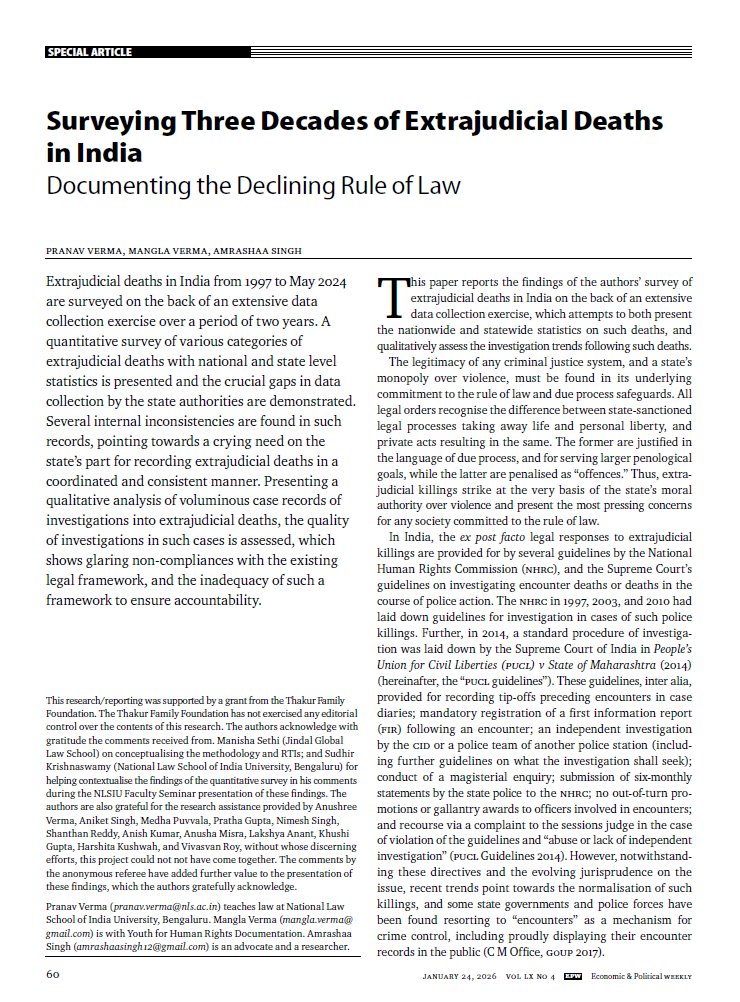
Researchers spent two years filing RTIs with #NHRC, all State Human Rights Commissions, and state police. They analysed quantitative and qualitative data which exposed patterns that should alarm anyone who believes in due process of law. 3/15
First finding: India has no centralised database on extrajudicial deaths.
Different agencies, different categories, different formats.
Does the state not know how many its police have killed, or does it simply not want to? 4/15
Different agencies, different categories, different formats.
Does the state not know how many its police have killed, or does it simply not want to? 4/15
Parliamentary responses on the same data contradict wildly.
UP reported 8 custodial deaths in one response, 451 in another, for the same period.
When the state can't count its dead, accountability becomes impossible. 5/15
UP reported 8 custodial deaths in one response, 451 in another, for the same period.
When the state can't count its dead, accountability becomes impossible. 5/15

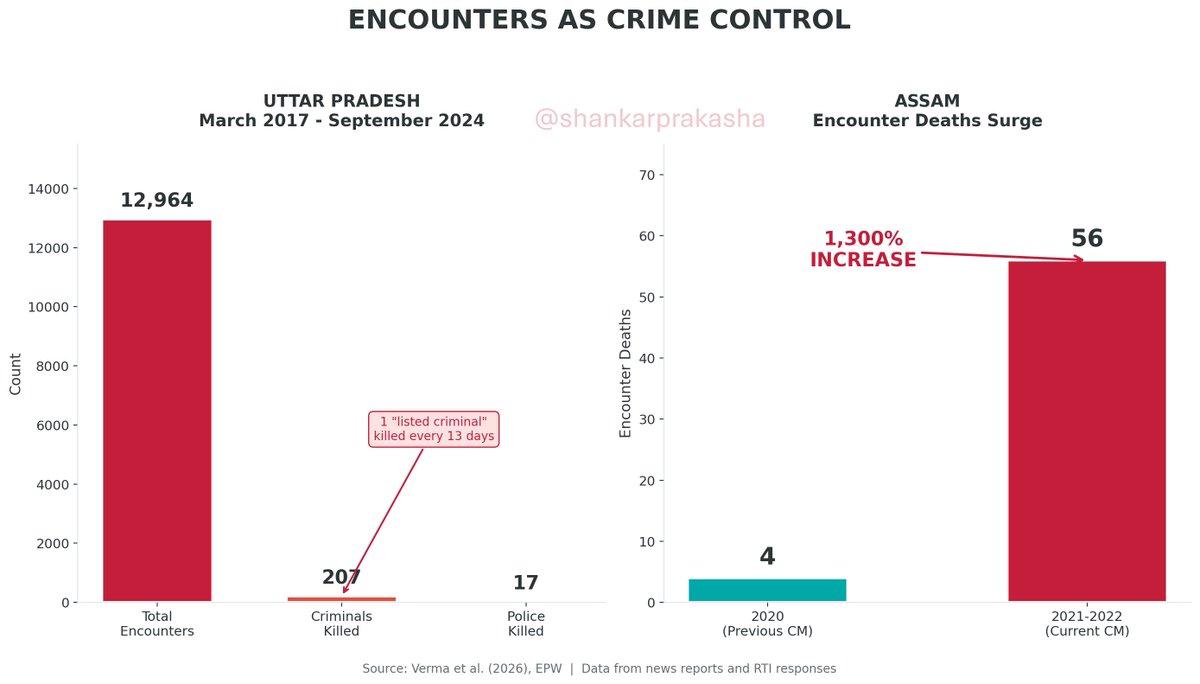
#BJP-ruled #UttarPradesh recorded 12,964 encounters in seven years. One "listed criminal" killed every 13 days. This isn't crime control. It's state violence substituting for the hard work of scientific investigation. 6/15
BJP-ruled #Assam saw encounter deaths surge 1,300% after the current government took power. From 4 deaths in 2020 to 56 shortly after. Killing has become political performance. 7/15
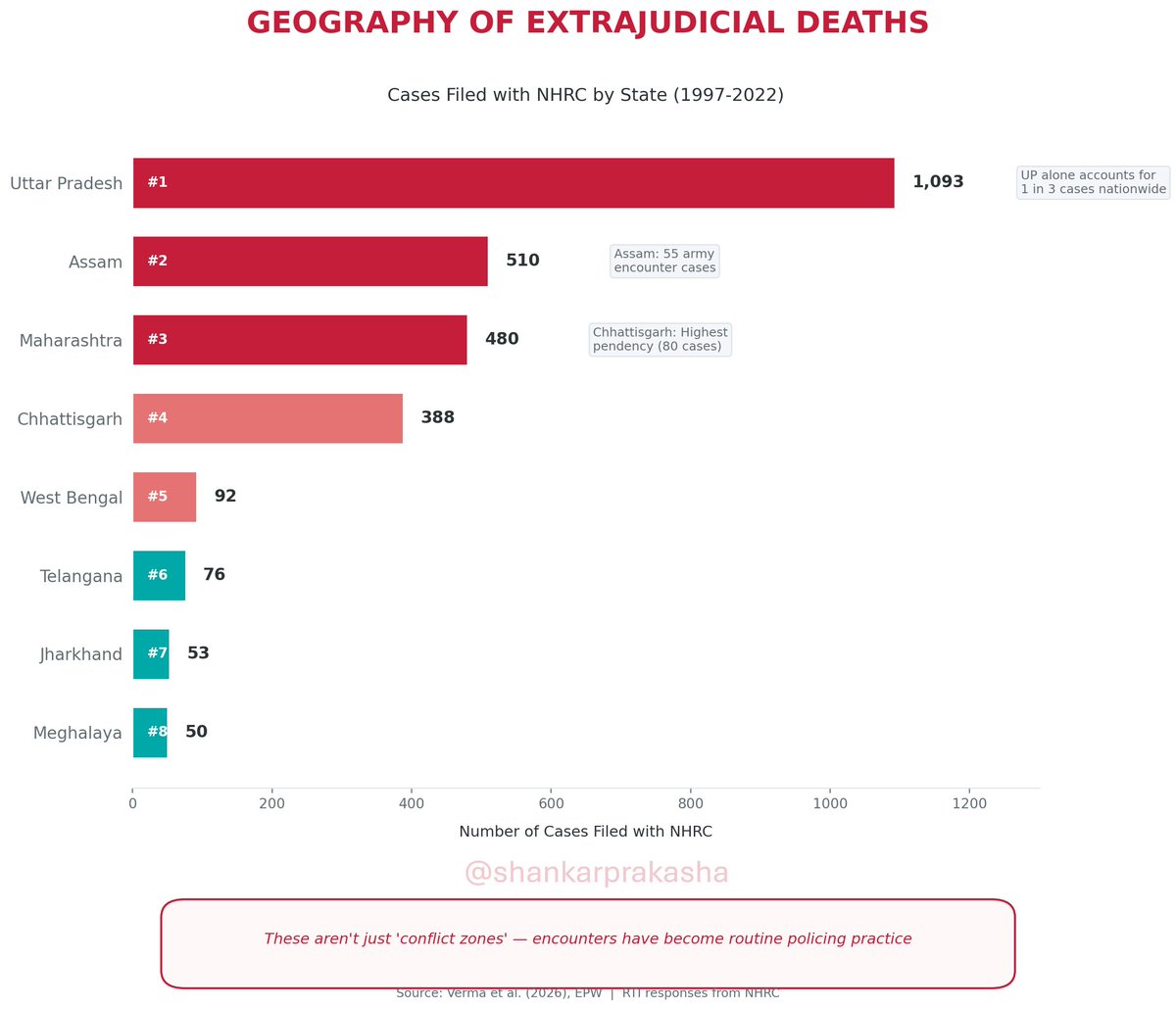
UP leads with 1,093 cases filed at NHRC. Assam and #Chhattisgarh follow. These aren't remote conflict zones anymore. Encounters have quietly become routine policing practice across India, normalised and celebrated. 8/15
The study analysed 49 case files in detail. What emerges is a system designed not to investigate police killings, but to legitimise them. The patterns are consistent and deeply troubling. 9/15
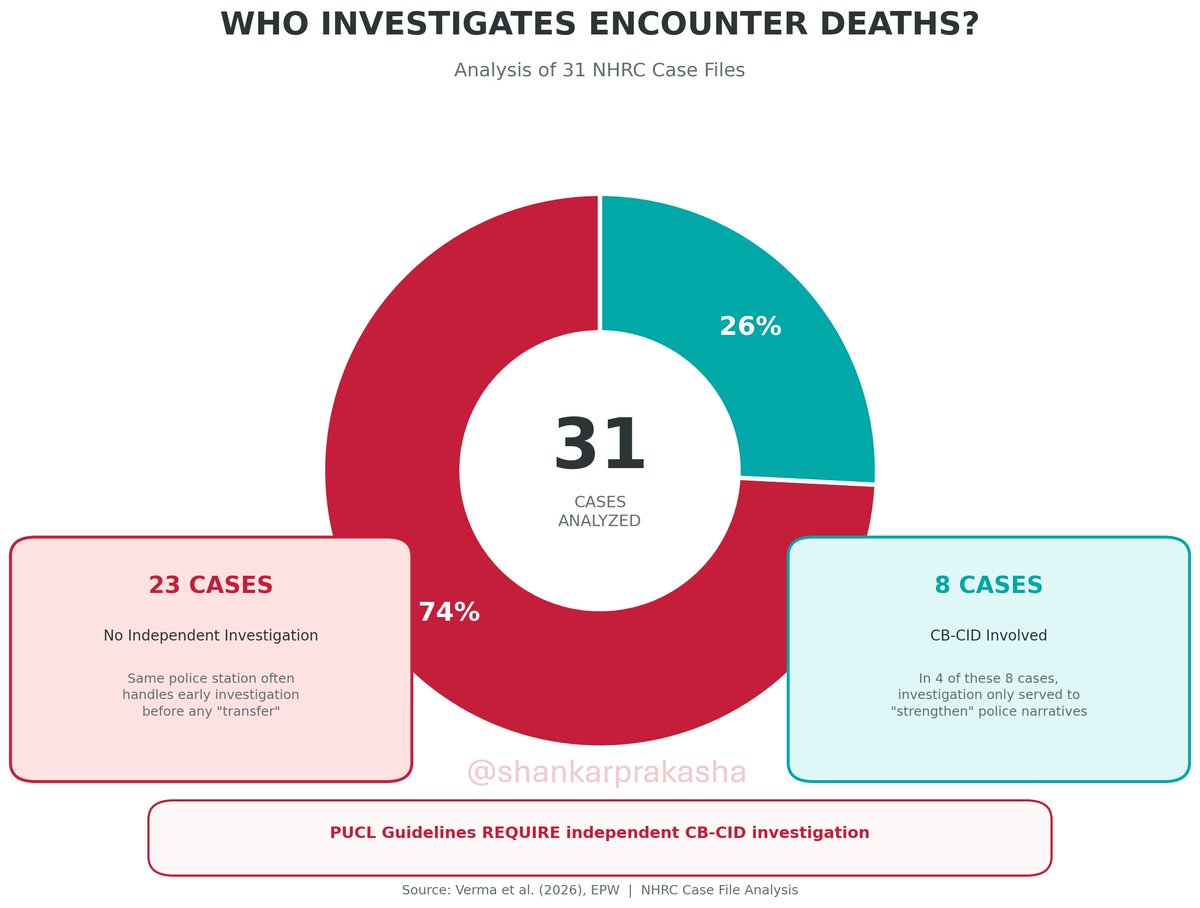
PUCL Guidelines mandate independent CB-CID investigations. Reality?
Only 8 of 31 cases had any CB-CID involvement & even then, the same police station handled crucial early stages before transfer. 10/15
Only 8 of 31 cases had any CB-CID involvement & even then, the same police station handled crucial early stages before transfer. 10/15
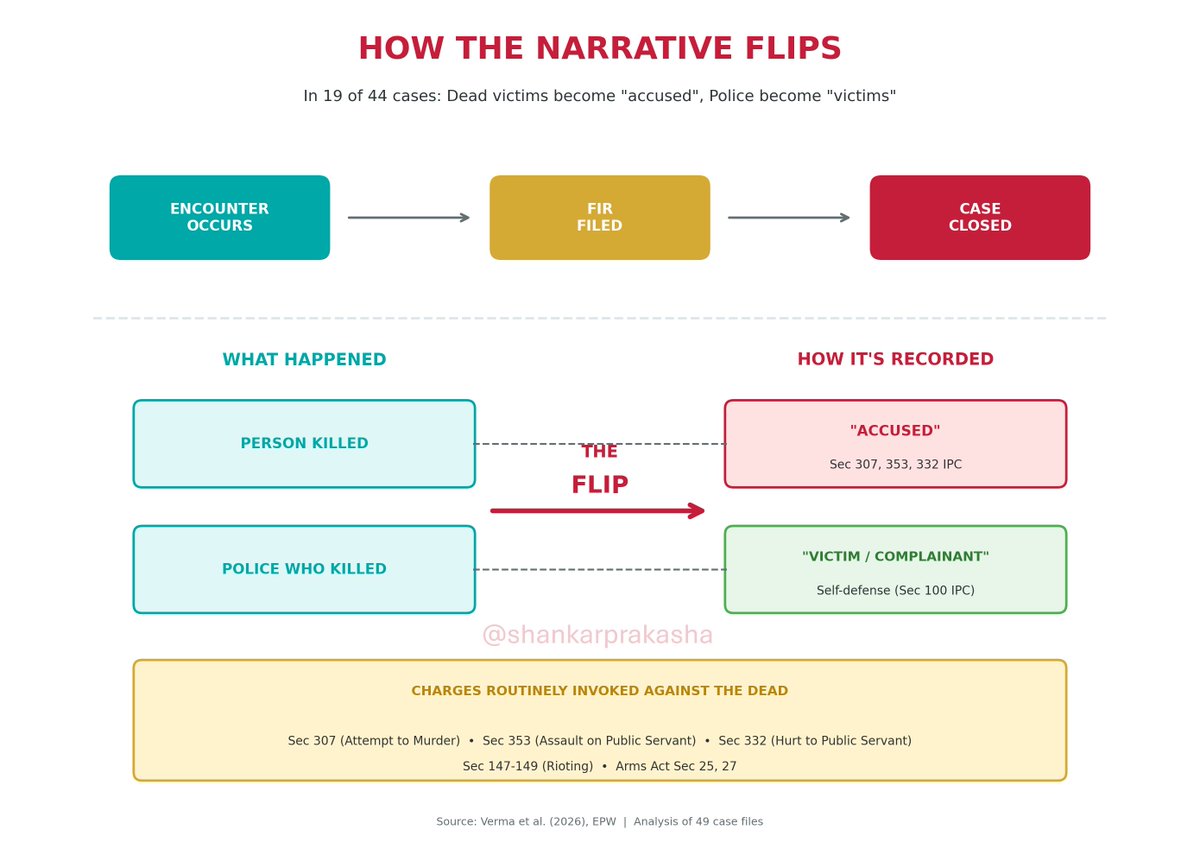
The most chilling pattern: in 19 of 44 cases, FIRs named dead victims as "accused" and police officers as "victims." The person killed becomes the criminal. The killer files the complaint. Justice inverted completely. 11/15
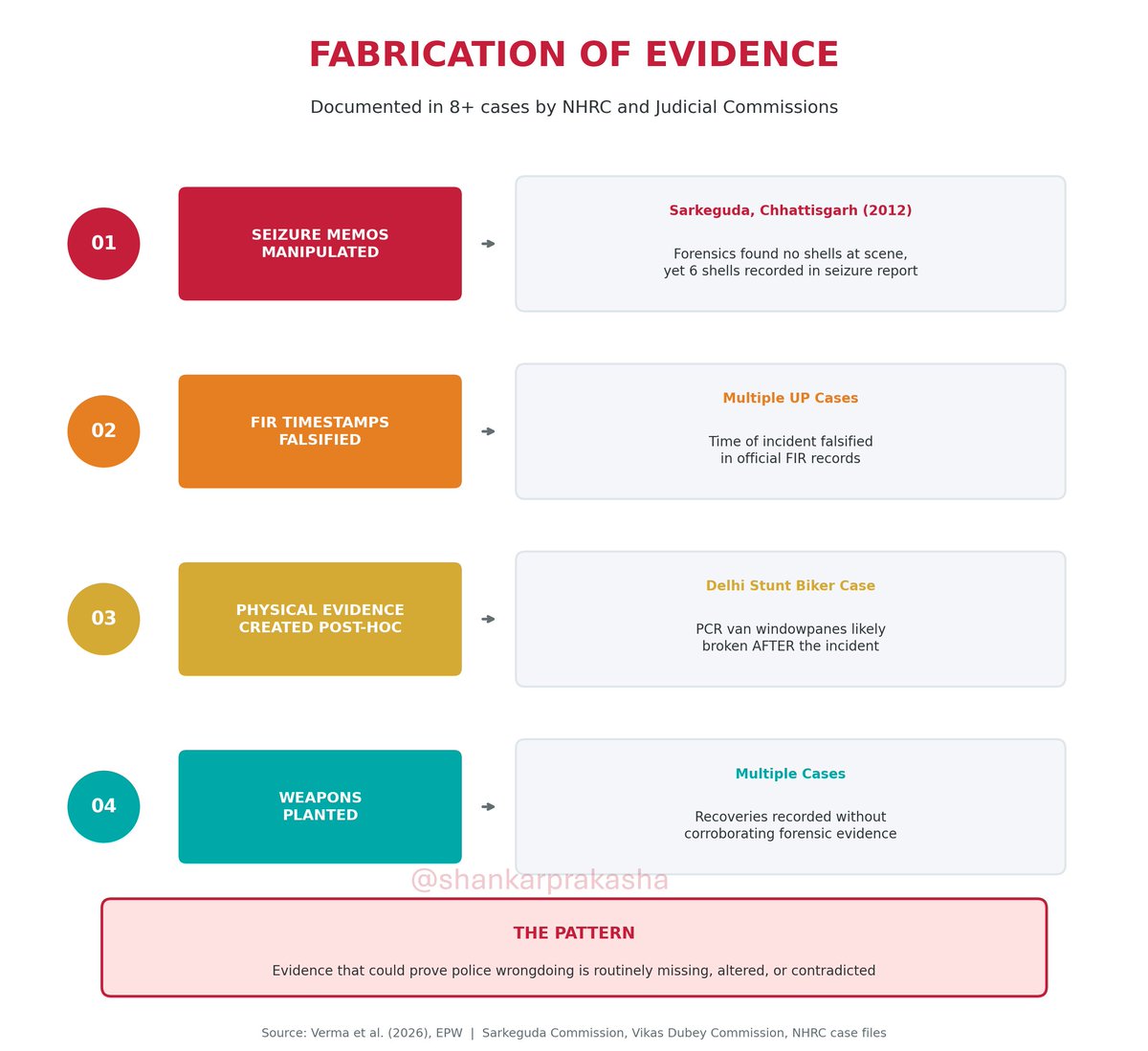
Every police narrative follows identical scripts. "They attacked first. We fired in self-defence." In 8+ cases, commissions found seizure memos manipulated, shells planted, timestamps falsified. Evidence manufactured to order. 12/15
The 2005 CrPC amendment mandates judicial magistrates for custodial death enquiries.
In all 31 cases reviewed?
Executive magistrates conducted them. Sometimes the same office that ordered firing later "investigated" it. 13/15
In all 31 cases reviewed?
Executive magistrates conducted them. Sometimes the same office that ordered firing later "investigated" it. 13/15
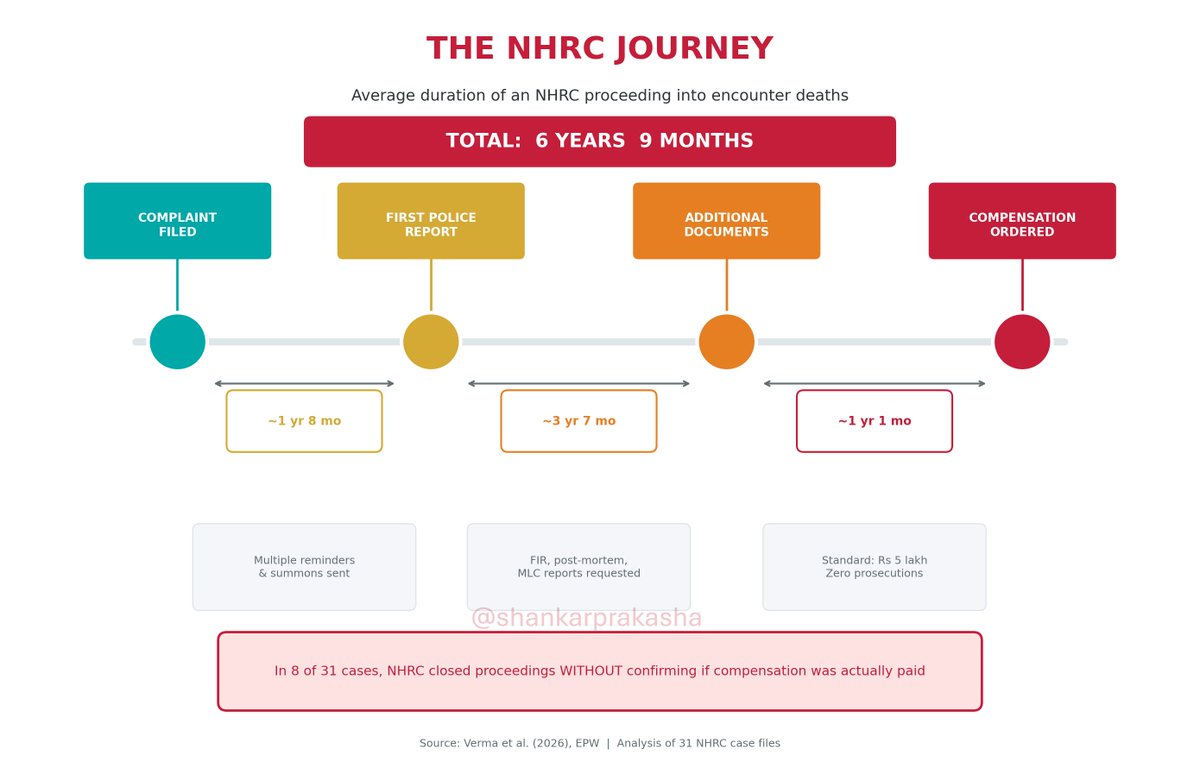
NHRC proceedings average six years and nine months. Families wait years for ₹5 lakh compensation.
Prosecutions recommended by NHRC across all cases? Zero.
The only accountability is money & even that comes with delays. 14/15
Prosecutions recommended by NHRC across all cases? Zero.
The only accountability is money & even that comes with delays. 14/15

Every encounter is a confession of investigative failure.
Professional police forces solve crimes through evidence, not bullets.
Until India invests in scientific policing, encounters will remain the lazy, lethal shortcut. 15/15
Professional police forces solve crimes through evidence, not bullets.
Until India invests in scientific policing, encounters will remain the lazy, lethal shortcut. 15/15
@threadreaderapp unroll
• • •
Missing some Tweet in this thread? You can try to
force a refresh