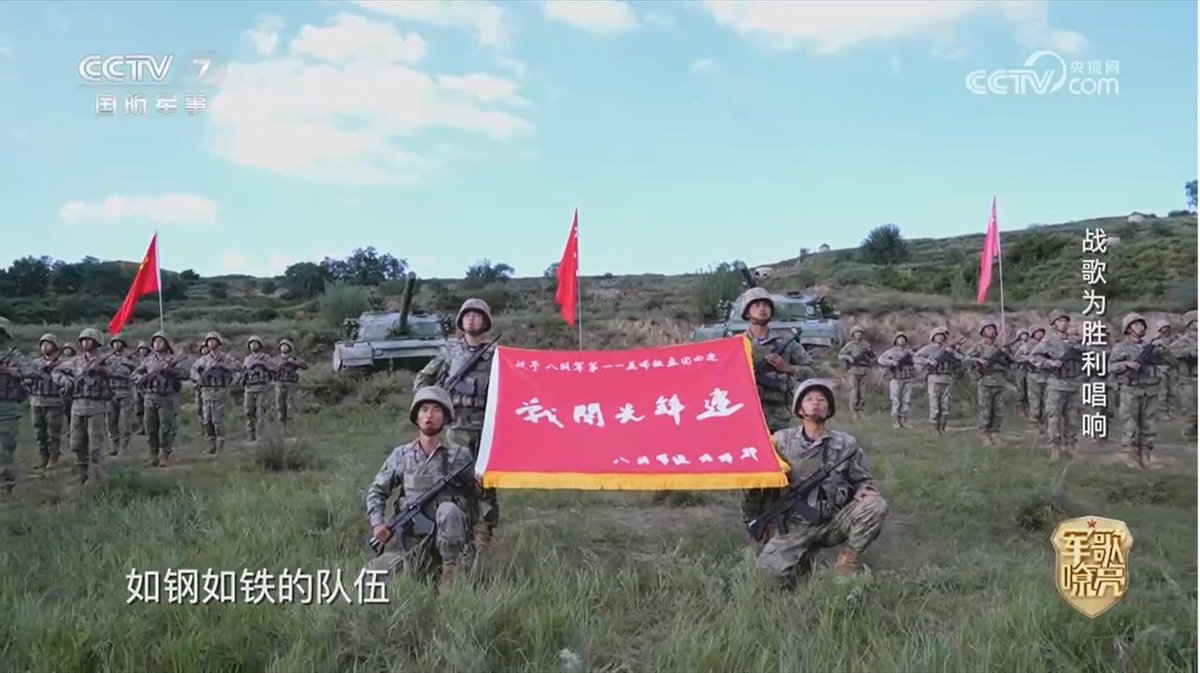
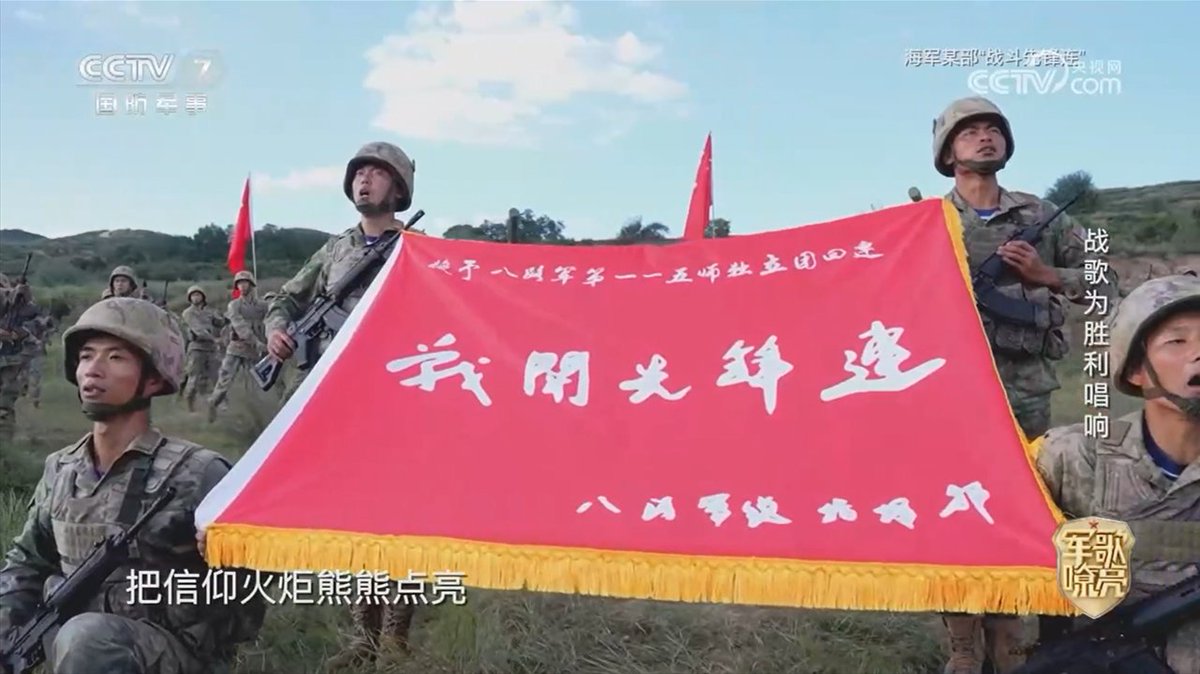
On January 24th, China’s Ministry of National Defense (MND) announced that CMC Vice Chairman, General Zhang Youxia, and CMC Joint Staff Department (JSD) Chief of Staff, General Liu Zhenli, were placed under investigation by the CCP’s Central Committee for “serious violations of discipline and law.”
Both generals were also absent from the opening ceremony of the Study Session for the Provincial and Ministerial-Level Leading Cadres on Implementing the Spirit of the Fourth Plenary Session of the 20th CCP Central Committee on January 20th.
The PLA Daily released an editorial that provided additional details on why the Central Committee decided to place Zhang and Liu under investigation. 
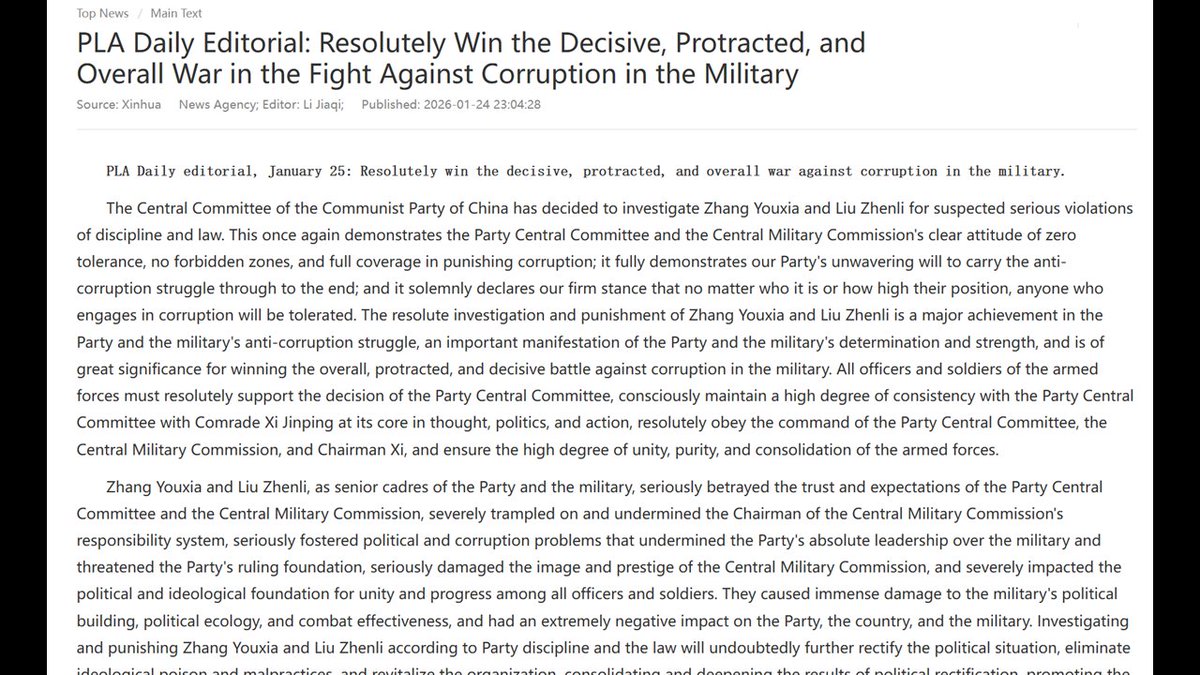
They stated that their investigation and punishment would be a “major achievement in the Party and the PLA’s anti-corruption struggle” as well as of “great significance for winning the overall, protracted, decisive battle against corruption in the military.”
Zhang and Liu “severely trampled on and undermined” the CMC Chairman’s responsibility system, fostering corruption and political problems that weakened the CCP’s absolute leadership over the PLA as well as severely impacting the ideological and political foundation of the unity and fore-ahead spirit of all officers and soldiers.
The article asserted that Zhang and Liu’s investigation will revitalize and promote the PLA’s rebirth as well as inject a strong impetus into the “development of a strong military.”
The investigation of Zhang and Liu by the CMC Discipline Inspection Commission (CMCDIC) is due to political and military reasons rather than corruption.
However, Zhang and Liu’s removal from their positions will have a profound impact on the PLA’s combat readiness as well as its modernization process.
The CMCDIC’s investigation is the first step of Zhang and Liu’s eventual dismissal from the CCP and the PLA. Corruption, however, is a common label used in investigations and likely not the reason for Zhang and Liu’s removal.
Zhang was likely removed as Vice Chairman because his powerbase was viewed by Xi as an obstacle to his control over the PLA and more recently as a hindrance to its modernization.

Liu was removed because of his link to Zhang, as they participated in the Battle of Laoshan with different units.
The generals were outliers in the PLA because they were among the few with combat experience from the Battle of Laoshan and the Sino-Vietnamese War.
Zhang’s experience is why Xi allowed him to serve after he reached the PLA’s mandatory retirement age and to maintain his powerbase despite viewing him as a political liability.
Xi decided to remove Zhang and Liu due to their failure to rapidly advance the PLA’s combat readiness and modernization efforts to meet his expectations. Xi viewed the slow progress as detrimental to achieving the goal of transforming the PLA into a world class military by 2049.

However, Zhang and Liu’s removal would negatively impact the PLA’s combat readiness and broader modernization efforts because it now lacks two individuals with experience in conducting real world operations.
Zhang and Liu’s slow progress likely stems from their understanding that it takes time to develop the PLA into a combat effective force, which cannot be expedited.
Liu’s removal, however, would especially be felt in the JSD because it is tasked with operational planning, developing military requirements and strategies, and guiding joint training and combat readiness development.
• • •
Missing some Tweet in this thread? You can try to
force a refresh