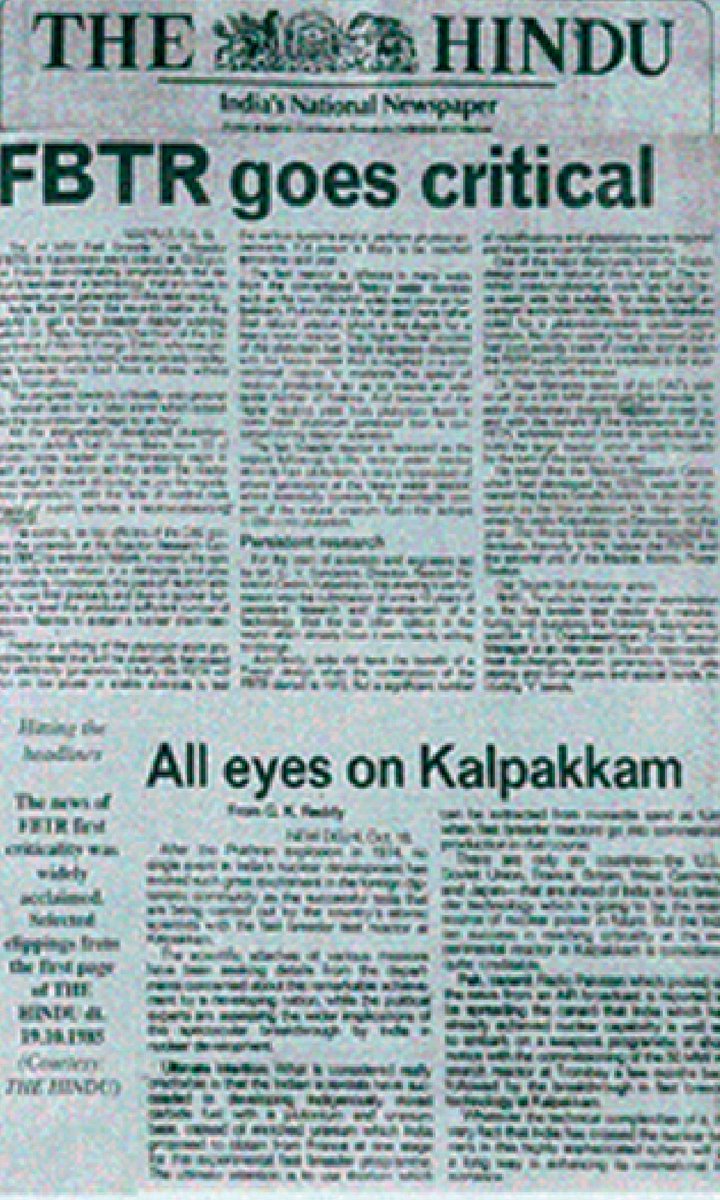
The $250 million was among the best-spent funds on any program in the country, and it is the primary reason why any international engine house is offering to co-develop a 5th gen engine (T/W > 10). 
We developed DMS3 back in 2002, then DMS4, DMRL learned from HAL Koraput and eventually out did the Russians
The blades were more advanced than whatever HAL was making for AL31
The blades were more advanced than whatever HAL was making for AL31
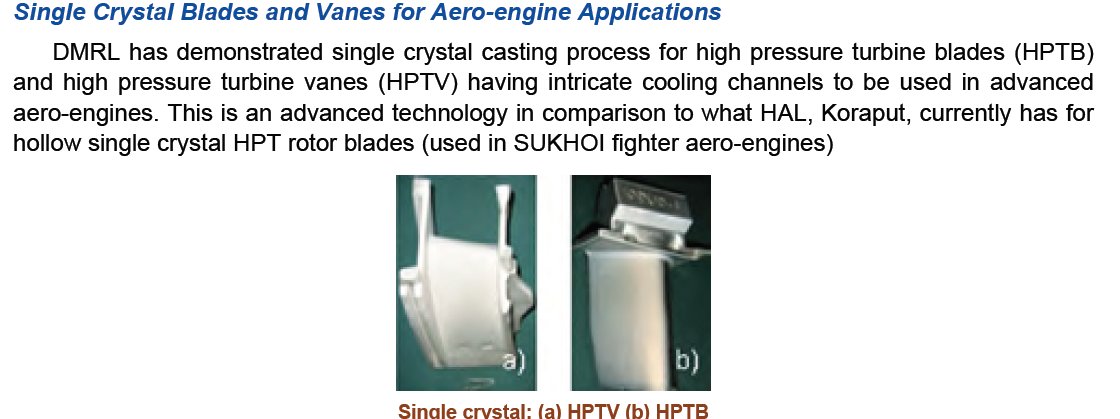
DMD4 was developed after that based on DMS4.
DMRL already supplied, 300 CMSX4 HPT blades to HAL for helicopter engine application
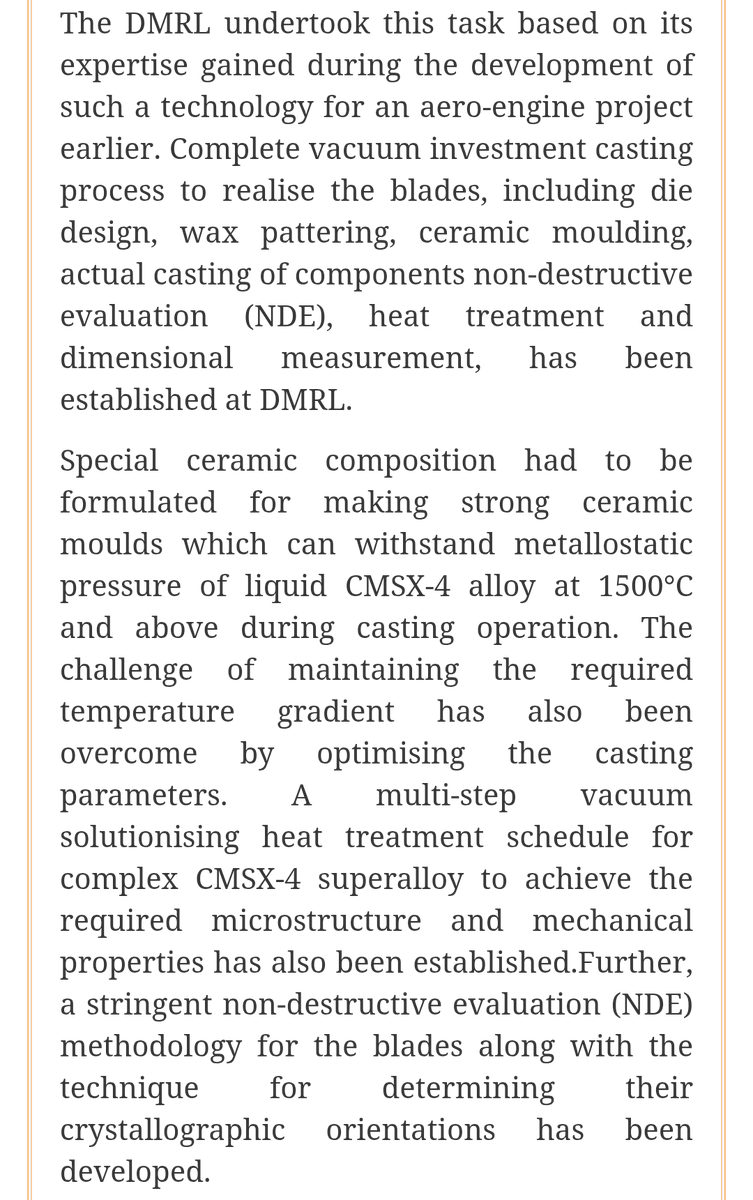
And "DMRL undertook this task based on its expertise gained during the development of such a technology for an aero-engine project earlier"
DMRL already supplied, 300 CMSX4 HPT blades to HAL for helicopter engine application
And "DMRL undertook this task based on its expertise gained during the development of such a technology for an aero-engine project earlier"

Also I think we fiddle around a lot with AL31, or whatever DMRL guys were allowed to do with it
One of them was TBC materials were synthesized from minerals like zircon (zirconium silicate) and monazite available in Indian beach sands
One of them was TBC materials were synthesized from minerals like zircon (zirconium silicate) and monazite available in Indian beach sands
They developed a method to produce high-purity Lanthanum Zirconate (LZ) and Yttria-Stabilized Zirconia (YSZ).
The development involved a bi-layer structure where Lanthanum Zirconate (LZ) is applied as a top coat over a YSZ layer
The development involved a bi-layer structure where Lanthanum Zirconate (LZ) is applied as a top coat over a YSZ layer
They utilized an Air Plasma Spray (APS) process to apply these nano structured coatings to the exhaust nozzle parts of an aeroengine
The coating was tested on aeroengine flaps during an accelerated endurance test equivalent to 1,000 hours of engine operation.
The coating was tested on aeroengine flaps during an accelerated endurance test equivalent to 1,000 hours of engine operation.

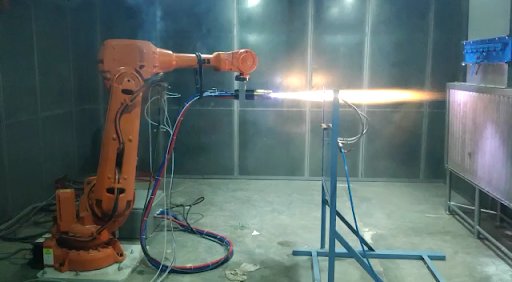
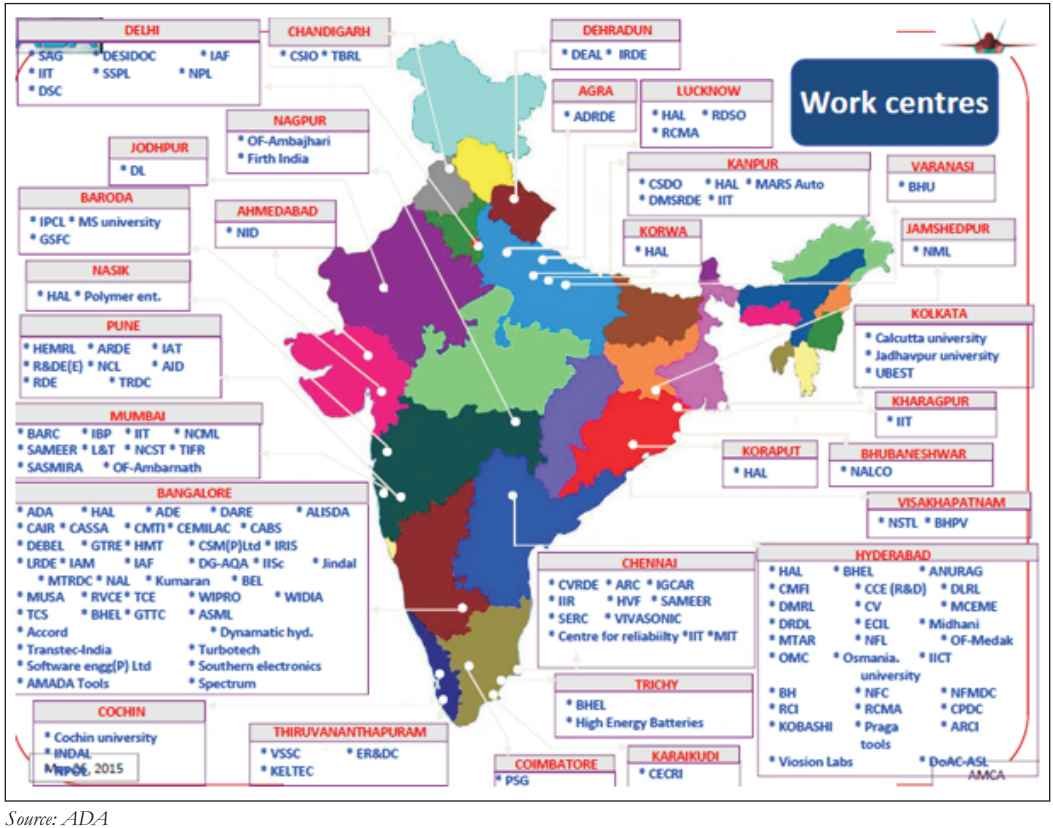
ARCI in Hydrabad has already developed EBPVD and Axial plasma spray, which can be used to YSZ type TBC coatings
They have also carried out research on NiCoCrAlY, NiCoCrAlHfYSi, CoNiCrAlY, NiCoCrAlTaY coats using Axial Plasma Spray.
They have also carried out research on NiCoCrAlY, NiCoCrAlHfYSi, CoNiCrAlY, NiCoCrAlTaY coats using Axial Plasma Spray.

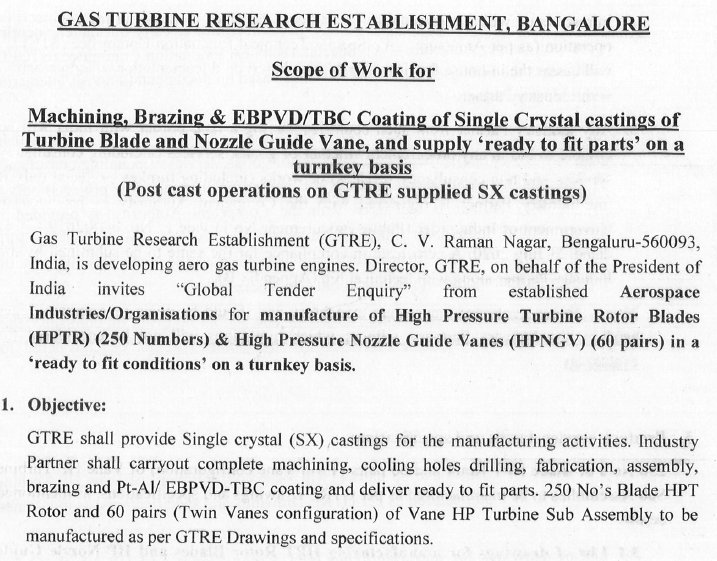
Also Polymer Matrix Composite based bypass duct was also developed for weight reduction

DMRL has established the near isothermal forging technology, the technology was transferred to MIDHANI
They supplied some 200 HPC discs for Adour, this tech will also find its use in next gen engine
They supplied some 200 HPC discs for Adour, this tech will also find its use in next gen engine

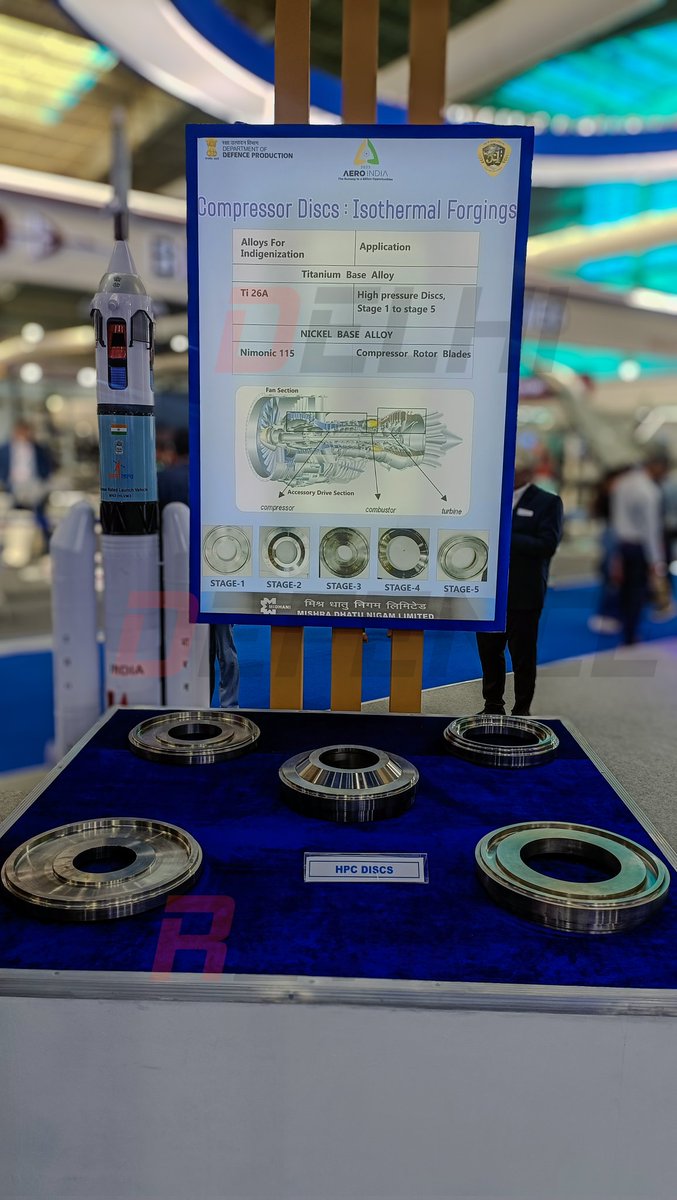
MIDHANI has also done their fair share under the program
They are also bidding for HAL's 20,000 Ton Isothermal Press tender
They are also bidding for HAL's 20,000 Ton Isothermal Press tender


We have also developed a new fan to meet the stealth requirements of Ghatak UCAV which will have serpentine intake
And anti-icing 3D printed IGV
And anti-icing 3D printed IGV


In 2022 Godrej got a contract for 8 modules of KDE, a non afterburning TF derived from original Kaveri
For which MIDHANI, HAL, PTC etc have supplied critical components
DRDO likes to groom the private sector more nowadays
For which MIDHANI, HAL, PTC etc have supplied critical components
DRDO likes to groom the private sector more nowadays

Another major achievement was FADEC, which has been designed, developed and qualified indigenously.
https://x.com/i/status/1969307072282948090
The first production engine called D1 has been reportedly delivered.
Also a Tejas is being modifed to fit the afterburning variant by HAL
Also a Tejas is being modifed to fit the afterburning variant by HAL
https://x.com/i/status/1963951633295118517
Kaveri is not in any way a failure, it will have its use as KDE in greater numbers with Ghatak UCAV for which two DcPP exists, one being L&T
And the technology developed for it will find its use in countless other projects
And the technology developed for it will find its use in countless other projects
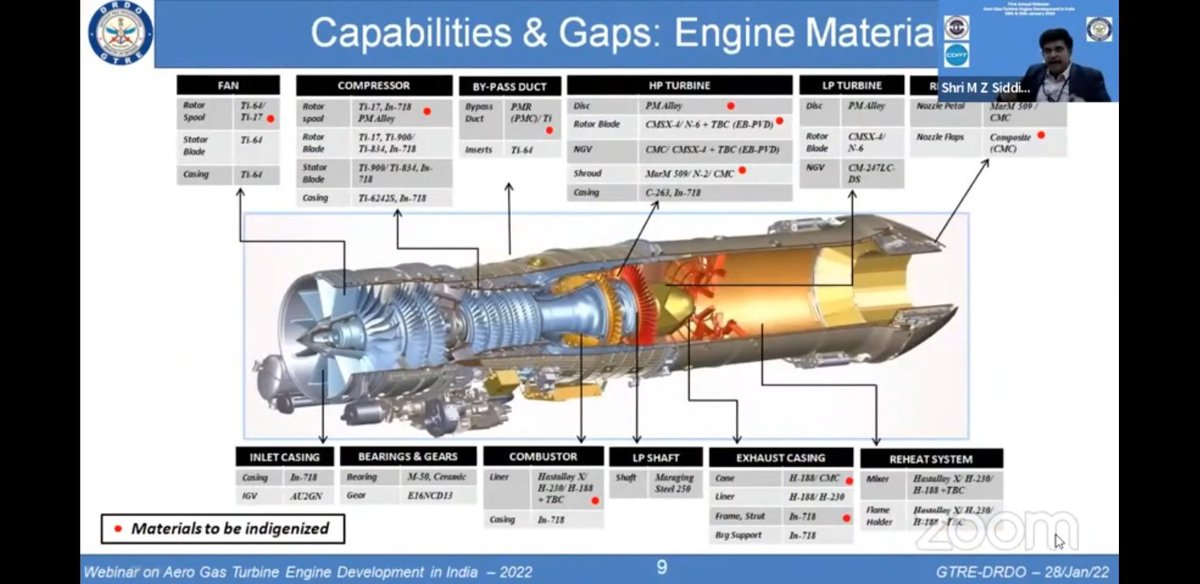
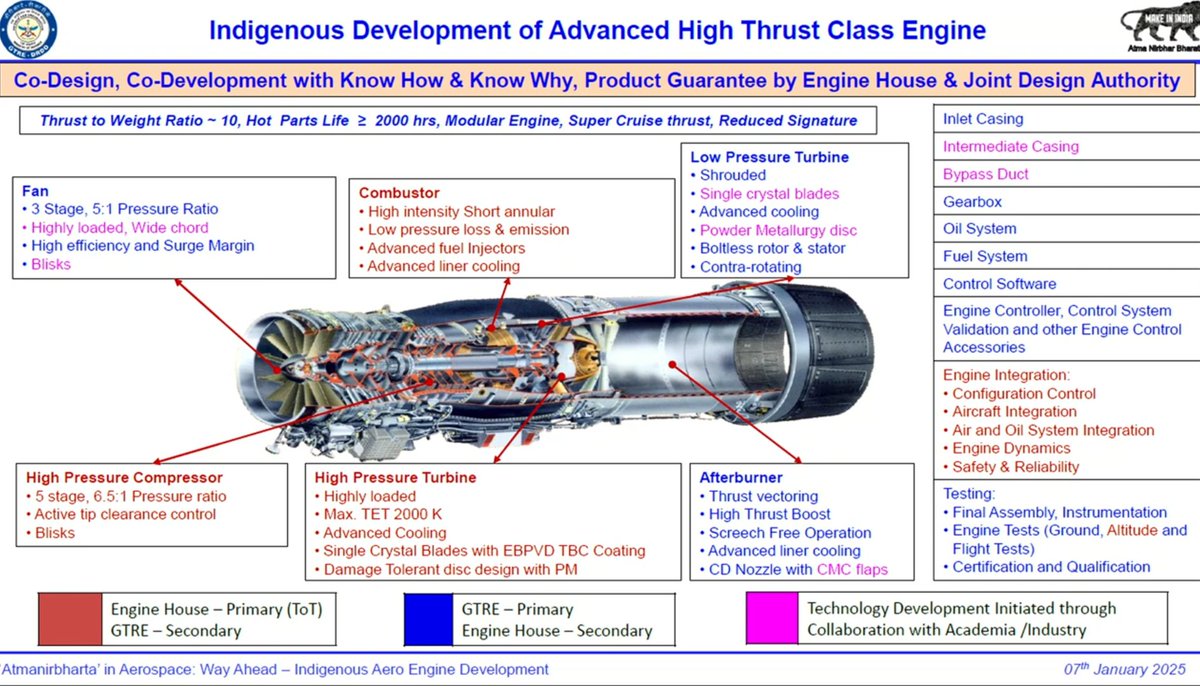
Now the plan is to co-develop a 5th gen engine with TET of 2100K, with Powder Metallurgy Discs and Single Crystal Blades with EBPVD coatings, CMC for nozzle petals and bypass ducts, 3D Blading and Advanced Blade Cooling to improve efficiency
And establishing testing facilities
And establishing testing facilities

GTRE has issued an EoI to identify an Indian industry partner for manufacturing and assembly of an Indigenous Advanced High Thrust Aero Engine and shortlist a DcPP partner
newindianexpress.com/nation/2026/Ja…
newindianexpress.com/nation/2026/Ja…
11 sub-systems, 34 assemblies, 125 sub-assemblies, 2,500 components. Includes compressors, combustor, turbines, afterburner, gearbox, fuel & oil systems, digital control units
DcPP will be responsible for production engineering, component manufacturing, sub assembly, final assembly, quality assurance, documentation, and compliance with aerospace standards
18 development engines over 10 years; potential production contract for up to 200 engines later.
18 development engines over 10 years; potential production contract for up to 200 engines later.
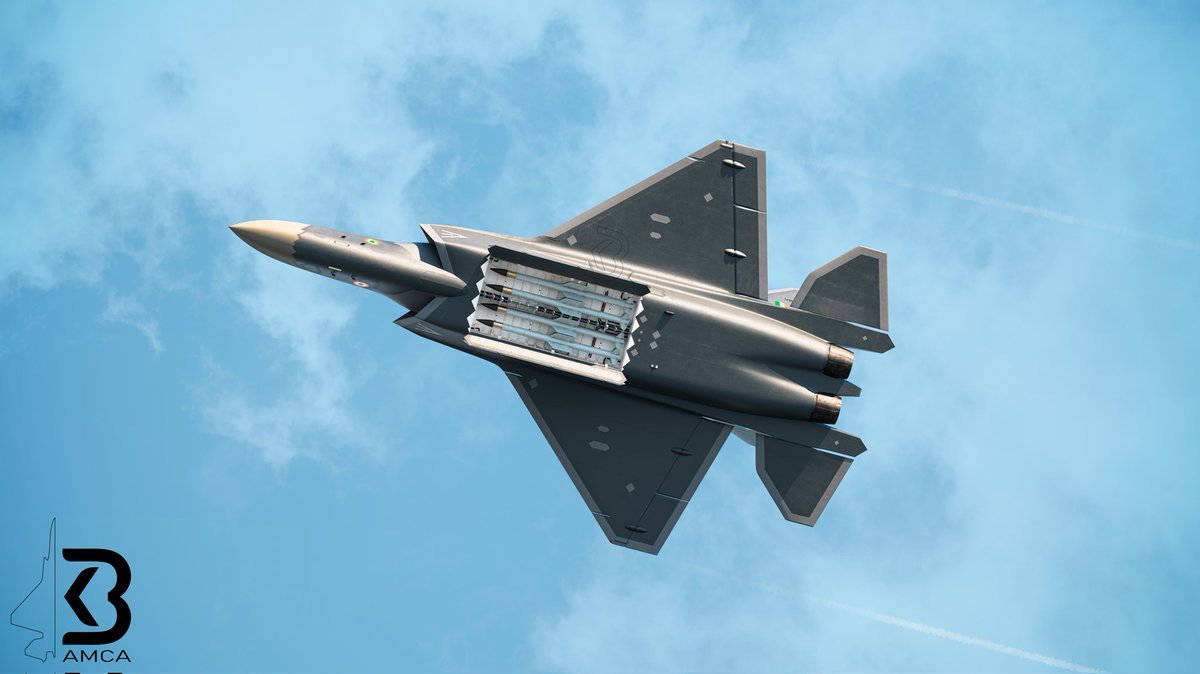
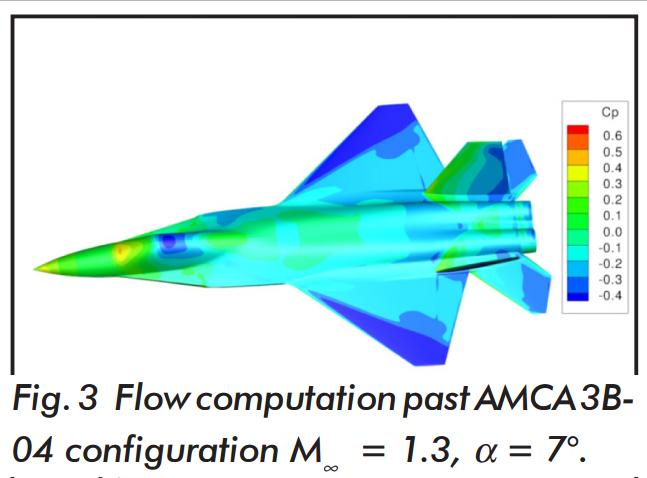
This new engine will be used in AMCA, Tejas Mk2 MLU, and TEDBF and potential for any next gen aircraft
GTRE will be the lead design authority while another company most likely HAL will be the lead integrator along with industry partners like Tata, L&T, etc.
GTRE will be the lead design authority while another company most likely HAL will be the lead integrator along with industry partners like Tata, L&T, etc.
• • •
Missing some Tweet in this thread? You can try to
force a refresh