A 1910 snapshot of a tragedy in motion, Bosnian Muslim families leaving Bosnia after the Austro-Hungarian annexation. Not mainly for money, but for identity, fear, and pride. The details are brutal. 🧳📜
Cvijić describes Belgrade station packed before the night train to Thessaloniki. Men rushing, women and kids on the floor, all squeezed into 3rd class. Asked why, the answer is simple, “everyone will move out.” 🚆
He calls it a “special type” of migration. Europe sees economic migration, but he argues this one is mostly psychological, a state of the soul after occupation, then annexation, under Christian rule and bureaucracy.
A hard point in the text, many emigrants feel tied to “Turks” through faith, not to neighbors who share their language. He notes hatred toward the new foreign rulers, and a belief that leaving is the only escape.
Where do they go? Not just European Ottoman lands, but Anatolia. He visits Bursa and nearby settlements, “muhajir” neighborhoods, even villages called Bosnaköy. The welcome they expect does not match reality.
The cost is staggering. He reports mass death after arrival, estimating about 1/3 die within five years, especially children. Climate shock, water, heat, disease, and poverty turn “resettlement” into a graveyard.
Survivors face another shock, they are still “foreign.” Older people cannot learn Turkish. Even those who do are marked by accent. Kids born there learn Turkish, sometimes lose the parents’ language. Assimilation arrives through loss.
In Macedonia and Old Serbia he sees Bosnian migrant quarters by their sagging houses and worn clothes. Nostalgia becomes illness. Farmers remember every boundary line, every grafted tree, even the smell of spring brush. 🌿
One scene flips the direction, a man returning toward Bosnia after 20 years. Wealth gone, children dead, reduced to servant work. He finally admits Turks see him as different. He returns “only to die there,” ashamed.
Cvijić warns of long-term effects, language loss, identity reshaping, and emptied land in Bosnia that can be settled by outsiders. His proposed brake is direct outreach, village to village, because pamphlets will not reach the masses.
Reading this today, it is a reminder that migration is not only economics. Pride, fear, belonging, and political engineering can push people into choices that destroy families and communities. Worth the full read. 📚
In 1752, Maria Theresa issued a patent that basically said, do not leave the Austrian Empire without permission. Not to settle abroad, not to take foreign jobs, not to join foreign armies. The target, “recruiters” and “seducers.” 🔽
The state framed it as protecting the “general welfare” and subjects under “maternal care.” But the tool was force, with local officials, militias, magistrates, even innkeepers were told to watch roads, side paths, and lodging houses. 🔽
If someone was suspected of recruiting or persuading people to emigrate, communities had to help seize them. Arrest first, interrogate immediately, ship the case to Temesvar fast. No delays allowed. Paper receipts for custody, formal records, strict procedure. 🔽
If you read one WWI account this week, make it this one. Bitola, 1917, a rich Macedonian town turned into a target. The occupation, the famine, then the shelling. This thread is a reminder of what “war on civilians” looks like. 🧵
Before WWI, Bitola was a trade hub, whitewashed houses in green orchards, tied to Salonica by rail. A place people fought over on maps, long before they fought over it with guns. 🔽
After 1915, Serbia retreats through Albania in winter. Thousands die on the road. Bulgaria moves in, claiming Bitola as theirs. The question was never just borders, it was how conquerors treat people. 🔽
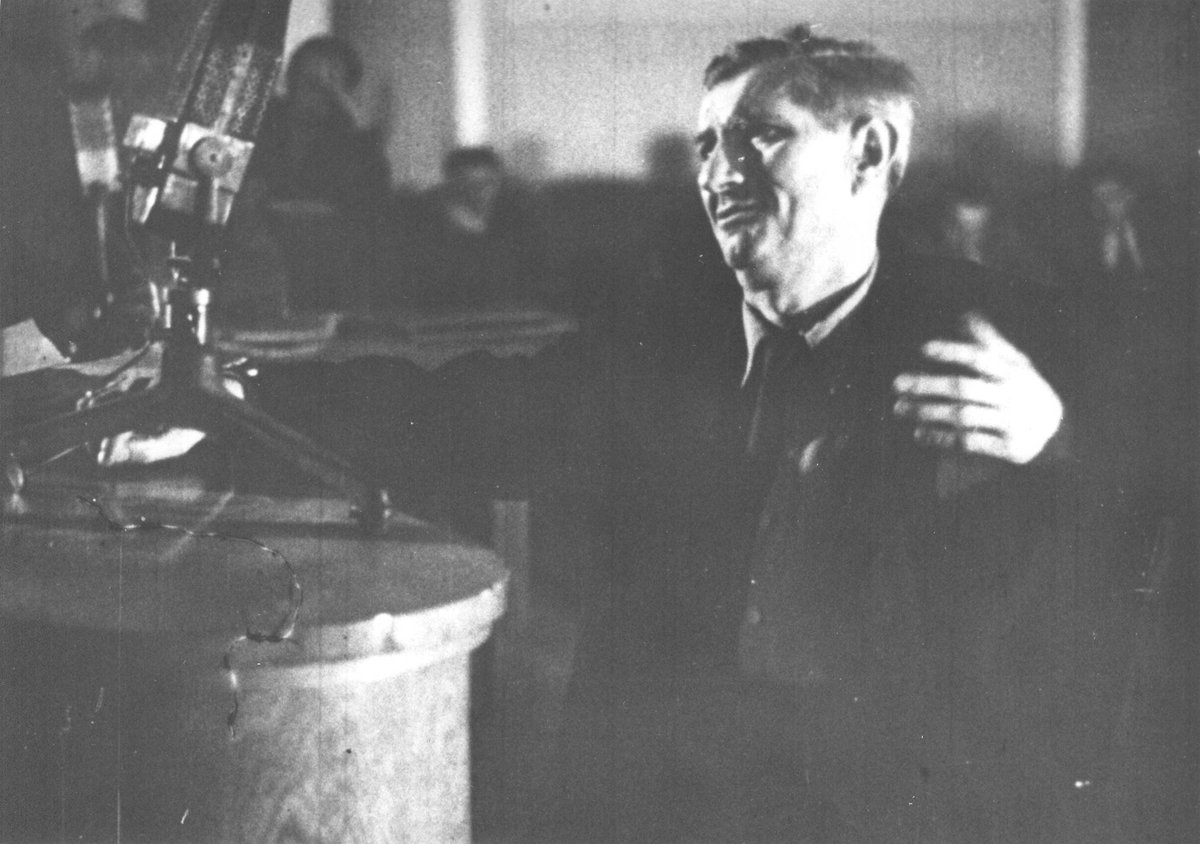
1/4 Third week of the trial of Draža Mihailović and the members of the refugee and Nedić's "governments" 10. June to 15. June 1946 in Belgrade: The testimony of Dragi Jovanović, "head of the Serbian state security" and 🔽
2/4extraordinary commissioner for Belgrade the counties of Vračar and Grocka. Courtesy of the Museum of Yugoslavia, inventory number 500.Side note: Jovanović was the head of Belgrade police before WWII, during WWII under German direction and was sentenced to death at this trial🔽
3/4 However, a recent biography of him has members of the Communist Party of Yugoslavia stating that they had been interrogated by him in three different periods: pre-war, during the war and after the war at the prison in Sremska Mitrovica, 🔽
The film found in the heritage of Osijek producer and owner of the cinema, Ignjat Rajntaler, which is kept in the Film Archive of Austria, is actually composed of several different materials about 👇vimeo.com/232188432
the Serbian Army filmed during the First and the Second Balkan Wars. One can see in the film the siege of Jedren in 1912, the Serbian Army on siege positions, and Colonel Vladimir Kondic with headquarters of the Timok Division, placement of grenades 👇
on the positions and the Serbian Artillery in action, machine gun unit in action. Then, on the material from July 1913, filmed on the position Crni kamen during the Second Balkan War, Colonel Milovan Nedic with headquarters of the Morava Division of II age class 👇
On the occasion of the Battle of Cer anniversary, the first victory of the Allied army in World War I, on Vidovdan the 28th June 1928, the King Alexander unveiled the commemorative plaque for fallen the soldiers
The monument was raised by the Association of Reserve Officers and people from the nearby areas with assistance of the Czechoslovakian government and bones of the warriors, gathered from the scattered graves throughout Cer Mountain, were built in its foundation.
2/5
The Serbian soldiers and the Czechs, members of the 28th Prague regiment, brought to the Serbian battlefield against their will, were buried in the same place. On the preserved part of the film, we can see people in front of the monument,
3/5
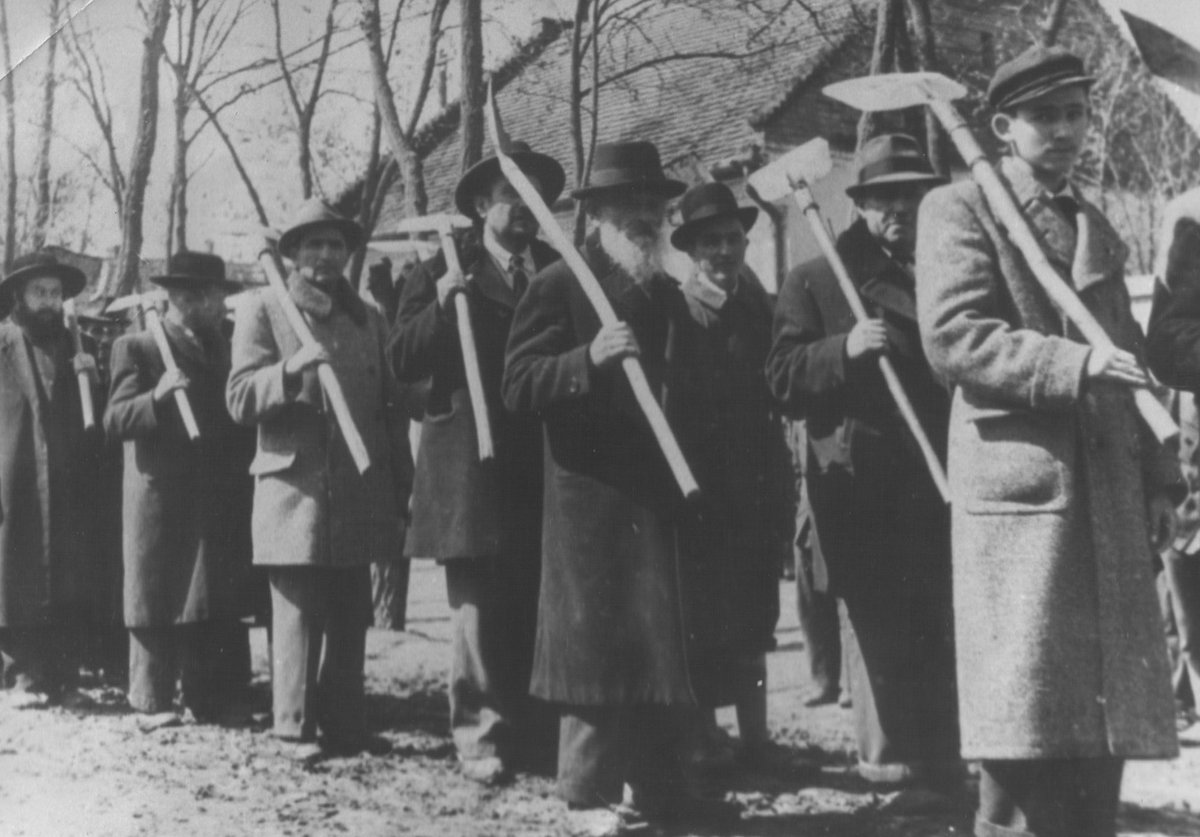
Jews from Senta, Serbia (1941-1944 under special administration by local German population), photographed on their way to perform forced labour. Roughly May 1941.
Courtesy of Museum of Yugoslavia.🔽
Inv. No. 7746
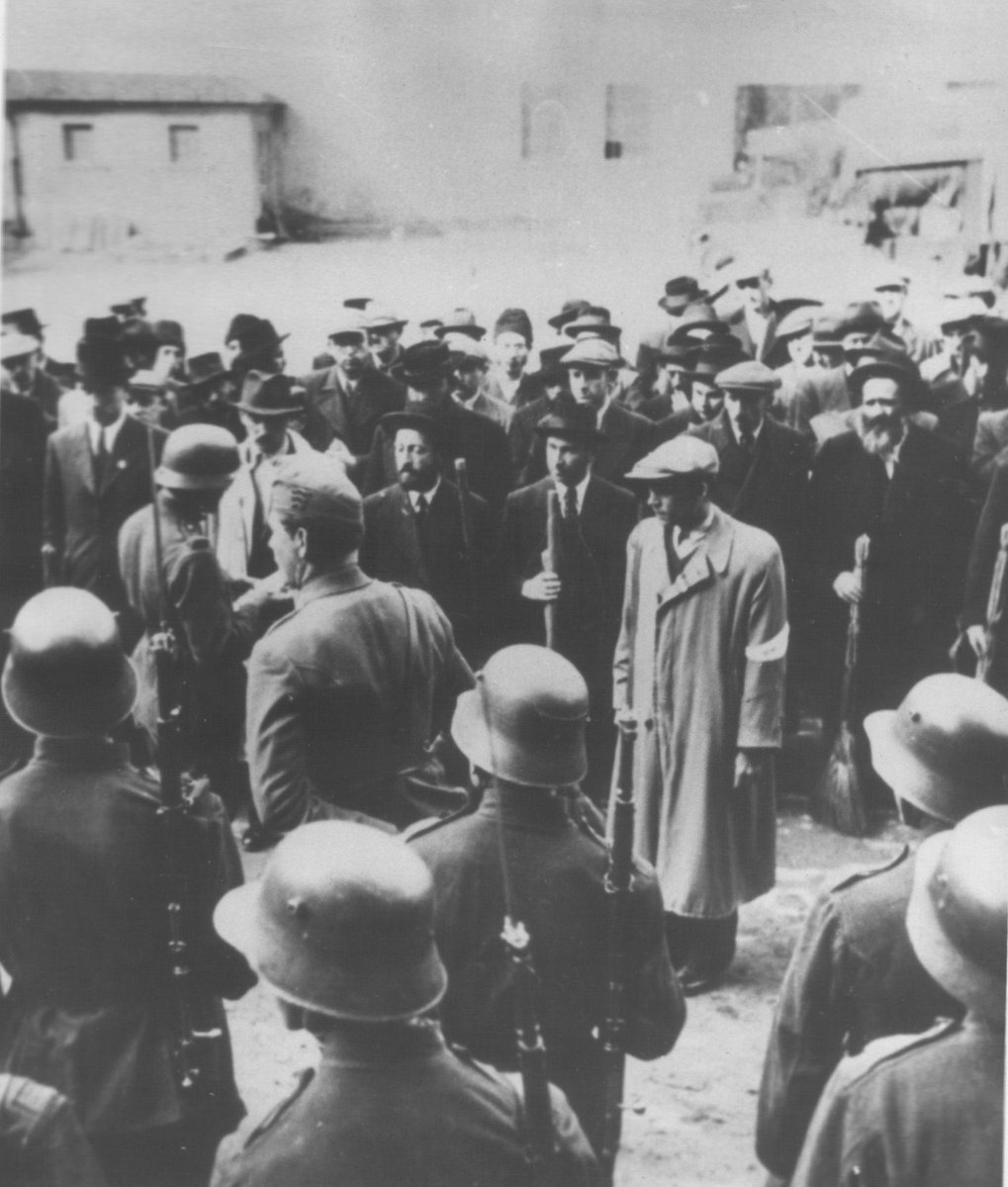
A group of Jews listening to their work orders, Senta, Serbia (1941-1944 under special administration by local German population). Roughly May 1941.
Courtesy of Museum of Yugoslavia.
Inv. No. 7747
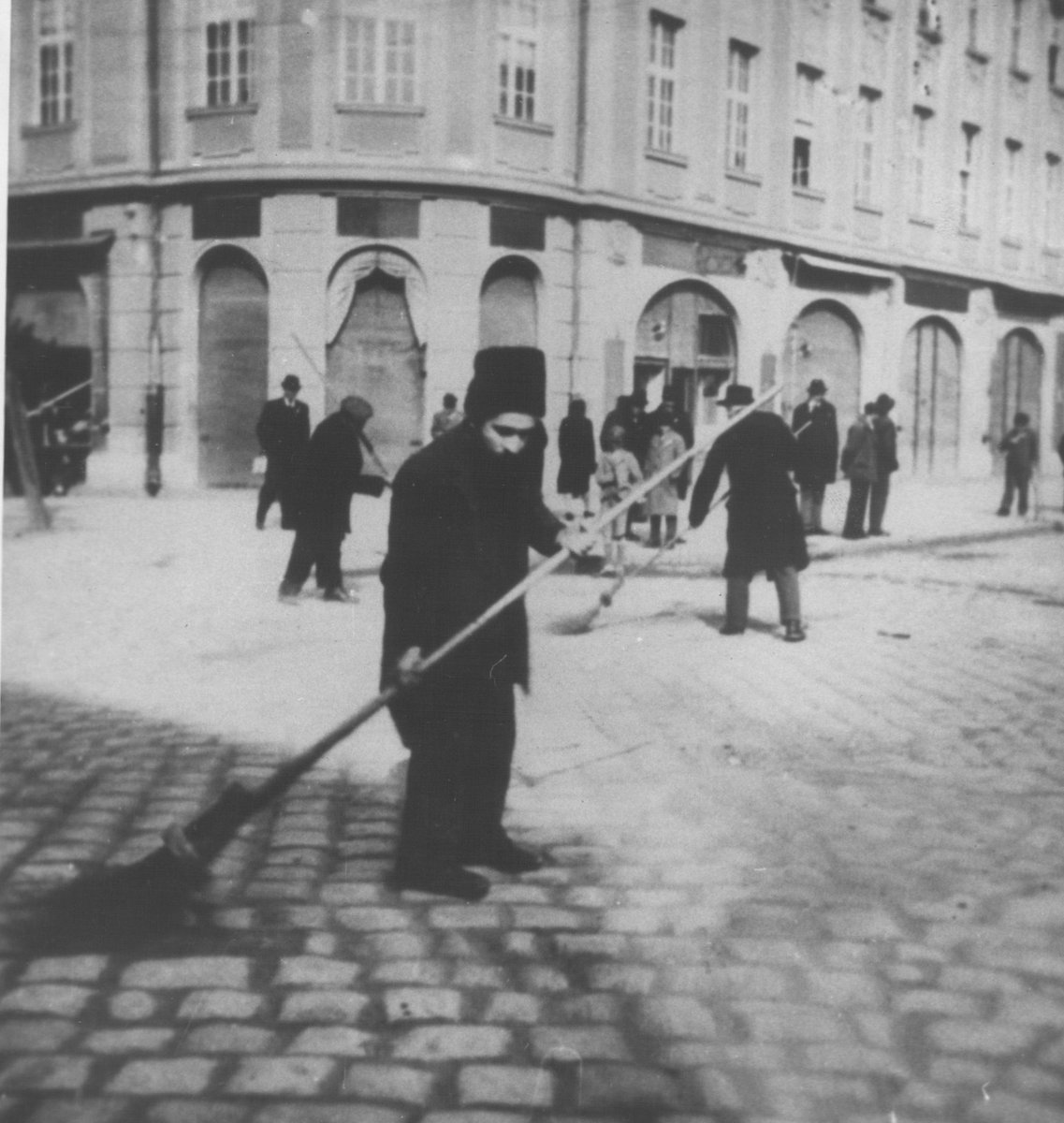
Jews being used as forced labour to clean streets, Senta, Serbia (1941-1944 under special administration by local German population). Roughly May 1941.