1
@almurray @WeHaveWaysPod it's time #FamilyHistoryFebruary and for the the second part of @jroche1001's retelling of his father Paddy's wartime naval exploits. Over to you Jim!
@almurray @WeHaveWaysPod it's time #FamilyHistoryFebruary and for the the second part of @jroche1001's retelling of his father Paddy's wartime naval exploits. Over to you Jim!
2
Yesterday, we left Paddy on board HMS Prince of Wales steaming towards a rendezvous with HMS Repulse, just south of Ceylon. The ship was badly designed and the heat below decks was intense, the Surgeon Commander limited shifts to two hours.
Yesterday, we left Paddy on board HMS Prince of Wales steaming towards a rendezvous with HMS Repulse, just south of Ceylon. The ship was badly designed and the heat below decks was intense, the Surgeon Commander limited shifts to two hours.
3
Paddy recalled that the stokers would work naked and emerge from the Engine Room exhausted after only two hours and collapse around the hatch to sleep. As a boy, he showed me how to keep a water bottle cold by putting it in a wet sock to cool from the evaporation.
Paddy recalled that the stokers would work naked and emerge from the Engine Room exhausted after only two hours and collapse around the hatch to sleep. As a boy, he showed me how to keep a water bottle cold by putting it in a wet sock to cool from the evaporation.
4
On December 2nd the Force entered the Straits of Johore and docked at Singapore’s naval base. Days later Japan declared war on 7th December 1941.
On December 2nd the Force entered the Straits of Johore and docked at Singapore’s naval base. Days later Japan declared war on 7th December 1941.
5
At 17.35 hours on December 8th, Prince of Wales and Repulse in company with the Destroyers, Tenedos, Electra, Express and HMAS Vampire left Singapore to intercept a reported Japanese invasion fleet.
At 17.35 hours on December 8th, Prince of Wales and Repulse in company with the Destroyers, Tenedos, Electra, Express and HMAS Vampire left Singapore to intercept a reported Japanese invasion fleet.
6
On 10th December 1941, in the South China Sea, the Japanese attacked with an unexpected force of torpedo bombers.
Prince of Wales was steaming at 25 knots when nine Japanese Betty bombers appeared low on her port bow. In moments they’d released their torpedoes.
On 10th December 1941, in the South China Sea, the Japanese attacked with an unexpected force of torpedo bombers.
Prince of Wales was steaming at 25 knots when nine Japanese Betty bombers appeared low on her port bow. In moments they’d released their torpedoes.
7
The Battleship’s crew shifted from the 5.25 secondary armament barrage to small arms rapid fire. the noise was deafening, reaching a crescendo as the planes flew within feet of the guard-rails.
Men on the upper deck watched in horror as the tracks of the torpedoes closed in.
The Battleship’s crew shifted from the 5.25 secondary armament barrage to small arms rapid fire. the noise was deafening, reaching a crescendo as the planes flew within feet of the guard-rails.
Men on the upper deck watched in horror as the tracks of the torpedoes closed in.
8
Suddenly there was a tremendous explosion, eyewitness accounts recall the forward motion of the ship was almost stopped by the force of this detonation; many believed the battleship to have been thrown in the air.
Suddenly there was a tremendous explosion, eyewitness accounts recall the forward motion of the ship was almost stopped by the force of this detonation; many believed the battleship to have been thrown in the air.
9
Within seconds the Prince of Wales took on a list of 11 degrees her speed fell to 15 knots, with both her steering gear and main electrical systems fatally damaged, she could no-longer manoeuvre with any degree of control.
Within seconds the Prince of Wales took on a list of 11 degrees her speed fell to 15 knots, with both her steering gear and main electrical systems fatally damaged, she could no-longer manoeuvre with any degree of control.
10
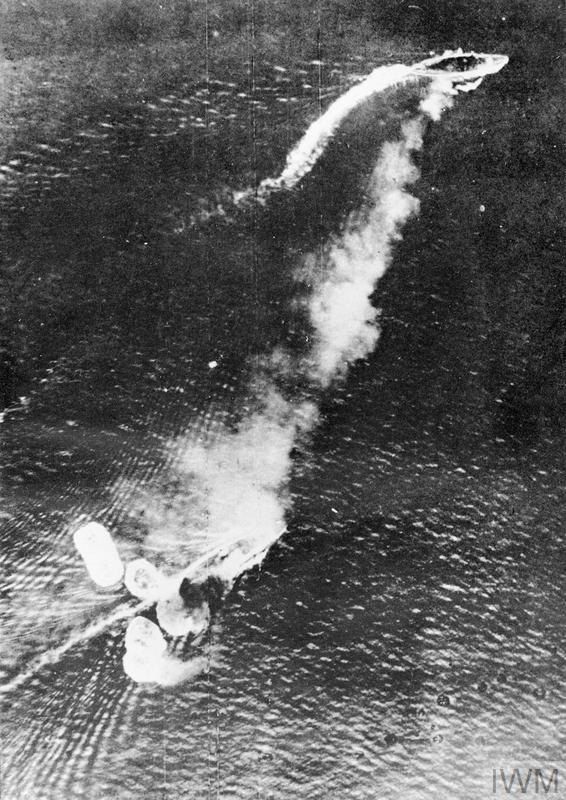
A Japanese aerial photograph showing HMS PRINCE OF WALES (top) and HMS REPULSE during the early stages of the attack in which they were sunk. HMS REPULSE had just been hit for the first time (12.20 hours).
A Japanese aerial photograph showing HMS PRINCE OF WALES (top) and HMS REPULSE during the early stages of the attack in which they were sunk. HMS REPULSE had just been hit for the first time (12.20 hours).
11
Paddy’s Action Station was in a Damage Control centre between the two propeller shafts when the torpedo hit.
The result of this initial strike was severe vibrations caused by a buckled propeller shaft that damaged all of the watertight shaft seals.
Paddy’s Action Station was in a Damage Control centre between the two propeller shafts when the torpedo hit.
The result of this initial strike was severe vibrations caused by a buckled propeller shaft that damaged all of the watertight shaft seals.
12
As direct result of the stern torpedo hit the Prince of Wales took on more than 18,000 tons of water. The weakness caused by the bomb damage from Birkenhead probably caused this.
As direct result of the stern torpedo hit the Prince of Wales took on more than 18,000 tons of water. The weakness caused by the bomb damage from Birkenhead probably caused this.
13
The ‘wall’ of Paddy’s control centre began to buckle inward from the increased water pressure in the propeller tube. As their officer had already deserted his Action Station, leaving the men alone, Paddy decided it was time to leave.
The ‘wall’ of Paddy’s control centre began to buckle inward from the increased water pressure in the propeller tube. As their officer had already deserted his Action Station, leaving the men alone, Paddy decided it was time to leave.
14
While on the upper deck, Paddy was lucky to be able to jump for cover between the rails used to move the Walrus aircraft from its hanger when he saw a bomb dropping.
He survived the explosion but others were killed by the blast.
While on the upper deck, Paddy was lucky to be able to jump for cover between the rails used to move the Walrus aircraft from its hanger when he saw a bomb dropping.
He survived the explosion but others were killed by the blast.
15
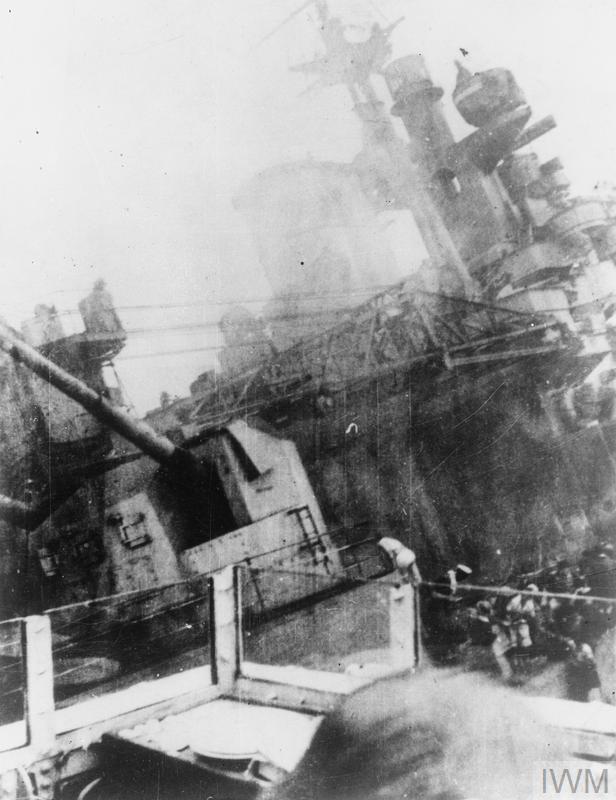
As the battleship was sinking, he went below to collect his money and the Bisley shooting medal he won during his training.
As the battleship was sinking, he went below to collect his money and the Bisley shooting medal he won during his training.
16
There was no electric power and all was in complete darkness. The deck was sloping and as he edged down the passageway and felt the water rising up his legs, he decided to go back up to the upper deck, Bisley medal or no.
There was no electric power and all was in complete darkness. The deck was sloping and as he edged down the passageway and felt the water rising up his legs, he decided to go back up to the upper deck, Bisley medal or no.
17
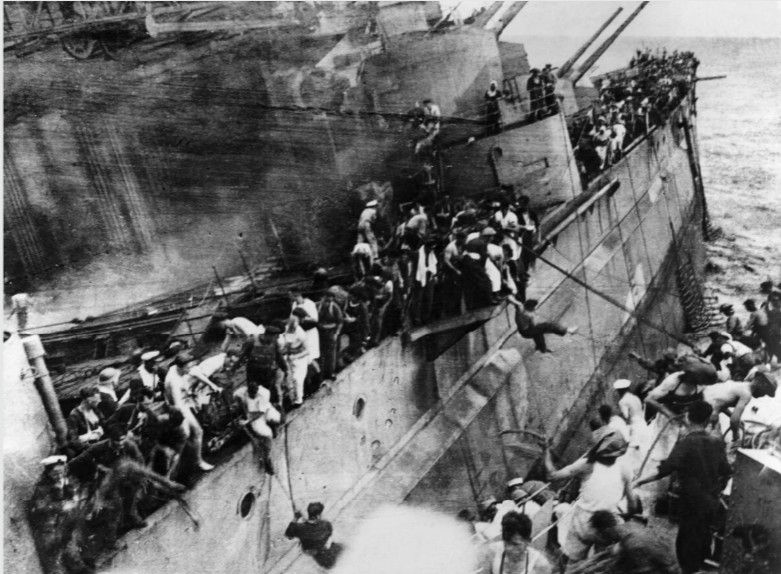
His Station for Abandon Ship was to man the scrambling nets near the bow and to release them before the ship went down, so as to avoid them floating out and entangling swimming sailors.
He misjudged this and became entangled in the wire cables after diving in.
His Station for Abandon Ship was to man the scrambling nets near the bow and to release them before the ship went down, so as to avoid them floating out and entangling swimming sailors.
He misjudged this and became entangled in the wire cables after diving in.
14
He was pulled down and described the warm tropical water becoming very cold and completely black.
Just before he ran out of breath, he struggled free of the scrambling net and swam to the surface. He was rescued by one of the Destroyer escorts and taken to Singapore.
He was pulled down and described the warm tropical water becoming very cold and completely black.
Just before he ran out of breath, he struggled free of the scrambling net and swam to the surface. He was rescued by one of the Destroyer escorts and taken to Singapore.
15
Few sailors escaped the fall of Singapore in February 1942. Paddy was lucky - he had learned how to handle an old-fashioned coal boiler during his training. When the call went out ‘Are there any Stokers who know how to serve a coal-fired ship?’ he was able to say YES!
Few sailors escaped the fall of Singapore in February 1942. Paddy was lucky - he had learned how to handle an old-fashioned coal boiler during his training. When the call went out ‘Are there any Stokers who know how to serve a coal-fired ship?’ he was able to say YES!
16
He was put on one of the last old steamers as it left Singapore with civilian and military evacuees just before the surrender and went to Australia.
He was put on one of the last old steamers as it left Singapore with civilian and military evacuees just before the surrender and went to Australia.
17
In Australia, Paddy served as an instructor, training the new volunteers for the Royal Australian Navy. He told me that he would advise the officers ‘that isn’t how we do things in the Royal Navy sir’.
In Australia, Paddy served as an instructor, training the new volunteers for the Royal Australian Navy. He told me that he would advise the officers ‘that isn’t how we do things in the Royal Navy sir’.
18
He returned to Rosyth and spent some time on HMS Diomede training sailors for the invasion of Europe. He hoped he might see out the rest of the war there - it was not to be.
He returned to Rosyth and spent some time on HMS Diomede training sailors for the invasion of Europe. He hoped he might see out the rest of the war there - it was not to be.
19
He was posted to LST 3009 which was destined to the Pacific to fight the Japanese. A Landing Ship Tank could carry eighteen Shermans and more than an infantry Company. Paddy was one of the most experienced sailors aboard.
He was posted to LST 3009 which was destined to the Pacific to fight the Japanese. A Landing Ship Tank could carry eighteen Shermans and more than an infantry Company. Paddy was one of the most experienced sailors aboard.
20
The LSTs were to land on Japanese-held islands. The process involved dropping a kedge anchor on the run-in to the shore, the bow doors opened and the tanks were landed. Then the lightened LST could pull herself back to sea, using the kedge anchor and winches.
The LSTs were to land on Japanese-held islands. The process involved dropping a kedge anchor on the run-in to the shore, the bow doors opened and the tanks were landed. Then the lightened LST could pull herself back to sea, using the kedge anchor and winches.
21
LST 3009 was readied for a landing, with tanks and infantry on board when the Japanese surrendered, following the A-Bombs. The authorities decided that the landing should go ahead anyway, so as to unload the men and equipment to take control.
LST 3009 was readied for a landing, with tanks and infantry on board when the Japanese surrendered, following the A-Bombs. The authorities decided that the landing should go ahead anyway, so as to unload the men and equipment to take control.
22
This could have gone badly wrong for LST 3009 if an opposed landing had occurred.
As planned, the ship ran out of momentum as she ran up the beach but then hit a palm tree which stopped the bow-doors opening.
This could have gone badly wrong for LST 3009 if an opposed landing had occurred.
As planned, the ship ran out of momentum as she ran up the beach but then hit a palm tree which stopped the bow-doors opening.
23
Because of the full load of tanks, she could not pull back on the kedge anchor.
Had the landing been opposed LST 3009 would have been a very large target under fire and unable to move.
And I wouldn’t be here.
Because of the full load of tanks, she could not pull back on the kedge anchor.
Had the landing been opposed LST 3009 would have been a very large target under fire and unable to move.
And I wouldn’t be here.
24
After VJ Day, LST 3009 became involved in the transport of supplies and troops. These included Chinese soldiers, who were very unhappy when Paddy congratulated them while trying to pronounce Chiang Kai-shek...they were Communists loyal to Mao Tse Tung and were very displeased!
After VJ Day, LST 3009 became involved in the transport of supplies and troops. These included Chinese soldiers, who were very unhappy when Paddy congratulated them while trying to pronounce Chiang Kai-shek...they were Communists loyal to Mao Tse Tung and were very displeased!
25
Very few RN sailors were sunk by both Germans and Japanese, I’m willing to bet that, other than Paddy, no former IRA volunteers were sunk by both!
Very few RN sailors were sunk by both Germans and Japanese, I’m willing to bet that, other than Paddy, no former IRA volunteers were sunk by both!
You can also hear an audio version of Paddy's story in this episode of @WeHaveWaysPod's "Family Stories" series.
Also included is the story of my great granddad's POW experiences so you get two for the price of one!open.spotify.com/episode/6aUVzW…
Also included is the story of my great granddad's POW experiences so you get two for the price of one!open.spotify.com/episode/6aUVzW…
• • •
Missing some Tweet in this thread? You can try to
force a refresh