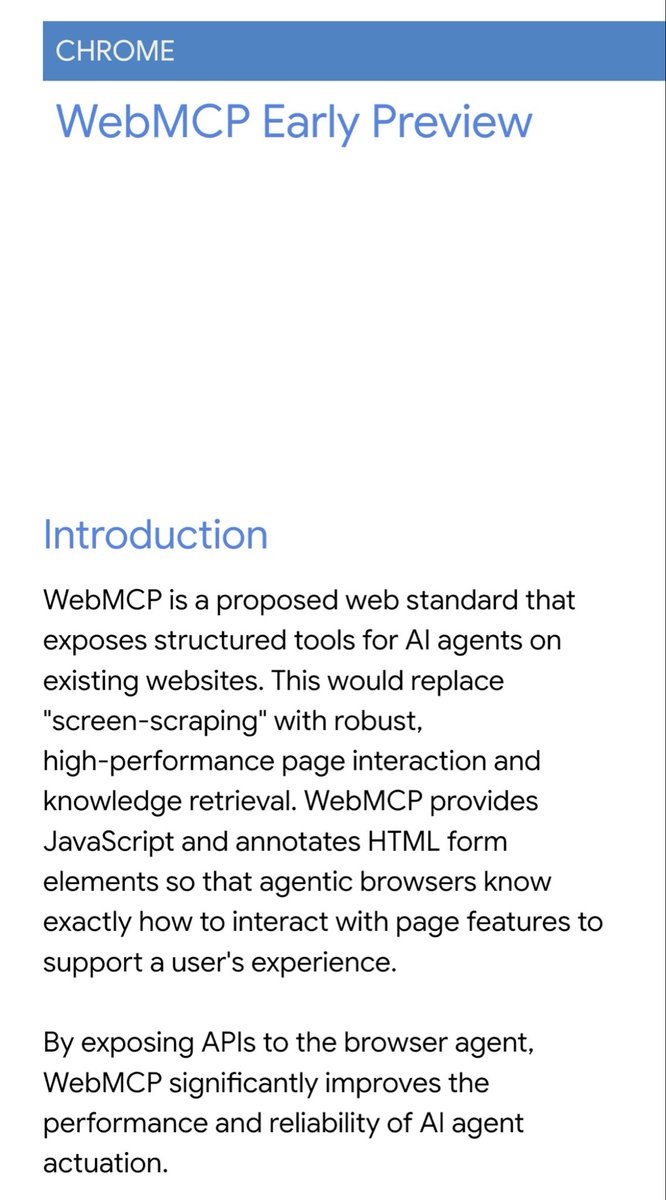
Chrome 146 includes an early preview of WebMCP, accessible via a flag, that lets AI agents query and execute services without browsing the web app like a user.
Services can be declared through an imperative navigator.modelContext API or declaratively through a form.
A month ago, a member of the Safari/WebKit family, invite the community to ask questions. Can you guess how many questions were answered before, during, and after WWDC? +
Yes! You are right. 🤨
277 questions with the WebKit tag are published (a lot of them were posted a year before this tweet, and most of them still have no answer)
75 with Safari DevTools tag
63 with Safari tag
+
Why do you invite the community to ask questions you won't answer? Not during WWDC, not on Twitter, not on the forum in the "ask a question" section?
That's the contrary of developer or community relations.
+
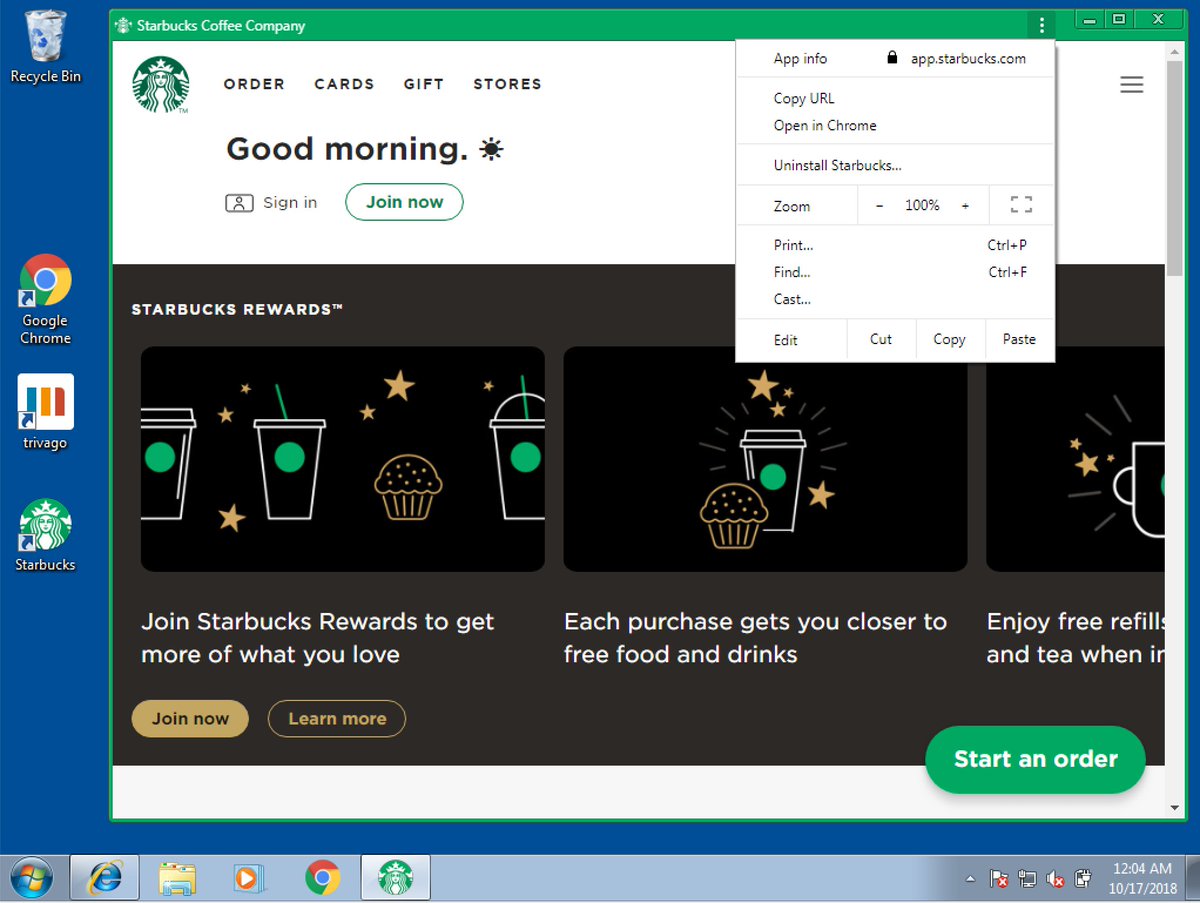
Starting with Chrome 70, PWAs are fully installable on Windows. Just look for the "Install <app-name>" menu item after 1/2 seconds from the page load. Fortunately, Chrome is using the verb "Install" and not "Add" as on Android on that menu. Thread ⏬
Most reports only talk about Windows 10 compatibility, but it works as well on Windows 7 and Windows 8.x. Chrome is not available as a universal app, so PWA installation won't be available on the mobile Windows versions, Windows 8 RT or Windows 10S.
The experience has a very similar UX than the one on Chrome 67+ for Chromebooks. Each standalone PWA gets its own themed window with document's current title, permissions and a drop-down menu to access website info (such as the SSL certificate) and "Open in Chrome."