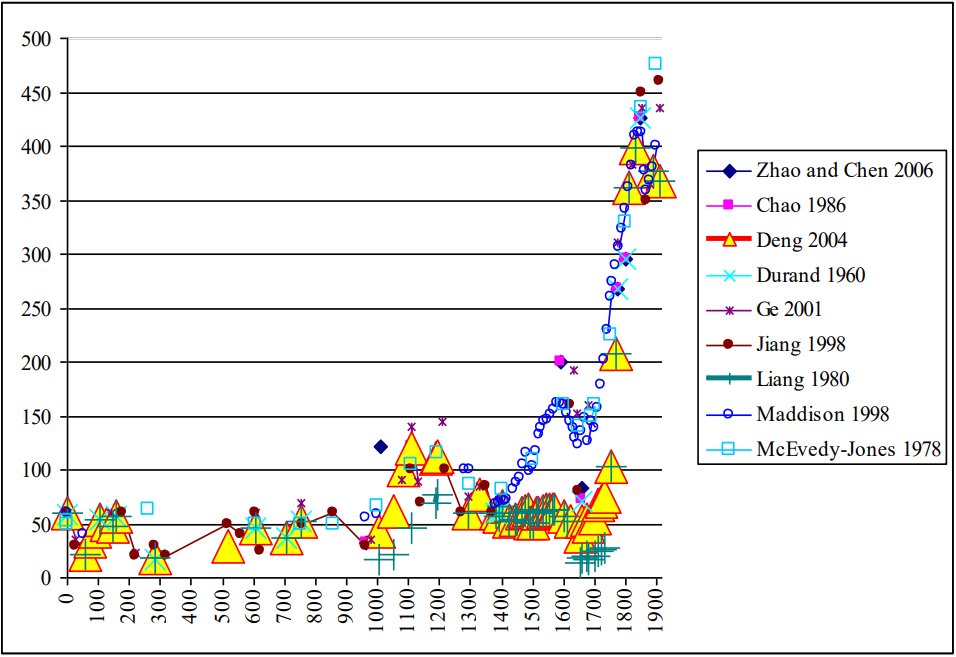
Under the Qing dynasty, China experienced a massive expansion in population, growing from 50-150 million persons in the Ming Era to around 400 million by the mid 19th century.
The main reasons for this extraordinary expansion🧵
Was first its military expansion, by 1760, the Qing, under the "Ten Great Campaigns of conquest," had incorporated a massive amount of new land.
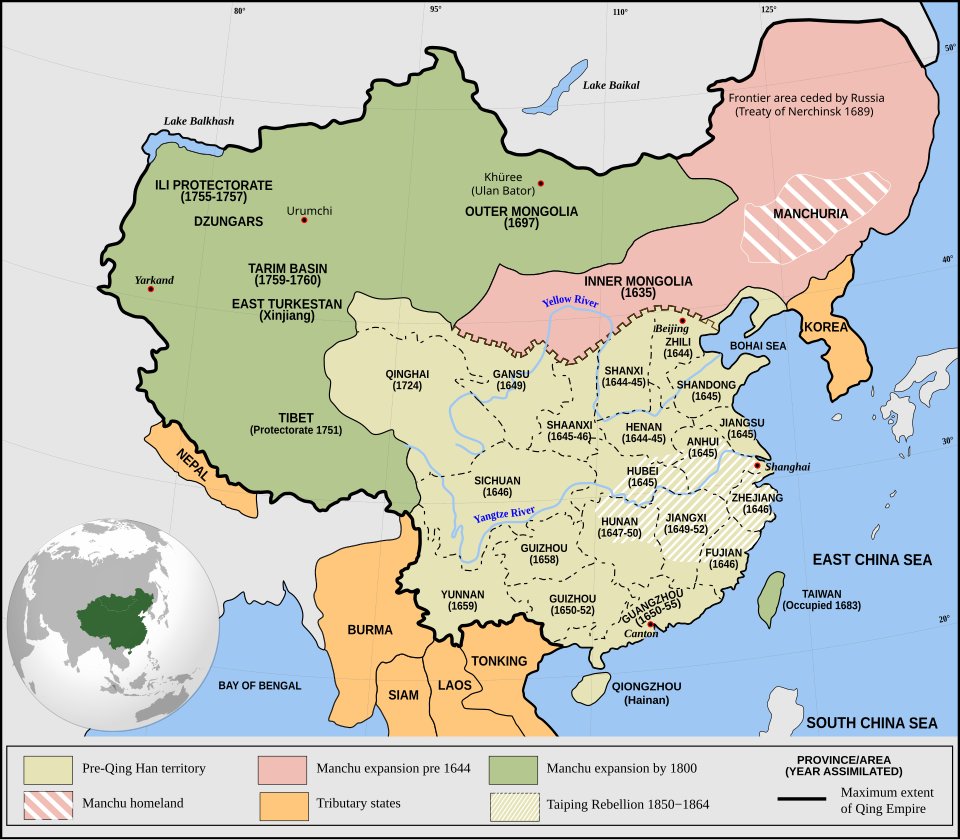
In the following decades, a mass movement of Han people into this new farmland significantly expanded agricultural production.
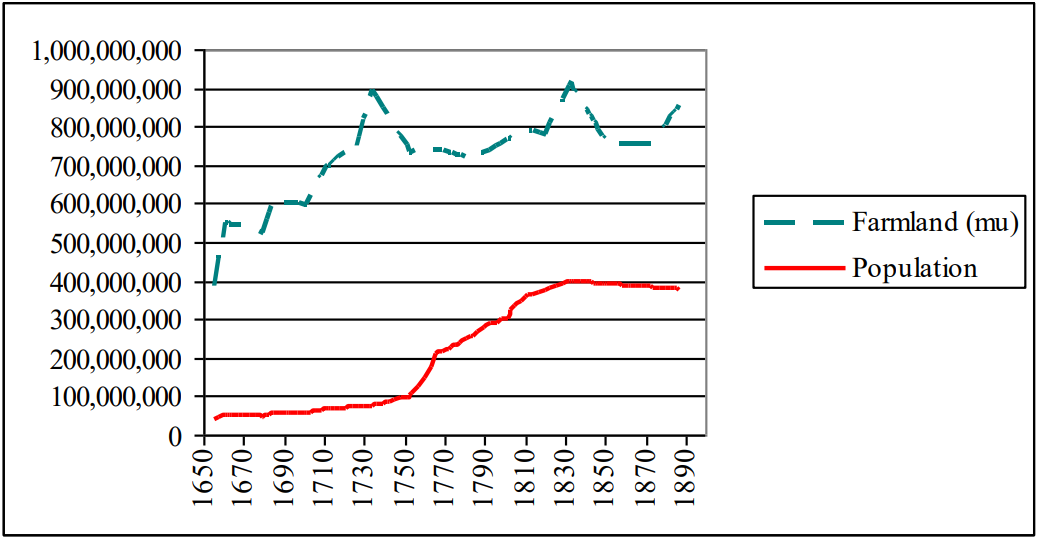
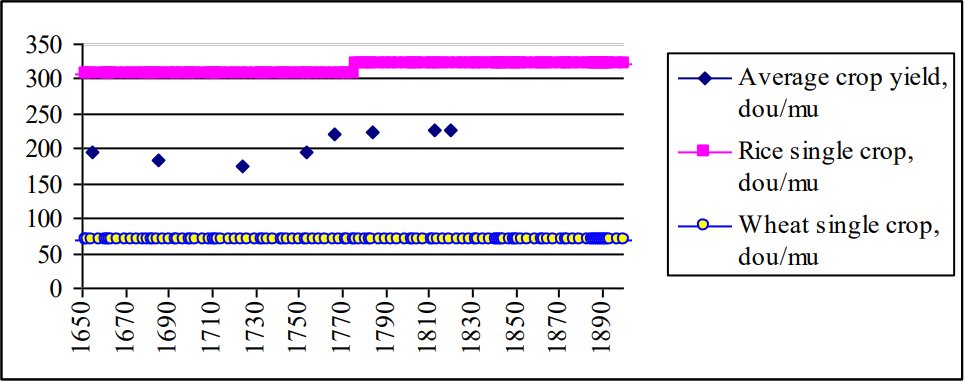
Another equally important factor is an increase in crop yields.
Data on rice yields shows a slight improvement over time, but a far greater factor is the introduction of new world crops into China.
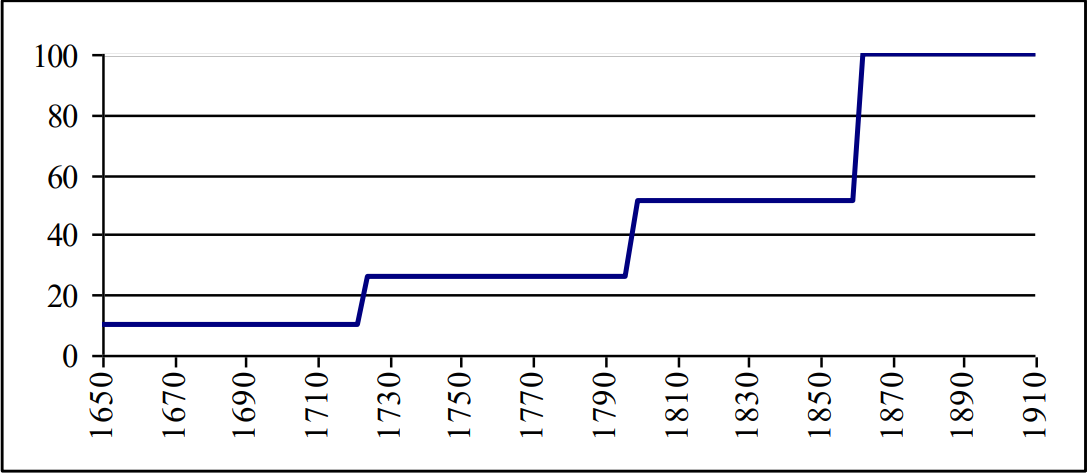
Qing data from over 1300 counties relating to whatever maize is grown in the county allows us to map the spread of New World crops in China.
From the end of the Ming to mid 19th century, maize went from being utilized in 10% of counties to all counties.
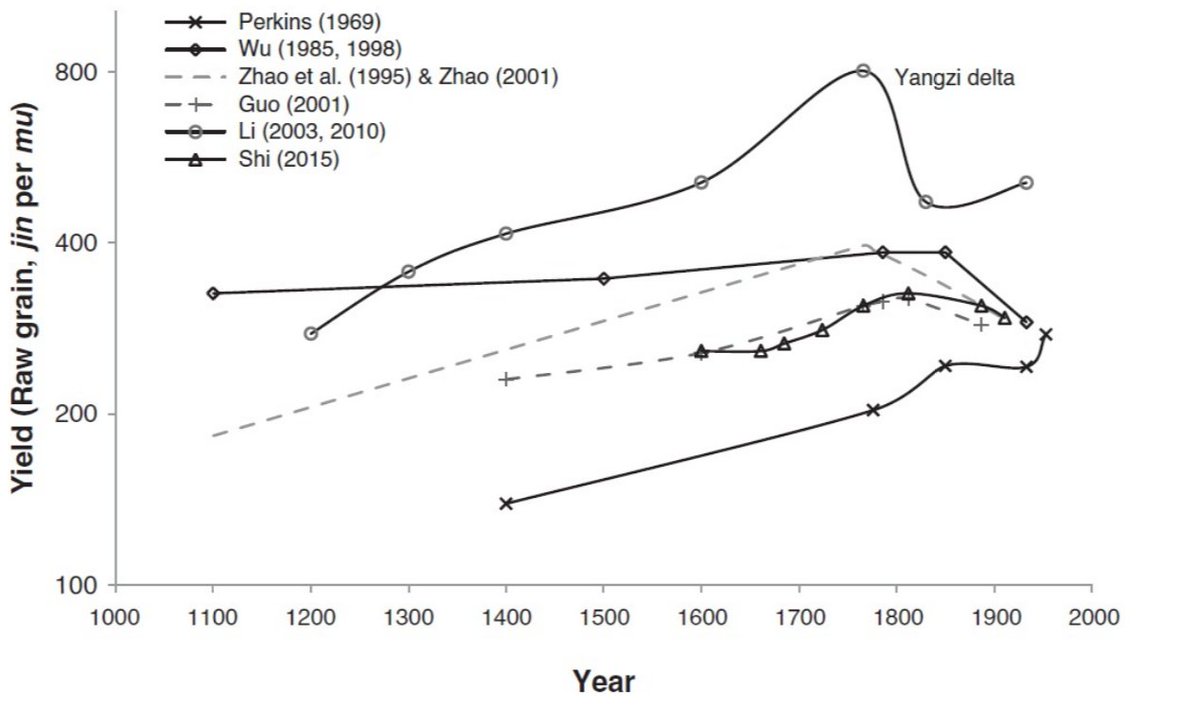
Consequantly multiple studies indicate a significant increase in crop yields per mu of land over this period.
Another possible factor is a relative decline in the frequency of natural disasters.
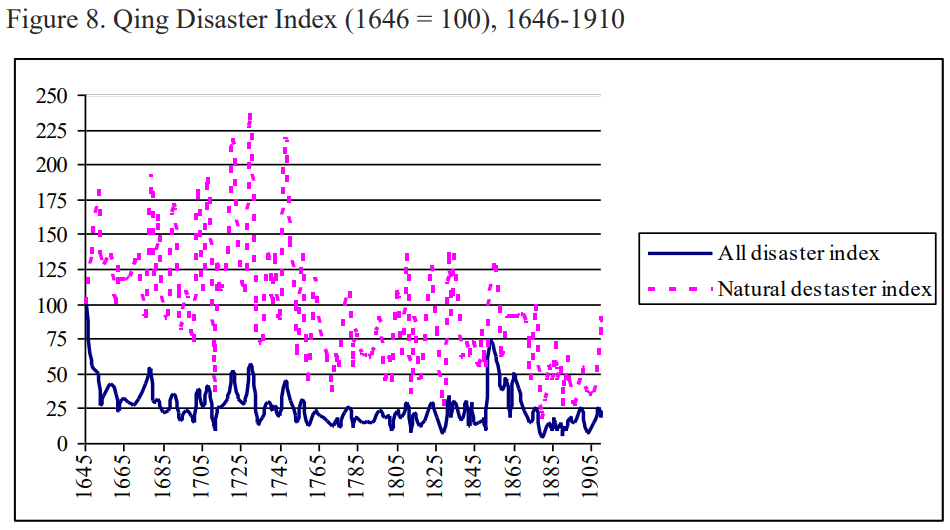
Interestingly, the combined effects of the decline in mortality due to the decrease in disasters and of the increase in population possibly meant that the situation in China was becoming more Malthusian, with per capita GDP declining toward subsistence.
Graphs from:
"China’s Extraordinary Population Expansion and Its Determinants during the Qing Period, 1644-1911" - Kent Deng.
And also from the Cambridge Economic History of China, vol 1
• • •
Missing some Tweet in this thread? You can try to
force a refresh

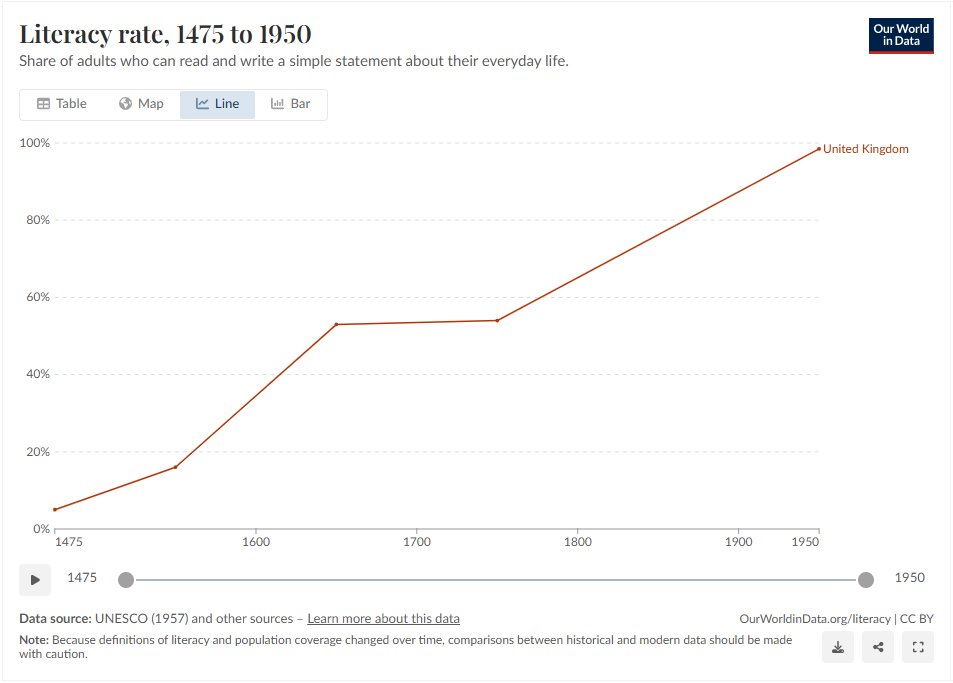
Between the late medieval era and 1800, literacy rates in Britain increased from 5% to over 60%.
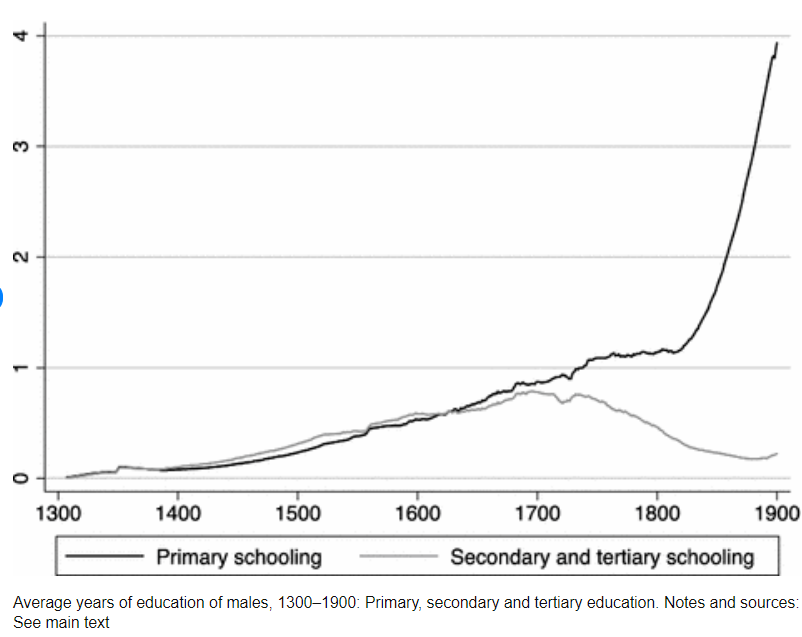
This happened despite virtually no state investment in Education in a bottom-up process motivated by individual interest in acquiring literacy and Protestant religious zeal in spreading it.
Before the mass establishment of a public education system, the average male during the early industrial revolution had, on average, 1 year of schooling.
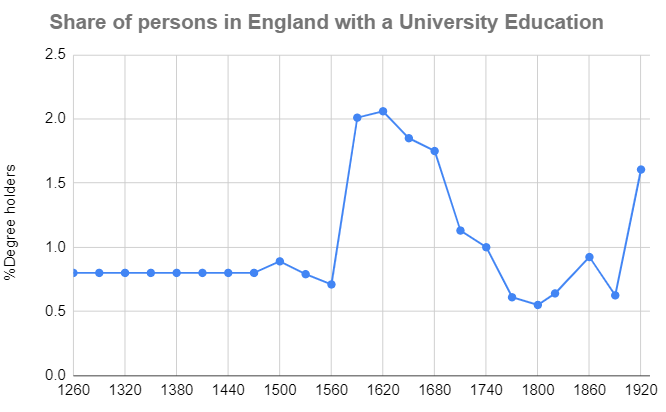
As far as higher learning, there were more men with a university degree in late medieval England than in early industrial-era England.
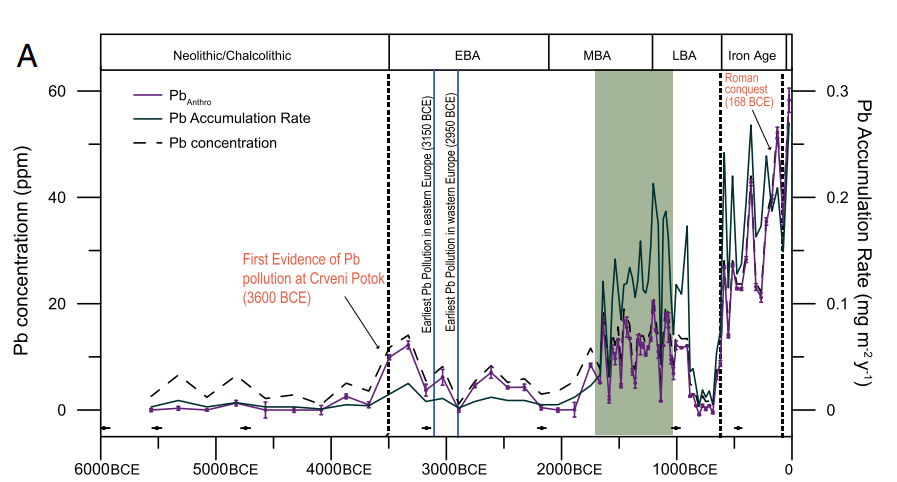
Mining first started in the 4th millennium BC and suffered major disruptions toward the end of Old Europe around 3000 BC and in the late Bronze Age with the collapse of Mycenaean civilization.
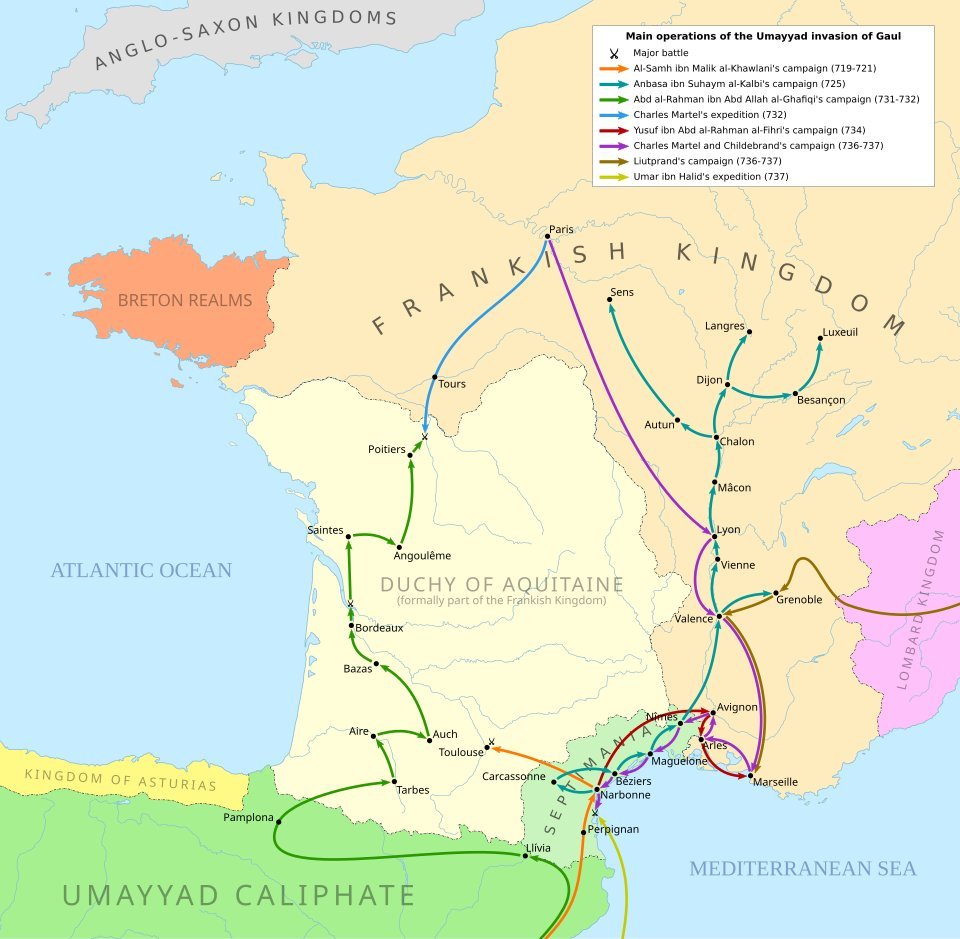
Unable to defend itself from Umayyad incursions, the independent Duchy of Aquitaine surrendered to Charles Martel, who turned back the Umayyad at the Battle of Tours.
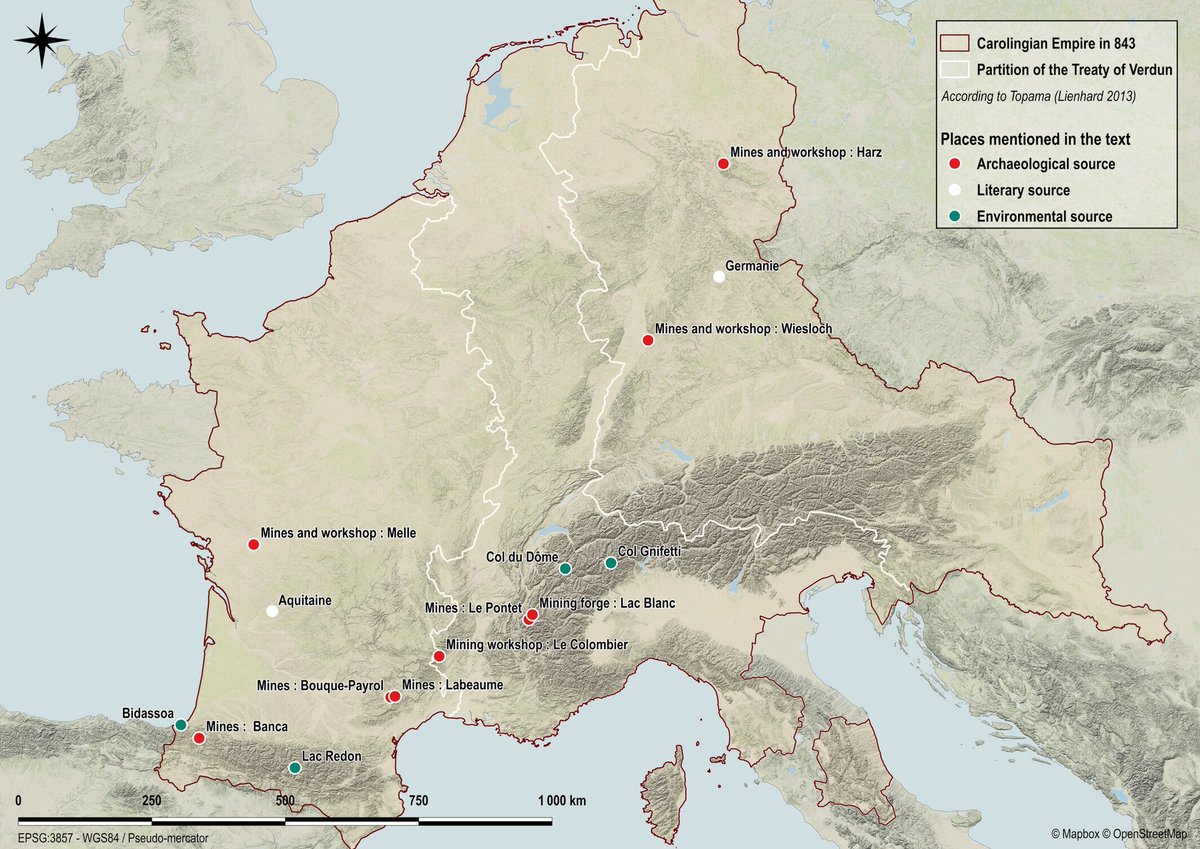
Aquitaine was worth to the Franks much more than the sum of its people; it contained valuable silver mines, in particular the Melle mines, which became the most productive source of silver in the Carolingian empire.
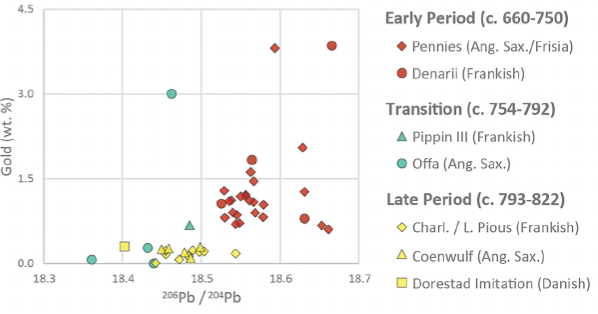
Isotope analysis of Carolingian coins shows that before the 750s, most of the silver in coinage came from recycled Byzantine silver, while afterwards most came from Frankish mines, with Melle supplying the largest share.
The mining work has created a network of over twenty kilometers of tunnels.
Melle silver is characterized by low gold content, while the opposite is true for Byzantine silver. Isotope analysis of north-west European coinage shows a decline of gold content in silver coinage, indicating a transition from Byzantine to Melle silver.
"A single mass killing of more than 140 children and over 200 camelids directed by the Chimú state, c. AD 1450."
Cuts transecting the child's sternum and displaced ribs suggests that "the chest had been cut open, perhaps to extract the heart." For most skeletons "No other evidence of perimortem trauma was observed" indicating the extraction of the heart was done on live victims.
As Spanish chronicler Cristóbal de Molina described "children had their live hearts taken out, and so the priests offered the beating hearts to the huacas to which the sacrifice was made."
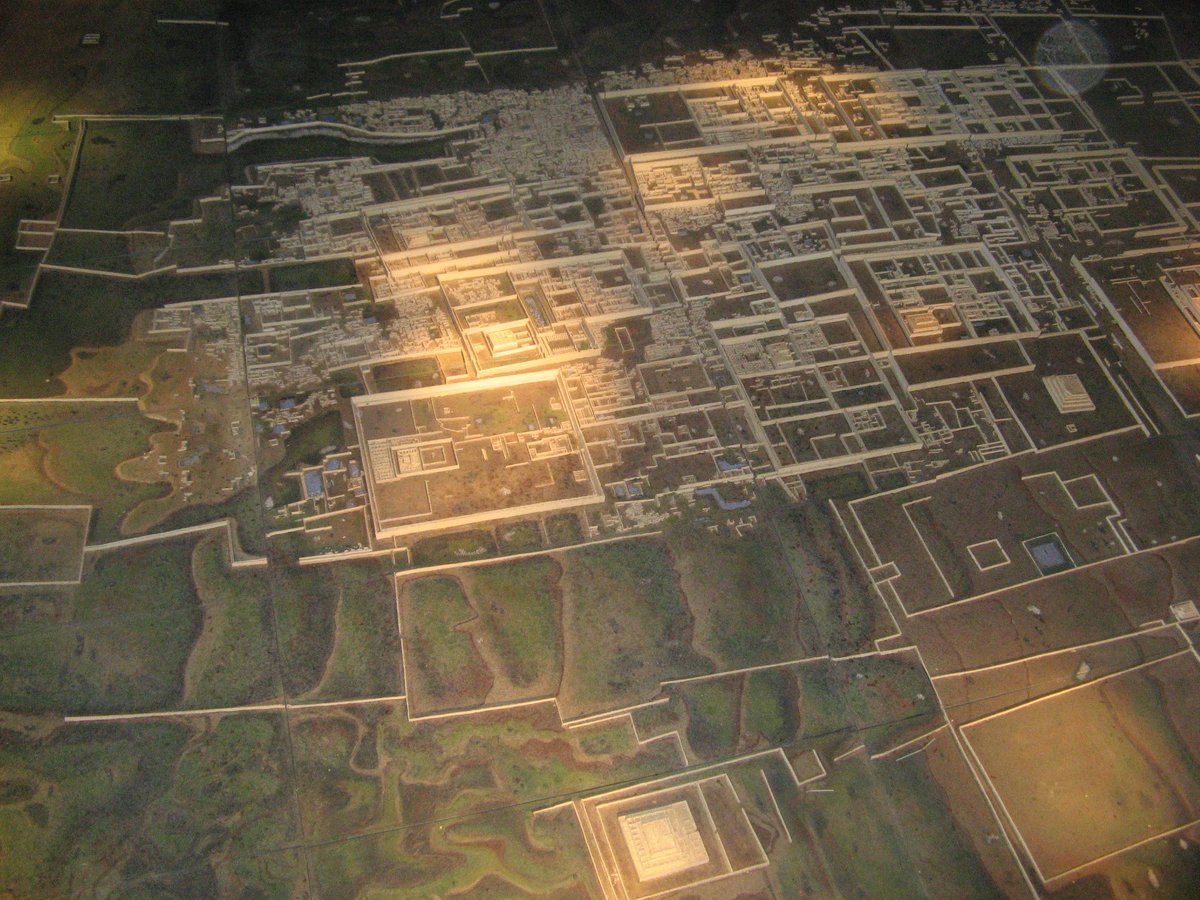
Children were brought from across the region to be sacrificed next to the Chimú capital.
"Variability in forms of cranial modification and stable isotope analysis of carbon and nitrogen suggest that the children were a heterogeneous sample drawn from multiple regions and ethnic groups throughout the Chimú state."
The sacrifice coincided with a major weather event, heavy rains and flooding carried a layer of mud on top of the burials in their aftermate, "it is tempting to hypothesize that the two wventa are associated"
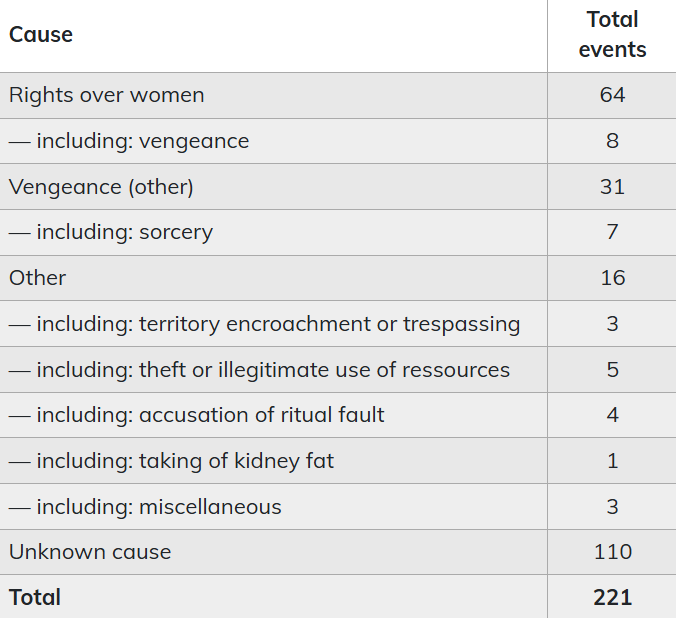
There is a notion that largely peaceful hunter-gatherers are pressed into violent conflict due to population pressure and resource scarcity, but if you check with HGs, 'why are they fighting?' They would often respond It's about Women and Vengeance.
In a sample of 111 conflicts between Australian aborigines whose proximate reason can be discerned, 58% were about Women, 28% were about revenge, and a minority were about territory or material plunder; "Territorial conflicts, if not totally absent, remain negligible: this motivation appears only in three occasions...The two main causes of conflicts are retaliation and, above all, rights over women."
When Napoleon Chagnon told the Yanomamo, a relatively war-like Amazon tribe, that American academics think that they fight over "game animals and meat," they laughed and responded: "We do like meat, we like women a whole lot more!"
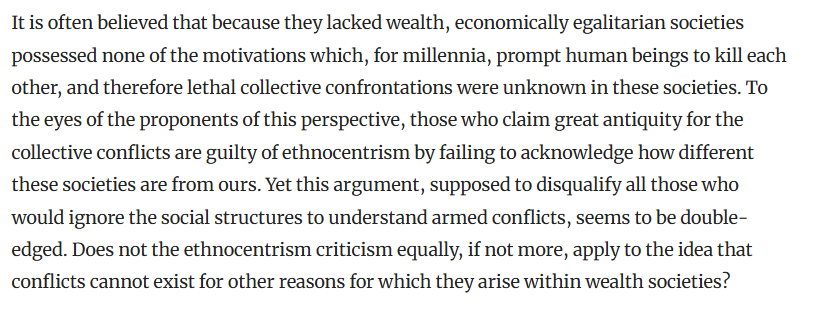
"It is often believed that because they lacked wealth, economically egalitarian societies possessed none of the motivations which, for millennia, prompt human beings to kill each other, and therefore lethal collective confrontations were unknown in these societies."
Rates of physical aggression in children tracked since infancy are highest in the youngest ages and then decline over time.
As Saint Augustine would put it: "The feebleness of infant limbs is innocent, not the infant’s mind. I have personally watched and studied a jealous baby. He could not yet speak and, pale with jealousy and bitterness, glared at his brother sharing his mother’s milk. Who is unaware of this fact of experience?"
There are also significant sex differences in physical aggression between girls (pink) and boys (blue) that are present since age 2.
"ten cohorts totaling 10,658 children were drawn from a national Canadian sample and followed longitudinally over 6 years" journals.uchicago.edu/doi/10.1086/71…