🚨New study finds #biochar made from bioenergy crops & residues in China could remove up to 1.88 GtCO₂/yr with optimized plant logistics and dedicated biomass.
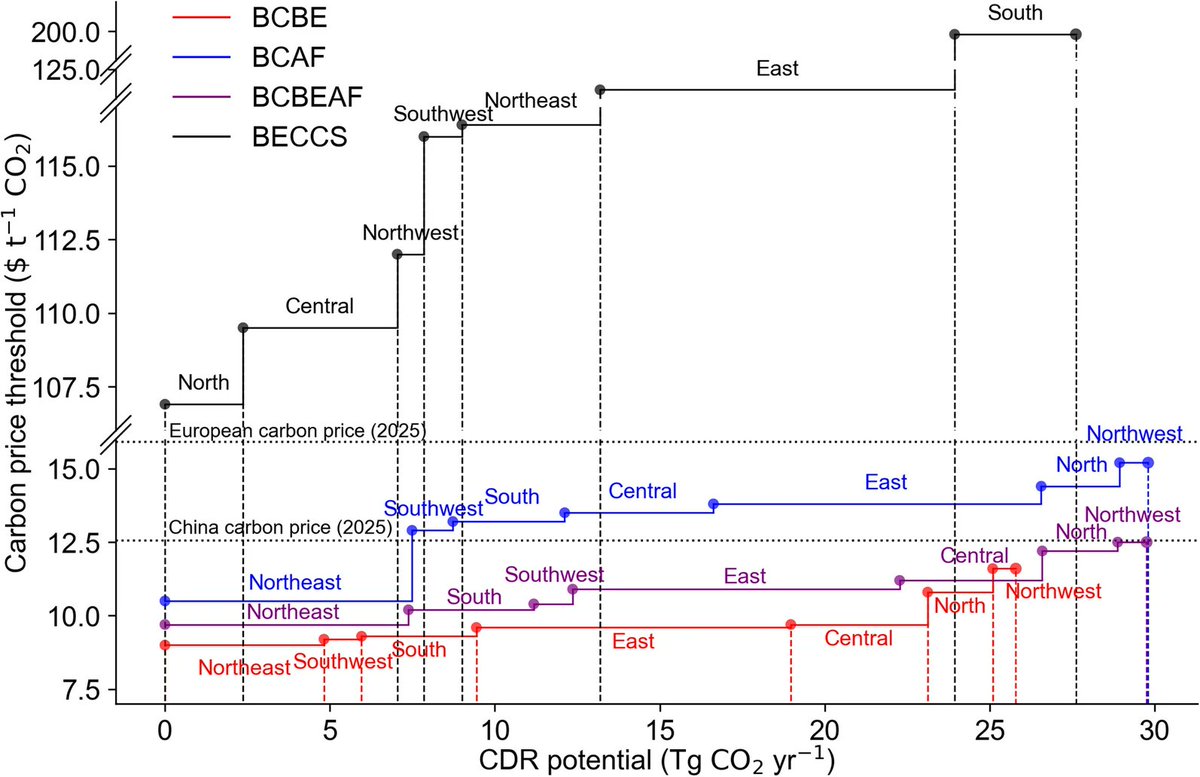
At ~$10/tCO₂, far cheaper than #BECCS, it offers a scalable, cost-effective carbon removal (#CDR) pathway.
🧵1/13
At ~$10/tCO₂, far cheaper than #BECCS, it offers a scalable, cost-effective carbon removal (#CDR) pathway.
🧵1/13
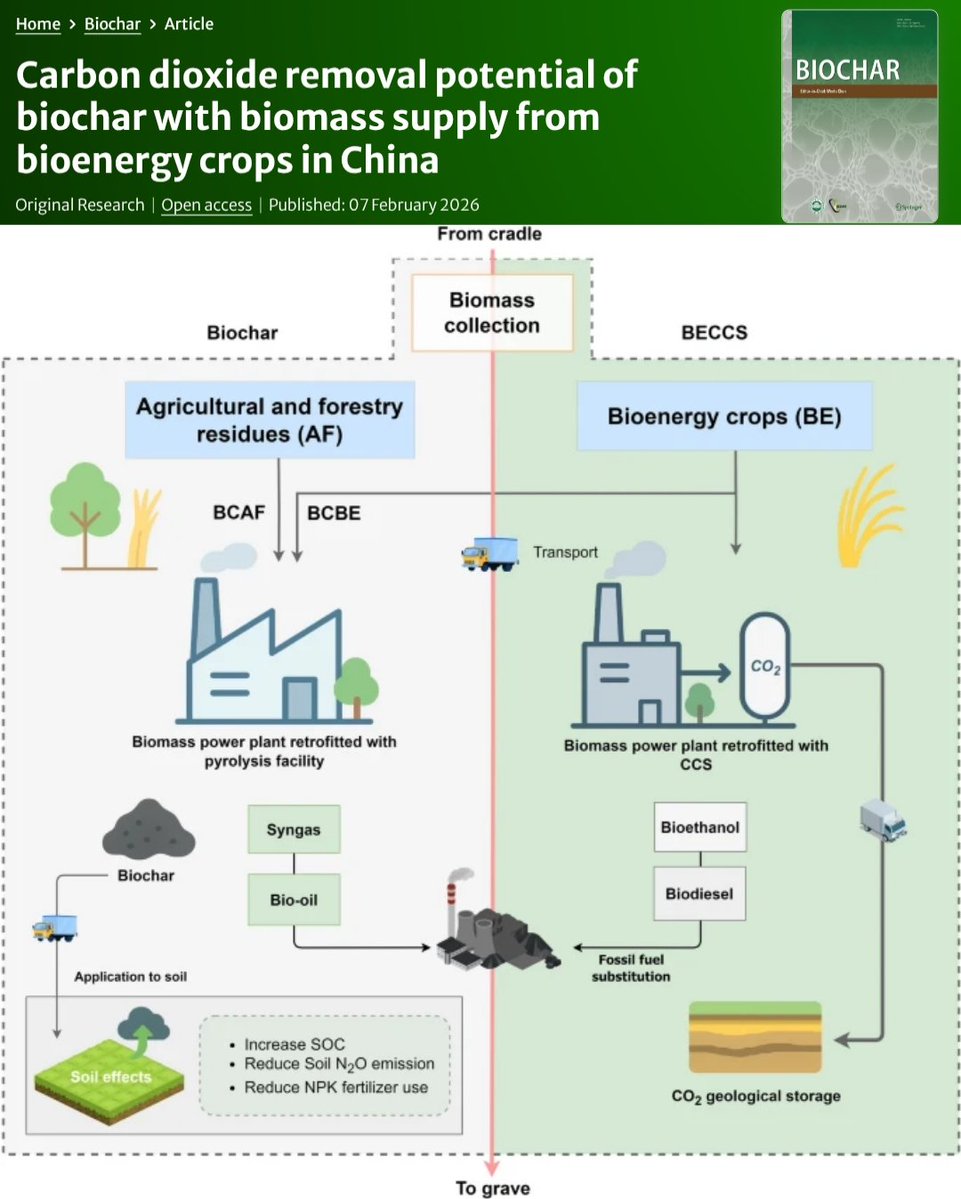
2/ Biochar, a carbon-rich solid produced by pyrolysis of biomass, locks carbon into soils for decades to centuries while improving soil quality and crop yields.
Its stability makes it a promising negative emissions technology (NET) relied on in climate scenarios.
Its stability makes it a promising negative emissions technology (NET) relied on in climate scenarios.
3/ The authors evaluate a hybrid system called BCBE, biochar production with biomass supply from dedicated bioenergy crops grown on abandoned cropland, plus agricultural and forestry residues.
This aims to reduce competition with food production.
This aims to reduce competition with food production.
4/ Under a realistic biomass supply assumption, 73% agricultural & 50% forestry residues or 84% bioenergy crops, the BCBE system can remove ~25.8 Tg CO₂/year (95 % CI: 23.6–32.4 Tg).
That’s similar to residue-only biochar (29.8 Tg).
That’s similar to residue-only biochar (29.8 Tg).
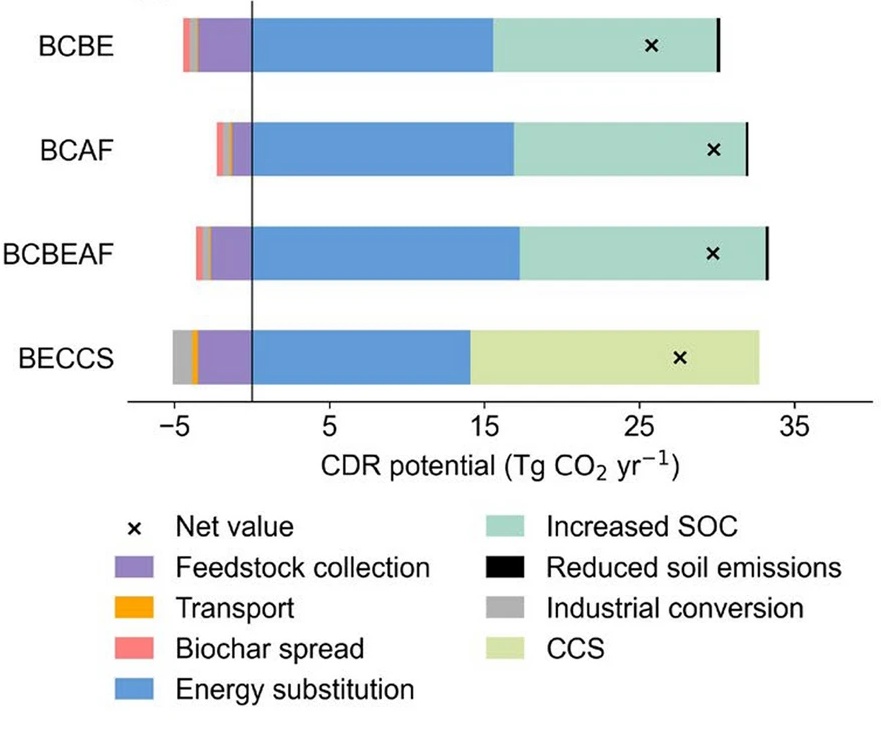
5/ Crucially, while BECCS (bioenergy with C capture & storage) can deliver higher gross removal, BCBE is vastly more economical:
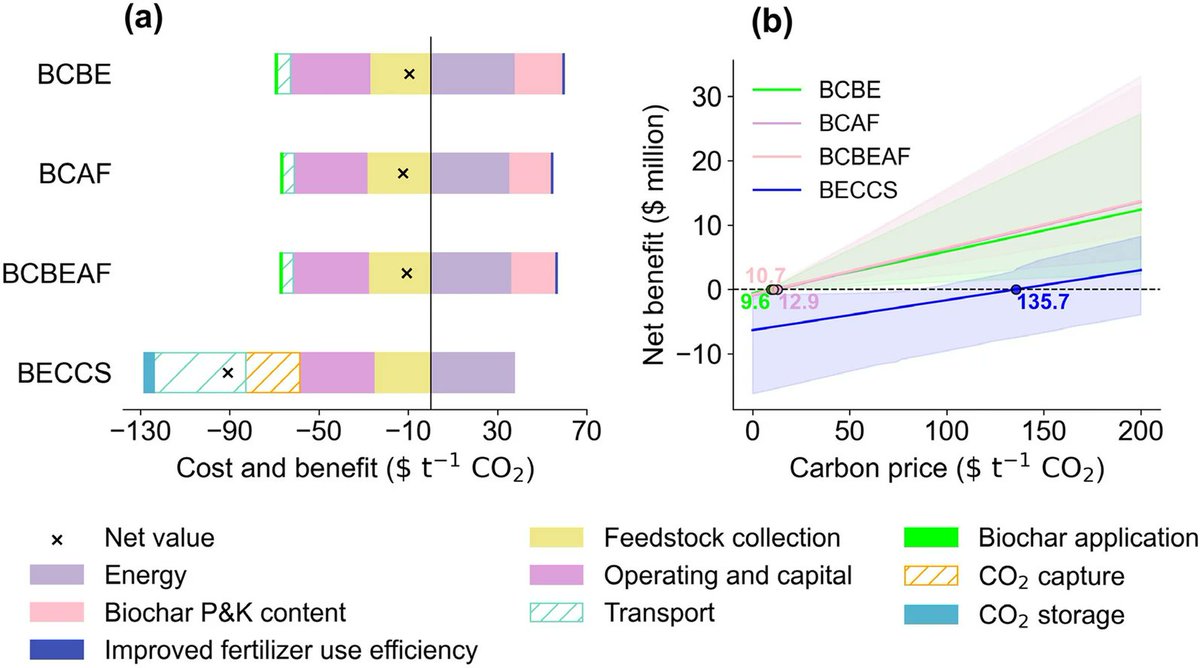
• BCBE removal cost: ~$9.6/tCO₂
• BECCS removal cost: ~$90.9/tCO₂
This magnitude difference helps explain real-world deployment feasibility.
• BCBE removal cost: ~$9.6/tCO₂
• BECCS removal cost: ~$90.9/tCO₂
This magnitude difference helps explain real-world deployment feasibility.
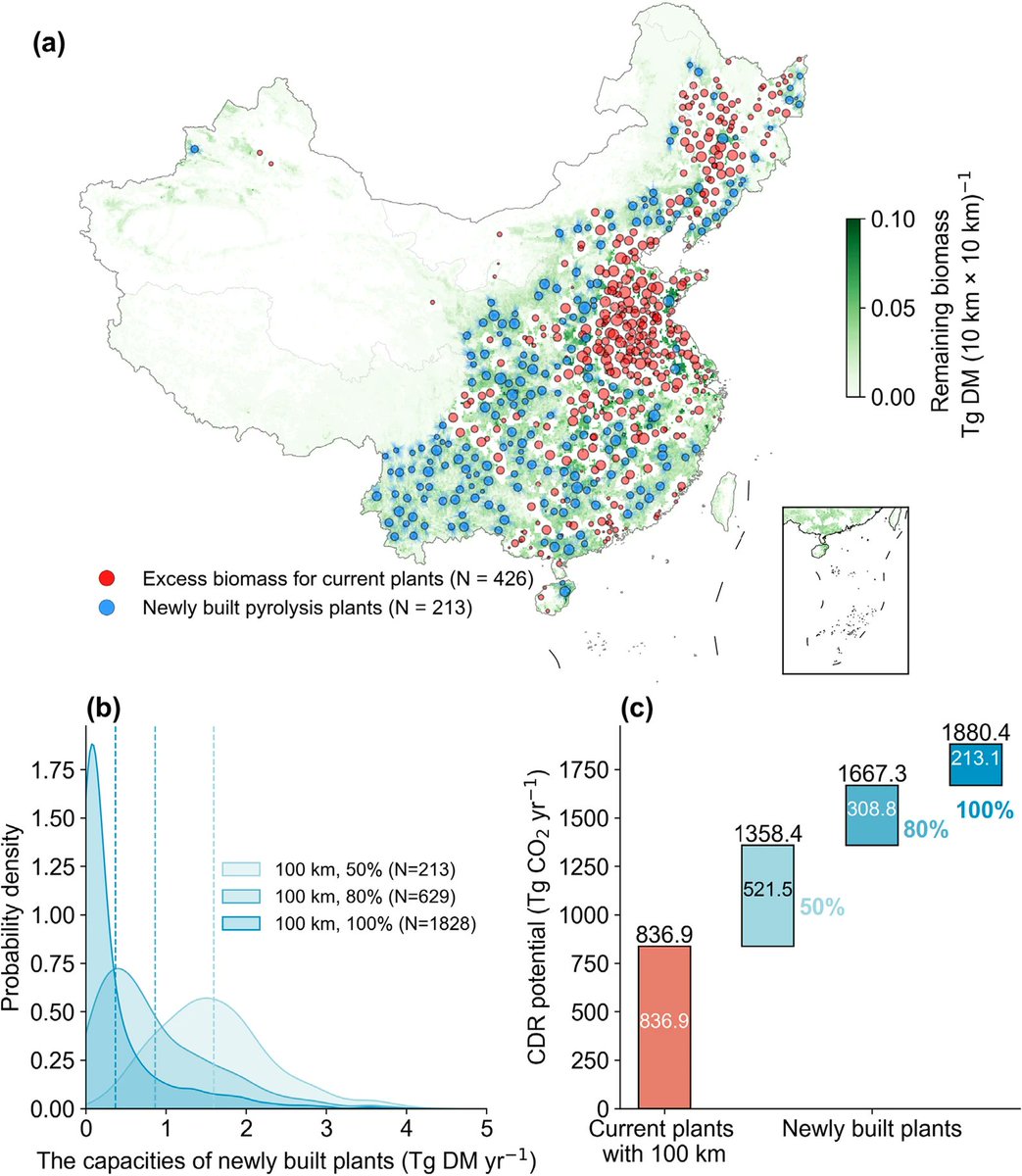
6/ When expanding beyond existing plant retrofits to include new pyrolysis plants supplied by both bioenergy crops and residues, the maximum sustainable CDR estimated is ~1880.4 Tg CO₂/year (≈1.88 Gt).
That’s on par with the scale of some national emissions totals.
That’s on par with the scale of some national emissions totals.
7/ Importance of this study:
Many climate pathways (e.g., limiting warming to ~1.5 °C) implicitly depend on multi-gigatonne CDR by mid-century, numbers that biochar could realistically contribute to alongside deep decarbonization.
Many climate pathways (e.g., limiting warming to ~1.5 °C) implicitly depend on multi-gigatonne CDR by mid-century, numbers that biochar could realistically contribute to alongside deep decarbonization.
8/ But the paper emphasizes constraints:
Biomass supply is not unlimited. Most residues are already used as fertilizer (43.2%), animal feed (18.8%) or fuel (11.4%), meaning biochar will increasingly rely on dedicated energy crops without competing with food.
Biomass supply is not unlimited. Most residues are already used as fertilizer (43.2%), animal feed (18.8%) or fuel (11.4%), meaning biochar will increasingly rely on dedicated energy crops without competing with food.
9/ Dedicated bioenergy crops such as miscanthus, switchgrass, and poplar can thrive on abandoned croplands, reducing land pressures, but they still require careful biomass chain logistics (transport networks, plant siting) to realize potentials.
10/ The authors argue that strategic retrofitting of 426 existing biomass power plants and targeted new pyrolysis facilities, optimized with real biomass supply routes, dramatically improves cost and carbon effectiveness compared to prior top-down estimates.
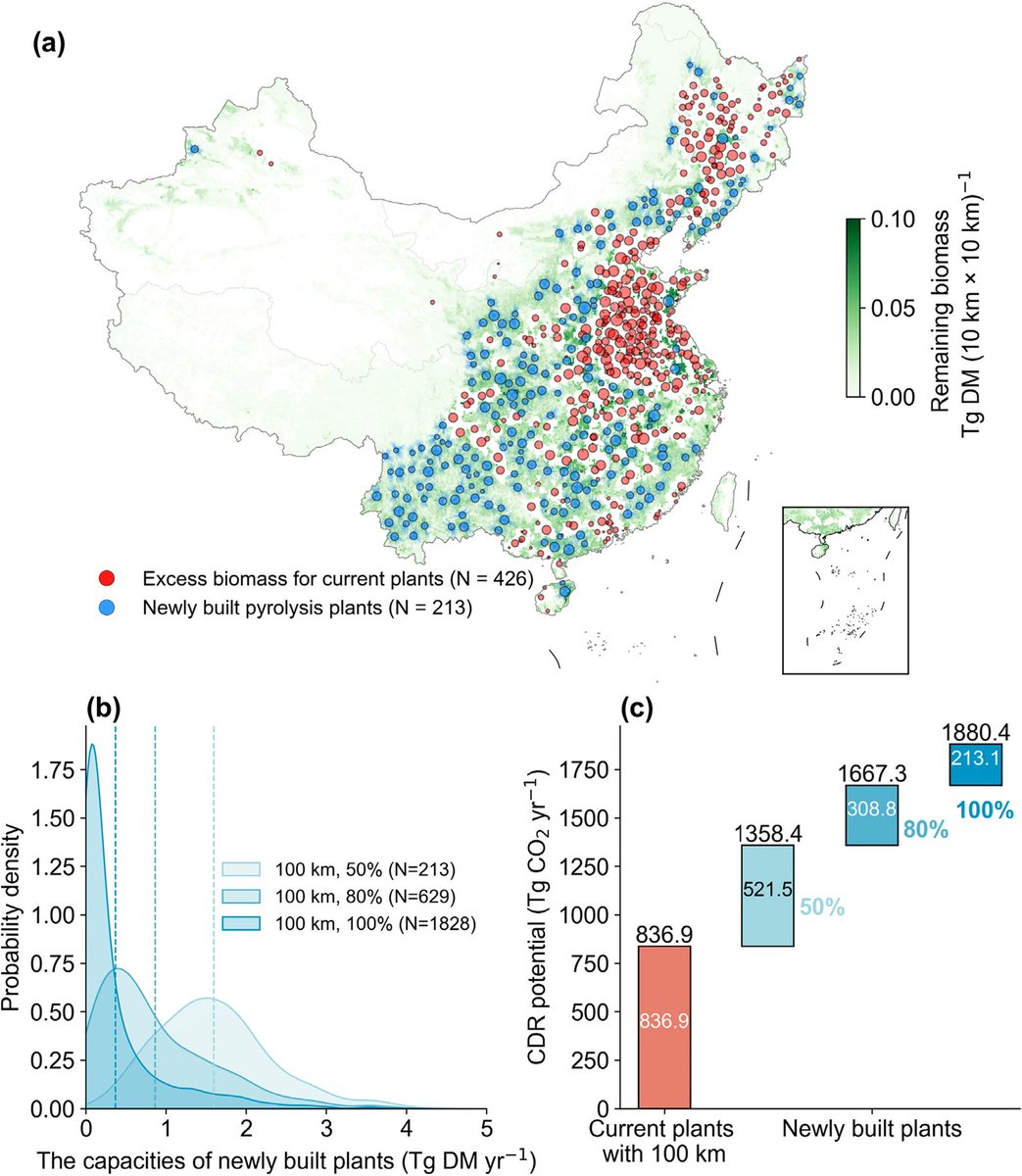
11/ Ultimately, this analysis reframes biochar from a marginal soil amendment to a quantified national-scale CDR pathway that is cheap, deployable now & aligned with China’s C neutrality goals, while highlighting the need to integrate biomass logistics and land use planning.
12/ TL;DR
✔ Biochar paired with dedicated energy crops can deliver ~1.9 Gt CO₂/year CDR.
✔ It does so at a fraction of BECCS cost (~$10 vs. ~$91 per t CO₂).
✔ Realizing it demands biomass feedstock planning, pyrolysis deployment, and supply-chain optimization.
✔ Biochar paired with dedicated energy crops can deliver ~1.9 Gt CO₂/year CDR.
✔ It does so at a fraction of BECCS cost (~$10 vs. ~$91 per t CO₂).
✔ Realizing it demands biomass feedstock planning, pyrolysis deployment, and supply-chain optimization.
📝For more details, read the study entitled "Carbon dioxide removal potential of biochar with biomass supply from bioenergy crops in China" here:
🧵13/13 #Biochar #CDR #BECCSlink.springer.com/article/10.100…
🧵13/13 #Biochar #CDR #BECCSlink.springer.com/article/10.100…
"unroll" @threadreaderapp
• • •
Missing some Tweet in this thread? You can try to
force a refresh