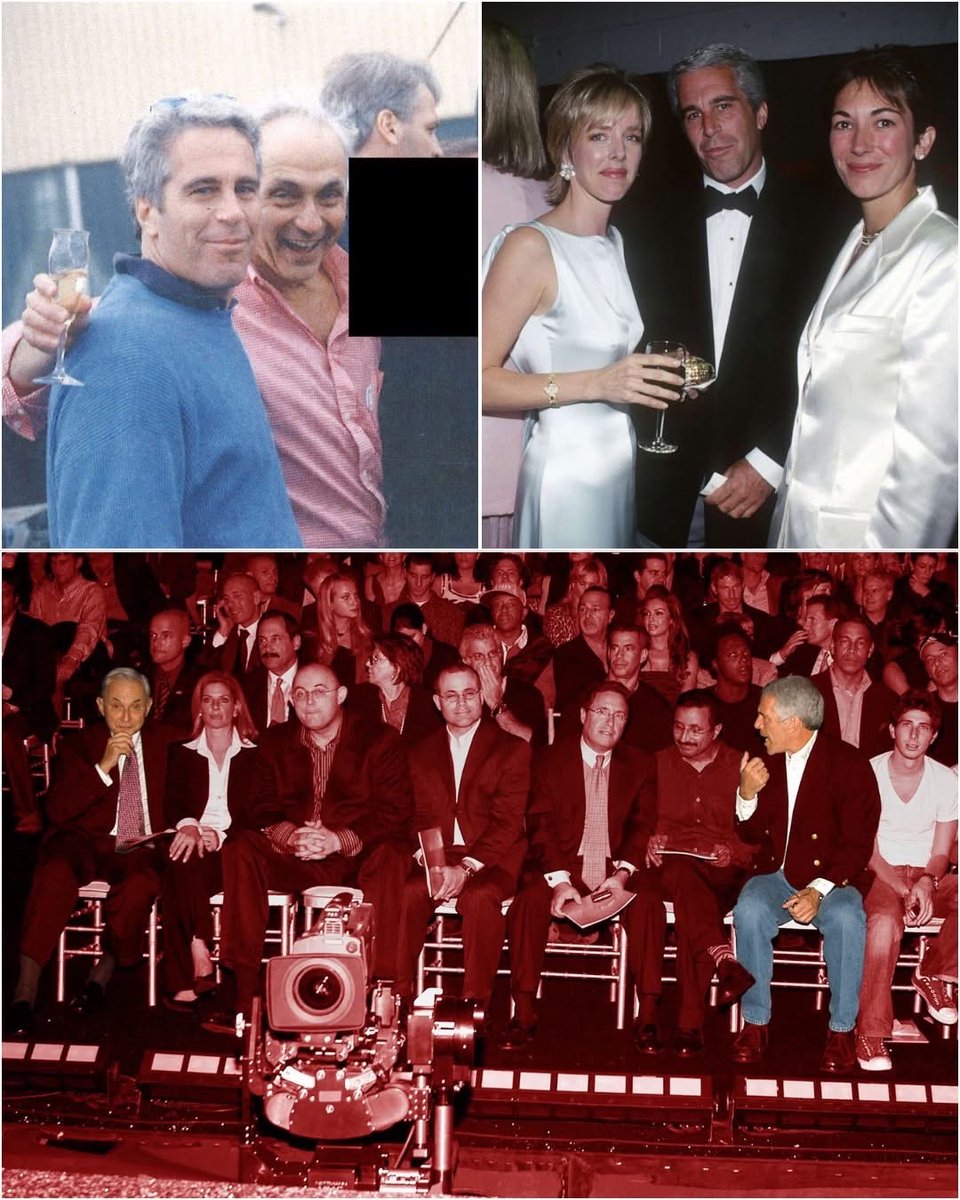
0️⃣BlackBetty ⚓️ Profile picture
Feb 11 8 tweets 21 min read Read on X
It’s May 1996. New Albany, Ohio.

Maria Farmer is 26 years old. An artist. She’s been working at a billionaire’s estate for three weeks. Today she needs to leave the guesthouse to buy art supplies.

She calls the billionaire’s wife. Asks permission.

The wife says she’ll think about it.

Maria is a grown woman. But armed guards patrol this property. She can’t leave without approval. She’s starting to understand: this isn’t an artist residency.

It’s a prison.

That night, Jeffrey Epstein walks into her room. By morning, she’s been assaulted. She escapes the estate. She reports him to the FBI.

Nothing happens.

Thirty years later—February 10, 2026—Congressman Ro Khanna stands on the House floor. He’s holding FBI documents. Documents the Department of Justice tried to keep secret.

He reads a list of six names. Men the FBI suspected of helping Jeffrey Epstein traffic children.

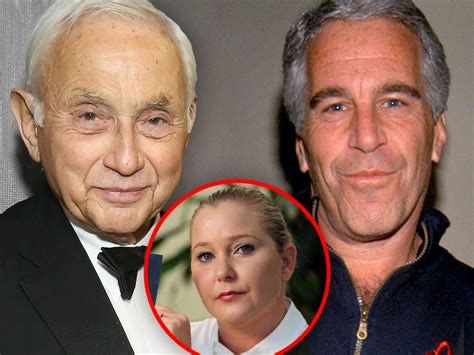
The first name: Leslie Wexner.
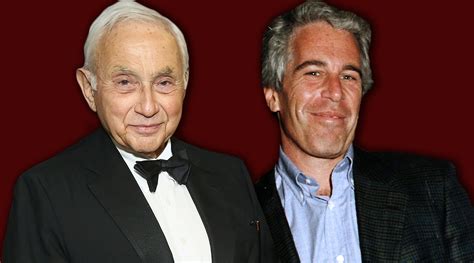
Owner of Victoria’s Secret. One of the richest men in America. The man who gave Epstein power of attorney over billions of dollars. The man who transferred a $56 million Manhattan mansion to Epstein with no record of payment.

The FBI called him a suspected co-conspirator.

This is the story of how it happened.

The Genius Who Built an Empire

Columbus, Ohio.

Les Wexner is 26 years old. His parents own a small clothing store in Dayton. Les has an idea: what if you only sold one thing? Women’s sportswear. Young professionals. Simple, focused, fast.​
He borrows $5,000 from his aunt. Opens one store. Calls it The Limited.

Within a year, he opens a second store. Then a third. Then ten.​

By 1969, The Limited is a chain. By 1980, Wexner has 187 stores across America. He’s a retail genius. He understands what women want before they know it themselves.

In 1982, he’s in San Francisco. He walks into a struggling lingerie store called Victoria’s Secret. Six locations. Losing money. Victorian-themed, frilly, old-fashioned.​
Wexner sees potential.

He buys the company for $1 million. Then he transforms it. Out go the Victorians. In come supermodels. Fashion shows. Fantasy. Glamour.​

By 1990, Victoria’s Secret isn’t just a store. It’s a cultural phenomenon. The fashion show becomes appointment television. Angels become celebrities. Sales exceed $1 billion.​

Les Wexner becomes one of the richest men in America.
He builds a private town in Ohio called New Albany. He designs every building himself. He donates hundreds of millions to charity. Ohio State University. Medical research. Jewish causes.

But by the mid-1980s, Wexner wants more. Retail is good. But he wants sophisticated wealth management. Offshore investments. Tax strategies. Complex financial structures.

He needs someone brilliant with money.
In 1986, a friend offers to introduce him to just such a person.​

That introduction will destroy everything.

The Warning: “I Smell a Rat”

Robert Meister is sitting on a plane. Mid-1980s. Flying to Palm Beach.

The man next to him is charming. Well-dressed. Says his name is Jeffrey Epstein. Says he works in finance. High-net-worth clients. Offshore accounts. Complex tax structures.
They talk. Meister mentions he’s an insurance executive. His firm handles policies for The Limited. He knows Les Wexner personally.​

Epstein becomes very interested.

Later, Epstein calls Meister. He has a story. He says he’s discovered that Wexner’s current money manager—Harold Levin—is stealing from him. Epstein describes himself as a financial “bounty hunter.” He can recover the stolen money.​
It sounds convincing.

Meister arranges a meeting. Wexner’s house in Aspen. Epstein makes his pitch.​

But Meister has a colleague who wants to meet Epstein first. Harold Levin himself. The man Epstein is accusing.

They meet. One meeting.

Levin walks out. Finds Meister. Says: “I smell a rat. I don’t trust him”.

He tells Wexner the same thing. Stay away from this man.​

Wexner ignores him.

By 1987, Jeffrey Epstein is Wexner’s financial adviser. Soon, he’s the only adviser. Levin is pushed aside. Eventually, Levin quits rather than work under Epstein.

Before he leaves, Levin learns something disturbing: Epstein had told Wexner that Levin was stealing. It was a lie. But Wexner believed Epstein, not Levin.​

The man who warned “I smell a rat” is gone.

Epstein is in.

Friends of Wexner are confused. Who is this Jeffrey Epstein? Where did he come from? What are his credentials?

No one can find answers. Epstein has no other clients. No verifiable track record. He’d worked at Bear Stearns in the late 1970s, but left in 1981 under unclear circumstances.​

Some people ask questions. Wexner doesn’t answer them.

By the early 1990s, Epstein isn’t just Wexner’s financial adviser. He’s part of the family. He attends dinners. Vacations. Celebrations.

But Robert Meister—the man who introduced them—is worried.

September 1997. Wexner’s 60th birthday party. His estate in New Albany. Hundreds of guests. Senator Joe Lieberman. Prominent developers. Ohio’s elite.​

Meister is there with his wife.

During the party, Meister pulls Wexner aside. In front of other guests, he begs Wexner to cut ties with Epstein. “My wife and I told him and Abigail hundreds of times to stay away from Epstein,” Meister says later.​

Wexner won’t listen.

It’s the last time Meister visits Wexner’s house.​

What Meister doesn’t know—what no one knows—is that by 1997, it’s already too late.

Six years earlier, Wexner had signed something. Three pages. A document that gave Jeffrey Epstein total control.​

And by 1997, Epstein is already using that control to build an empire of abuse.

Thread 🪡 continue reading 📖 next Tweet.

usnews.mstfootball.com/lam1/the-billi…Image
July 1991: Signing Away Everything

Three pages. That’s all it takes.​

Power of attorney. Signed July 1991.

Les Wexner grants Jeffrey Epstein the legal right to sign Wexner’s name. On anything. Any document. Any contract. Any check.​

Epstein can buy properties. Sell them. Borrow money. Access accounts. Hire employees. Fire them. Make investments. All in Wexner’s name.​

It’s not limited. It’s not temporary. It’s total authority.

Lawyers who later review the document are stunned. One tells New York Magazine: “I’ve never seen anyone give power of attorney that broad to someone who wasn’t a family member”.​

Most people don’t even give their spouses this kind of power.

Why would a billionaire give it to a man he’d known for five years? A man with no verifiable credentials? A man his best advisers called “a rat”?

In 2019, Wexner offers an explanation. He says Epstein came “highly recommended” by friends. He says he trusted those recommendations.​

But the warnings were explicit. Multiple advisers had urged caution. Harold Levin didn’t trust him. Robert Meister begged him to walk away.

Wexner gave Epstein everything anyway.

For 16 years—1991 to 2007—Epstein operates with complete legal authority. He manages billions. He moves assets across borders. He represents Wexner in business deals.​

Friends are mystified. One tells Vanity Fair: “We couldn’t understand it. Les is a brilliant businessman. How could he be so blind?”.​
The assets under Epstein’s control aren’t small. By the mid-1990s, Wexner’s net worth exceeds $5 billion. Properties include estates in Ohio, New Albany, vacation homes, private jets.

And one particular property.

A seven-story mansion at 9 East 71st Street in Manhattan. The largest private residence in New York City.​

In 1989, Wexner bought it for $13.2 million.​

By 1996, Jeffrey Epstein is living there.​

By 1998, it’s transferred to Epstein’s name.

Public records show no payment.

That mansion becomes the center of Jeffrey Epstein’s criminal empire.

But before it became his headquarters, it became his trap.

And Maria Farmer walked right into it.

May 1996: The Guesthouse

Maria Farmer is packing her rental truck. Art supplies. Canvases. Brushes. Paint.

She’s 26 years old. She studied at the New York Academy of Art. She’s talented. She has a future.

A professor introduced her to Jeffrey Epstein. Said he was an art collector. A patron. Someone who helped young artists.​

Epstein seemed legitimate. He attended gallery shows. He bought pieces. He introduced Maria to Ghislaine Maxwell. Maxwell seemed cultured. Connected. She talked about art, travel, high society.

Then Epstein made an offer.

He’d arranged for Maria to work as artist-in-residence on a property in Ohio. She’d paint backdrops for a Hollywood movie—”As Good As It Gets.” She’d have space. Time. Materials. It was the opportunity she’d been dreaming of.

Maria says yes.

She packs everything. Drives from New York to New Albany, Ohio.​

The property belongs to Les Wexner.

Maria arrives. The estate is massive. Sprawling. Isolated. But she’s not staying in the main house. She’s in a guesthouse.​

The first day, she tries to leave. To buy supplies in town.

A guard stops her.

He says she needs permission.

Maria calls the main house. Speaks to Abigail Wexner—Les Wexner’s wife. Asks if she can go into town.
Abigail says she’ll think about it.​

Maria is 26 years old. An adult. But she can’t leave without asking permission.

She realizes something is very wrong.

Days pass. Maria works on the paintings. But the guards are always watching. She can’t leave the property. Every trip into town requires a phone call. Approval. Supervision.​

Then Epstein and Maxwell visit.

One night, they assault her.

Maria is terrified. She finishes the work as quickly as possible. She leaves the estate. She drives back to New York.

And she does something almost no one had done before.

She reports Jeffrey Epstein to the police.​

She files a criminal complaint with the FBI. Then the NYPD. She gives details. The assault. The Ohio estate. Ghislaine Maxwell’s involvement. Les Wexner’s property.​

The FBI takes her statement.

Nothing happens.

No investigation. No charges. No follow-up.​

Maria doesn’t understand. She reported a crime. She gave names, locations, dates. Why isn’t anyone doing anything?

Years later, she’ll learn the truth. Epstein has connections. Powerful connections. Complaints against him have a way of disappearing.​

In 1996, Maria is one of the first to report him.

She won’t be the last.

One year later. May 1997. Santa Monica, California. Another woman gets a phone call. The man on the line says he’s a Victoria’s Secret talent scout.

His name is Jeffrey Epstein.

May 1997: “Let Me Manhandle You”

Alicia Arden is 27. An actress. A model. She’d appeared on “Baywatch” a few years ago. Now she’s trying to break into high fashion.

The phone rings.

A man. Says his name is Jeffrey Epstein. Says he’s a talent scout for Victoria’s Secret. Says he’s in Los Angeles looking for models for the catalog.​​

Alicia can’t believe it. Victoria’s Secret. The dream. Every model wants that job.

They arrange to meet. Shutters on the Beach. A luxury hotel in Santa Monica. Epstein books a room. Says it’s easier to review her portfolio there, away from distractions.

Alicia arrives. Professional photos. Comp cards. Measurements. She’s nervous. Excited.

Epstein opens the door. Invites her in. At first, everything seems normal. He looks through her photos. Asks about her experience. Seems professional.​

Then he asks her to sit closer.​

She does. She wants this job.

He starts touching her. Shoulder. Back. Thigh.​

Alicia tenses. This doesn’t feel right.

Epstein says: “Let me manhandle you”.

He grabs her. Pulls her shirt over her head. Yanks her skirt down. Gropes her.

Alicia realizes what’s happening. This isn’t an audition. This is assault.

She fights. Pushes him away. Grabs her clothes. Runs.

Outside the hotel, she’s shaking. Crying. She calls the police.​​

Santa Monica Police Department. She files a sexual battery report. Gives them everything. Epstein’s name. The hotel room number. What he did.

A detective takes her statement. He seems to believe her.

But nothing happens.

No arrest. No charges. No investigation.​

Alicia doesn’t understand. She reported it immediately. She had evidence. She gave them his name.

Why isn’t anyone doing anything?

She’ll learn later: Epstein used the Victoria’s Secret connection repeatedly. He approached models. Aspiring actresses. Young women desperate for a break. Promised them catalog work. Runway shows. Exposure.

Then he assaulted them.

And he got away with it.

Because the Victoria’s Secret connection wasn’t fake. It was real. He had Les Wexner.

In fact, two executives at Victoria’s Secret eventually warned Wexner. They told him Epstein was using the company’s name to approach women. They said it was damaging the brand. Creating liability.​

Wexner told them: “I’ll take care of it”.​

He didn’t.

The relationship between Wexner and Epstein continued.

And Epstein’s abuse escalated.

But here’s what’s strange. Epstein wasn’t just using Wexner’s company name. He was using Wexner’s money. In 2004, he gave a man named Jean-Luc Brunel up to $1 million.​

That money launched one of the most notorious modeling agencies in history.

An agency that, according to victims, supplied Epstein with dozens of underage girlsImage
2004: The Model Pipeline

Jean-Luc Brunel is a French modeling scout. In the 1980s, models accused him of drugging and sexually assaulting them. In 1988, a “60 Minutes” segment featured models describing his predatory behavior.​

But Brunel is connected. He works with major agencies. He scouts across Eastern Europe.​

And he knows Jeffrey Epstein.

In 2004, Epstein gives Brunel up to $1 million. The purpose: launch a modeling agency called MC2 Model Management.

Brunel opens offices in New York. Miami. He recruits young women from Eastern Europe. Poor countries. Promises them modeling careers in America. Visas. Housing. Work.​

But according to court testimony, MC2 wasn’t just a modeling agency.

Virginia Roberts Giuffre—one of Epstein’s most vocal accusers—states in a 2015 deposition that Brunel “supplied Epstein with dozens of underage girls”. She says Brunel recruited girls as young as 12. Brought them to America. Delivered them to Epstein’s mansions.​

In 2020, French authorities arrest Brunel. Charges: rape and sex trafficking of minors.​

In February 2022, he’s found dead in his Paris jail cell. Apparent suicide.​

But here’s the disturbing part.

Victoria’s Secret continued working with MC2 Model Management even after Wexner claimed to have cut ties with Epstein in 2007.​

Models represented by MC2 walked in Victoria’s Secret fashion shows. Appeared in catalogs. Were part of brand campaigns.​

Victoria’s Secret finally ended the relationship in 2015. The same year Virginia Giuffre publicly accused Brunel of trafficking.​

For eight years after Wexner supposedly severed ties with Epstein, the company Wexner built kept working with an agency Epstein had funded.​

An agency accused of supplying Epstein with victims.

When reporters asked Victoria’s Secret about this, a spokesperson said the company “took allegations seriously”.​

No explanation for the eight-year relationship.

And just this month—February 2026—new evidence emerged.

Videos. The FBI obtained them during their investigation. They show Epstein conducting fake “catwalk auditions” with young girls.​

The girls walk back and forth. Epstein films them. Former models who saw the videos said it looked exactly like legitimate talent scouts audition models.​

Except these weren’t legitimate auditions.

They were grooming.​

And they were happening while Epstein still had access to Les Wexner’s fortune. Still had power of attorney. Still lived in the Manhattan mansion Wexner had given him.

That mansion—9 East 71st Street—is worth examining closely.

Because the way it transferred from Wexner to Epstein raises a question no one has been able to answer.

How do you give away $56 million and leave no trace?

The $56 Million Mystery: A Mansion for $0

Les Wexner buys a mansion at 9 East 71st Street in Manhattan. Purchase price: $13.2 million.​

It’s one of the largest private homes in New York City. Seven stories. 21,000 square feet. Built in 1930 for Herbert Straus, founder of Macy’s department store.​

Wexner says he’ll use it for business trips to New York.

But he rarely stays there. In 1996, Epstein tells The New York Times: “Les never spent more than two months there”.​

Instead, Epstein moves in.​

He decorates it. A life-size female doll hanging from a chandelier. Taxidermied animals. A painting of Bill Clinton in a dress. Security cameras in every room.​

Visitors notice the cameras. Some say they felt watched. Uncomfortable.

Epstein dismisses concerns. Says he needs security.​

Then, in 1998, something happens.

The mansion transfers from Les Wexner’s name to a corporation: Nine East 71st Street Corporation.

Public records don’t show how much Epstein paid.​

One source claims $20 million. But no documents confirm this.​

Then, in 2011, another transfer. From Nine East 71st Street Corporation—which Epstein controls—to another Epstein company: Maple Inc., registered in the Virgin Islands.

The deed is dated December 25, 2011. Christmas Day.​

It’s signed by Jeffrey E. Epstein, President.​

The consideration—the amount paid—is listed on the official document.​

$10.

Ten dollars.​

A mansion worth tens of millions. Transferred for the price of lunch.

By 2019, the property is valued at $77 million.​

Real estate lawyers say such transfers can be legal. They happen in family trusts. Corporate restructuring. But they’re unusual.​

And they raise questions.

How did Jeffrey Epstein—a man with no money in 1987—acquire a $13.2 million mansion from Les Wexner?

Why are there no public records showing payment?

Why would Wexner, a brilliant businessman, give away one of Manhattan’s most valuable properties?

Wexner has never fully explained it. In his 2019 letter, he acknowledged that Epstein had “misappropriated vast sums of money” from him.

He said he was “deeply embarrassed” by his relationship with Epstein.​

But he didn’t explain the mansion.

And he never sued to get it back.​

In fact, when Wexner discovered in 2007 that Epstein had stolen $46 million, he did something that baffled legal experts.

He did nothing.

The $46 Million Question: Why No Lawsuit?

Les Wexner makes a discovery.

Jeffrey Epstein—his trusted financial adviser for 16 years—has “misappropriated vast sums of money” from him.

The amount: over $46 million.

This isn’t a minor accounting error. This is massive theft.

Most people, when they discover someone has stolen $46 million, do two things. They call the police. They file a lawsuit.

Les Wexner does neither.Image
He quietly severs financial ties with Epstein. Removes his power of attorney. Stops taking his calls.​

But no criminal charges. No civil lawsuit.​

Why?

In 2020, Abigail Wexner—Les’s wife—offers an explanation. She says Wexner chose not to sue “to avoid ongoing litigation entanglements with Epstein”.​

Think about that.

A man steals $46 million. The victim’s response: “I don’t want to deal with litigation.”

Legal experts are baffled. Bradley Edwards, a lawyer who has represented multiple Epstein victims, tells reporters: “If someone stole $46 million from you, you sue. You have to. Otherwise, how do you explain to the IRS, to your investors, to anyone, where that money went?”.​

New York Magazine investigates. They speak to tax lawyers. Financial experts. Wealth managers. The consensus: Wexner’s decision makes no sense.​

Unless there’s something he doesn’t want revealed in court.

Lawsuits require discovery. Both sides can subpoena documents. Take depositions. Demand answers.

If Wexner sued Epstein, Epstein’s lawyers could demand financial records showing exactly where Wexner’s money went. They could ask about the mansion transfer. The power of attorney. The decades-long relationship.​

They could bring up Maria Farmer. Alicia Arden. The Victoria’s Secret connection.

Wexner chose silence.​

He did release one public statement. August 2019. After Epstein was arrested on federal sex trafficking charges. Wexner sent a letter to members of his charitable foundation.​

He wrote that he was “NEVER aware of the illegal activity charged in the indictment”.​

He said he first learned of Epstein’s “abhorrent behavior” when Epstein was charged in Florida in 2007.​

He expressed “tremendous shock”.​

But the timeline doesn’t add up.

Maria Farmer reported Epstein to the FBI in 1996. Eleven years before Wexner claimed to first learn of abuse.​

Alicia Arden filed a police report in 1997. Ten years before.​

Two Victoria’s Secret executives warned Wexner that Epstein was using the company’s name to approach women. Years before Wexner said he knew.​

Robert Meister begged Wexner to cut ties with Epstein at Wexner’s 60th birthday party in 1997. A full decade before the supposed “discovery”.​

Either Wexner didn’t know—which means willful blindness for 20 years—or he knew and did nothing.

In 2007, Florida prosecutors built a case against Epstein. Dozens of underage girls. Sexual abuse. Trafficking.​

Wexner was never called to testify. Never questioned.​

His name appeared in case files. But he was classified as a “witness,” not a suspect.​

Epstein ultimately pleaded guilty in 2008. Two state prostitution charges. He served 13 months in a private wing of the Palm Beach County jail. He had permission to leave for work 12 hours a day.​

One of the most lenient sentences for a sex trafficking case in U.S. history.

Les Wexner remained silent.

Until August 10, 2019, when Jeffrey Epstein was found dead in his Manhattan jail cell.​

And the world started asking questions.

August 2019: The Letter

August 10, 2019. Jeffrey Epstein is dead. Officials rule it suicide.​

He’d been arrested a month earlier. Federal sex trafficking charges. Prosecutors said he’d sexually abused dozens of underage girls. Operated an international sex trafficking ring for decades.​

The arrest sparked a media firestorm. Journalists uncovered details. His mysterious wealth. Private island. Connections to powerful men.​

One name appeared repeatedly: Les Wexner.​

How had Epstein become rich? Who was his “main client”? How did he acquire a $77 million mansion?

August 8, 2019—two days before Epstein’s death—Les Wexner sent a letter to members of his charitable foundation.​

Damage control.

He wrote: “I am embarrassed that, like so many others, I was deceived by Mr. Epstein”.​

He said his path crossed Epstein’s “at an unfortunate time in my life, when I was experiencing personal issues”.​

He said he learned of Epstein’s “abhorrent behavior” only in 2007. He said he severed ties immediately. He said he was “NEVER aware of the illegal activity”.​

The letter raised more questions than it answered.

What “personal issues” made Wexner vulnerable? Why did he give Epstein power of attorney? How did Epstein “misappropriate” $46 million if Wexner was monitoring his finances? Why no lawsuit?

Reporters pressed for interviews. Wexner declined.

His spokesperson issued brief statements. Wexner had “cooperated fully” with investigators. He was “not a target”.

For a while, the story faded. Epstein was dead. Ghislaine Maxwell was arrested in 2020, convicted in 2021, sentenced to 20 years.​

Some victims received compensation from Epstein’s estate.

But questions about Wexner persisted.

Then, January 2024, a federal judge ordered the release of documents from a 2015 lawsuit.

And Virginia Giuffre’s testimony became public.Image
January 2024: “He Participated”

The documents included depositions. Emails. Testimony sealed for years. Nearly 200 individuals were named.​

One name appeared in a way that shocked observers: Les Wexner.​

Virginia Giuffre had given testimony in 2016. She was asked about men Jeffrey Epstein had trafficked her to for sex.​

She named several high-profile individuals.

And she named Les Wexner.

Giuffre testified that she was trafficked to Wexner between three and ten times. She said Ghislaine Maxwell instructed her to wear Victoria’s Secret lingerie for Wexner.​

An attorney asked: why did you say in a previous statement that you didn’t believe Wexner would tell the truth?

Giuffre answered: “He participated in sex with minors”.​

She elaborated: “If you walked foot into Jeffrey Epstein’s house and you went in there and you continued to be an acquaintance of his then you would have to know what was going on there”.​

Wexner’s representatives immediately denied the allegations. They pointed to a 2019 statement by attorney Brad Edwards—who has represented multiple Epstein victims—saying it was “very highly likely to be true” that Wexner was unaware of Epstein’s abuse.​

But Edwards’s statement came with caveats. He acknowledged the situation was “odd.” He couldn’t explain Wexner’s decades-long relationship with Epstein.​

The unsealed documents didn’t result in criminal charges against Wexner.

But the public revelation of Giuffre’s testimony reignited scrutiny.

How much did Wexner really know?

If he didn’t know, why not?

The answer came from an unlikely source.

The FBI itself.

February 10, 2026: The Co-Conspirator

December 31, 2025. The Department of Justice released documents related to Jeffrey Epstein’s 2019 prosecution.​

Most were heavily redacted. Names blacked out. Information removed.​

The DOJ said the redactions were necessary. Ongoing investigations. Privacy interests.​

Members of Congress were furious. Representatives Ro Khanna (Democrat, California) and Thomas Massie (Republican, Kentucky) had co-authored the Epstein Files Transparency Act. They demanded full disclosure.

January 7, 2026. The House Oversight Committee voted to subpoena three men: Les Wexner, Darren Indyke (Epstein’s lawyer), and Richard Kahn (Epstein’s accountant).

Representative Ro Khanna said: “The subpoenas represent a significant advancement in our quest for justice for the survivors and truth for the American populace”.​

Khanna had reviewed the unredacted documents. He knew what the government was hiding.

February 9, 2026—two days ago—Khanna stood on the House floor.

He announced he was going to do something extraordinary. Read the names the DOJ had redacted.

He said: “If we found six men they were hiding in two hours, imagine how many more men they are covering up for in those 3 million files”.​

Then he read the names:

Leslie Wexner

Sultan Ahmed bin Sulayem

Salvatore Nuara

Zurab Mikeladze

Leonic Leonov

Nicola Caputo

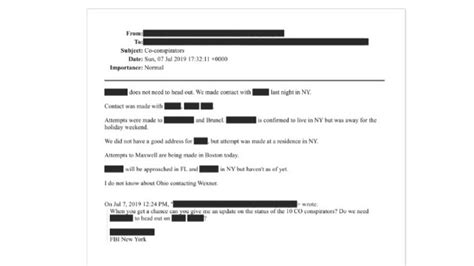
Khanna focused on Wexner. He explained that an internal FBI email from 2019 listed ten individuals as possible co-conspirators in Epstein’s sex trafficking operation.

Wexner was on that list.

Not a victim. Not a witness.

A suspected co-conspirator.

The revelation was explosive. Deputy Attorney General Todd Blanche responded on social media: “We have just unredacted Les Wexner’s name from this document, but his name already appears in the files thousands of times”.​

Thousands of times.

Khanna announced that Wexner would be deposed before Congress in late February or early March 2026.

Under oath.

He’d have to answer questions he’d avoided for years.

Tom Davies, Wexner’s spokesperson, issued a statement: “According to Mr. Wexner’s legal representative, Mr. Wexner will cooperate fully with any governmental inquiry into Epstein, just as he did regarding the U.S. Attorney’s investigation into Epstein in which Mr. Wexner was told that he was neither a co-conspirator nor a target in any respect”.

But being told you’re “not a target” is different from being named by the FBI as a suspected co-conspirator.

February 10, 2026—yesterday—the Justice Department officially un-redacted Wexner’s name from the documents.

Today—February 11, 2026—news outlets around the world are reporting the story.

The billionaire owner of Victoria’s Secret. The man who made Jeffrey Epstein rich. Labeled by the FBI as a suspected co-conspirator in one of the worst sex trafficking cases in American history.

And in a few weeks, he’ll have to testify.Image
The Questions No One Can Answer

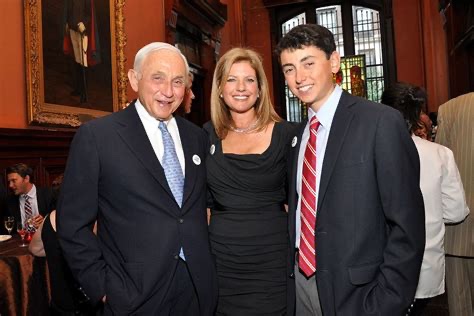
Les Wexner is 88 years old. He stepped down as CEO of L Brands in 2020. He lives in New Albany, Ohio. The town he built.​

He’s donated over $1 billion to charitable causes.

But the questions haven’t stopped.

How did Jeffrey Epstein—a man with no money in 1987—convince a billionaire to give him total power of attorney?

Why did Wexner ignore repeated warnings? Harold Levin said “I smell a rat.” Robert Meister begged him to walk away. Why didn’t he listen?

How did a $13.2 million Manhattan mansion transfer to Epstein? Where’s the record of payment? Why did the 2011 deed list the consideration as $10?

Why didn’t Wexner sue when Epstein stole $46 million? What was he afraid of revealing in court?

Did Wexner know about the abuse?

Maria Farmer reported assault on his property in 1996. Why didn’t he investigate?

Victoria’s Secret executives warned him Epstein was using the company’s name to prey on women. Why didn’t he act?

Robert Meister begged him—at his own 60th birthday party—to cut ties with Epstein. Why did he wait ten more years?

And if he did know, why did he wait until 2007—only after Epstein was criminally charged—to cut ties?

Virginia Giuffre says Wexner participated. Wexner denies it.​

The FBI called him a suspected co-conspirator. His lawyers say he was cleared.

But Wexner’s name appears “thousands of times” in FBI files.

What do those files say?

In three weeks, Wexner will testify before Congress.

For the first time, he’ll answer questions under oath.

Survivors are watching.

Maria Farmer—who reported Epstein in 1996 and was ignored—told reporters: “I’ve been waiting almost 30 years for someone to ask the right questions. Maybe now they finally will”.​

Alicia Arden—who filed a police report in 1997 that went nowhere—said: “Jeffrey Epstein didn’t operate alone. He had help. He had enablers. People who gave him access, money, power, credibility. Without them, he couldn’t have hurt so many girls”.

The congressional hearing is scheduled for late February 2026. Representative Ro Khanna says the committee has “significant evidence”.​

What that evidence shows remains to be seen.

But one thing is becoming clear.

The mystery of how Jeffrey Epstein became rich. How he operated for decades with impunity. Who helped him. Who enabled him. Who looked the away.

All of it centers on one relationship.

Between a sex trafficker and the billionaire who gave him everything.

In 1991, Les Wexner signed three pages. Power of attorney.

By 1995, Jeffrey Epstein owned a $56 million mansion. A private island. A Boeing 727.

In 1996, Maria Farmer was assaulted on Wexner’s property. She reported it. Nothing happened.​

In 1997, Alicia Arden was assaulted by a man claiming to scout for Victoria’s Secret. She reported it. Nothing happened.​

In 2007, Wexner discovered Epstein had stolen $46 million. He never sued.

In 2019, Wexner claimed he “never knew” about Epstein’s crimes.​

In 2024, Virginia Giuffre testified under oath that Wexner “participated in sex with minors”.​

In 2026, the FBI revealed they’d listed Wexner as a suspected co-conspirator.

But here’s the question nobody’s asked yet.

If Epstein stole $46 million from Wexner, why did the FBI call Wexner a co-conspirator?

What if Epstein didn’t steal the money?

What if he was paid?

And if he was paid, what was the payment for?

In three weeks, Les Wexner will sit before Congress. Under oath. He’ll be asked to explain 20 years of warnings ignored. 20 years of victims silenced. 20 years of looking the other way.

Twenty years of giving Jeffrey Epstein everything he needed to build an empire of abuse.

The world is watching.

The survivors are waiting.

And for the first time in 30 years, Les Wexner won’t be able to stay silent.Image
Don’t mind me just making it simple…

• • •

Missing some Tweet in this thread? You can try to force a refresh

 

Keep Current with 0️⃣BlackBetty ⚓️

0️⃣BlackBetty ⚓️ Profile picture

Stay in touch and get notified when new unrolls are available from this author!

Read all threads

This Thread may be Removed Anytime!

PDF

Twitter may remove this content at anytime! Save it as PDF for later use!

Try unrolling a thread yourself!

how to unroll video
  1. Follow @ThreadReaderApp to mention us!

  2. From a Twitter thread mention us with a keyword "unroll"
@threadreaderapp unroll

Practice here first or read more on our help page!

More from @BabyD1111229

Mar 16
Every link I shared with this has been removed…

What are they trying to
Hide? 🙈
Next tweet shows they’ve been removed..

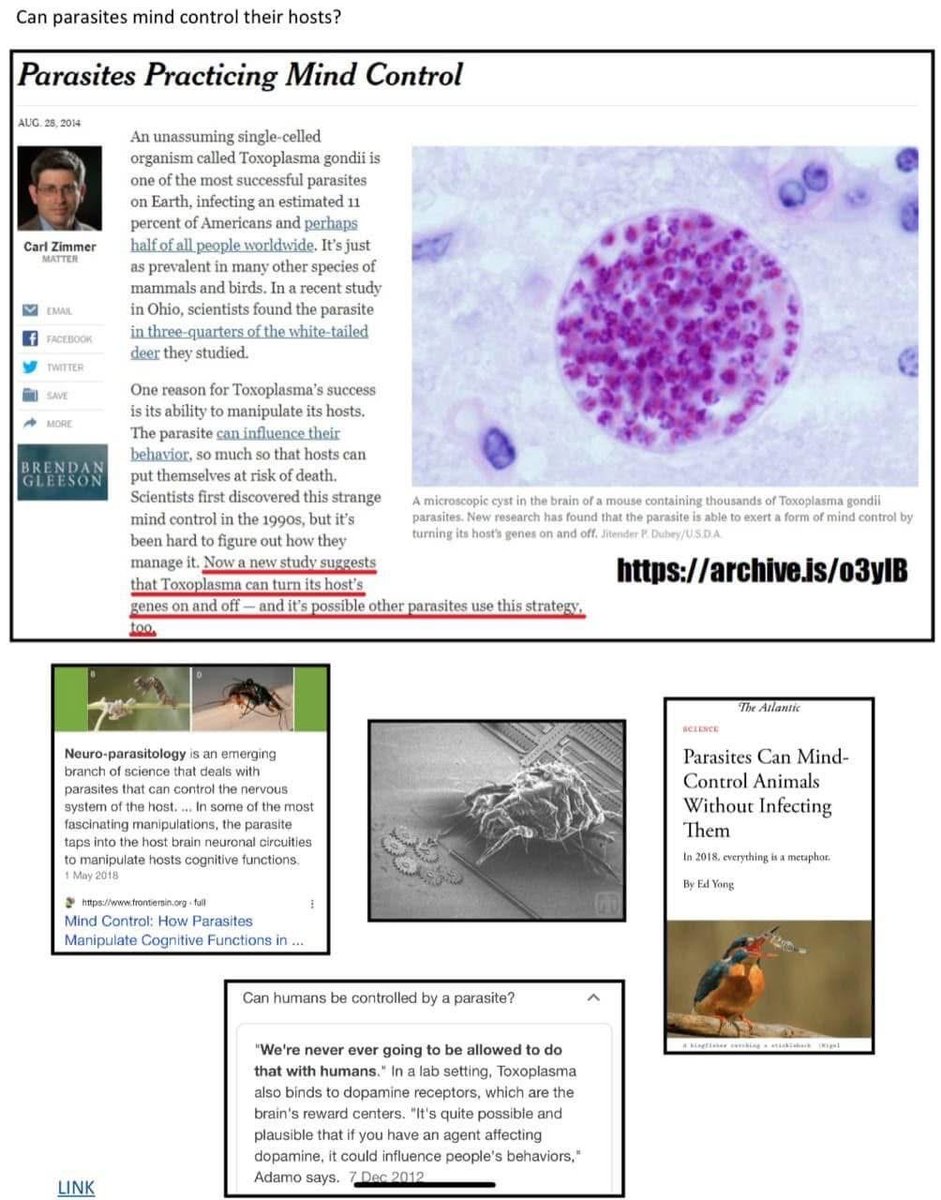
An unassuming single-celled organism called Toxoplasma gondii is one of the most successful parasites on Earth, infecting an estimated 11 percent of Americans and perhaps half of all people worldwide.
It's just as prevalent in many other species of mammals and birds. In a recent study in Ohio, scientists found the parasite in three-quarters of the white-tailed deer they studied.
One reason for Toxoplasma's success is its ability to manipulate its hosts.
The parasite can influence their behavior, so much so that hosts can put themselves at risk of death.
Scientists first discovered this strange mind control in the 1990s, but it's been hard to figure out how they manage it. Now a new study suggests that Toxoplasma can turn its host's
genes on and off - and it's possible other parasites use this strategy, too.

theatlantic.com/science/archiv

frontiersin.org/journals/psych

usnews.com/news/articles/Image
What are they afraid of…. Image
Image
Image
Parasites Practicing Mind Control
The New York Times, August 28, 2014

Link

An unassuming single-celled organism called Toxoplasma gondii is one of the most successful parasites on Earth, infecting an estimated 11 percent of Americans and perhaps half of all people worldwide. It’s just as prevalent in many other species of mammals and birds. In a recent study in Ohio, scientists found the parasite in three-quarters of the white-tailed deer they studied.

One reason for Toxoplasma’s success is its ability to manipulate its hosts. The parasite can influence their behavior, so much so that hosts can put themselves at risk of death.

Scientists first discovered this strange mind control in the 1990s, but it’s been hard to figure out how they manage it. Now a new study suggests that Toxoplasma can turn its host’s genes on and off — and it’s possible other parasites use this strategy, too.

Toxoplasma manipulates its hosts to complete its life cycle. Although it can infect any mammal or bird, it can reproduce only inside of a cat. The parasites produce cysts that get passed out of the cat with its feces; once in the soil, the cysts infect new hosts.

Toxoplasma returns to cats via their prey. But a host like a rat has evolved to avoid cats as much as possible, taking evasive action from the very moment it smells feline odor.

Experiments on rats and mice have shown that Toxoplasma alters their response to cat smells. Many infected rodents lose their natural fear of the scent. Some even seem to be attracted to it.

Manipulating the behavior of a host is a fairly common strategy among parasites, but it’s hard to fathom how they manage it. A rat’s response to cat odor, for example, emerges from complex networks of neurons that detect an odor, figure out its source and decide on the right response in a given moment.

Within each of the neurons in those networks, thousands of genes are producing proteins and other molecules essential for relaying all of the necessary information throughout the body. Simple Toxoplasma seems ill-equipped to take over such a complicated system.

But a new study published in the journal Molecular Ecology hints that the parasite can do so by relying on an eerily elegant strategy. Think of the genes in a host as keys on a piano. Toxoplasma, it seems, simply plays some of the keys differently to produce a new melody.

A rat is made up of lots of different kinds of cells, from the neurons in its brain to the bone-producing cells in its skeleton to the insulin-making cells in its pancreas. Yet all of them carry the same 20,000 genes. Depending on the function of a particular cell, some of its genes are switched on and others are shut down.

Genes may be switched off, or silenced, by the attachment of molecular caps called methyl groups, a process called methylation. In order to switch a gene on again, the caps are removed.

Methylation does more than just allow cells to develop into a variety of organs. It lets them change the way they work in response to signals from the outside. In the brain, for example, neurons rely on this process to lay down long-term memories and change how an animal responds to its environment.

Ajai Vyas, a neurobiologist at Nanyang Technological University in Singapore, wondered if Toxoplasma might wreak changes on rats by changing methylation in the rat brain — an idea “just hiding in plain sight,” he said.

In earlier research, Dr. Vyas and his colleagues had found that infected rats produced extra amounts of a neurotransmitter called arginine vasopressin. The neurotransmitter is manufactured by a small set of neurons buried in a structure of the brain called the medial amygdala.

Perhaps, Dr. Vyas thought, the parasite switched on the gene for arginine vasopressin in those cells. To find out, he and his colleagues ran a series of tests.

First they looked at the gene for arginine vasopressin in the medial amygdala of rats. In infected rats, they found, many of the molecular caps were missing, suggesting that Toxoplasma had “unsilenced” the gene in order to increase production of the neurotransmitter. The arginine vasopressin then might alter their response to cats.

If that were true, Dr. Vyas reasoned, then counteracting the parasite’s strategy should change the rat’s behavior.

He and his colleagues injected an extra supply of the molecular caps into infected rats. Some of the caps attached to the arginine vasopressin gene, and the rats became more fearful of the odor of cats.

That experiment led Dr. Vyas to see if he could make the rats behave as if they were being controlled by parasites — but without the parasites.

He and his colleagues removed molecular caps from the arginine vasopressin gene, mimicking what Toxoplasma might be doing to its hosts. The rats became reckless, feeling no fear at the whiff of cats.

“The animals looked like they were infected, even though there was no parasite around,” said Dr. Vyas.

“I think they could be on to something interesting,” said Michael Eisen, a biologist at the University of California, Berkeley, who has researched Toxoplasma in mice and was not involved in the new study. But he thought more experiments would have to be done to make a compelling case that the parasites really are using methylation to control their hosts.

Kami Kim of Albert Einstein College of Medicine, who also was not involved in the study, was more enthusiastic about the research. She also suggested that the strategy may be not be uncommon. In a review published this spring in the American Journal of Pathology, Dr. Kim and her colleagues survey a number of species that may use methylation to turn host genes on and off.

The bacteria that cause leprosy, for example, invade certain kinds of neurons and change some of their molecular caps. This methylation causes the neurons to change into stem cells much like those in an embryo. In this new state, the infected cells leave the nervous system and migrate through the body, spreading the bacteria with them.

“It looks like it will be a general strategy used by pathogens,” said Dr. Kim.

Copyright 2014 The New York Times Company

carlzimmer.com/parasites-prac…Image
Read 5 tweets
Mar 16
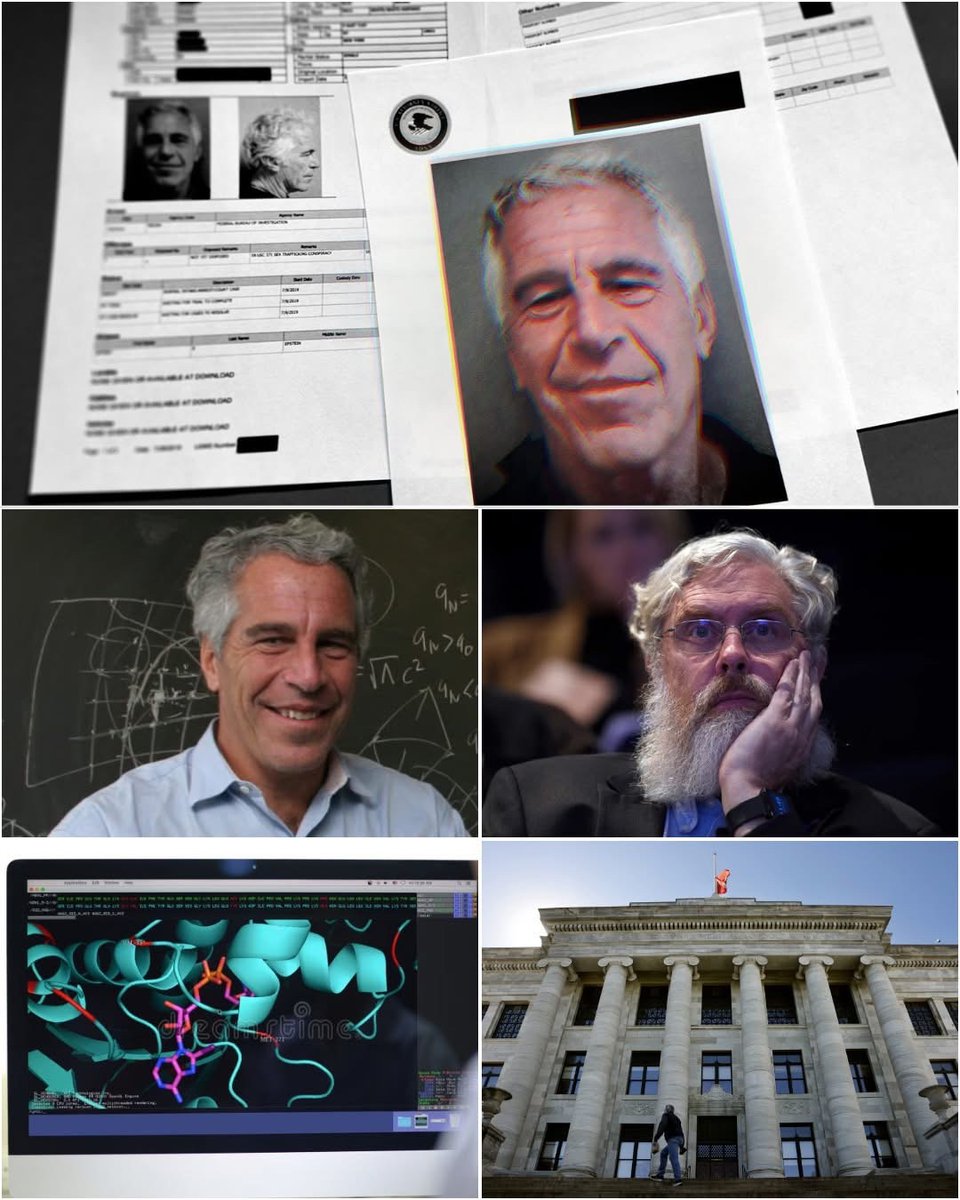
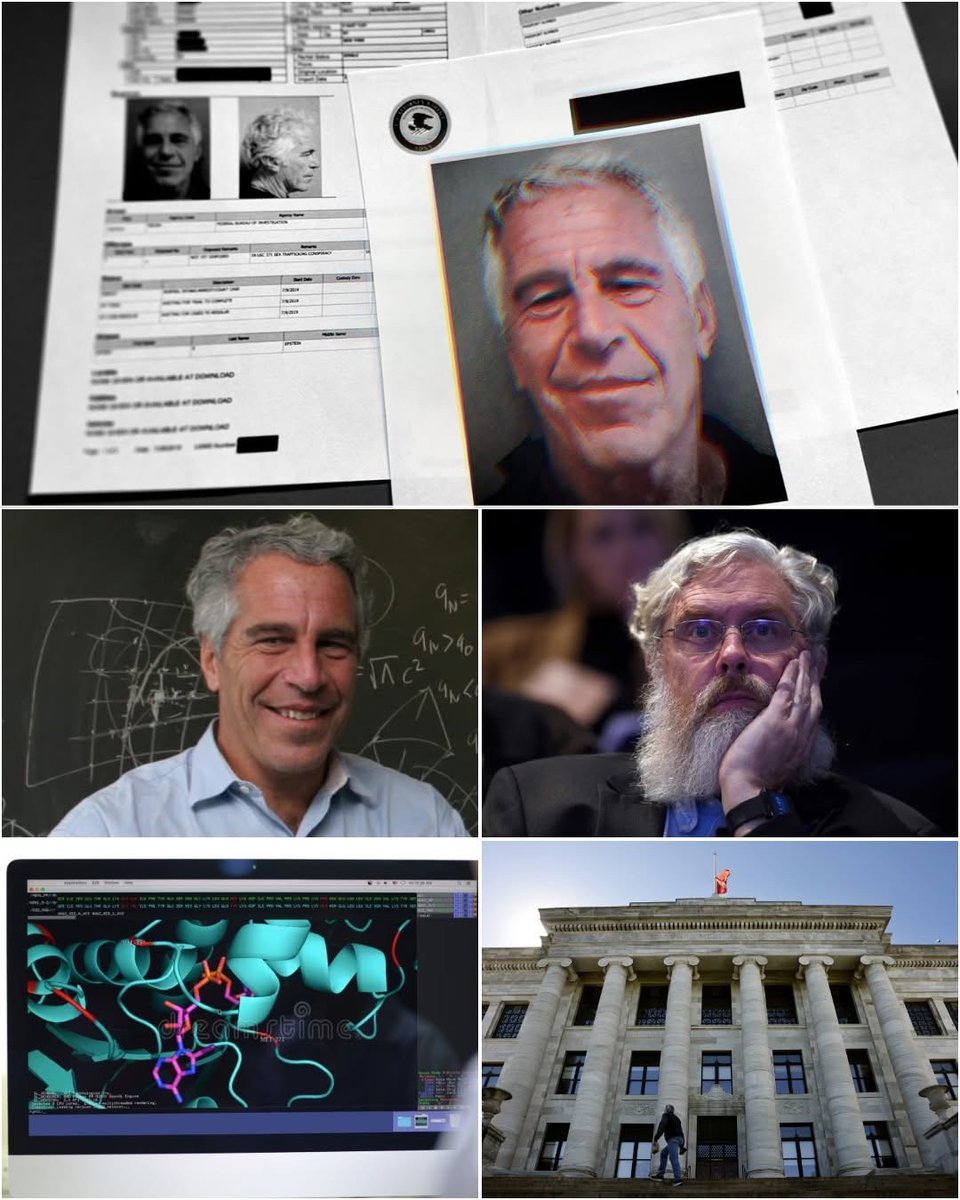
Someone Changed Jeffrey Epstein’s Harvard DNA Consent Date the Day After DOJ Released 3 Million Files. His Cell Lines Are Still Alive.

It is 9:47 on a Tuesday morning in the summer of 2013. A young scientist named Mad Ball walks into a laboratory at Harvard Medical School, ties on her lab coat, and pulls up a database on a computer screen. A colleague had asked her, casually, almost offhandedly, if she could check on a DNA sample that had been sitting in the refrigerator for a few weeks. Could it be prioritized for sequencing? Could it be bumped to the front of the line?

Ball types an ID number into the system. A name appears.

She doesn’t recognize it at first. So she does what any curious twenty-something scientist would do. She opens a new tab and types the name into Google.
What comes back stops her cold.

Jeffrey Epstein. Sex offender. Florida. Young girls. Dozens of victims. A sweetheart plea deal that prosecutors had quietly engineered to make most of it disappear. Ball stares at the screen for a long moment. Then she closes her laptop, packs up her things, and walks straight out of the lab — shaking.

She will later describe the moment this way: “It was such a shock to me. I didn’t even have words.”

That afternoon, one of the most bizarre, troubling, and still-unresolved chapters in modern science begins. And it does not end — not in 2013, not in 2019 when Epstein dies in a federal jail cell, not in 2026 when the Department of Justice dumps 3 million pages of Epstein files onto the public internet.

Because on January 31, 2026 — the morning after the DOJ releases those files — someone quietly logs into Harvard’s Personal Genome Project database and changes the date on Jeffrey Epstein’s consent record.

From 2013.

To January 31, 2026.

Nobody says a word. Nobody sends a press release. Nobody explains why.

His cell lines are still sitting in a Harvard refrigerator somewhere. His DNA is still catalogued. His blood still exists — coaxed, cultured, and kept alive — more than six years after the man himself died.

And no one — not Harvard, not George Church, not the DOJ — will say who made that change, or why.

A Man Who Wanted to Live Forever

To understand what makes this story so deeply unsettling, you need to understand who Jeffrey Epstein really was. Not just the man in the headlines. Not just the predator who trafficked and abused hundreds of young women and girls over decades. You need to understand what he believed about himself — and what he intended to do about it.

Epstein believed, with a fervor that bordered on religious conviction, that he was genetically special. That his DNA was worth preserving, worth studying, worth spreading. He spoke openly about this to scientists, to businessmen, to the rotating cast of brilliant minds he invited to his Manhattan mansion for lavish dinner parties where the wine was expensive and the conversation was carefully curated to flatter his ego.

He wanted to seed the human race with his DNA. Literally.

Multiple sources, first reported by the New York Times in July 2019, described how Epstein had laid out his plan in remarkable detail. He intended to use his sprawling 33,000-square-foot Zorro Ranch in New Mexico — the same property where investigators believe he committed some of his most serious crimes — as a kind of personal breeding facility. He wanted to impregnate twenty women at a time. He wanted to create children who carried his genetic material into the next century. He modeled the idea, without apparent irony, on the Repository for Germinal Choice, a California sperm bank from 1980 that was stocked with Nobel laureates’ donations before quietly shutting down in 1999.

He was not embarrassed about this. He talked about it at dinner parties.

He called it, at various points in his career, an interest in eugenics. By the time his emails were released to the public in early 2026, he had rebranded it with a Silicon Valley–flavored spin: “genetic altruism.” The idea, as he explained it in emails, was that men of superior intelligence and genetic makeup had a social obligation to spread their seed as widely as possible — not for selfish reasons, but for the good of humanity.

The narcissism is so breathtaking it almost distracts from how dangerous it is.

But here’s the thing that makes his Harvard DNA story more than just a historical footnote: Epstein didn’t just talk about this stuff. He acted on it. He cultivated relationships with the most brilliant geneticists in the world. He hosted them. He funded them. He bought his way into their laboratories and their databases and their refrigerators.

And in 2013, he put his blood in one of those refrigerators at Harvard Medical School — and asked for special treatment.

The Personal Genome Project

To understand how Epstein’s DNA ended up at Harvard, you first need to understand what the Personal Genome Project actually is — because it’s genuinely important science buried inside a genuinely troubling scandal.

The PGP was founded in 2005 by George Church, one of the most celebrated geneticists alive. Church is not a fringe figure. He is a towering presence in modern biology — a professor at Harvard Medical School, a pioneer in CRISPR gene editing, a man whose name appears on dozens of the most important papers in his field. He is also famously accessible and famously eccentric, a man who has spoken publicly about plans to resurrect woolly mammoths and who admits, with self-deprecating humor, that he sometimes moves too fast and asks too few questions.

The Personal Genome Project was his brainchild: an open-science initiative designed to create the world’s largest public database of human genetic information. Participants would donate their DNA. They would donate their medical records. They would do this voluntarily, understanding that their genetic information would be publicly posted online — stripped of traditional privacy protections — in the hopes that researchers around the world could use it to unlock the secrets of human disease, aging, and biology.

It was radical. It was controversial. And it was exactly the kind of thing Jeffrey Epstein found irresistible.

The project attracted thousands of participants over the years. Scientists. Professors. Ordinary citizens. People who wanted to contribute to something meaningful. They signed consent forms. They gave blood. They gave saliva. They waited.

Among them, beginning in 2013, was Jeffrey Epstein.

How he got in is a story that takes you straight to the heart of what made Epstein so effective and so dangerous. He didn’t knock on the front door. He never did. He found a side entrance — a back channel, a warm introduction, a financial connection that made the door swing open before anyone thought to ask whether it should.

He had been funding George Church’s research. Not secretly — Church later confirmed this, acknowledging in his 2019 apology that Epstein had made unrestricted donations to his lab between 2005 and 2007. In the world of academic science, that kind of early-stage, no-strings-attached funding is called “angel money.” It lets researchers pursue ideas too speculative to attract traditional grants. It buys goodwill. It opens doors.

And in 2013, one of those doors led directly to the PGP refrigerator.

A sample arrived. It was processed. It was logged. Cell lines were created — meaning living cells derived from Epstein’s blood were coaxed to multiply in culture, creating a renewable biological resource. His DNA was catalogued. His profile was added to the database. He was, on paper, just another participant in an open-science project.

Except he wasn’t. And within weeks, people inside the lab knew it.

Thread 🪡 link 🔗 to source below. ⬇️Image
The Morning Mad Ball Walked Out

The summer of 2013 is hot in Boston. The Charles River shimmers. The brick buildings of Harvard Medical School sit quiet and purposeful on Longwood Avenue, a campus that hums with the specific, concentrated energy of people who believe — correctly, mostly — that the work they are doing matters.

Mad Ball is at her bench when a colleague approaches. There’s a sample in the fridge. Can it be prioritized? It’s only been there a few weeks, but someone wants it moved to the front of the sequencing queue.

Ball goes to check.

She types the ID number.

She reads the name.

She Googles it.

By the time the search results load, her hands are already reaching for her bag.

“It looked like a quid pro quo sort of thing,” she told STAT News reporter Megan Molteni more than a decade later. “Which would have been upsetting but not super upsetting if it wasn’t a bad person but just a rich person. But this was a rich, bad person, and it looked awful.”

She walks out. Not for a coffee break. Out. She needs air. She needs to think. She is one person in a lab full of scientists who have all just had a registered sex offender’s DNA quietly slipped into their collection without their knowledge.

What follows is a crisis. Not a public one — there are no news cameras, no press releases, no official statements. But inside the lab, something breaks. Scientists argue. Emails fly. People feel violated. A registered sex offender — a man who had already pleaded guilty to soliciting a minor for prostitution in Florida in 2008 — has donated his biological material to their scientific project. And someone, it appears, had tried to ensure his sample got special attention.

The internal pushback was fierce enough that it worked. Epstein’s sample was not prioritized. No one jumped the queue for him. The sequencing request was denied.

But here is the thing that nobody says aloud at the time, the thing that will matter enormously years later: the sample stays.

The blood stays in the fridge. The cell lines stay alive. The DNA profile stays in the database. Jeffrey Epstein remains, quietly and officially, a participant in the Personal Genome Project at Harvard Medical School.

For thirteen years.

What George Church Knew — And When He Knew It

George Church has been telling a particular story about his relationship with Jeffrey Epstein for several years now. It is a story about “nerd tunnel vision.” About a brilliant scientist who was so focused on the work, so deep inside the research, that he failed to properly investigate the character of the man funding it. It is, in its way, a sympathetic story — or at least an understandable one.

It is also, based on what STAT News uncovered in February 2026, significantly incomplete.

The 2013 incident — the one where Mad Ball walked out of the lab after googling Epstein’s name — was not a minor administrative blip. It was a full-blown internal crisis. Scientists were upset. Emails were sent. The project’s director of research was so disturbed she had to leave the building.

And according to the interviews and emails obtained by STAT, George Church learned about it.

He was told that his lab had a problem. He was told who the problem was. He was given more information about Epstein’s activities — his crimes, his victims, his ongoing behavior — than he has previously acknowledged having.

And yet, in the years that immediately followed, Church continued to have contact with Epstein. The DOJ files, released in January 2026, contain evidence that Church received funding from Epstein or through his associates after the 2013 blowup. There is a reference to a planned meeting in 2014, just months after the Miami Herald investigation began revealing the true scale of Epstein’s crimes to the world.

Church issued an apology in 2019 after Epstein’s arrest, calling his continued meetings with the financier a product of “nerd tunnel vision.” He told 60 Minutes: “You don’t always know your donors as well as you would like.” When the show’s anchor Scott Pelley asked him if he regretted taking Epstein’s money, Church responded: “I regret not knowing more about the donor.”

The 2026 STAT investigation suggests he knew more than he let on.

Church has not responded to the latest round of questions. Harvard has issued no new statement. The records show what they show.

Meanwhile, the cell lines keep living.

The Obsession with Immortality

To understand why Epstein’s DNA mattered so much to him — why he didn’t just write checks and attend dinner parties but actually put his blood in a Harvard refrigerator — you need to go deeper into his worldview. And it is a worldview that, once you see it clearly, explains almost everything.

Epstein was terrified of death.

This is not unusual among the ultra-wealthy. Silicon Valley is full of billionaires spending hundreds of millions of dollars on life-extension research, on supplements, on young blood transfusions, on anything that might slow the clock. But Epstein’s obsession went further, and it took on a specifically genetic dimension that his Harvard entanglement makes suddenly, starkly real.

He dabbled in cryonics — the practice of having your body or head frozen after death in the hopes that future technology might revive you. He told at least one associate that he intended to have his head and his penis frozen upon dying, preserved for what he imagined would be a future reboot of Jeffrey Epstein.

He funded longevity research at multiple institutions. He was interested in stem cells, in CRISPR gene editing, in the emerging science of epigenetics. He paid for his own genome to be sequenced. He paid a Harvard-affiliated physician named Joseph Thakuria — first publicly linked to Epstein in the 2026 DOJ file release — to explore the possibility of using CRISPR to introduce longevity-enhancing mutations into his cells in culture.

In one email, Thakuria wrote to Epstein about this plan with barely contained excitement. He described the possibility of modifying Epstein’s stem cells to carry mutations thought to be associated with longer life, using gene-editing techniques then in their infancy. He wrote: “I’m exclusively offering this to Jeffrey. Due to the extensive labor involved, I simply cannot extend this opportunity to more than a few individuals at present.”

Epstein paid. A check for $2,000 was issued for DNA sequencing.

And somewhere in the middle of all this — the longevity research, the CRISPR experiments, the eugenics fantasies — Epstein’s blood went into the PGP fridge at Harvard. Living cells, taken from his body, multiplied into a permanent biological archive. Cell lines that, unlike their donor, do not age. Do not die of natural causes. Do not end up in a jail cell at the Metropolitan Correctional Center on a humid August morning in 2019.

They just keep growing. Division by division. Quietly. In the cold.
January 30, 2026: The Files Drop

By the time the DOJ announces the release of the Epstein files, the country has been waiting years for this moment. Every major outlet has reporters on standby. Activists, survivors, and attorneys are ready to comb through every page. The Justice Department promises over 3 million pages of documents — emails, financial records, photographs, flight logs, interview transcripts, internal memos — the most comprehensive public accounting of Epstein’s criminal enterprise ever assembled.

Deputy Attorney General Todd Blanche stands at a podium and calls it a fulfilment of the department’s obligations under the Epstein Files Transparency Act. He says the release will be the final major drop. He says names of powerful men associated with Epstein were not redacted. He says the team examined more than six million records during the review process.

The files go live on January 30, 2026.

Within hours, buried among the millions of pages, reporters find what they’ve been looking for — and some things they weren’t. There are flight logs that expand the list of names on the Lolita Express. There are emails detailing financial transactions with academics and researchers. There are references to the Harvard Personal Genome Project. There are references to George Church. There are emails connecting Epstein’s money to multiple research institutions, multiple scientists, multiple projects he had quietly funded over the years.

And among those references is this: cell lines containing Jeffrey Epstein’s DNA were created in 2013 as part of the Personal Genome Project at Harvard Medical School.

His DNA is still there. His cell lines are still alive.

The internet collectively inhales.

It is January 30, 2026. The story is already enormous.

The next morning, it gets stranger.

January 31: Someone Moves in the Dark

It is sometime on January 31, 2026. The exact hour is not known. What is known is that someone — a human being with access credentials to the Personal Genome Project’s public participant database — logs into the system and opens Jeffrey Epstein’s profile page.

They make a change. A small change. A change that, on its face, looks almost like routine data maintenance. They update the field that records the date of the participant’s consent to join the project.

The original date: 2013.

The new date: January 31, 2026.

The date of the change: January 31, 2026. The day after the DOJ released 3 million pages of files revealing that Epstein’s DNA was in the Harvard database.

The change is quiet. No announcement. No email. No press release. Just a cursor clicking into a database field, a new date typed in, a save button pressed.

STAT News reporter Megan Molteni discovers it on March 3, 2026, and publishes it the following morning in a piece that lands like a thunderclap.

The story is this: while the world was focused on the 3 million pages of documents the DOJ had just released — while journalists were sifting through flight logs and financial records and photographs — someone was inside Harvard’s database, quietly changing a date on a dead man’s consent record.

Nobody explains why.

Nobody says who.

Nobody from Harvard issues a statement.

George Church does not respond to questions.

The DOJ does not comment.

The Personal Genome Project, one of the most celebrated open-science initiatives in modern research history, offers nothing.Image
What Does a Changed Consent Date Mean?

Here’s where the story gets genuinely strange — because the implications of the changed date spiral in multiple directions, and each direction is more disturbing than the last.

The first possibility: it was a clerical correction. Maybe the original date was logged incorrectly. Maybe someone at the PGP was doing routine database maintenance, noticed an error, and fixed it. The timing — one day after the DOJ files — was pure coincidence.

But here’s why that explanation doesn’t hold up. The Personal Genome Project has records going back to 2005. The original consent date for Epstein’s participation was 2013 — consistent with every other piece of evidence about his enrollment in the project. There is no reason why a 13-year-old record would suddenly need a date correction. Not on January 31. Not the morning after 3 million pages of DOJ files reveal that Epstein’s DNA is in the database.

The second possibility: someone changed the date to make it look like Epstein had recently — posthumously — re-consented to his participation in the project. This is almost more disturbing than simple fraud. It would mean that someone wanted to create a paper trail suggesting the dead man’s inclusion in the database was somehow current, somehow freshly authorized. But why? And authorized by whom? Jeffrey Epstein has been dead since August 2019.

The third possibility — and this is the one that has researchers and legal experts genuinely unsettled — is that the changed date relates to something about what can be done with the DNA. Consent forms in scientific research are not just bureaucratic formalities. They define what researchers are permitted to do with biological samples. Under certain institutional frameworks, a current consent date might open doors that an expired or historical consent date would close. If someone wanted to access, sequence, or use Epstein’s cell lines for a purpose not originally contemplated in 2013, updating the consent record to a current date might — depending on the specific language of the PGP’s data-sharing agreements — create a pathway to do so.

In other words: the changed date might not be about covering something up. It might be about opening something up.

What, exactly? That is the question no one will answer.

The Cell Lines That Will Not Die

Let’s talk about the cell lines, because this is where the story stops being abstract and becomes viscerally, biologically real.

When Jeffrey Epstein joined the Personal Genome Project, he did not merely give a cheek swab. He gave blood. And from that blood, scientists created something that genetic researchers call a “cell line” — a collection of living cells coaxed to grow and multiply in a laboratory culture, indefinitely sustained by a carefully controlled chemical environment.

Cell lines are extraordinary things. Once established, they can be maintained essentially forever. They don’t age the way the body ages. They don’t carry the epigenetic damage of stress, disease, or time. They are, in a sense, a permanent biological archive of the person who donated them — a frozen slice of their biology, preserved in perpetuity, available for study whenever researchers choose to reach into the freezer and use them.

Epstein’s cell lines were created in 2013. They are, as of the writing of this article in early 2026, somewhere between twelve and thirteen years old. Which means they could still be growing. Still alive. Still sitting in a refrigerator in a Harvard lab, dividing quietly in the cold.

What can you do with a cell line? In 2013, when Epstein’s cells were first collected, the answer was: quite a lot, but not everything. You could sequence the genome. You could study genetic variants associated with disease. You could look for markers of specific traits.

But in 2026, the answer is different. In the twelve years since Epstein’s cells were collected, gene-editing technology has undergone a revolution. CRISPR, which Epstein was already enthusiastically funding in its earliest days, has matured into a precise, powerful, and widely available tool. Researchers can now do things with a cell line that would have seemed like science fiction in 2013. They can edit specific genes. They can create organoids — miniature organs grown in a dish. They can, in theory, derive certain types of stem cells from an existing cell line and use those stem cells to grow tissues, or to study developmental processes.

And there is one more possibility that exists in 2026 that did not meaningfully exist in 2013: the theoretical framework for human cloning — not practical, not legal in most jurisdictions, not something any reputable institution would openly pursue — has nonetheless advanced considerably. A cell line containing the complete genome of a human being is, from a purely biological standpoint, a starting point.

This is not to say anyone at Harvard is planning to clone Jeffrey Epstein. There is no evidence of that. But it does mean that a cell line containing his DNA is a fundamentally different object in 2026 than it was in 2013.

And someone, on January 31, 2026, went into a database and changed a date.

The Architect: George Church

George Church is 71 years old. He is tall, broad-shouldered, with a beard that has gone fully white and the specific, slightly distracted energy of a person whose mind is always partially somewhere else — somewhere in a genome, somewhere in a sequence, somewhere in the future he is building four base pairs at a time.

He is one of the most important scientists of his generation. He contributed foundational work to the Human Genome Project. He pioneered techniques for reading and writing DNA that underlie billions of dollars of modern biotechnology. He has started more than 30 companies. He is a MacArthur Fellow. He has been called, without exaggeration, the father of modern genomics.

He also accepted money from Jeffrey Epstein for at least seven years. He also attended meetings with Epstein after the man’s 2008 guilty plea. He also remained in contact — regular phone calls, the new files suggest, as recently as 2014 — with a man who had been convicted of soliciting a minor for prostitution.

He also ran the Personal Genome Project, the database where Epstein’s DNA lived.

And in 2026, his lab’s refrigerators still contain biological material that Epstein donated.
Church’s public explanation for all of this has evolved over time. In 2019, it was “nerd tunnel vision.” He didn’t know. He didn’t pay attention. He was too focused on the science. This explanation was accepted, mostly, by a press corps exhausted by Epstein coverage and by an academic community that understood, at some level, how a brilliant but unworldly scientist might miss something a layperson would catch immediately.

But the 2026 investigation by STAT changes the calculus. The new reporting shows that Church was told about the 2013 crisis. He was informed about Mad Ball’s discovery. He knew that his project’s director of research had walked out of the lab in distress after learning Epstein’s identity. The emails obtained by STAT suggest that he received detailed information about Epstein’s crimes at that time — more information than he acknowledged in his 2019 apology.

And after receiving that information, he continued to accept money that, the new DOJ files show, came from Epstein or from Epstein-connected sources.

Church has not responded to the latest round of questions. His lab has not issued a statement. Harvard’s communications office, asked repeatedly about the changed consent date and the status of Epstein’s cell lines, has offered nothing.

Harvard’s Long Silence

Harvard University and Jeffrey Epstein have a complicated and deeply uncomfortable history that goes well beyond George Church and the Personal Genome Project.

In 2003, Harvard quietly accepted $6.5 million from Epstein — the largest individual donation the university had received in years. The money went, in part, to establish the Program for Evolutionary Dynamics, a research initiative led by mathematical biologist Martin Nowak. For years, the university maintained that Epstein’s connection to the program was essentially that of a donor — generous, enthusiastic, but operating at arm’s length from the actual research.

The new DOJ files complicate this story in multiple ways. Emails show that Epstein was more involved in the intellectual direction of the program than previously acknowledged. He attended meetings. He suggested research directions. He brought scientists together. He used Harvard’s name — and his connection to it — as a credential in other contexts, telling financial contacts and associates that he was “sponsored” by Harvard, that Harvard scientists endorsed his ideas.

In 2008, after Epstein’s guilty plea in Florida, Harvard quietly decided it would refuse future donations from him. The decision was not announced. It was not explained publicly. It was simply made — a bureaucratic door quietly closed while Epstein’s existing funding continued to flow through existing programs.

The 2019 revelations prompted a round of internal reviews and public statements. Harvard convened a working group. It issued statements about taking Epstein’s crimes seriously. It acknowledged mistakes.

But through all of it — through the 2019 crisis, through the 2023 ongoing coverage, through the January 2026 DOJ file release — one question has never been fully answered: what exactly is the status of Jeffrey Epstein’s biological material at Harvard Medical School?

Are the cell lines still alive? Are they stored? Are they being used? Under what terms? With what oversight? With what safeguards?

And now, as of March 2026, there is a new question layered on top of all the others: who changed the consent date?

Harvard will not say.

The Eugenics Emails

While the consent-date mystery dominates the headlines in March 2026, it exists within a broader context of revelations from the DOJ file release that make Epstein’s presence in the Harvard DNA database even more disturbing.

Among the millions of documents released on January 30, 2026, are emails in which Epstein discusses his genetic and eugenics interests in remarkable detail. Mother Jones, reviewing the files in February 2026, describes emails in which Epstein explicitly lays out what he called his “genetic altruism” theory — the idea that men of superior intelligence and genetic quality had an obligation to reproduce as widely as possible.

These are not abstract philosophical musings. They are operational discussions. Epstein writes about specific mechanisms. He references specific scientific projects. He names specific researchers. He talks about what he wants to do — not just what he believes.

And woven through these emails is the thread that connects everything: his relationship to his own DNA. He is obsessed with it. He wants it sequenced, studied, preserved, and propagated. He pays for experimental procedures involving his own cells. He funds the research of scientists who are working on the very technologies that could, in theory, be used to extend the biological reach of his genome beyond his own lifetime.

In this context, the Personal Genome Project is not just a philanthropic gesture or a vanity scientific project. It is a piece of a strategy. A strategy for biological immortality. A strategy for leaving a genetic legacy that outlives the man — or, more precisely, outlives the legal problems that might otherwise contain him.

He put his blood in that Harvard refrigerator for a reason.

He kept in touch with George Church for a reason.

He funded research into CRISPR and longevity and stem cells for a reason.

The reason is sitting in a freezer in Boston. And on January 31, 2026, someone decided that the date on that reason needed to be updated.

The People Who Tried to Stop It

Lost in the swirl of conspiracies and cover stories and celebrity names is the fact that some people, when confronted with Jeffrey Epstein, said no.

Mad Ball said no. A young scientist, early in a career that depended on institutional goodwill and professional relationships, looked at what was happening in her lab and walked out. She didn’t stay quiet. She didn’t rationalize. She set off a crisis because she believed a crisis was warranted.

Other lab members supported her. The internal pushback was strong enough that Epstein’s sample didn’t get special treatment. No one jumped the queue. The quid pro quo, if that’s what it was, didn’t work.

These are the people whose names don’t appear on the grants, don’t get quoted in the admiring profiles, don’t get credit for the discoveries. They are the ones who saw something wrong and said so — at real professional risk, in an environment where powerful donors have powerful friends.

Their story is part of this story too.

And it raises a question that gets sharper and more pointed with every passing year: if a junior scientist in 2013 could look at a database entry, google a name, and immediately understand that something was very wrong — why couldn’t the people above her? Why couldn’t the professor whose lab she worked in? Why couldn’t the institution whose campus they all shared?

Or did they understand? And decide, for reasons of their own, that the cell lines were worth more than the discomfort?

The Night Epstein Died

It is the early hours of August 10, 2019. Jeffrey Epstein is in a private cell at the Metropolitan Correctional Center in lower Manhattan, awaiting trial on federal sex trafficking charges. The charges are serious. The evidence is substantial. After years of near-misses and sweetheart deals and legal maneuvers that kept him free, he is finally, genuinely exposed.

At some point before dawn, he dies.

The official ruling is suicide by hanging. The Bureau of Prisons says he was supposed to be checked on every thirty minutes but wasn’t. His cellmate had been transferred the day before. The cameras outside his cell were not functioning. The two guards on duty had both fallen asleep — or so they later claimed. They had falsified their check logs.

The circumstances are so spectacularly convenient — for so many spectacularly powerful people whose names appear in his files, his flight logs, his contact lists — that a significant portion of the country simply refuses to accept the official explanation.

But regardless of what you believe about how he died, one fact is undisputed: his cell lines at Harvard did not die with him.

They kept growing. They kept dividing. They kept existing, quietly and persistently, in the cold of a university laboratory, waiting.

For what?

The Open Question

Here is what we know for certain as of March 2026.

Jeffrey Epstein joined the Harvard Personal Genome Project in 2013. His enrollment caused an internal crisis in George Church’s lab. Cell lines containing his DNA were created and stored. The crisis was contained but the samples remained. Epstein continued to fund research at Harvard and affiliated institutions for years after the 2013 incident. He died in 2019.

In January 2026, the DOJ released 3 million pages of Epstein files, among which were documents revealing his participation in the PGP and the existence of his cell lines. The next morning — January 31, 2026 — someone changed the consent date in his PGP profile from 2013 to January 31, 2026.

No one will say who did it.

No one will say why.

Harvard will not comment. George Church will not comment. The DOJ will not comment. The Personal Genome Project, whose entire existence is premised on radical transparency and open science, has not offered an explanation for why a dead man’s consent record was updated the morning after the biggest Epstein document release in history.

The cell lines may still be alive. Living cells, thirteen years old, coaxed from the blood of one of the most reviled figures in modern American history, sitting in a refrigerator at one of the world’s most celebrated universities.

The science of what can be done with those cells has changed enormously since 2013. CRISPR is mature. Organoids are real. The theoretical conversations about human cloning are closer to practical reality than they have ever been.

And someone, on a January morning, updated a date.Image
Read 4 tweets
Mar 8
Jeffrey Epstein's Ranch Won $85 Million in the Oklahoma Lottery Two Days After He Went to Prison. The Company That Printed the Ticket Belonged to His Palm Beach Neighbor.

The Store That Sold It Belonged to The Neighbor's Former Colleague. And The Ranch, Which Was Never Searched, Now Belongs to a Trump Insider's Family. Follow the Money, Part Two.

🎩 By Alisa Valdes-Rodriguez

Yesterday, I published the first installment of a four-part series I’ve written in which I follow the money related to Jeffrey Epstein’s Zorro Ranch, from its purchase from the King family in 1993 to its new owners, Don and Mary Catherine Huffines. What follows here is part two. By following the money, a terrifying picture begins to emerge, an existential threat to the national security of the United States of America.

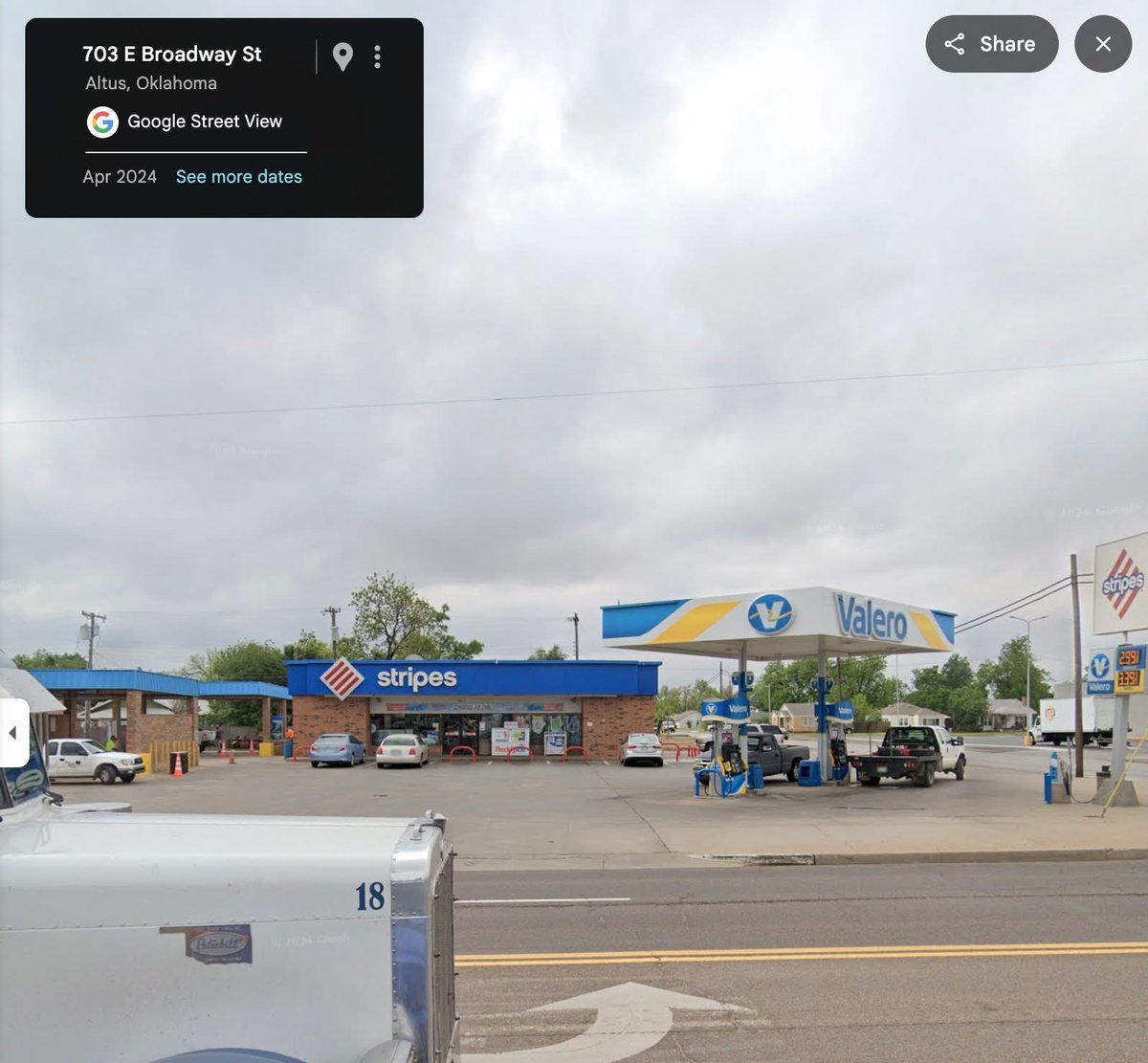
In yesterday’s part one of this series, I shared a bit about the financial relationships between dead child rapist and sex trafficker Jeffrey Epstein and former New Mexico Governor Bruce King and his son, former New Mexico Attorney General Gary King. To briefly summarize, Epstein’s Zorro Trust purchased nearly 7,500 acres outside Stanley, New Mexico, from the King family for $12.3 million in 1993, after the King family sold it off to help pay $21 million in debts on their various businesses. I recounted the evidence of child sex rape and trafficking that took place at Zorro Ranch for decades, and ended the piece with the vastly under-reported fact that Zorro Trust won the Oklahoma Powerball lottery in 2008, two days after Epstein began serving his first — and far too lenient — jail term, in the amount of $85 million.

Today we pick up there. With that lottery win. While I’ve seen a few stories online about it, no serious news outlet has covered it. I suspect this is because plausible deniability is built into the way Oklahoma law allows trusts to win the lottery while legally protecting the identity of the trust’s owners. This law exists in theory to protect large jackpot winners from being hounded or robbed. But it also creates fertile ground for fraud. Not even a freedom of information act records request from a reporter can unseal those records. The only way we could ever find out for certain, from lottery officials, that the Zorro Trust that won on July 2, 2008, was the same Zorro Trust that bought the ranch in Stanley, New Mexico — a six-hour drive from the convenience store where the ticket was purchased — would be if the courts demanded the record unsealed. So far, that hasn’t happened.

There are, however, other ways to put together a strong circumstantial case.

One way is to go to Stanley and other points in this state and ask around. Which I did. I live here. We’re a big state with a small population. Everyone knows everyone, and my family has been here for 13 generations. Lots of regular people worked on that ranch — as staff, as contractors. And while it’s clear in the Epstein files that Epstein and his wealthy associates didn’t think much of the working poor who cleaned their toilets and took out their trash, such disregard by the rich for those they exploit tends not to breed loyalty in the end, because the working poor are human. That said, people are still reluctant to give their names publicly, because many were forced to sign non-disclosure agreements, and others witnessed abuses so horrific they’re pretty sure that even with Epstein dead, there are still people who want this all to go away.

I want to pause here to say this: Former employees of Jeffrey Epstein’s Zorro Ranch who signed non-disclosure agreements may have more legal freedom to speak than they realize. The Speak Out Act, signed into federal law in 2022, significantly curtailed the enforceability of NDAs involving sexual assault and sexual harassment, gutting one of the primary legal mechanisms used to silence witnesses to abuse. Beyond that, courts have long held that no contract can compel someone to conceal criminal conduct — an NDA that functions as a cover-up is, by definition, unenforceable as against public policy. Whistleblower protections further shield anyone who comes forward to law enforcement or journalists investigating matters of legitimate public concern. And there is a practical reality worth noting: Epstein is dead, his ranch has changed hands, and any attempt by his estate to sue a former employee for speaking truthfully about crimes would open that estate to the very discovery process it would most want to avoid. The NDA, in other words, may have always been more threat than law.

Which is all to say: people here in New Mexico know that it was Epstein’s Zorro Trust that won the Oklahoma lottery two days after he began to serve his first prison sentence. They also know who bought the ticket. Brice Gordon, a former New Zealand soldier who managed the estate with his wife Karen, also a former New Zealand soldier. I’d ask them about it directly, but they seem to have disappeared off the face of the earth after inheriting $2 million when Epstein died.

Now that we have all that out of the way, let’s look at the people and entities involved behind the scenes in making that win possible — a win with 146 million to one odds for regular people, and likely far greater odds for a convicted pedophile in prison. It’s in those details that the picture begins to come into focus.

Fact No. 1: The Man at the Top

James Scroggins materialized in the world of American state lotteries the way certain figures do in industries built on government contracts and quiet relationships — fully formed and without much of a paper trail explaining how he got there. He ran the Pennsylvania lottery, then the Missouri lottery for thirteen years, then arrived in Oklahoma in 2005 to launch its lottery from scratch. He was the executive director of the Oklahoma Lottery Commission on July 2, 2008, when the Zorro Trust walked in and claimed $85 million — which the trust opted to take as a $29.3 million lump sum. He was the man legally required to receive the trust’s membership disclosure — the document naming the actual human beings behind that claim. He is one of a very small number of people alive who knows what that document said.

Scroggins is not a man the public knows much about. Search his name and you find almost nothing — no consulting website, no professional biography, no industry award profiles, no conference keynotes, no press releases announcing his next chapter after he left public service. His LinkedIn profile exists, but is set to private, a curious posture for a man who spent two decades as a government official administering a public trust. What we know about him comes almost entirely from contemporaneous news coverage of the lotteries he ran. And what that coverage reveals, once you read across all four states and all four decades, is a consistent pattern: wherever James Scroggins went, the rules bent.

It started in Pennsylvania.

In the late 1980s, while Scroggins was serving as Pennsylvania’s lottery director, a man named Nick Herbst walked into lottery offices to claim a nine-month-old $15.2 million Super 7 jackpot. The ticket was reviewed at the lottery offices and approved for payment by Scroggins personally — over the written objections of at least one lottery staff member who had flagged a serious problem with the ticket’s validity. The problem was this: while the lottery’s computer showed the ticket had been sold at the Neshaminy Mall in Bensalem, Bucks County, the paper the ticket was printed on carried a serial number assigned to a lot of paper sent to a Scranton lottery agent — a completely different location. The two records did not match. Scroggins ordered the claim honored anyway. Herbst was ushered to a press conference, given a check for the first installment, posed for photographers, and answered reporters’ questions. He claimed he had forgotten about the ticket and had been using it as a bookmark.

The ticket was a fraud. It had been fabricated by an employee of the company that provided computer systems to the lottery — a scheme that required inside access to the technical infrastructure of the game itself. Two men, Herbst and a computer repairman alleged to have masterminded the scheme, were arrested and charged with forgery, theft, conspiracy, tampering with public information, and unlawful use of a computer. When the arrests were made, Scroggins stood before reporters and said: “This situation proves beyond a shadow of a doubt the system works. Yes, there was a payment made to someone who in fact was not a winner, but those persons were apprehended.” That claim was disputed by at least one official privy to the details of the investigation.

It was not the last time Scroggins would find himself defending a suspicious claim he had personally approved.

He moved on to Missouri, where he ran the lottery for thirteen years without surfacing in major public scandals — though it bears noting that Missouri was a Scientific Games contract state throughout his tenure, cementing a long working relationship between Scroggins and the executives of the company that would later hold Oklahoma’s lottery contract.

Then came Oklahoma, where the pattern sharpened considerably.

Two years before the Zorro Trust claimed its $85 million, a different anonymous trust claimed a $101.8 million Powerball jackpot in Oklahoma. Scroggins told a reporter at the time that the commission did not even know who the winners were — that their identities were not stated in the trust agreement. Under the Oklahoma Lottery Act, the commission was required to withhold delinquent child support payments from lottery winnings. But Scroggins, backed by the state Attorney General’s office, declared that requirement inapplicable in this case. The winners’ identities were protected. No background search was conducted. No child support check was run. The precedent had been set: anonymous trust claims in Oklahoma were beyond scrutiny, with the executive director’s blessing and the state’s legal imprimatur.

That was 2006. In 2008, the Zorro Trust walked through the door Scroggins had built.

Scroggins himself, in a 2009 interview, drew attention to something remarkable about Oklahoma’s jackpot win rate. He noted that the state’s frequency of jackpot winners was, in his own word, “astounding” for a lottery only four years old. “Many participating states have played Powerball for 10 to 15 years and only had one winner,” he said. Oklahoma, between 2006 and 2008, had produced four unique jackpot winners — two of them on the same day. Scroggins flagged the anomaly. He did not investigate it.

There is something else worth noting about that July 2, 2008 drawing specifically. According to multiple accounts, a computer malfunction disrupted what was ordinarily a live, televised broadcast of the Powerball draw. The drawing went forward without the usual public broadcast, monitored instead by an auditing firm. Why was the night Oklahoma’s largest-ever jackpot was decided also the night the live television feed went dark? That question has never been publicly answered.

After Oklahoma, Scroggins moved to Illinois in 2012, to serve as Chief Financial Officer for the state’s lottery — arriving, characteristically, at a moment of institutional chaos. Illinois had just become the first state in the nation to privatize its lottery operations, hiring a company called Northstar Lottery Group to run its games. Northstar later came under withering scrutiny after a Chicago Tribune investigation found that the lottery had failed to award more than forty percent of the instant game grand prizes it had advertised between 2011 and 2015, with Northstar dramatically increasing the number of printed tickets while dangling ever-larger prizes in front of buyers. Scroggins walked into the middle of that scandal.

And then he vanished from public record entirely.

What we are left with, across Pennsylvania, Missouri, Oklahoma, and Illinois, is a man who repeatedly found himself at the exact intersection of questionable claims, convenient procedural interpretations, and lucrative vendor relationships — and who, when his public career ended, chose silence over the kind of professional visibility that is standard in his industry. We know almost nothing about who he is. That, too, is a kind of answer.

Fact No. 2: The Store

The winning ticket was purchased at a Stripes convenience store in Altus, Oklahoma — a town of 18,000 near an Air Force base, and a six-hour drive from the Zorro Ranch outside Stanley, New Mexico — by Brice Gordon.

Stripes was a chain of convenience stores and gas stations operating primarily in Texas, Oklahoma, and New Mexico, owned in 2008 by Susser Holdings Corporation, a family-run company headquartered in Corpus Christi, Texas. The Altus location had only recently come under Susser Holdings’ control — the company had completed its acquisition of the Town & Country Food Stores chain in early 2008, absorbing the western Oklahoma locations into its corporate portfolio just months before the July 2 jackpot.

Unlike a franchise operation, where an independent owner might notice and report anomalies, Susser Holdings owned and operated its stores directly. The terminal, the staff, and the ticket inventory at the Altus location all fell under a single corporate chain of command. And at the top of that chain was the company’s Chairman, CEO, and President: Sam L. Susser.

Susser had come to the convenience store business by way of Wall Street. He worked at Salomon Brothers Inc. in the Corporate Finance and Mergers and Acquisitions division from 1985 to 1987. He was on the floor of that institution during the precise months when a man named Ronald Perelman — funded by junk bond king Michael Milken of Drexel Burnham Lambert — made a hostile move to acquire a controlling stake in Salomon Brothers worth $800 million. It was widely described as a junk bond raid. Warren Buffett intervened as a white knight, investing $700 million in convertible preferred stock, which allowed Salomon to buy back the targeted shares. With that, Perelman was dispatched. Susser left Salomon the same year and returned to Texas to build his family’s business.

Fact No. 3: The Lottery Contract

The company that held the Oklahoma lottery contract in 2008 — printing the state’s Powerball tickets and operating the central gaming system that determined the winners — was Scientific Games Corporation. Its largest shareholder, holding nearly forty percent of its stock, was Ronald Perelman.

Let that land for a moment. The man who had tried to seize the firm where the future owner of the winning ticket’s store once worked — Perelman — controlled the company that printed the tickets and ran the system.

Fact No. 4: The Network

Ronald Perelman was not a peripheral figure in Jeffrey Epstein’s world. He appears in Epstein’s personal black book. He hosted the 1995 Palm Beach dinner at which Epstein and President Bill Clinton were first documented in the same room together. And in 2004, Perelman sold his Palm Beach estate, Casa Apava, for $70 million — then a record for Palm Beach real estate — on the same small island where, that same year, Epstein and Donald Trump famously went head to head at a bankruptcy auction for a 62,000 square foot oceanfront mansion called Maison de l’Amitié, the House of Friendship. Trump outbid Epstein, paying $41.35 million. The trustee overseeing the auction described it at the time as “two very large Palm Beach egos going at it.” It was the beginning of the end of their friendship. Within weeks of losing that auction, Epstein found himself under investigation by Palm Beach police.

These three men — Epstein, Trump, and Perelman — did not merely know each other. They occupied the same tightly drawn circle on one of the wealthiest strips of land in America. And Ronald Perelman, alone among them, had the industrial infrastructure to print lottery tickets and run the systems that determined who won.

And it just so happens that his associate, Jeffrey Epstein, was the winner.

Fact No. 5: The New Owners

Eleven years passed between the lottery win and Epstein’s death in a Manhattan federal detention facility on August 10, 2019 — years during which Zorro Ranch was never searched, even as federal investigators examined his other properties. Two days before he died, Epstein changed his will, leaving $100 million and all of his properties to a woman often identified as his last girlfriend, Karyna Shuliak, whom I wrote about in detail a couple of weeks ago. Zorro Ranch was among those properties. Shortly after Epstein’s death, federal investigators instructed then-New Mexico Attorney General Hector Balderas to pull the plug on any efforts to investigate or search the ranch.

On August 16, 2023, a company called San Rafael Ranch LLC purchased Zorro Ranch from Epstein’s estate for an undisclosed price — the asking price had been reduced from $27.5 million to $18 million before the sale closed. San Rafael Ranch LLC was formed just 19 days before the purchase closed, with a Santa Fe real estate attorney, Charles V. Henry IV, listed as its registered agent. There was no public disclosure of beneficial ownership, until last month, when Clara Bates, a reporter with the Santa Fe New Mexican, was able to find mention of the LLC’s owners in court documents pertaining to the owners’ attempts to force the state of New Mexico to place the value of the ranch at just $9 million for tax purposes — the same tactic Trump has used throughout his career to avoid paying real estate taxes.

The new owners are Don and Mary Catherine Huffines. Court documents list Mary Catherine as trustee and their son Colin as manager of a related entity, San Rafael One LLC.

Don Huffines is a Dallas real estate developer and hard-right Republican politician who, along with his identical twin brother Phillip, co-founded Huffines Communities in 1985, now one of the largest residential real estate development firms in the Dallas-Fort Worth area. A fifth-generation Texan whose family has operated car dealerships in the Dallas metroplex since 1924, Huffines served one term in the Texas State Senate representing North Dallas from 2015 to 2019, ran unsuccessfully against Governor Greg Abbott from the right in 2022, and on March 3, 2026 — three days before this article was published — won the Republican primary for Texas Comptroller, the state’s chief financial officer. A self-described MAGA Republican, he has endorsements from Ted Cruz, the late Charlie Kirk, and just last week, Donald J. Trump. Don and Mary Catherine spent Valentine’s Day in 2025 at Mar-a-Lago.

Another son, Russell Huffines, serves as Associate Director of Agency Outreach in the White House Office of Cabinet Affairs under President Donald J. Trump, and co-runs HEST Investments — a Dallas-based venture capital family office — alongside his father.

And here’s where the dot-connecting comes full circle. Remember Sam L. Susser? Yeah. Hold on to your hats, friends. It’s about to get bumpy.

In 2014, Sam L. Susser sold Susser Holdings Corporation — the parent company of the Stripes convenience store chain — to Energy Transfer Partners for approximately $1.8 billion. He then relocated to Dallas, where he founded Susser Bank, a private financial institution, taking on the role of Chairman. To help govern it, he assembled a board that included James R. Huffines — Don Huffines’ older brother.

James Huffines is a veteran Texas banker who had served as President and Chief Operating Officer of PlainsCapital Corporation before becoming COO of Hilltop Holdings, the financial empire built by Dallas billionaire Gerald J. Ford.

Ford, it happens, had built a significant portion of that empire in partnership with Ronald Perelman — the same Ronald Perelman whose company printed Oklahoma’s Powerball tickets in 2008, and whose name appears in Jeffrey Epstein’s personal black book.

In March 2026, the newly-created Epstein Survivor’s Truth Commission ordered Don and Mary Catherine Huffines to immediately halt all construction at the now-renamed San Rafael Ranch, finding the new front gate was being built without proper permitting. Aerial shots taken by the New York Times showed that the Huffines had also excavated a large portion of the ranch’s helipad and labyrinth gardens, leaving a deep, massive hole in a property where witnesses said two “foreign girls” had been buried on orders from Epstein and Maxwell after being murdered during “rough fetish sex.”

In tomorrow’s Part 3 of this series, I will take a closer look at the businesses Don and Russell Huffines run together through HEST Investments, and how at least one of their portfolio companies — which works with neonatal cardiac tissue harvested within 30 days of live birth — occupies a field of science that was of well-documented special interest to Jeffrey Epstein.

Image: The Stripes convenience store in Altus, Oklahoma, that sold the winning Powerball ticket to Zorro Trust in 2008.

🎩 Author Alisa Valdes (Rodriguez)Image
New evidence has emerged showing that federal prosecutors ordered New Mexico investigators to shut down their probe into Jeffrey Epstein’s New Mexico ranch in 2019.

The discovery is raising new questions about how the federal government handled key aspects of the Epstein investigation.

The order came from then-Assistant U.S. Attorney Maurene Comey, the daughter of disgraced former FBI Director James Comey.

According to newly reported details, state officials agreed to halt their investigation after federal prosecutors promised access to additional evidence related to Epstein’s trafficking network.

slaynews.com/news/feds-orde…Image
Image
Read 5 tweets
Mar 1
Epstein Files 2014: Silk For Nanotechnology RFID Microelectronic Tags and Vaccine Delivery Implantable In Humans For Tracking - Why Did The COVID19 Bioweapon Contain Spider "Silk" Genes?

SILK technology driven enterprise FIORENZO OMENETTO DAVID KAPLAN SILK LAB - TUFTS UNIVERSITY justice.gov/epstein/files/…

Researching the Epstein Database for Epstein connections to nanotechnologies, human RFID chipping, nanoelectronics for vaccine delivery, microfluidics for microrobotics use is like a treasure trove. The point of this research is to direct attention to the technocratic Transhumanist Agenda that Epstein was intimately involved in directing. Everything I have been uncovering in the human blood and COVID19 injections over the past years can be found in the Epstein files, as well as the top scientists who were working in those fields.

Here, we discuss the materials pertaining to Silk used for the manufacturing of biosensors and nanotechnological tracking devices for human and vaccine microelectronics. The presentation is part of the Epstein files and the emails show that Epstein courted both Tuff’s university professors involved in the research of liquid silk. Epstein was able to connect with Fiorenzo Omenetto and there are emails that I listed below that discuss funding opportunities by Epstein for Omenetto.

Why is this important?

Because the COVID 19 shots contained genes for spider silk, used in nanotechnology and for brain computer interface. Spidersilk has also been sprayed via geoengineering, its is a versatile polymer for Cyborg Transhuman self assembly nanotechnologies. I have extensively discussed in previous articles that Epstein had interest in areas that have been seen specifically implemented in the COVID19 bioweapon.

Journalist Sayer Ji has done deep dive on connections with Epstein and Bill Gates to “get more money for vaccines”.

Epstein Files, Pandemic Power and the Question of Accountability childrenshealthdefense.ca/news/epstein-f…

I have discussed recently Epsteins obsession with the Vagus nerve and his belief that this is what needs to be immunized. I showed how COVID19 bioweapon has all of the features of Vagus nerve attack, which is critical for brain computer interface as well as weaponization of vaccines.

Epstein Was Obsessed With Vagus Nerve “Should Be Immunized”Critical To Hacking Humans For BCI - C19 Causes Autonomic Dysfunction Via Vagus Nerve Resulting In Worse Cancer, Afib, Cognitive Dysfunction anamihalceamdphd.substack.com/p/epstein-was-…

It is of great interest, that Epstein was also obsessed in contacting the scientists and experts who’s field of expertise are all of the building blocks of self assembly nanotechnology that I have discussed and researched for the past 4 years.

Dr Speicher found in the DNA fragments of the COVID19 shots gene encoding spider silk.

Residual DNA fragments Analysis Detected In Monovalent And Bivalent Pfizer/BioNTech And Moderna modRNA COVID-19 Shots Confirms Spider Silk Genes Encoded In The Spike Open Reading Frame anamihalceamdphd.substack.com/p/residual-dna…

I discussed how spidersilk is used for self assembly nanotechnology and brain computer interface and confirmed the findings of Clifford Carnicom and I that human blood and the vaccinated blood clots contain polyamides which could also represent spider silk and nylon. Please see this substack from 1/2024:

Spider Silk Polyamide Polymers Applications In Self Assembly Nanotechnology, Biosensors, Vaccine Delivery, Synthetic Biology, Brain Computer Interface anamihalceamdphd.substack.com/p/spider-silk-…

During the same time I received Spider Silk Samples for microscopic analysis that were being sprayed in California:

Spider Silk Polymer Sprayed Via Geoengineering Operations From California - Darkfield Microscopy Analysis anamihalceamdphd.substack.com/p/spider-silk-…

It was of great interest that spider silk amyloid was mentioned in the Presidents Nanotechnology Budget, specifically mentioning AMYLOID spidersilk.

Amyloid clots have been found in all vaccinated people:

Study Shows ALL C19 Vaccinated Have Amyloid Microclots-Confirming 2022 Live Blood Study. Dissolution Of Amyloid Clots With EDTA, Vitamin C, Methylene Blue & DMSO - Successfully Done For Past 3 Years anamihalceamdphd.substack.com/p/study-shows-…

Spike protein gene sequence codes for hydrogel/ amyloid depending on PH. Both are used for brain computer interface but can also cause disease in humans.

Amyloid and Hydrogel Formation of a Peptide Sequence from a Coronavirus Spike Protein Its’ Hydrogel manufactured in the C19 injected, not Amyloid! anamihalceamdphd.substack.com/p/amyloid-and-…

Here is what the Presidents Nanotechnology budget said:

What Did The National Nanotechnology Initiative Supplement To The Presidents 2023 Budget Say About Polymer Amyloid Spider Silk Production? Could This Have Been Weaponized Against Humanity? anamihalceamdphd.substack.com/p/what-did-the…

''Harnessing bacteria to synthesize high-performance nanomaterials. University researchers funded by NIFA, ONR, and DOE have used genetically engineered bacteria to produce polymeric amyloid fibers that exhibit ultimate tensile strength comparable to the strongest natural spider silk (~1 GPa, stronger than common steel) while displaying higher toughness than natural spider silk (~160 MJ/m3 ). Redesigning the silk sequence by introducing amyloid sequences that have a high tendency to form βnanocrystals, they were able to induce the bacteria to synthesize a hybrid polymeric amyloid protein with 128 repeating units. The resulting proteins had less repetitive amino acid sequences than spider silk, making them easier for engineered bacteria to produce. The polymeric amyloid proteins can be wet-spun into macroscopic fibers with a wide range of mechanically demanding applications.''

Here is Epstein courting the scientists in 2014 who were working on liquid silk for nanotechnology and RFID chip tracking in humans, as the slides from the Epstein files show below:
👇🏼
🎩Matthew M. CameronImage
Researching the Epstein Database for Epstein connections to nanotechnologies, human RFID chipping, nanoelectronics for vaccine delivery, microfluidics for microrobotics use is like a treasure trove. The point of this research is to direct attention to the technocratic Transhumanist Agenda that Epstein was intimately involved in directing. Everything I have been uncovering in the human blood and COVID19 injections over the past years can be found in the Epstein files, as well as the top scientists who were working in those fields.

Here, we discuss the materials pertaining to Silk used for the manufacturing of biosensors and nanotechnological tracking devices for human and vaccine microelectronics. The presentation is part of the Epstein files and the emails show that Epstein courted both Tuff’s university professors involved in the research of liquid silk. Epstein was able to connect with Fiorenzo Omenetto and there are emails that I listed below that discuss funding opportunities by Epstein for Omenetto.

Why is this important?

Because the COVID 19 shots contained genes for spider silk, used in nanotechnology and for brain computer interface. Spidersilk has also been sprayed via geoengineering, its is a versatile polymer for Cyborg Transhuman self assembly nanotechnologies. I have extensively discussed in previous articles that Epstein had interest in areas that have been seen specifically implemented in the COVID19 bioweapon.

Journalist Sayer Ji has done deep dive on connections with Epstein and Bill Gates to “get more money for vaccines”.

Epstein Files, Pandemic Power and the Question of Accountability

I have discussed recently Epsteins obsession with the Vagus nerve and his belief that this is what needs to be immunized. I showed how COVID19 bioweapon has all of the features of Vagus nerve attack, which is critical for brain computer interface as well as weaponization of vaccines.

Epstein Was Obsessed With Vagus Nerve “Should Be Immunized”Critical To Hacking Humans For BCI - C19 Causes Autonomic Dysfunction Via Vagus Nerve Resulting In Worse Cancer, Afib, Cognitive Dysfunction

It is of great interest, that Epstein was also obsessed in contacting the scientists and experts who’s field of expertise are all of the building blocks of self assembly nanotechnology that I have discussed and researched for the past 4 years.

Dr Speicher found in the DNA fragments of the COVID19 shots gene encoding spider silk.

Residual DNA fragments Analysis Detected In Monovalent And Bivalent Pfizer/BioNTech And Moderna modRNA COVID-19 Shots Confirms Spider Silk Genes Encoded In The Spike Open Reading Frame

I discussed how spidersilk is used for self assembly nanotechnology and brain computer interface and confirmed the findings of Clifford Carnicom and I that human blood and the vaccinated blood clots contain polyamides which could also represent spider silk and nylon. Please see this substack from 1/2024:

Spider Silk Polyamide Polymers Applications In Self Assembly Nanotechnology, Biosensors, Vaccine Delivery, Synthetic Biology, Brain Computer Interface

During the same time I received Spider Silk Samples for microscopic analysis that were being sprayed in California:

Spider Silk Polymer Sprayed Via Geoengineering Operations From California - Darkfield Microscopy Analysis

It was of great interest that spider silk amyloid was mentioned in the Presidents Nanotechnology Budget, specifically mentioning AMYLOID spidersilk.

Amyloid clots have been found in all vaccinated people:

Study Shows ALL C19 Vaccinated Have Amyloid Microclots-Confirming 2022 Live Blood Study. Dissolution Of Amyloid Clots With EDTA, Vitamin C, Methylene Blue & DMSO - Successfully Done For Past 3 Years

Spike protein gene sequence codes for hydrogel/ amyloid depending on PH. Both are used for brain computer interface but can also cause disease in humans.

Amyloid and Hydrogel Formation of a Peptide Sequence from a Coronavirus Spike Protein Its’ Hydrogel manufactured in the C19 injected, not Amyloid!

Here is what the Presidents Nanotechnology budget said:

What Did The National Nanotechnology Initiative Supplement To The Presidents 2023 Budget Say About Polymer Amyloid Spider Silk Production? Could This Have Been Weaponized Against Humanity?

„Harnessing bacteria to synthesize high-performance nanomaterials. University researchers funded by NIFA, ONR, and DOE have used genetically engineered bacteria to produce polymeric amyloid fibers that exhibit ultimate tensile strength comparable to the strongest natural spider silk (~1 GPa, stronger than common steel) while displaying higher toughness than natural spider silk (~160 MJ/m3 ). Redesigning the silk sequence by introducing amyloid sequences that have a high tendency to form βnanocrystals, they were able to induce the bacteria to synthesize a hybrid polymeric amyloid protein with 128 repeating units. The resulting proteins had less repetitive amino acid sequences than spider silk, making them easier for engineered bacteria to produce. The polymeric amyloid proteins can be wet-spun into macroscopic fibers with a wide range of mechanically demanding applications.

Here is Epstein courting the scientists in 2014 who were working on liquid silk for nanotechnology and RFID chip tracking in humans, as the slides from the Epstein files show below: David Kaplan is the Stern Family Endowed Professor of Engineering at Tufts University, a Distinguished University Professor, a Professor in the Department of Biomedical Engineering, and the Director of the Tufts University Center for Cellular Agriculture (TUCCA). His research focus is on biopolymer engineering, tissue engineering, regenerative medicine and cellular agriculture. He has published over 1,000 peer reviewed papers, he is editor-in-chief of ACS Biomaterials Science and Engineering and he serves on many editorial boards and programs for journals and universities. He has received awards for his research and teaching and is an elected Fellow of the American Institute of Medical and Biological Engineering, the National Academy of Inventors, and the National Academy of Engineering.

Epstein tried hard to meet Kaplan but apparently was unsuccessful.
However, Epstein was lucky with the other research partner:

Fiorenzo Omenetto

Professor, Biomedical Engineering, Professor, Physics & Astronomy, Frank C. Doble Professorship in Engineering, Biomedical Engineering, Professor, Electrical and Computer EngineeringImage
Image
Here is what this scientist was working on - please note the silk can create nanoparticles and fibers, something we see routinely in the live blood of humans now and it developed in the COVID19 shots: (IF YOU HAVE NOT SEEN THESE IMAGES, THEY ARE VERY COMPELLING FOR SELF ASSEMBLY NANOTECHNOLOGY THAT IS SHEDDING)

Pfizer BioNTech COVID19 Injection 6 Days Left On Slide At Room Temperature - Comparison To COVID19 Unvaccinated Live Blood Affected by Shedding - Darkfield Microscopy

Here is the presentation, please note the ability to TRACK HUMANS FRIEND AND FOE. Would that meet the definition of “Surveillance under the skin?” I think so.Image
Image
Image
Image
Read 4 tweets
Feb 24
The Secret Storage Network Jeffrey Epstein Built — And the Evidence the FBI Never Found.

THE HOUSE WAS ALREADY CLEAN

August 23, 2009. 9:14 a.m.

It’s a Sunday morning in Palm Beach, Florida.

Jeffrey Epstein is free.

Just one month out of jail — released after serving thirteen months of an eighteen-month sentence — he’s already back in his world. The phones are ringing. The emails are flowing. The lawyers are on standby. The machine is running again like it never stopped.

And then one email arrives. From a man named Bill Riley.
Riley is a former cop turned private detective. He works for Epstein. Has for years. He is, in the polite language of legal documents, a “private investigator retained by counsel.” In plain English, he’s the man Epstein calls when things need to disappear.

The email is short. Business-like. But buried inside those few paragraphs is a sentence that should have changed everything.

“Over the weekend I learned that plaintiff’s counsel are looking to get from me the computers and paperwork I took from Jeff’s house prior to the Search Warrant.”
Read that again.

Prior to the Search Warrant.

Before the police came. Before the badge was flashed at the front door. Before a single officer stepped across the threshold of Epstein’s fourteen-thousand-square-foot Palm Beach mansion — Bill Riley was already there. Already packing. Already walking out the door with computers and paperwork that investigators would spend the next two decades looking for.

Riley continues: “I have them locked in storage and would like to know what to do with them.”

Locked in storage.

Not destroyed. Not handed over. Not shredded, burned, dumped in the Intracoastal Waterway. Locked in a self-storage unit somewhere in Palm Beach County, still intact, still holding whatever they held the day they were carried out the back door of the most notorious address in Florida.

The email also mentions, almost as an afterthought, that the hard drives have been cloned. Copied. Duplicated.

The originals are in storage.

The copies — nobody knows where the copies went.

Epstein reads the email. He does not panic. He does not call 911. He does not do what an innocent man might do — which is immediately contact law enforcement and say, “I believe my private investigator has evidence related to an ongoing civil lawsuit and you should probably know about it.”

What Epstein does, we don’t know exactly. His response, if he wrote one, hasn’t surfaced.

What we know is this: the computers stayed in storage. The cloned drives stayed wherever they were. And for the next sixteen years, nobody — not the Palm Beach Police Department, not the FBI, not the Department of Justice — ever obtained a search warrant for any of Jeffrey Epstein’s storage units.

Not one.

This is the story of six padlocked rooms scattered across the United States. Of hard drives that vanished before police ever arrived. Of a private island where computers were shipped off with instructions to wipe them clean before throwing them out. Of a detective agency run by former cops who kept everything locked up tight, and who are still, to this day, legally protected from saying a word about what they know.

And it’s the story of the most important question nobody in Washington seems to want to answer:

If the FBI never searched those storage units — what’s still inside them?

Thread 🪡 ⬇️ catch up on the Sauce!! Link 2 🔗 source last tweet.Image
The Man Who Built an Empire Out of Nothing

To understand what might be in those units, you need to understand what Jeffrey Epstein was — not the tabloid caricature, not the conspiracy-theory boogeyman, but the real man, the one who walked into rooms and immediately understood exactly what every single person in that room wanted.
He was born in 1953 in Coney Island, Brooklyn. Son of a parks department groundskeeper and a homemaker. No silver spoon. No family connections. No Harvard degree — he never even finished college. What he had was a mind that processed numbers like a machine and read people like a book he’d already memorized.

By his thirties, he was managing money for some of the wealthiest individuals on the planet. How he got there — how a man with no formal financial credentials and no institutional backing became a trusted advisor to billionaires — is one of the questions that serious investigators and journalists have been trying to answer for twenty years. The answers have never been fully satisfying.
What we know is that by the early 2000s, Jeffrey Epstein had assembled a physical footprint that would have impressed a head of state.

The Palm Beach mansion on El Brillo Way: fourteen thousand square feet, marble floors, multiple outbuildings, a pool, and a massage room that would become the center of a criminal investigation.

The Manhattan townhouse: a nine-story limestone building on East 71st Street in the Upper East Side, reportedly the largest single-family private residence in New York City. A building with a seven-screen media tower in one room and — in the basement — two bins full of computer hard drives that arrived at the scene already tagged with evidence tape.
Zorro Ranch in Stanley, New Mexico: nearly eight thousand acres of high desert, complete with its own airstrip, multiple outbuildings, and a guest lodge where a rotating roster of scientists, academics, and celebrities came to discuss Epstein’s ideas about the future of the human race.

A Paris apartment near the Arc de Triomphe.

And Little Saint James — a seventy-five-acre private island in the U.S. Virgin Islands, connected to the outside world only by boat or helicopter, featuring a blue-and-white-striped temple-like structure whose purpose has never been officially explained, and a main house where FBI agents, when they finally arrived in August 2019, found a dentist’s chair, walls hung with gold-painted masks, and a blackboard with the words “power and deception” written in chalk.

This is the world Epstein built. And in every single one of those properties, when authorities finally arrived, the most important things had already been moved.Image
The Girls Nobody Believed

In 2005, a woman in Palm Beach made a phone call that she hoped would change everything.

Her daughter — fourteen years old — had been to a large house in the wealthy part of town. A man there had done things to her. The mother didn’t know exactly how to describe what had happened. She just knew it was wrong.

The Palm Beach Police Department took the call seriously. More than they might have, had it been a single incident. But the detective who interviewed the first girl came back to the station with something in his eyes that his colleagues recognized.

This is real. This is big. And there are more.

There were more. One name led to another. One address led to a phone number led to a pattern that was unmistakable to anyone trained to see it. Girls — some as young as thirteen — were being recruited, often by women who approached them in public places, brought to the El Brillo Way mansion, and told they were there to give massages. What happened in that massage room was not massage.

The Palm Beach PD built their case carefully. They identified victims. They documented their accounts. They planned their move.

And someone told Epstein they were coming.

Michael Reiter — the Palm Beach police chief, a twenty-year veteran who would later describe this case as “the worst failure of the criminal justice system” he ever witnessed — has long suspected Epstein was tipped off before the 2005 raid. He never had proof. He just knew what he saw when he walked through that front door.

“The place had been cleaned up,” Reiter said years later. “And some of the computer material appeared to be missing.”
October 2005: The House on El Brillo Way

The search warrant is executed on a bright October morning in Palm Beach.

Reiter’s detectives spread through the house. They document what they find. In the massage room, there is equipment consistent with what the girls described. In the main living areas, there are details that align with their accounts. The investigators photograph everything, log everything, preserve the chain of custody on everything they can collect.

But the computers — the computers that might have shown the full scope of what was happening here, the computers that might have contained schedules, names, photographs, video — are not where they should be.

An audio recording of a Florida detective briefing the FBI, recently declassified and included in the latest document release, captures the moment:

“Two computers were seized. One was the covert cameras, and the other one was Mr. Banasiak’s personal computer.”

That’s it. Two. In a fourteen-thousand-square-foot mansion operated by a man who owned multiple properties across four states and the Caribbean — two computers.

The detective is asked: Was there any evidence of sexual activity on the devices seized?

“No.”

No.

Because by the time those investigators walked through the door, the hard drives that might have shown them exactly what they needed to see were already in a storage unit on the outskirts of Palm Beach, boxed up by a former cop turned private detective named Bill Riley, who was being paid by Epstein’s lawyers to make sure that nothing that mattered was ever found in the right place at the right time.

The Deal That Broke Everything

What happened next remains one of the most controversial episodes in the history of American prosecutorial discretion.

Despite having multiple victims, documented evidence of criminal activity, and a clear pattern of predatory behavior, the federal prosecution of Jeffrey Epstein was quietly transformed into something almost unrecognizable.

In 2007, after negotiations conducted largely in secret, Epstein entered into what’s known as a “non-prosecution agreement” with the U.S. Attorney’s Office for the Southern District of Florida. The agreement was negotiated under Alexander Acosta — who would later become Secretary of Labor under President Trump before resigning under pressure when the details of the deal became public in 2019.

Under the NPA, Epstein agreed to plead guilty at the state level to a single count of soliciting a minor for prostitution. Not federal sex trafficking. Not organized sexual abuse of children. Not the charges that reflected what two dozen victims said had happened to them.

Soliciting a minor.

The sentence: eighteen months in the Palm Beach County Jail.

With a remarkable provision: he would be permitted to leave the facility for up to twelve hours per day to conduct business at a rented office.

He served thirteen months. Then walked out.

The victims were not informed about the deal before it was finalized. That aspect alone was later ruled a federal crime — a violation of the Crime Victims’ Rights Act — by a federal judge. The damage, however, had been done.

Michael Reiter, who had handed his files to the FBI with the expectation of a full federal prosecution, was left staring at a plea deal that his detectives considered an insult to everyone who had come forward.

“The criminal justice system,” Reiter later said, “failed these kids.”

What he didn’t know then — what nobody knew then — was that even if the prosecution had gone the distance, the most incriminating evidence may have already been locked behind rolling steel doors in a nondescript self-storage facility off a Palm Beach industrial road.Image
Read 6 tweets
Feb 22
The Man With No Face: How Daniel Siad Hunted Girls Across Three Continents for Jeffrey Epstein — And Still Walks Free.

A 56-year-old Swedish woman named Ebba Karlsson walks into the Paris prosecutor’s office alone. No press cameras outside. No lawyer holding her elbow. Just a woman who has carried something very heavy for thirty-six years, finally deciding she has carried it long enough.

She sits down. She tells a story that begins in Stockholm in 1990, when she was twenty years old and a man approached her on the street.

He said he was looking for girls for a swimwear contract in Monaco.

She believed him. She traveled with him. She never took a single photo in Monaco. Instead, he drove her to a friend’s house in Cannes, to a pool house on the French Riviera. And there, she says, he raped her.​

The man’s name is Daniel Amar Siad.

Ebba Karlsson did not know his full name when it happened. She did not know who he really was until she opened her phone in early February 2026 and saw a photograph circulating in the news — a photo released as part of 3.5 million pages of newly declassified American government documents about Jeffrey Epstein.​

She recognized his face immediately.

What she did not know — what almost no one in the world knew until that moment — is that this same man’s name appears nearly two thousand times in the United States Department of Justice’s files on Jeffrey Epstein. More than almost any other name. More than many of the famous politicians, billionaires, and royals whose names the whole world was searching for.​

And yet, until February 2026, Daniel Siad was essentially unknown to the public.

No Wikipedia page. No news articles. No criminal record. No face attached to the name.

Just two thousand appearances in the private emails of the most prolific sex trafficker in modern American history.

The Files Nobody Was Looking For

When the U.S. Department of Justice released 3.5 million pages of Epstein documents on January 31, 2026, the internet erupted.​

Everyone was searching for the same thing: the famous names. The politicians. The royals. The billionaires. The celebrities. Within hours, names were being pulled out of context and shared millions of times. News anchors read them aloud on television. Social media lit up with accusations, theories, and outrage.

It was understandable. The famous names were the story everyone already knew they wanted.

But buried inside those millions of pages — in Skype transcripts, in email chains with subject lines like “Hello from Ibiza” and “I have a girl arriving tonight from London” — was a different kind of story.​

Not about a famous man. About an invisible one.

The story of how Epstein’s network actually worked. Not at the top, but in the machinery underneath. The gears that kept the whole operation running for over a decade, across dozens of countries, without ever attracting the attention of law enforcement.

That machinery had a name.

And for almost a decade, it signed its emails: Daniel Siad.​

A Man of Many Countries, Many Names, Many Faces

To understand Daniel Siad, you first have to understand how difficult it is to understand Daniel Siad.

He appears in official records as a citizen of both Sweden and Algeria. In some documents he is listed as having been born in France. He describes himself as Kabyle — a member of the Berber indigenous people of North Africa — and Jewish Berber by religious heritage.​

Over the years, depending on which country you asked and which decade you were asking about, he was described as:

A fashion photographer

An international model scout

A cultural activist for Amazigh (Berber) heritage

A diplomatic representative for the Movement for Self-Determination of Kabylia (MAK) in Saudi Arabia, the United Arab Emirates, and Bahrain

A financial consultant

A project manager for the World Fashion Channel, a Russian television network​

Between 2017 and 2020, he held formal diplomatic status representing the MAK organization in three Gulf states. That status came with travel documents and a level of diplomatic protection not available to ordinary citizens.​

His banking records, when investigators finally found them, showed his account was held in Palm Jumeirah — the famous artificial island in Dubai. Not in Stockholm, where he was officially registered. Not in Paris, where he spent significant time. Dubai. A financial system famously difficult for European and American law enforcement to penetrate.​

In his professional life, he moved through Stockholm, Paris, Barcelona, Ibiza, Marrakesh, Casablanca, Havana, Cape Town, Hong Kong, and the South of France.​

Every city was temporary. Every address was a stopover. Every identity was partial.

He was a ghost — not despite living in plain sight at fashion events, cocktail parties, and model agency offices, but precisely because of it.

The First Connection: How Epstein Created the Link

Here is a fact that investigators confirmed in 2026 from the declassified files, and that almost no one has reported clearly:

It was Jeffrey Epstein himself who first introduced Daniel Siad to Jean-Luc Brunel in 2009.​

Epstein organized the initial meeting.

This matters enormously. It means Siad did not enter Epstein’s world through the back door, introduced by an intermediary who later lost control of the relationship. Epstein chose Siad. Epstein brought him in. Epstein was the architect of this particular connection from the very beginning.

Jean-Luc Brunel, for those who need a reminder, was one of the most powerful men in European fashion for decades. He ran Karin Models and later MC2 Model Management, an agency that Epstein secretly financed. Brunel used his position to traffic dozens of young women and girls to Epstein over many years. He was arrested in France in December 2020. In February 2022, he was found dead in his cell at La Santé prison in Paris, before his trial could begin. Authorities ruled it a suicide.​

In a 2016 email to a New York district prosecutor, attorney Stan Pottinger — who represented several Epstein victims — wrote that he had spoken with Brunel directly. Brunel told him that Daniel Siad was, in Pottinger’s words, “a scout or recruiter of girls and/or women for J. Epstein.”​

This account was submitted as sealed evidence — Exhibit O — in the federal case against Ghislaine Maxwell in the Southern District of New York. Of the only eight exhibits submitted in that filing, Siad’s name appeared in one. The material remains under court seal to this day.​

The formal professional relationship began almost immediately. In correspondence from 2009, Brunel wrote to Epstein: “We will pay him 3,000 euros per month for six months to scout models.”​

Three thousand euros a month. Paid by Epstein, through Brunel, to a man who would spend the next decade traveling across three continents looking for young women and girls to send to a convicted sex offender.

Continue Reading ⬇️ and find link 🔗 of source.

Thread 🪡Image
The Emails: A Decade of “Fisherman” Work

The earliest emails between Siad and Epstein in the DOJ files are dated 2009. The last ones appear just before Epstein’s arrest in the summer of 2019. That is almost exactly ten years of documented correspondence.​

The language in those emails is worth reading carefully, because it reveals not just what Siad was doing, but how he thought about what he was doing.

In one of the very first documented exchanges, from June 2009, Siad wrote to Epstein with seven photographs attached:
I just found an amazing one; she is 20 years old but looks younger, from Latvia.”​

Read that sentence slowly.

She is 20 years old. But she looks younger.

That is not the language of a legitimate talent scout describing a client’s commercial potential. That is a sales pitch to a man who had already been convicted in 2008 of procuring a minor for prostitution. The emphasis on appearing younger than the actual age is a signal — a coded communication between two people who both understand the real purpose of the transaction.​

In July 2014, Siad’s email to Epstein mentioned “at least five potential” recruits “aged 16 and 17” — and then mentioned “a 15-year-old French girl.”​

Fifteen. Years. Old.

The year before, in 2013, according to a woman who was later interviewed by French investigators, Siad had approached her on the street in Paris, presented himself as a modeling agent, and then introduced her directly to Epstein as a candidate to become his “assistant.” She was hired after an interview at Epstein’s apartment on Avenue Foch in the 16th arrondissement.

“He wanted me to be at his disposal. Sexually, I was his thing. He always told me I was his slave,” she told police in 2022.​

Siad had recruited her. He had made the introduction. And he was never questioned during the original French investigation that ran from 2019 to 2023.​

From Paris to the Villages: The Eastern European Operation

By mid-2009, Siad was not just working the fashion capitals of Paris and Milan. He was going further.

In an email to Epstein, he outlined a scouting plan for the coming summer months: he intended to travel to “small villages in Poland, Czech Republic, Slovakia, and Hungary” specifically to find young women.​

Not the modeling agencies in Warsaw or Prague. Not the established fashion networks of Budapest or Bratislava.

The small villages.

The places where girls grew up with big dreams and limited options. Where the idea of a European modeling contract was enough to make a family encourage their daughter to meet a charming stranger who claimed to know people in Paris and New York. Where no one had the connections or the experience to know the difference between a legitimate scout and a predator wearing the same face.

In 2010, Siad was in Sofia, Bulgaria, working through local agencies — specifically Next One Agency — forwarding photographs of young women to Epstein while arranging meetings.​

In each case, the structure was identical: Siad identifies a young woman. He takes or obtains photographs. He forwards them to Epstein with notes about physical appearance, age, and sometimes the telling observation that the woman “looks younger” than she is. Epstein responds with comments about ethnicity, physical features, and youthfulness.​

A booking. A payment. A next target.

“In this business, I feel like a fisherman,” Siad wrote to Epstein in 2014. “Sometimes I catch quickly, and sometimes there are no fish.”​

Girls are fish.

That is how he described them. In writing. In an email that was stored in servers that were later obtained by the United States Department of Justice.

The Barcelona Chapter: Girls Staying in His Apartment

By 2016, Siad had settled — at least for a period — in Barcelona.

And he was not just forwarding photographs from a distance. He was housing the women he scouted.

According to the DOJ documents, Siad sent Epstein a message in September 2017 that read:

“I am here in Barcelona. I have girls staying with me, of Australian and Croatian origin. You can speak with her, very sweet.”

He added: “I am looking to place her here and in Paris. Also her dream is NY, of course.”

He then sent photographs, noting the woman was 23 years old. He hastily added — as if remembering a selling point — that she had a 20-year-old sister.​

Epstein’s interest apparently warranted a Skype call. According to the documents, following that Skype call with Siad and the woman, Siad was then invited by Epstein to organize a meeting between the woman and Woody Allen, who appeared to also be in Barcelona at the time.​

The women living in Siad’s apartment believed they were being helped with their modeling careers. They likely did not know that their photographs were being sent to a convicted sex offender. They almost certainly did not know that his comments about their age and appearance were being forwarded to a man whose private pilot would later testify about the parade of young women flown to private islands and private estates.

Siad provided the housing. He covered the travel costs. He organized the meetings. And he received payment — transferred by Epstein’s accountant, Richard Kahn, to that account in Dubai’s Palm Jumeirah.​

In 2018, Epstein had relayed Siad’s banking information to Kahn with the note: “5-year loan for $25,000.”​

A loan. On paper. Twenty-five thousand dollars.

This is how the money moved without leaving obvious fingerprints. Not a direct payment for “recruiting girls.” A loan. A consulting fee. A modeling advance. Legitimate-sounding labels attached to transactions that served a very different purpose.
The New Zealand Girls: “Too Old”

In 2015, somewhere in Paris — likely near a fashion week event — two teenage girls from New Zealand were approached by a man.​

They were 16 years old. Both had recently signed their first modeling contracts. Paris was supposed to be the beginning of everything for them.

The man who approached them was charming. He spoke about parties in New York. He mentioned important names in the fashion world. He said he could make introductions.

After the meeting, he sent photographs to Jeffrey Epstein.

Epstein’s response was two words.

“Too old.”​

Sixteen-year-old girls. Too old.

This was not an isolated incident. This was Epstein’s documented pattern — a preference so extreme that even teenage girls did not meet his standard of youth. And it was Siad’s job, year after year, to keep searching for whoever might meet that standard.

The two New Zealand girls went back to their Paris apartment not knowing that their faces had been transmitted to a man who had already been convicted of sex crimes against children. They went back to their careers, their dreams, their ordinary teenage lives.

Somewhere in Dubai, a payment cleared into an account registered on an artificial island.

The Woman in the Pool House: Ebba Karlsson’s Story

The story of Ebba Karlsson is not, technically, part of the Epstein files. The events she describes happened in 1990 — nineteen years before the earliest Siad-Epstein email in the DOJ documents, and nine years before Epstein began to become a household name in America.

But it is the story that makes everything else comprehensible.

Because it shows that what Daniel Siad was doing for Epstein between 2009 and 2019 was not a new behavior. It was not something he learned from Epstein. It was something he had apparently been doing — in some form — for a very long time before Epstein came along.​

Ebba Karlsson was 20 years old in 1990. She was walking down the street in Stockholm when a man approached her. He told her she was beautiful. He said he was looking for girls for a swimwear contract with a brand based in Monaco.​

She agreed to meet him. She traveled with him to Monaco.

No photographs were taken in Monaco.

Instead, he drove her to the South of France — to a house in Cannes, to a pool house. She says he raped her there. They stayed for several days. She did not know this man’s full name. She filed no report. She told almost no one.

Thirty-six years passed.

Then, in early February 2026, photographs of Daniel Siad began circulating in French media as journalists and researchers dug through the newly released Epstein files.​

Ebba Karlsson was scrolling through her phone when she saw one of those photographs.

And she knew exactly who she was looking at.

She went to Paris. She filed a formal complaint for rape and human trafficking. Her lawyer stood beside her and described what had happened at the pool house in Cannes in 1990.

And then — because the story was not finished — Ebba Karlsson told reporters something else:

After she had been identified as someone who recognized Siad, she began receiving death threats.​

Text messages. Someone who knew she had spoken. Someone who wanted her to stop.

She did not stop.
Read 5 tweets

Did Thread Reader help you today?

Support us! We are indie developers!


This site is made by just two indie developers on a laptop doing marketing, support and development! Read more about the story.

Become a Premium Member ($3/month or $30/year) and get exclusive features!

Become Premium

Don't want to be a Premium member but still want to support us?

Make a small donation by buying us coffee ($5) or help with server cost ($10)

Donate via Paypal

Or Donate anonymously using crypto!

Ethereum

0xfe58350B80634f60Fa6Dc149a72b4DFbc17D341E copy

Bitcoin

3ATGMxNzCUFzxpMCHL5sWSt4DVtS8UqXpi copy

Thank you for your support!

Follow Us!

:(