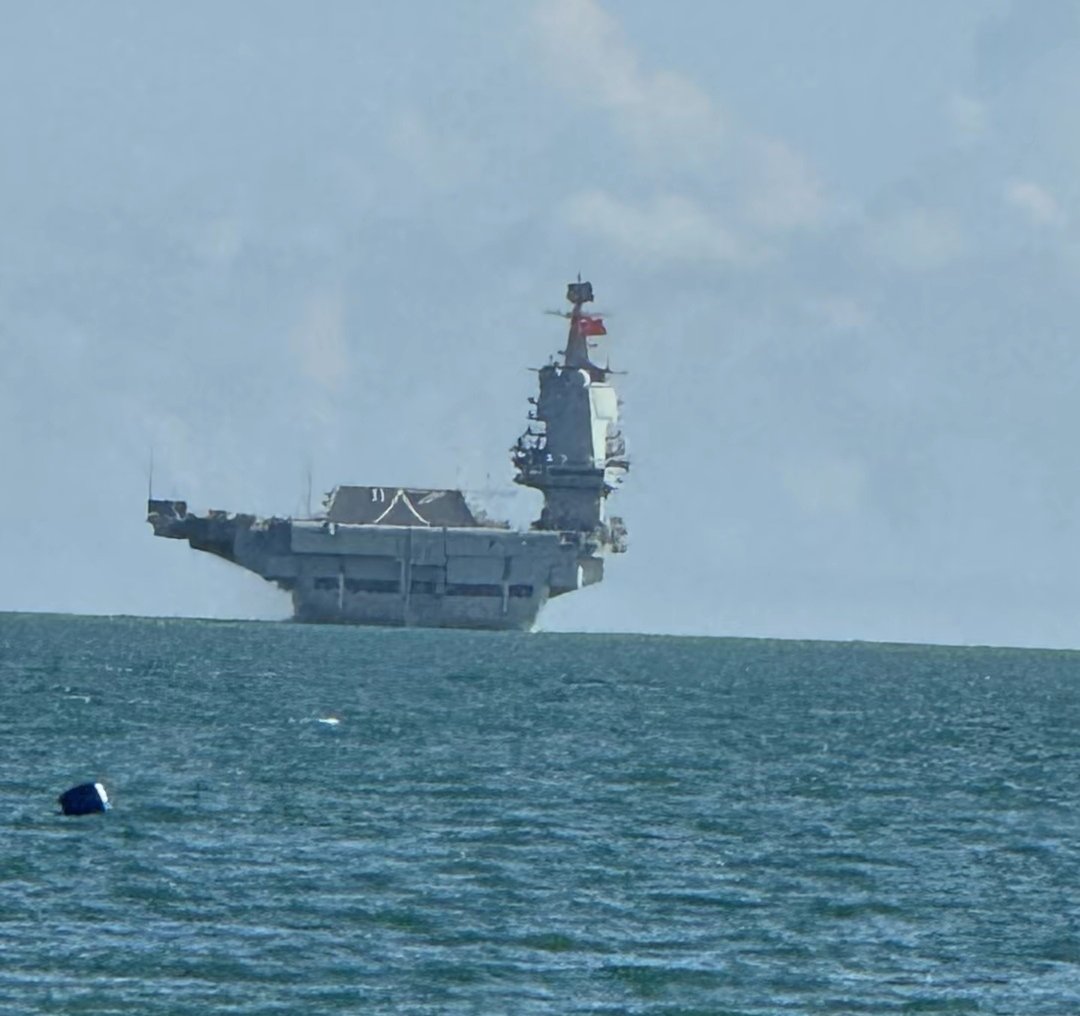
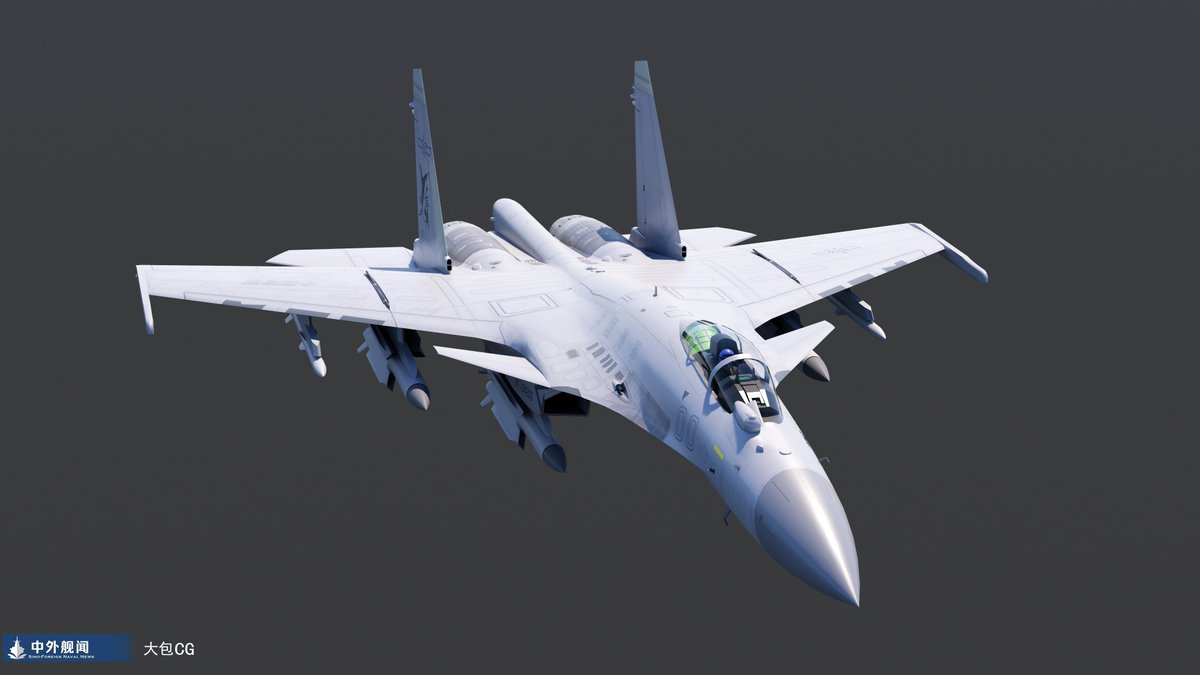
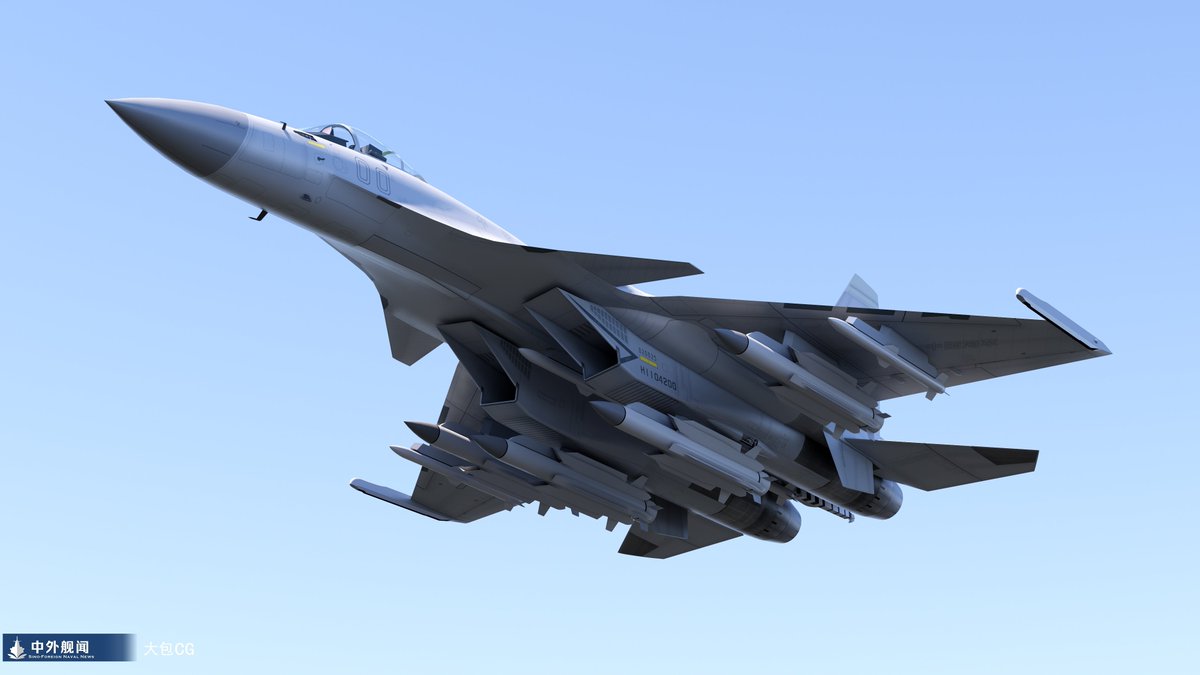
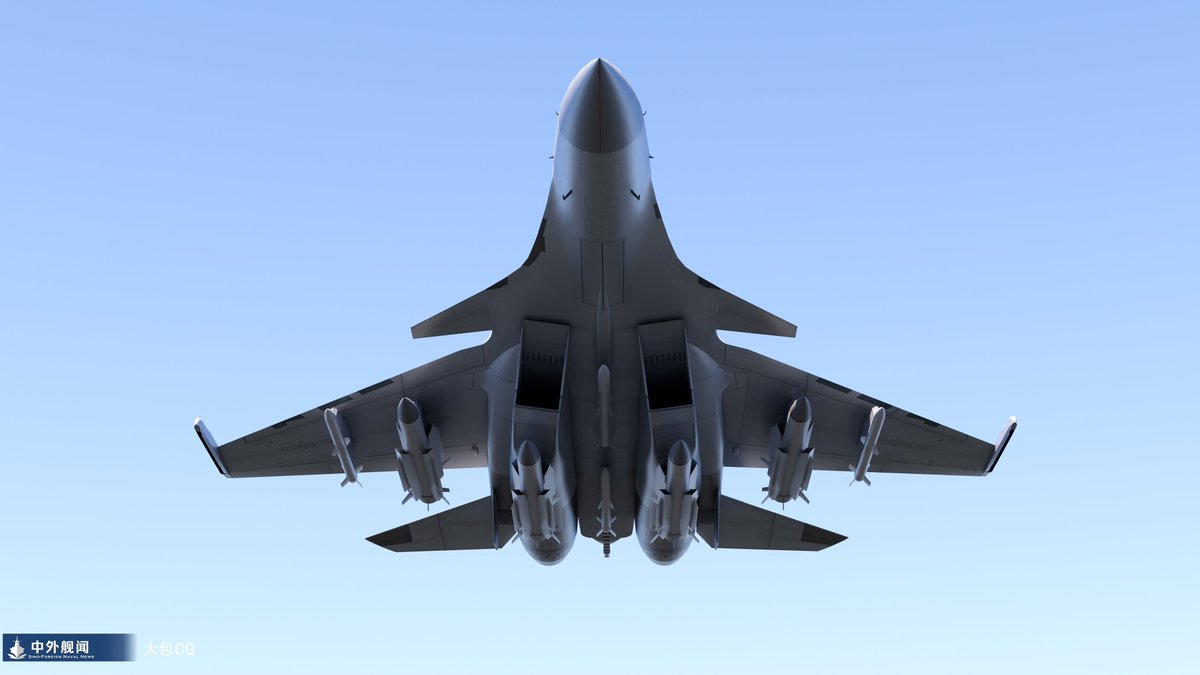
In early February, an image of a J-15T carrier based multirole aircraft flying with two YJ-15 Anti Ship Cruise Missiles (ASCM) on its air intake hardpoints in Lingshui, Hainan province. 

The J-15T was conducting a training mission so the pilot could learn how to handle the aircraft while armed with heavy munitions, such as the YJ-15. More importantly, the training flight also enabled the pilot to understand the parameters for when they would launch the YJ-15.
The YJ-15 was designed to be a low-cost ASCM compared to larger hypersonic ones such as the YJ-17, YJ-19, and YJ-21 and will replace the YJ-83K and YJ-83KH. The missile is a scaled-down version of the YJ-12, which also incorporated aspects of the Kh-31 and YJ-91.
The YJ-15 was designed to be easily mounted to the J-15T without affecting its flight characteristics. The ASCM utilizes a liquid fuel ramjet engine with an axisymmetric four inlet layout that compresses and burns air during flight, enabling the missile to travel at speeds between Mach 4 and 5.
The missile has a range of between 373 and 621 miles (600 and 1,000 kilometers) and a sea skimming capability of 62 miles (100 kilometers).
The ASCM’s integrated guidance system consists of inertial navigation, BeiDou satellite data for mid course correction, and dual active radar/IR imaging during the terminal guidance phase.
The YJ-15 has significant anti jamming and terminal maneuvering capabilities to enable the missile to resist jamming and Close In Weapons Systems (CIWS).
The YJ-15 ASCM significantly increases the J-15T’s anti ship capabilities compared to the older YJ-83K and YJ-83KH. However, the PLAN would have to develop the doctrine and Tactics, Techniques, and Procedures (TTPs) to effectively utilize the YJ-15’s capabilities.
The J-15T previously only had the YJ-83K and YJ-83KH to conduct maritime strike missions, but the ASCMs had a limited range that would force the aircraft to fly closer to U.S. aircraft carriers and other naval vessels before they could launch the missiles.
Furthermore, the YJ-83K and YJ-83KH would not have the ability to overcome increasingly advanced EW and CIWS that the U.S. Navy and other navies would use to protect their vessels.
The YJ-15 would overcome these limitations while complementing the J-15T’s range and ability to launch from aircraft carriers carrying heavier ordnance.
This increased capability would enable the J-15Ts to conduct more complex carrier strike missions to interdict and destroy naval vessels or prevent ships from sailing into strategic areas.
For example, both the J-15T’s 932-mile (1,500-kilometer) range and the YJ-15’s range would drastically increase the aircraft’s standoff capability.
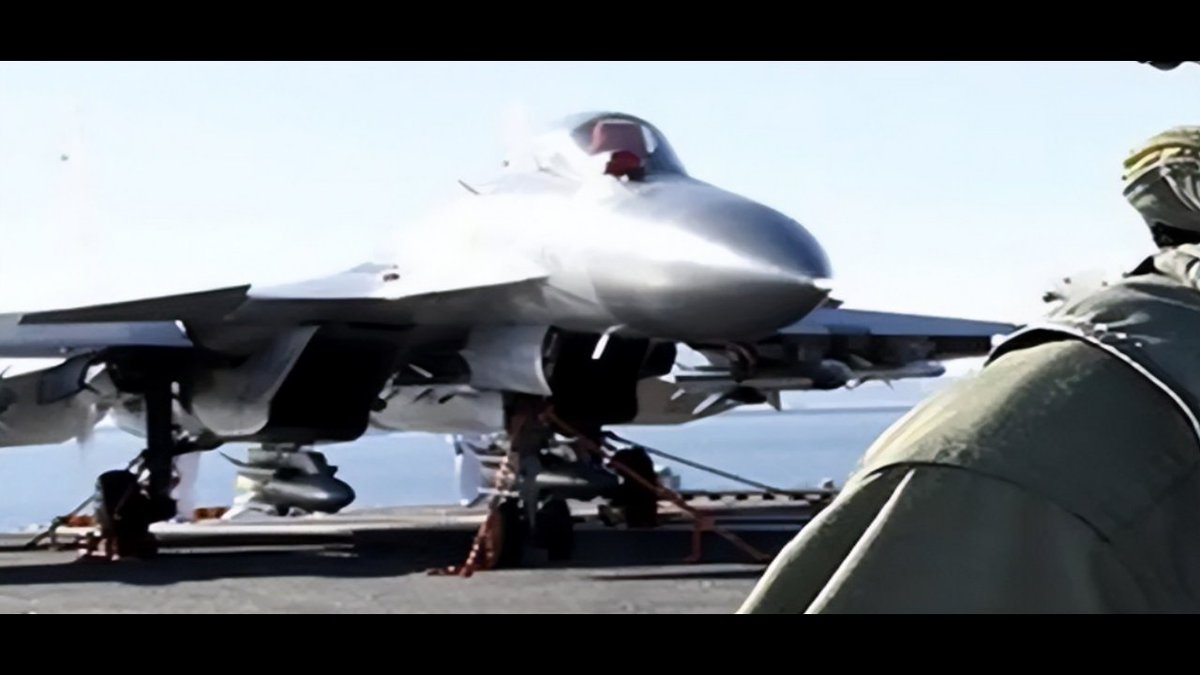
The J-15T and the YJ-15’s combined range would also increase China’s Carrier Strike Groups’ (CSG) standoff range to reduce the potential of enemy aircraft locating and destroying the ships.
Additionally, the YJ-15’s strong anti jamming and terminal maneuvering capabilities would enable the missile to overcome the defensive systems used by USN and other ships.
While the YJ-15 would significantly increase the J-15T’s anti ship capabilities, the PLAN would need time to develop the necessary doctrine and TTPs to employ them effectively.
The J-15Ts can carry up to four YJ-15s depending on mission requirements, which would give them a significant ability to work alongside PLAN ships to conduct coordinated strikes against USN CSGs and other naval vessels.

Specifically, the TTPs developed would allow the J-15Ts to coordinate with PLAN vessels to target enemy boats using YJ-15, YJ-17, YJ-19, YJ-20, and YJ-21 missiles in multiple waves.
This coordination would force USN and other naval ships to expend interceptors and other countermeasures that would leave them vulnerable to subsequent waves launched by PLAN ships, H-6Js/H-6Ks, and J-15Ts.
However, developing the doctrine and TTPs for these strike missions would require a significant amount of time.
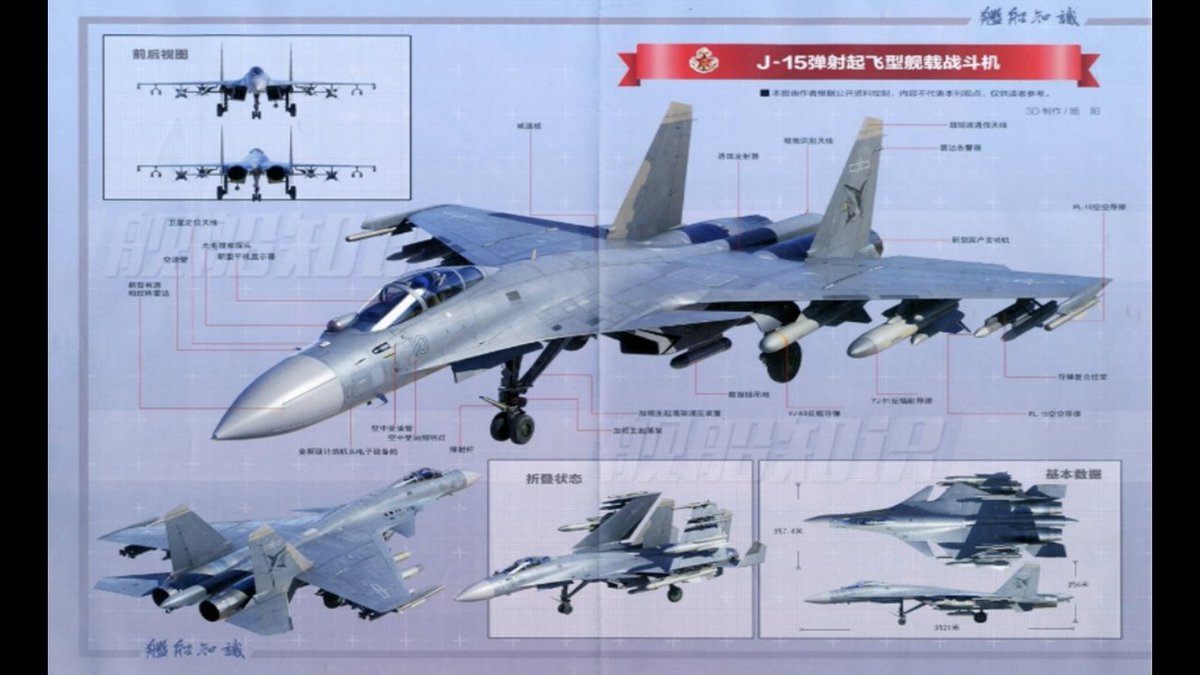
This aspect is important because the PLAN would need to coordinate with the KJ-600 carrier borne Airborne Early Warning and Command aircraft or the KJ-500H to successfully conduct these missions against USN and other naval vessels.
• • •
Missing some Tweet in this thread? You can try to
force a refresh