The quoted tweeted study shows that places that lost more young men in WW1 became less innovative.
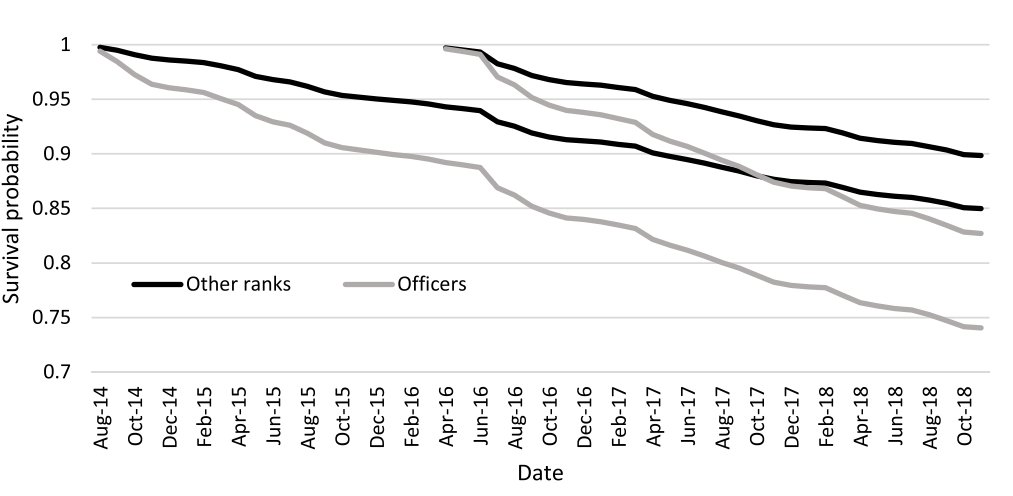
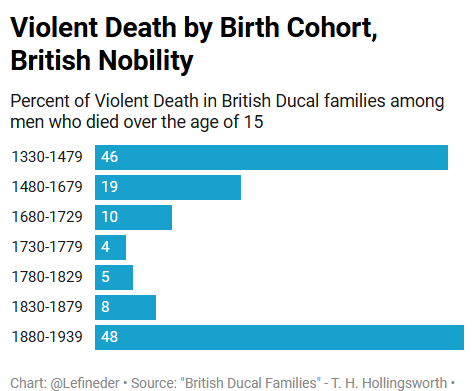
One can add that the type of people lost in WW1 often were above average in their human capital. People disproportionately lost were the aristocracy, officers, students from upper-class schools:
"Eton School alone lost 1,157 former pupils – 20.5% of those who served. Harrow, lost 644 scholars (22% of those who served); Wellington School, lost 707 pupils (20%); Winchester, lost 505 former boys (21%); King Edward Birmingham, 246 men (18%); Felstead School, 244 (19%); Downside School, 109 men (21%) to name just a few. These were Britain’s future leaders, destined for great things, cut down in their prime.
The British Aristocracy was devastated by the war, with 47 Peers killed and six of these, leaving no brothers to succeed them. In all, 264 Members of Parliament served in WW1 and 22 MP’s were killed. 323 Members of the House of Lords served and 24 Peers died in the war. The UK wartime Prime Minister Herbert Asquith lost a son, while future Prime Minister Andrew Bonar Law lost two sons. Anthony Eden lost two brothers, another brother of his was terribly wounded, and an uncle was captured.
Commercial and Professional also suffered. Nearly 15,000 Solicitors, or a quarter of all practitioners, served in the First World War. Of those, 588 were killed and 669 seriously wounded (nearly a tenth of all practitioners at the time). Similarly, 1,625 Chartered Accountants and 1,803 articled clerks served during the war, and 510 were killed. 1,300 British Architects served in the war and 230 Fellows, Associates and students died in the war. The Institute of Electrical Engineers war memorial lists 162 Members killed, the Chemical Society, 30 members. Similarly many Doctors, Teachers, and others from all walks of life which showed great promise, were lost in the war...
Great Britain lost 51 Olympians, 79 International Rugby Players, 275 First Class Cricketers, including ten Test Match Players, and 42 Oxbridge boat race rowers, also killed in the war. Captain, Tony Wilding, Royal Marines, the nine times Wimbledon Tennis Champion and considered the world’s first Tennis Superstar, died at Auber Ridge, 9th May 1915, aged 31."
One can add that the type of people lost in WW1 often were above average in their human capital. People disproportionately lost were the aristocracy, officers, students from upper-class schools:
"Eton School alone lost 1,157 former pupils – 20.5% of those who served. Harrow, lost 644 scholars (22% of those who served); Wellington School, lost 707 pupils (20%); Winchester, lost 505 former boys (21%); King Edward Birmingham, 246 men (18%); Felstead School, 244 (19%); Downside School, 109 men (21%) to name just a few. These were Britain’s future leaders, destined for great things, cut down in their prime.
The British Aristocracy was devastated by the war, with 47 Peers killed and six of these, leaving no brothers to succeed them. In all, 264 Members of Parliament served in WW1 and 22 MP’s were killed. 323 Members of the House of Lords served and 24 Peers died in the war. The UK wartime Prime Minister Herbert Asquith lost a son, while future Prime Minister Andrew Bonar Law lost two sons. Anthony Eden lost two brothers, another brother of his was terribly wounded, and an uncle was captured.
Commercial and Professional also suffered. Nearly 15,000 Solicitors, or a quarter of all practitioners, served in the First World War. Of those, 588 were killed and 669 seriously wounded (nearly a tenth of all practitioners at the time). Similarly, 1,625 Chartered Accountants and 1,803 articled clerks served during the war, and 510 were killed. 1,300 British Architects served in the war and 230 Fellows, Associates and students died in the war. The Institute of Electrical Engineers war memorial lists 162 Members killed, the Chemical Society, 30 members. Similarly many Doctors, Teachers, and others from all walks of life which showed great promise, were lost in the war...
Great Britain lost 51 Olympians, 79 International Rugby Players, 275 First Class Cricketers, including ten Test Match Players, and 42 Oxbridge boat race rowers, also killed in the war. Captain, Tony Wilding, Royal Marines, the nine times Wimbledon Tennis Champion and considered the world’s first Tennis Superstar, died at Auber Ridge, 9th May 1915, aged 31."
https://x.com/lefineder/status/2032443860022952025
• • •
Missing some Tweet in this thread? You can try to
force a refresh