We have 3 months left until we hit summer.
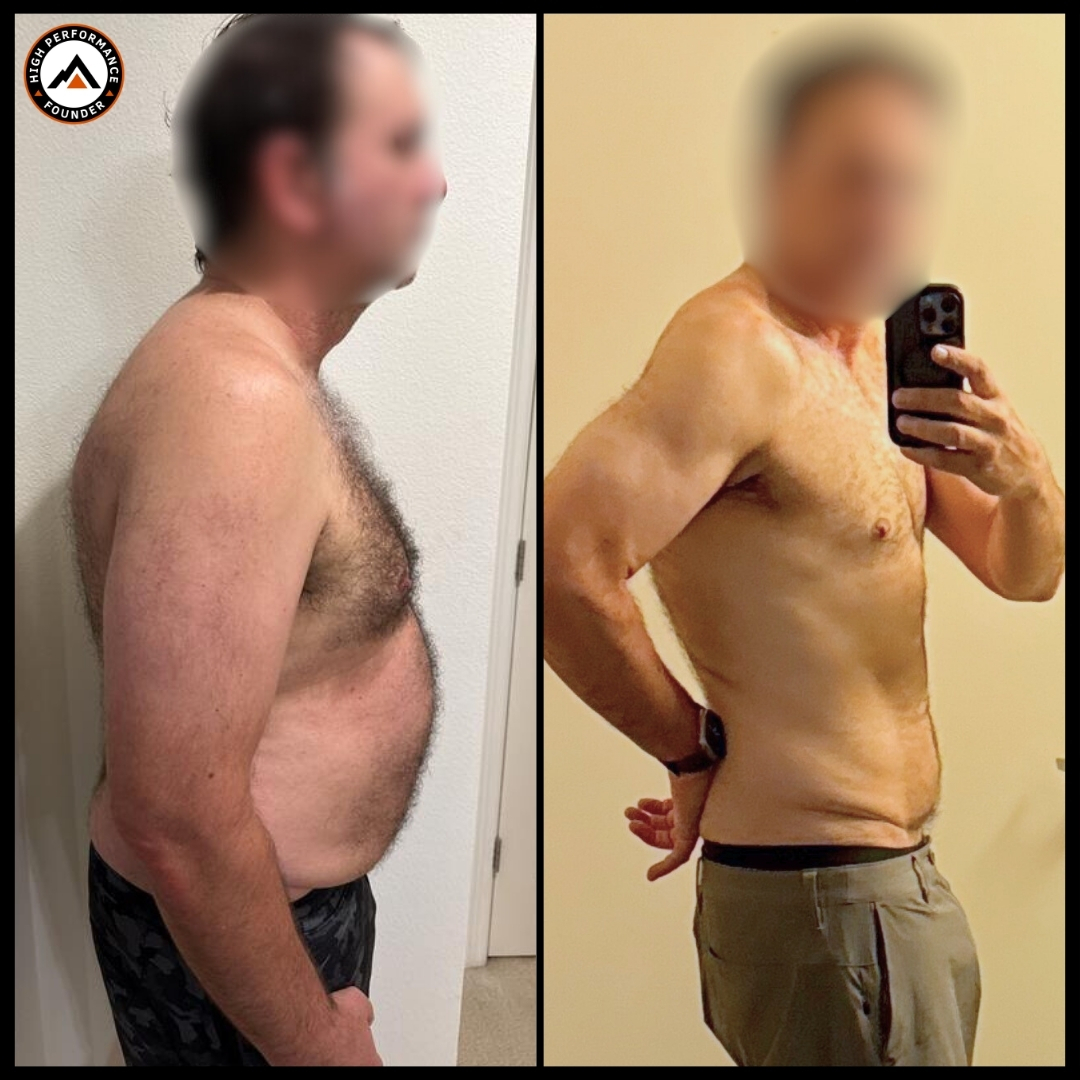
If I woke up 30 pounds overweight and needed to lose it by summer, I'd copy these systems:
If I woke up 30 pounds overweight and needed to lose it by summer, I'd copy these systems:
The system has five parts:
· Fuel Architecture
· Strength Training
· Step Automation
· KPI Tracking
· Identity Upgrade
It's the same system that helped our client Jay drop 33 pounds in 90 days and countless others.
Here it is:
· Fuel Architecture
· Strength Training
· Step Automation
· KPI Tracking
· Identity Upgrade
It's the same system that helped our client Jay drop 33 pounds in 90 days and countless others.
Here it is:
1. Fuel Architecture
Focus on two numbers: calories and protein.
Aim for a 500-700 calorie deficit. For protein, aim for .7 to 1 gram per pound to protect muscle.
You want each meal to be roughly around 40+ grams of protein spread across 3 or so meals.
Focus on two numbers: calories and protein.
Aim for a 500-700 calorie deficit. For protein, aim for .7 to 1 gram per pound to protect muscle.
You want each meal to be roughly around 40+ grams of protein spread across 3 or so meals.
Every meal decision is a point of failure. Remove the decisions.
Three main meals. Similar foods most days.
Eat the first meal 1-2 hours upon waking. Middle meal 3-5 hours after. Last meal finished 3-5 hours before bed. Late eating wrecks sleep and drives cravings the next day.
Three main meals. Similar foods most days.
Eat the first meal 1-2 hours upon waking. Middle meal 3-5 hours after. Last meal finished 3-5 hours before bed. Late eating wrecks sleep and drives cravings the next day.
2. Strength Training
Your workouts are for muscle. Not calorie burning.
Muscle is what makes you look good at 30 pounds down, not just smaller.
Low volume when cutting. 2 sets per exercise. Full body, 3x a week. Every week, add reps or weight. 30-40 minutes.
Your workouts are for muscle. Not calorie burning.
Muscle is what makes you look good at 30 pounds down, not just smaller.
Low volume when cutting. 2 sets per exercise. Full body, 3x a week. Every week, add reps or weight. 30-40 minutes.
3. Step Automation
No one should force themselves to do cardio to lose weight.
Any cardio you do to lose the weight must be kept up to keep it off. Instead, automate your steps.
Walking pad under your standing desk. Walking meetings. Podcasts and videos while moving.
No one should force themselves to do cardio to lose weight.
Any cardio you do to lose the weight must be kept up to keep it off. Instead, automate your steps.
Walking pad under your standing desk. Walking meetings. Podcasts and videos while moving.
Low-intensity movement burns fat, relieves stress, and keeps energy high.
When energy stays high, you don't stress-eat at 3pm. You're not exercising more.
You're moving more while doing what you already do.
When energy stays high, you don't stress-eat at 3pm. You're not exercising more.
You're moving more while doing what you already do.
4. Track your damn KPI's
If you don't track, you're guessing. But most people track too much and quit.
Track two things: daily scale weight judged by weekly averages, and waist measurement once a week.
Weight can lie short-term. The waist tells the truth.
If you don't track, you're guessing. But most people track too much and quit.
Track two things: daily scale weight judged by weekly averages, and waist measurement once a week.
Weight can lie short-term. The waist tells the truth.
5. Identity Upgrade
Goals don't change behavior. Identity does.
When you're stressed or traveling, you don't rise to your goals. You fall to your identity.
Pick 3 non-negotiables you can execute on your worst week, not your best week.
That's your new floor.
Goals don't change behavior. Identity does.
When you're stressed or traveling, you don't rise to your goals. You fall to your identity.
Pick 3 non-negotiables you can execute on your worst week, not your best week.
That's your new floor.
You don't transform by trying harder.
You transform by stopping reliance on motivation and starting reliance on systems.
Your job is not to be extreme. Your job is to be consistent.
If you found this useful, follow @coachdango for more.
You transform by stopping reliance on motivation and starting reliance on systems.
Your job is not to be extreme. Your job is to be consistent.
If you found this useful, follow @coachdango for more.
• • •
Missing some Tweet in this thread? You can try to
force a refresh