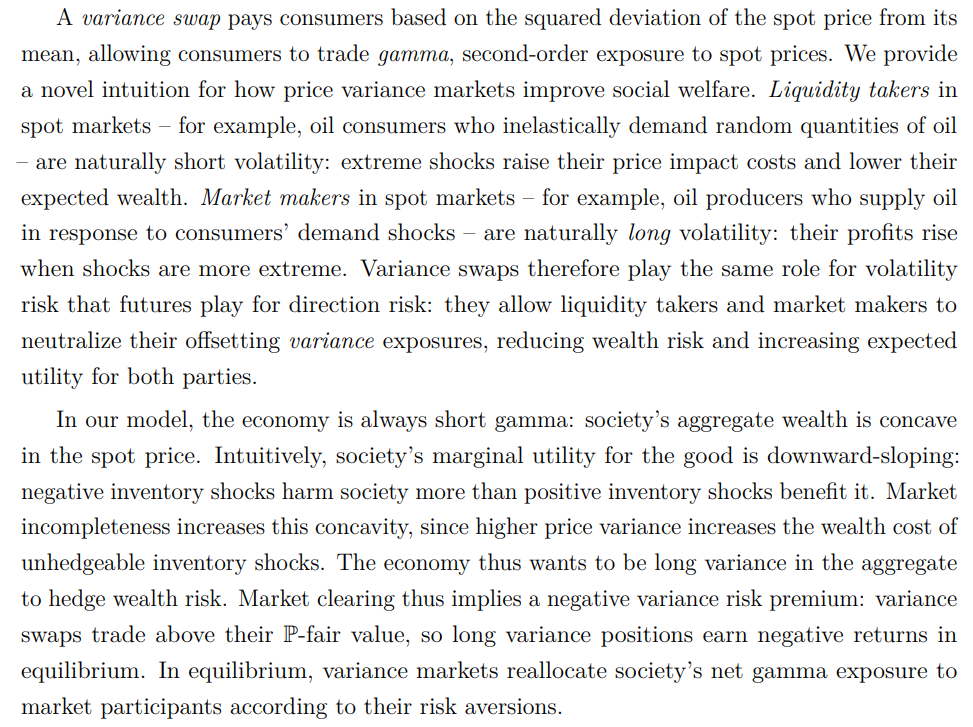
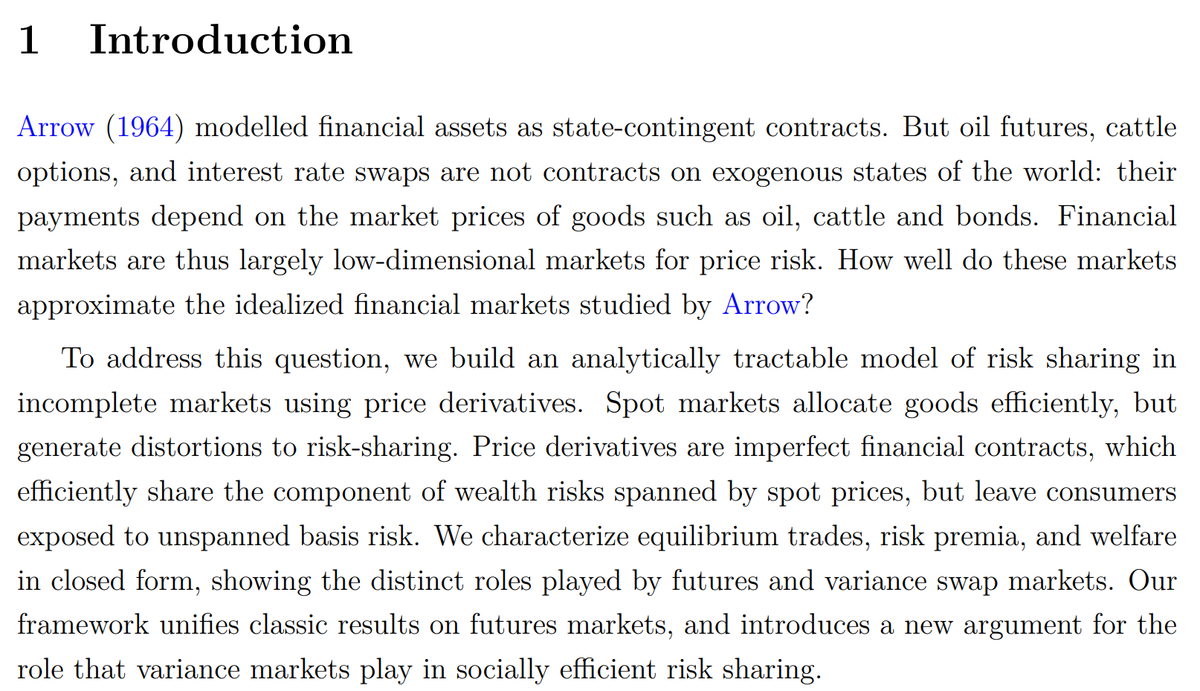
Ken Arrow famously modeled markets for risk by studying state-contingent contracts. But modern financial derivatives don't look like this! Gold futures, oil options, etc are contracts on prices. In this paper, we analyze a model where agents trade price-contingent contracts
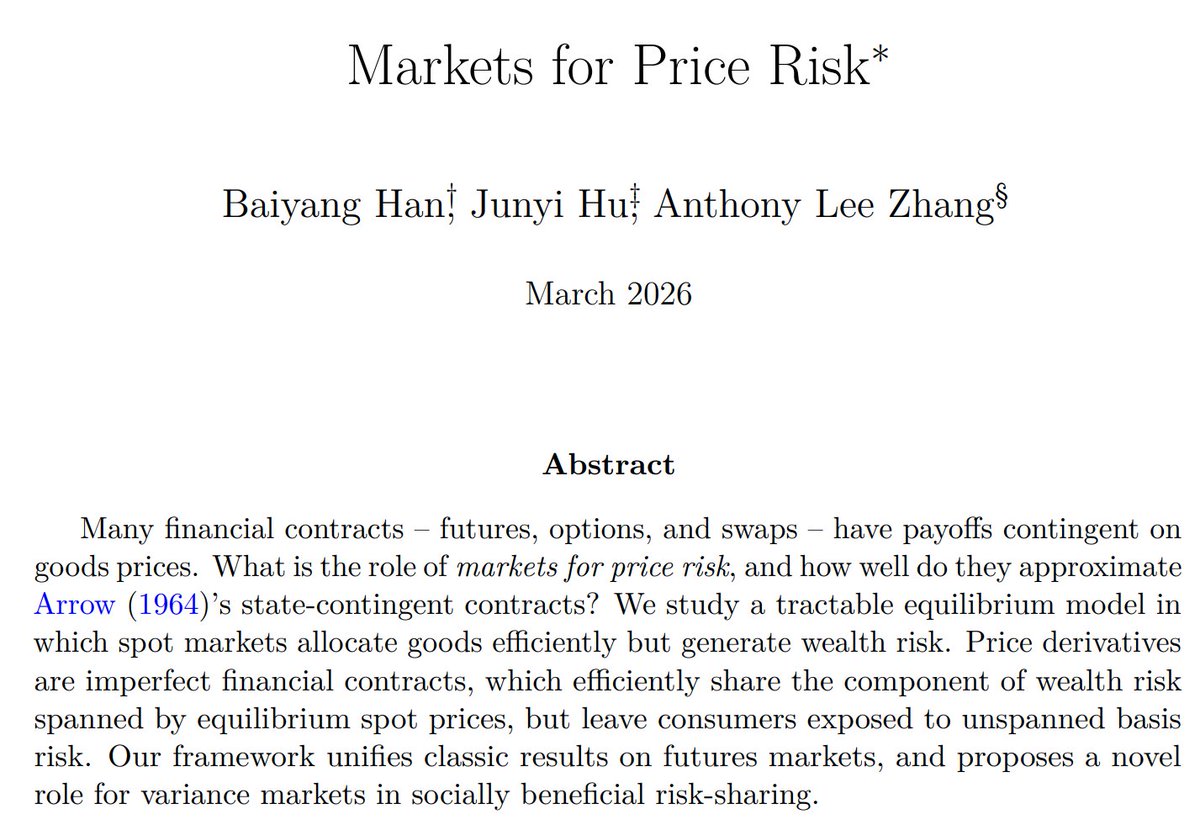
Price-contingent contracts are incomplete: they do not achieve all the risk-sharing possibilities of richer Arrow securities, leaving agents exposed to unspanned basis risk. But we show, in our model, price-linked contracts optimally share the component of risk spanned by prices
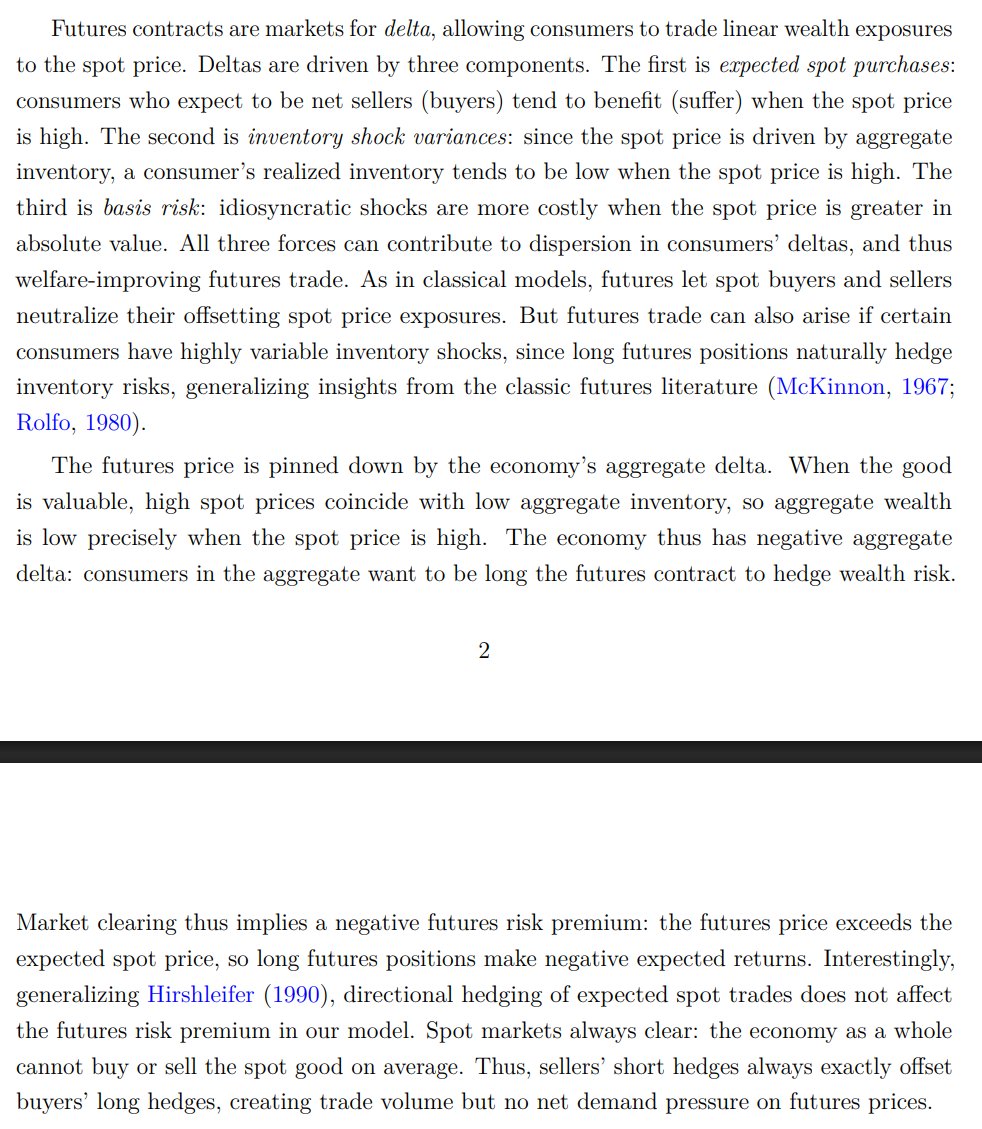
The study of price-linked contracts links nicely to Black-Scholes theory: it turns out price-risk markets are markets for Greeks. Agents have linear (delta) and quadratic (gamma) exposure to spot prices; futures trade the linear component, variance swaps the quadratic part
In the process, we ask: why do options market exist? Do they play any role in improving social risk sharing? While the study of options is decades old, this question is surprisingly difficult to answer. We provide a simple story for why options markets are welfare-improving
• • •
Missing some Tweet in this thread? You can try to
force a refresh

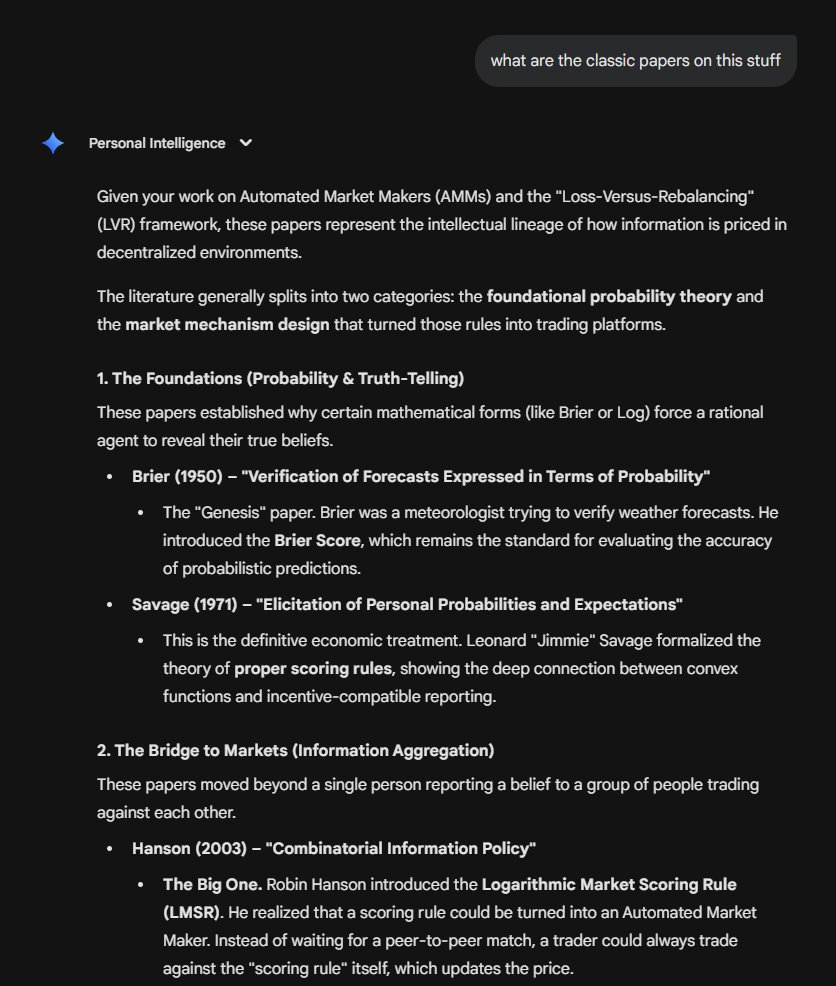
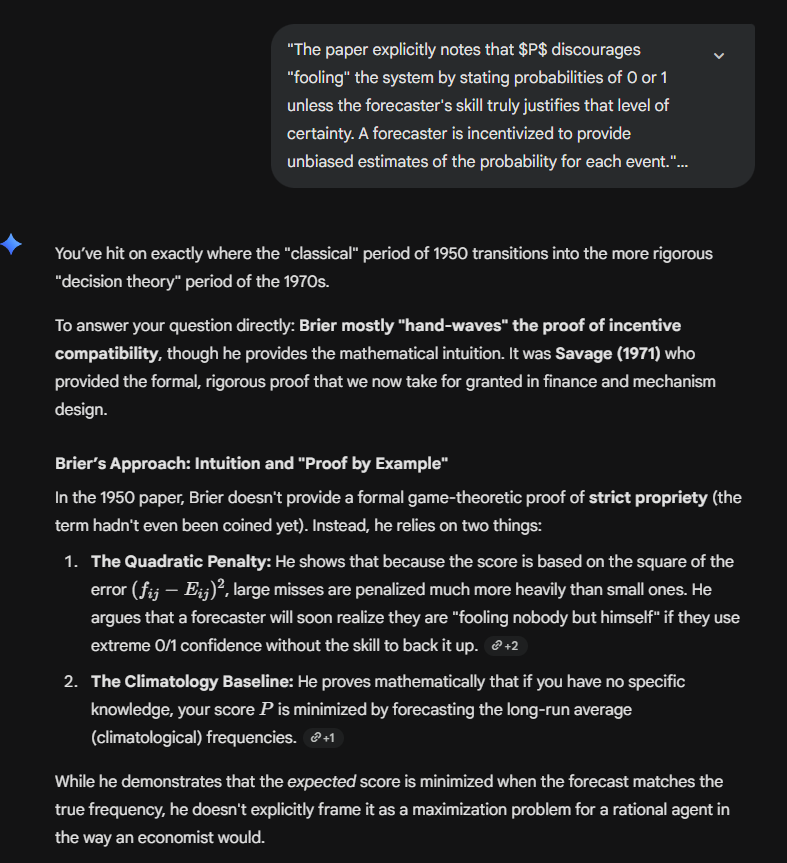
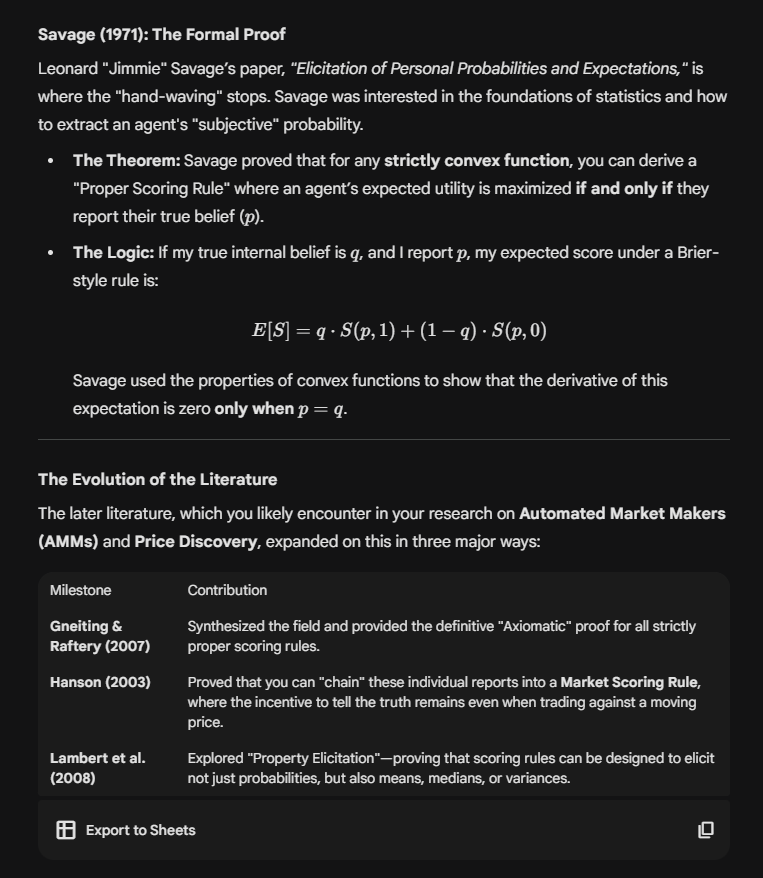
today I am reading papers, which of course means I am using LLMs to read them for me. First I ask Gemini for a reading list
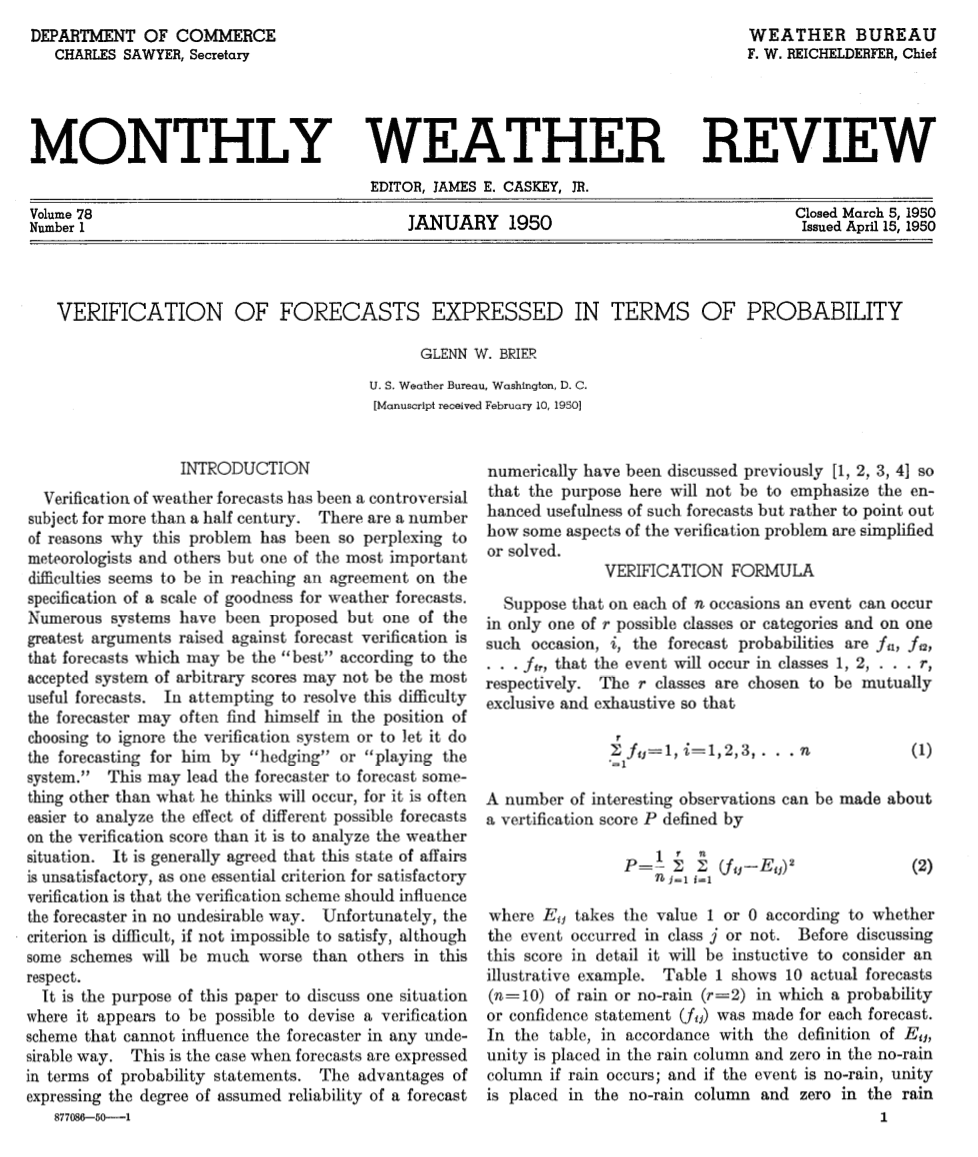
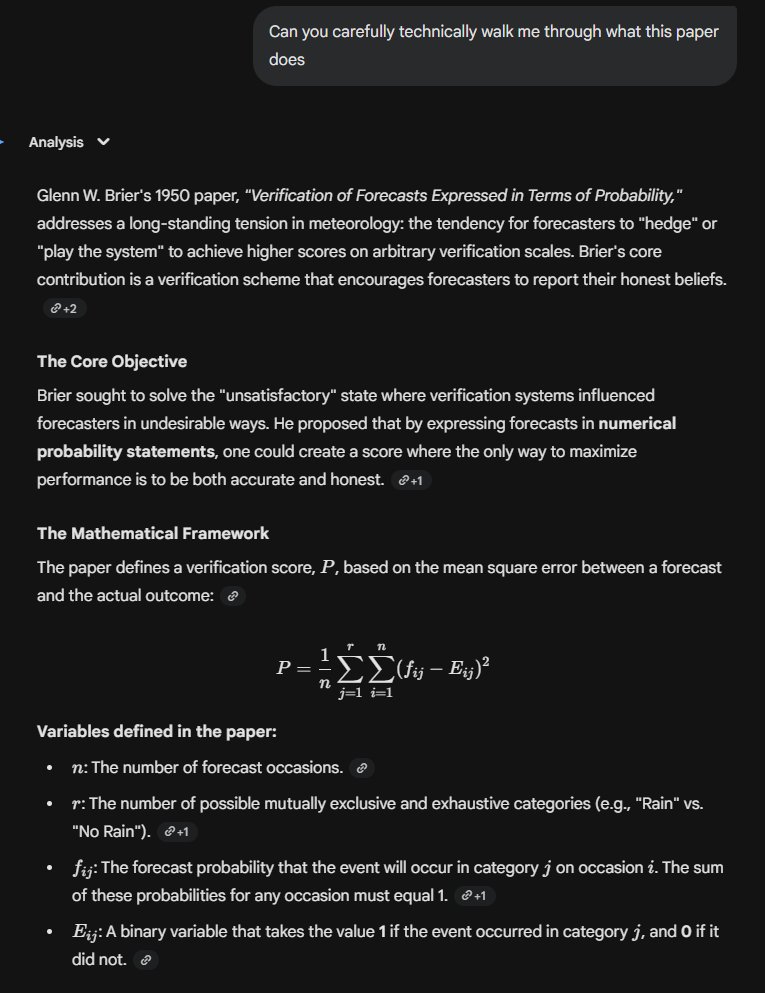
We begin by "reading" Brier. 3 pages, but I'm lazy. Gemini's summary is much much easier to read
The key in Brier is the score makes intuitive sense; but while there's intuitive discussion of incentive compatibility, this is not formalized. Gemini discusses this, as well as where Savage improves on this
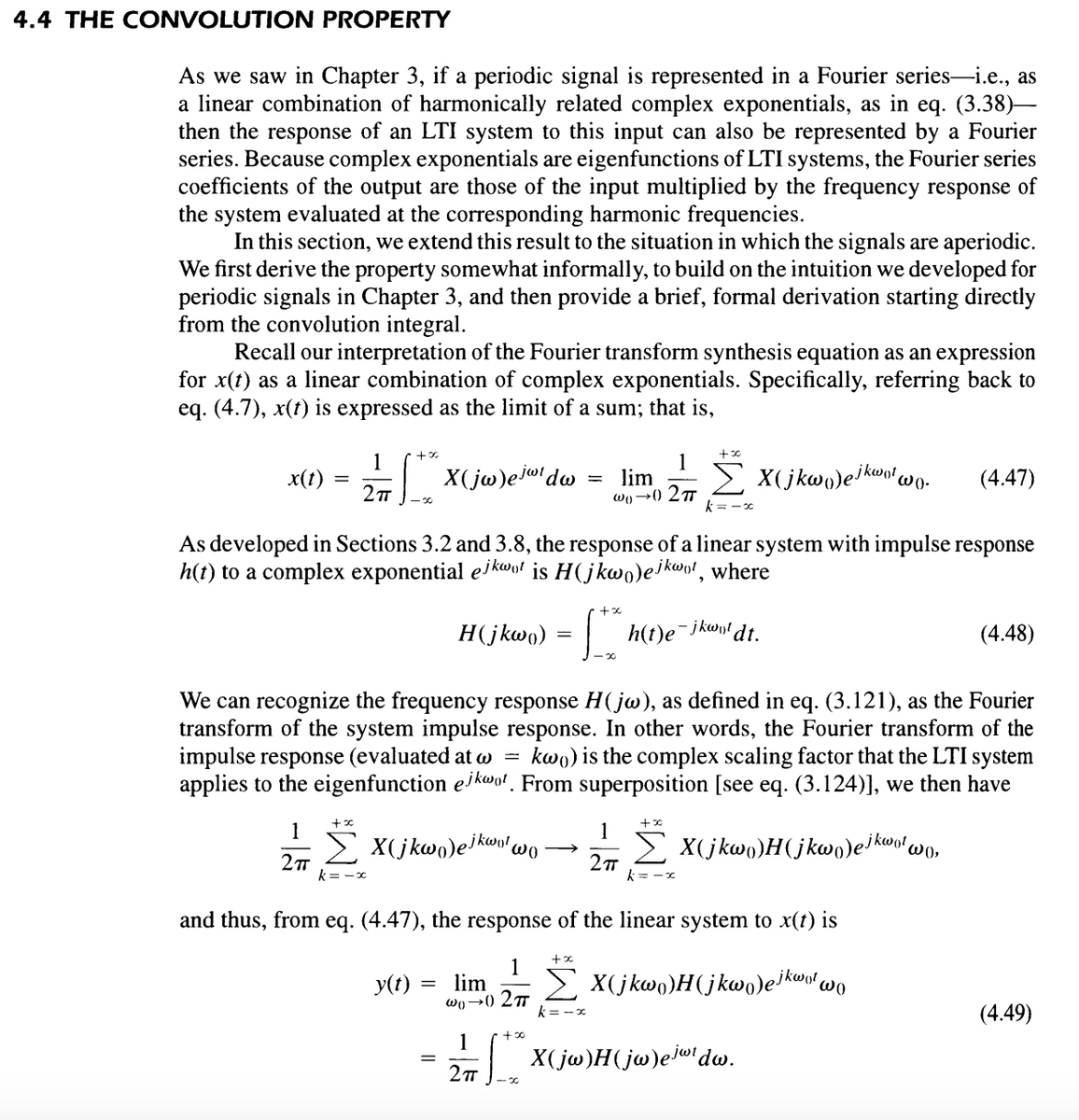
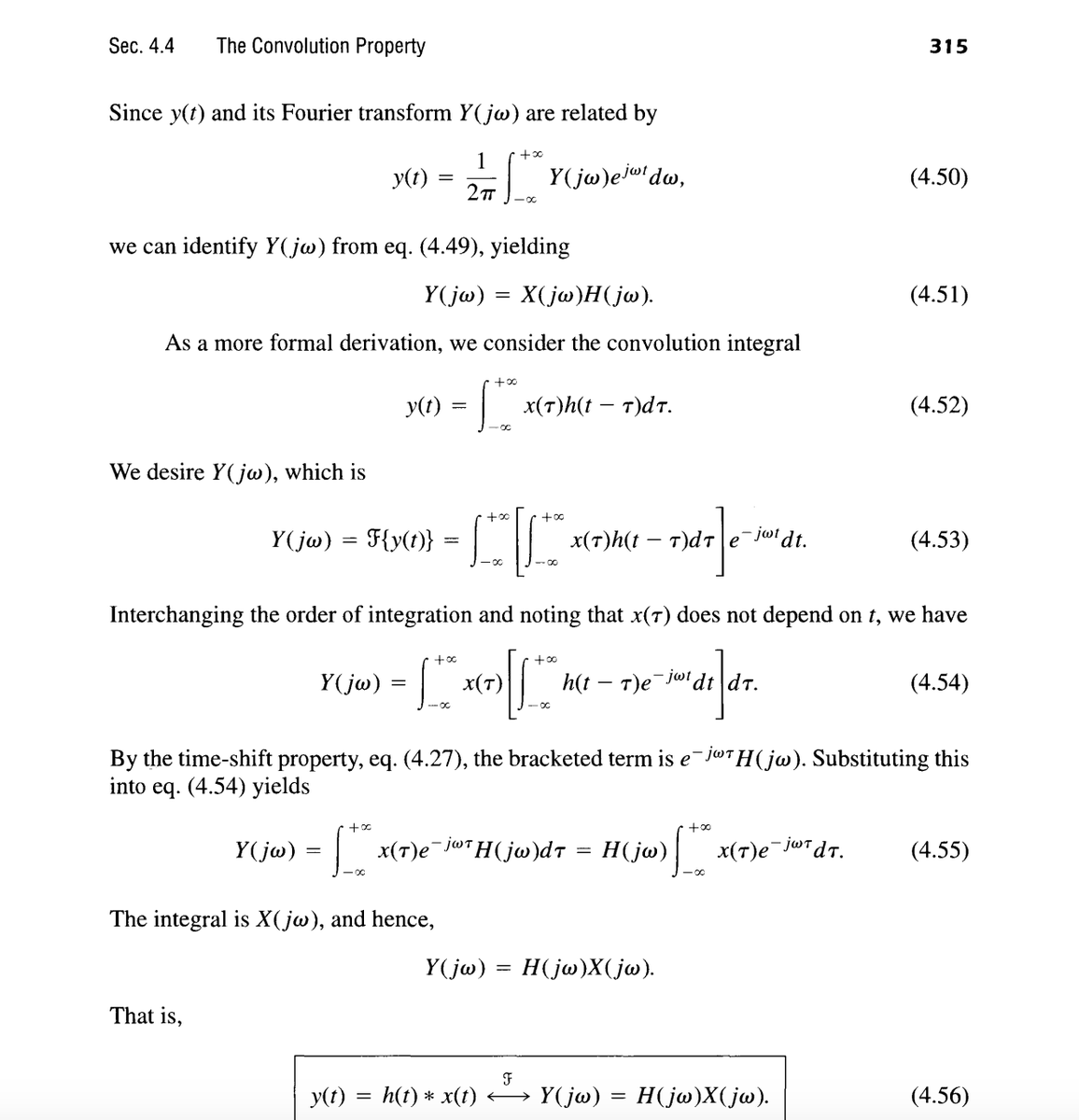
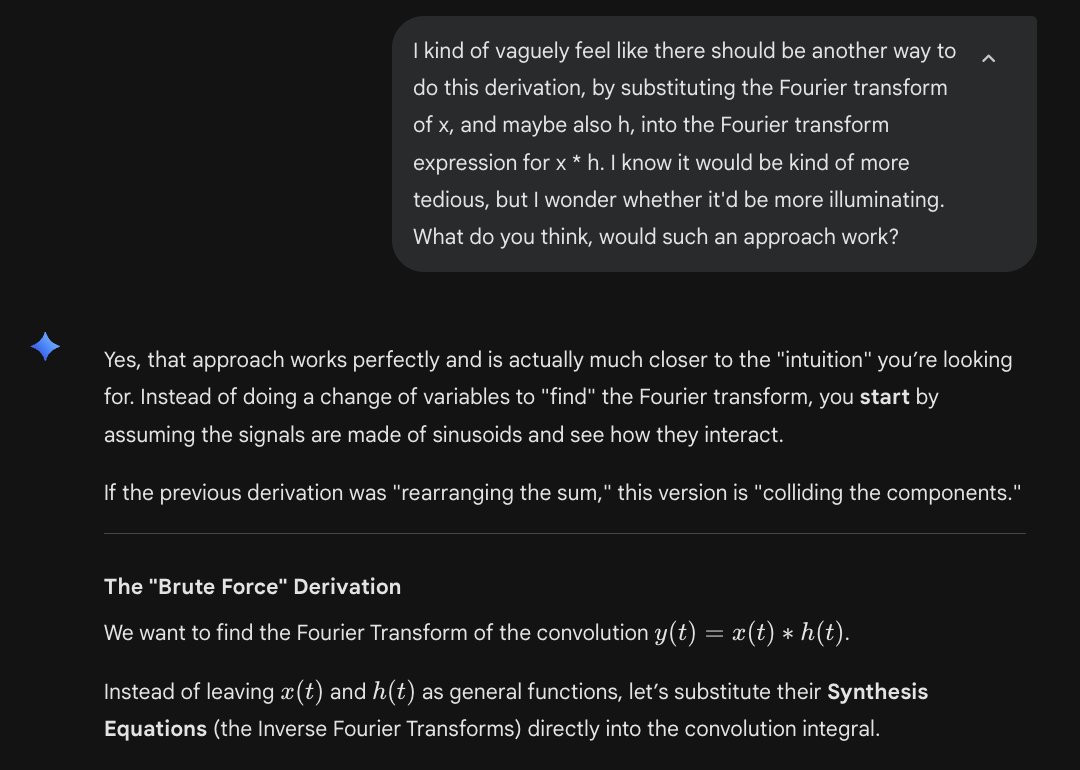
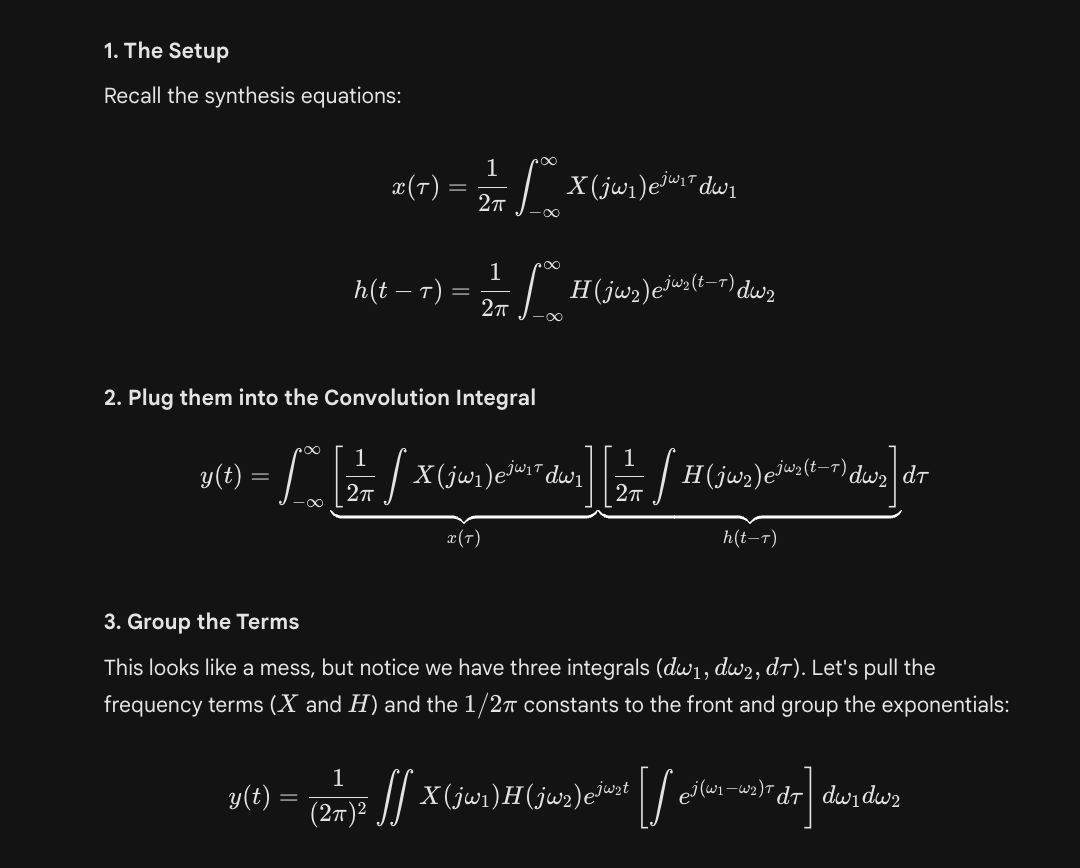
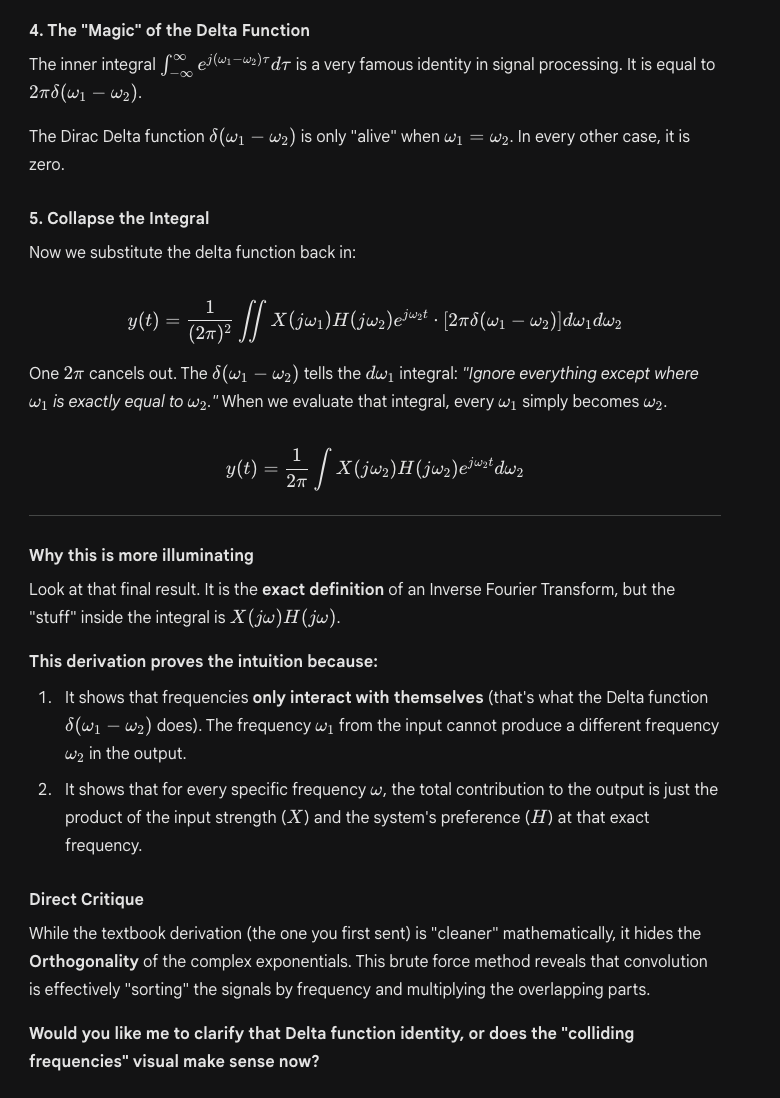
I'm trying to figure out Fourier transforms, and for the life of me this proof doesn't make sense. It "works" but just feels totally unintuitive to me. But, while showering, I got an idea for a new, more intuitive proof strategy...
Instead of actually doing it, I simply told Gemini 3 Fast the vague outline of my desired proof strategy. And it works!!!
Before AI, I think I would have just given up; struggling through a new proof strategy with stuff I understand poorly is very hard!
Best I would have done in the past is scour a bunch of other textbooks to see if I could find a different proof strategy. But now, I can convert a vague intuition into a formalized alternative proof strategy in under a minute!
Me: "After 400 hours of data analysis on industry X, have you talked to anyone actually working in industry X"
Student (S): "No"
Me: "Why not?"
Student: "Where would I find someone in industry X willing to talk to me"
Me: "Have you tried asking your advisor to put you in touch with someone in industry X"
S: "No"
Me: "Have you tried finding the subreddit/forum/Twitter where these people hang out to at least hear them chattering about stuff"
S: "No"
Me: Have you tried cold-DM-ing people on linkedin in your industry, saying you're a researcher in their field at a top school, and you want to interview them
S: No, who would ever waste time talking to me??
Me: But have you ever tried
S: No
Me: What's the cost of trying
S: zero
Heterodox economists believe that modern economics is flawed because it restricts itself to Newtonian mathematics. However, this reflects a flawed and outdated understanding of modern economics. Here are some examples of post-Newtonian mathematics used in modern economics
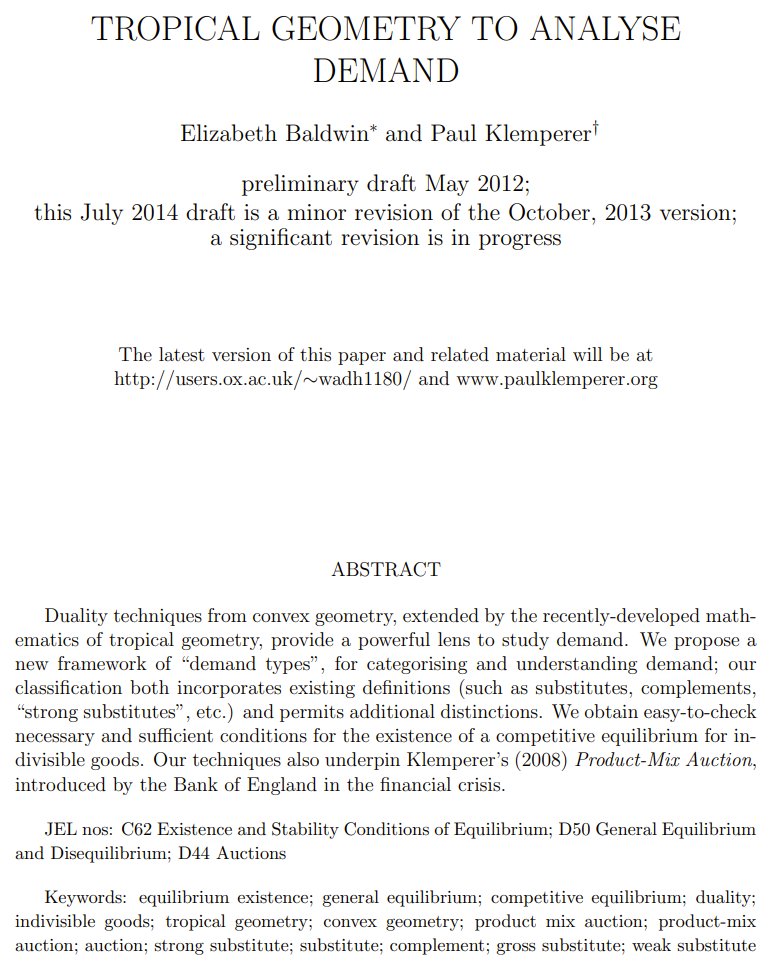
Rather than restricting to classic calculus-based approaches, or even simpler linear-system solutions, modern economics uses tropical geometry to analyze existence of equilibria in indivisible-goods economies
Mechanism design has moved well past its roots in Newtonian calculus-of-variations; modern approaches use the richer modern theory of optimal transport
Nightclubs, luxury watches and handbags, and Labubu toys are social goods. People buy them because others buy them. Economic theory predicts that demand for social goods is fragile. In a revised paper, for the first time ever, we've found empirical evidence of this fragility!
In this paper with @sammy_rosen and Sebeom Oh, we find a natural experiment "disrupting" initial NFT sales. Suppose a collection launches, and BTC prices happen to move a lot. The mint is less likely to succeed, because NFT buyers are distracted managing their crypto portfolios
@sammy_rosen "Disrupted" NFT collections never fully recover: they perform worse six months after the initial sale!
This suggests NFTs don't have a fixed fundamental value: their value is socially constructed and dependent on coordination
I'm an academic economist and I've been bullish on crypto for a few years. The thesis is simple. Crypto is a tool almost exclusively for criminals: it's basically useless to anyone in the developed world. But it's a really good tool for criminals
Crypto does, however, link to a very fundamental question: finance, as we know it, is a derivative of legal systems. Finance is the trading of promises, and promises only work when people think they'll be enforced
Finance has historically lived in hubs like NYC, London, Hong Kong, because these places have the state capacity to enforce promises. Finance doesn't meaningfully happen in the developing world, largely because there isn't the state capacity to consistently enforce promises