🚨Where should Direct Air Capture (#DAC) be deployed to scale carbon removal?
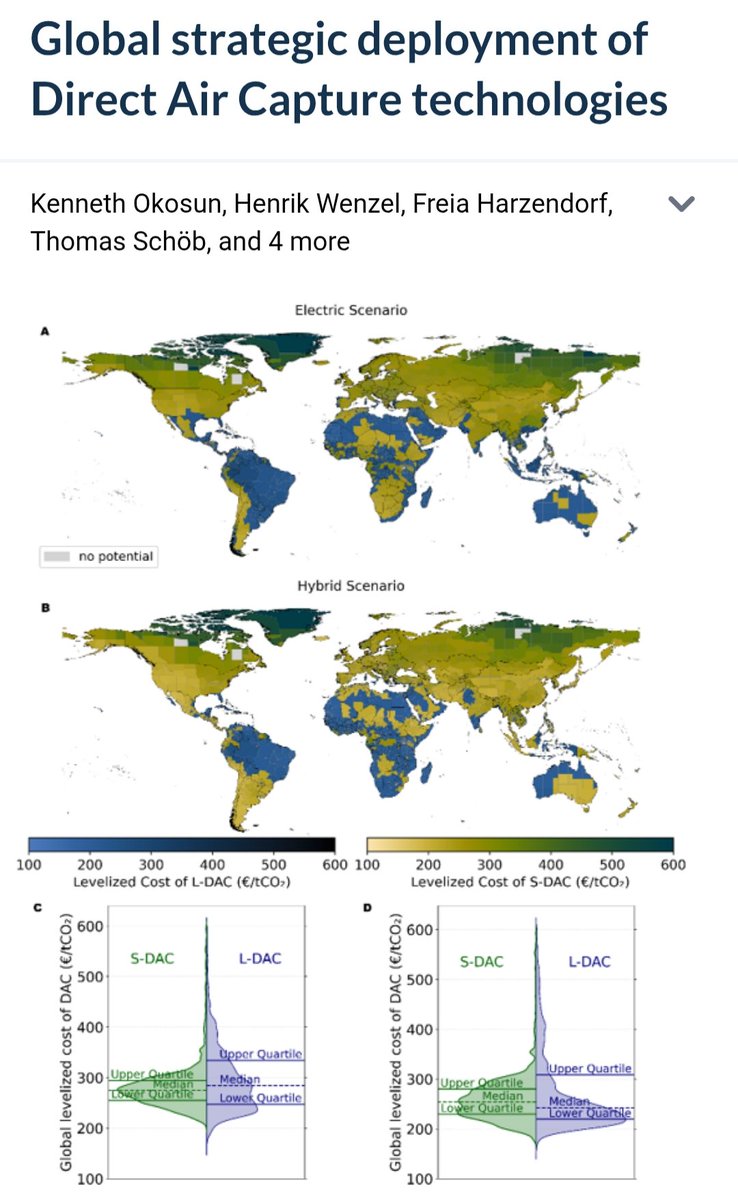
New research shows: costs are driven less by the technology itself and more by location, climate, and energy systems, making DAC a fundamentally geo-dependent solution.
Details🧵1/10
New research shows: costs are driven less by the technology itself and more by location, climate, and energy systems, making DAC a fundamentally geo-dependent solution.
Details🧵1/10
2/ DAC needs to scale to 0.5–5 GtCO₂/year by 2050, yet current capacity is ~0.00004 Gt.
Scaling requires massive cost reductions, and smart siting.
Scaling requires massive cost reductions, and smart siting.
3/ The study evaluates two leading approaches:
• Solid sorbent DAC (S-DAC)
• Liquid solvent DAC (L-DAC)
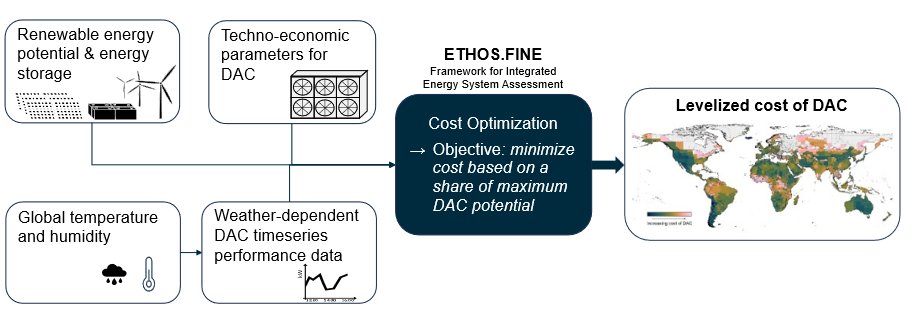
Using global, high-resolution data on weather and renewable energy availability.
• Solid sorbent DAC (S-DAC)
• Liquid solvent DAC (L-DAC)
Using global, high-resolution data on weather and renewable energy availability.
4/ Key finding: DAC costs vary hugely by location.
Why? Because performance depends on:
• Temperature
• Humidity
• Solar, wind & geothermal resources
Not all regions are equal.
Why? Because performance depends on:
• Temperature
• Humidity
• Solar, wind & geothermal resources
Not all regions are equal.
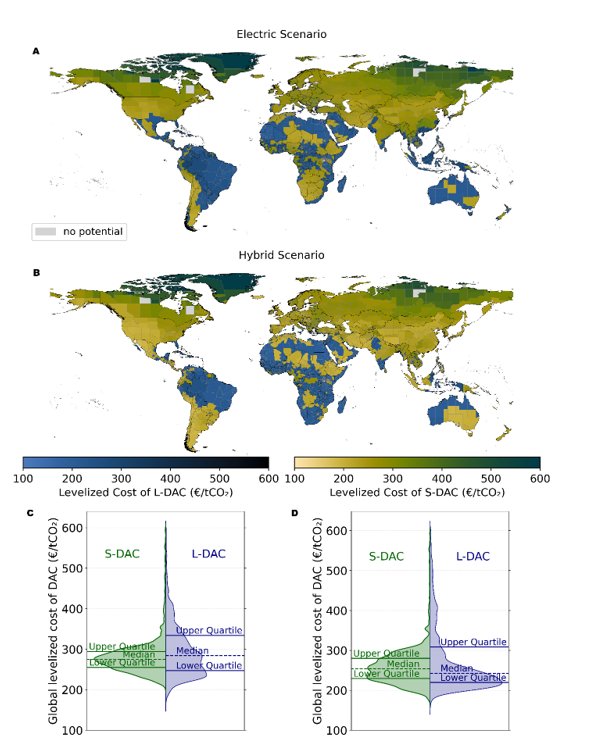
5/S-DAC is more sensitive to humidity & temp swings, while L-DAC is more stable but heat-intensive
So, S-DAC performs best in: Australia, Iceland, Mexico, parts of Asia
L-DAC works better in:South America & Sub-Saharan Africa
Imp insight:There's no universally optimal DAC tech
So, S-DAC performs best in: Australia, Iceland, Mexico, parts of Asia
L-DAC works better in:South America & Sub-Saharan Africa
Imp insight:There's no universally optimal DAC tech
6/Energy choice is just as critical
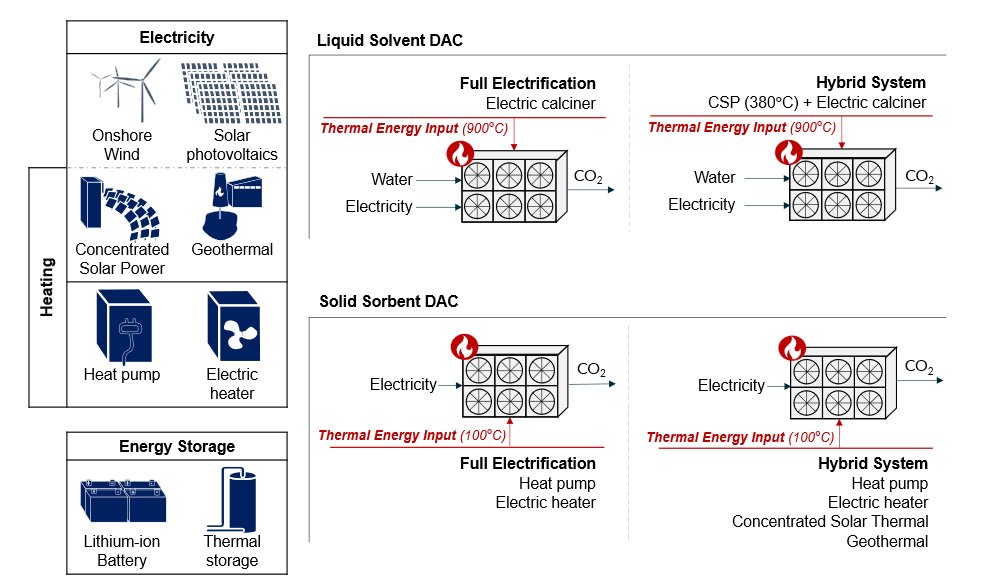
The study compares:
•Fully electric systems
•Hybrid systems (electric+heat, e.g. geothermal)
Major insight:Hybrid systems significantly reduce costs
Combining renewable electricity with direct heat sources→lower overall DAC costs globally
The study compares:
•Fully electric systems
•Hybrid systems (electric+heat, e.g. geothermal)
Major insight:Hybrid systems significantly reduce costs
Combining renewable electricity with direct heat sources→lower overall DAC costs globally
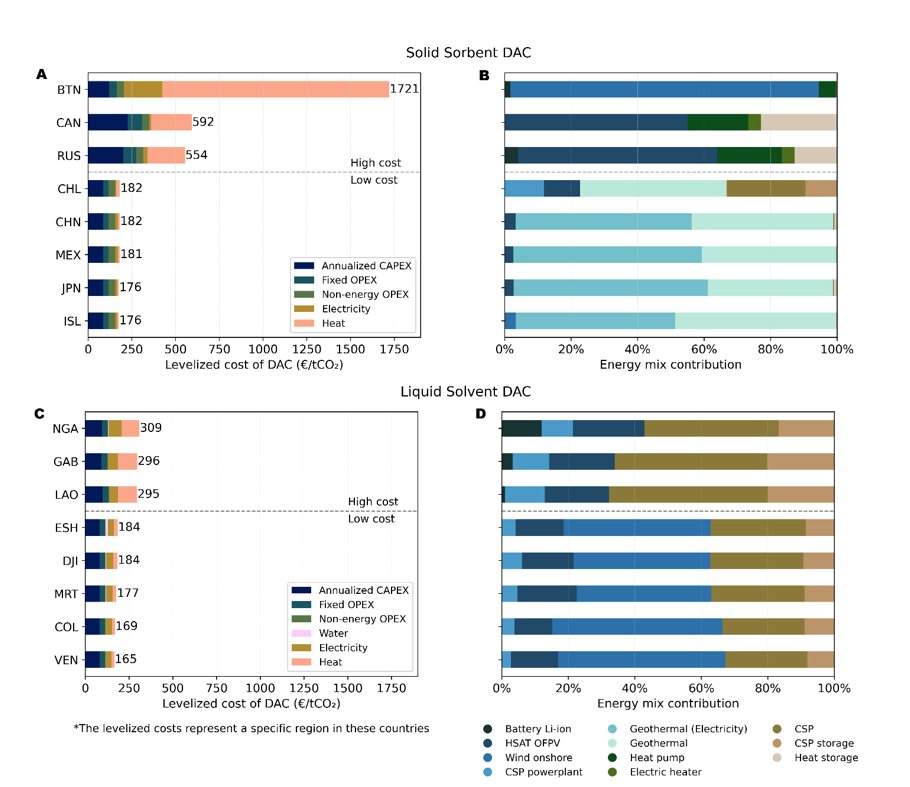
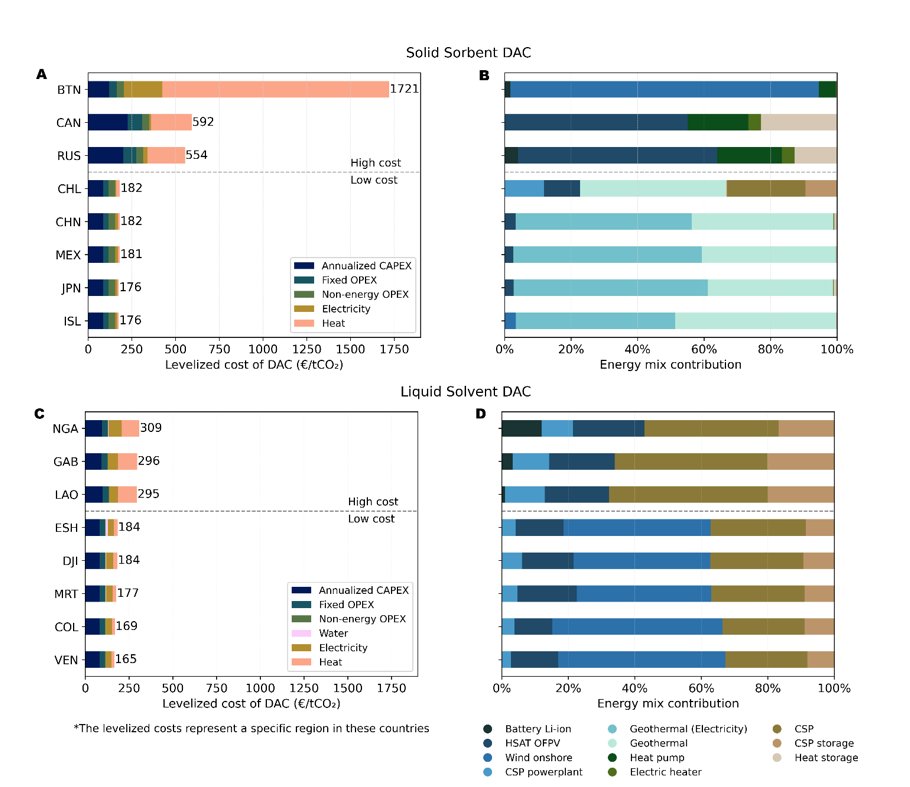
7/ Even under optimized conditions, this study finds DAC costs remain highly variable:
→ ~€165 to €1720 per tCO₂
This wide range is largely explained by location, energy mix, and system design.
→ ~€165 to €1720 per tCO₂
This wide range is largely explained by location, energy mix, and system design.
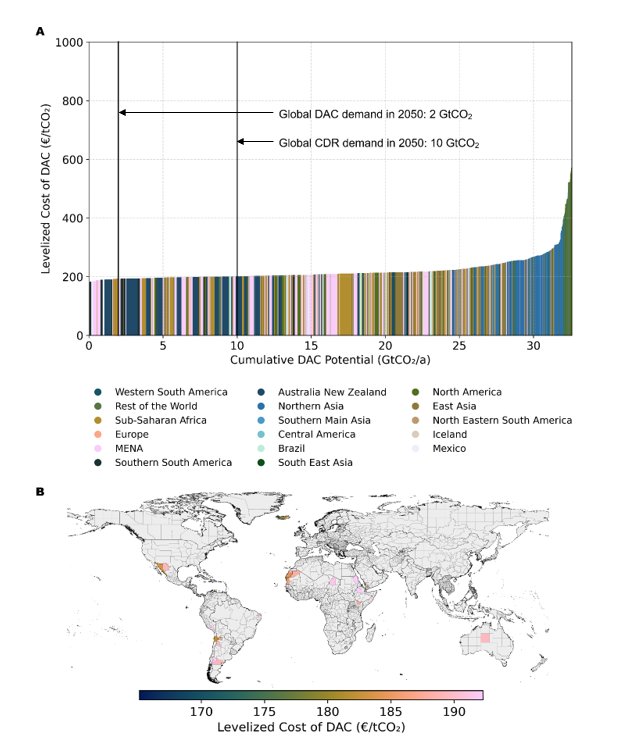
8/ In the most favorable regions, DAC could scale to ~2 GtCO₂/yr at <€195/tCO₂
→ Showing that large-scale deployment is possible, but geographically concentrated.
→ Showing that large-scale deployment is possible, but geographically concentrated.
9/ Reaching ~€100/tCO₂ depends on optimistic assumptions:
• Lower capital costs
• Higher process efficiency
→ These conditions are uncertain and unlikely to apply globally, researchers concluded.
• Lower capital costs
• Higher process efficiency
→ These conditions are uncertain and unlikely to apply globally, researchers concluded.
For more details, read the study entitled "Global strategic deployment of Direct Air Capture technologies here:
🧵10/10 #CDR #DirectAirCapture researchsquare.com/article/rs-902…
🧵10/10 #CDR #DirectAirCapture researchsquare.com/article/rs-902…
For more such stories, subscribe to the Carbon Removal Updates Substack Newsletter:
carbonremovalupdates.substack.com
carbonremovalupdates.substack.com
"unroll" @threadreaderapp
• • •
Missing some Tweet in this thread? You can try to
force a refresh