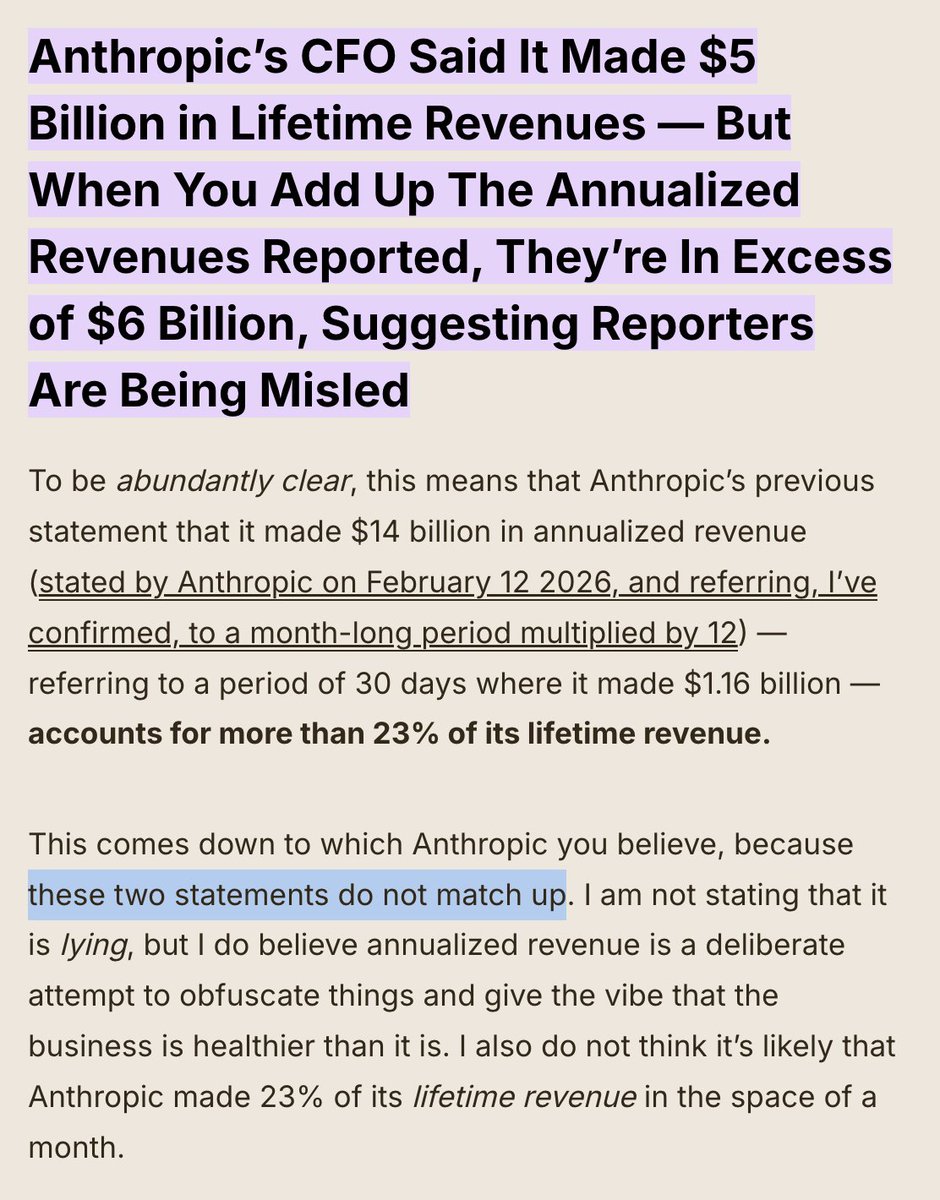
In a recent legal filing, Anthropic said that its revenue "exceed[ed] $5 billion to date." @edzitron says other Anthropic statements indicate it was more than $6 billion and that "these two statements do not match up." But, um, $6 billion exceeds $5 billion?
My guess is that Anthropic releases audited financial statements once a month or once a quarter or something, and the lawyers used the last official number, which was a few weeks out of date.
Also, check out this train wreck of a spreadsheet Ed made to estimate Anthropic's revenue for 2025. He doesn't count February 1-10, counts March 1-10 twice, counts August 21-October 21 as one month instead of two, and doesn't count October 21-November 1.
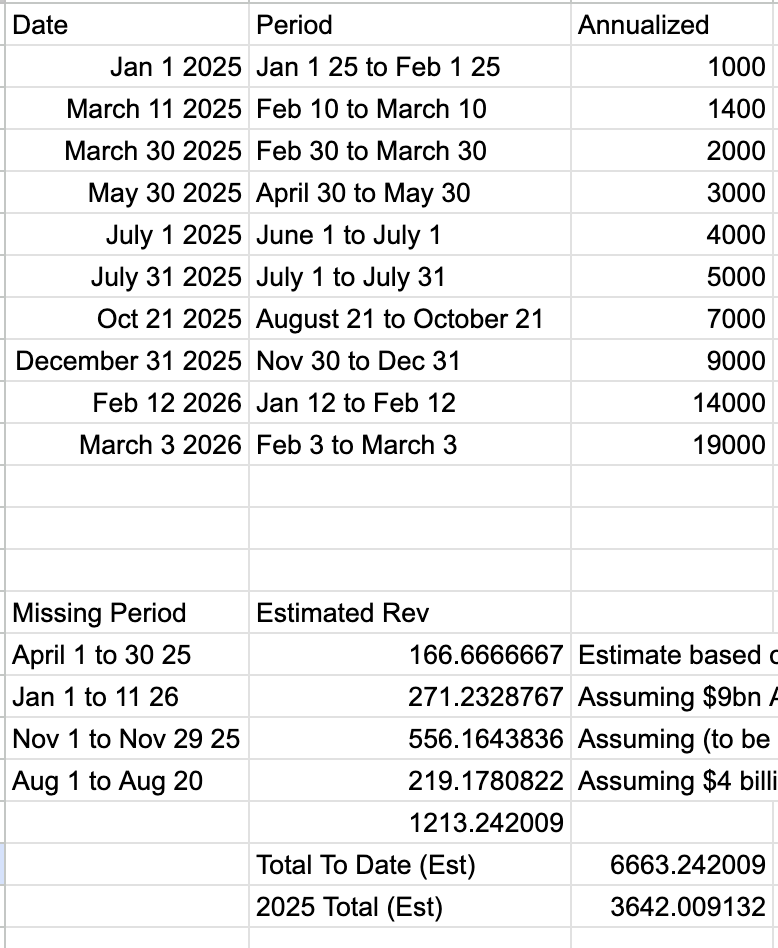
Ed claims he tried to compute Anthropic's revenue for 2025 and came up with $3.6 billion, suggesting some funny business. I made a new spreadsheet where I used his numbers but fixed the obvious errors (like treating August 21-October 21 as one month), and I got $4.3 billion.
If you change the August number to $500 billion (the average of Ed's numbers of July and September), then Anthropic's 2025 revenue is $4.5 billion, which is right in line with media reports.
BTW a source told Reuters that "the $5 billion figure refers to GAAP revenue generated from 2023 through to December 2025." Probably the lawyers gave the latest quarterly figure rather than trying to give an up-to-the-minute number. reuters.com/commentary/bre…
Anyway I mostly try to ignore Ed Zitron but people keep sending me his stuff. I wish more people understood how ignorant, innumerate, and sloppy he is.
We had a private email conversation last week where I pointed out some of the problems with his spreadsheet. He never responded, which makes me wonder if he actually cares about getting these details right.
• • •
Missing some Tweet in this thread? You can try to
force a refresh

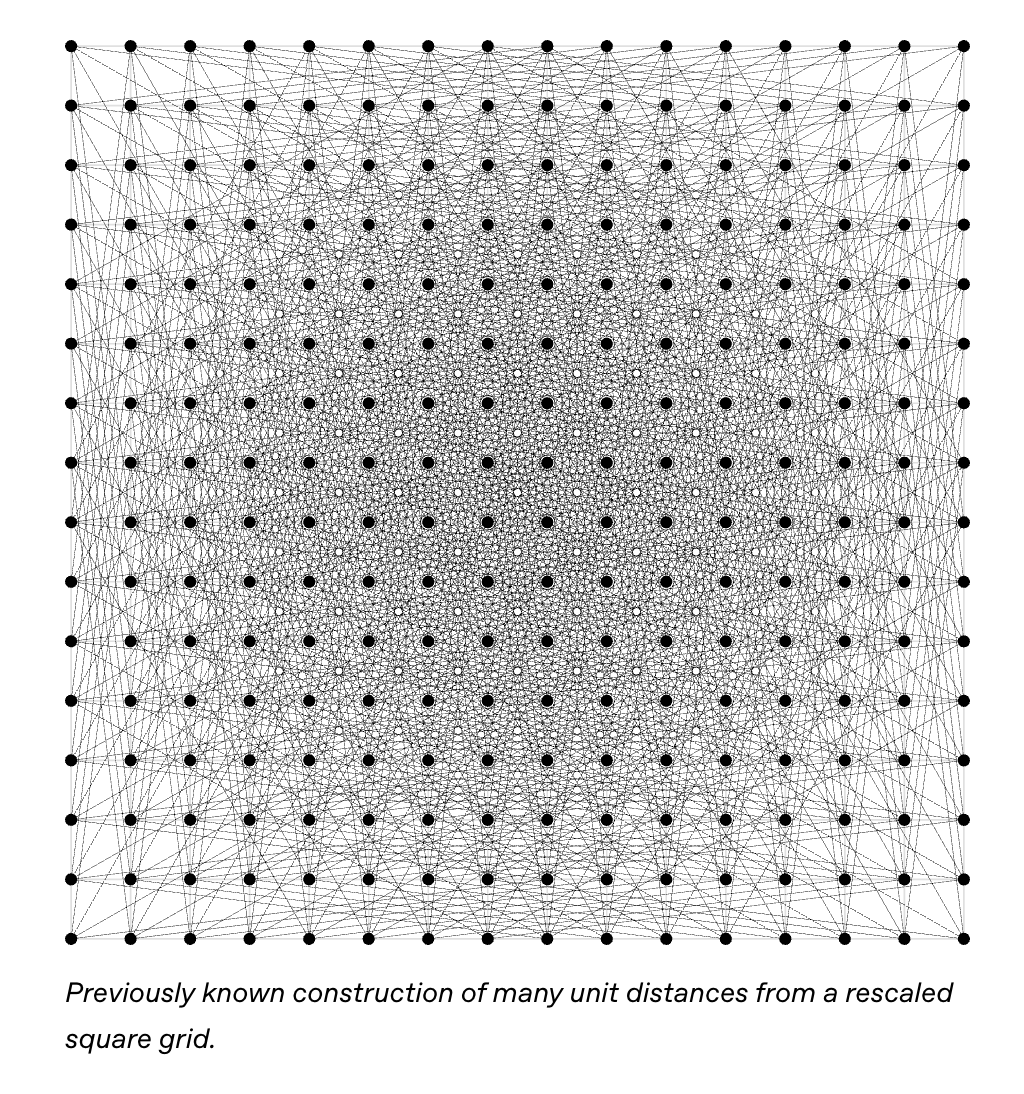
If you read last week's OpenAI post about their (quite impressive) math breakthrough, you probably got to this diagram and had no idea what you were looking at. I know I didn't. Now you can read @chi_t_williams's article explaining it and the rest of the result.
The unit distance problem tries to calculate how many points in a plan can be exactly one unit apart. Erdos tried to do this by placing points on a grid. He realized that if you pick exactly the right grid size, you can have a bunch of one-away diagonals. Like this:
For example, if the grid points are 1/5 apart, then each point will be 1 unit away from 12 points, as illustrated here:
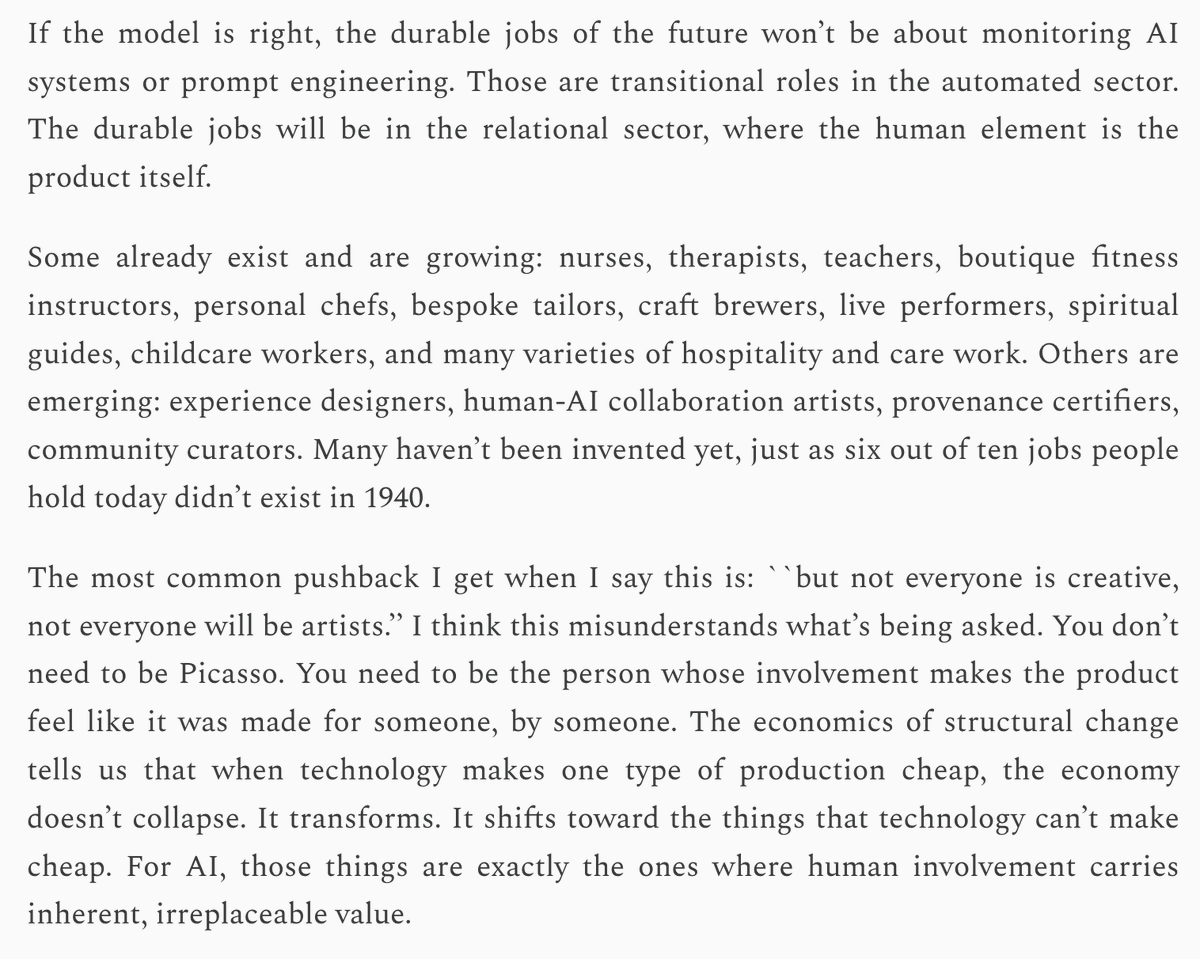
This essay by @alexolegimas is the best thing I've ever read on why AGI won't lead to mass unemployment. A compelling argument backed up by substantial empirical data.
As people get richer, they become more willing to spend money on goods and services that confer status via exclusivity. One of the few things we can be confident will remain scarce in a post-AGI world is the time and attention of other human beings.
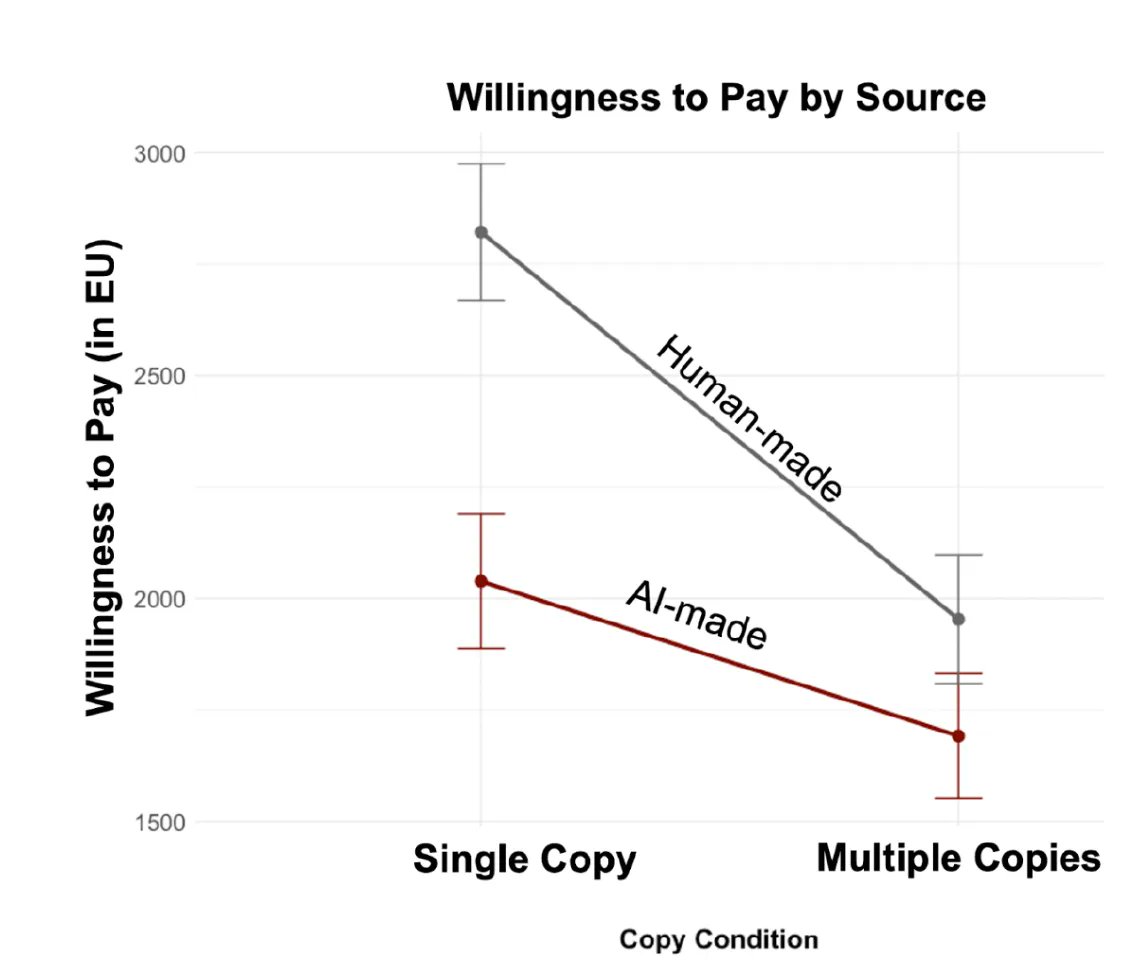
And indeed, empirical research by @alexolegimas shows that people inherently value AI-generated art less than human-made ones. The same is likely to be true in many other product categories.
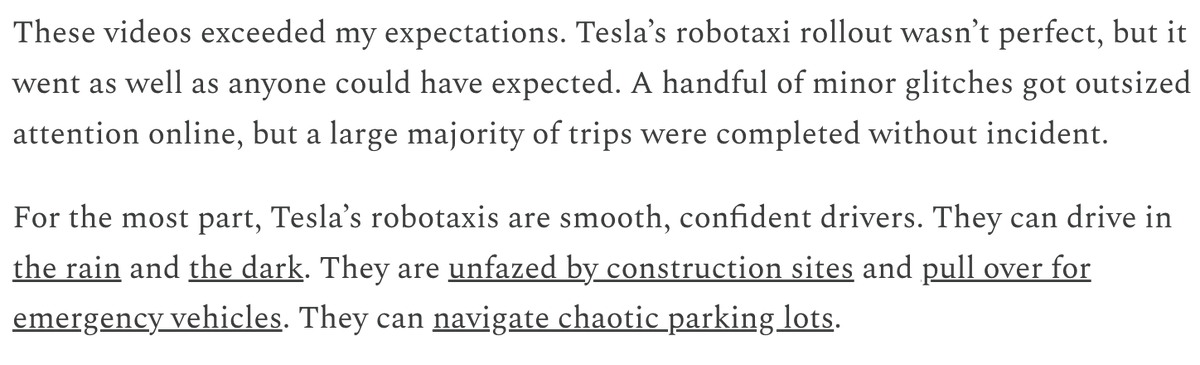
I watched almost 80 videos from Tesla's robotaxi launch, including a 4-hour livestream. It went better than I expected!
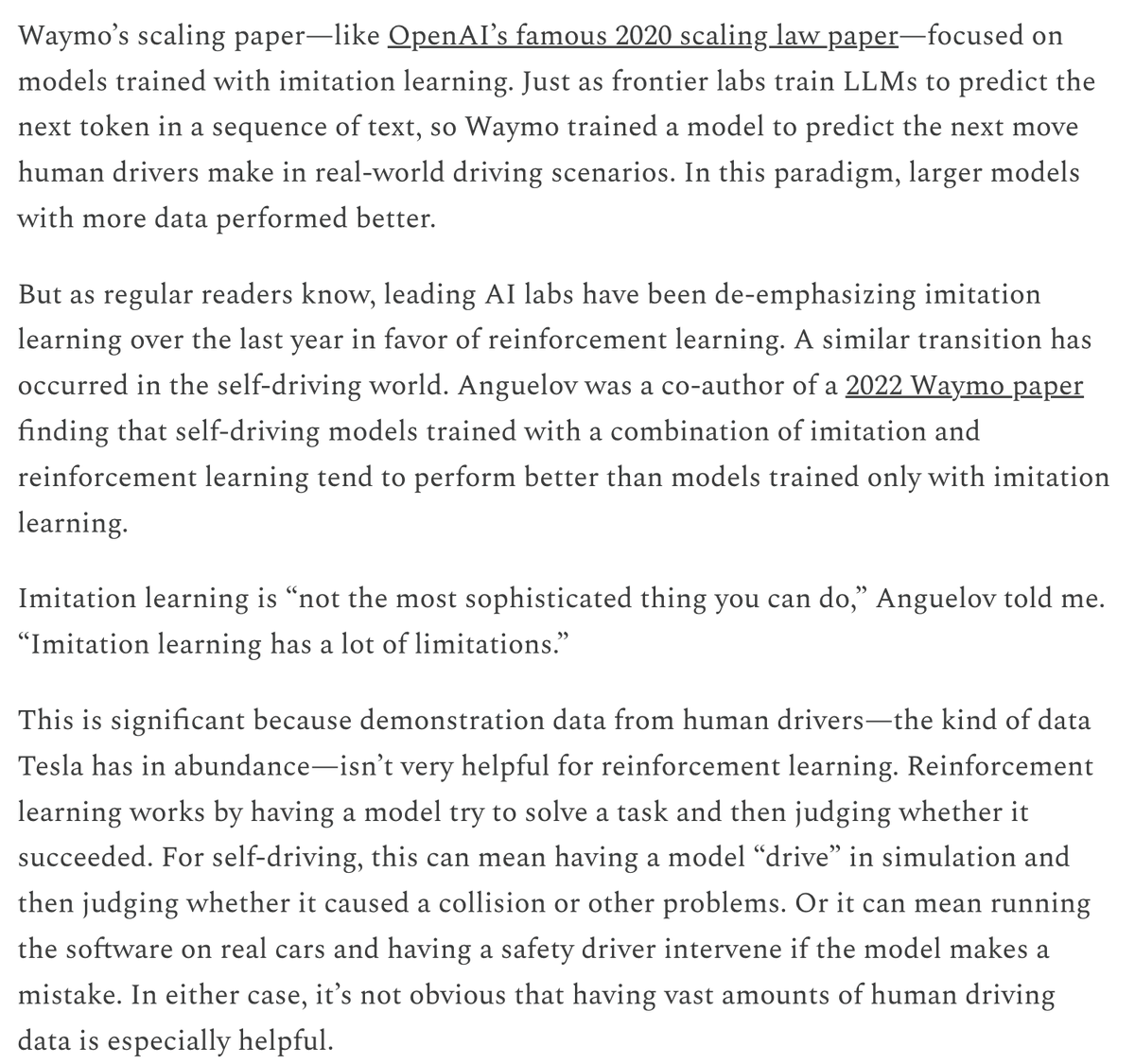
I also finally wrote about the scaling paper Waymo released last month that Tesla fans say proves their point. It's actually more complicated than that.
The big open question in my mind is how often Tesla has people literally driving robotaxis from a remote location. Some people think this is impossible but it's not.
I took a close look at the 38 most serious crashes Waymo experienced between July 2024 and February 2025. Almost all of them involved a Waymo following the rules and a human-driven car... not doing that.
38 crashes might sound like a lot, but those crashes occurred over more than 30 million miles of driving. If humans were driving those miles we would have had several times as many crashes.
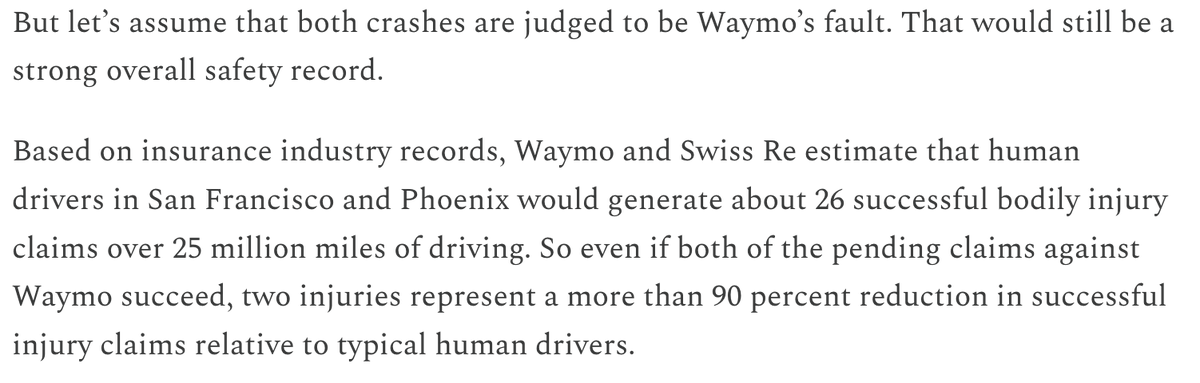
But perhaps the most astounding fact is that Waymo faced only two potentially successful bodily injury insurance claims during its first 25 million miles. Human drivers generate bodily injury claims more than 10 times as often.
I got 19 subject-matter experts to participate in a blind "taste test" between OpenAI and Google's Deep Research products. More than half said it would take 10+ hours to produce something as good as the OpenAI response. Only three people said that for Google.
Seven out of 13 experts said OpenAI's response was at or near the level of an experienced professional. Ten compared it to an intern or entry-level worker. People were not as impressed with Google's responses.
Overall, 16 out of 19 of my expert judges thought OpenAI's response was better, compared to only three who thought Google's was better.
Almost all jobs involve performing some set of tasks, but it doesn't follow that a robot that could perform all the tasks would be able to replace workers doing that job. Many jobs depend on human characteristics that will be difficult or impossible to reproduce using AI.
For example, some jobs just inherently require person-to-person contact. Nobody is going to want a robot nanny no matter how good it is at changing diapers.
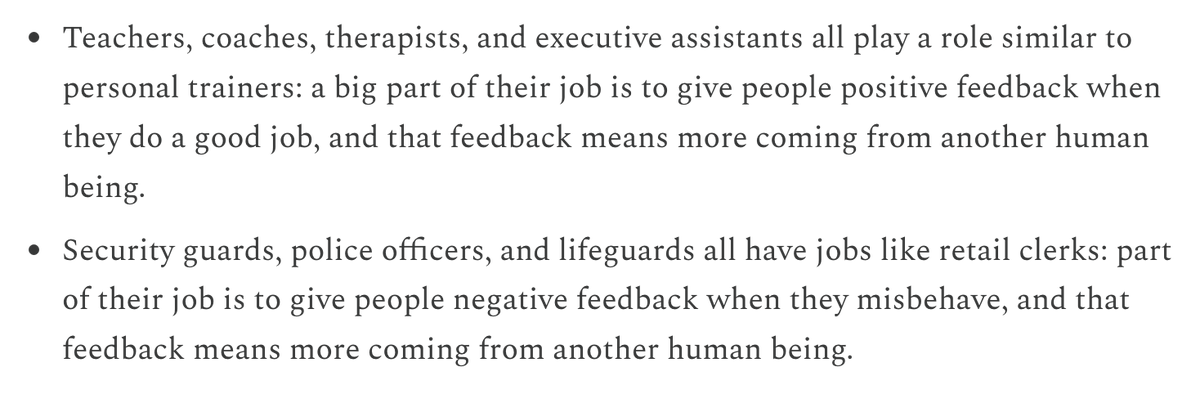
Many jobs involve trying to influence the behavior of others by praising or criticizing them. This is going to be much more effective if it comes from a human than a robot or chatbot.