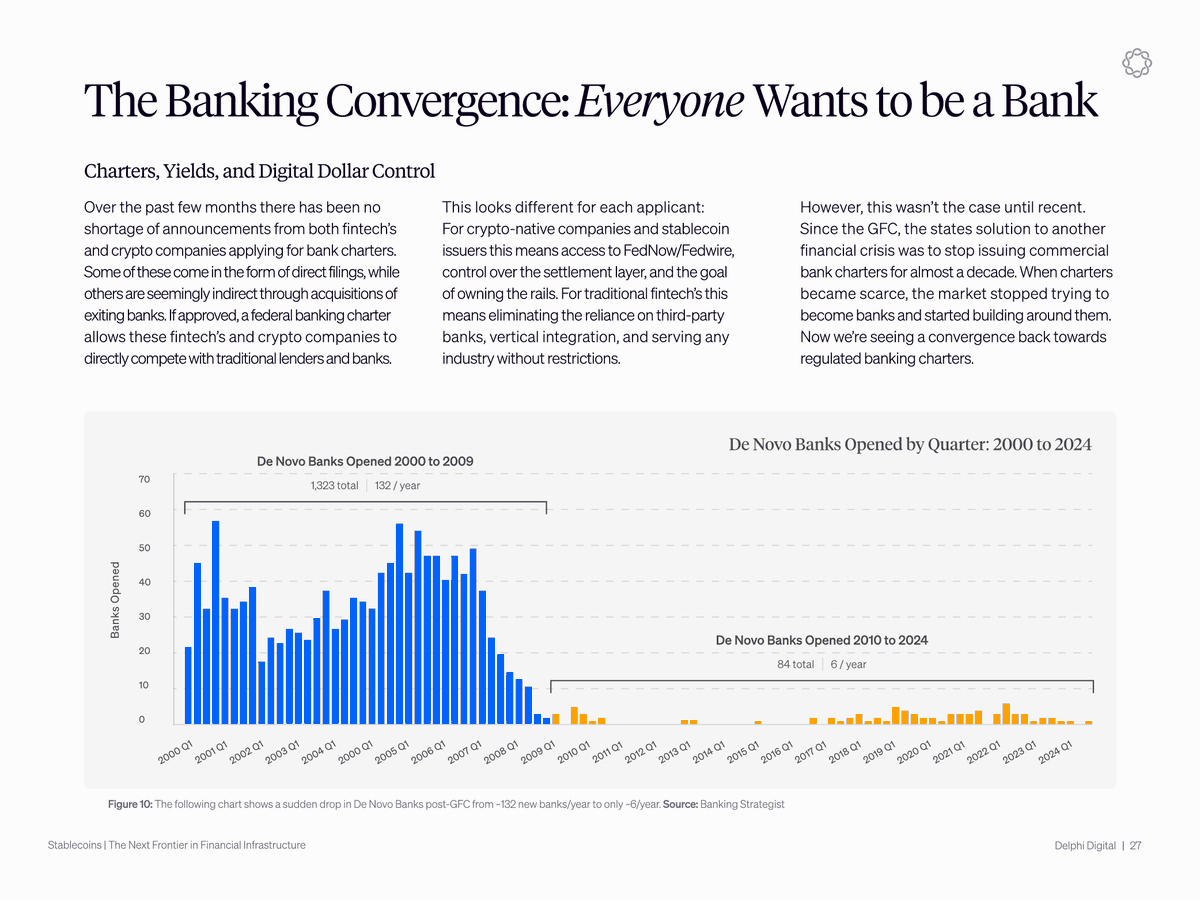
Critics frame stablecoins as a threat to national security, but the real threat is to the banking profit model.
Treasuries yield roughly 3.89% while a standard savings account pays 0.39%. Banks capture that entire spread on deposits that could otherwise be earning closer to the risk-free rate.
Stablecoins are backed by the same treasuries, and issuers are increasingly exploring ways to pass that yield directly to holders.
If that happens at scale, deposits could migrate out of the banking system. Banks may lose their cheapest source of funding and their ability to offer cheap credit along with it.
Treasuries yield roughly 3.89% while a standard savings account pays 0.39%. Banks capture that entire spread on deposits that could otherwise be earning closer to the risk-free rate.
Stablecoins are backed by the same treasuries, and issuers are increasingly exploring ways to pass that yield directly to holders.
If that happens at scale, deposits could migrate out of the banking system. Banks may lose their cheapest source of funding and their ability to offer cheap credit along with it.
Read the Full Stablecoin Report here.
members.delphidigital.io/reports/stable…
members.delphidigital.io/reports/stable…
• • •
Missing some Tweet in this thread? You can try to
force a refresh