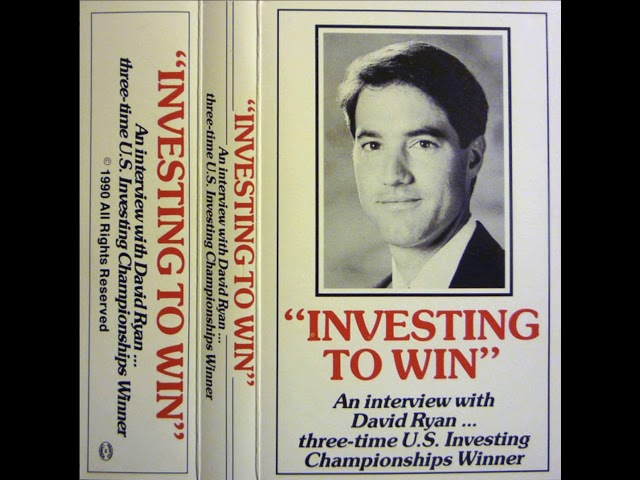
David Ryan won the US Investing Championship three years in a row - 1985, 1986, 1987.
Triple digit returns each year. 1,379% compounded over three years.
Here's the actual method behind it. 🧵
Triple digit returns each year. 1,379% compounded over three years.
Here's the actual method behind it. 🧵

1) He Was O'Neil's Protégé, Not Just a Student
Ryan didn't just read O'Neil's books. He walked into William O'Neil & Co straight out of college and offered to work for free just to get in the door.
He stayed for 17 years. Became Chief Market Strategist and the firm's first Portfolio Manager.
CANSLIM wasn't something he picked up from a book. It was something he built his entire process around under the person who created it.
That's a different level of understanding than most traders ever get.
Ryan didn't just read O'Neil's books. He walked into William O'Neil & Co straight out of college and offered to work for free just to get in the door.
He stayed for 17 years. Became Chief Market Strategist and the firm's first Portfolio Manager.
CANSLIM wasn't something he picked up from a book. It was something he built his entire process around under the person who created it.
That's a different level of understanding than most traders ever get.
2) Weekly Charts Only
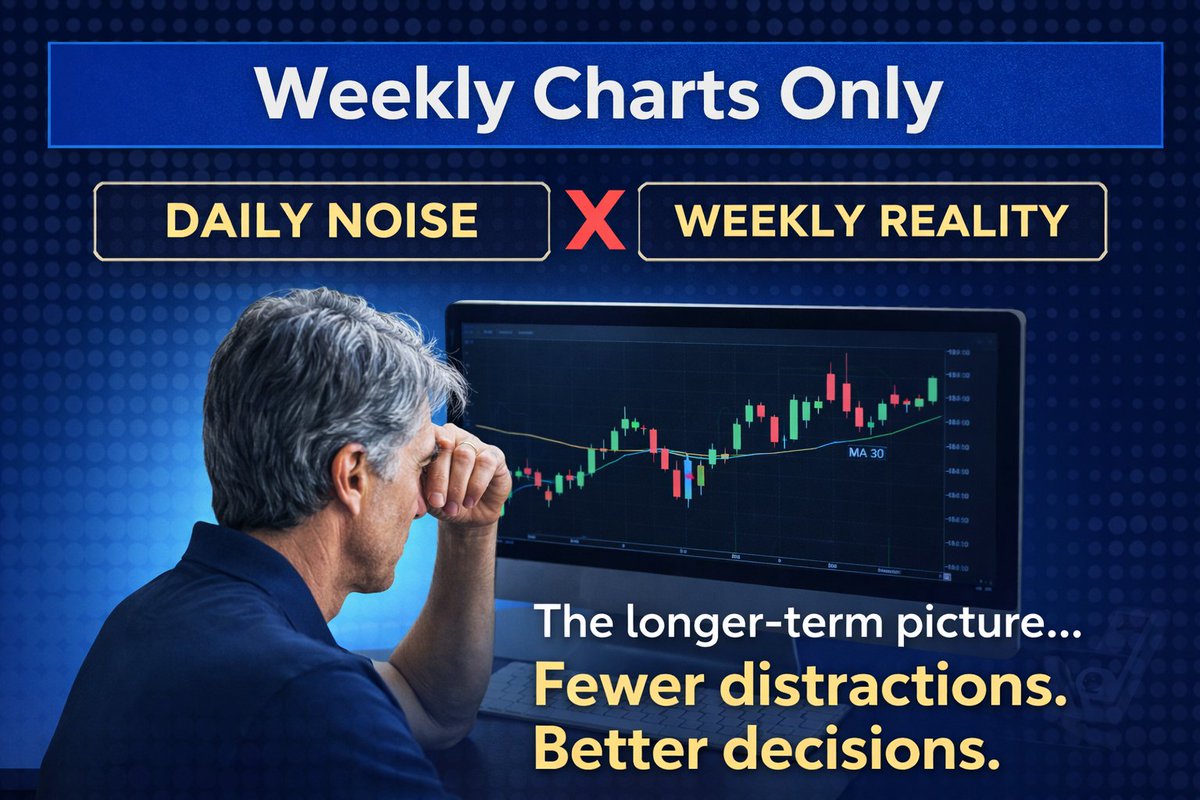
While most traders are glued to daily and intraday charts, Ryan worked almost entirely off weekly charts.
Every weekend he'd go through hundreds of stocks. No intraday noise, no daily overreaction - just the cleaner, longer-term picture of what a stock was actually doing.
His reasoning was simple. Weekly charts show you what's real. Daily charts show you a lot of things that don't matter.
Most traders look at too short a timeframe and make decisions off too much noise.
While most traders are glued to daily and intraday charts, Ryan worked almost entirely off weekly charts.
Every weekend he'd go through hundreds of stocks. No intraday noise, no daily overreaction - just the cleaner, longer-term picture of what a stock was actually doing.
His reasoning was simple. Weekly charts show you what's real. Daily charts show you a lot of things that don't matter.
Most traders look at too short a timeframe and make decisions off too much noise.
3) The Stock Should Be at Profit on Day One
Ryan had a rule - if a stock isn't showing you a profit on the first day you buy it, that's a warning sign.
Not a guarantee it fails. But one of the clearest early signals that a trade is working is immediate follow through from the entry.
When a stock breaks out and immediately goes flat or pulls back, the breakout isn't convincing. When it moves in your favour from the first session, the market is confirming your read.
He used this as one of his earliest filters for whether to hold or start cutting.
Ryan had a rule - if a stock isn't showing you a profit on the first day you buy it, that's a warning sign.
Not a guarantee it fails. But one of the clearest early signals that a trade is working is immediate follow through from the entry.
When a stock breaks out and immediately goes flat or pulls back, the breakout isn't convincing. When it moves in your favour from the first session, the market is confirming your read.
He used this as one of his earliest filters for whether to hold or start cutting.

4) Cut the Position in Half if It Re-enters the Base
Non-negotiable rule.
If a stock breaks out and then falls back into the consolidation it just came from - the base is broken. The setup has failed.
Ryan's response wasn't to wait and see. It wasn't to hold and hope. He cut the position by at least 50% immediately.
The base re-entry is the chart telling you something went wrong. The traders who ignore that signal are the ones who turn small losses into large ones.
Non-negotiable rule.
If a stock breaks out and then falls back into the consolidation it just came from - the base is broken. The setup has failed.
Ryan's response wasn't to wait and see. It wasn't to hold and hope. He cut the position by at least 50% immediately.
The base re-entry is the chart telling you something went wrong. The traders who ignore that signal are the ones who turn small losses into large ones.
5) Post-Analysis Changed Everything
Early in his career Ryan would try to forget his losing trades.
Then he started keeping a journal and going through every trade - winners and losers - looking for patterns in his own behaviour.
What he found changed his results significantly. He was consistently buying too late. A stock would break at ₹30 and he'd be entering at ₹35. Over hundreds of trades that single habit was quietly destroying his performance.
He fixed it because he looked. Most traders never look.
Early in his career Ryan would try to forget his losing trades.
Then he started keeping a journal and going through every trade - winners and losers - looking for patterns in his own behaviour.
What he found changed his results significantly. He was consistently buying too late. A stock would break at ₹30 and he'd be entering at ₹35. Over hundreds of trades that single habit was quietly destroying his performance.
He fixed it because he looked. Most traders never look.
6) The Year He Forgot His Own Rules
After three consecutive championship wins, Ryan entered for a fourth time.
And went flat.
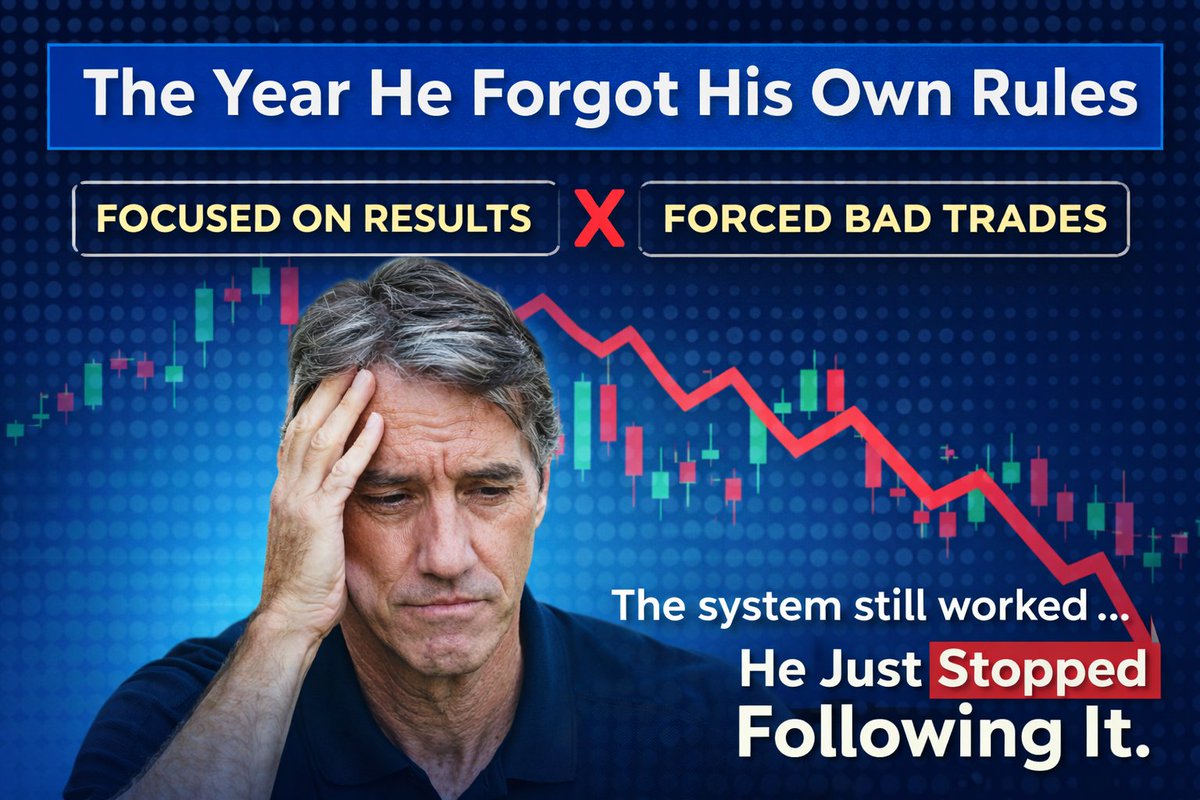
He knew exactly why. He'd become focused on the results instead of the process. Taking positions that were too large, not giving stocks enough room, forcing trades that didn't fully meet his criteria.
Nothing about the market changed. Nothing about his system changed. He just stopped following it.
He came back the next year and finished second. The system still worked. He just had to get out of its way again.
After three consecutive championship wins, Ryan entered for a fourth time.
And went flat.
He knew exactly why. He'd become focused on the results instead of the process. Taking positions that were too large, not giving stocks enough room, forcing trades that didn't fully meet his criteria.
Nothing about the market changed. Nothing about his system changed. He just stopped following it.
He came back the next year and finished second. The system still worked. He just had to get out of its way again.
Three elements Ryan said every trader needs - a real trade selection process, strict risk control, and the discipline to follow both even when it's uncomfortable.
Most traders have one of the three. Very few have all of them working at the same time.
That's the actual reason the three championship wins happened.
Follow @ankurpatel59 for more on the traders and methods worth studying.
Most traders have one of the three. Very few have all of them working at the same time.
That's the actual reason the three championship wins happened.
Follow @ankurpatel59 for more on the traders and methods worth studying.
• • •
Missing some Tweet in this thread? You can try to
force a refresh