The Most Obvious Thing Nobody Wants to Say Out Loud
Months of watching the news, and it comes down to this: either everyone in Washington has suffered a simultaneous catastrophic brain injury, or something far more deliberate is going on.
Let’s start with the sanctions. Trump has lifted them on Russia. Iran. Belarus. Three regimes that between them have shot down passenger aircraft, poisoned people in English cathedral cities, and run prison systems that make Alcatraz look like a Marriott. Those sanctions. Gone. Just like that.
But Canada? Canada gets tariffs. Germany gets lectures. France gets ignored. NATO gets treated like an embarrassing uncle at Christmas.
Are you seeing this?
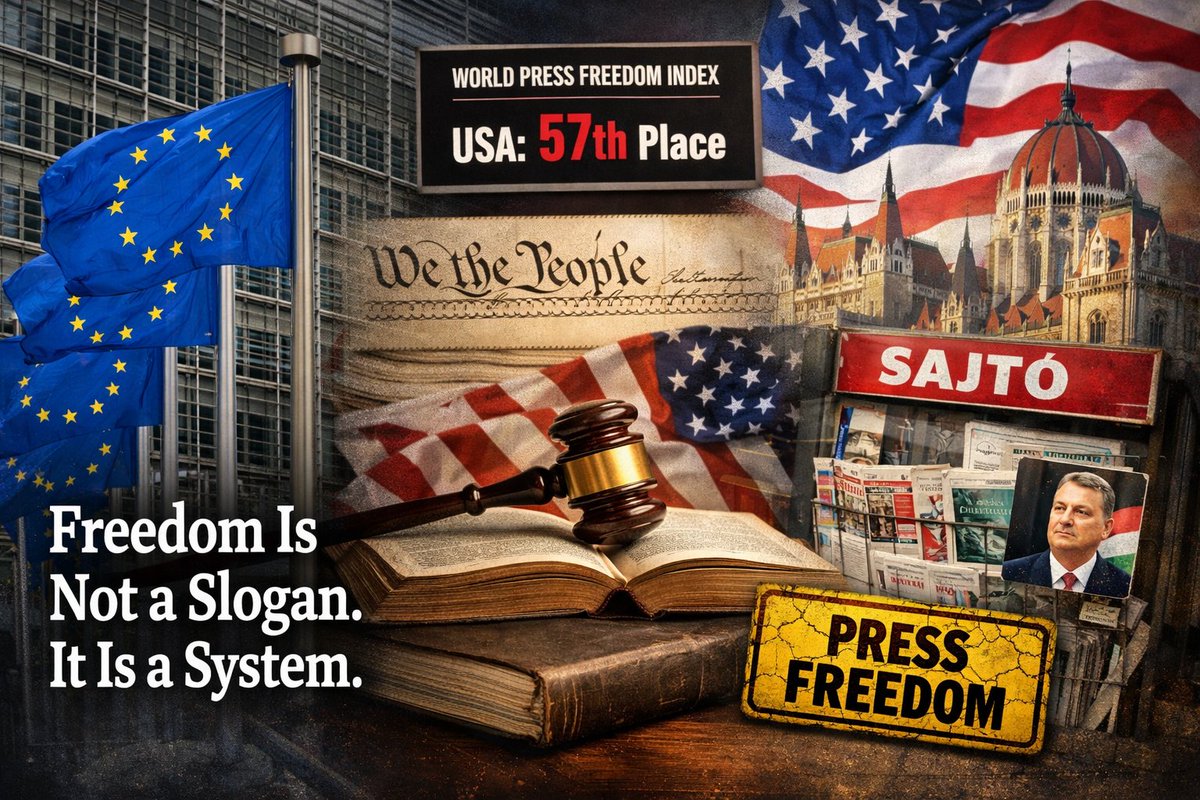
Marco Rubio flew to Budapest. To visit Viktor Orban – a man who has spent fifteen years methodically dismantling every court, every newspaper, and every independent institution his country ever had. And now JD Vance is making the same pilgrimage. These are not coincidences. You don’t fly to Budapest unless you really, really admire what Viktor Orban has built there.
And what has he built? A state with no functioning opposition. A press that agrees with the government. A judiciary that does what it’s told.
Sound familiar?
Trump has never – not once – said a critical word about Putin. Not one. He has praised him. Repeatedly. Enthusiastically. Like a schoolboy who’s just discovered his favourite footballer. Meanwhile Zelensky – the man whose country is being shelled daily – got dragged into the Oval Office and humiliated on live television.
This is not a foreign policy. This is a preference.
Now here’s the bit that should make you put down your coffee.
A united Europe – with NATO overhead, shared defence, shared intelligence, shared values – is the one thing the Trump regime cannot control. You can’t squeeze France and Germany and Poland simultaneously if they’re all holding hands. But break the chain? Isolate each country? Make them feel exposed and dependent and alone?
Then you can deal with them one at a time.
That is what is happening. Not tariffs. Not trade disputes. Not some philosophical disagreement about multilateralism. The goal – the actual goal – is to dismantle the umbrella so that every European country gets rained on individually.
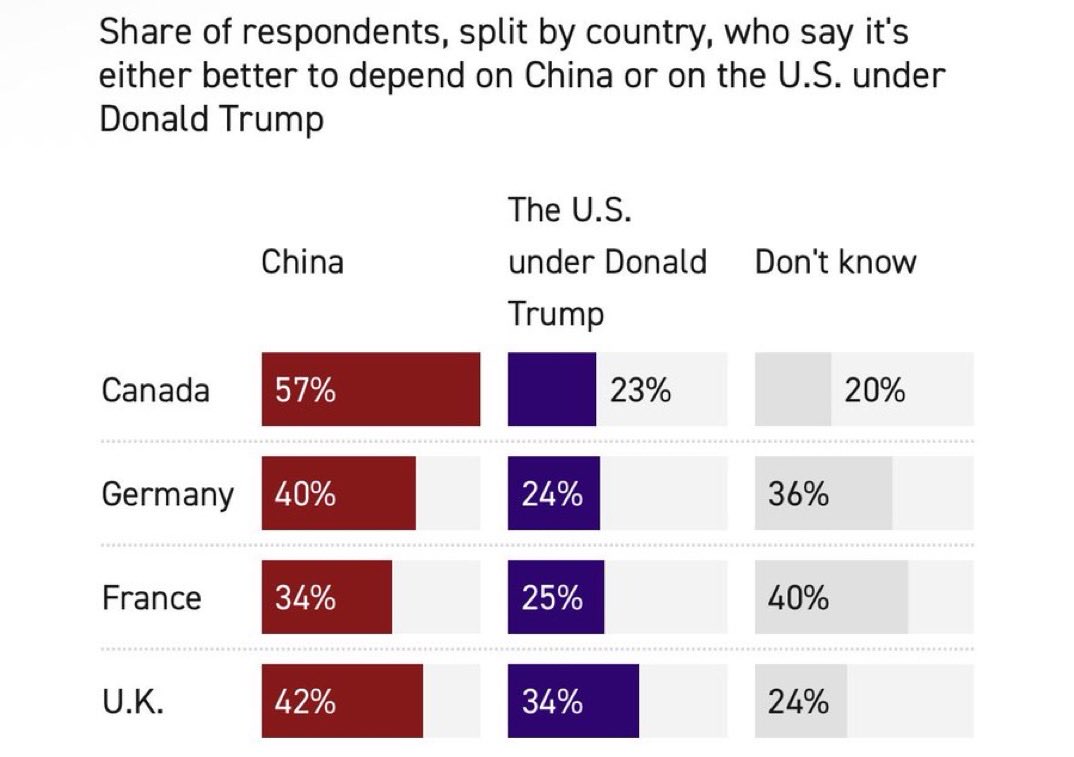
And here’s how you know the public has worked it out, even if the commentators haven’t. A recent poll asked people across Western democracies a straightforward question. Would you rather depend on China, or on the United States under Donald Trump? In Canada – America’s nearest neighbour, closest ally, sharer of the world’s longest undefended border – 57% chose China. Twenty-three percent chose the Trump regime. In Britain, 42% preferred Beijing. Germany, 40%. France, 34%.
Citizens of countries that sent their sons to die on American-adjacent beaches in 1944 now trust the Chinese Communist Party more than they trust Washington.
Read that sentence again. Slowly.
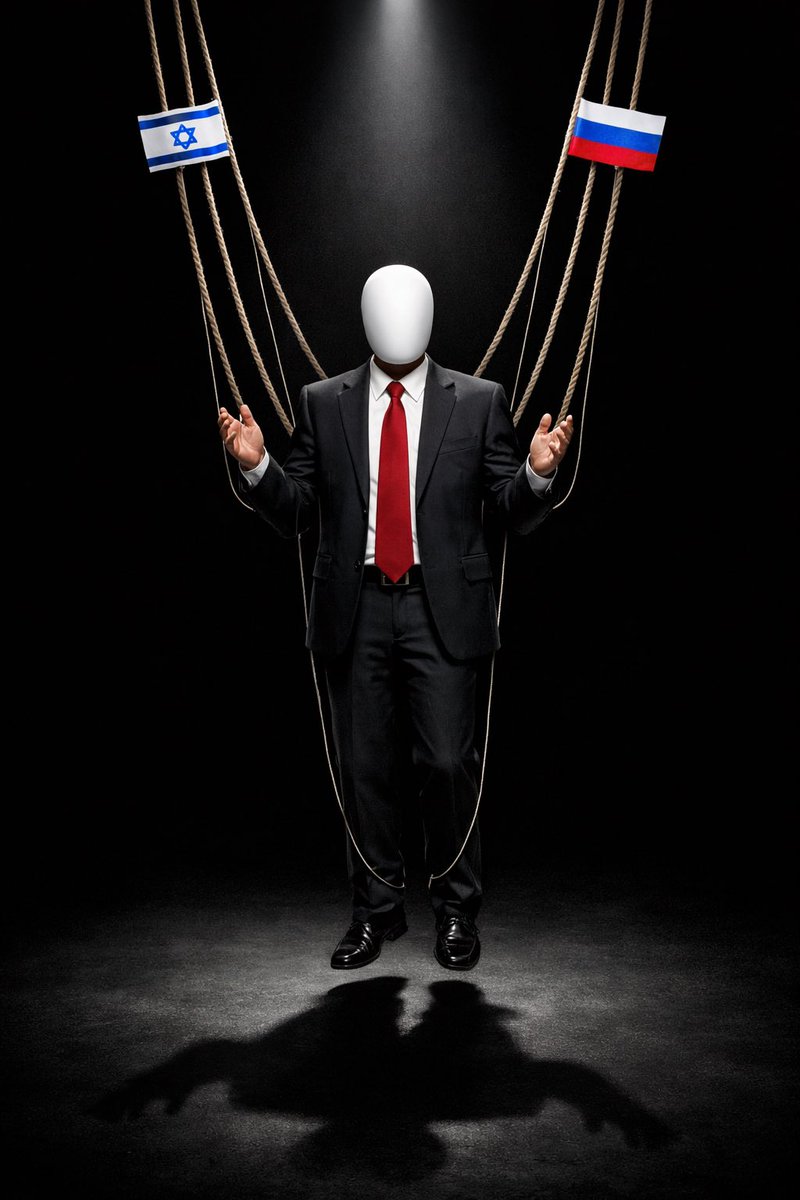
And then there’s Iran. Three weeks ago the Trump regime lifted sanctions on Tehran. This week – with Israel bombing the city – American aircraft are joining in. The same regime that decided Iran was fine, actually, no problem, here are your sanctions back, is now at war with Iran. Because Netanyahu asked nicely.
This is not strength. This is a regime so desperate for the approval of whoever is in the room that it will contradict itself within a fortnight and call it strategy. Maybe Trump didn’t lead America into this. He was pulled. By a smaller country with a very clear agenda and a very good read on exactly how malleable this particular president is.
That is not a superpower. That is a sock puppet.
Months of watching the news, and it comes down to this: either everyone in Washington has suffered a simultaneous catastrophic brain injury, or something far more deliberate is going on.
Let’s start with the sanctions. Trump has lifted them on Russia. Iran. Belarus. Three regimes that between them have shot down passenger aircraft, poisoned people in English cathedral cities, and run prison systems that make Alcatraz look like a Marriott. Those sanctions. Gone. Just like that.
But Canada? Canada gets tariffs. Germany gets lectures. France gets ignored. NATO gets treated like an embarrassing uncle at Christmas.
Are you seeing this?
Marco Rubio flew to Budapest. To visit Viktor Orban – a man who has spent fifteen years methodically dismantling every court, every newspaper, and every independent institution his country ever had. And now JD Vance is making the same pilgrimage. These are not coincidences. You don’t fly to Budapest unless you really, really admire what Viktor Orban has built there.
And what has he built? A state with no functioning opposition. A press that agrees with the government. A judiciary that does what it’s told.
Sound familiar?
Trump has never – not once – said a critical word about Putin. Not one. He has praised him. Repeatedly. Enthusiastically. Like a schoolboy who’s just discovered his favourite footballer. Meanwhile Zelensky – the man whose country is being shelled daily – got dragged into the Oval Office and humiliated on live television.
This is not a foreign policy. This is a preference.
Now here’s the bit that should make you put down your coffee.
A united Europe – with NATO overhead, shared defence, shared intelligence, shared values – is the one thing the Trump regime cannot control. You can’t squeeze France and Germany and Poland simultaneously if they’re all holding hands. But break the chain? Isolate each country? Make them feel exposed and dependent and alone?
Then you can deal with them one at a time.
That is what is happening. Not tariffs. Not trade disputes. Not some philosophical disagreement about multilateralism. The goal – the actual goal – is to dismantle the umbrella so that every European country gets rained on individually.
And here’s how you know the public has worked it out, even if the commentators haven’t. A recent poll asked people across Western democracies a straightforward question. Would you rather depend on China, or on the United States under Donald Trump? In Canada – America’s nearest neighbour, closest ally, sharer of the world’s longest undefended border – 57% chose China. Twenty-three percent chose the Trump regime. In Britain, 42% preferred Beijing. Germany, 40%. France, 34%.
Citizens of countries that sent their sons to die on American-adjacent beaches in 1944 now trust the Chinese Communist Party more than they trust Washington.
Read that sentence again. Slowly.
And then there’s Iran. Three weeks ago the Trump regime lifted sanctions on Tehran. This week – with Israel bombing the city – American aircraft are joining in. The same regime that decided Iran was fine, actually, no problem, here are your sanctions back, is now at war with Iran. Because Netanyahu asked nicely.
This is not strength. This is a regime so desperate for the approval of whoever is in the room that it will contradict itself within a fortnight and call it strategy. Maybe Trump didn’t lead America into this. He was pulled. By a smaller country with a very clear agenda and a very good read on exactly how malleable this particular president is.
That is not a superpower. That is a sock puppet.
So when European leaders refuse to fall in behind the Trump regime’s position on Iran, understand what’s actually happening. They are not being difficult. They are not being anti-American. They have simply noticed that the regime demanding their loyalty has spent the past years praising Moscow, rewarding Tehran, and then bombing Tehran, while trying to saw off the branch they’re all sitting on.
You don’t take orders from a general who’s already shooting at you.
The Trump regime is not a confused ally. It is not a bull in a china shop. It knows exactly what it’s doing. And what it’s doing is not good for democracy, not good for Europe, and not good for anyone who believes that the last eighty years of relative peace were worth preserving.
Europe needs to grow up. Fast. And look after itself.
Because that lot in Washington aren’t going to.
Gandalv / @Microinteracti1
You don’t take orders from a general who’s already shooting at you.
The Trump regime is not a confused ally. It is not a bull in a china shop. It knows exactly what it’s doing. And what it’s doing is not good for democracy, not good for Europe, and not good for anyone who believes that the last eighty years of relative peace were worth preserving.
Europe needs to grow up. Fast. And look after itself.
Because that lot in Washington aren’t going to.
Gandalv / @Microinteracti1
• • •
Missing some Tweet in this thread? You can try to
force a refresh