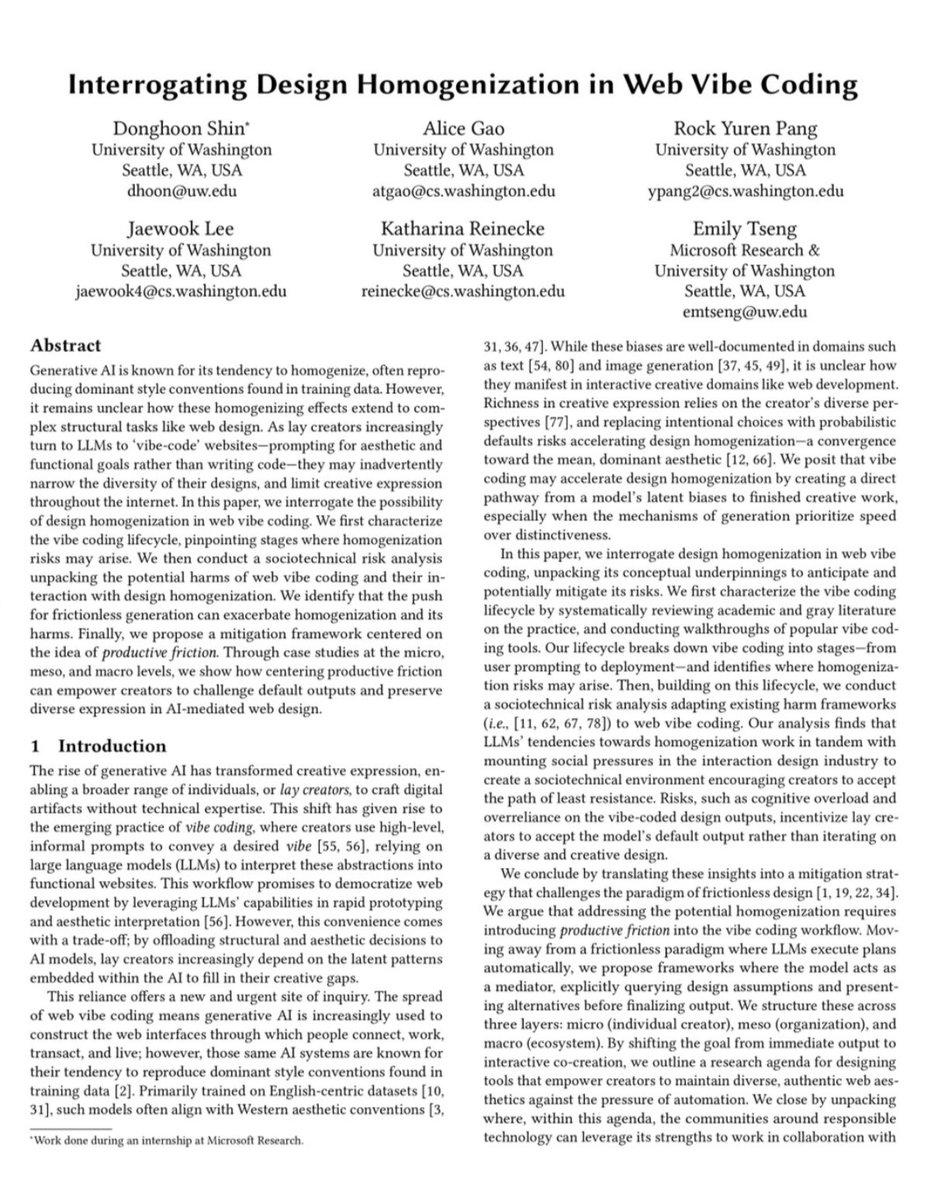
BREAKING: OpenAI and Anthropic engineers leaked a prompting technique that separates beginners from experts.
It's called "Socratic prompting" and it's insanely simple.
Instead of telling the AI what to do, you ask it questions.
My output quality: 6.2/10 → 9.1/10
Here's how it works:
It's called "Socratic prompting" and it's insanely simple.
Instead of telling the AI what to do, you ask it questions.
My output quality: 6.2/10 → 9.1/10
Here's how it works:
Most people prompt like this:
"Write a blog post about AI productivity tools"
"Create a marketing strategy for my SaaS"
"Analyze this data and give me insights"
LLMs treat these like tasks to complete.
They optimize for speed, not depth.
You get surface-level garbage.
"Write a blog post about AI productivity tools"
"Create a marketing strategy for my SaaS"
"Analyze this data and give me insights"
LLMs treat these like tasks to complete.
They optimize for speed, not depth.
You get surface-level garbage.
Socratic prompting flips this.
Instead of telling the AI what to produce, you ask questions that force it to think through the problem.
LLMs are trained on billions of reasoning examples.
Questions activate that reasoning mode.
Instructions don't.
Instead of telling the AI what to produce, you ask questions that force it to think through the problem.
LLMs are trained on billions of reasoning examples.
Questions activate that reasoning mode.
Instructions don't.
❌ INSTRUCTION PROMPT:
"Write a value proposition for my AI analytics tool"
✅ SOCRATIC PROMPT:
"What makes a value proposition compelling to B2B buyers? What emotional and logical triggers should it hit? Now apply that framework to an AI analytics tool."
The AI thinks first, then writes.
Output is 10x better.
"Write a value proposition for my AI analytics tool"
✅ SOCRATIC PROMPT:
"What makes a value proposition compelling to B2B buyers? What emotional and logical triggers should it hit? Now apply that framework to an AI analytics tool."
The AI thinks first, then writes.
Output is 10x better.
❌ INSTRUCTION:
"Create a content calendar for LinkedIn"
✅ SOCRATIC:
"What types of LinkedIn content generate the most engagement in B2B SaaS? What posting frequency avoids audience fatigue? How should topics build on each other? Now design a 30-day calendar using these principles."
See the difference?
"Create a content calendar for LinkedIn"
✅ SOCRATIC:
"What types of LinkedIn content generate the most engagement in B2B SaaS? What posting frequency avoids audience fatigue? How should topics build on each other? Now design a 30-day calendar using these principles."
See the difference?
LLMs use chain-of-thought reasoning during training.
When you ask questions, you trigger that same reasoning pathway.
The model:
1. Analyzes the question's requirements
2. Considers multiple frameworks
3. Evaluates trade-offs
4. Synthesizes a nuanced answer
Instructions skip steps 1-3.
When you ask questions, you trigger that same reasoning pathway.
The model:
1. Analyzes the question's requirements
2. Considers multiple frameworks
3. Evaluates trade-offs
4. Synthesizes a nuanced answer
Instructions skip steps 1-3.
Structure your Socratic prompts in 3 parts:
PART 1: Theoretical Question
"What makes [output type] effective?"
PART 2: Framework Question
"What principles or frameworks apply here?"
PART 3: Application Question
"Now apply those insights to [your specific task]"
This forces step-by-step reasoning.
PART 1: Theoretical Question
"What makes [output type] effective?"
PART 2: Framework Question
"What principles or frameworks apply here?"
PART 3: Application Question
"Now apply those insights to [your specific task]"
This forces step-by-step reasoning.
❌ "Analyze this customer feedback data"
✅ "What patterns in customer feedback indicate product-market fit issues? What quantitative and qualitative signals matter most? Now analyze this data through that lens and tell me what's breaking."
The AI becomes a strategic analyst, not a data summarizer.
✅ "What patterns in customer feedback indicate product-market fit issues? What quantitative and qualitative signals matter most? Now analyze this data through that lens and tell me what's breaking."
The AI becomes a strategic analyst, not a data summarizer.
For complex problems, stack questions:
"What would a top growth marketer ask before building a funnel? What data would they need? What assumptions would they validate first?
Now answer those questions for my SaaS product, then design the funnel."
You're programming the AI's thinking process.
"What would a top growth marketer ask before building a funnel? What data would they need? What assumptions would they validate first?
Now answer those questions for my SaaS product, then design the funnel."
You're programming the AI's thinking process.
Socratic prompting is overkill for:
- Simple factual queries
- Data formatting tasks
- Basic code generation
- Quick rewrites
Use it when you need:
- Strategic thinking
- Nuanced analysis
- Creative problem-solving
- Multi-step reasoning
- Simple factual queries
- Data formatting tasks
- Basic code generation
- Quick rewrites
Use it when you need:
- Strategic thinking
- Nuanced analysis
- Creative problem-solving
- Multi-step reasoning
Going to be honest: this changed how I use AI completely.
I went from fighting with ChatGPT to having actual strategic conversations.
Start with one prompt today.
Turn your next instruction into 3 questions.
Watch what happens.
Which use case will you try first?
I went from fighting with ChatGPT to having actual strategic conversations.
Start with one prompt today.
Turn your next instruction into 3 questions.
Watch what happens.
Which use case will you try first?
I hope you've found this thread helpful.
Follow me @heygurisingh for more.
Like/Repost the quote below if you can:
Follow me @heygurisingh for more.
Like/Repost the quote below if you can:
https://twitter.com/1662123349148073984/status/2034896678520856788
• • •
Missing some Tweet in this thread? You can try to
force a refresh