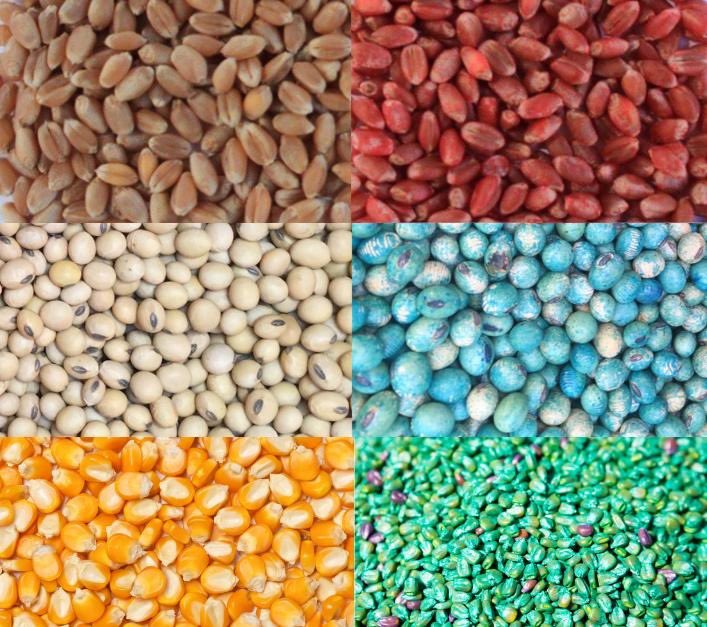
Many modern conventional crops (corn, soy, wheat, etc.) are pre-coated with pesticides before they are ever planted in the ground, and this is not regulated due to a massive loophole. Once pesticides are coated onto a seed, the seed is exempt from pesticide registration and labeling requirements under a regulatory policy known as the EPA “treated article exemption” (40 CFR 152.25). In other words: since the pesticide cocktail is applied before the seed is planted, the treated seed itself is not regulated the same way as pesticides sprayed during the growing season.
Plus, while companies are required to disclose the active pesticide ingredients, they are not required to disclose the full composition of the formulation, which makes up 90% of the mix, and can include dyes, stabilizers & other chemical additives.
These chemicals enter the soil, ecosystems, and food system from day one, adding to our chronic exposure of pesticides that can negatively impact gut microbiome and overall human health.
For grains in particular, it has become increasingly important to understand where they come from and how they are grown. Labels give you claims, but knowing your farmer gives you answers!!
Many people say that carbs increase insulin which leads to fat storage. Low carb diets keep insulin low, so you should get effortlessly get lean by avoiding carbs, right? No, an increase in insulin after your meals does not inhibit fat loss. This is a normal physiological response and does not necessarily mean fat loss is inhibited.
You can still lose weight eating carbohydrates if in a calorie deficit. In fact, there are a number of benefits for including carbs during a fat loss phase…
1. Carbs help maintain precious muscle tissue. Keeping your glycogen stores replenished boosts your gym performance and helps your recovery. Full glycogen stores provide an anabolic (building-up) hormonal environment. Muscle glycogen depletion creates a catabolic (breaking-down) hormonal environment, which means more protein breakdown and less protein synthesis.
Carbs also help boost your gym performance so that you can push yourself and maintain adequate stimulus on your muscles for maintenance during your cut.
Muscle is precious tissue that you do NOT want to lose!
In the 1940s, lean men maintained their physique while consuming approximately 3,500 calories daily—the same amount the average American consumes today. Yet, in stark contrast to the past, obesity rates have skyrocketed. Our metabolic rates have received a downgrade. ⤵️
Example - subjects in the Minnesota Starvation Experiment (1940s). The lean men aged 20-33, mean weight = 152.7 lbs, mean height = 5'10". Maintenance calories = 3500! (Again - the average calorie consumption in America today is ~3500-3600 calories per day, yet obesity is at an all time high).
The Minnesota Starvation Experiment was a very tightly controlled study, so their activity was closely monitored, and there were chefs that made ALL of their meals during the study, with weighed out portions. (Calories were controlled)
There weren't doing a ton of exercise, but remained active with daily steps. They walked 10,000-15,000 steps per day and performed one "cardio session" per week (30-min walk on a treadmill at 4.5 mph speed with a 10% incline). Along with 25 hours of classes at University and 15 hours of maintenance work (laundry, cleaning, clerical & statistical work).
We are fatter than our ancestors, despite eating similar calories.
A thread🧵
Energy balance ⚖️ comparing calories consumed (IN) vs. calories burned (OUT)
You can't expect a body to maintain or lose weight when significantly more calories are consumed relative to one's metabolic needs.
And yes, there are some people who have significantly reduced their activity levels and increased their calories.
BUT according to some researchers, this calories in vs. calories out model just isn't enough to explain the current obesity epidemic.
There must be a reason for the large difference between calories in & calories out…
Dr. John Spearman is one of the leading metabolism and obesity researchers in the world. His lab has released a number of fascinating studies in the past year, including this one:
“Total daily energy expenditure has declined over the past three decades due to declining basal expenditure, not reduced activity expenditure” PMID: 37100994
Yes, fat gain is the result of too many calories IN relative to the calories coming OUT.
But there is *a lot* more involved in the calories OUT side of the equation that is often discussed… what if there has been a MAJOR change in our metabolisms, impacting the calories OUT side of the equation?




