🧵 America is in the midst of a behavioral health (BH) crisis. Incidence of most BH conditions is increasing and affecting all age groups. In parallel, many areas lack an adequate supply of providers, exacerbated by high rates of burnout and low-efficacy case assignment models. 
When access does exist, it often is not timely, with wait times up to 6 months. This crisis has been dramatically worsened by the Covid-2019 pandemic.
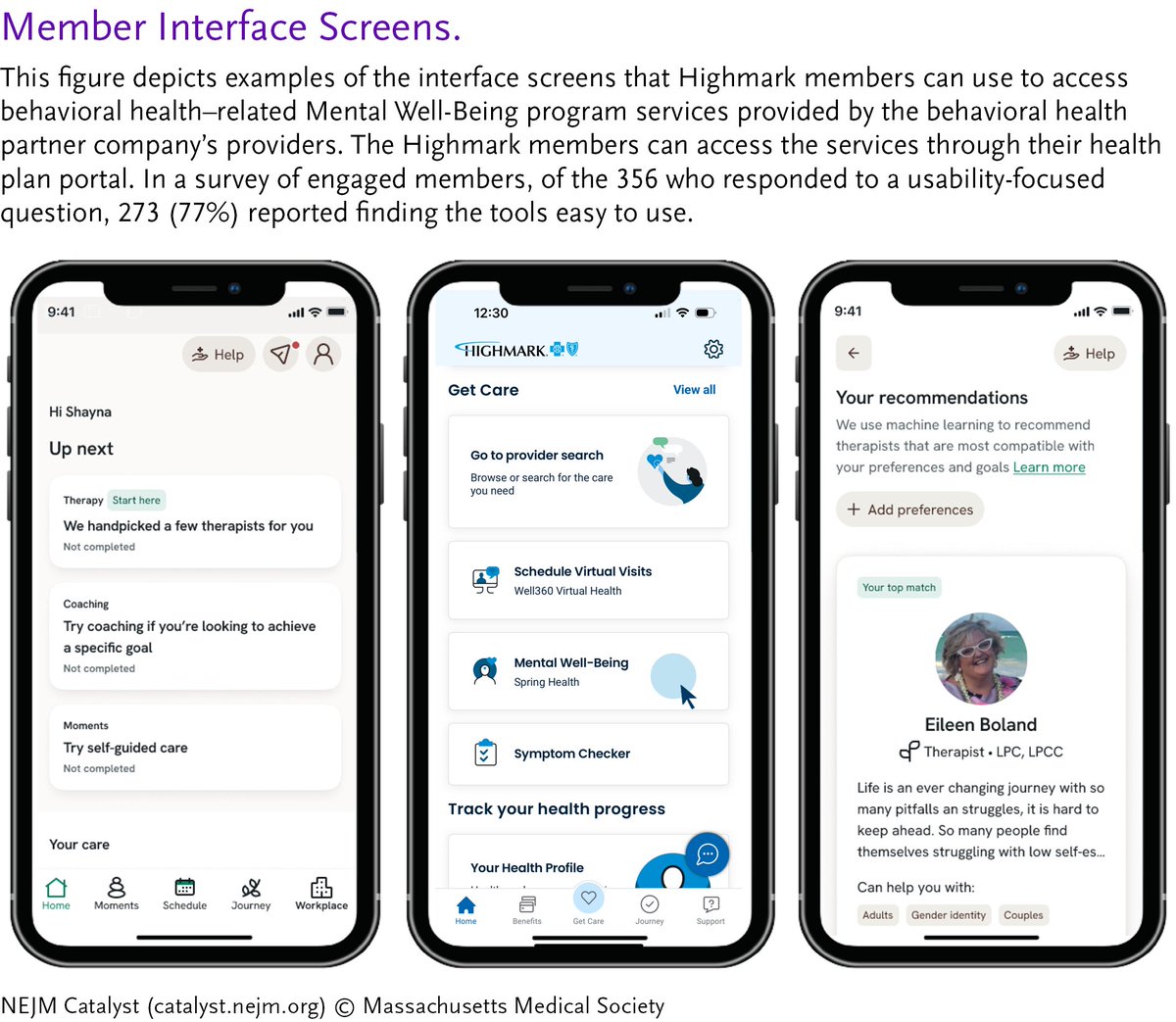
Based on these challenges, Highmark Health developed a mental well-being program via collaboration with Spring Health, a company that offers a comprehensive mental health system developed to address the needs of employers and health plans.
Highmark Health's goals for this collaboration include (1) improving the quality and clinical outcomes of BH for Highmark members, (2) expanding access to BH care and interventions for members, (3) creating a BH system that uses data to inform operations and clinical decisions,
(4) tracking key outcomes measures to assess program impact, and (5) reducing stigma associated with BH conditions and help-seeking.
A phased rollout of the Mental Well-Being (MWB) program began in January 2024. The effort involved technical integration among the parties to place the MWB solution in health plan member portals.
Using a structured intake process that includes a detailed self-assessment, personalized care plans were developed across a spectrum of levels of support.
Interventions span a range of digital daily wellness interactions, such as one-on-one care navigation, or more in-depth behavioral care provided virtually or with in-person provider visits.
Care plans include the use of routine, clinically validated self-assessments that are used to monitor and guide care. Behavioral therapy, medication management, and 24/7 crisis support are offered.
Initial findings show an average wait time in 2025 of less than 2 days. Among members diagnosed with moderate-to-severe depression and anxiety, in 2024, remission was achieved in about four and five appointments, respectively.
Of about 51,000 MWB-enrolled members, about 78.5% of participants are engaging with BH services for the first time: nej.md/4rxKZFz
• • •
Missing some Tweet in this thread? You can try to
force a refresh