
This is one of the last times I’ll make my plea to the Germans. I’ll stop fighting and talking about it. But I work with AI technologies, this is my full time job including risk and responsible AI policies. Hessen, Bavaria, NRW, BW, you have betrayed your own people. Here’s why: 
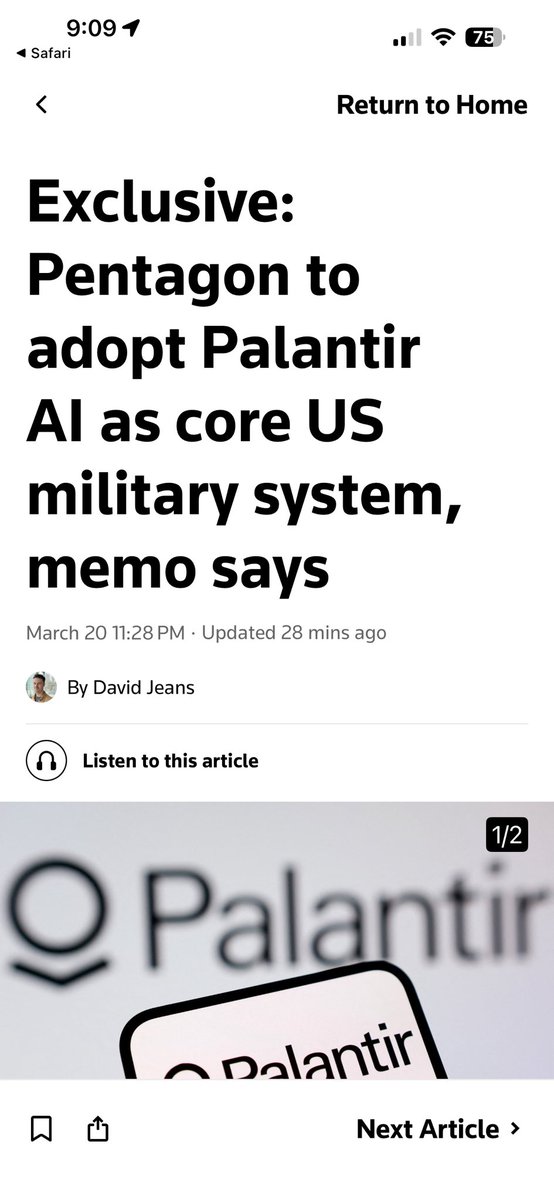
I’m an American watching my country's defense establishment lock a European alliance into a permanent dependency on Palantir’s U.S. surveillance technology. And I'm watching Europeans make rational-seeming decisions that will systematically eliminate their ability to act independently. Let me explain why this should terrify you, and why I'm shouting about it now.
Start with the facts on the ground in Germany:
- HESSE: Hessendata (Palantir/Gotham) since 2017
- NORTH RHINE-WESTPHALIA: DAR system (Palantir) since 2019-2020
- BAVARIA: VeRA (Palantir) since 2024 (€25M contract)
- BADEN-WÜRTTEMBERG: Q2 2026 deployment (€25M contract, legal framework just changed)
Four of Germany's most populous states are now running Palantir for police intelligence. The software is called "Gotham" borrowed from Batman's dark, corrupt city. That's not a coincidence.
- HESSE: Hessendata (Palantir/Gotham) since 2017
- NORTH RHINE-WESTPHALIA: DAR system (Palantir) since 2019-2020
- BAVARIA: VeRA (Palantir) since 2024 (€25M contract)
- BADEN-WÜRTTEMBERG: Q2 2026 deployment (€25M contract, legal framework just changed)
Four of Germany's most populous states are now running Palantir for police intelligence. The software is called "Gotham" borrowed from Batman's dark, corrupt city. That's not a coincidence.
But here's what most people don't understand: this isn't just a police software choice. This is a structural decision about who controls Germany's future operational capacity.
Yesterday (March 9, 2026), the U.S. Deputy Secretary of Defense made Maven an official Pentagon "program of record." That means: Palantir's weapons-targeting AI is now the institutional backbone of the entire U.S. military.
By September 2026, it will be integrated across all service branches.
Yesterday (March 9, 2026), the U.S. Deputy Secretary of Defense made Maven an official Pentagon "program of record." That means: Palantir's weapons-targeting AI is now the institutional backbone of the entire U.S. military.
By September 2026, it will be integrated across all service branches.
And here's the connection to Germany that should make everyone uncomfortable:
NATO just adopted Maven as its official warfighting command-and-control system (March 25, 2025). German intelligence officers, Dutch commanders, French planners they're all now uploading their operational data into a single Palantir database.
Once that data goes in, it's subject to U.S. government access. Not by court order you can appeal. Not by mutual agreement. By unilateral U.S. legal authority.
NATO just adopted Maven as its official warfighting command-and-control system (March 25, 2025). German intelligence officers, Dutch commanders, French planners they're all now uploading their operational data into a single Palantir database.
Once that data goes in, it's subject to U.S. government access. Not by court order you can appeal. Not by mutual agreement. By unilateral U.S. legal authority.
Switzerland understood this risk. Their military conducted a full security audit of Palantir in 2024. Their conclusion: "Significant likelihood" that U.S. intelligence agencies could access classified Swiss defense data.
Switzerland a neutral country with extreme data protection culture decided: "No. This is unacceptable."
And they terminated the contract.
Germany is moving in the opposite direction.
Switzerland a neutral country with extreme data protection culture decided: "No. This is unacceptable."
And they terminated the contract.
Germany is moving in the opposite direction.
The Switzerland decision is the crucial data point Americans need to understand. The Swiss didn't reject Palantir because the technology is inferior. Their own assessment said Palantir's technical capabilities are "impressive."
They rejected it because the residual sovereignty risk is unacceptable. Their exact words: even with local data residency, contractual clauses, and technical controls, the combination of proprietary complexity, foreign legal jurisdiction, and remote update mechanisms creates unmitigable risk.
They rejected it because the residual sovereignty risk is unacceptable. Their exact words: even with local data residency, contractual clauses, and technical controls, the combination of proprietary complexity, foreign legal jurisdiction, and remote update mechanisms creates unmitigable risk.
Now here's why I, as an American, am screaming:
The U.S. is not being deceptive about what it's doing. The Pentagon is openly integrating Palantir into every layer of military decision-making because Maven enables something we call "machine-speed targeting." Reduce a multi-hour kill-chain into seconds.
That's the competitive advantage. That's why we're doing it.
The problem is: NATO allies don't get an off-ramp. Once Maven is standard, you can't opt out.
The U.S. is not being deceptive about what it's doing. The Pentagon is openly integrating Palantir into every layer of military decision-making because Maven enables something we call "machine-speed targeting." Reduce a multi-hour kill-chain into seconds.
That's the competitive advantage. That's why we're doing it.
The problem is: NATO allies don't get an off-ramp. Once Maven is standard, you can't opt out.
Let me walk through what "machine-speed targeting" means for European sovereignty:
The U.S. decides rapid, large-scale strikes in a region are strategically appropriate. Maven is already optimized for exactly that doctrine. NATO infrastructure is built for it. European commanders inherit a system designed around that assumption.
You don't choose the doctrine. The architecture embeds it.
This happened with drones. It's happening with AI targeting.
The U.S. decides rapid, large-scale strikes in a region are strategically appropriate. Maven is already optimized for exactly that doctrine. NATO infrastructure is built for it. European commanders inherit a system designed around that assumption.
You don't choose the doctrine. The architecture embeds it.
This happened with drones. It's happening with AI targeting.
Back to Germany specifically: Why should Germans care about all this?
Because Germany has been here before. Twice in the 20th century, your country experienced what happens when intelligence infrastructure and decision-making authority are centralized and beyond democratic oversight.
Stasi surveillance. Gestapo control.
That's not ancient history. That's institutional memory that shapes German law and German values around informational self-determination and constitutional protection of privacy.
Because Germany has been here before. Twice in the 20th century, your country experienced what happens when intelligence infrastructure and decision-making authority are centralized and beyond democratic oversight.
Stasi surveillance. Gestapo control.
That's not ancient history. That's institutional memory that shapes German law and German values around informational self-determination and constitutional protection of privacy.
And yet Germany is voluntarily embedding Palantir into police systems in four major states.
A Palantir spokesperson says: "We run a business predicated on trust... we do everything possible to ensure customers are in full control of their data."
That's a lie. If U.S. government can access it, customers don't control it. Full stop.
Switzerland's military read that same statement and concluded: "There is no basis for this claim."
A Palantir spokesperson says: "We run a business predicated on trust... we do everything possible to ensure customers are in full control of their data."
That's a lie. If U.S. government can access it, customers don't control it. Full stop.
Switzerland's military read that same statement and concluded: "There is no basis for this claim."
Here's the structure of how this works in practice:
1) Palantir is a U.S. company
2) U.S. government has broad authority to access data held by U.S. companies (FISA, Executive Order, classified directives)
3) Palantir's infrastructure runs on AWS (U.S. cloud)
4) Data enters Palantir's databases in unified form
5) No EU regulatory body can enforce data access constraints because the infrastructure is U.S.-operated
6) European legal frameworks become irrelevant
This is LITERALLY how the infrastructure works.
1) Palantir is a U.S. company
2) U.S. government has broad authority to access data held by U.S. companies (FISA, Executive Order, classified directives)
3) Palantir's infrastructure runs on AWS (U.S. cloud)
4) Data enters Palantir's databases in unified form
5) No EU regulatory body can enforce data access constraints because the infrastructure is U.S.-operated
6) European legal frameworks become irrelevant
This is LITERALLY how the infrastructure works.
The political cover story is always the same: "We need this for security. Criminals are sophisticated. Police need modern tools."
True. But the mechanism of that deployment matters.
The Greens in Baden-Württemberg made a deal: support Palantir legalization in exchange for Black Forest National Park expansion. They called it "political horse trading." That's accurate. It's how democracy gets dismantled
not through coups, but through transaction by transaction. The BW Greens sold BW out. Hamburg was smart and banned it. Perhaps we need to learn from Hamburg these days: okay, moving on:
True. But the mechanism of that deployment matters.
The Greens in Baden-Württemberg made a deal: support Palantir legalization in exchange for Black Forest National Park expansion. They called it "political horse trading." That's accurate. It's how democracy gets dismantled
not through coups, but through transaction by transaction. The BW Greens sold BW out. Hamburg was smart and banned it. Perhaps we need to learn from Hamburg these days: okay, moving on:
And now the constitutional challenges:
The Society for Civil Liberties (GFF) and the Chaos Computer Club (CCC) have filed constitutional complaints against Palantir deployment in multiple states. Their core argument: Gotham violates the fundamental right to informational self-determination.
They're right. But the legal timeline is years. Meanwhile, the system is operational, generating data, creating dependency.
By the time courts decide, it's too late to unwind.
The Society for Civil Liberties (GFF) and the Chaos Computer Club (CCC) have filed constitutional complaints against Palantir deployment in multiple states. Their core argument: Gotham violates the fundamental right to informational self-determination.
They're right. But the legal timeline is years. Meanwhile, the system is operational, generating data, creating dependency.
By the time courts decide, it's too late to unwind.
Here's what American strategists understood 20 years ago that Europeans are only now grappling with:
Once a technology becomes standard infrastructure, you can't remove it. Removing it means rearchitecting everything that depends on it. The cost becomes prohibitive. The dependency becomes lock-in.
Palantir knows this. The Pentagon knows this. That's why they're aggressive about deployment NOW.
By 2030, Palantir will be so embedded in NATO and European police operations that replacing it will be strategically unthinkable.
Once a technology becomes standard infrastructure, you can't remove it. Removing it means rearchitecting everything that depends on it. The cost becomes prohibitive. The dependency becomes lock-in.
Palantir knows this. The Pentagon knows this. That's why they're aggressive about deployment NOW.
By 2030, Palantir will be so embedded in NATO and European police operations that replacing it will be strategically unthinkable.
The other thing Americans understand and Germans seem to be learning too late is how regulatory arbitrage works:
The EU passed the AI Act. Sophisticated regulation on high-risk AI systems. Excellent framework.
But Palantir's deployment in NATO bypasses that entirely. It's military infrastructure. Deployed through a military alliance. Palantir can argue it's exempt from EU regulation.
You've built a regulatory fence around an open field, and everyone's walking around it.
The EU passed the AI Act. Sophisticated regulation on high-risk AI systems. Excellent framework.
But Palantir's deployment in NATO bypasses that entirely. It's military infrastructure. Deployed through a military alliance. Palantir can argue it's exempt from EU regulation.
You've built a regulatory fence around an open field, and everyone's walking around it.
The Pentagon's March 9 memo did something else important: it moved Maven oversight from the National Geospatial Intelligence Agency to the Pentagon's Chief Digital AI Office. And contracted it to the Army.
Translation: Consolidating control. Making the system more opaque. Reducing the number of oversight bodies.
This is how military bureaucracies protect systems from congressional oversight and public scrutiny.
NATO's integration of Maven follows the same pattern: Centralize everything in one platform, one vendor, one point of failure.
Translation: Consolidating control. Making the system more opaque. Reducing the number of oversight bodies.
This is how military bureaucracies protect systems from congressional oversight and public scrutiny.
NATO's integration of Maven follows the same pattern: Centralize everything in one platform, one vendor, one point of failure.
Here's why I as an American am screaming into the void about this:
I understand the power dynamics at work. I know how U.S. defense strategy works. And I'm watching my country systematize the subordination of European sovereignty through technology deployment.
Not through coercion. Through seduction “We have the best tools. You need them. Join us."
By the time Europeans realize they've surrendered strategic autonomy, the infrastructure is too expensive to replace and the doctrine too embedded to change.
I understand the power dynamics at work. I know how U.S. defense strategy works. And I'm watching my country systematize the subordination of European sovereignty through technology deployment.
Not through coercion. Through seduction “We have the best tools. You need them. Join us."
By the time Europeans realize they've surrendered strategic autonomy, the infrastructure is too expensive to replace and the doctrine too embedded to change.
The German response to all this is interesting because it reveals something important:
German political culture (correctly) prioritizes data protection and informational self-determination. The Betriebsrat (works council) system legally empowers workers to review data practices.
But the political moment is too urgent. Russia is on the border. Ukraine is burning. The U.S. is offering the fastest, most capable targeting system in the world for military use.
So Germany accepts the technological subordination in exchange for short-term security. You can use many American products, I do! That’s my job! But this is another beast and Europeans MUST reject this software. If you had to reject ANYTHING it’s this. PLEASE PLEASE PLEASE DONT GO THROUGH WITH THIS.
German political culture (correctly) prioritizes data protection and informational self-determination. The Betriebsrat (works council) system legally empowers workers to review data practices.
But the political moment is too urgent. Russia is on the border. Ukraine is burning. The U.S. is offering the fastest, most capable targeting system in the world for military use.
So Germany accepts the technological subordination in exchange for short-term security. You can use many American products, I do! That’s my job! But this is another beast and Europeans MUST reject this software. If you had to reject ANYTHING it’s this. PLEASE PLEASE PLEASE DONT GO THROUGH WITH THIS.
I know the trade-off seems rational in the near and i immediate term. It's also the mechanism by which empires consolidate power over their allies.
Rome didn't conquer Europe by direct invasion. Rome conquered Europe by becoming the provider of military infrastructure that no one else could match. Become dependent on Rome's technology, and eventually you depend on Rome's political decisions about when to use it.
The Pentagon understands this. Palantir is the 21st-century version of the Roman legions.
Rome didn't conquer Europe by direct invasion. Rome conquered Europe by becoming the provider of military infrastructure that no one else could match. Become dependent on Rome's technology, and eventually you depend on Rome's political decisions about when to use it.
The Pentagon understands this. Palantir is the 21st-century version of the Roman legions.
So what should Germans do?
First: Stop the Betriebsrat from rubber-stamping Palantir deployments. Use the works council authority to demand independent security audits not from Palantir, from European entities.
Second: Demand that all Palantir contracts include explicit provisions that data cannot be accessed by foreign governments without German judicial authorization. (This is legally unenforceable against the U.S. government, but it creates a record of intent.)
First: Stop the Betriebsrat from rubber-stamping Palantir deployments. Use the works council authority to demand independent security audits not from Palantir, from European entities.
Second: Demand that all Palantir contracts include explicit provisions that data cannot be accessed by foreign governments without German judicial authorization. (This is legally unenforceable against the U.S. government, but it creates a record of intent.)
And Jesus Christ, demand more from the German politicians before it’s too late.
LIKE ITS ONE THING TO BUY MICROSOFT OFFICE AND AZURE, THATS CHILL - ITS ANOTHER TO FUCKING HAVE AN ENTIRE MILITARY SURVEILLANCE SOFTWARE BY AN ERRATIC ASS PENTAGON IN YOUR LITERAL GERMAN STATE TECHNOLOGY INFRASTRUCTURE STACK. GOD HELP US
• • •
Missing some Tweet in this thread? You can try to
force a refresh




