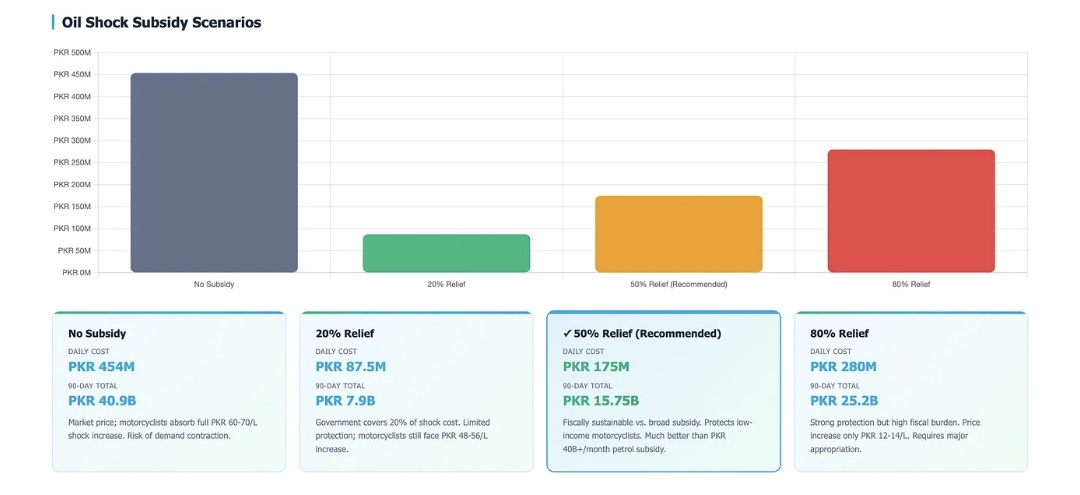
Pakistan consumes about 58.8 liters per day of petrol and diesel -- even a PKR 10/ltr subsidy leads to PKR 18bn of lost revenue monthly (c. PKR 215bn p.a.)
36mn vehicles in PK, of which 30mn are motorcycles. There is no reason for a blanket subsidy
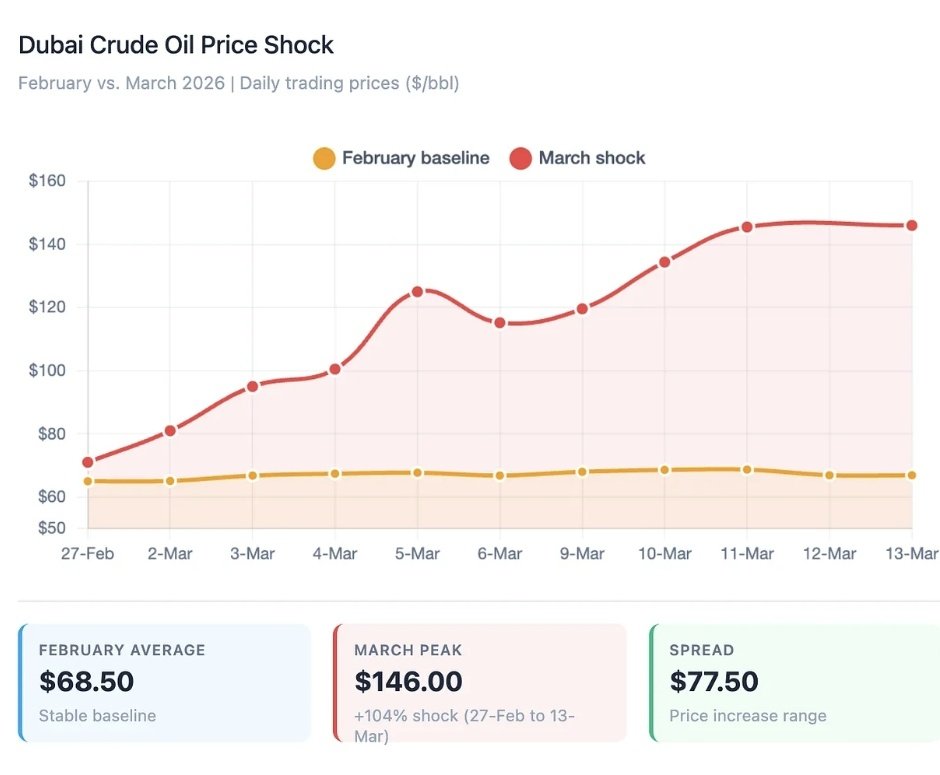
Oil and product prices have more than doubled in last three weeks, if the same is not passed on to the pump it will lead to the same disaster that happened in 21-22. Reluctance to pass on prices will result in higher deficits, and higher inflation across the board 2/
There are 30m bikes in PK, almost one in three males in labour force in PK have a bike. A direct subsidy/transfer to the more vulnerable households is a more optimal strategy than a brute force blanket subsidy
2/
A directed subsidy plan for motorcycle costs a fraction of blanket subsidy, shelters the vulnerable households, and significantly reduces deficit.
The same can be done through RAAST and @NadraPak tech stacks. RAAST provides the payments layer, NADRA provides identity layer
3/
Each motorcycle can be linked to a CNIC (registered) - if not registered, then maybe register to be eligible. The CNIC is linked to a bank account enabled by RAAST. Effectively, it is possible to create a fuel account, against which relevant subsidy can be disbursed
4/
Sufficient QR and other methodologies exist to increase uptake of the same. This not just solves the directed subsidy problem, but also becomes a massive boost for cashless trxns. Yes, there will he edge cases, but worthy of solving them to save quarter of a trillion rupees
5/
The tech stacks exists. This isnt the first oil crisis, and won't be the last. The tech stacks didnt exist in 21-22. It is now mature enough to be rolled be out.
Throwing money at the problem doesn't work, when one doesn't have money. It only makes things worse
/6
• • •
Missing some Tweet in this thread? You can try to
force a refresh

The tax structure for salaried individuals in Pakistan is not just lopsided, its so lopsided, there is no side left anymore.
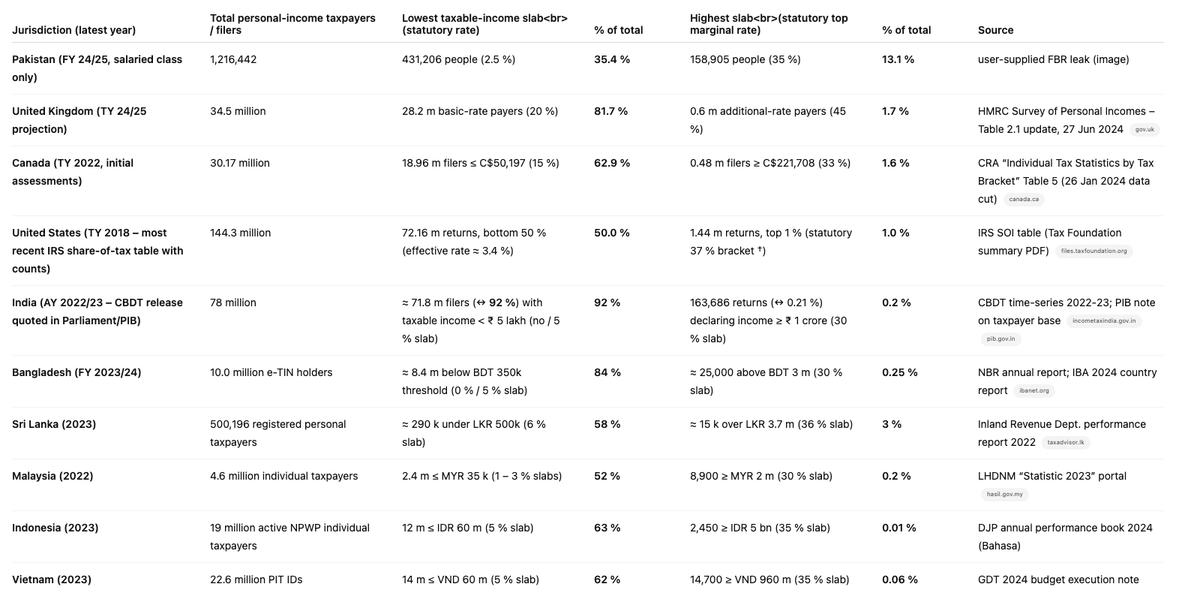
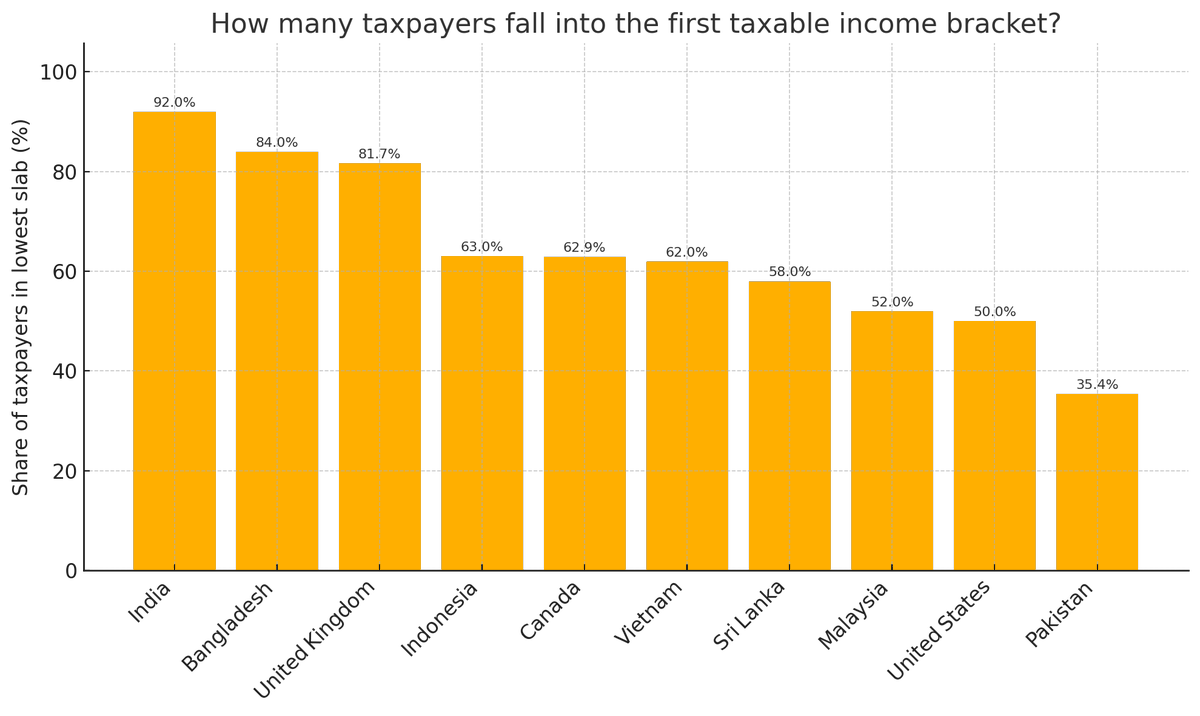
14% of salaried taxpayers are in the top tax bracket -- while for most other countries, this % is below 1%. If 14% are in your top bracket -- that is a problem, not something to celebrate. Similarly, 35%+ salaried taxpayers are in the lowest tax bracket, while for most other countries, this is >80%.
This effectively means that our tax brackets are out of whack, and do not represent reality, or actual distribution of income. There is an urgent need to redesign brackets to align with distribution of income.
Nowhere in the world is tax distribution a largely flat line like this, rather than a fair distribution. Ironically, IMF which knows better (or should know better) continues to toe a completely irrational line.
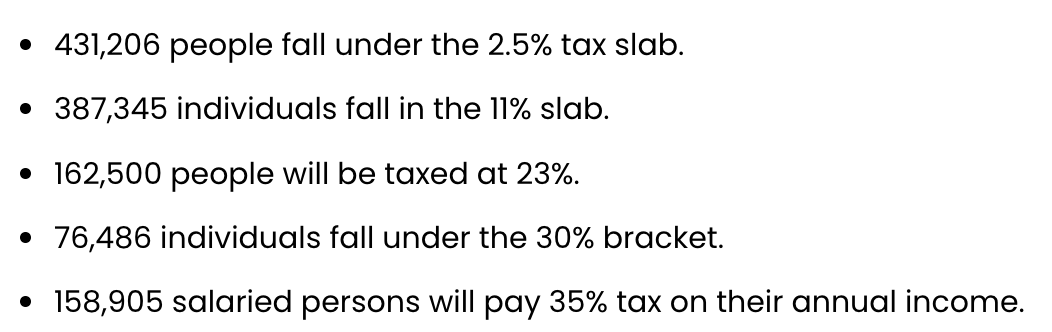
This is the salaried tax distribution for Pakistan
This is the tax distribution compared to countries in the region, and rest of the world
13%+ of salaried individuals are in the highest tax bracket, relative to less than 1% for most developing countries. Even G8 countries maintain it at 1% or so. This a slab design problem, and nothing else.
And on the lowest end for the lowest tax bracket -- just mental how bad the numbers are at this point
There are 113k residential units with solar net metering. This is less than 0.3% of total households in the country. >75% of these users are 700+ kWh consumption households.
This is an issue of rich people pretending not-to-be rich.
0.3pc of households with net metering connections certainly do not constitute the middle class but are essentially the upper class. Those belonging to such an economic strata may not feel like it, but the country’s overall distribution of wealth and income says otherwise.
2/
The net metering price is around Rs22/kWh,which is basically higher than the weighted average fuel cost of roughly Rs9/kWh. In a scenario where excess generation capacity is available, it makes little sense to generate electricity via distributed solar at such a high cost
3/
There is surplus generation capacity in the country. The avg. fuel cost of electricity is PKR 10/kWh (final tariff being high is a separate story). Net metering users get paid PKR 20+/kWh
Why should gov buy same electron for PKR 20/kWh, when avg pool cost is c. PKR 10/kWh? 1/
Investing in rooftop solar is a commercial decision, which comes with its own risks. If there is surplus capacity in market, the net metering price should come down, and vice versa. If anything, most net metering systems are actually installed by upper-upper class households
2/
Most systems are 5kW+, which basically means average monthly consumption of >550 units. This is clearly not a middle class household. Once again, this is a poor country, so the middle class threshold is much lower than what people say it is
3/
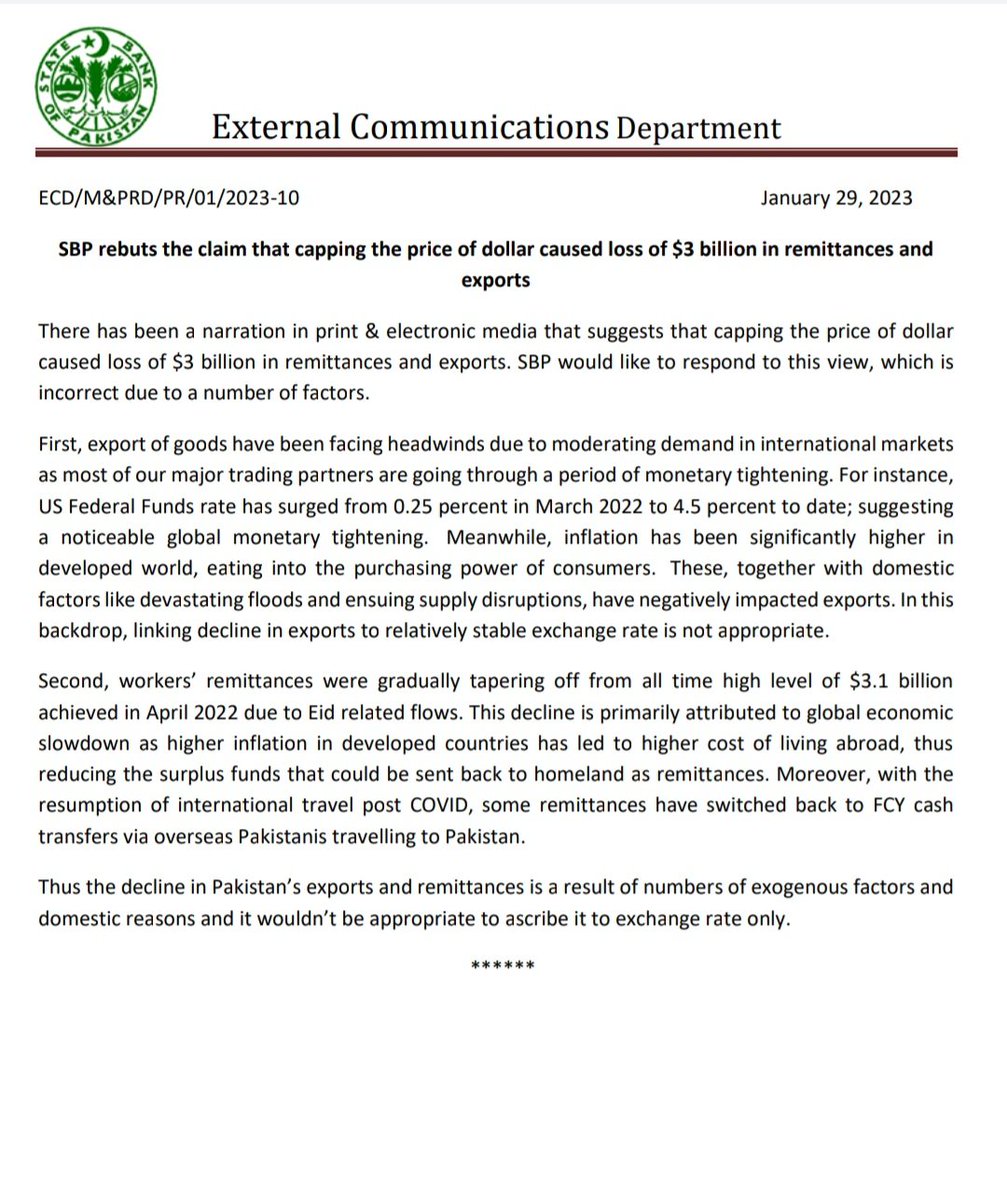
So much to unpack here. This is potentially the worst communication the CB has ever done.
A cap always leads to inefficiencies, and shortages -- the CB may consult it's research unit for the same.
Exports of Bangladesh, India, Vietnam, etc. all increased during the period
1/
Similarly, remittances for similar countries also increased during the period. The drop in exports is much higher than any drop in consumption in export markets due to global monetary tightening. A pegged currency is NOT a 'relatively stable currency' ffs.
2/
Drop in remittances can be directly attributed to a parallel exchange rate at a premium of 12-15%. It makes zero sense to remit officially, when informally one can get a higher rate. Once again, remittance in other similar markets did NOT drop like this
3/
These are the four files. We want to look for 'Travel & Transportation', and get the 'budget estimate' number for 2022-23 for each head of Travel & Transportation.