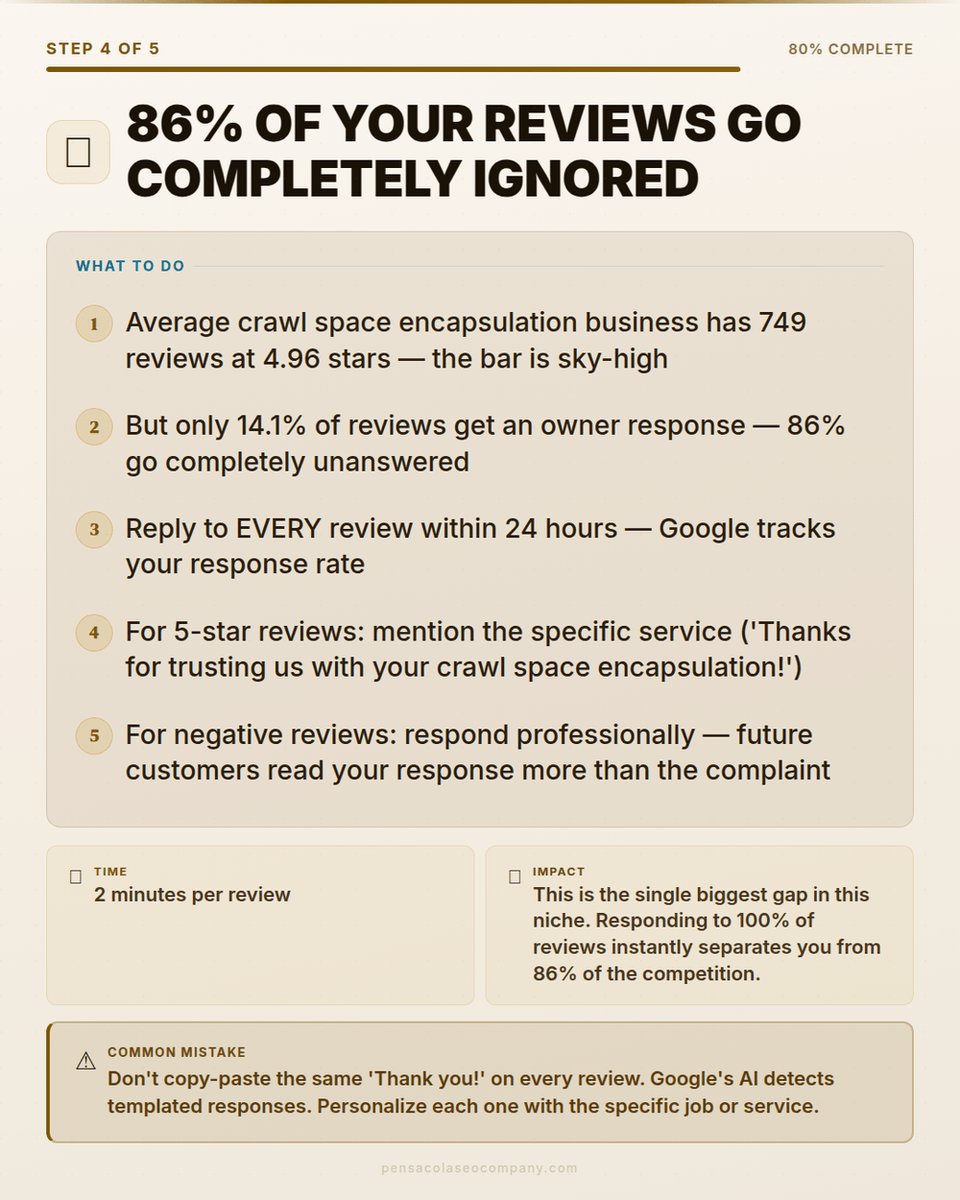
86% of crawl space encapsulation reviews go completely unanswered. That is the single biggest competitive gap in any niche I have analyzed — and it costs nothing to fix 🧵👇
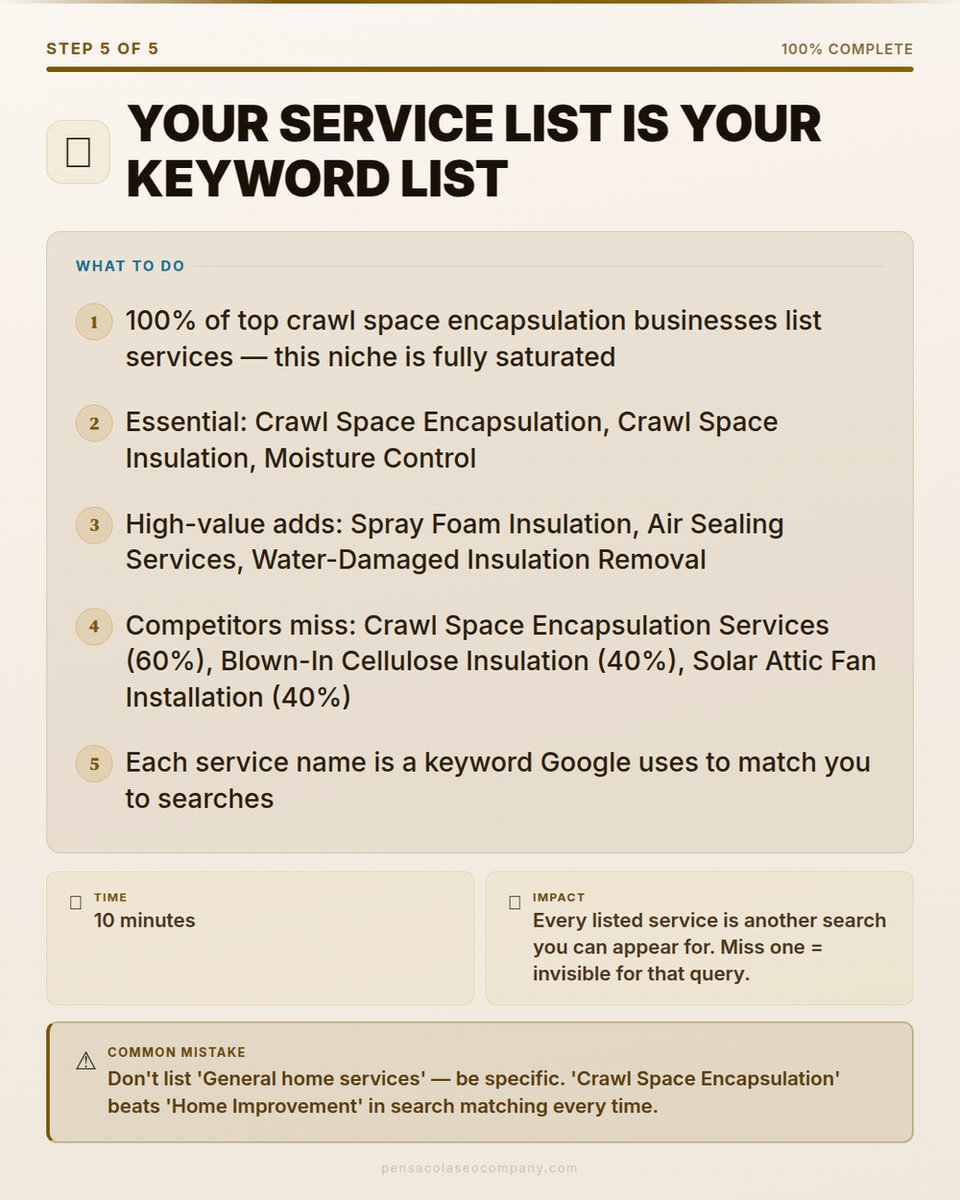
I analyzed 1,550 reviews across 5 real crawl space encapsulation businesses in Houston. Here are the 5 Google Profile fixes that take about 30 minutes total.
Only 14.1% of reviews get a response. The average description uses 501 of 750 characters. 40% of businesses use 'Insulation contractor' as their primary category — the rest are misclassified.
Swipe through to see all 5 fixes with exact steps.
Every stat is from real crawl space encapsulation businesses — not made up. Sample: 5 businesses, 1,550 total reviews analyzed.
Save this for later. Share it with a crawl space encapsulation business owner who needs it.
Want a free audit of your Crawl Space Encapsulation Google profile?
I analyzed 601 reviews across 16 countertop installer businesses. Most are leaving money on the table with their Google profile 🧵👇
Only 19% use the right primary category. Average descriptions use 412 of 750 characters. 37% of reviews go completely unanswered. 38% don't even list their services.
Swipe through to see all 5 fixes -- each one takes less than 15 minutes.
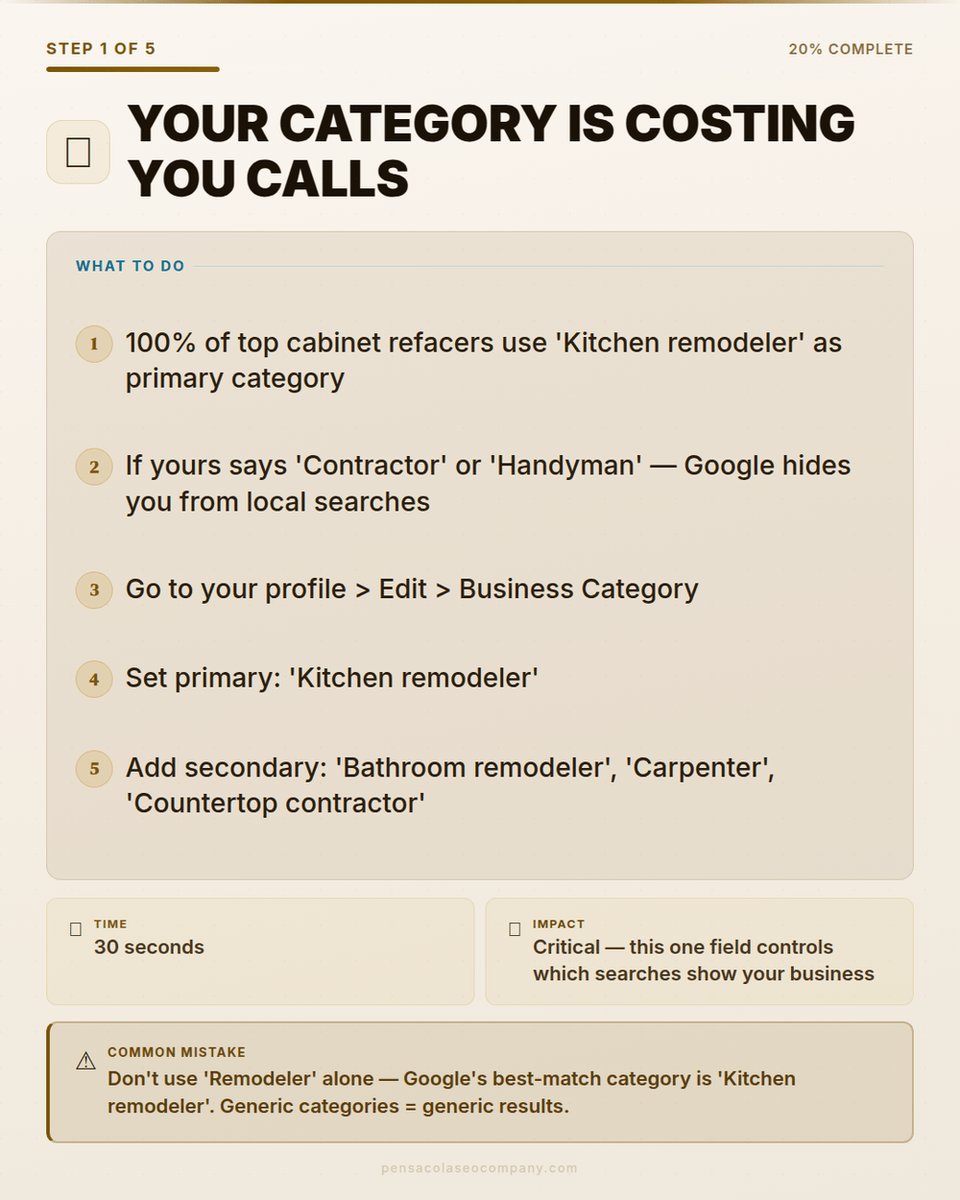
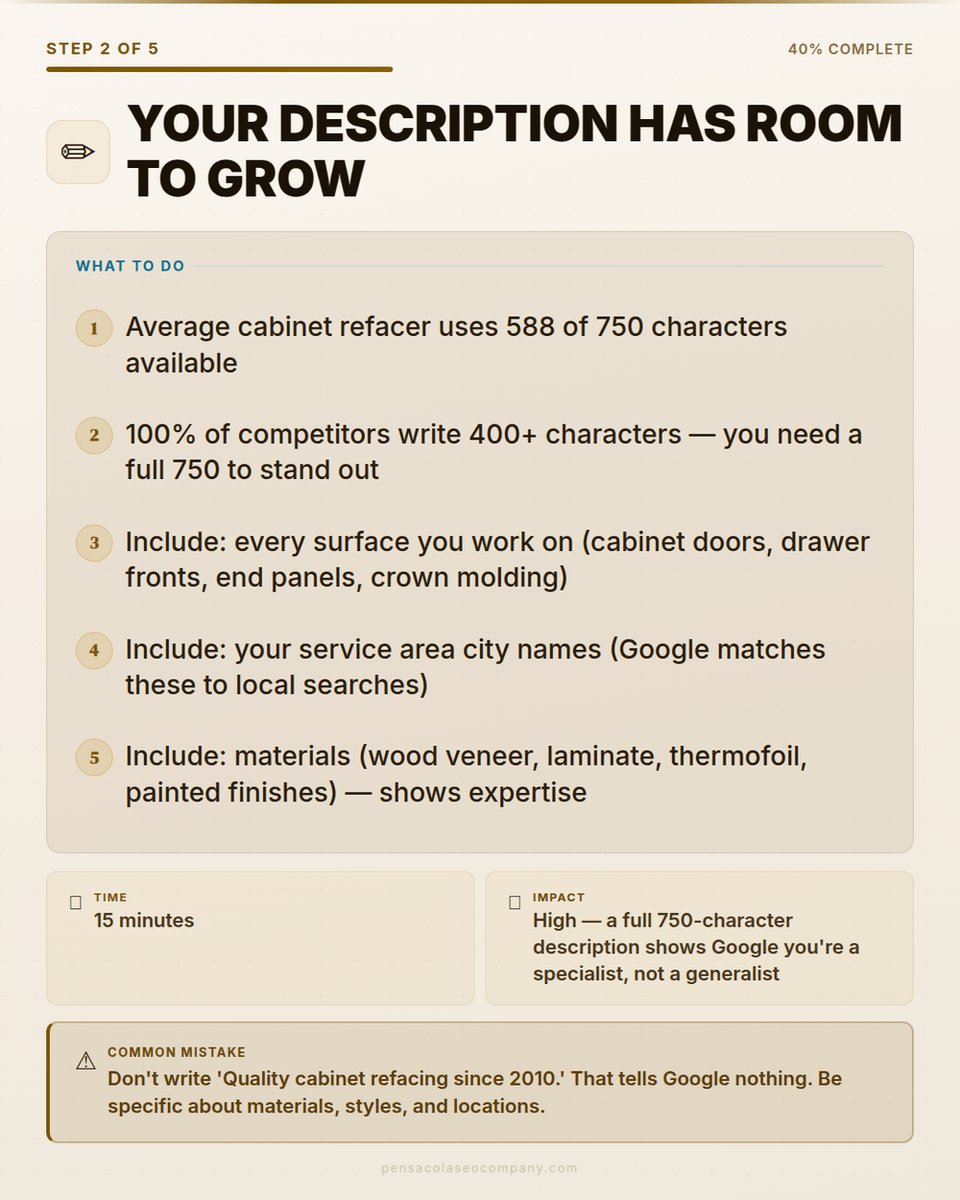
I analyzed 57 reviews from a top-performing cabinet refacing business. Here's what separates a 5.0-star profile from everyone else 🧵👇
100% use 'Kitchen remodeler' as primary category. Average description: 588 of 750 characters -- good but not maxed out. 121 photos on average. 98.2% review response rate. All services listed.
Swipe through to see 5 fixes that keep you competitive in a niche where the top performers already do most things right.
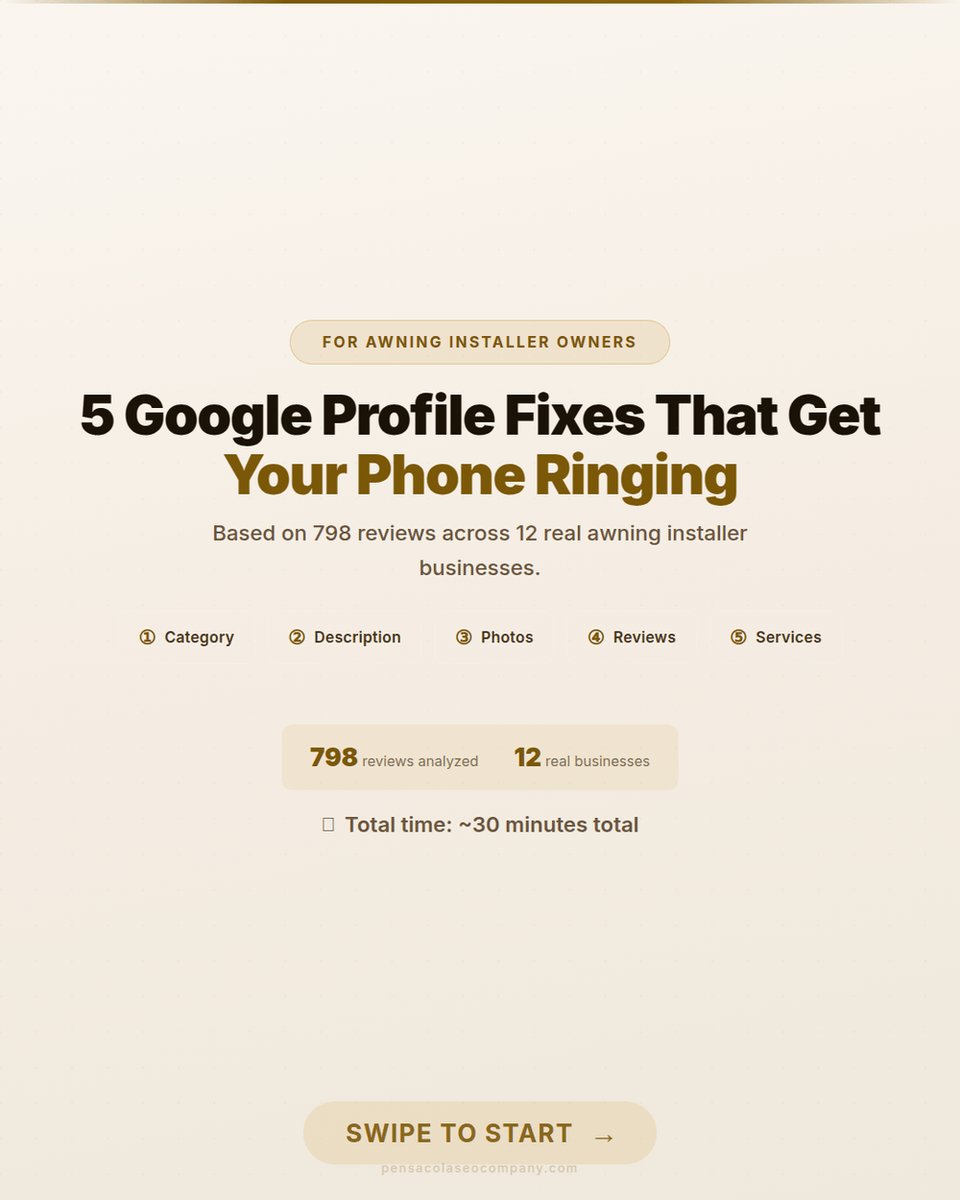
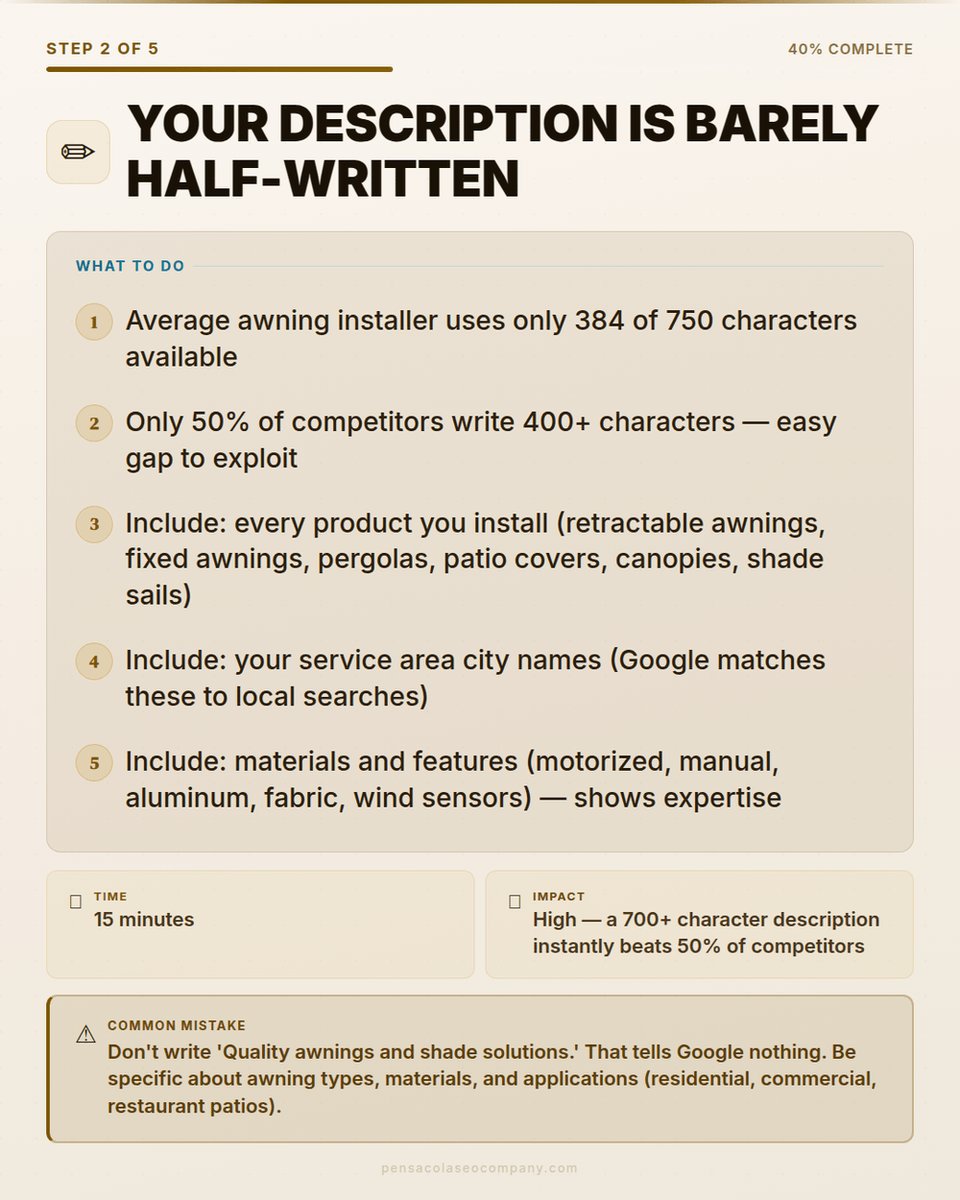
I analyzed 798 reviews across 12 awning installer businesses. Half of them are using the wrong Google category entirely 🧵👇
50% scatter across 'Sign shop', 'Roofing contractor', 'Construction company' -- wrong searches entirely. Descriptions average 384 of 750 characters. 51% of reviews go unanswered. 42% don't list any services.
Swipe through to see all 5 fixes -- each one takes less than 15 minutes.
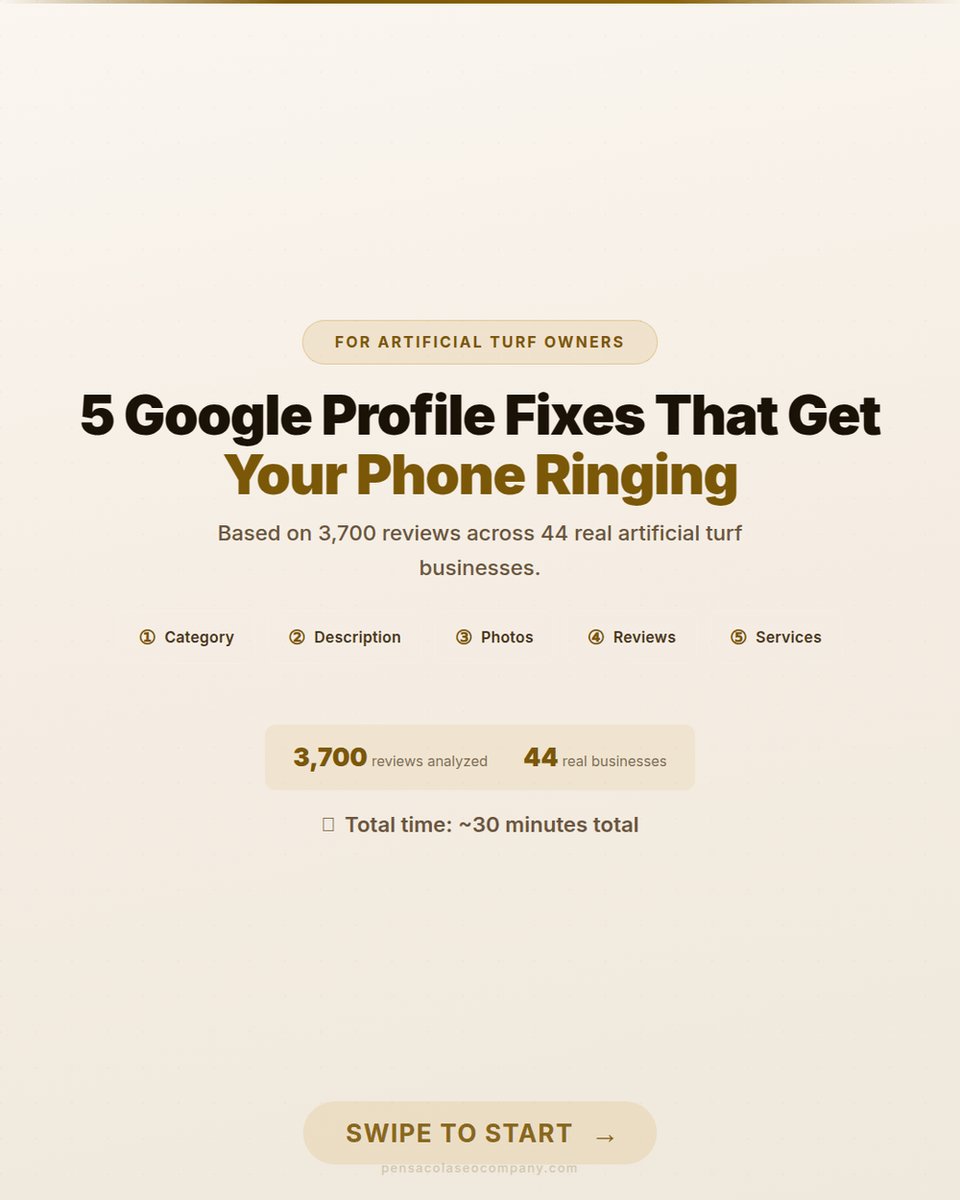
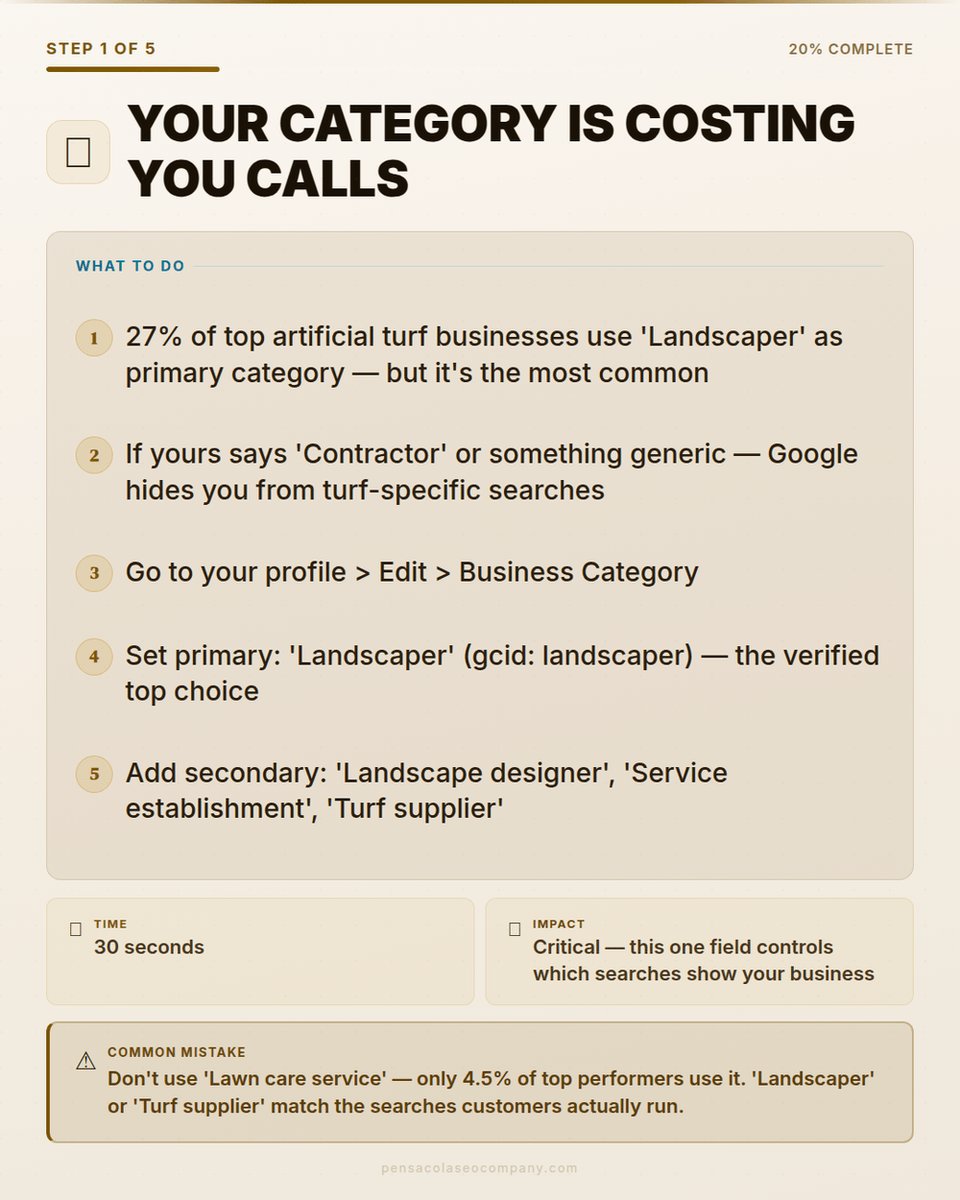
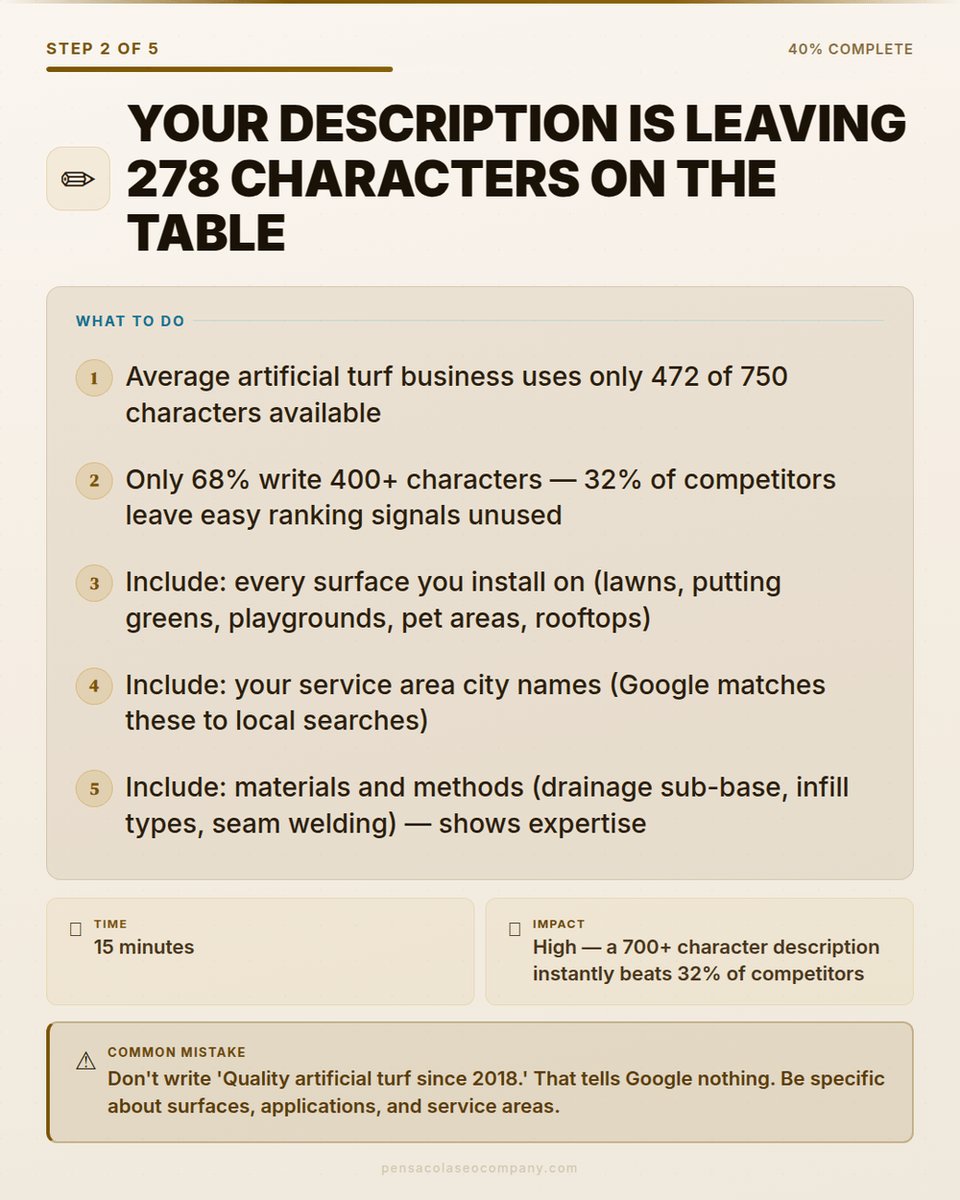
39% of artificial turf reviews go completely unanswered. That is your competitive advantage sitting right there — and it costs nothing to fix 🧵👇
I analyzed 3,700 reviews across 44 real artificial turf businesses in Houston, Phoenix, and Tampa. Here are the 5 Google Profile fixes that take about 30 minutes total.
The average description uses only 472 of 750 characters. 9% of businesses list zero services. Top performers average 252 photos with a range up to 1,542.
Most people fail at SEO because they're optimizing for Google instead of humans. This single mistake costs businesses millions in lost traffic every year. The irony? Google's algorithm is literally designed to reward content that serves people first.
Here's the uncomfortable truth: keyword stuffing, over-optimization, and chasing algorithm hacks create content that ranks temporarily but converts poorly. When you write for robots, you end up with robotic content that real humans scroll past. Google's AI can detect this disconnect faster than ever before.
The problem starts with how most people approach keyword research. They find high-volume keywords and force them unnaturally into every paragraph, header, and meta tag. This creates awkward, repetitive content that screams "I'm trying too hard to rank." Readers sense this immediately and bounce.
Think about the last time you searched for something important. You didn't want keyword-dense fluff, you wanted a clear answer to your specific question. You wanted expertise, nuance, and actionable insights. That's exactly what Google's ranking algorithm prioritizes now.
The search intent mismatch is where most SEO strategies collapse. Someone searching "best running shoes" might want reviews, comparisons, or buying guides depending on their stage in the buyer journey. If you optimize a product page for this term when they want educational content, your bounce rate skyrockets and rankings plummet.
Google's Page Experience update and subsequent algorithm changes have made user behavior the ultimate ranking signal. Dwell time, bounce rate, click-through rate, and engagement metrics matter more than ever. You can't game these metrics with technical tricks; you need genuinely valuable content.
Laundromat/Dry Cleaner SEO Checklist for BeginnersThis checklist is designed for business owners new to SEO (Search Engine Optimization). SEO helps your website and Google Business Profile show up higher in search results when people look for services like yours. We'll explain each section simply, and each item includes a short note on why it matters and how to do it. Start with the basics and work your way down. Tools like Google Search Console (free) can help you track progress. Google Business Profile OptimizationYour Google Business Profile (GBP) is the free listing that appears in Google Maps and local searches. It's like your online storefront—keep it accurate and complete to attract more customers.
Choose the best main category (dry cleaner or laundromat) based on what makes you the most money Why? Google uses this to match your business to searches. If laundromat services bring in more revenue, switch to that for better visibility. Check and update in your GBP dashboard.
Make sure there's only one Better Business Bureau (BBB) profile (delete extras) Why? Duplicates confuse Google and customers. Search for your business on BBB.org and contact them to merge or remove old ones.
Double-check that your name, address, phone, and website match everywhere online Why? Inconsistent info hurts your rankings. Use tools like Moz Local (free scan) to check listings on other sites.
List all your services in your GBP Why? This helps Google show your profile for specific searches like "wash and fold near me." Add them in the "Services" section of your GBP.
Write a full description using up to 750 characters Why? A detailed description with keywords (like your services and location) improves search relevance. Include what makes your business unique, like "eco-friendly dry cleaning."
Add your service areas if you do pickups or deliveries Why? This tells Google you serve nearby areas, expanding your reach. Enter cities or zip codes in GBP settings.
Website Technical SEOTechnical SEO fixes the "behind-the-scenes" stuff on your site so Google can understand and rank it better. If you're using WordPress, plugins like Yoast can help, but don't rely on defaults—customize them.
Add meta descriptions to every page (at least 160 characters) Why? These are the snippets shown in search results. They encourage clicks. Use Yoast or similar to add them, including keywords like "affordable laundromat in [city]."
Verify all important pages are indexed by Google Why? Indexed means Google knows about them. Use "site:yourwebsite.com" in Google search to check. Submit your sitemap in Google Search Console if pages are missing.
Remove useless pages from Google's index (like plain review pages) Why? Low-quality pages can drag down your site. Use robots.txt or noindex tags in Yoast to hide them.
Add better schema markup (beyond basic plugins) Why? Schema is code that explains your business to Google (e.g., hours, services). Use free tools like Google's Structured Data Markup Helper.
Include contact info and service areas in schema Why? Helps Google show your business in local searches. Add to your homepage code.
Add Google Knowledge Graph IDs (property values) to schema Why? Connects your business to Google's database for better understanding. Search for your business in Google to find IDs.
List your services in schema markup Why? Makes services like "dry cleaning" easier for Google to recognize. Include prices if possible.
Use local business schema on location pages Why? Boosts local rankings. Apply to pages about your physical store.
Fix any missing HTML tags (like headings or lists) Why? Proper structure helps Google read your content. Run a free audit with tools like Screaming Frog.
Add descriptive alt text to all images Why? Helps with image searches and accessibility. Describe the image with keywords, e.g., "modern laundromat machines in [city]."
Website Content & StructureGood content keeps visitors on your site and signals to Google that you're helpful. Structure makes it easy to navigate.
Create a footer with your contact details (phone, email, address) Why? Appears on every page for easy access. Add it in your website editor.
Link to your social media profiles in the footer (even if you don't post often) Why? Builds trust and helps Google connect your online presence.
Put links to key pages (like services or contact) in the footer Why? Improves navigation and helps Google crawl your site faster.
Add Terms of Service and Privacy Policy pages Why? Required for trust and some ads. Use free templates online and customize.
Replace old or mismatched photos Why? Fresh images build credibility. Use high-quality photos of your actual location.
Group content into "silos" by service (e.g., one section for laundromat, one for dry cleaning) Why? Organizes your site thematically for better rankings. Link related pages together.
Write helpful blog posts related to your main services Why? Attracts visitors searching for tips (e.g., "how to wash delicates"). Use keywords naturally.
Link blog posts back to your main service pages Why? Passes "link juice" to important pages, boosting their rankings.
Show reviews with stars and keywords from customers Why? Improves trust and clicks. Pull from Google reviews and highlight ones mentioning services.
Off-Page SEOThis is about building your reputation outside your site, like getting mentioned elsewhere online.
Send out a press release to 250+ news sites Why? Gets backlinks from reputable domains, improving authority. Use services like EIN Presswire.
Track new websites linking to yours Why? More quality links mean higher rankings. Use Ahrefs or SEMrush (free trials available).
Watch what competitors do for links Why? Learn from them to get similar opportunities.
Keep adding blog content after setup Why? Fresh content signals an active site to Google.
Advanced Schema ImplementationSchema is like labels for Google. Start simple, then add more.
Research and add full JSON-LD code to your site Why? Better than basic plugins. Use free generators online.
Include details about the owner (like education) in schema Why? Builds credibility. Add to business schema.
Put services and price ranges in schema Why? Helps in rich results (stars in search).
Link related things (entities) in schema Why? Helps Google understand connections, like services to locations.
Ongoing OptimizationSEO isn't one-time—keep checking and improving.
Run site reports monthly to spot issues Why? Tools like Google Analytics show what's working.
Check GBP and Search Console for how people search for you Why? Adjust keywords based on real data. chrissimpsonseo.com