DeFi's next growth phase will be embedded.
Whop just launched Treasury, a yield feature for their creator payments platform that serves over 21 million users and processes $3 billion in annual payouts.
Creator balances that sat idle now convert to stablecoins and route through Aave lending markets via Plasma. Users never touch a wallet or think about what chain they're on.
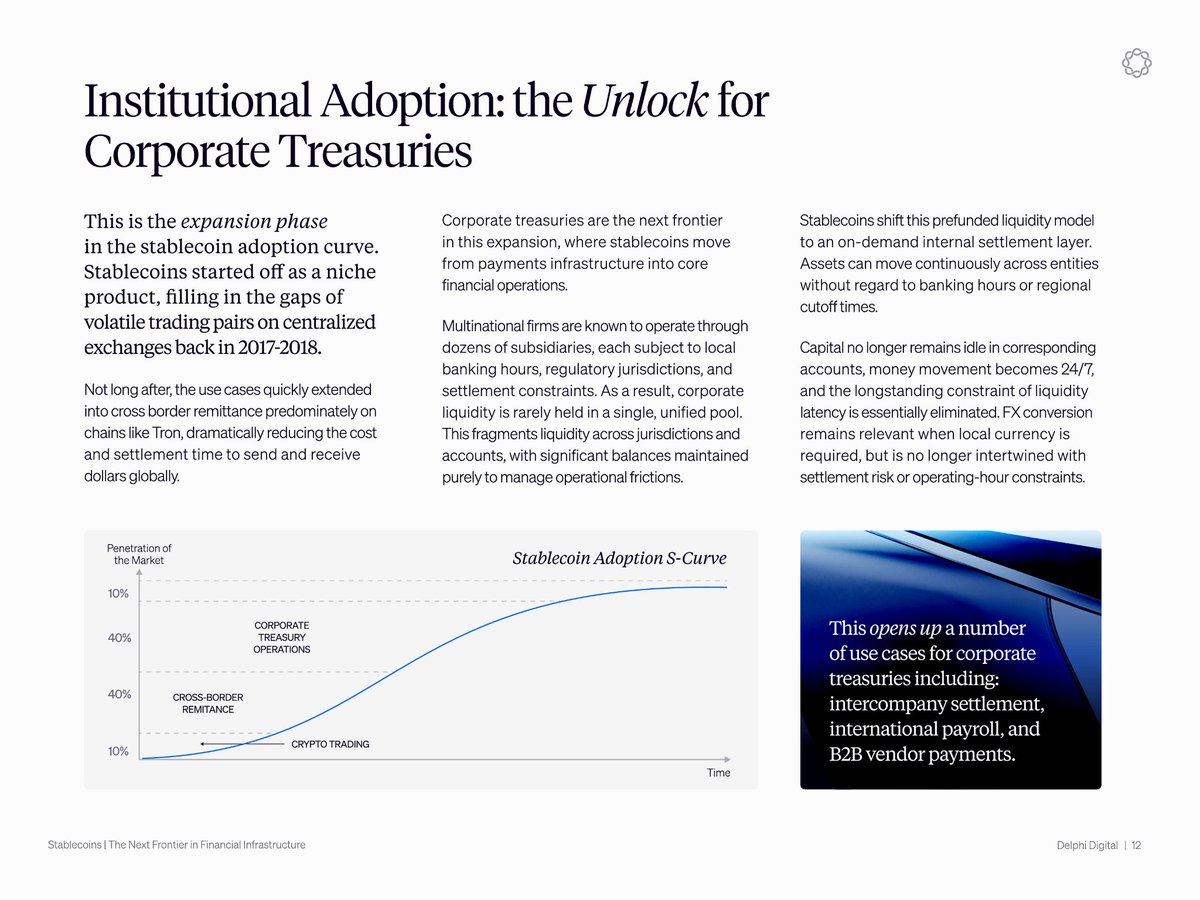
Stablecoin supply added a third of its total value this past year to over $306 billion. That growth is being driven by stablecoins becoming invisible infrastructure inside platforms that already have the users.
The protocols that become the default yield and settlement backend for those platforms are competing for the integration layer behind fintechs that already have distribution.
Whop just launched Treasury, a yield feature for their creator payments platform that serves over 21 million users and processes $3 billion in annual payouts.
Creator balances that sat idle now convert to stablecoins and route through Aave lending markets via Plasma. Users never touch a wallet or think about what chain they're on.
Stablecoin supply added a third of its total value this past year to over $306 billion. That growth is being driven by stablecoins becoming invisible infrastructure inside platforms that already have the users.
The protocols that become the default yield and settlement backend for those platforms are competing for the integration layer behind fintechs that already have distribution.
https://x.com/Delphi_Digital/status/2036828379043787194
• • •
Missing some Tweet in this thread? You can try to
force a refresh