
Easily top 3 business books I've ever read.
It's about discernment in real-time: knowing which rational method fits this problem, this moment, these conditions. It's pattern-matching at the highest level.
The case studies show well-known leaders emphasizing different methods based on their circumstances: some lean into learning, some into diverse deliberation, some into strategic calculation.
There's no one-size-fits-all playbook, just principles and judgment.
—
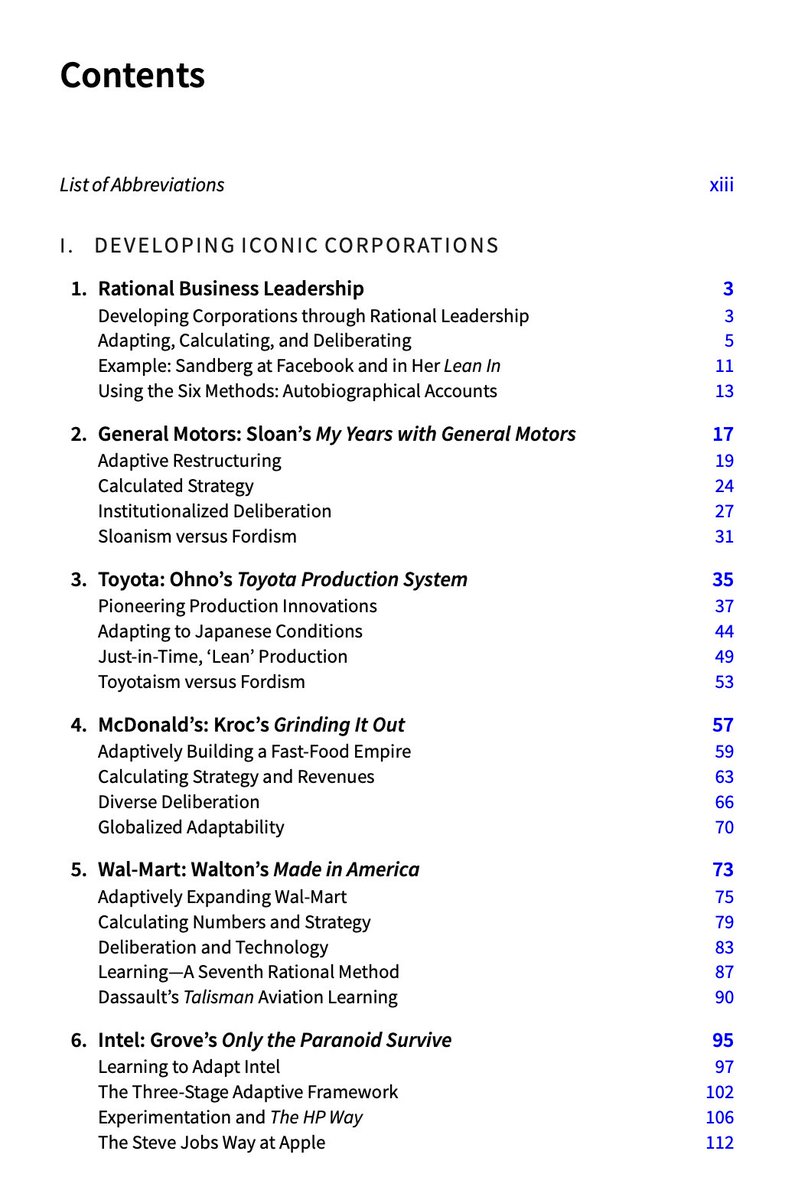
¹ Table of contents below if interested
geni.us/xJ3V
It's about discernment in real-time: knowing which rational method fits this problem, this moment, these conditions. It's pattern-matching at the highest level.
The case studies show well-known leaders emphasizing different methods based on their circumstances: some lean into learning, some into diverse deliberation, some into strategic calculation.
There's no one-size-fits-all playbook, just principles and judgment.
—
¹ Table of contents below if interested
geni.us/xJ3V


Another one that goes into this list:
https://x.com/Kpaxs/status/1807277036529918377
• • •
Missing some Tweet in this thread? You can try to
force a refresh






