What is a dysregulated nervous system?
Dr. Robert Sapolsky spent 30 years studying stress in primates and humans.
His conclusion: "The stress response is more dangerous than the stressors themselves."
Few understand what this means for their body.
Here's the short version: 🧵
Dr. Robert Sapolsky spent 30 years studying stress in primates and humans.
His conclusion: "The stress response is more dangerous than the stressors themselves."
Few understand what this means for their body.
Here's the short version: 🧵
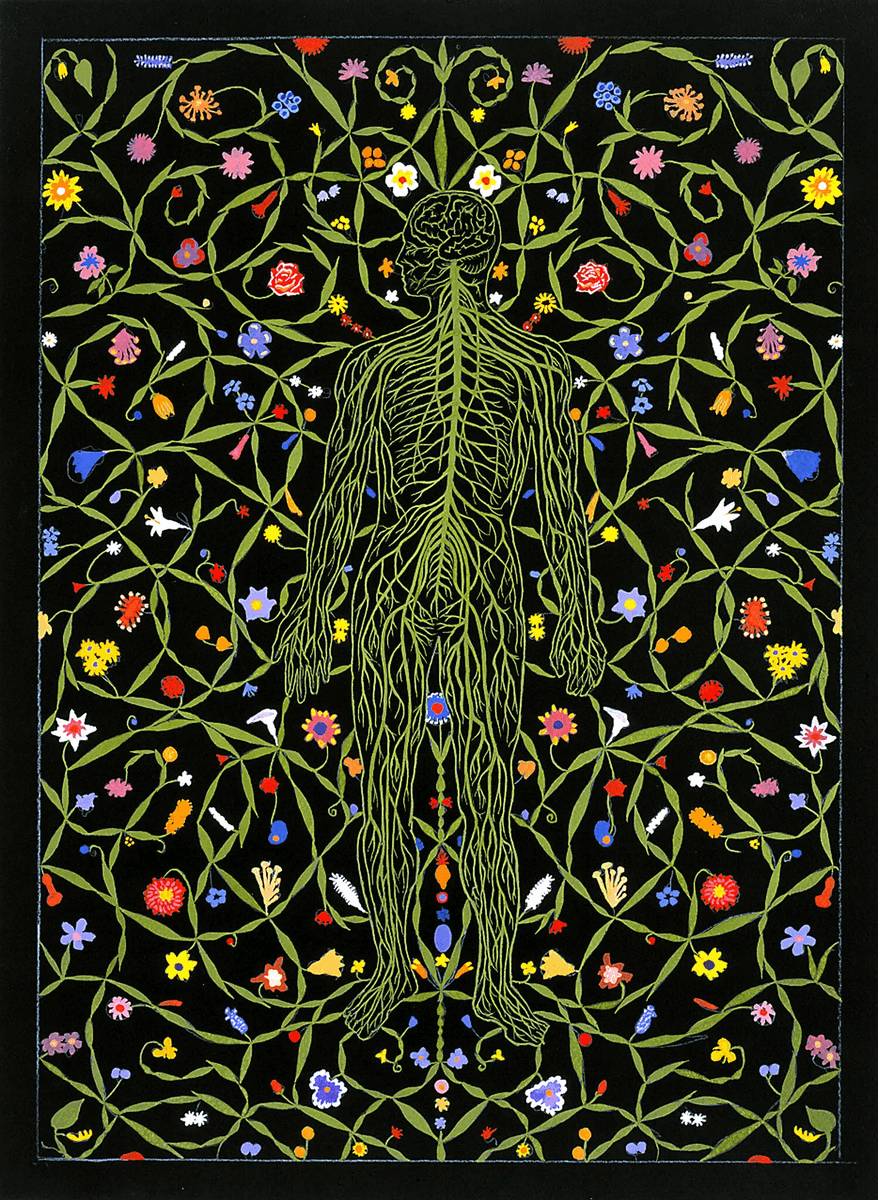
Your body is supposed to spend roughly 90% of its time in homeostasis. Calm. Recovering. Rebuilding tissue. Clearing inflammation. Filing memories properly.
For most people with chronic pain, fatigue, IBS, or brain fog, that ratio is inverted.
Their nervous system runs in threat mode almost constantly. Not because they're in danger. Because the brain got conditioned to treat normal life as a threat — and the conditioning stuck.
For most people with chronic pain, fatigue, IBS, or brain fog, that ratio is inverted.
Their nervous system runs in threat mode almost constantly. Not because they're in danger. Because the brain got conditioned to treat normal life as a threat — and the conditioning stuck.
This is how it happens:
A period of stress, illness, injury, or emotional overwhelm activates the brain's danger response. That's normal. The problem starts when the stressor lasts long enough — weeks, months — for the brain to start treating the stress response itself as the new default.
The limbic system, which controls threat detection, physically rewires. Neural pathways that fire together wire together. The alarm circuit gets stronger with every repetition. Eventually it runs on autopilot.
Neuroscientists call this central sensitization. Your threat detector recalibrated itself to "high" and lost the off switch.
A period of stress, illness, injury, or emotional overwhelm activates the brain's danger response. That's normal. The problem starts when the stressor lasts long enough — weeks, months — for the brain to start treating the stress response itself as the new default.
The limbic system, which controls threat detection, physically rewires. Neural pathways that fire together wire together. The alarm circuit gets stronger with every repetition. Eventually it runs on autopilot.
Neuroscientists call this central sensitization. Your threat detector recalibrated itself to "high" and lost the off switch.
When the brain is locked in this threat state, it floods the body with three chemicals nonstop:
Cortisol. Adrenaline. Noradrenaline.
The C.A.N. chemicals.
Here's what they do when they don't shut off:
→ Cortisol suppresses immune function and breaks down tissue
→ Adrenaline keeps your heart rate elevated and your muscles tense
→ Noradrenaline amplifies pain signals and disrupts sleep architecture
This is why you wake up exhausted after 8 hours. Why pain spreads to new areas. Why you can't focus. Why your gut stops working properly. Why wounds heal slowly. Why you get sick more often.
These aren't separate problems. They're all symptoms of one conditioned state.
Cortisol. Adrenaline. Noradrenaline.
The C.A.N. chemicals.
Here's what they do when they don't shut off:
→ Cortisol suppresses immune function and breaks down tissue
→ Adrenaline keeps your heart rate elevated and your muscles tense
→ Noradrenaline amplifies pain signals and disrupts sleep architecture
This is why you wake up exhausted after 8 hours. Why pain spreads to new areas. Why you can't focus. Why your gut stops working properly. Why wounds heal slowly. Why you get sick more often.
These aren't separate problems. They're all symptoms of one conditioned state.
When the brain learns to exit threat mode, the chemistry flips:
Dopamine. Oxytocin. Serotonin. Endorphins.
The D.O.S.E. chemicals.
→ Dopamine restores motivation and reward processing
→ Oxytocin lowers inflammation and rebuilds social bonding
→ Serotonin stabilizes mood and regulates gut function (95% of serotonin is made in the gut)
→ Endorphins reduce pain sensitivity naturally
Same brain. Same body. Opposite chemical environment. The difference is which circuit is dominant.
This isn't theory. A UCSF neuroscientist published a paper in 2011 showing that these stress circuits can be deliberately rewired through targeted protocols — and that when you do, the nervous, immune, metabolic, and hormonal systems all follow.
Dopamine. Oxytocin. Serotonin. Endorphins.
The D.O.S.E. chemicals.
→ Dopamine restores motivation and reward processing
→ Oxytocin lowers inflammation and rebuilds social bonding
→ Serotonin stabilizes mood and regulates gut function (95% of serotonin is made in the gut)
→ Endorphins reduce pain sensitivity naturally
Same brain. Same body. Opposite chemical environment. The difference is which circuit is dominant.
This isn't theory. A UCSF neuroscientist published a paper in 2011 showing that these stress circuits can be deliberately rewired through targeted protocols — and that when you do, the nervous, immune, metabolic, and hormonal systems all follow.
So how do you reverse conditioning that took months or years to form?
The same way it formed: through repetition, but in the opposite direction.
The clinical research points to three categories of technique that retrain the limbic system:
1. Somatic regulation — teaching the body to signal safety to the brain (bottom-up). Breathing patterns, body awareness, and sensory grounding interrupt the threat loop at the physiological level.
2. Pain reprocessing — reappraising danger signals so the brain stops interpreting safe sensations as threats. A JAMA Psychiatry trial tested this: 66% of chronic pain patients were pain-free after treatment. The 5-year follow-up showed most stayed that way.
3. Emotional processing — unresolved emotional patterns (grief, suppressed anger, chronic people-pleasing) are fuel for the stress loop. Expressive writing and emotional awareness techniques drain that fuel.
Each technique targets a different entry point into the same stuck circuit. Together they teach the brain: you are safe. The alarm can turn off.
The same way it formed: through repetition, but in the opposite direction.
The clinical research points to three categories of technique that retrain the limbic system:
1. Somatic regulation — teaching the body to signal safety to the brain (bottom-up). Breathing patterns, body awareness, and sensory grounding interrupt the threat loop at the physiological level.
2. Pain reprocessing — reappraising danger signals so the brain stops interpreting safe sensations as threats. A JAMA Psychiatry trial tested this: 66% of chronic pain patients were pain-free after treatment. The 5-year follow-up showed most stayed that way.
3. Emotional processing — unresolved emotional patterns (grief, suppressed anger, chronic people-pleasing) are fuel for the stress loop. Expressive writing and emotional awareness techniques drain that fuel.
Each technique targets a different entry point into the same stuck circuit. Together they teach the brain: you are safe. The alarm can turn off.
When people successfully retrain their nervous system, the changes go beyond pain reduction.
Sleep deepens. Gut function normalizes. Brain fog lifts. Energy returns. Immune function improves. Emotional reactivity drops.
This makes sense when you understand that the stress circuit was suppressing all of these systems simultaneously. Fixing the circuit doesn't just remove one symptom. It takes the foot off the brake on every system the brain was throttling.
This is why people who recover from neuroplastic symptoms often say "I feel like a different person." They aren't. Their brain is just running a different program.
Sleep deepens. Gut function normalizes. Brain fog lifts. Energy returns. Immune function improves. Emotional reactivity drops.
This makes sense when you understand that the stress circuit was suppressing all of these systems simultaneously. Fixing the circuit doesn't just remove one symptom. It takes the foot off the brake on every system the brain was throttling.
This is why people who recover from neuroplastic symptoms often say "I feel like a different person." They aren't. Their brain is just running a different program.
One question worth sitting with:
When was the last time you felt genuinely calm for a full day? Not distracted. Not numbing. Actually feeling safe in your body.
If you can't remember, your nervous system might be running a conditioned program it learned years ago — one you never chose and didn't know was running.
That program can be rewritten. The brain that learned the pattern can unlearn it.
Use code KIMIIA for $50 off → trynervana.com
When was the last time you felt genuinely calm for a full day? Not distracted. Not numbing. Actually feeling safe in your body.
If you can't remember, your nervous system might be running a conditioned program it learned years ago — one you never chose and didn't know was running.
That program can be rewritten. The brain that learned the pattern can unlearn it.
Use code KIMIIA for $50 off → trynervana.com
• • •
Missing some Tweet in this thread? You can try to
force a refresh