The head of Europe’s central bank just said financial markets don’t understand what they’re in for.
This is Christine Lagarde saying the damage is already done. Most people have absolutely no idea. Here is what she actually said.
Iran closed the Strait of Hormuz. That chokepoint carries 20% of the world’s oil and gas. Markets shrugged. Investors assumed it would blow over. Lagarde told The Economist that technical experts are not talking about months for recovery. They are talking about years.
Helium travels through the Strait of Hormuz. Helium is not a balloon gas. It is the invisible ingredient inside every advanced microchip on earth. Qatar supplies 35% of the world’s commercial helium. Qatar’s facilities have gone dark. Spot prices have surged past $450 per thousand cubic feet. Most chip fabricators carry less than three months of inventory. The world is building AI data centers at record speed. The raw material that makes the chips possible is now scarce.
Meanwhile Brent crude has hit $99. Earlier spikes passed $120. US gasoline is up 30%. Iraq cut 1.5 million barrels a day. Saudi Arabia paused its largest refinery. Europe is heading into this with gas storage at 30% capacity.
And the ECB is not cutting rates to soften the blow. It is considering hiking them to fight inflation.
Slow economy. Rising prices. Tighter money. All at once.
Gandalv / @Microinteracti1
• • •
Missing some Tweet in this thread? You can try to
force a refresh

There is a European intelligence report. Obtained by CNN. Corroborated independently. It describes what Vladimir Putin has done since December 2025, when a car bomb killed a Russian general on a Moscow street.
One detail stood out.
The FSO, Russia's presidential protection service, installed surveillance cameras in his cook's kitchen.
The man who makes his food is now being watched by the people whose job is to protect him. That is the distance trust has traveled inside the Kremlin in 2026.
Every year since the Soviet era, Russia's parliament attends the Victory Day parade on Red Square. It is the most important day in the Russian political calendar. A show of unity. A demonstration of continuity.
This year, not a single State Duma deputy received an invitation.
Zero.
The Kremlin offered no explanation. No one asked for one
Russia's FSB is the most powerful domestic intelligence service in the world. An FSB officer recently tried to obtain authorisation for a routine wiretap on an ordinary criminal case.
Request denied.
The reason: all available surveillance capacity had already been redirected.
Not toward Ukraine or western intelligence, but toward the Russian government itself.
You Broke NATO. Now You Want a Favour.
There is a particular kind of man who picks a fight at the pub, smashes three teeth out of the bloke who bought him a drink, then wanders over an hour later and asks if anyone fancies splitting a taxi. Donald Trump is that man. And Europe, for once, has decided it would rather walk home in the rain.
Let us go back to January 2026, because the memory of the Trump administration is apparently shorter than its attention span.
Trump refused to rule out the use of military force to annex Greenland, a territory belonging to Denmark, a founding NATO member, and threatened a 25% import tax on European goods unless Copenhagen handed the island over. Wikipedia Not bought it. Not negotiated for it. Handed it over. Like a sandwich. To a man with nuclear weapons and the emotional regulation of a golden retriever who has eaten the sofa.
White House press secretary Karoline Leavitt told CNN with a straight face that "utilizing the U.S. Military is always an option at the Commander in Chief's disposal" CNN when asked about acquiring territory belonging to a treaty ally. This is the same NATO alliance in which an attack on one member is legally an attack on all. Leavitt delivered this information as though it were a weather forecast. Cloudy with a chance of annexation.
The United States is accusing the European Union of censorship. Before accepting that framing, it is worth asking a more basic question: what does the EU actually regulate, and how does that compare to what the U.S. does at home?
What the Digital Services Act Actually Does
The DSA does not create a blacklist of forbidden political opinions. It establishes procedures: transparency requirements, notice and action systems, appeals mechanisms, and risk assessments for the largest platforms operating in Europe. Platforms must remove content that is already illegal under EU or national law. The law is, at its core, a framework for accountability, not a catalogue of censored ideas.
What Is Actually Illegal in the EU?
The categories of restricted content are not radical. They include terrorist content, child sexual abuse material, direct incitement to violence, certain forms of hate speech already criminalized under national law, and fraud.
China Just Crossed a Threshold America Is Walking Away From
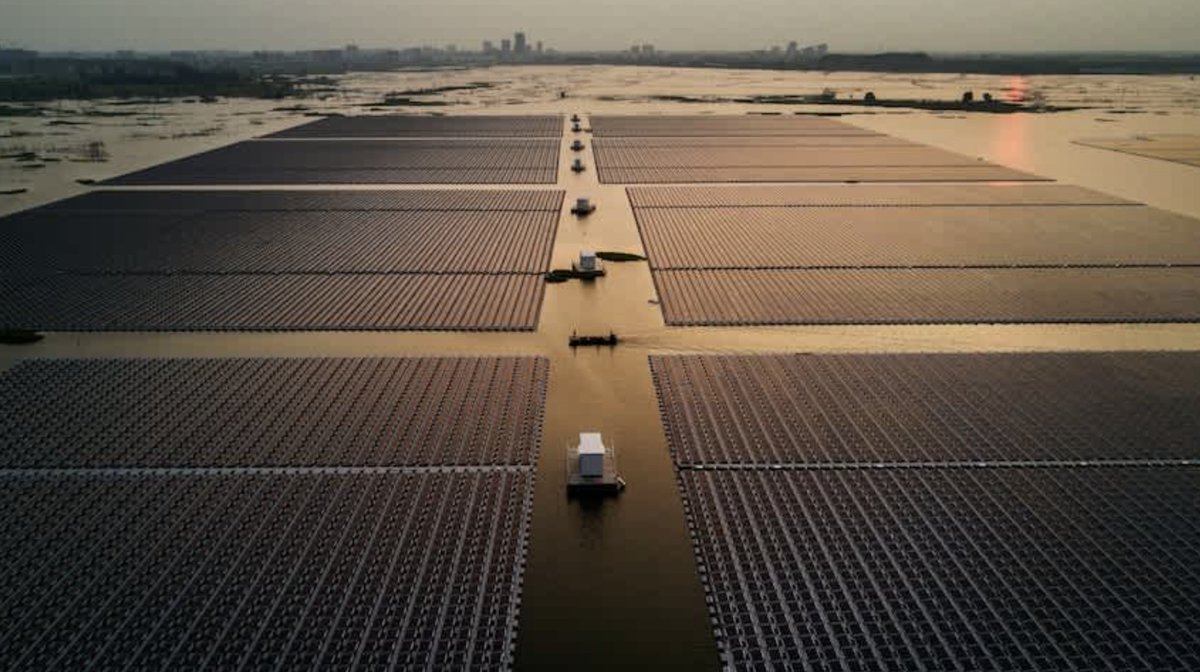
China has quietly passed a milestone that matters more than most headlines suggest. For the first time, non-fossil sources (solar, wind, hydro, and nuclear) make up the majority of China's installed electricity capacity. That's not a symbolic achievement. It's a structural shift in how a major economy operates.
When a country generates most of its electricity from sources it owns outright, no fuel to import, no price shocks from distant conflicts, energy starts becoming a competitive weapon.
Cheap, abundant, domestically produced electricity accelerates manufacturing, makes electrifying transport and heating viable at national scale, and opens industrial doors that simply don't exist when power is expensive or unreliable.
China is already betting on this: massive data center expansions, electrified heavy industry, and dominance over the supply chains that produce the panels, turbines, and batteries the rest of the world needs to follow.
The country that manufactures the most clean electrons and exports the equipment that generates them owns the next century's industrial order. China is positioning for exactly that.
The Quiet Collapse: How America Lost Its Moral Authority
There was a time when the United States didn't need to defend its democratic credentials. It simply pointed to them. Free press. Rule of law. Stable institutions. Predictable alliances. That era is fading, and the numbers tell the story.
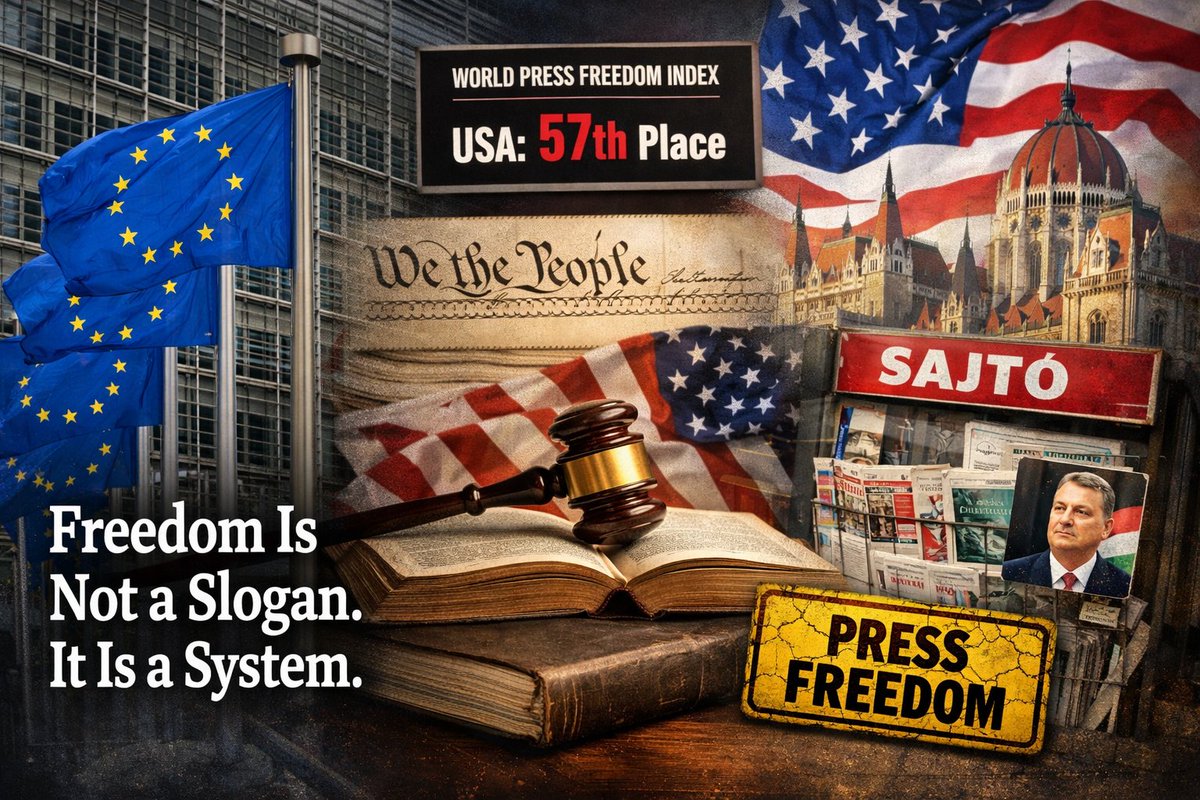
The Press Freedom Catastrophe. In the latest global press freedom ranking from Reporters Without Borders, the United States has fallen to 55th place in the world.
Not top 10. Not top 20. Not even top 40.
Fifty-fifth!
The country that once lectured others about democratic backsliding now sits behind nations it used to advise on reform. That is structural decline. When a country falls that far on press freedom, it's not because of a bad news cycle.
Across Europe, something has snapped. The tone has shifted from irritation to open contempt. What once passed for strained diplomacy is now spoken of as extortion, bad faith, and outright sabotage of international norms. The Greenland crisis, renewed tariff threats, and the crude theatrics of the Trump administration have pushed European public opinion into unfamiliar territory. It is anger, and it is no longer being hidden.
What is striking is how openly this sentiment is now expressed. In parliaments, in editorials, in boardrooms, and increasingly in everyday consumer choices, the message is the same. The United States under MAGA leadership is no longer seen as a difficult partner. It is seen as a problem that must be managed.
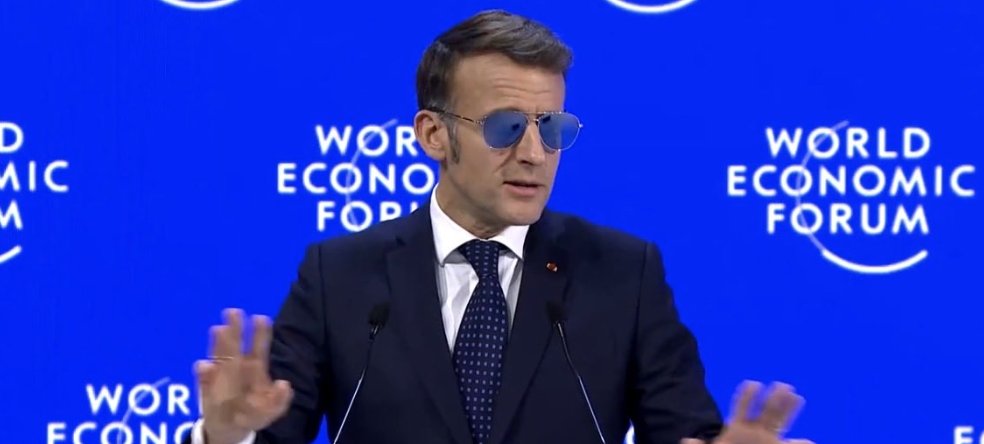
At Davos, the usual choreography collapsed. European and Asian leaders, long accustomed to translating American volatility into diplomatic euphemisms, stopped pretending. The language was blunt. The tone unmistakably cold.