The White House's Ratepayer Protection Pledge is an empty promise unless there is transparency and accountability. If the Pledge is backed only by company press releases, then it's just "PR help" for the hyperscalers, as the President let slip.
But it's not too late for the Pledge to be meaningful.
The previous Meta-Entergy deal is not public. From what we know, ratepayers are paying fo $500M in transmission upgrades. Key benefit is that ratepayers might get a good deal on a used natural gas plant in 2042.
Friday's press release about the deal claims $2B "ratepayer savings" bc of Meta facilities. For further info on the savings, Entergy links to the company's prior press release describing its own 'pledge' about data centers.
Press releases all the way down.
Someone should do something!
• • •
Missing some Tweet in this thread? You can try to
force a refresh

PJM has no authority over transmission line ratings. This is a governance and regulatory failure.
PJM is now technically able to use more accurate inputs in its transmission system models, but it might not actually be doing so. It's up to the utilities.
Inaccurate line undervalue transmission capabilities, creating inflexible constraints in system models that cause higher energy prices, stifle new entry, and divert planning processes away from beneficial projects.
As the market monitor puts it, "PJM prices are extremely sensitive to transmission line ratings."
President makes FERC Commissioners stand and says FERC Commissioners "are the most powerful people in the country . . . I've had more people say, do you know FERC? I've learned so much about FERC."
Mike Johnson is here and speaking for some reason. Calls the "pledge . . . an idea whose time has come." It responds to "misinformation."
Rehearing requests about Colocation in PJM are coming in.
The utilities broadly oppose FERC's order that PJM offer new tiers of transmission service. Mostly, they argue FERC has not shown that existing rates are unjust and unreasonable or that the new service tiers will be J&R.
They also argue that the new service tiers are unduly discriminatory and "in tension" w Open Access transmission principles. And they argue FERC is infringing on state authority over retail service.
But there's a utility schism! Exelon and FirstEnergy sign on to these arguments. AEP, PSE&G, PPL, Duke, Dominion, Duquesne, ConEd, (others I'm forgetting) are not on this filing.
Pretty unusual to see a TO disagreement on such significant issues.
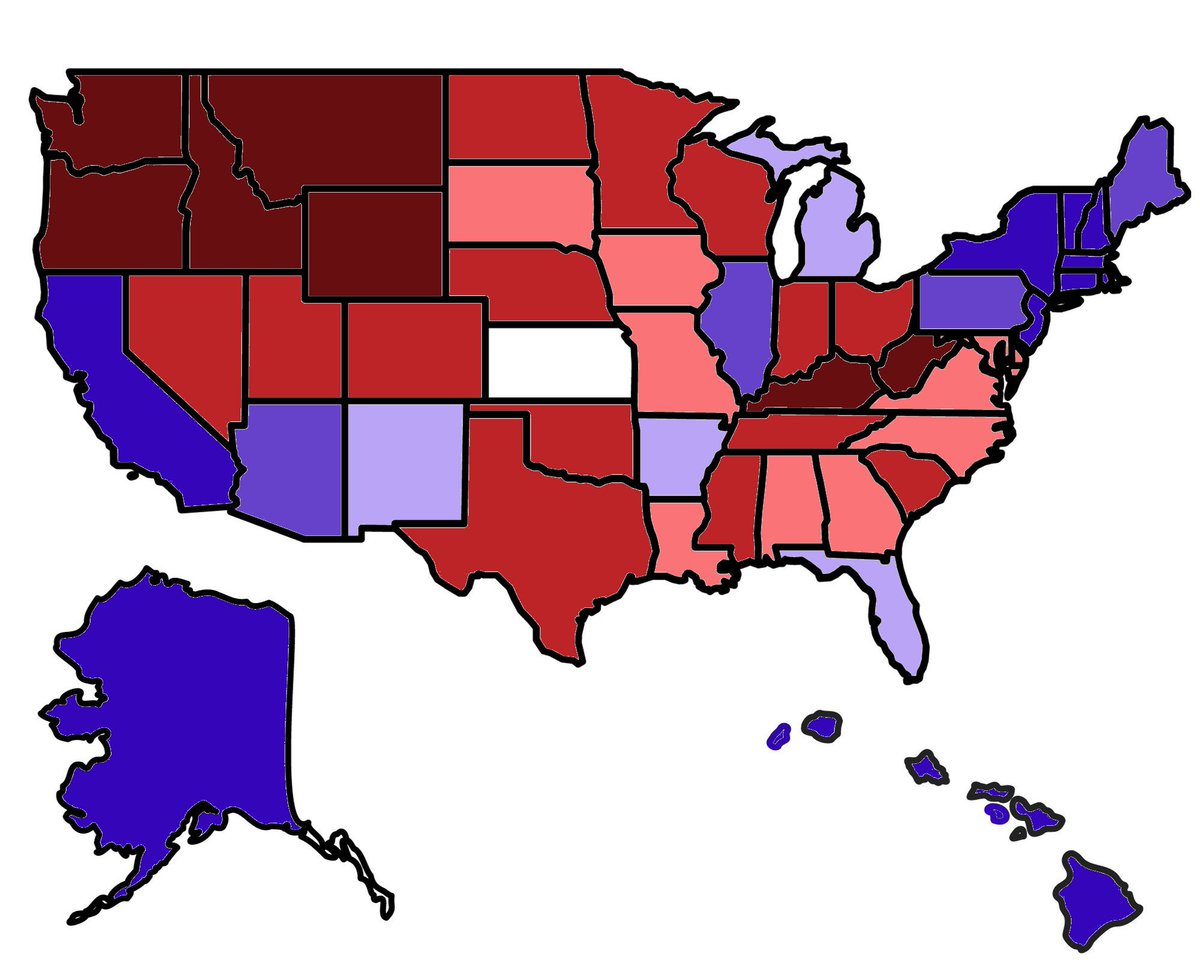
No. This map of retail electricity prices reflects generational trends. Of course, state + fed policies have price impacts. But stating that state clean energy policies are "why Blue States have the highest electricity prices" is wrong.
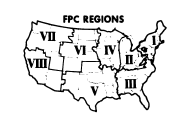
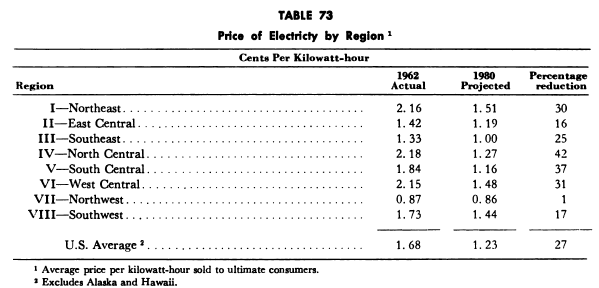
Here's a chart and map from the Federal Power Commission's 1964 National Power Survey, showing 1962 prices. Note higher prices in the Northeast and California. Not a perfect reflection of today but the NE trend has been persistent since at least 1962!
Here's a map I just made of 1990 retail prices from EIA data.
Light colors show less than 10% difference from US avg.
Dark colors show greater than 20% difference.
Medium colors are between 10 and 20 %
More action in PJM. 1. Last week, the utilities asked FERC for an extension in proposing how to comply with FERC's December order on co-location. Today, Constellation protests: the utilities "have long benefited by delaying existing large load co-location requests."
Why did the utilities ask for an extension and not PJM? Because FERC has ordered new rates for new tiers of transmission service and the utilities want to control what happens next.
Ordinarily, the utilities have the "right" to propose new rates (but not terms of service). But in this proceeding, where FERC found PJM's tariff is unjust and unreasonable, the utilities have no "rights" to control the process.