If you're interested in the broader analysis, you can find it here:
carbonmiddlemanagementinc.github.io/publicfunding_…
Some important caveats on the methodology, including what was put in and left out and why🧵 x.com/ThomasHochman/…
carbonmiddlemanagementinc.github.io/publicfunding_…
Some important caveats on the methodology, including what was put in and left out and why🧵 x.com/ThomasHochman/…
To start, the goal of this exercise is to get a relative view of public funding for various energy sources. I am including coal, oil, and gas in the next version.
I welcome all feedback and know that people will give it since everyone feels some sort of way about the numbers!
I welcome all feedback and know that people will give it since everyone feels some sort of way about the numbers!
I purposefully took the public funding angle with R&D, tax credits, state incentives, NEM, grants/loans, loan guarantees, ZECS/mandates for a full view of how much public money has been allocated to different resources rather than using the word "subsidy"...
Subsidy has all sorts of connotations in the policy world and people feel all sorts of ways about what counts and doesn't count as a subsidy.
A clear example of this is with the Price Anderson act which insitute an indemnity insurance pool for nuclear companies...
A clear example of this is with the Price Anderson act which insitute an indemnity insurance pool for nuclear companies...
narrowly defining this as a subsidy doesn't provide the full picture, and so I've included it as a toggle-able option
Furthermore some of this data is sparse, or difficult to piece together, so I have some confidence scores baked into the charts section
Furthermore some of this data is sparse, or difficult to piece together, so I have some confidence scores baked into the charts section

On net metering, I evaluated several studies that have looked at the cost-shift of that policy, and there is a separate tab that outlines the differences in those studies

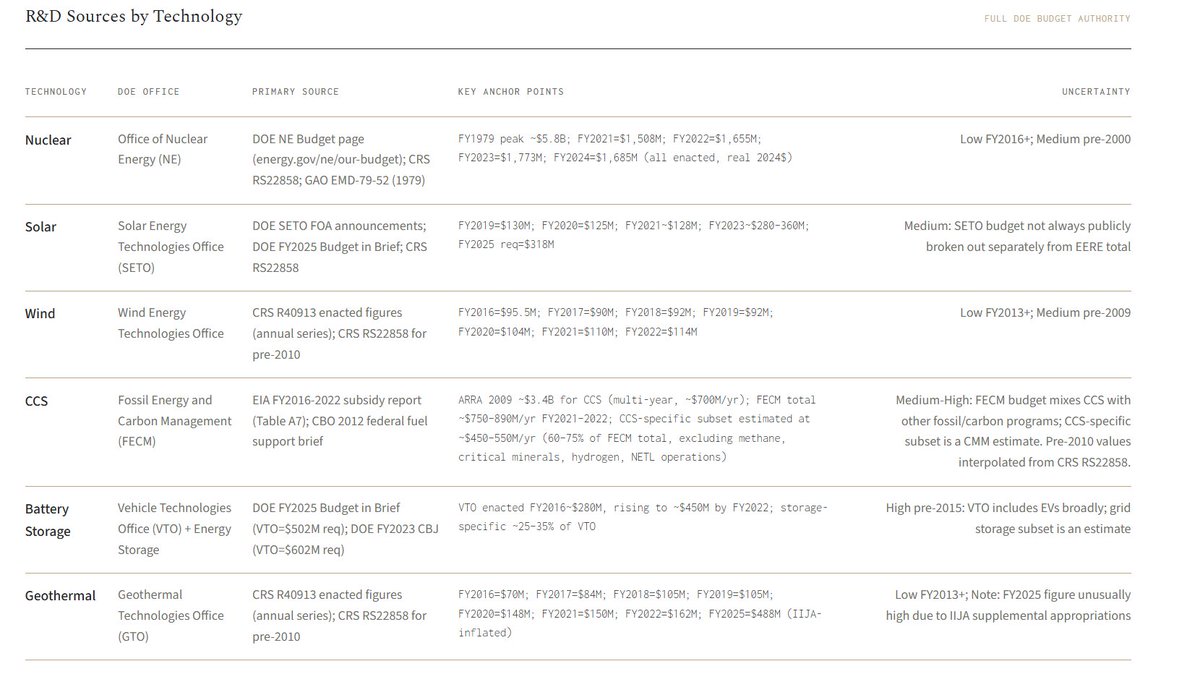
In the methodology section, you can see where I pulled the data from and the relative certainity of which the numbers can be substantiated
Also in the methodology section a whole table on what wasn't included, and why, alongside estimates on what their addition would do to totals and the uncertainty around those estimates
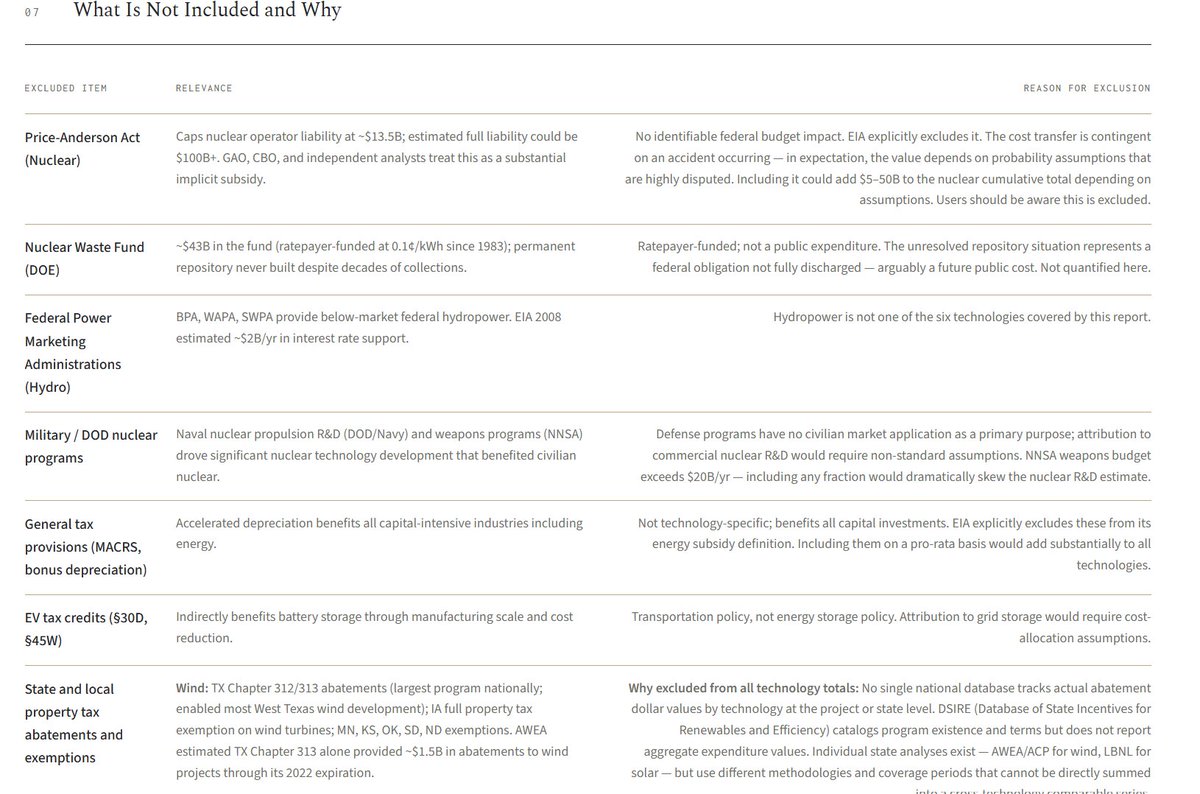
The methodology section also includes gaps and known exclusions. I'm going to work through these to find better data sources and/or a way to incorporate them with higher confidence.

I welcome any and all feedback on where I'm off or where I can find data to help make this a more accurate view.
The goal here is to get a holisitic view of the relative amounts of public funding for various energy sources. I'm including fossil fuels in the next version!
The goal here is to get a holisitic view of the relative amounts of public funding for various energy sources. I'm including fossil fuels in the next version!
• • •
Missing some Tweet in this thread? You can try to
force a refresh