I gave a short high-level overview talk about the intersection between economics and AI safety last week. Here are some highlights and musings, and the actual slides in the end 
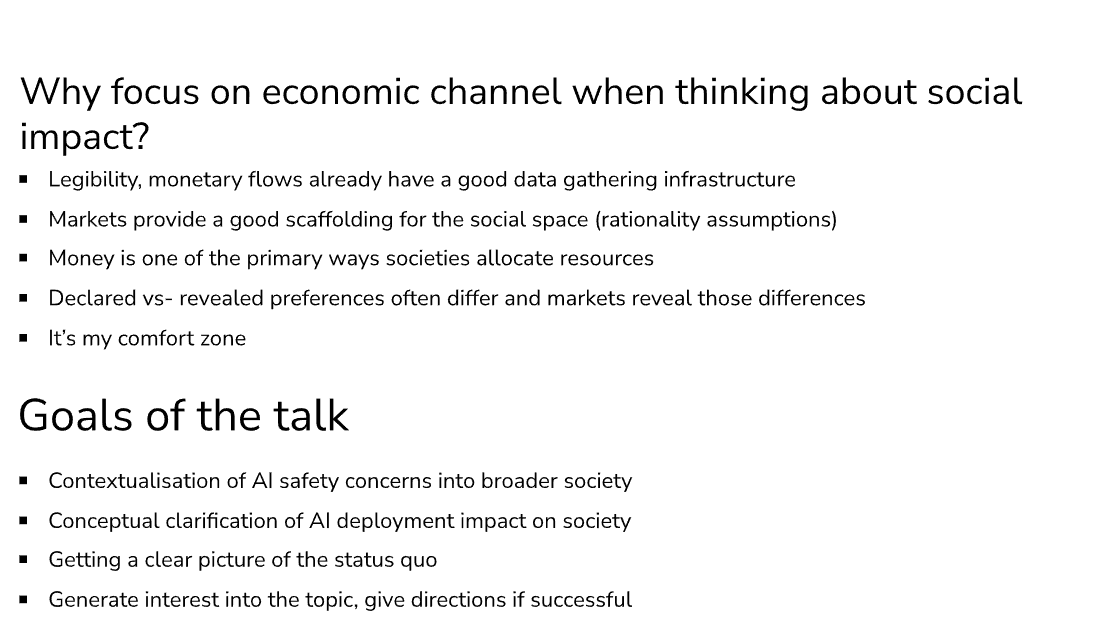
The audience was quite diverse ranging from technical to social science and advocacy / activism.
I spend a lot time thinking about how to find a common denominator to get everyone's interest and clarify significance. Decided to go the philosophy/abstraction route
I spend a lot time thinking about how to find a common denominator to get everyone's interest and clarify significance. Decided to go the philosophy/abstraction route
Tried to take into account the environment itself, by returning to the basics of iterative self improvement, and making more transparent / highlighting social embeddedness of this process.
The basic argument presupposes a lot!
The basic argument presupposes a lot!
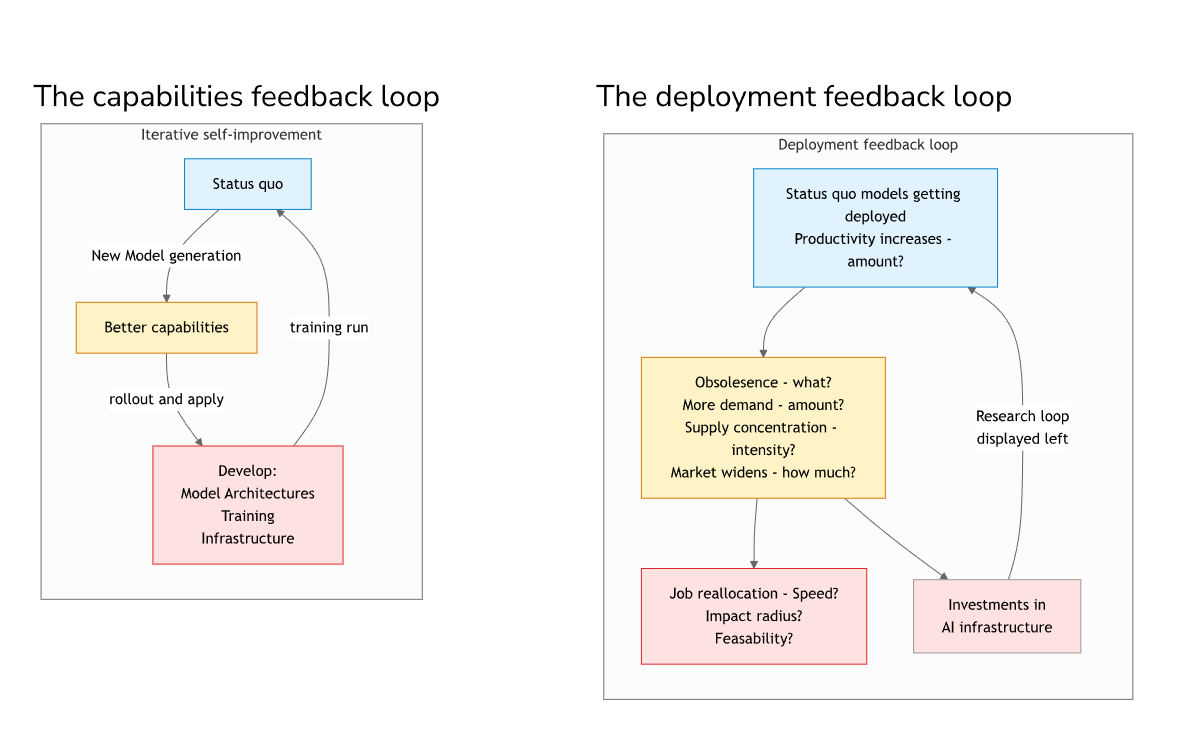
As already mentioned with @sebkrier, one very abstract model of the current situations AI labs are in right now is that they want to race along self improvement and need to finance, which means positive supply-shocking societies.
Very delicate balancing act, plus competition!
Very delicate balancing act, plus competition!
@sebkrier The big elephant in the room is of course labor market impact. I tried to stay on the very abstract level and communicate the basic mental models that improve my intuition on this I feel. It's quite fascinating how well they dovetail, once I wrote it down.


@sebkrier I delighted in the fact that one of the reactions to the jaggedness concept was to point out how the straightness of human competences is itself constructed - similar to Denetts "cuteness is derived from babies, not the other way around" point
@sebkrier After the general section about how best to think about positive labor productivity shocks I also added Jevons paradox which might well be coming our way. In software engineering that seems to be what most self report. After that I tried to report our knowledge of the status quo

@sebkrier On the one hand I think compared to other social sciences, we have a lot domain specific data sources, taxonomies etc. already because economics already created those, but still the actual impact seems quite opaque. So, which epistemic channels are actually there?

@sebkrier Apart from the Anthropic Economic Index about which I'm quite enthusiastic, I'm mostly thinking about aggregated macro data. Not only because that's part of my comfort zone - I also think considering the framing of AI safety, that level of resource intensity is adequate

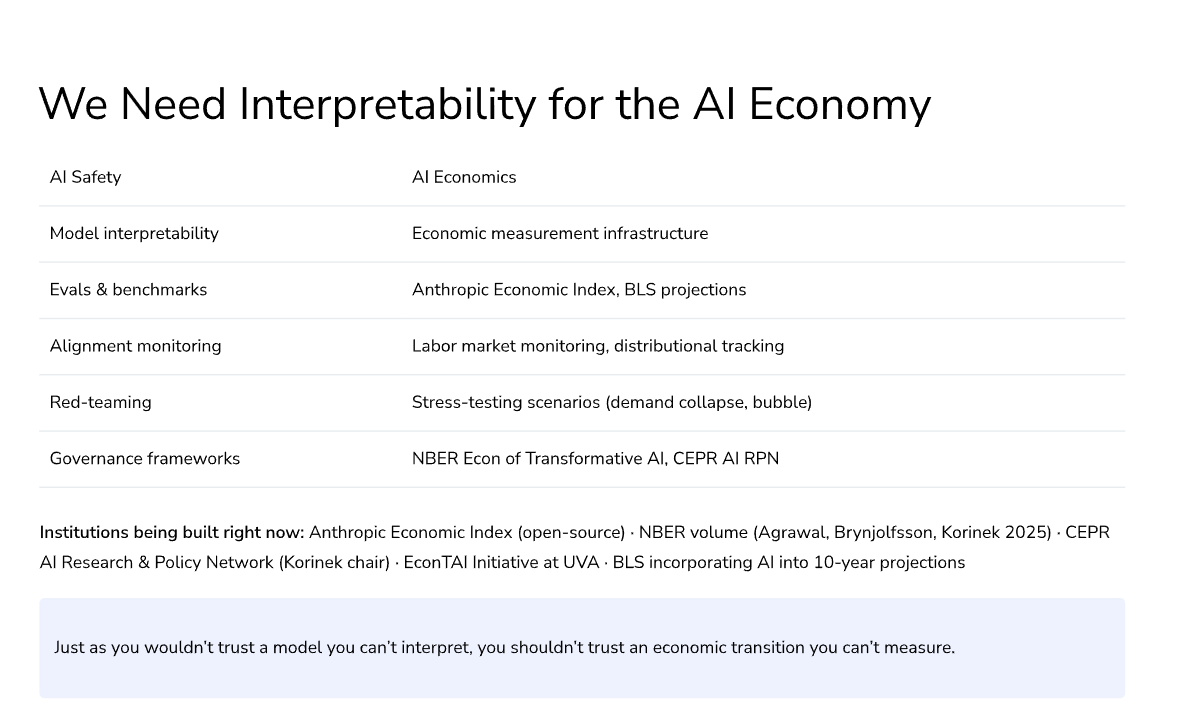
@sebkrier I ended with some kind of analogue comparison harking back on the two kinds of feedback loops and their scientific / epistemic tools that are already there and also being build right now.
Apart from everything else, the times are extremely exciting
Apart from everything else, the times are extremely exciting
@sebkrier I would not have even felt qualified to do something like this without all the amazing people on this platform that share their insights and quips every day with me in a wonderful act of social grace and generosity:
@alexolegimas, @akorinek, @erikbryn, @sebkrier
@alexolegimas, @akorinek, @erikbryn, @sebkrier
@sebkrier @alexolegimas @akorinek @erikbryn I'm surely missing a ton of others!
Still compiling a resource list as a complement to the talk, starting with accounts on here.
For a start, you can download the slides from my personal website:
infornomics.de/uploads/2026_0…
Still compiling a resource list as a complement to the talk, starting with accounts on here.
For a start, you can download the slides from my personal website:
infornomics.de/uploads/2026_0…
@sebkrier @alexolegimas @akorinek @erikbryn Two addenda:
I create the slides with - wrapping Markdown files for very easy use with Claude Code. I would recommend!
Second: @edenhofer_jacob was kind enough to provide me with a long list of political science literature I will try to add as well!sli.dev
I create the slides with - wrapping Markdown files for very easy use with Claude Code. I would recommend!
Second: @edenhofer_jacob was kind enough to provide me with a long list of political science literature I will try to add as well!sli.dev
@sebkrier @alexolegimas @akorinek @erikbryn @edenhofer_jacob He is of course much more organized and prepared on this than I am, and as a result if anyone is interested in spreading out into political science literature, I cannot recommend his posts from last week enough
https://x.com/edenhofer_jacob/status/2036765624513270121?s=20
@sebkrier @alexolegimas @akorinek @erikbryn @threadreaderapp unroll
• • •
Missing some Tweet in this thread? You can try to
force a refresh