The story of the 1985 Tour of Flanders; one of the most atrocious editions of the race. 1/24
#cyclingiceberg
#cyclingiceberg

Todays story builds on the last post about Eric Vandenaerden.
Still young, Vandenaerden was deemed experienced enough to be a contender for the 1985 Tour of Flanders. He already won 7 races that season, including a stage in Tirreno-Adriatico. 2/24
Still young, Vandenaerden was deemed experienced enough to be a contender for the 1985 Tour of Flanders. He already won 7 races that season, including a stage in Tirreno-Adriatico. 2/24
https://x.com/NoahvPutten/status/2038680100120535063
Most opposition would come from his own team. Eddy Planckaert had won Omloop het Volk. His brother Walter and Australian Phil Anderson, winner of E3, were also formidable contenders. The team also fielded defending champion Johan Lammerts, although he was a domestique. 3/24
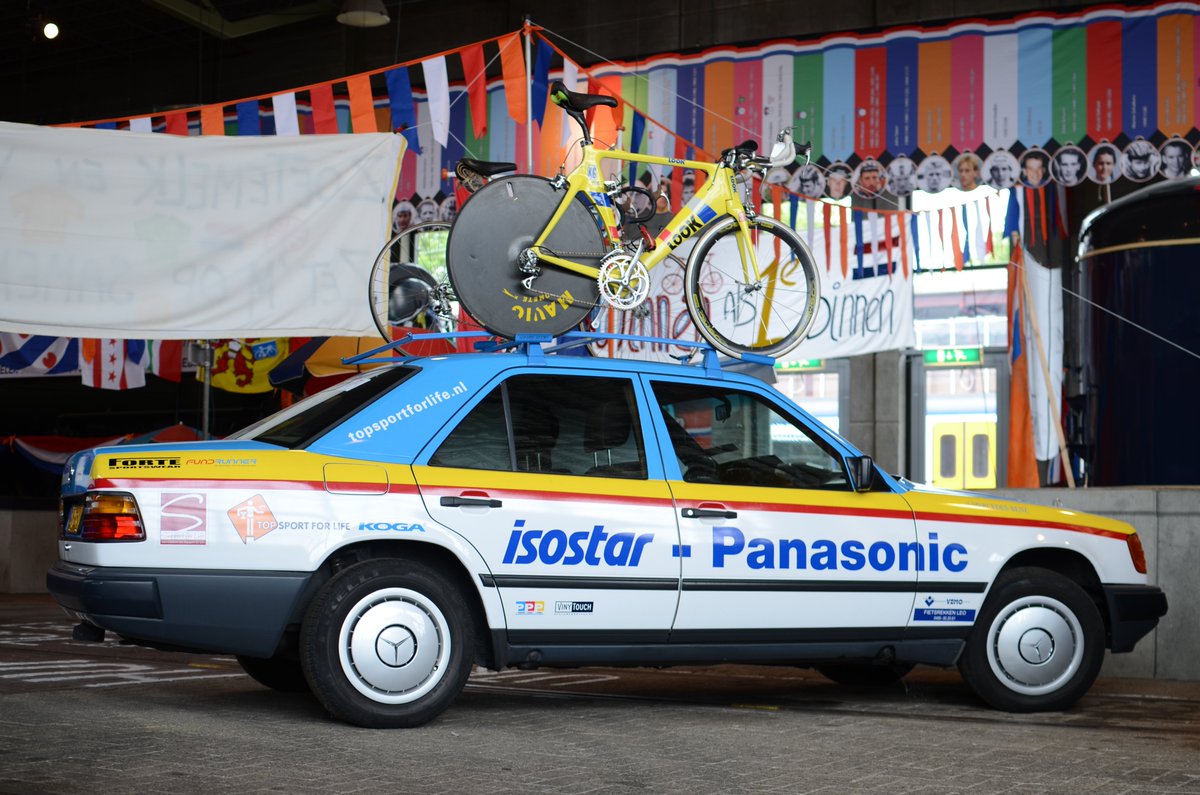
There were other contenders. The Dutch media hoped Jan Raas would do well. For years, Raas has been the start rider of Peter Post’s team. The two were close friends, but had a big fallout. Raas became rider manager for his own team, and had a heated rivalry with Panasonic. 4/24
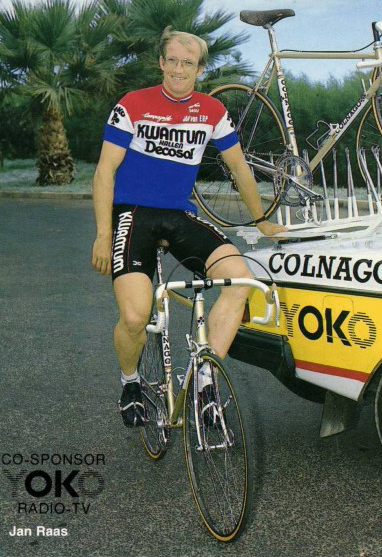
The Dutch (papers) enjoyed this thoroughly, for now. Later it would cost them big wins, but now they hoped for a new chapter in this rivalry, although Raas had been dealing with a nerve disorder. His teammates Jacques Hanegraaf and Adrie van der Poel were outsiders. 5/24
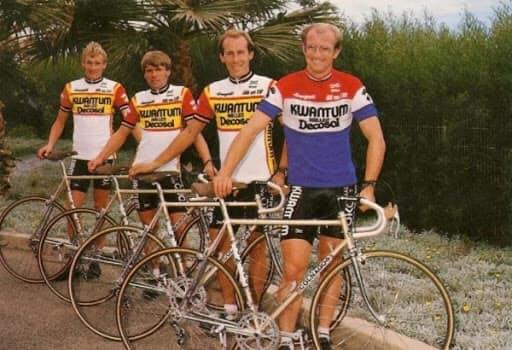
Bernard Hinault didn’t start in Flanders, saying: “Let the circus animals do their tricks on that stupid Koppenberg,” but his La Vie Claire team did field Greg LeMond. The American had finished on the podium of the 1984 Tour, but was unproven in the classics. 6/24
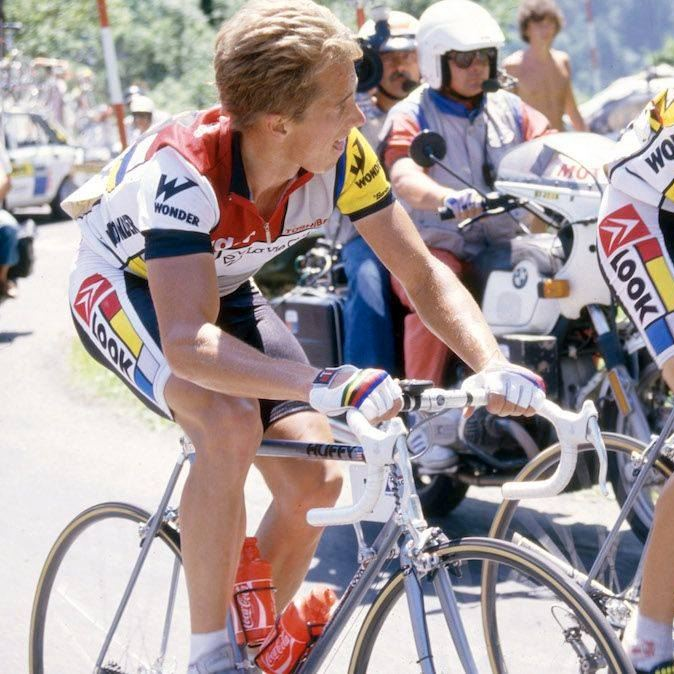
The winner of that Tour, Laurent Fignon, was also at the line, but cobbles weren’t his preferred terrain either. Other favorites included Dutch veteran Hennie Kuiper (Verandalux), Sean Kelly (Skil), Lozef Lieckens (Lotto), and Luc Colyn (Safir). 7/24
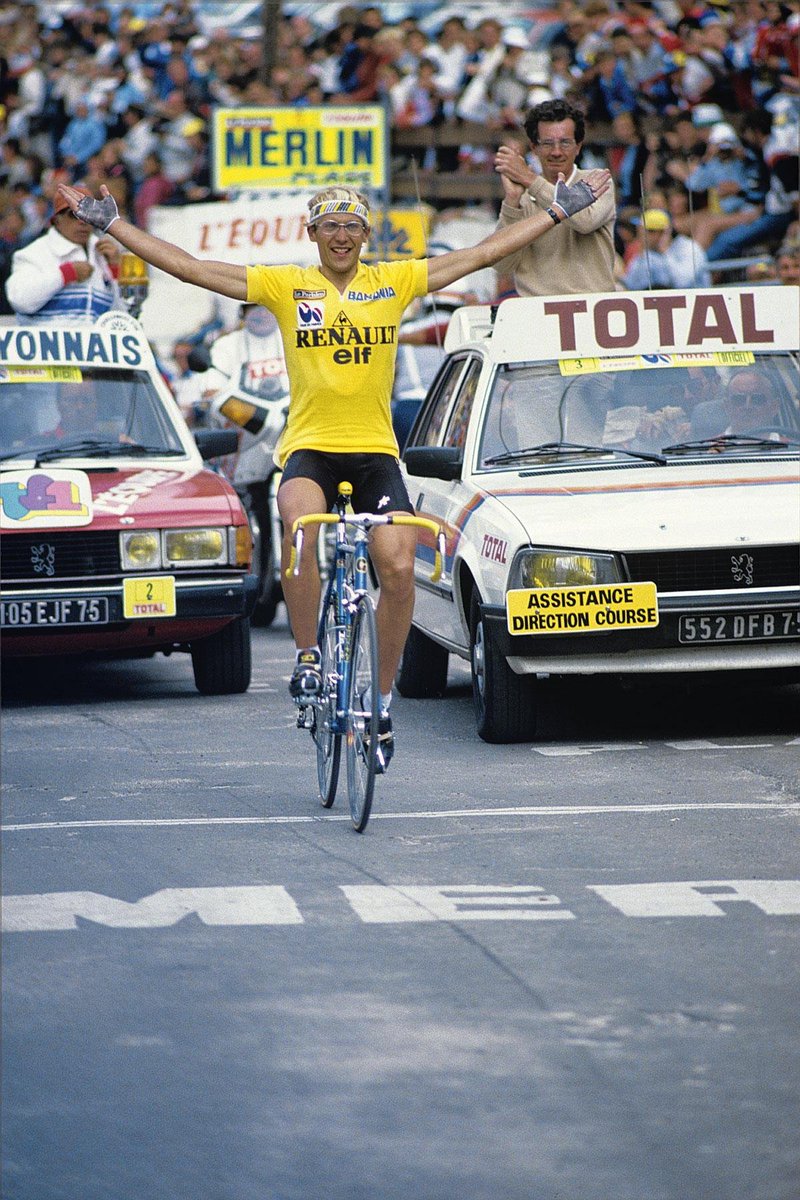
Before the start of the race, Fignon was already pretty much out of contention. He arrived late to inscription, and got scolded at by the officials: “Vous etes trop tard monsieur Fignon!” He missed the start and needed to chase a while, and would never contend the win. 8/24

The weather was atrocious for the 69th edition of the race. It rained, and was quite cold. Dutch paper AD wrote: Champions fought the elements of nature, as the hills they faced turned into slides and the stones became enemies.” 9/24
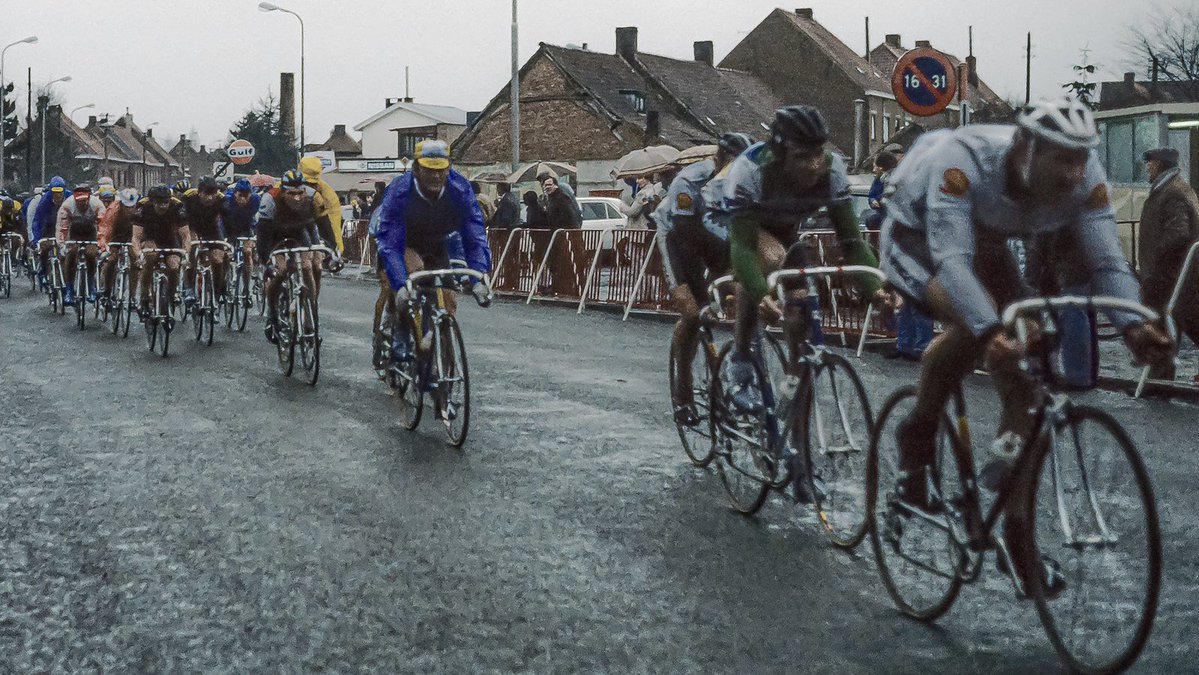
With these weather conditions, it was guaranteed that the Koppenberg would cause havoc. The hardest climb of the Tour of Flanders was barely ridable in dry conditions, let alone when the rain made the cobbles drenched in mud even slippery. 10/24
Video:
Video:
The race however opened before the Koppenberg. With 160km to go, Jan Raas attacked through a feed zone. The veteran knew he needed a miracle to win, and threw a hail marry. He got reeled in with 100km to go, as the peloton picked up the pace before the Oude Kwaremont. 11/24
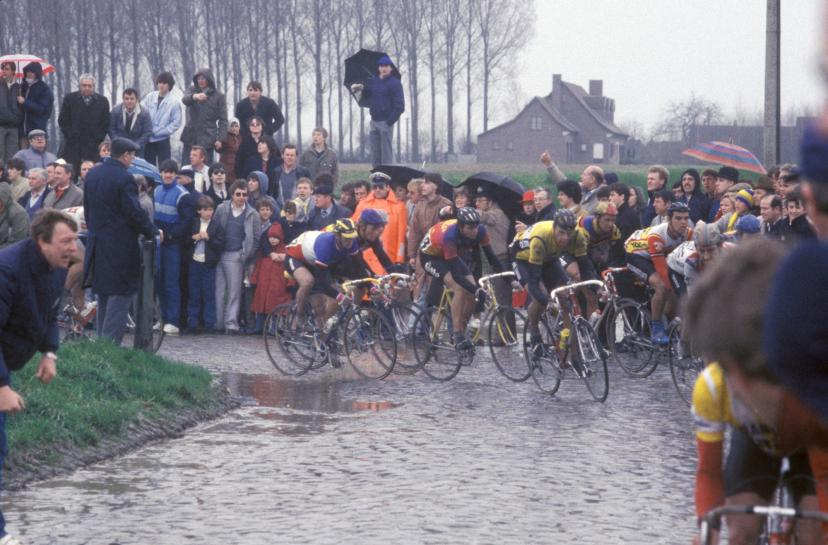
Panasonic set the pace on the Kwaremont, thinning out the peloton to some 50 riders. As the peloton set course to the Koppenberg, Vandenaerden suffered a puncture in the downhill. He got a wheel from Lammerts, but was at least 40 seconds behind the peloton at this point. 12/24
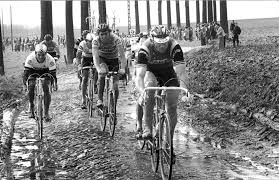
On the Koppenberg all hell broke loose. Nico Verhoeven (Skala) crowned himself king of the Koppenberg setting a grueling tempo. He led, with Anderson and Planckaert on his wheel. Van der Poel reached the top 10 seconds later, as the fourth rider to reach the top on the bike 13/24
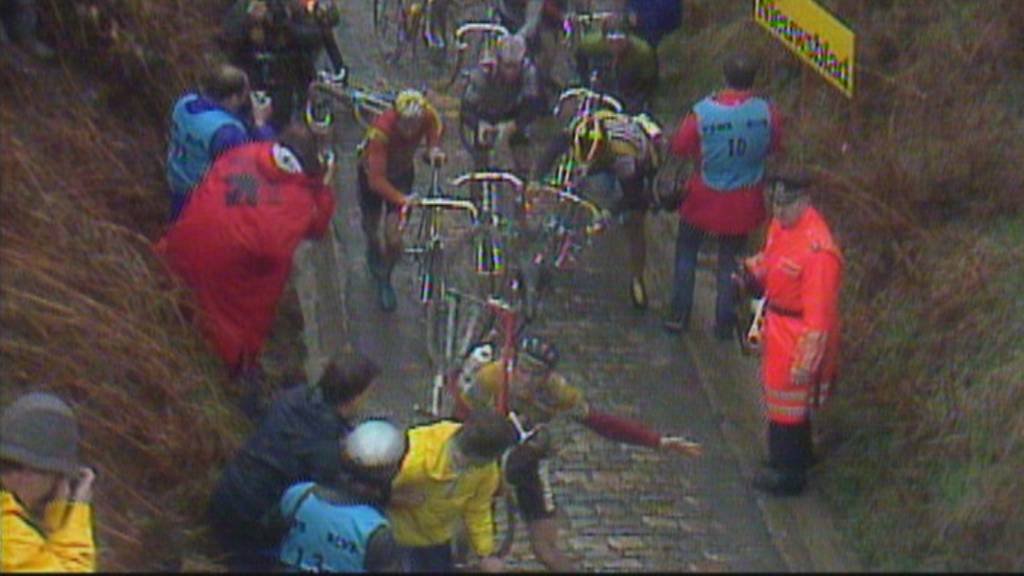
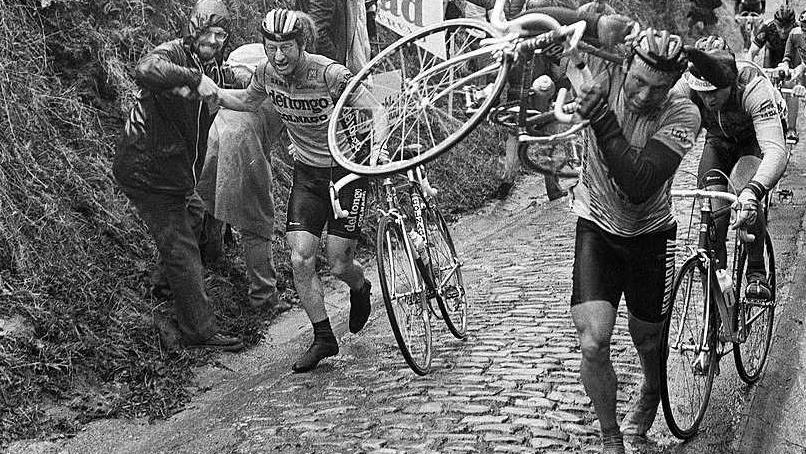
Behind, it were the typical scenes. Screaming riders, trying to walk up the slippery slopes desperately holding onto their bike. Most notably, Hennie Kuiper had been blocked by a photographer, causing him to lose time. He got in a verbal fight, and shoved the photographer. 14/24
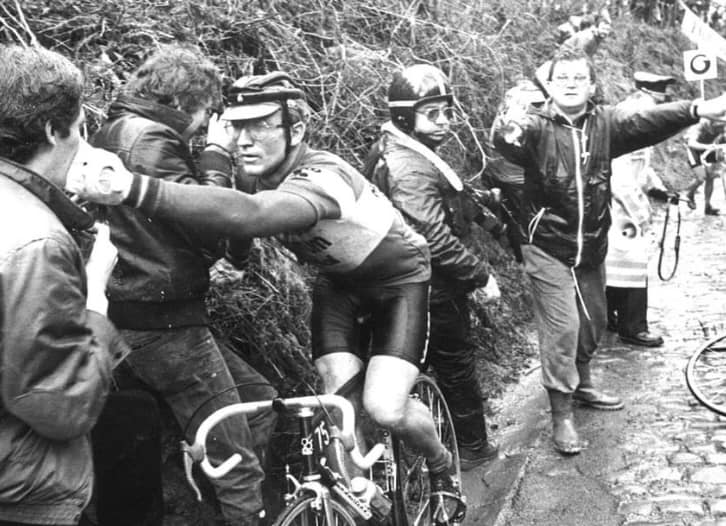
That wasnt the case for Vandenaerden. He slalomed his way through the walkers, and made his way up without stopping. Still, it cost him time. With 70k to go, he was 1.20 behind the leaders. A win seemed unlikely, as Panasonic had two riders up front who paced viciously. 15/24

Vandenaerden worked with Kuiper, who had three teammates in a group of 15. They started closing the gap, and soon reeled in Van der Poel, who blew himself up against the headwind. On the hills, the chasing group got smaller as they closed in on the leading trident. 16/24

Panasonic was racing against itself, as Vandenaerden kept pacing with teammate Ludo de Keulenaar.
After 40 minutes, they returned to the front. Kuiper, Lieckens and Rudy Rogiers (Hitachi) were the only ones who had managed to follow. LeMond also came back, but punctured. 17/24
After 40 minutes, they returned to the front. Kuiper, Lieckens and Rudy Rogiers (Hitachi) were the only ones who had managed to follow. LeMond also came back, but punctured. 17/24

Where Vandenaerden had made the strongest impression, the momentum quickly shifted to Kuiper. The 36 year old was experienced, and had let the eager Belgian champion do most of the work. Shortly after the regrouping, Kuiper attacked on the Varent. He opened a 15 second gap. 18/24
Panasonic had the numbers behind. Anderson, who had already pulled most up front, pushed on to reel Kuiper back in.
An eventful race scenario unfolded. The pace dropped, allowing more riders to come back. 19/24
An eventful race scenario unfolded. The pace dropped, allowing more riders to come back. 19/24
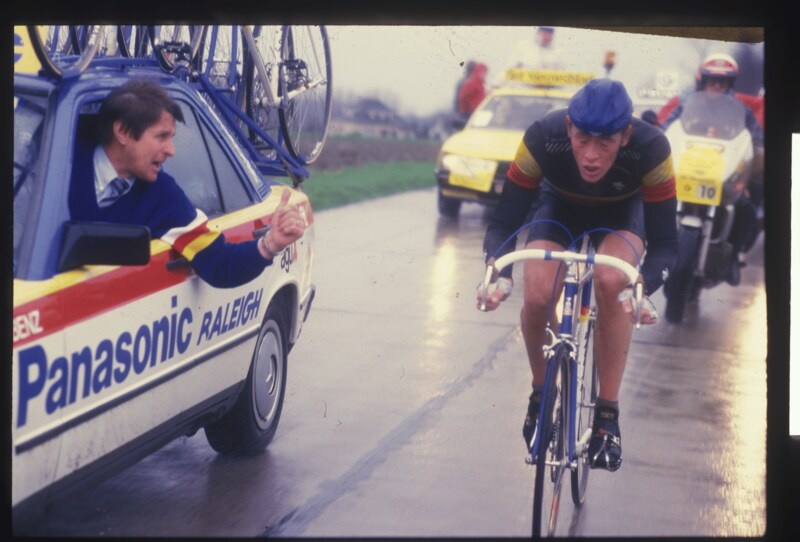
After Kuiper unsuccessfully attempted to break clear on the Berendries, many of these riders seized the false flat roads to place all or nothing attacks. It was up to Panasonic to control the bunch.
With 27km to go, Kuiper attacked again, this time on the Eikenberg. 20/24
With 27km to go, Kuiper attacked again, this time on the Eikenberg. 20/24
He broke clear, opening a gap of 22s. Vandenaerden saw the danger and placed a counter attack just before the downhill to Geerardsbergen. Once he had a 5 second gap, Anderson bridged across alone. The tandem cooperated well, and they caught Kuiper just before the Muur. 21/24
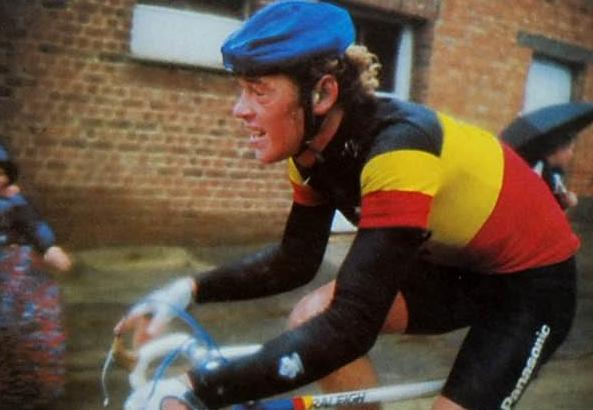
On the steepest section, Vandenaerden broke clear and set course to the finish. It would be a 1-2 for Panasonic, as Anderson claimed second 40s later. Kuiper came 3rd, with just 24 riders finishing the race. Three days later, Vandenaerden also won Gent-Wevelgem. 22/24

The 1985 Tour of Flanders is widely regarded as one of the toughest, and most eventful, editions due to the weather and course. In fact, the organizers even deemed the course so tough, they planned to the Koppenberg out. They eventually postponed that until 1987. 23/24

For Vandenaerden 1985 was his best year. He was still good the next two seasons, winning Roubaix and podiuming Flanders and San Remo in 1987. Whether he indeed raced too much at a young age is debatable, but he didn’t become the superstar many saw in him. 24/24
Sources: nrc.nl/nieuws/2011/01… knack.be/sport/wielrenn… hbvl.be/sport/wielrenn… resolver.kb.nl/resolve?urn=KB… resolver.kb.nl/resolve?urn=dd… resolver.kb.nl/resolve?urn=KB… resolver.kb.nl/resolve?urn=dd… resolver.kb.nl/resolve?urn=AB… resolver.kb.nl/resolve?urn=dd…
• • •
Missing some Tweet in this thread? You can try to
force a refresh