
🧵The Eminent Doctor, Fr. Francisco Suárez, on the Formal Distinction of Bl. John Duns Scotus.
This matter is addressed in Suárez's "Summa Seu Compendium", wherein he explains the Scotist position, and then provides a refutation of it.
This matter is addressed in Suárez's "Summa Seu Compendium", wherein he explains the Scotist position, and then provides a refutation of it.
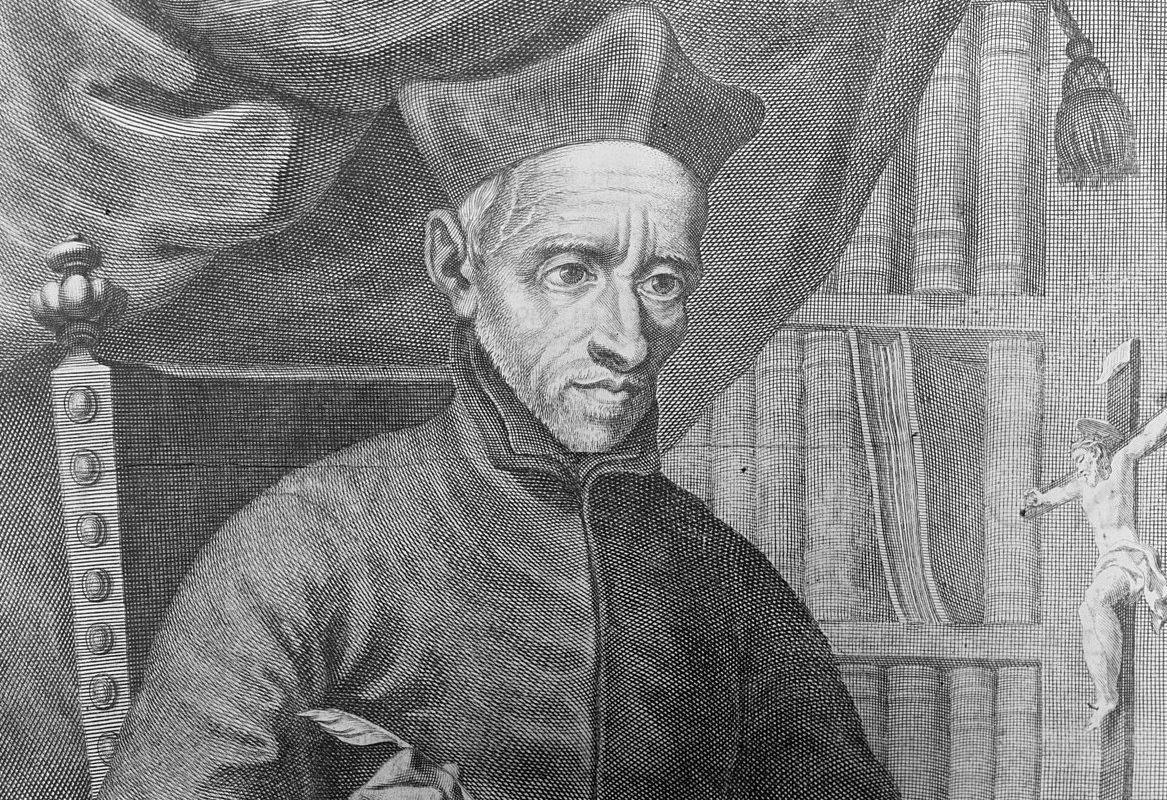
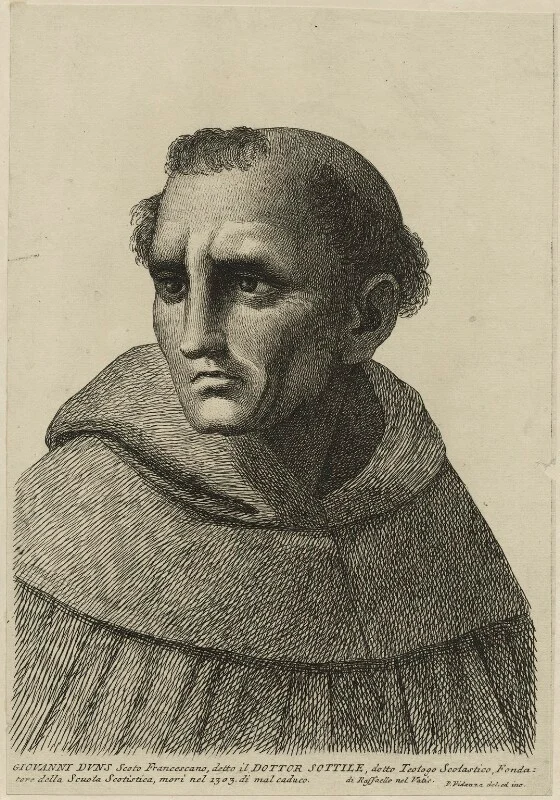
- The citation is Tome 1, Book 1, Chapter 10, Pages 24 - 25.
- The source of this work is to be found here:
google.co.uk/books/edition/…
- The source of this work is to be found here:
google.co.uk/books/edition/…
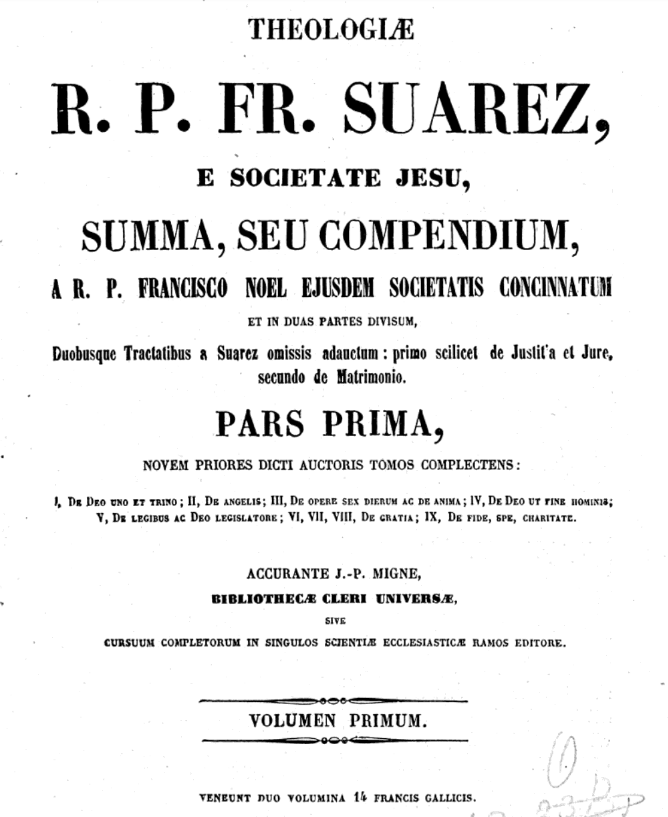
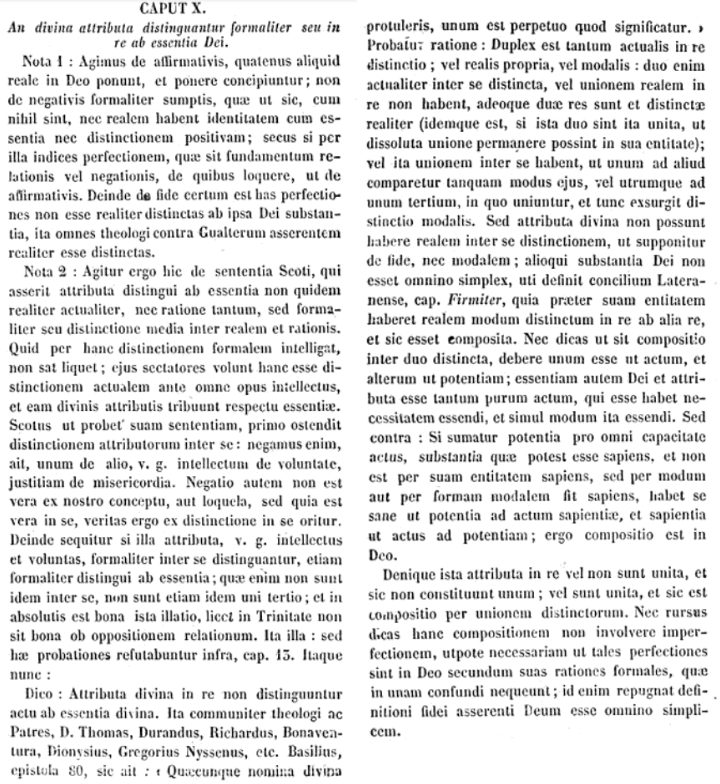
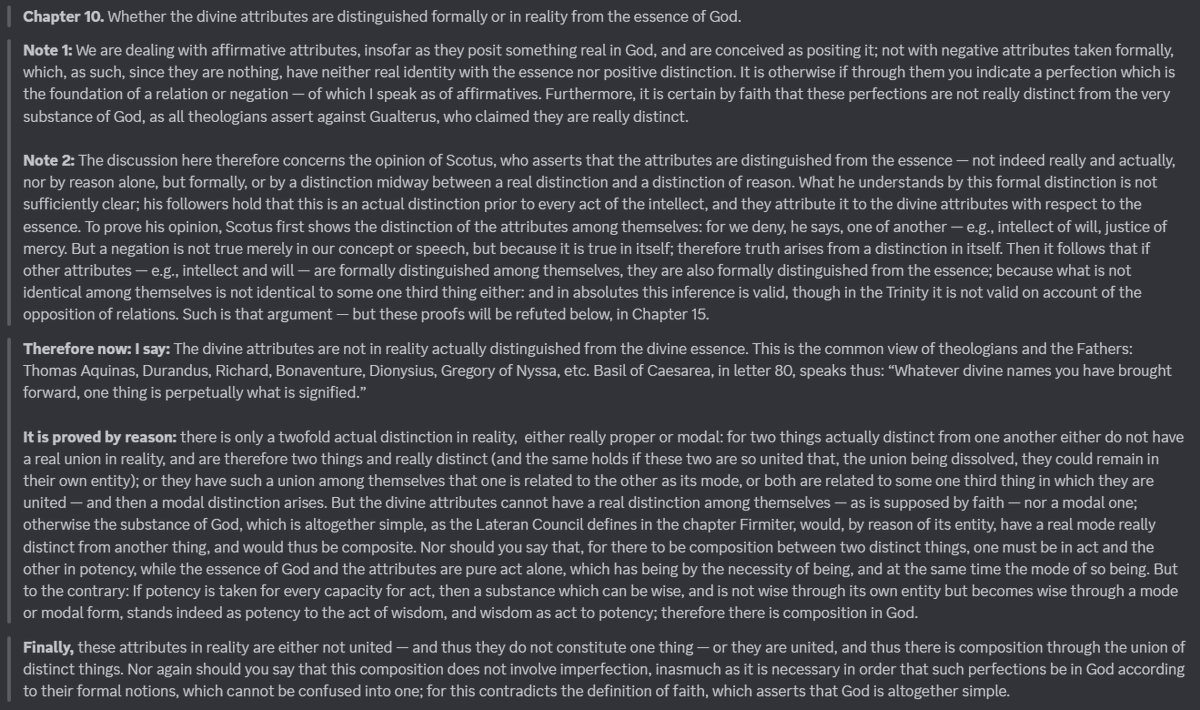
“Chapter 10. Whether the divine attributes are distinguished formally or in reality from the essence of God.
Note 1: We are dealing with affirmative attributes, insofar as they posit something real in God, and are conceived as positing it; not with negative attributes taken formally, which, as such, since they are nothing, have neither real identity with the essence...
...nor positive distinction. It is otherwise if through them you indicate a perfection which is the foundation of a relation or negation, of which I speak as of affirmatives. Furthermore, it is certain by faith that these perfections are not really distinct from...
...the very substance of God, as all theologians assert against Gualterus, who claimed they are really distinct.
Note 2: The discussion here therefore concerns the opinion of Scotus, who asserts that the attributes are distinguished from the essence, not indeed really and actually, nor by reason alone...
...but formally, or by a distinction midway between a real distinction and a distinction of reason. What he understands by this formal distinction is not sufficiently clear; his followers hold that this is an actual distinction prior to every act of the intellect...
...and they attribute it to the divine attributes with respect to the essence. To prove his opinion, Scotus first shows the distinction of the attributes among themselves: for we deny, he says, one of another, e.g., intellect of will, justice of mercy.
But a negation is not true merely in our concept or speech, but because it is true in itself; therefore truth arises from a distinction in itself. Then it follows that if other attributes, e.g., intellect and will, are formally distinguished among themselves, they are also...
...formally distinguished from the essence; because what is not identical among themselves is not identical to some one third thing either: and in absolutes this inference is valid, though in the Trinity it is not valid on account of the opposition of relations.
Such is that argument, but these proofs will be refuted below, in Chapter 15.
Therefore now I say: The divine attributes are not in reality actually distinguished from the divine essence. This is the common view of theologians and the Fathers: Thomas Aquinas, Durandus, Richard, Bonaventure, Dionysius, Gregory of Nyssa, etc. Basil the Great, in letter 80...
...speaks thus: “Whatever divine names you have brought forward, one thing is perpetually what is signified.”
[This is seemingly quoted from Basil in his 189th letter; why Suárez said it's from Basil's 80th letter - I cannot explain.]
[This is seemingly quoted from Basil in his 189th letter; why Suárez said it's from Basil's 80th letter - I cannot explain.]

It is proved by reason: there is only a twofold actual distinction in reality, either really proper or modal: for two things actually distinct from one another either do not have a real union in reality, and are therefore two things and really distinct...
(and the same holds if these two are so united that, the union being dissolved, they could remain in their own entity); or they have such a union among themselves that one is related to the other as its mode, or both are related to some one third thing in which they are united...
...and then a modal distinction arises. But the divine attributes cannot have a real distinction among themselves, as is supposed by faith, nor a modal one; otherwise the substance of God, which is altogether simple...
...as the Lateran Council defines in the chapter Firmiter, would, by reason of its entity, have a real mode really distinct from another thing, and would thus be composite.
[*Firmiter* refers to a constitution from the Fourth Lateran Council - shown in the screenshot below]
[*Firmiter* refers to a constitution from the Fourth Lateran Council - shown in the screenshot below]

Nor should you say that, for there to be composition between two distinct things, one must be in act and the other in potency, while the essence of God and the attributes are pure act alone, which has being by the necessity of being, and at the same time the mode of so being.
But to the contrary: If potency is taken for every capacity for act, then a substance which can be wise, and is not wise through its own entity but becomes wise through a mode or modal form...
...stands indeed as potency to the act of wisdom, and wisdom as act to potency; therefore there is composition in God.
Finally, these attributes in reality are either not united, and thus they do not constitute one thing, or they are united, and thus there is composition through the union of distinct things. Nor again should you say that this composition does not involve imperfection...
...inasmuch as it is necessary in order that such perfections be in God according to their formal notions, which cannot be confused into one; for this contradicts the definition of faith, which asserts that God is altogether simple.”
This article of Francisco Suárez may be viewed below; both in Latin and in English.
If you enjoyed this thread, be sure to spread it amongst your friends.🧵
If you enjoyed this thread, be sure to spread it amongst your friends.🧵
@threadreaderapp unroll
• • •
Missing some Tweet in this thread? You can try to
force a refresh






