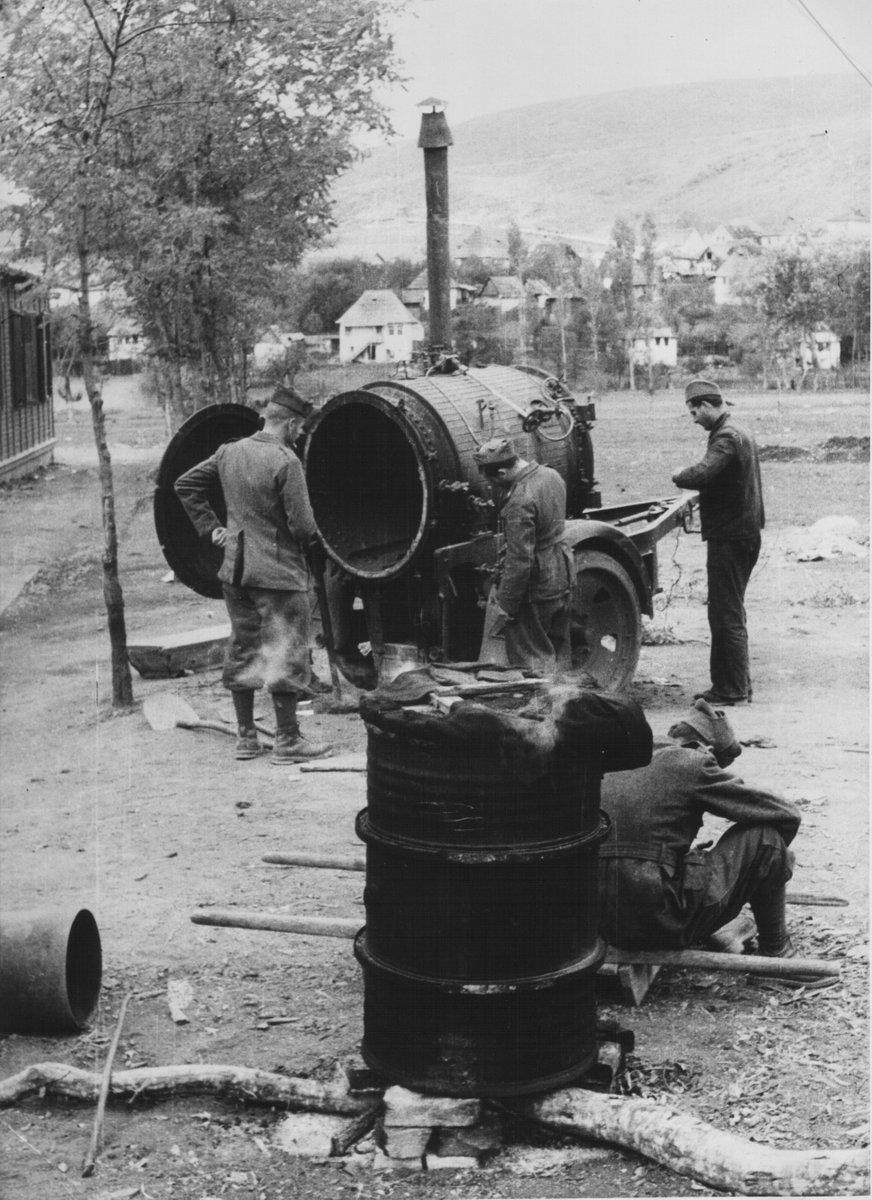
A "Partisan barrel" and a damaged Italian disinfection cart, Pljevlja 1943. Photo bought from Danilo Gagović, Belgrade, decision 1803, dated 28.XI.1962.
Side note: during WWI, this was called the "Serbian barrel", used for fight against lice. More below 🔽
Bitola was once one of Macedonia’s richest towns, tied to Salonica by rail, full of trade and mixed communities. Then WWI turned it into a symbol of how civilians get crushed when borders, propaganda, and revenge collide.🕯️🔽
After the Balkan Wars, Bitola was awarded to Serbia. Bulgaria never accepted it, and waited for a moment to reclaim it. That moment came in 1915, as Serbia was attacked from multiple sides and allies arrived too late. 🔽
Serbia’s retreat through Albania became a national trauma. The article frames it as both suffering and glory, a refusal to surrender. In that vacuum, Bulgaria took Macedonia, including Bitola. 🔽
Ever heard of a tribe's ancient code enforcing peace, faith, and revenge? The Vasojevići tribe's 12-point law is raw, unfiltered tradition. Dive into this fierce set of rules. 🏔️⚖️ 🔽
Point First: Brotherhoods of Vasojevići and Srbljaci must make peace, no excuses. Force the unwilling. A man's head: 300 groš. Woman's: 301. Blood prices set in stone. 💀 🔽
Point Second: No new mosques, abandon old ones. Return Muslim converts to ancestors' faith. Beat resisters freely. New converts? Treat as Turks from now on. No mercy. 🔽
A 19-year-old’s 1942 debriefing describes Slana, an extermination camp on Pag island, Croatia. It is a firsthand look at how an extreme ideology turns into routine violence. ⚠️🕯️🔽
He says he was recruited in school through “Križari”, framed as faith, trained in Ustaša politics. Lectures targeted Serbs, Jews, Communists. Motto: “In the name of Christ, kill the Antichrist.” 🔽
War comes, Yugoslav army collapses, and these youths help disarm it. He describes joining Ustašas as “national duty”, then being sent to Slana on Pag, where most prisoners were Serbs and Jews. 🔽
In 1942, Četnik battalion "Karađorđe and Petar Mrkonjić" sent a remarkable letter to Croatian Domobran soldiers amid WWII horrors. A plea for brotherhood over fratricide. Here's the story. 📜🔽
Četniks found a Croatian soldier in combat, let him go home, and sent this message via him to Croatian officers, NCOs, and troops. 📨🔽
They accuse: Your army burns Serbian villages, kills elders and children, fuels hatred between our peoples. This serves the Axis, doomed to lose. 🔥🔽
An 1899 “confidential report” says Bosnia is being stirred by petitions, envoys, and one rich merchant. It reads like a manual for managing dissent. 🕵️📜
Read on for the details. 🔽
Novi Sad, Jan 14, 1899: the writer claims “reliable sources” say agitators entered Bosnia’s politics, and signed complaints were sent to the Russian envoy in Vienna. 🔽
The complaints: Bosnians say Austro-Hungarian rule attacks religion and customs, and uses civil violence, out of spite because Serbs won’t renounce nationality and demand church and school autonomy. 🔽
Doboj concentration camp: 45,791 internees, 8,000-12,000 Serb victims during WWI. A forgotten horror of Austro-Hungarian camps. A thread. 💀📜
Camp on Bosna River's right bank, near Doboj station. Built from 9 filthy horse stables of a glanders hospital, never cleaned. Opened Dec 27, 1915, for civilians. Closed officially July 5, 1917. 🏚️ 🔽
First victims: Bosnian refugees fleeing to Serbia, lured back with "return home" lies. Mostly women, children. Plus 5,000+ from Belgrade county after its fall. Groups of 600-800 arrived nonstop. 👨👩👧👦 🔽




