
New Working Paper Alert 📔
Do accents shape social and economic opportunity? With @miweintraub83 and @NGarbirasDiaz, we tested this in Colombia through an online experiment with 6,000 adults.
🧵
Do accents shape social and economic opportunity? With @miweintraub83 and @NGarbirasDiaz, we tested this in Colombia through an online experiment with 6,000 adults.
🧵

We discover a large “accent premium”: those with high-class accents are more likely to be seen as trustworthy, employable, and worth choosing as friends, coworkers, business partners, or bosses. We also show why this premium emerges. Spoiler: it is not only income or education.
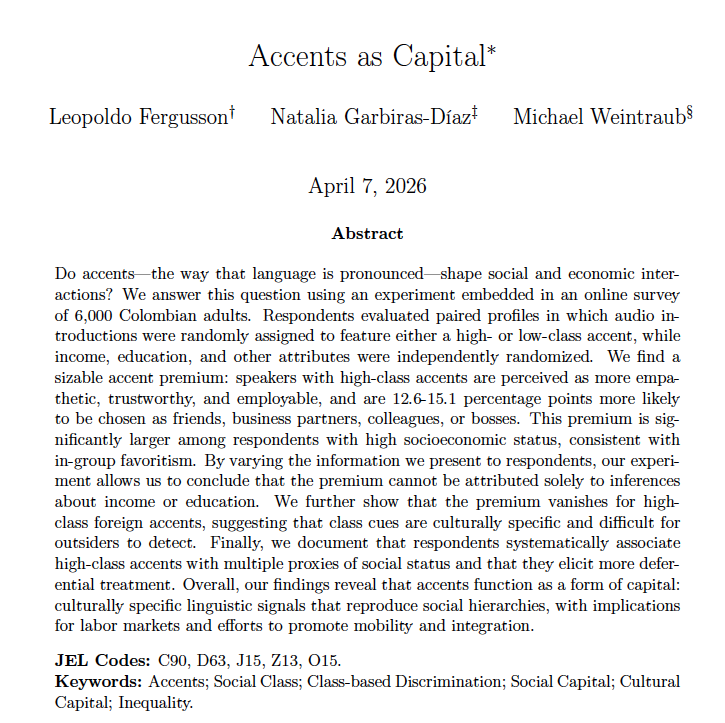
Why should we care? Accents are among the earliest cues people perceive. They signal not only where someone is from, but also where they stand in a society’s class structure. If the way we pronounce words changes how others treat us, accents likely help reproduce inequality.
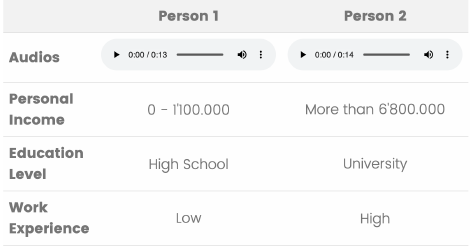
To isolate the impact of accents, we hired professional actors to record audio clips, then randomly assigned profiles to high- or low-class accents. Respondents in an experiment then ranked paired profiles, with income, education, and personality traits randomized independently.
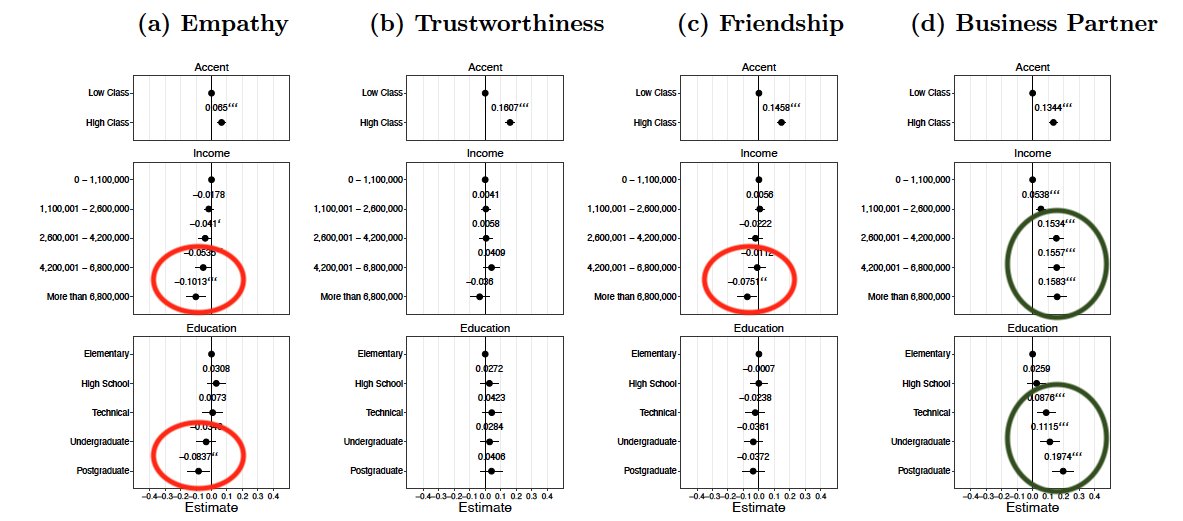
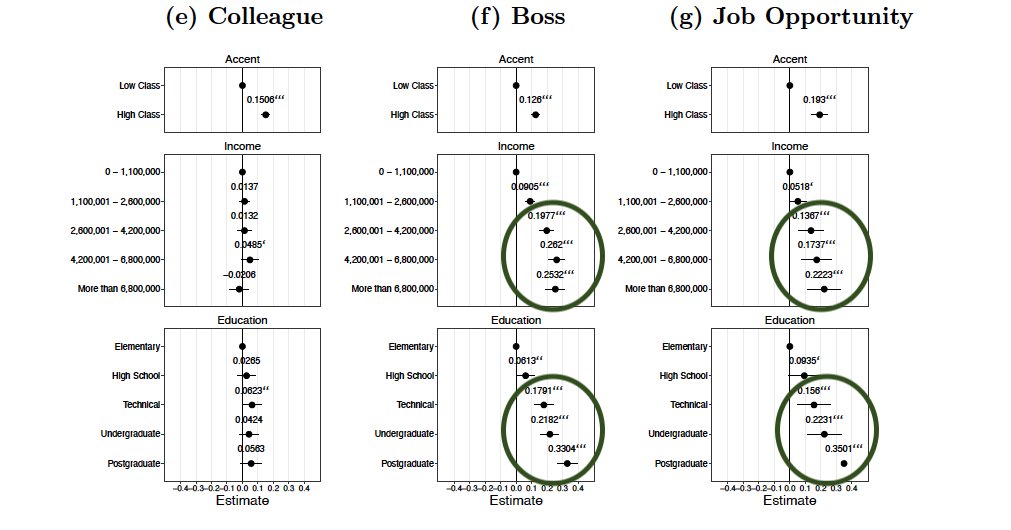
The baseline result is big. High-class accents increase perceived empathy by 6.5 pp, trustworthiness by 16.1 pp, friendship by 14.6 pp, preferred business partner by 13.4 pp, preferred colleague by 15.1 pp, perceived boss by 12.6 pp, and expected job offer by 19.3 pp.


Importantly, these effects are not just a reflection of money or schooling. In fact, income and education often increase profiles’ labor-market status but hurt perceived social warmth. High-class accents, by contrast, raise both workplace and interpersonal evaluations.
So what explains this? Do people hear an accent and simply infer income or education?
We test this by removing income and education, then decomposing the effect into a direct and an “eliminated” effect. The direct effect remains positive and large across almost all outcomes.
We test this by removing income and education, then decomposing the effect into a direct and an “eliminated” effect. The direct effect remains positive and large across almost all outcomes.
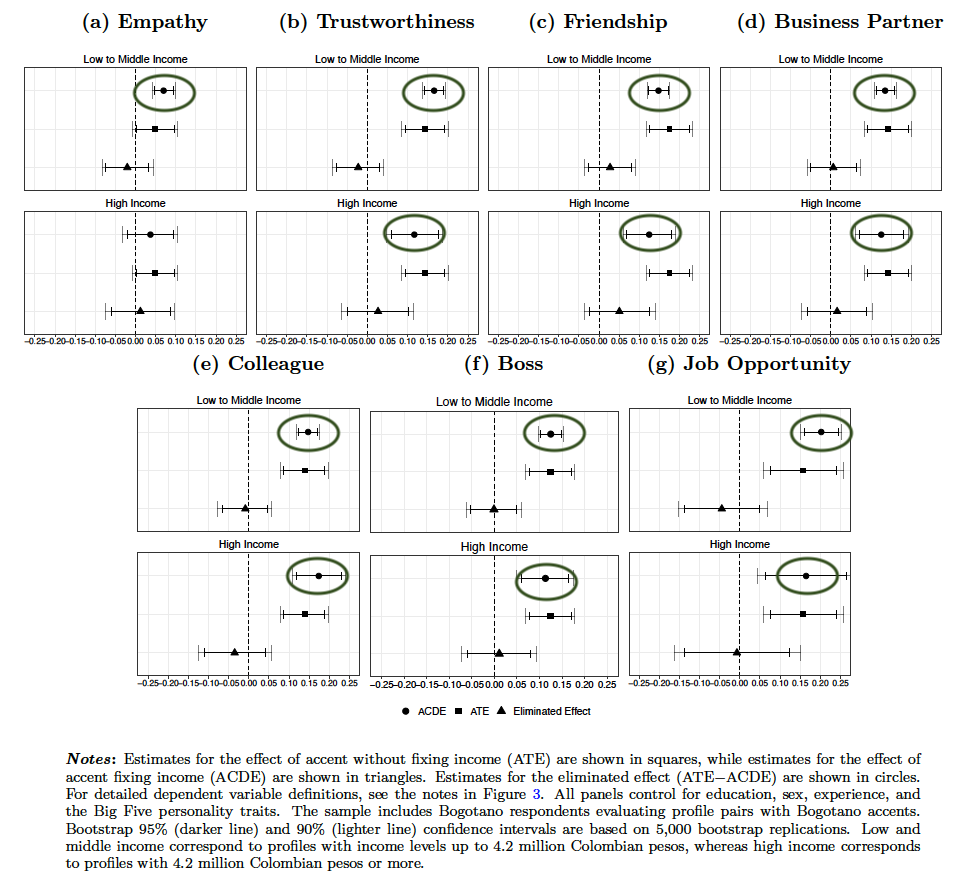
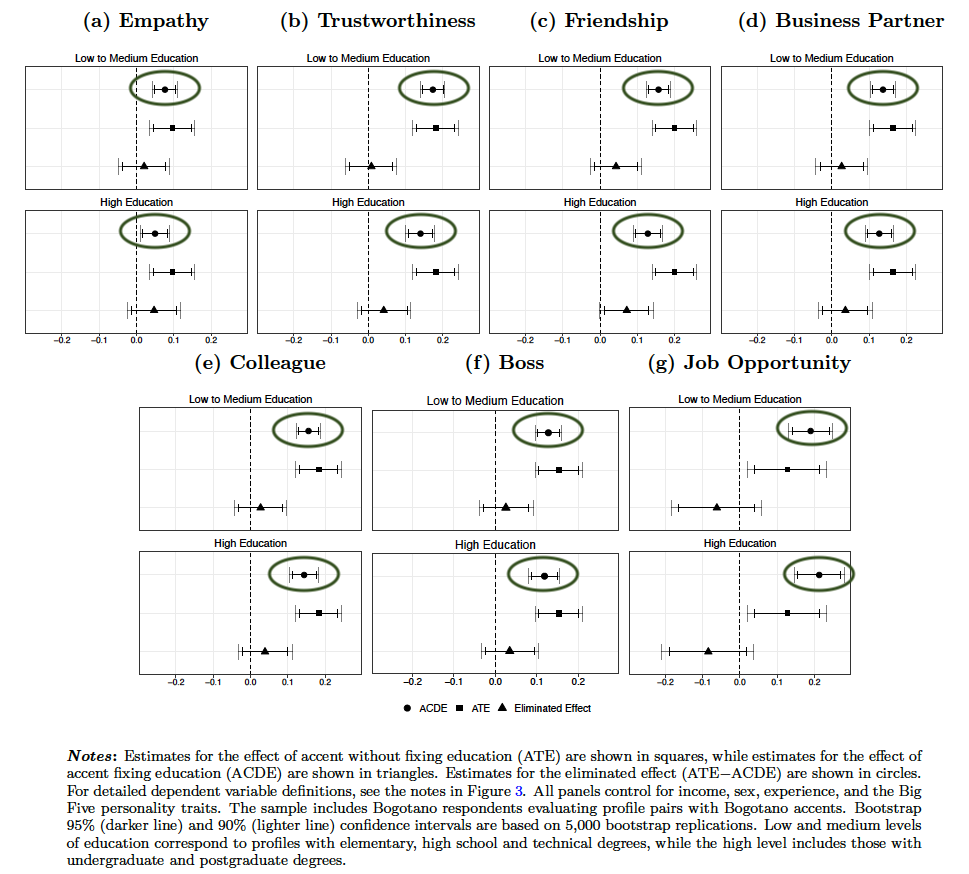
A second major result: the accent premium is much larger among high-SES survey respondents. While everyone prefers high-class accents, high-SES listeners do so much more strongly. That is consistent with in-group favoritism and high-status listeners acting as gatekeepers.

What do accents signal, if not income and education?
Our evidence points to social and cultural capital. Respondents associate high-class accents with higher social class, more influential networks, upper-class tastes in leisure and music, and with deferential treatment.
Our evidence points to social and cultural capital. Respondents associate high-class accents with higher social class, more influential networks, upper-class tastes in leisure and music, and with deferential treatment.

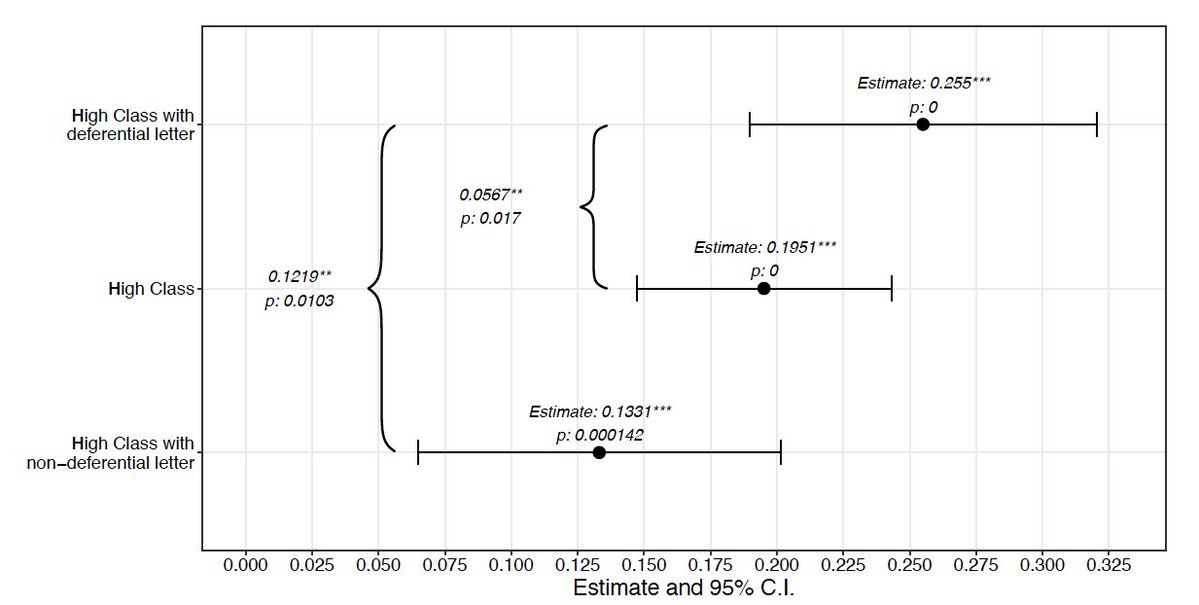
A key test of the interpretation: if this were just universal “confidence” or “professionalism,” it should appear for foreign high-class accents.
It does not: when Bogotanos evaluate Santiago (Chile) accents, the premium mostly disappears. These cues are culturally specific.
It does not: when Bogotanos evaluate Santiago (Chile) accents, the premium mostly disappears. These cues are culturally specific.
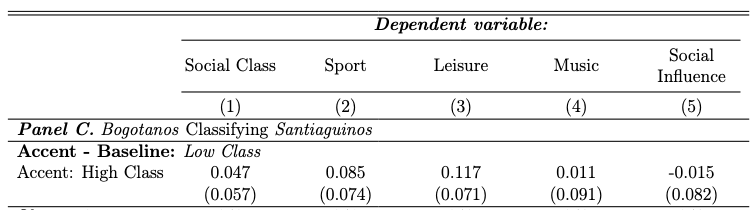
Class premiums shrink across borders, suggesting an underexplored implication of migration: natives may have difficulty decoding class from migrants' accents.
That can reduce class-based penalties for some migrants, even while foreignness itself may still carry its own stigma.
That can reduce class-based penalties for some migrants, even while foreignness itself may still carry its own stigma.

Bottom line: accents function as a form of capital, culturally specific signals that open & close doors. Inequality gets reproduced not just via income or education; also subtly through accents. We call this “segregation by sound.” Paper link with more!👇
ideas.repec.org/p/col/000089/0…
ideas.repec.org/p/col/000089/0…
@threadreaderapp unroll
• • •
Missing some Tweet in this thread? You can try to
force a refresh




