Joe Regalia Profile picture
Apr 11 7 tweets 2 min read Read on X
Most lawyers research in a straight line.

They find the statute. They find the leading cases. They pull a few quotations. Then they start explaining why their facts fit.

That works sometimes. It just does not take you very far. 🧵
The lawyers who do exceptional work use authority differently.

They do not treat it as a pile of answers.

They treat it as evidence. Something to test. Something to pressure. Something to compare, narrow, widen, flip, and question. (2/7)
That shift matters because the hard part of legal analysis usually is not finding some authority.

It is figuring out what that authority is really doing, what it leaves open, and how to explain that clearly enough that a judge sees it too.

A few moves make that possible: (3/7)
➡️ Read Cases for the Machinery

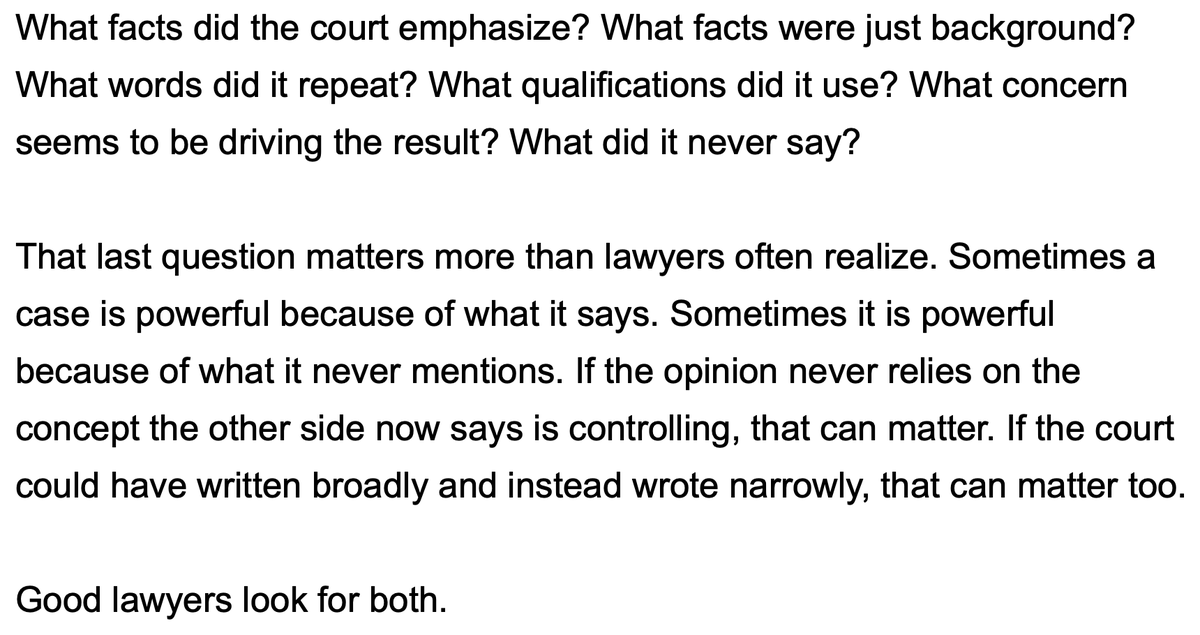
A lot of lawyers read cases for the takeaway. Stronger lawyers read them for the moving parts.

Start with the holding. Then keep going. (4/7) Image
➡️ Compare Authorities Against Each Other

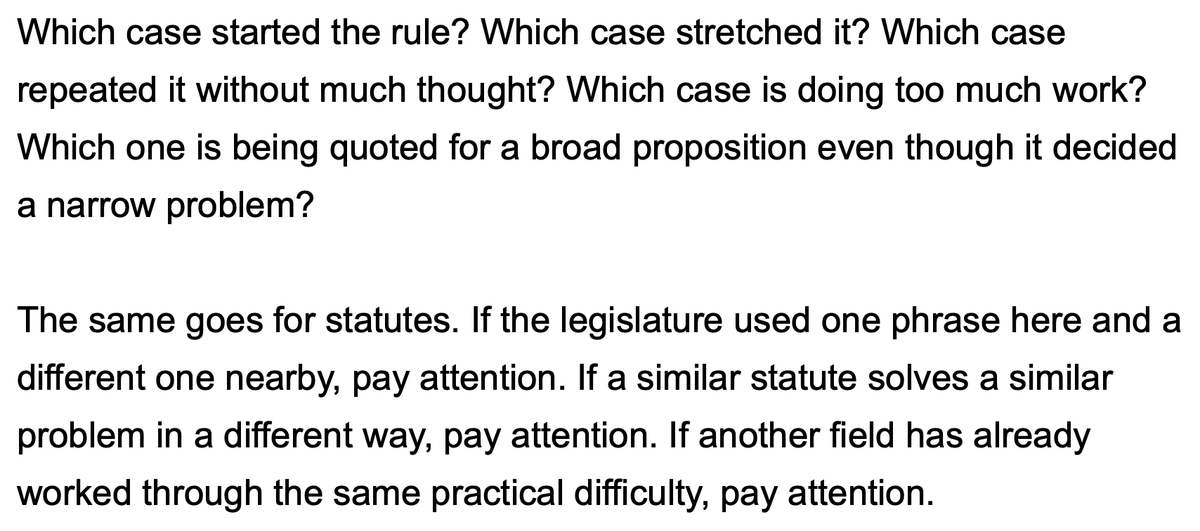
One case rarely tells the whole story. A line of cases often does.

A lot of creative legal analysis comes from comparison. (5/7) Image
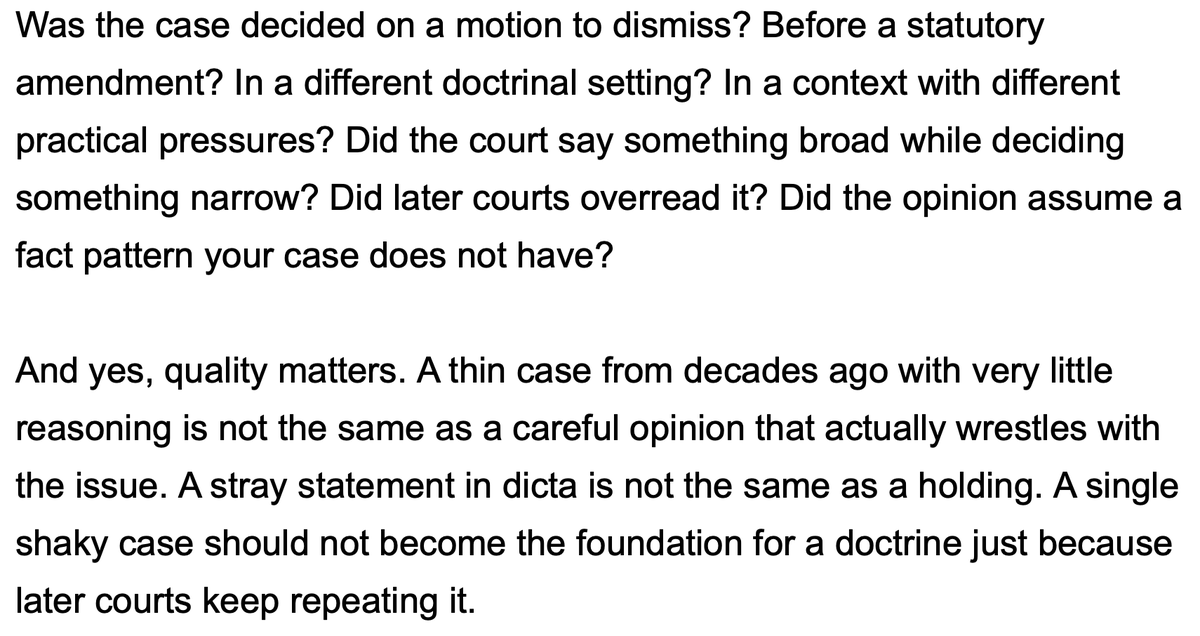
➡️ Pressure-Test the Other Side’s Authorities

Too many briefs treat opposing cases as fixed obstacles. They are not.

Strong lawyers do not just distinguish bad cases. They show why those cases should not carry the weight the other side wants them to carry. (6/7) Image
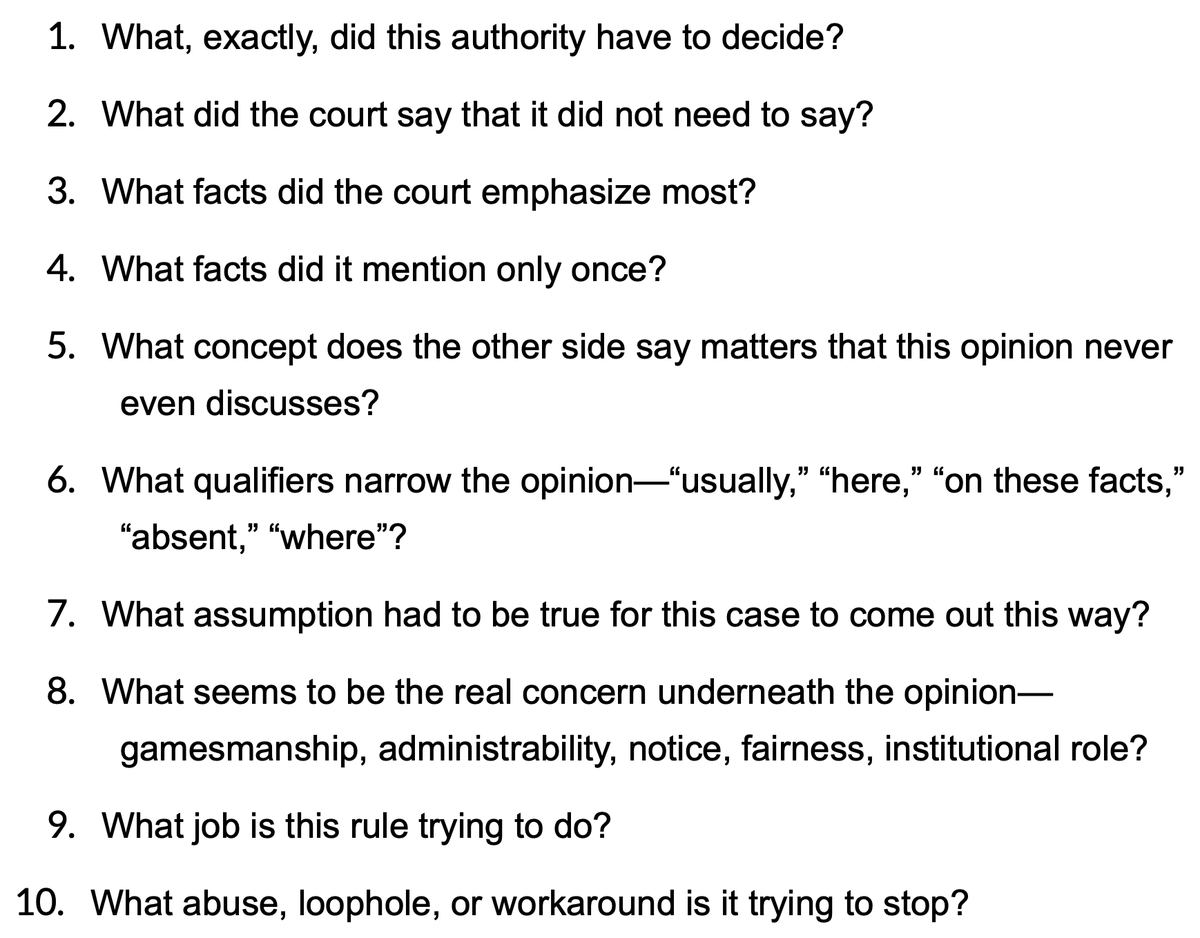
➡️ A Checklist to Start From

When research stalls out, most lawyers do not need more tabs. They need better questions.

Here is a checklist worth keeping next to your desk: (7/7) Image
• • •

Missing some Tweet in this thread? You can try to force a refresh

 

Keep Current with Joe Regalia

Joe Regalia Profile picture

Stay in touch and get notified when new unrolls are available from this author!

Read all threads

This Thread may be Removed Anytime!

PDF

Twitter may remove this content at anytime! Save it as PDF for later use!

Try unrolling a thread yourself!

how to unroll video
  1. Follow @ThreadReaderApp to mention us!

  2. From a Twitter thread mention us with a keyword "unroll"
@threadreaderapp unroll

Practice here first or read more on our help page!

More from @writedotlaw

Apr 4
We use commas throughout our writing, but many legal writers place them where they aren’t needed.

Others remove them from phrases or clauses even when they are necessary to avoid ambiguity.

Let’s break down the rules for when to use commas—and when to leave them out. 🧵
First, use commas to separate two independent clauses (full sentences) with a coordinating conjunction.

✅ Joe went to Saipan, and he loves reading. (2/8)
Do not use commas to join two full sentences without a conjunction (also called a comma splice).

❎ Joe went to Saipan, he likes to read. (3/8)
Read 8 tweets
Mar 4
Agents are changing the game for lawyers.

If you’re still thinking about “prompt engineering” as a spell-casting exercise, you’re already behind.

Let’s slow down and get clear on what’s actually happening. 🧵
An agent is a system that can break a task into sub-tasks, decide what to do next, evaluate intermediate outputs, and revise its own work.

Instead of one prompt and one answer, you get a loop.

Think less “question and answer” and more “junior associate with a workflow.” (2/7)
The new reality: workflow > wording.

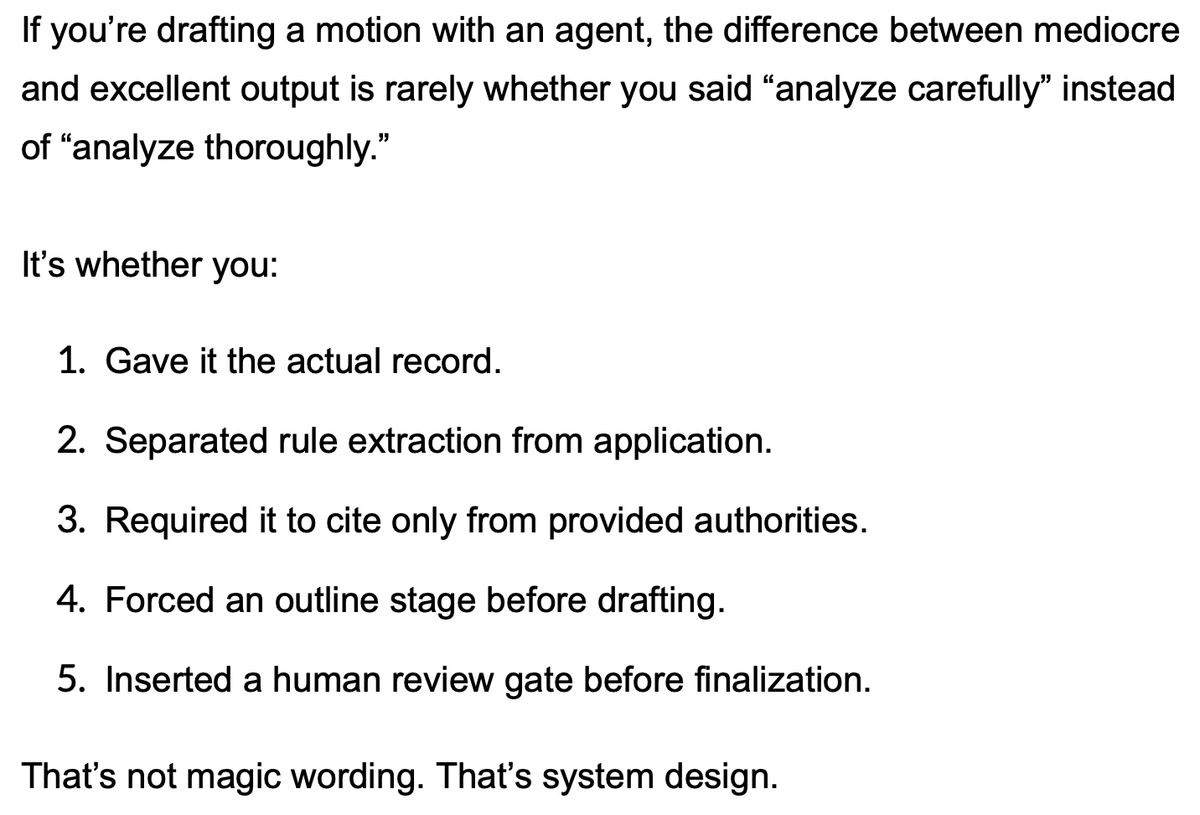
When you’re using an agent, the real leverage is upstream and downstream:

What materials you feed it, how the task is staged, what checkpoints exist, who verifies what, what tools it can access, and what it is forbidden to do. (3/7) Image
Read 7 tweets
Feb 27
The Supreme Court just heard a major case: whether the President can use a 1977 emergency-powers statute to impose tariffs.

The private respondents—represented by Neal Katyal and a team of elite advocates—filed a merits brief that reads like a legal writing masterclass.

🧵
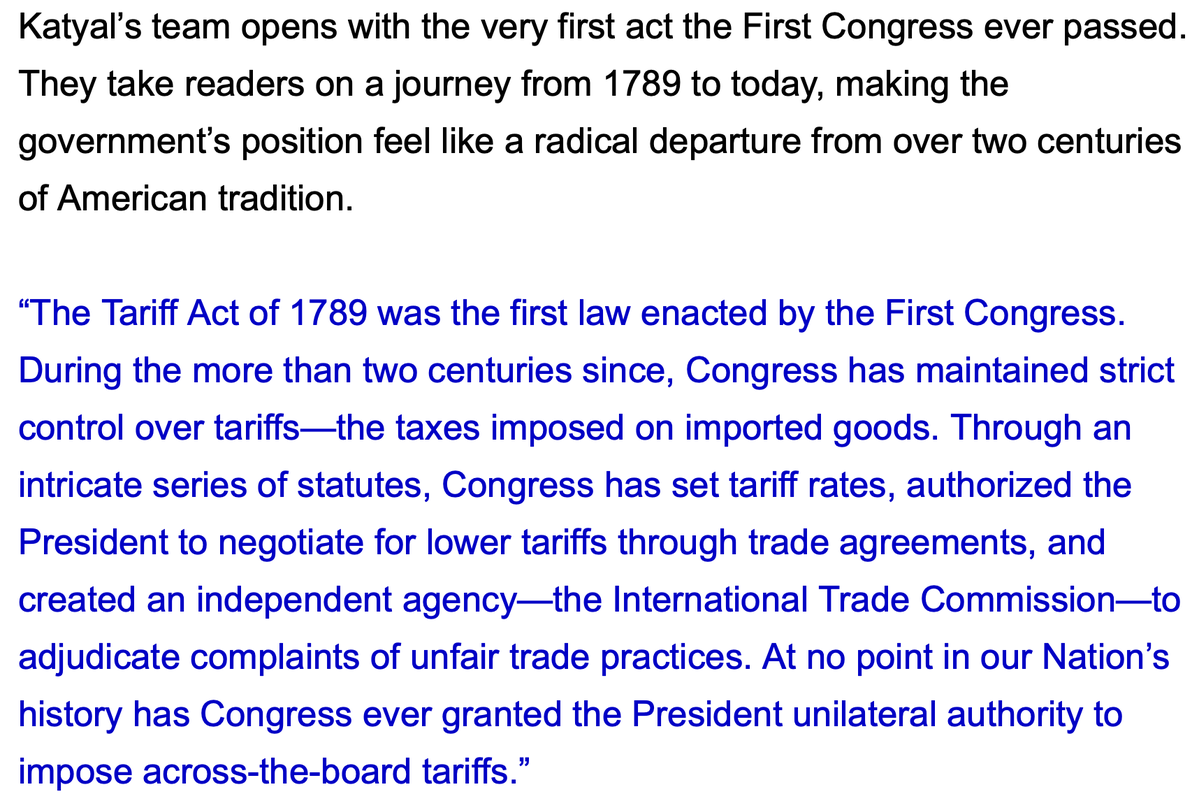
☑️ Open By Telling a Story, Not Stating a Rule

Most lawyers launch their briefs with procedural history or legal standards.

The best legal writers do something different—they tell a story first. Before readers can care about your rule, they need to care about the stakes. (2/6) Image
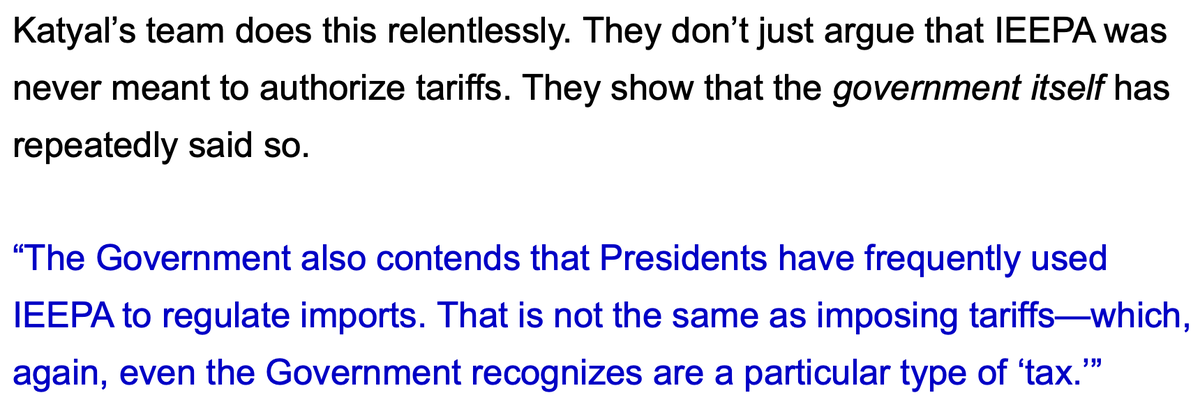
☑️ Turn Your Opponent’s Own Words Into Your Best Evidence

There’s no more devastating move in legal writing than using the other side’s own words against them.

When your opponent concedes a point, don’t let it slide by—put it center stage. (3/6) Image
Read 6 tweets
Jan 3
Most lawyers spend more time fighting Microsoft Word than using it.

That frustration usually gets chalked up to Word being “quirky.” It isn’t.

Here are the Word tools and skills that actually matter for lawyers and power users in 2026. 🧵
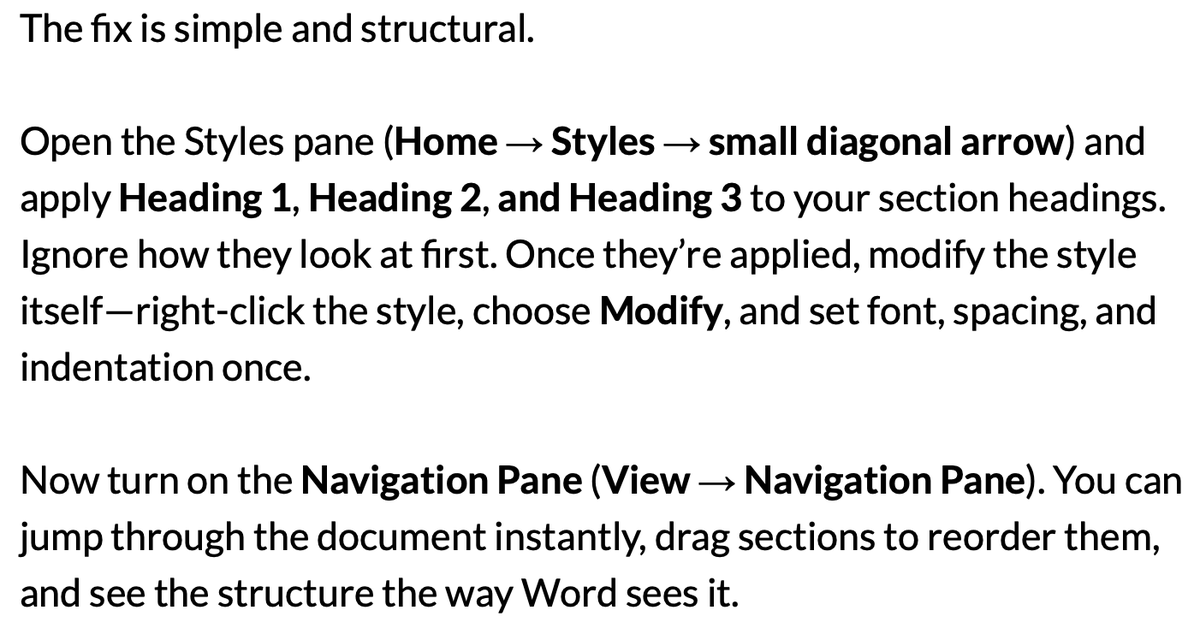
☑️ Start by Letting Styles Do the Heavy Lifting

If you format headings by changing font size and bolding text manually, Word treats every heading as unrelated.

That’s why numbering breaks, tables of contents fall apart, and cross-references stop updating. (2/7) Image
☑️ Fix Numbering the Way Word Expects You To

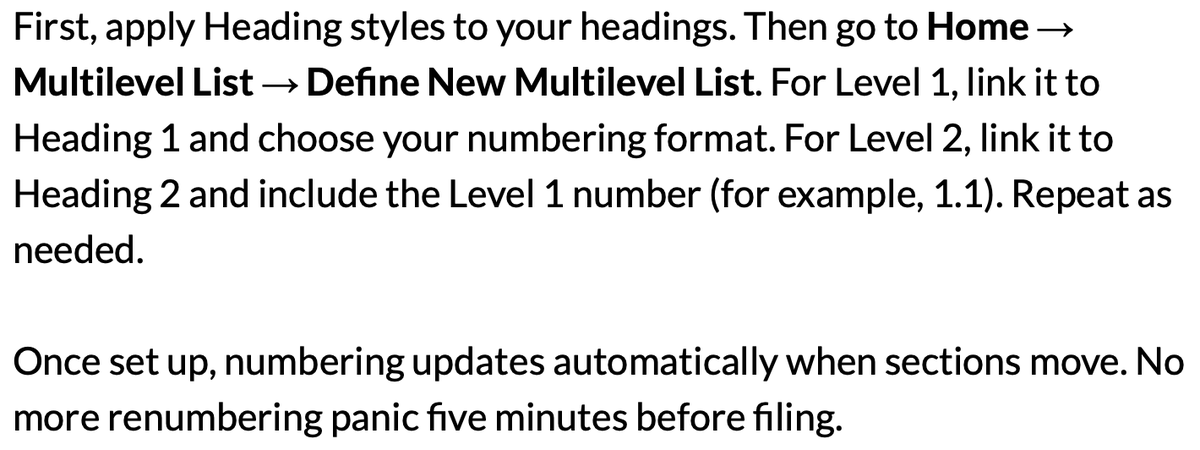
Legal numbering fails when people click the numbering button and hope for the best. Stable numbering comes from multilevel lists linked to heading styles.

The correct workflow looks like this: (3/7) Image
Read 7 tweets
Dec 5, 2025
Kirkland & Ellis’s brief in the blockbuster AI case, Thomson Reuters v. ROSS, lands like a masterclass.

It shows how advocates frame a narrative, marshal facts, and push the reader toward one inescapable conclusion.

Let’s unpack the writing techniques that make this one hum. 🧵
1️⃣ Choose a Frame That Carries the Whole Story

Kirkland doesn’t warm up. It opens with the entire case in a single hit. (2/8) Image
2️⃣ Distill the Point Before You Dive Into the Details

Great briefs announce the takeaway before the reader ever has to work for it. Kirkland does this over and over. (3/8) Image
Read 8 tweets
Aug 5, 2025
If you’re still unsure where GenAI fits in your legal writing, start here: summarizing and restyling.

Why these two? Because you’re feeding the tool your own material. Full control. Low risk. High reward.

Here’s how to do it right 👇 (1/8)
1⃣ Summarizing: Compress Without Losing the Thread

GenAI is fast and ruthless when it comes to boiling text down. Give it a long court opinion or a five-page email chain, and it’ll give you something short, useful, and readable. As long as you tell it how. (2/8)
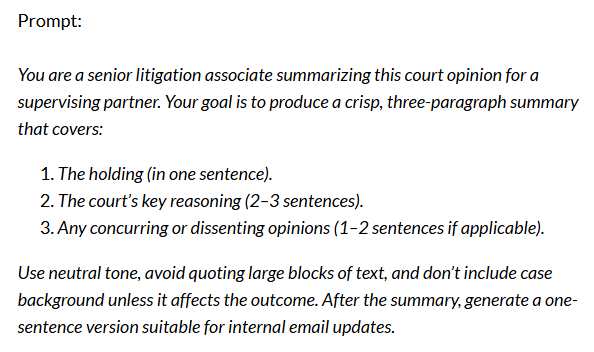
➡️Prompt: Summarize a Court Opinion for Internal Use

You’re giving the model a role, a clear goal, sectioned instructions, and formatting constraints. That reduces fluff and hallucination. (3/8) Image
Read 8 tweets

Did Thread Reader help you today?

Support us! We are indie developers!


This site is made by just two indie developers on a laptop doing marketing, support and development! Read more about the story.

Become a Premium Member ($3/month or $30/year) and get exclusive features!

Become Premium

Don't want to be a Premium member but still want to support us?

Make a small donation by buying us coffee ($5) or help with server cost ($10)

Donate via Paypal

Or Donate anonymously using crypto!

Ethereum

0xfe58350B80634f60Fa6Dc149a72b4DFbc17D341E copy

Bitcoin

3ATGMxNzCUFzxpMCHL5sWSt4DVtS8UqXpi copy

Thank you for your support!

Follow Us!

:(