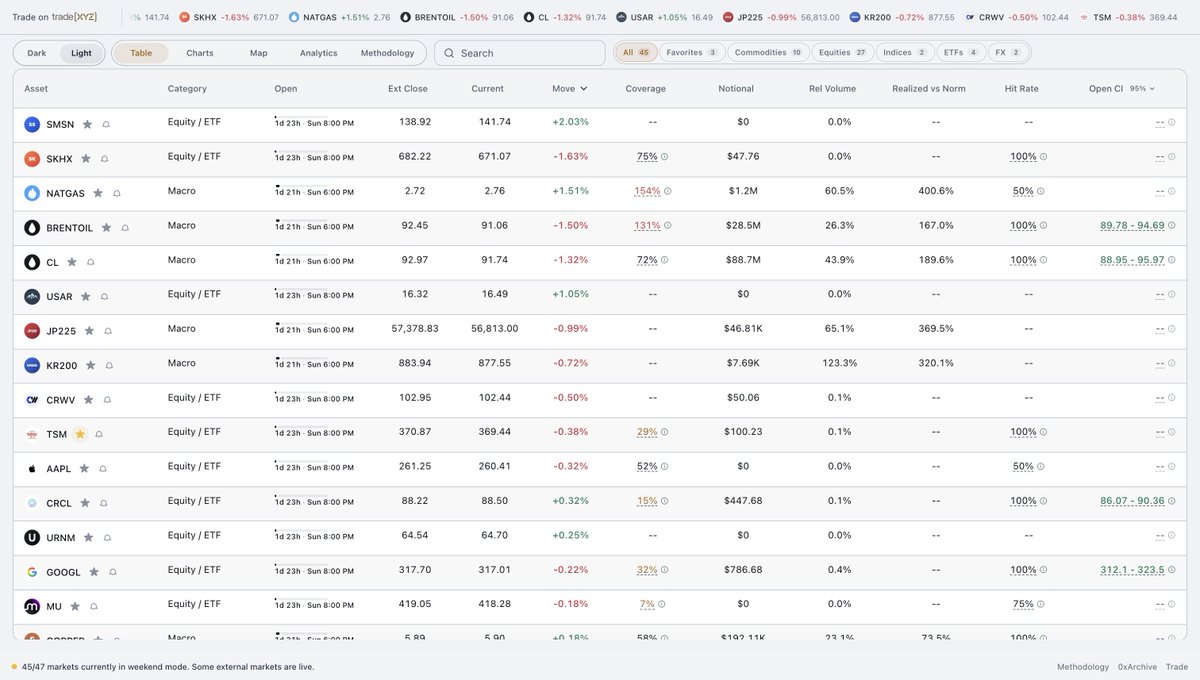
When traditional markets close, TradeXYZ becomes the only live venue for price discovery. With billions in weekend volume and a 50 bps median error predicting the Monday open, TradeXYZ prices are the most informative signal in finance relative to a stale Friday close.
We built Weekend Markets to systematically track this off-hours data.
Weekend Markets is the comprehensive source for analytics on traditional asset prices over the weekend.
1/ US options hit $89T notional in September, dwarfing crypto futures ($1.2T). In SPX, 61% of volume is 0DTE and retail is >50% of that flow, bleeding out in toxic auctions and theta decay
With incumbents blocked by regulation, is DeFi the solution?
Breaking down Equity perps:
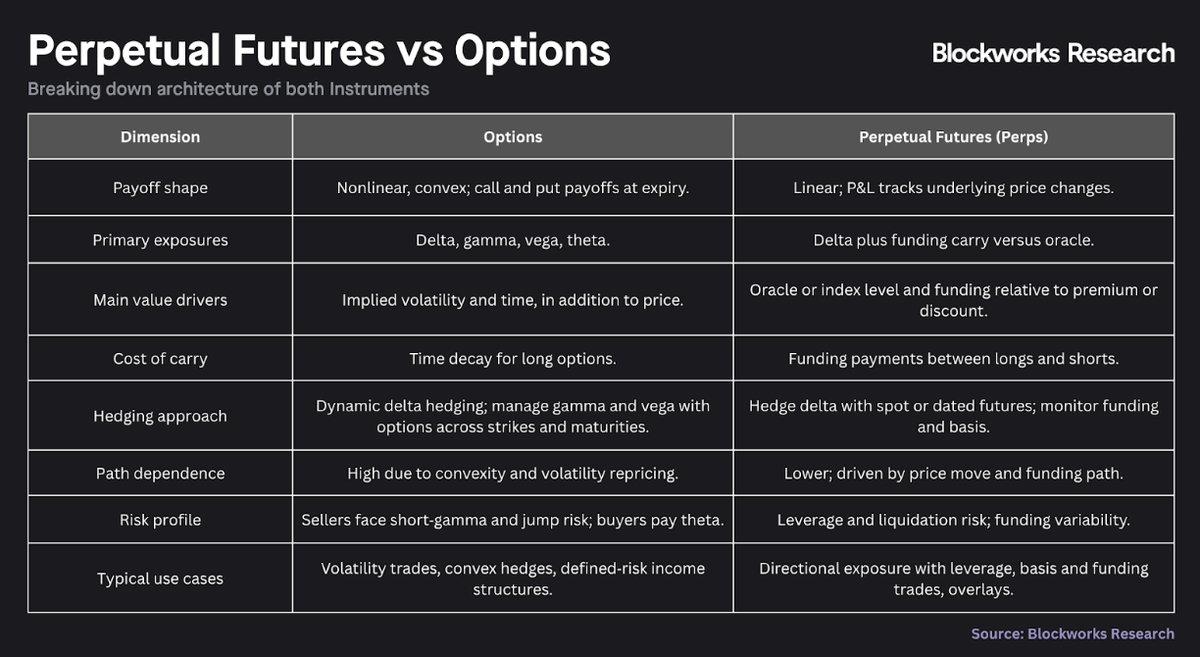
2/ A Perpetual Future is a cash-settled, delta-one derivative that replicates spot exposure with no expiry.
Unlike options or dated futures, price convergence is enforced economically via funding rates rather than a delivery date.
This periodic value exchange incentivizes arbitrageurs to mechanically compress the basis whenever the mark detaches from the oracle.
3/ In contrast, options are convex derivatives granting the right to buy/sell at a strike before expiry.
Buyers pay an upfront premium for a non-linear, path-dependent payoff where value decays over time (Theta). While designed for volatility trading, retail uses them for directional leverage.
This is structurally suboptimal: it forces traders to manage implied volatility and time decay when they simply want exposure to Price (Delta).
1/ Ethena's USDe supply is up $3.7B in just 20 days, driven primarily by the Pendle-Aave PT-USDe looping strategy.
With $4.3B (60% of total USDe) now locked in Pendle and $3B deposited in Aave, here's a breakdown of the PT loop mechanics, growth vectors, and potential risks:
2/ USDe is a decentralized stablecoin pegged to USD, maintaining its peg via delta-neutral hedging using ETH perpetual futures.
This hedging allows USDe to algorithmically stabilize its price, generating yield through both spot staking and futures funding rates.
3/ Yields from this strategy exhibit high volatility due to their dependence on funding rates (USDe YTD yield is ~9.4% with a stdv of 4.4pp).
Funding rates are driven by the premium or discount between the perpetual futures price and the underlying ETH spot price ("mark price").
When bullish sentiment rises, traders aggressively open leveraged long positions, temporarily driving perpetual prices above the mark price.
Positive funding rates then incentivize MMs to step in, shorting the perp and hedging with spot.
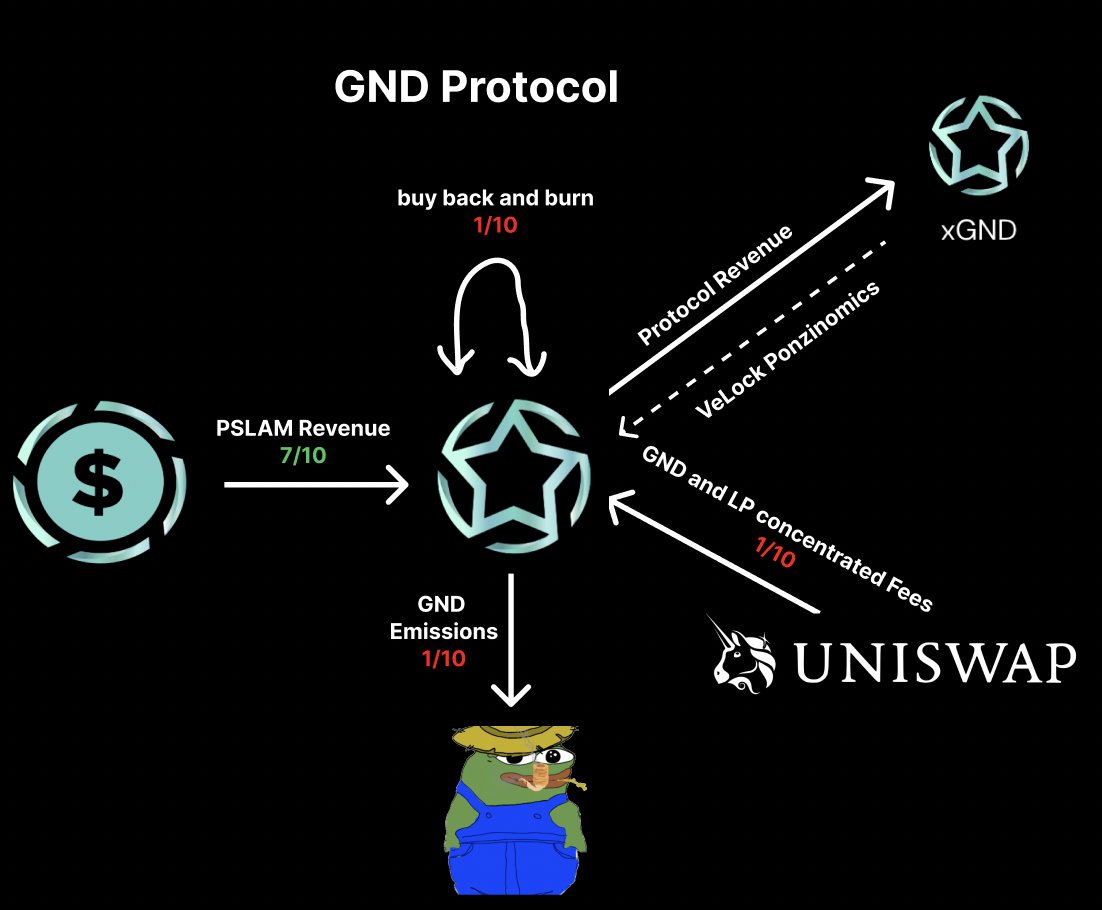
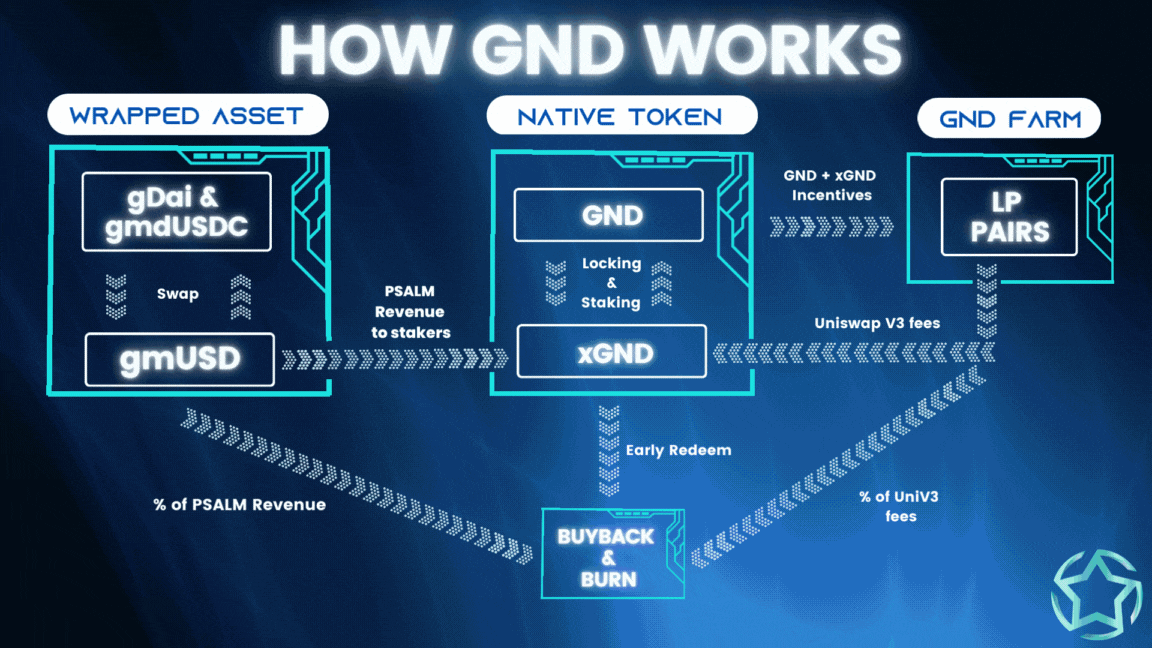
GND is the mother protocol of $Gmusd - a yield bearing stable coin, and GND Protocol - a Uniswap v3 CLAMM yield farm.
GND has been popular due to the real yield narrative - but is this really the case - or is it another propped up ponzi?
The goal of GND protocol is to maximize "real yield" for $GND. In this sense GND works similar to LUNA/UST ; with a highly attractive stablecoin ($gmusd) that has the purpose of increasing value of the $GND token.
1. gmUSD Tokenomics
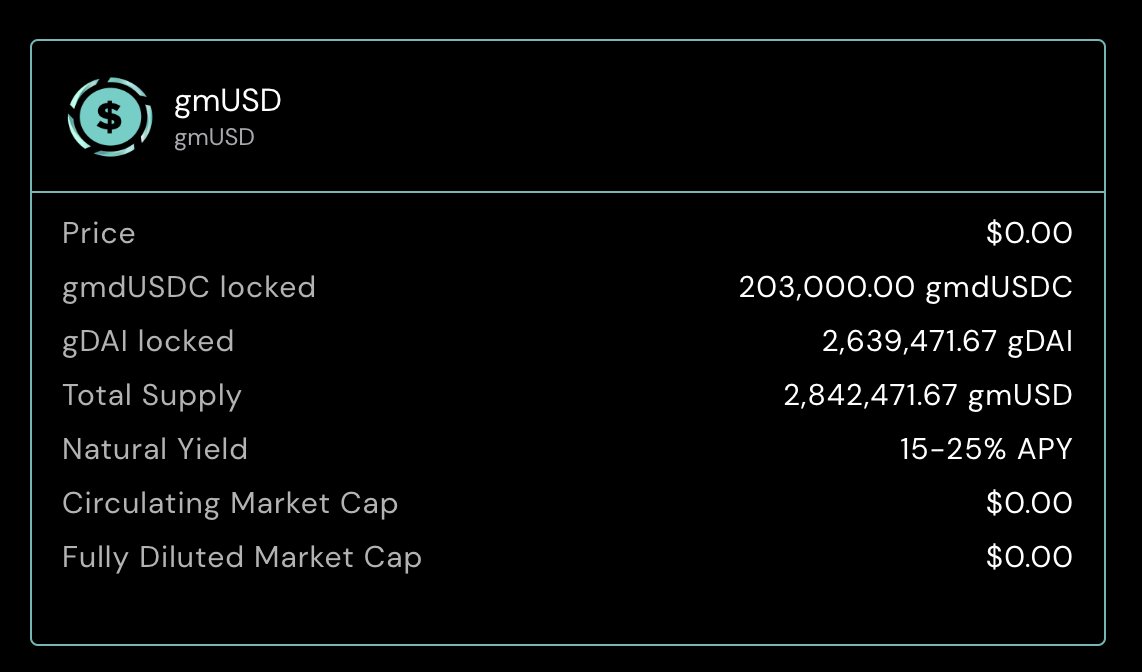
GUSD is not as robust as it seems, $gmusd is backed 93% by $gDAI and 7% by $gmUSDC.
GND basically rewraps $gDAI for $gmUSD.
$gDAI is the vault asset acting as a Counterparty to traders on Gains network. Traders PNL is taken/given to the $gDAI pool
With so many grifters in the space, finding the right accounts to follow can be hard.
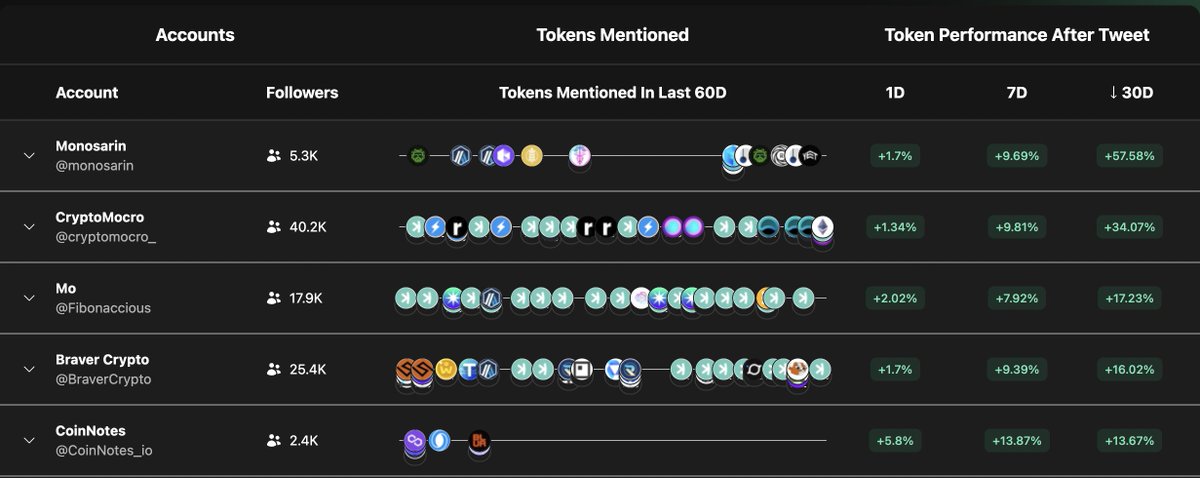
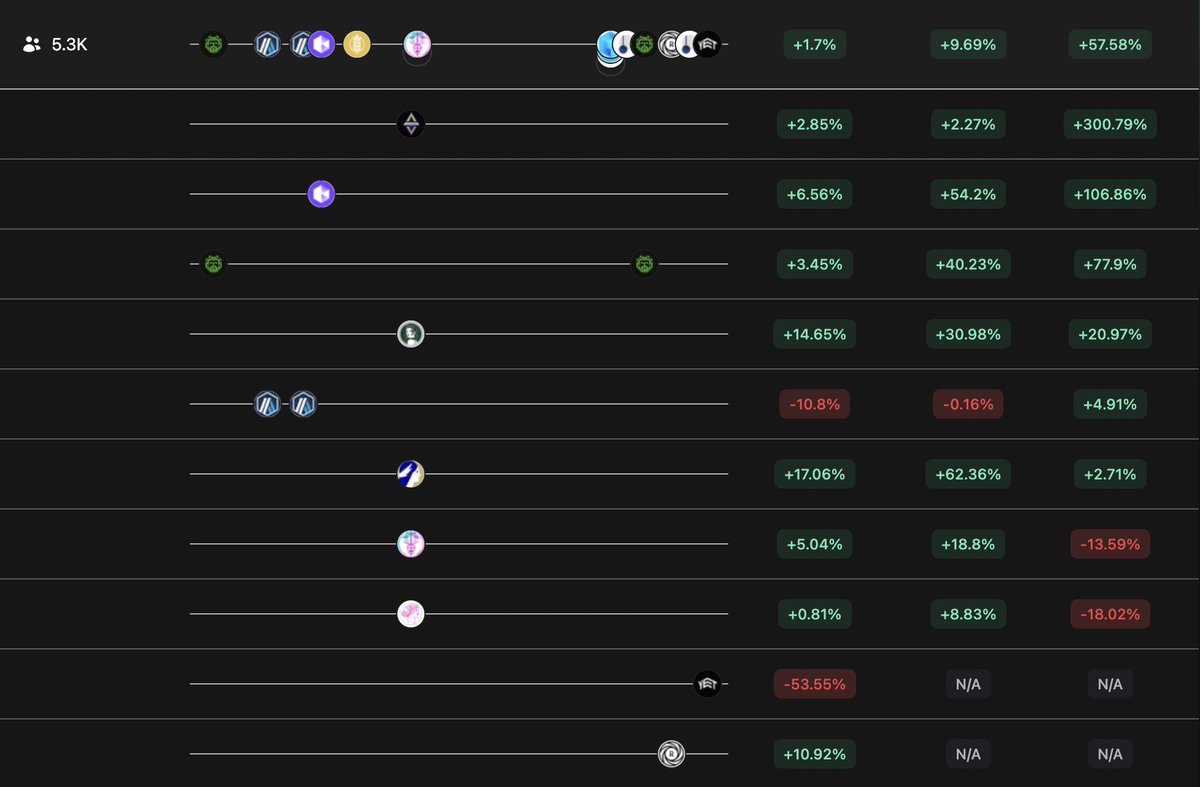
Using @alphascan_xyz I found the top 5 accounts to follow based on the 30 day performance of the coins they mention. 🧵👇
@monosarin is a member of @FungiAlpha and writes project summaries and shares alpha. Small account so he probably cant influence the price of tokens he mentions.
30 day Token performance: 57%
Tokens mentioned: 1. $AREA up 300% 2. $KIN up 100% 3. $PLS up 77%
@CryptoMocro_ has a slightly bigger account; however he regularly discusses tokens he talks about - rather than using his influence to PND.
30 Day performance : 34%
His top pick was $Txbit ; gaining 1,400% over the past 30 days. Other picks are $dione , $DSLA, $CASPA