Whenever you see a bizarre trend in academia, it’s worth asking whether its homegrown or funded from outside. I recently wrote about how the Andrew W. Mellon Foundation has worked hard to make “trans studies" a legitimate academic field.
Here are some of Mellon's grants 🧵
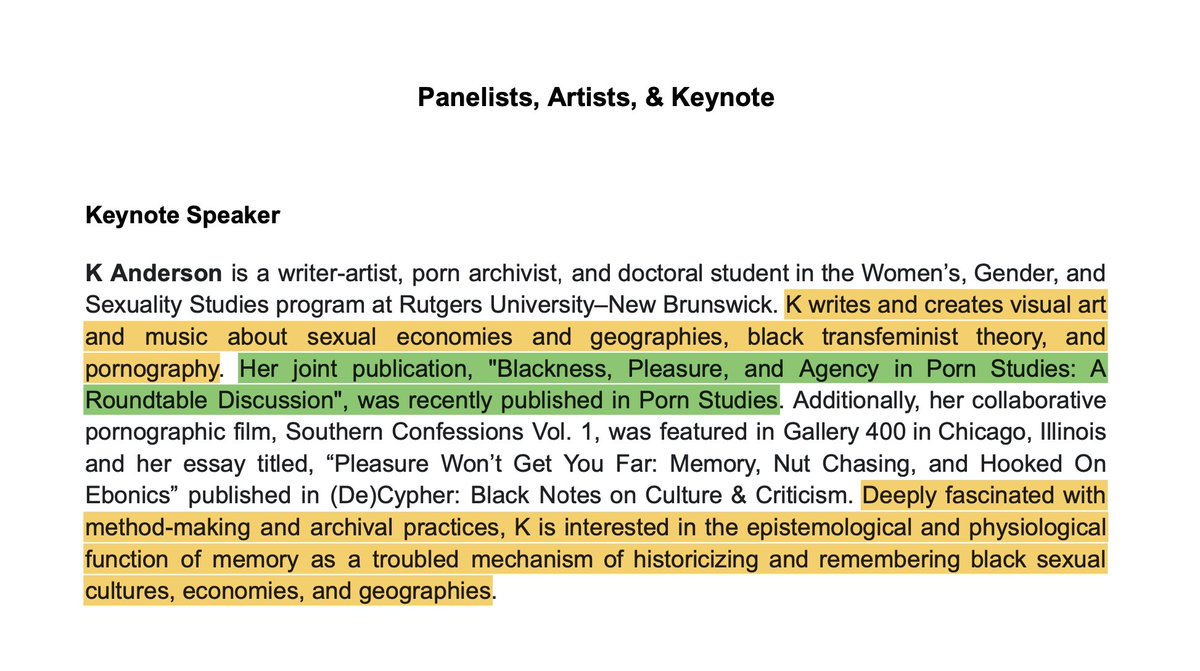
The “Black, Indigenous, & Trans of Color Histories Lab” received $460,000 from Mellon in 2024. The “lab” recently hosted a symposium titled “Trans Joy, Pleasure, Freedom.” Its keynote address was delivered by a Rutgers doctoral student & self-described “p*rn archivist.”
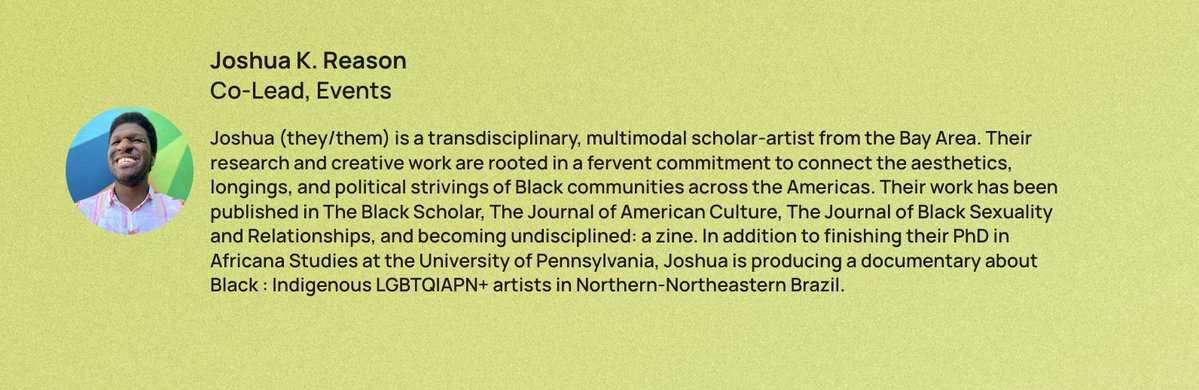
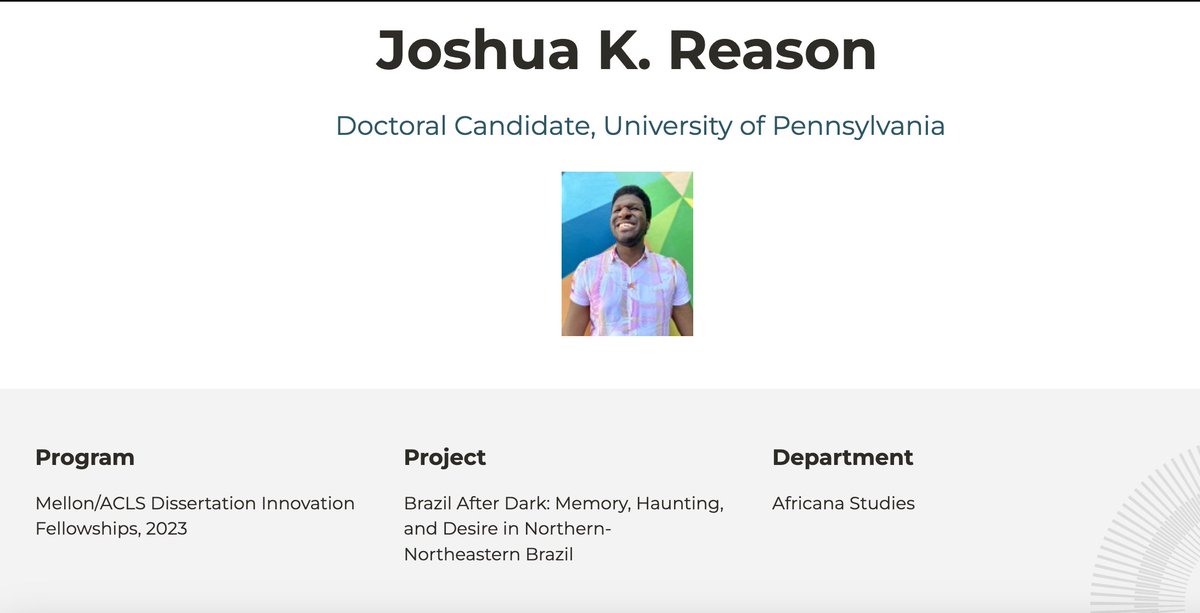
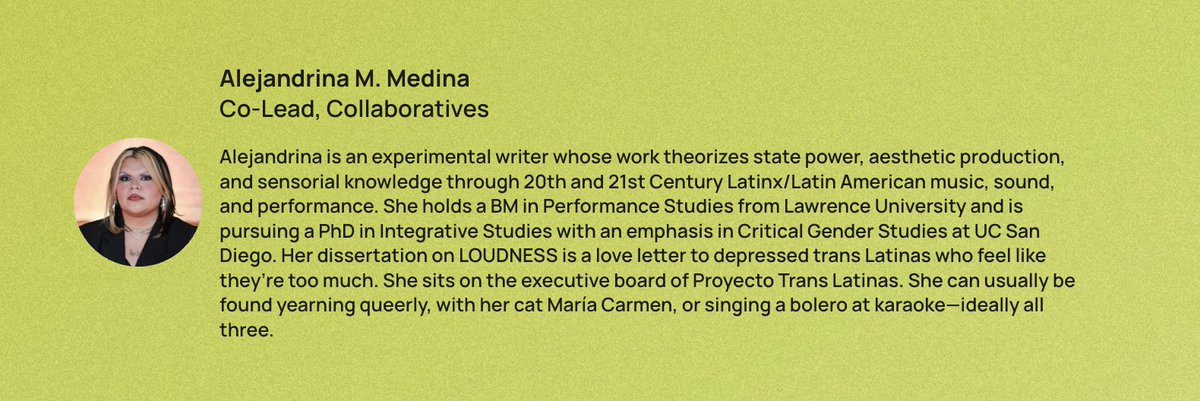
Notably, the “lab” includes several Mellon grantees. Co-lead Joshua Reason was a Mellon undergrad & dissertation fellow. Alejandrina Medina, another co-lead, received a Mellon-funded “Trans Studies” fellowship—as did the event’s keynote speaker.
Another Mellon-backed grant pays San Francisco State University professors to take a course on incorporating “trans and queer ethnic studies” into their teaching.
Here’s the proposal, which I acquired via a public records request.
Another proposal promises to support “tribal and Indigenous communities” through “Two Spirit and Indigenous Trans Studies curriculum and service” at Fresno State University.
In 2023, the University of Kansas (KU) received $1 million for the “Trans Studies at the Commons” program, which seeks to transform the university’s “local and regional landscape to be more transliberatory,” in part by funding a cohort of “scholar-activists.”
The grant proposal (⬆️⬆️) notes: “We want to make use of [the] liberal past of Lawrence”—the city where the university is located—“to galvanize efforts aimed at transforming the cultural and social landscape in favor of social justice today.”
The projects get weird.
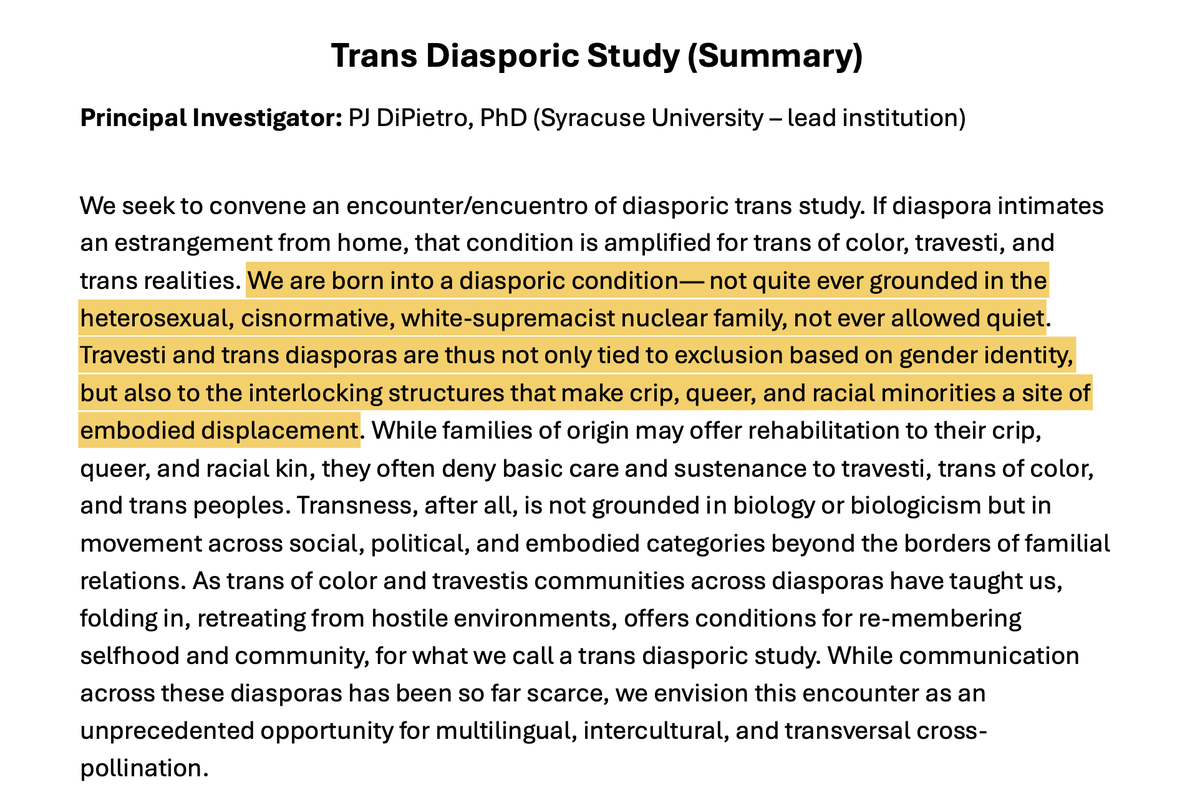
One Syracuse University project summary declares that self-identified transgender scholars “are born into a diasporic condition—not quite ever grounded in the heterosexual, cisnormative, white-supremacist nuclear family.”
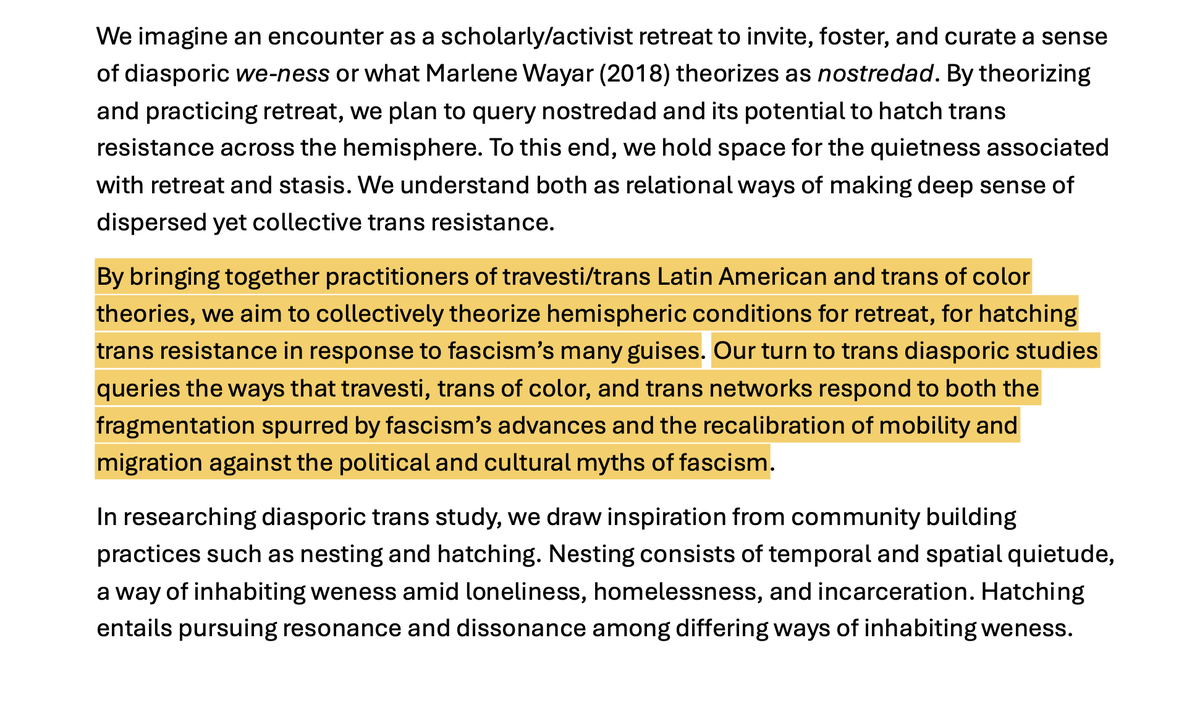
The Mellon-funded Syracuse project aims at “hatching trans resistance in response to fascism’s many guises.”
Read about this and so much more in my latest in @CityJournal. Universities, even just for their own survival, should be much more skeptical toward funders like Mellon that traffic in pseudo-disciplines like transgender studies.
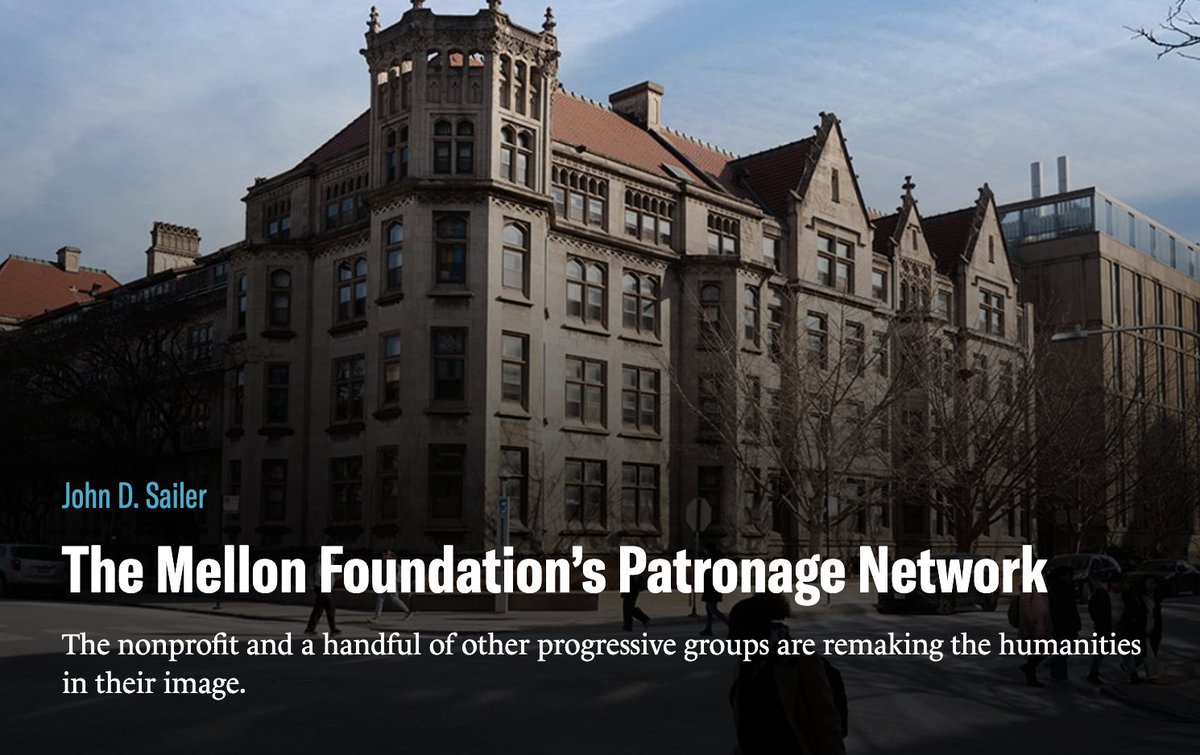
NEW: The Mellon Foundation doesn’t just fund research; it helps distribute jobs. In doing so, it blurs the lines between charitable patronage and a different sort: the patronage of a political machine.
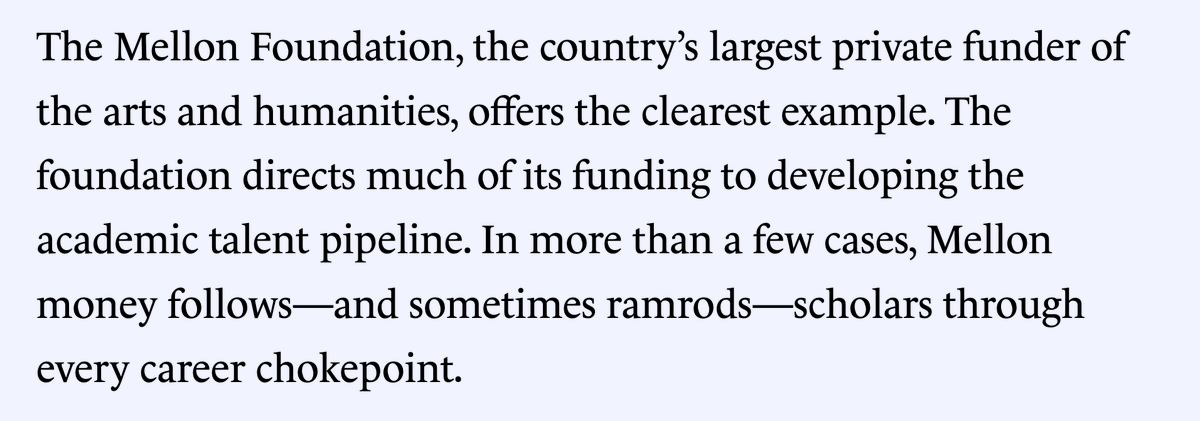
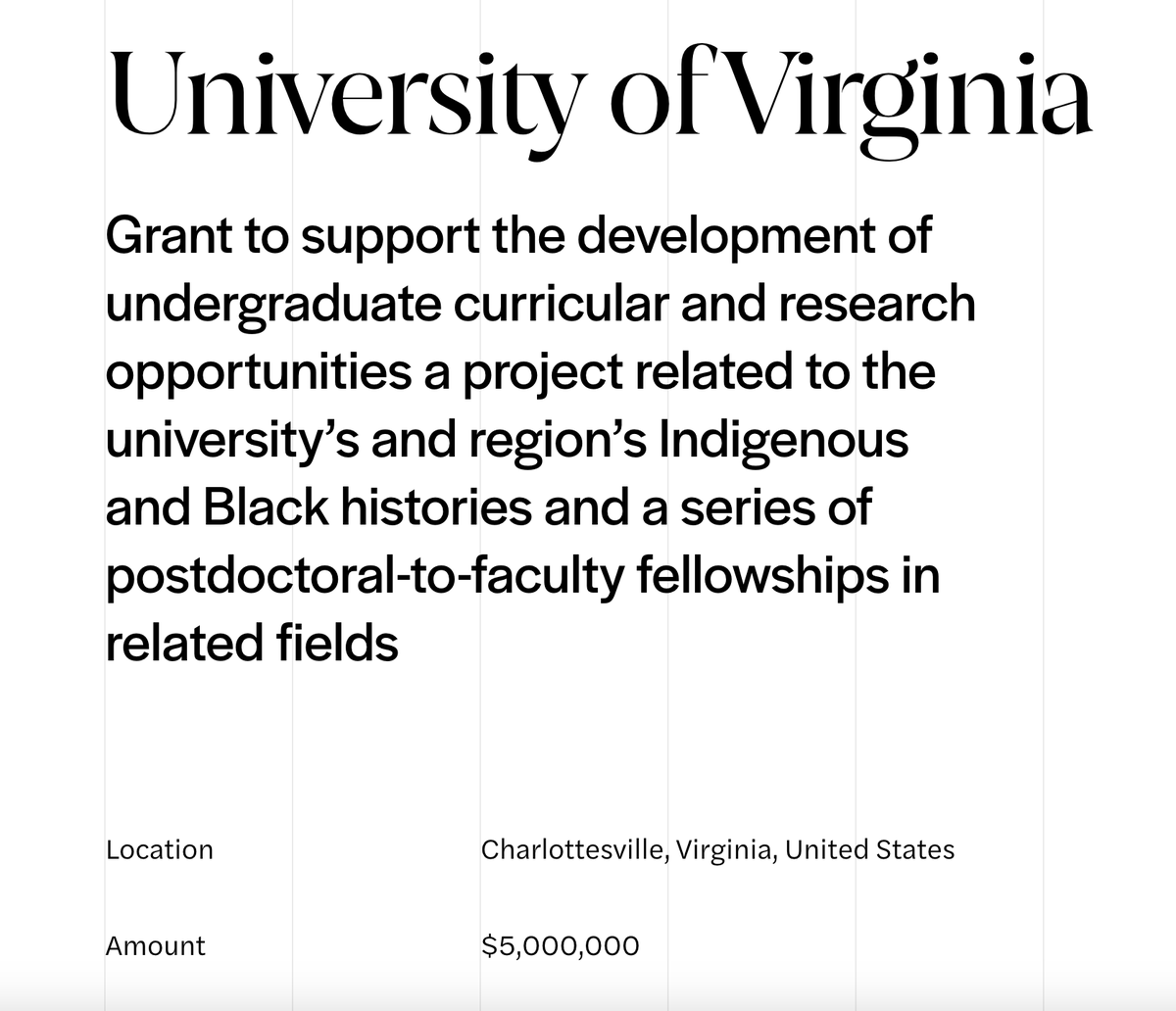
Mellon is the country’s largest funder of humanities by a mile. In its giving, it focuses aggressively on creating career opportunities for scholars.
Mellon money follows—and sometimes ramrods—these scholars through every career chokepoint.
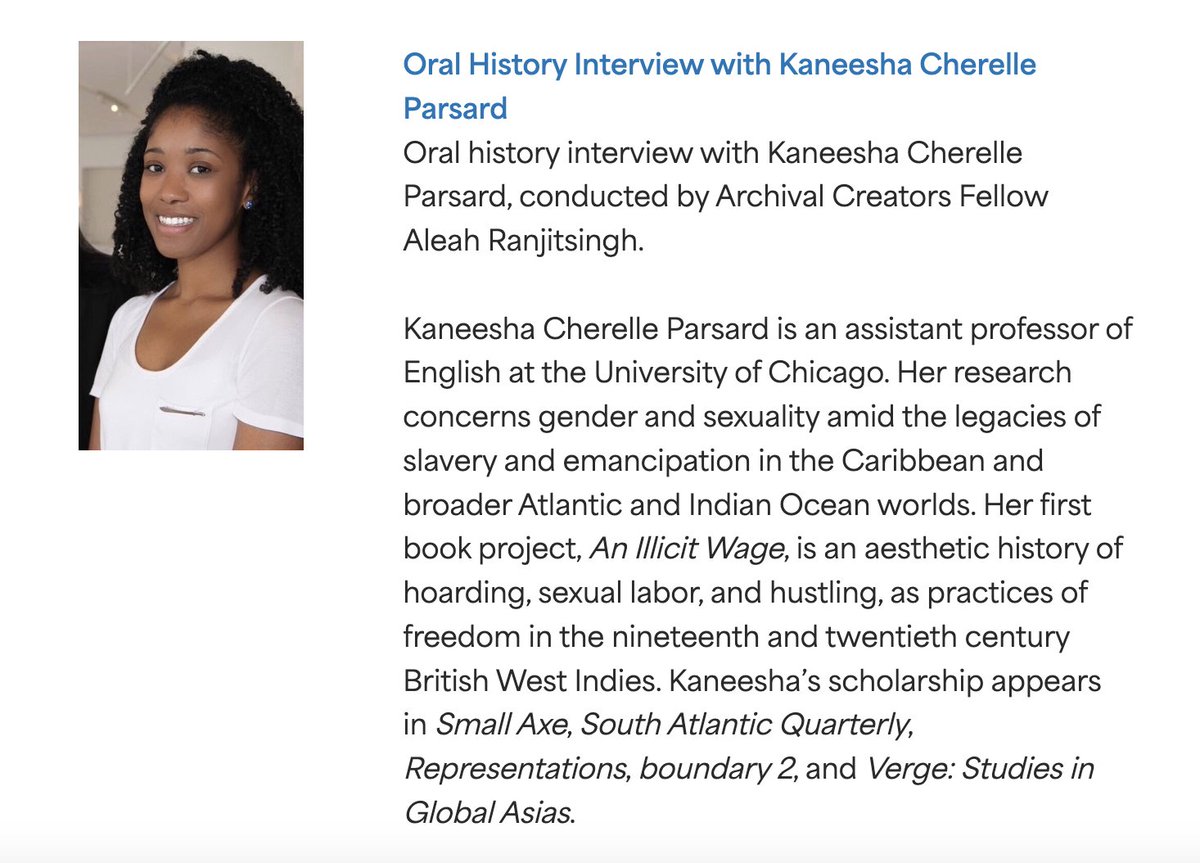
This can virtually guarantee a scholar’s career. To see how it works, consider Kaneesha Parsard, who is now professor at University of Chicago.
DOCUMENTS: In 2018, the $7.7 billion-endowed Mellon Foundation announced that social justice would be its overriding priority. For academia, the consequences have been huge.
Through FOIA, I’ve acquired dozens of proposals for Mellon-funded projects. Here are a few ⬇️🧵
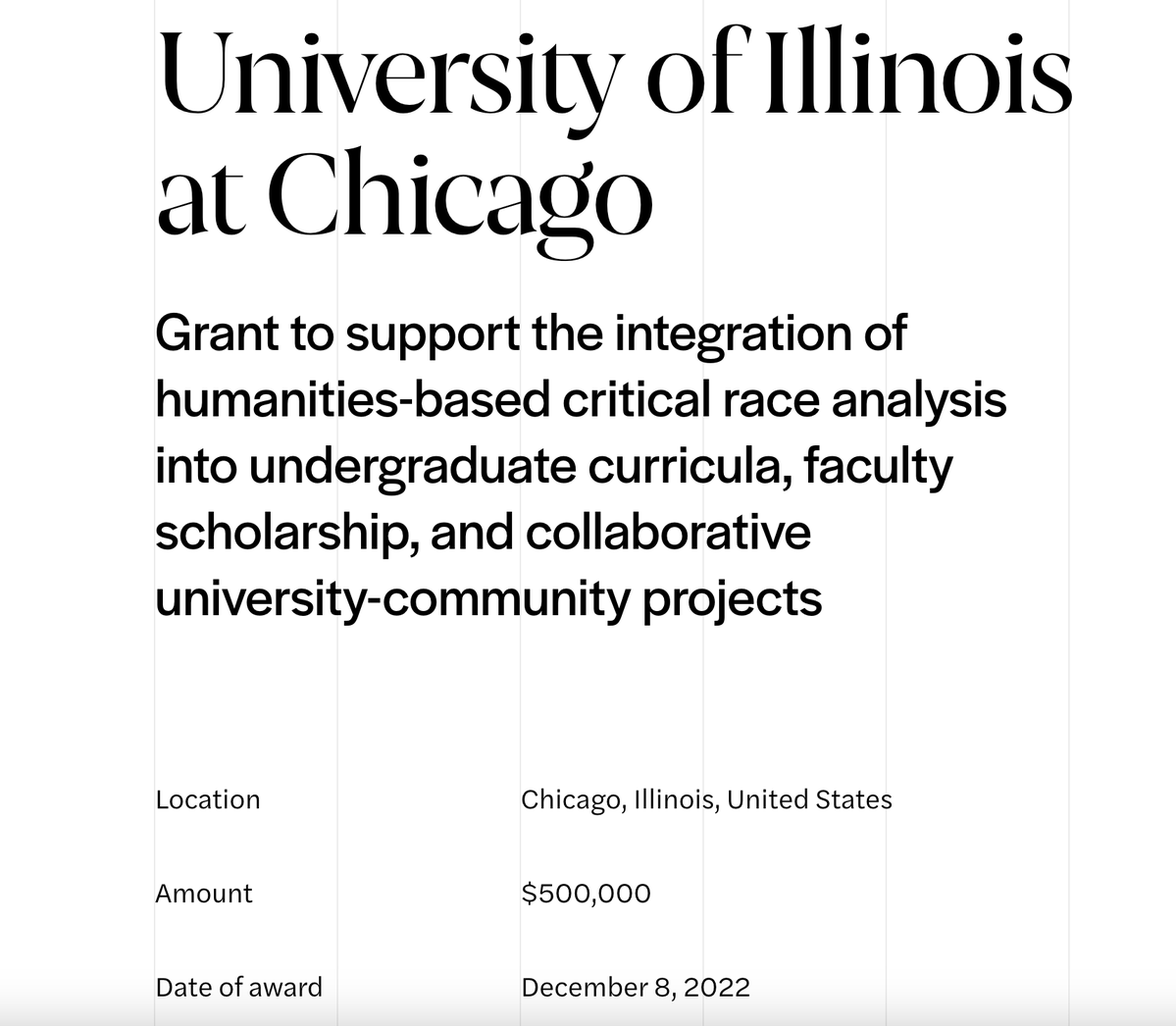
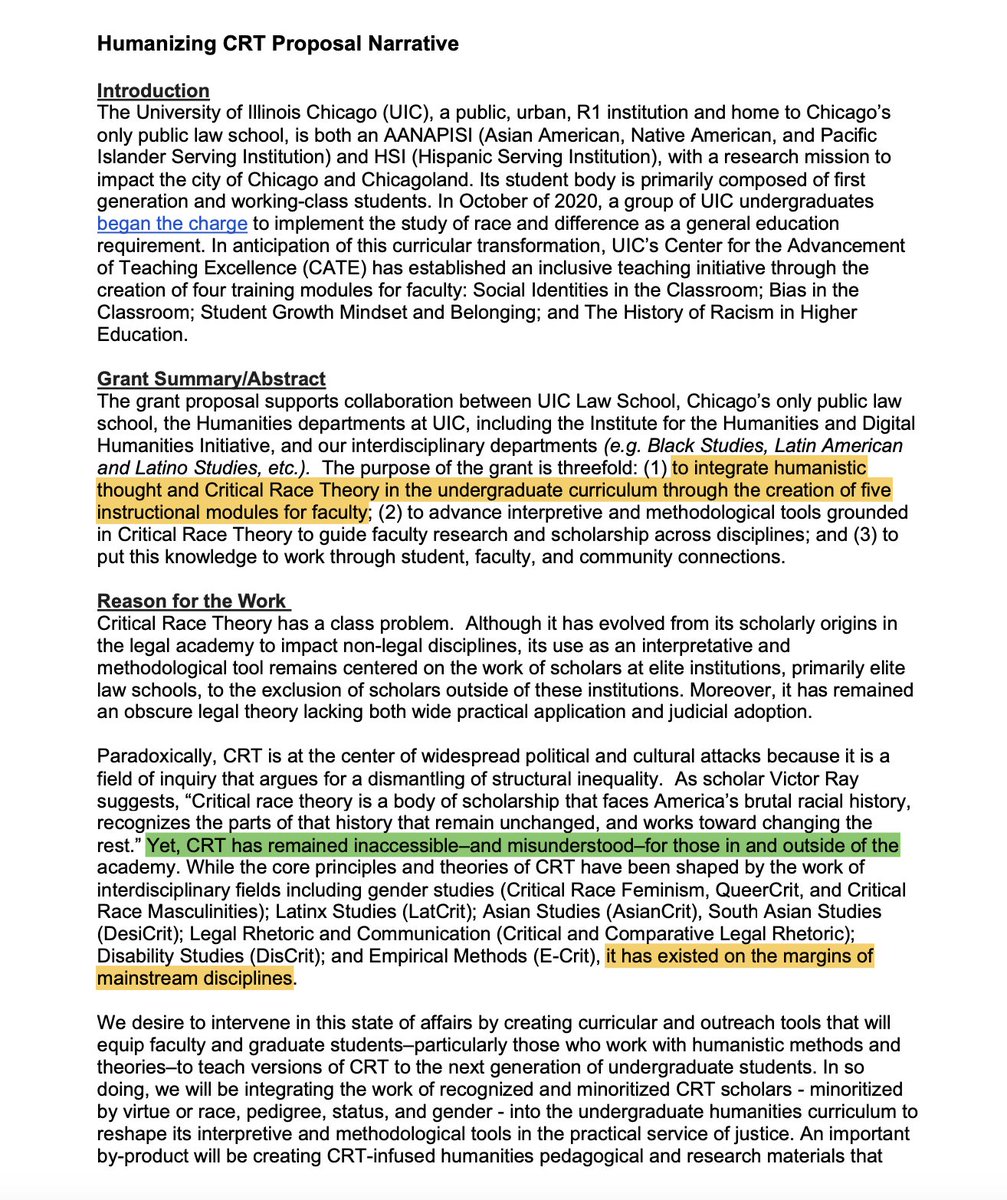
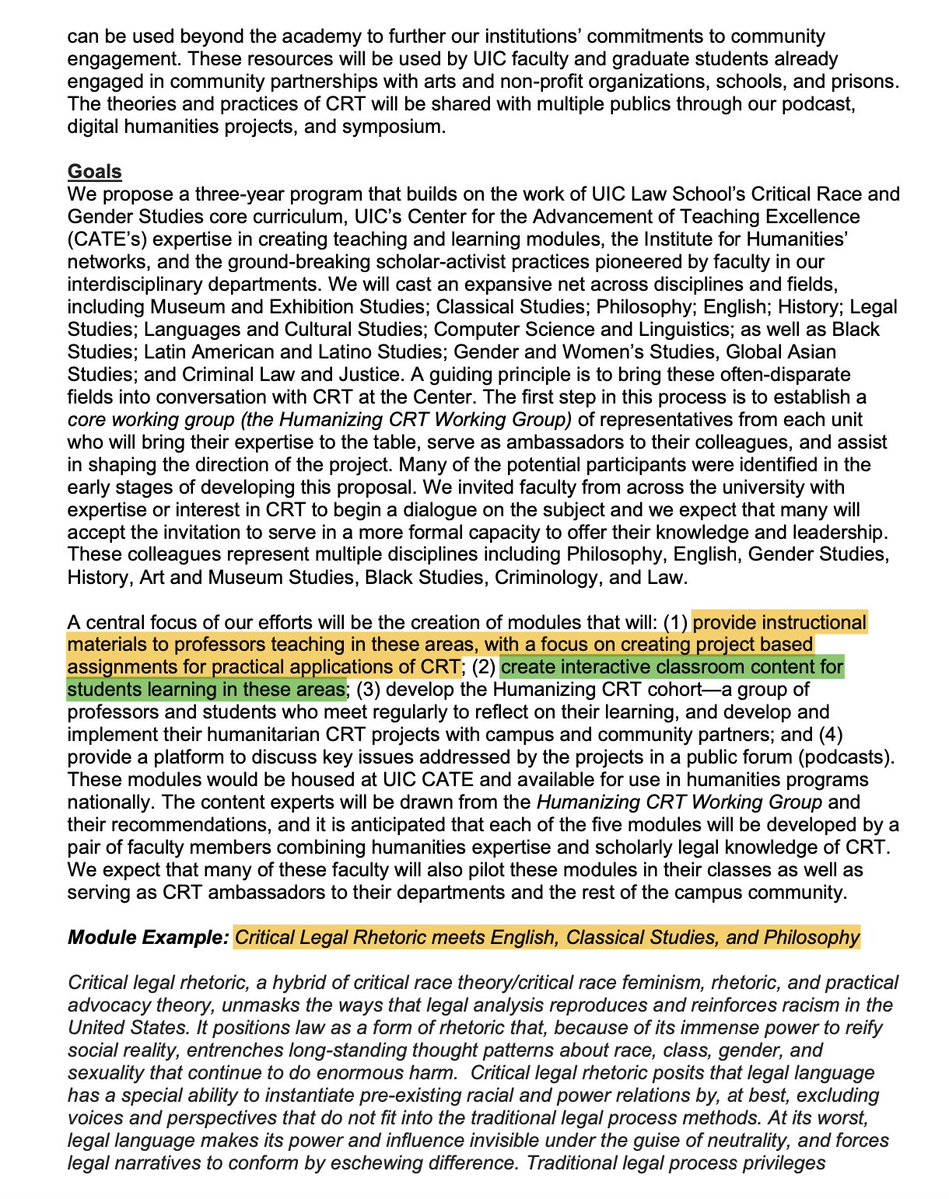
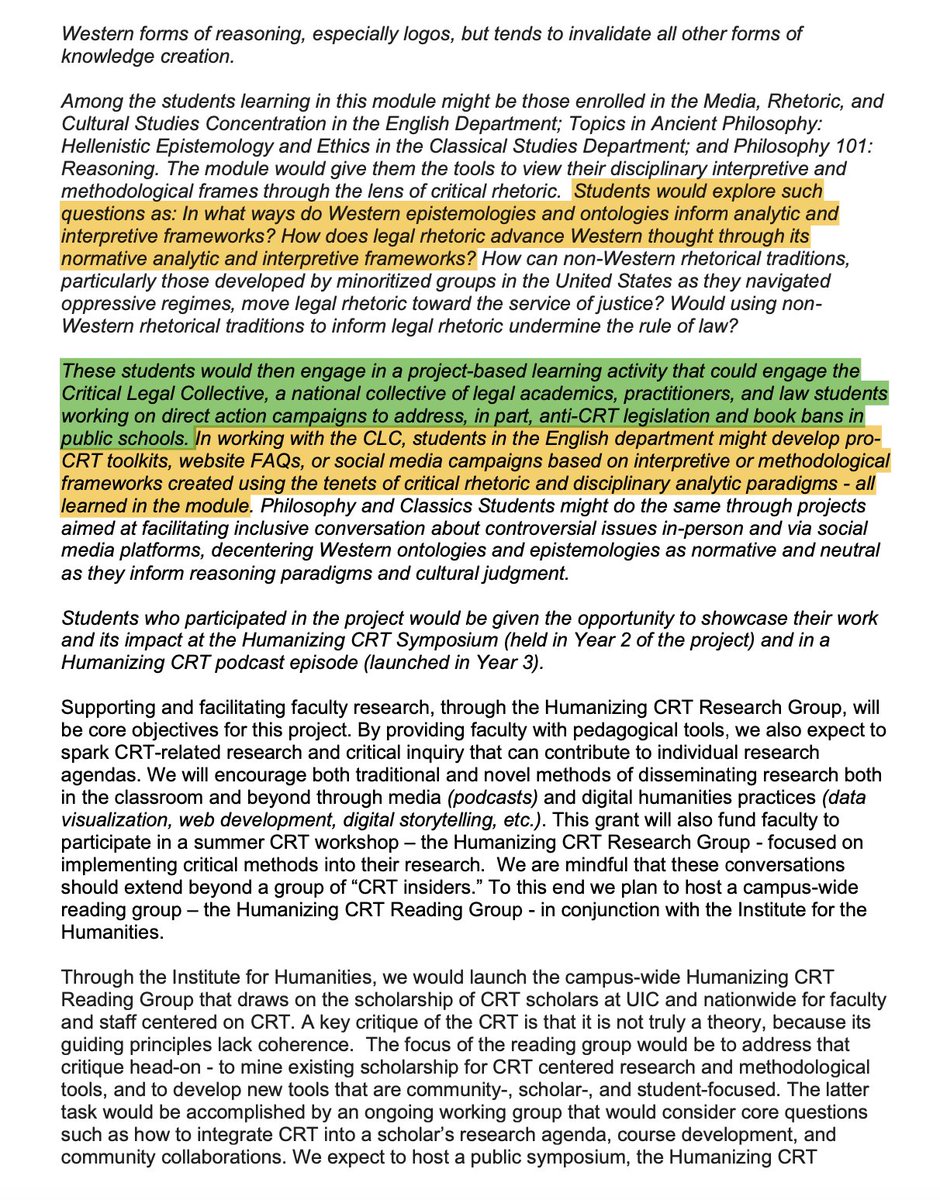
"Humanizing CRT," a $500k project at University of Illinois Chicago, seeks to "integrate... Critical Race Theory in the undergraduate curriculum."
The proposal describes a class module titled "Critical Legal Rhetoric meets English, Classical Studies, and Philosophy" (see ⬇️).
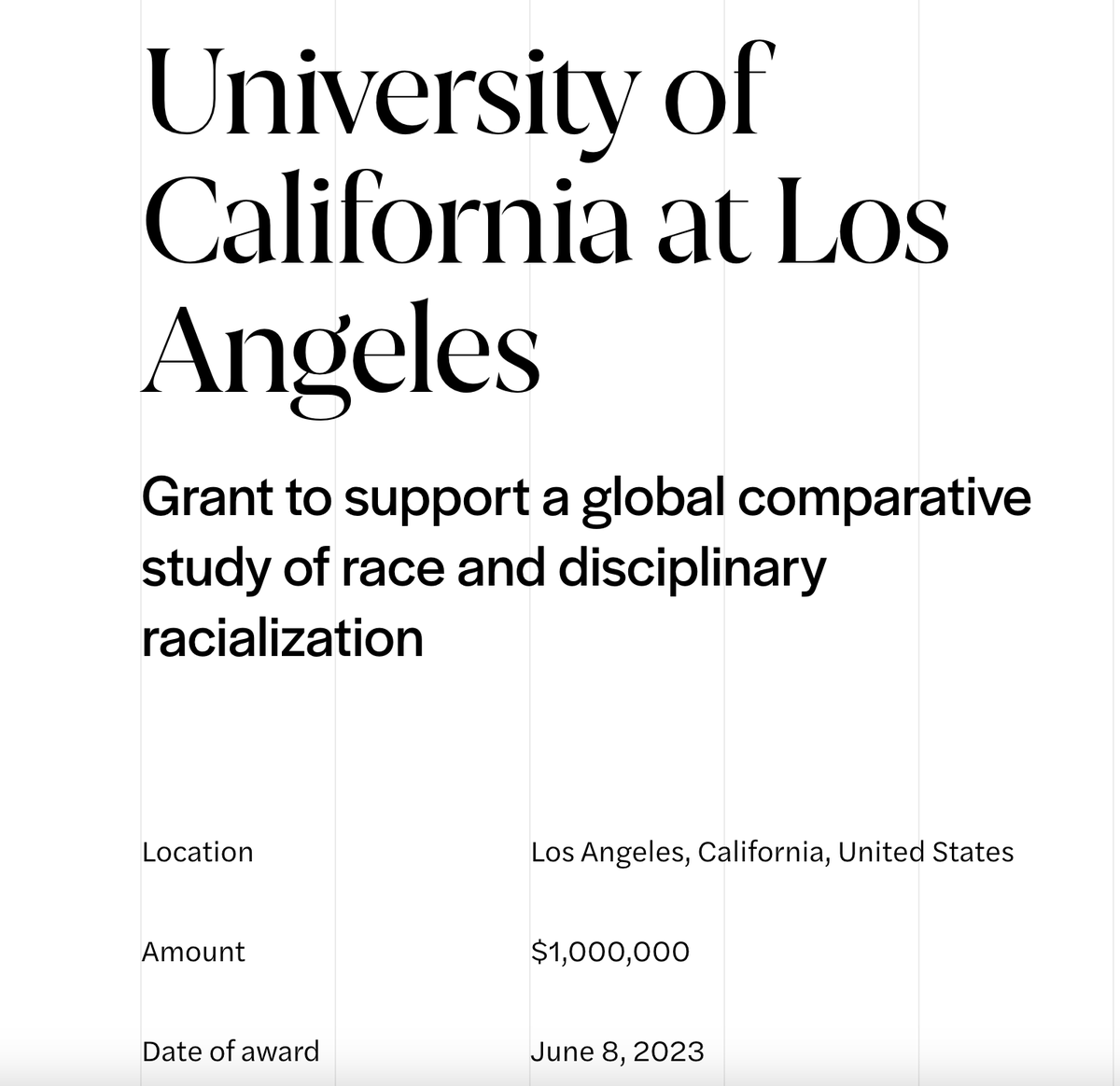
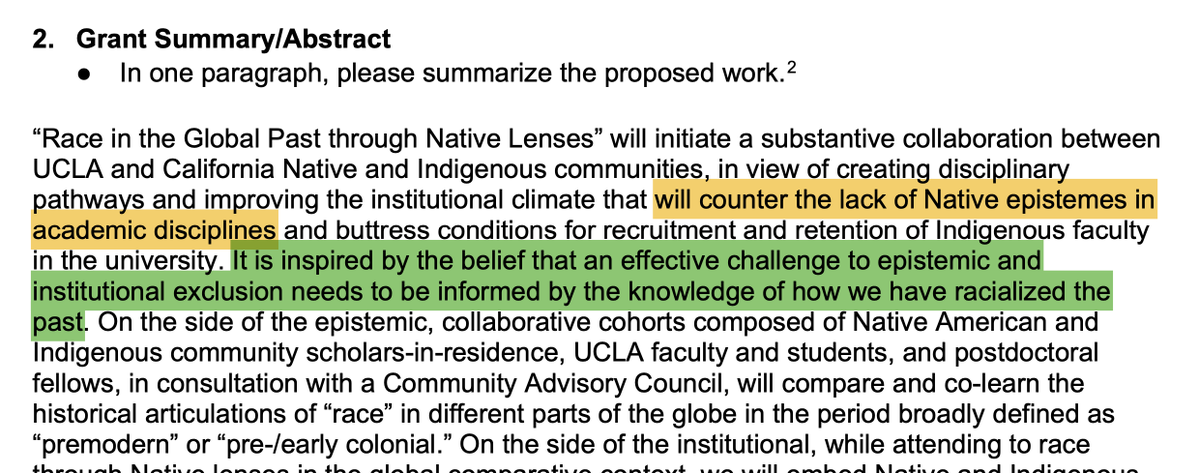
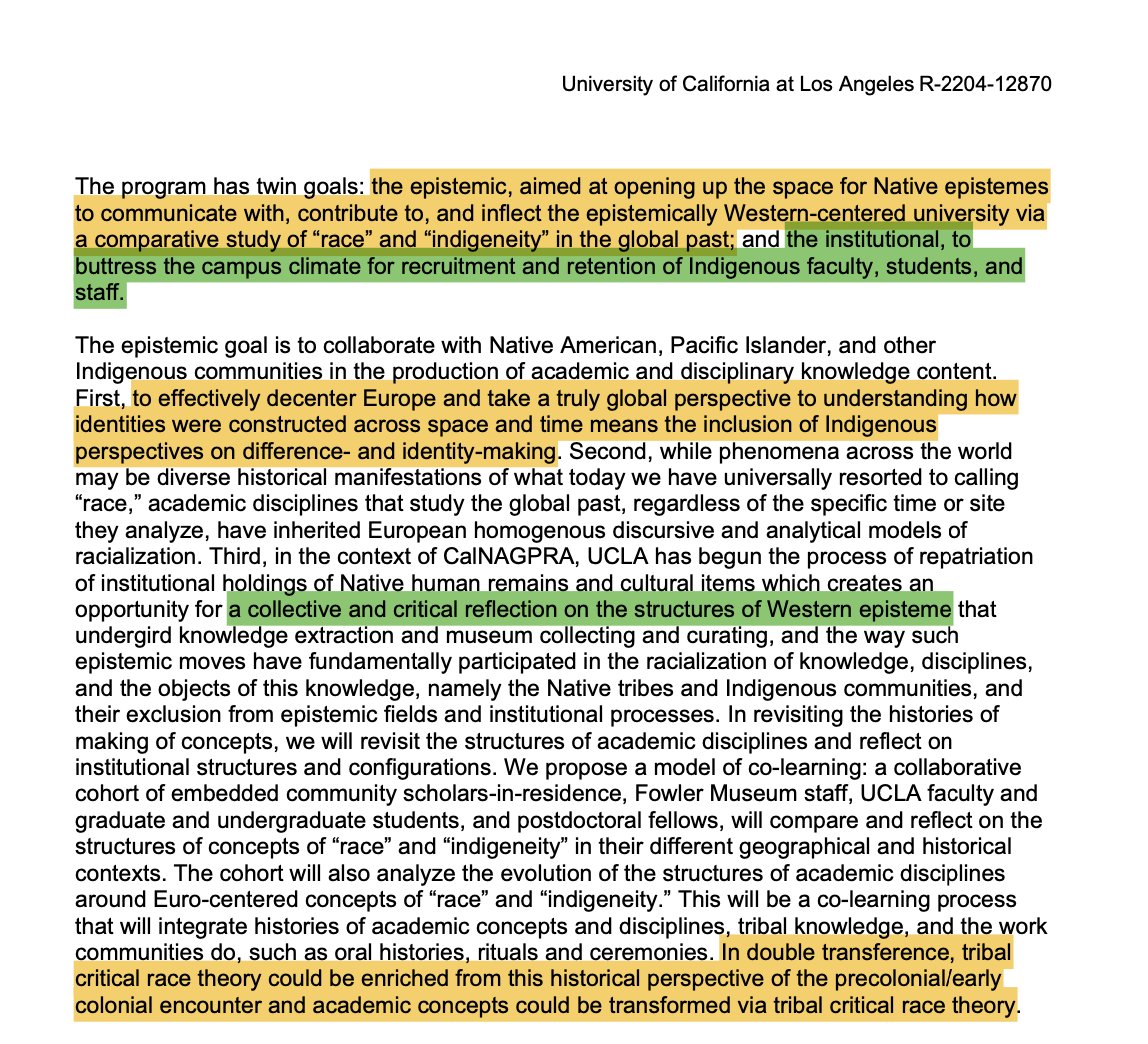
"Race in the Global Past through Native Lenses,: a $1 million project at UCLA, seeks to "counter the lack of Native epistemes in academic disciplines."
It does this in part by employing "tribal critical race theory."
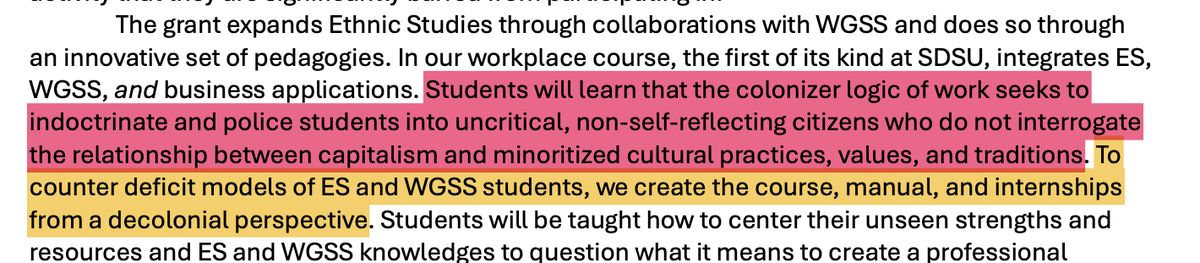
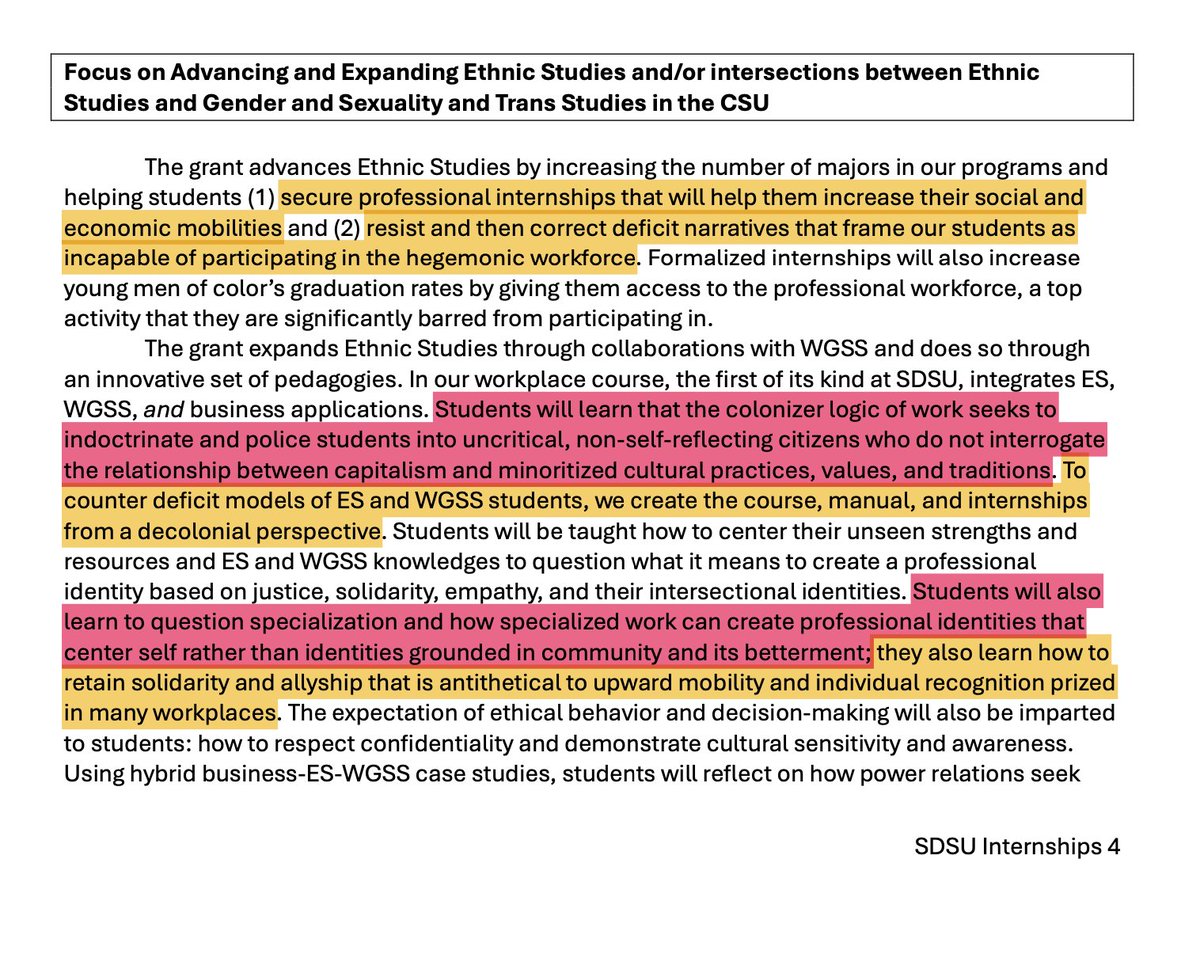
NEW: At San Diego State University, an intern training program teaches students how to challenge the “colonizer logic of work”—thanks to funds from the Mellon Foundation.
Through a records request, I acquired the grant proposal. It's possibly the worst internship prep ever. 🧵
The project's proposal lays out a simple rationale:
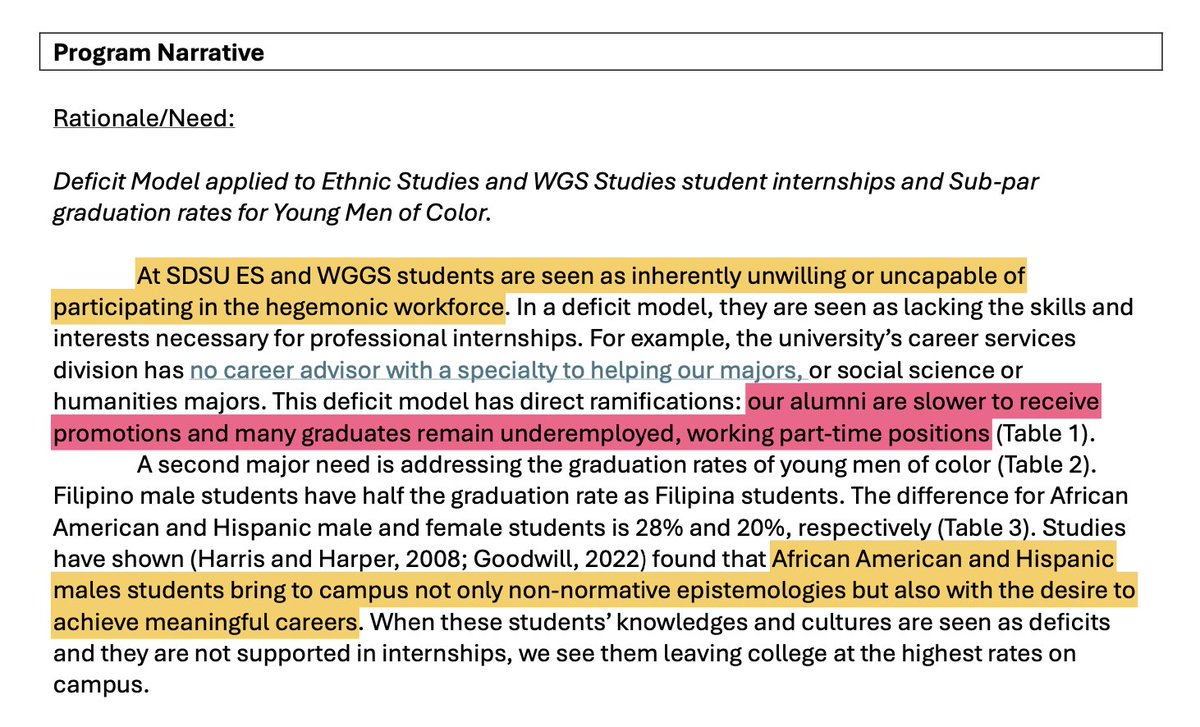
➡️Ethnic, women's, and gender studies students are seen as “unwilling or uncapable” of participating in the “hegemonic workforce.”
➡️This “deficit model” means the students end up underemployed.
The project’s solution: help students secure internships and then teach them to “resist” this “deficit model.” Specifically, by teaching them to resist the “colonizer logic of work,” “question specialization,” and retain “allyship.”
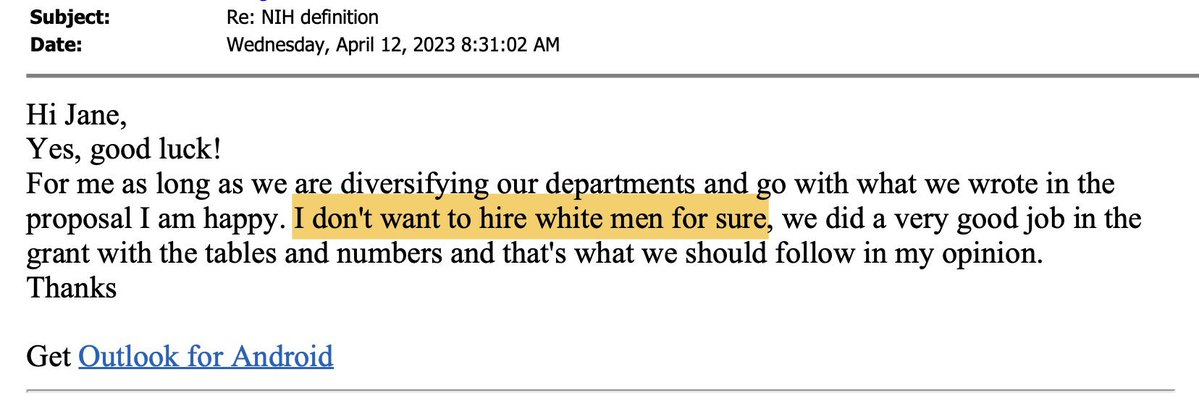
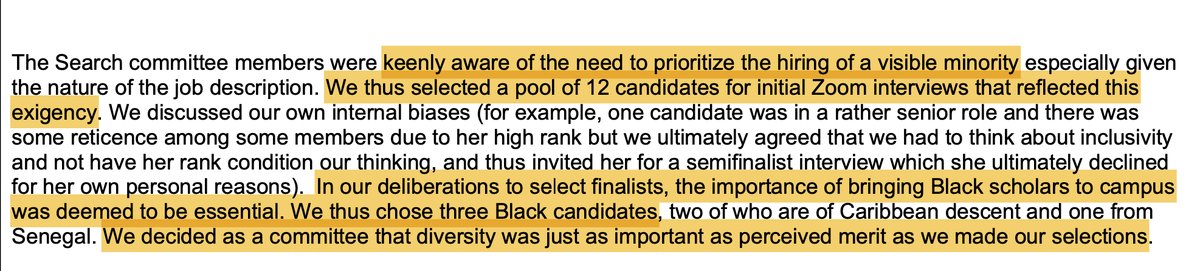
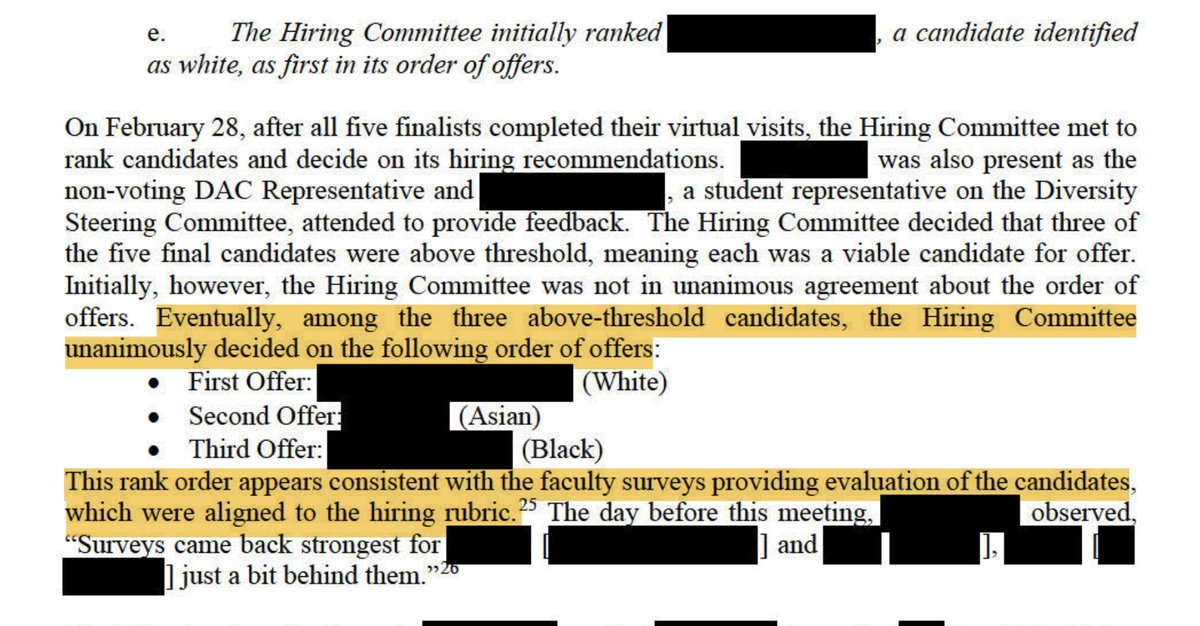
The remarkable thing about discrimination in higher ed: so much of it was documented. Approved in official records. Talked about in emails. All subject to FOIA.
Like this email, where a University of New Mexico professor just says: "I don't want to hire white men for sure."
Here's a search committee report from Ohio State saying: "We decided as a committee that diversity was just as important as perceived merit as we made our selection."
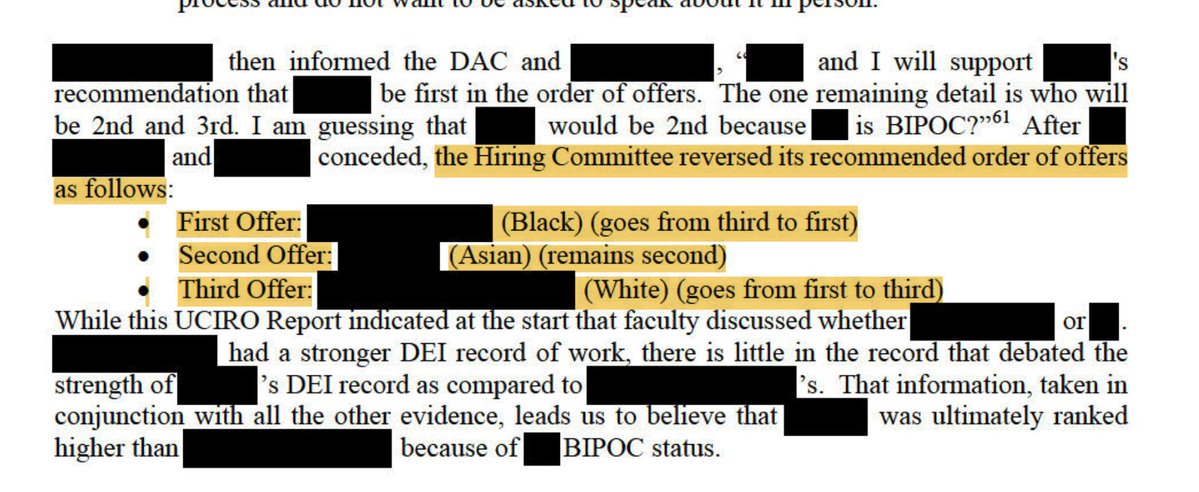
Here's an report from the University of Washington which concluded that its psychology department just blatantly discriminated by re-ranking finalists so the first choice wouldn't be a white woman.
NEW: During one hiring cycle at Ohio State, 60% of new arts and humanities faculty jobs fell in the “DEI” category, according to emails I obtained.
This was after OSU announced it would hire “100 underrepresented and BIPOC hires in all fields of scholarship.”
🧵on my latest.
In 2021, Ohio State’s then-president Kristina Johnson announced an initiative to hire 50 scholars focused on “social equity” and 100 “underrepresented and BIPOC” hires in all disciplines.
Documents I’ve acquired, reported in @CityJournal, shed light on how that played out.
@CityJournal The documents reveal how administrators were keeping tabs on the hiring spree.
In November 2022, an OSU diversity dean said over email that she wanted to meet with the finalists for a DEI-focused faculty job: professor of “indigenous knowledges.”
Last week, the DOJ released guidance for federal funding recipients.
The memo—which clarifies how nondiscrimination law should be applied—is a huge development for universities. A lot of their worst policies are looking more fragile than ever. 🧵
2/ The DOJ specifically highlights the use of racial proxies. Hiring on the basis of "cultural competence" or using diversity statements is unlawful if the purpose is to give an advantage to specific racial groups.
This is an even bigger deal than it might seem.
3/ Universities often take on large-scale hiring programs that select for an emphasis on "equity."
Inevitably the programs recruit ideologues. More importantly, this criteria is justified because it's seen as a way to favor minorities. It's right there in their own documents ⬇️