I want to ask you to follow this dot with your eyes. Was that easy? Without you even having to give that much thought, your brain is telling your eye muscles where to move to keep your focus on that dot. 1/
For most you out there, your eye movement would have looked like this, maybe it took you a sec, but then you probably got it just fine. 2/
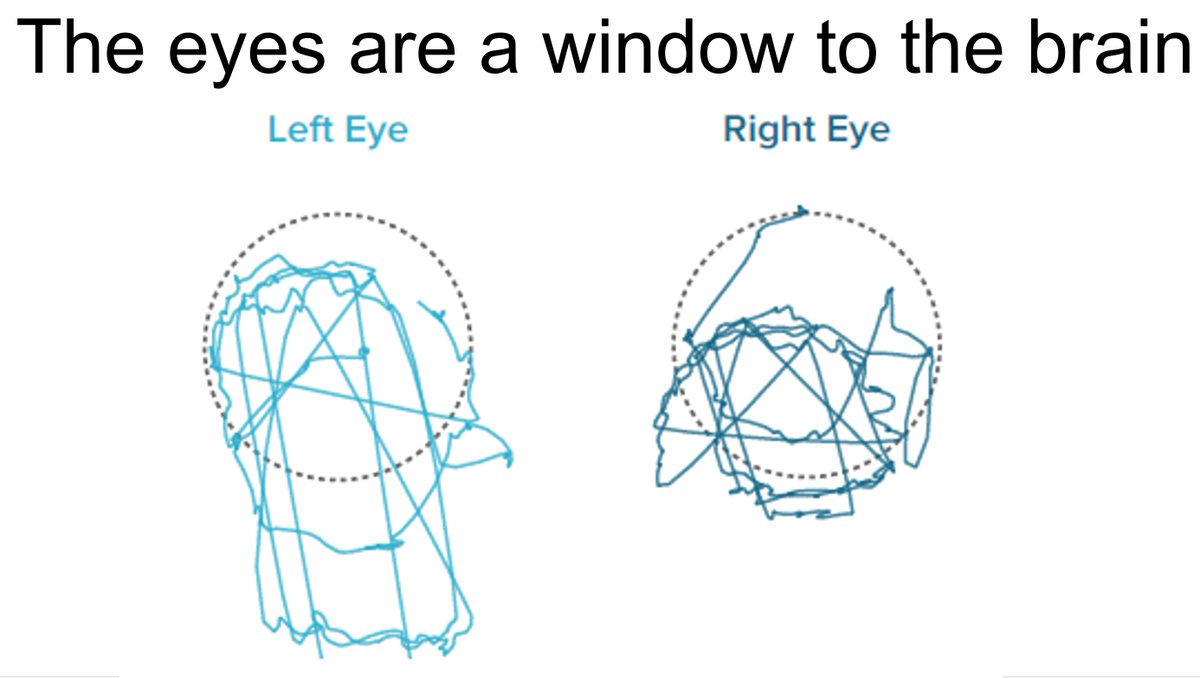
Now look at what "Jill"’s eye is doing as she’s trying to follow that motion.
At 7 years old, growing up just outside Lyme, CT, she had a swollen tick attached to the back of her head. 3/
At 7 years old, growing up just outside Lyme, CT, she had a swollen tick attached to the back of her head. 3/
That tick bite was shortly followed by debilitating leg pain and mental health struggles which then mostly resolved for many years. She was able to finish school and have a career. 4/
But since another mystery vector-borne illness 10 years ago, she’s had daily headaches, Migraines, Brain Fog, Joint and Muscle pain, Nausea, Positional Vertigo, and then this was all made dangerously worse by a bout of COVID several years ago... 5/ 
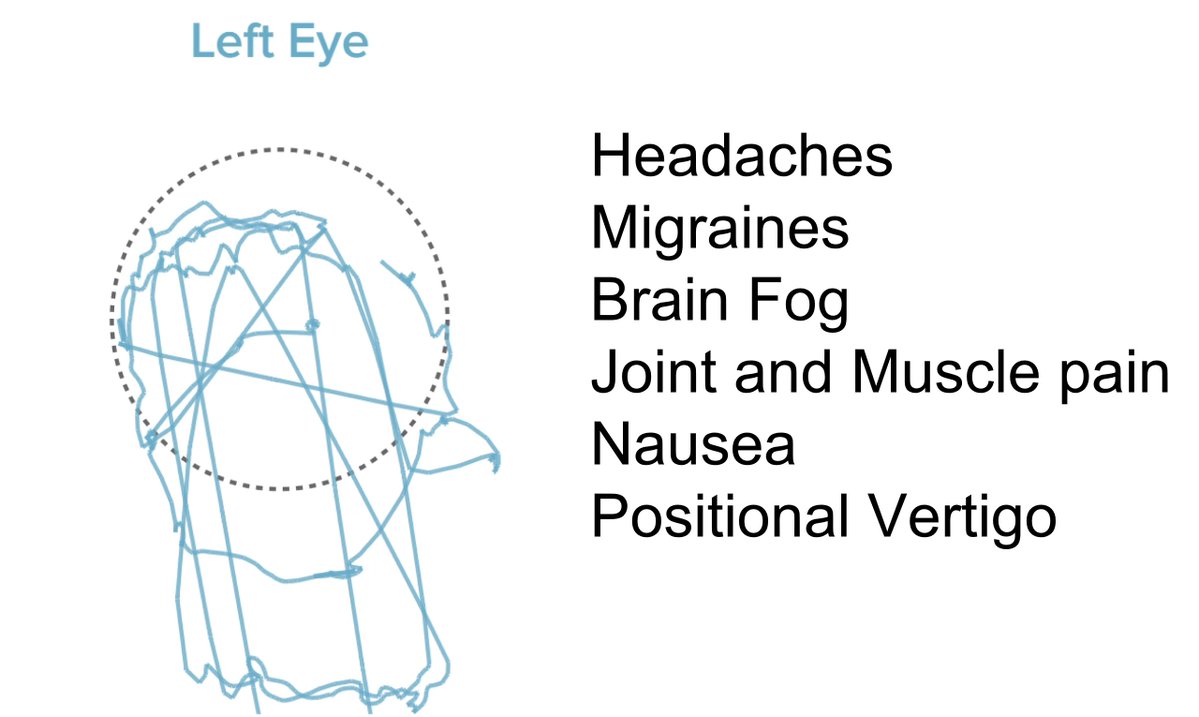
No wonder she’s having all these symptoms, headaches, brain fog, her eyes aren’t even looking at the same thing, and she’s got to do so much additional processing work in her brain to try to sort out what she’s seeing. That’s exhausting! 6/
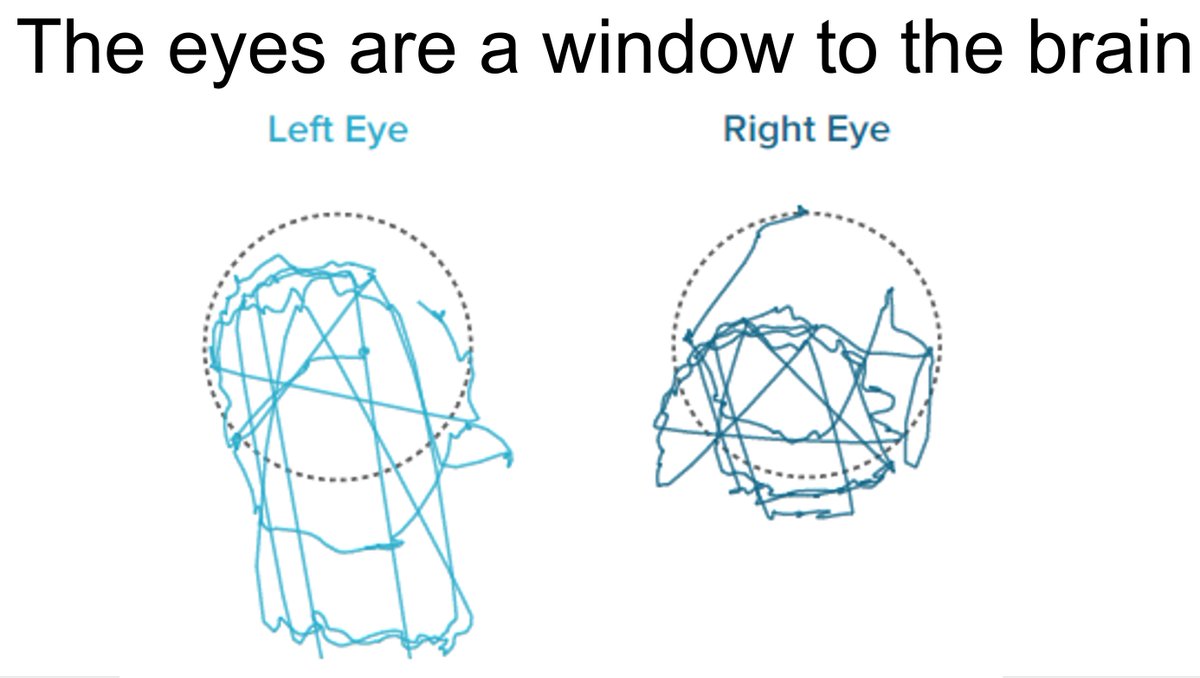
Right now, we’re not just learning about Jill’s eyes. We’re also learning about her brain. What’s working as expected, and what’s not working as expected. Jill has been to endless Dr. visits, hospital visits, she’s tried everything. 7/
So many Drs. have tried to help her along the way, but they still don’t know what’s making her so sick, or how to help. They’re making their best guess, and she’s spent the last decade in a loop of trial and error. Jill isn’t alone. 8/
We’ve heard hundreds of variations of her story. And as peoples' health slips away from them, they lose their identity, their work, their savings, their relationships. 9/
This has to change! We’re failing these patients. How can people be this sick, but clinical tests fail to pick that up? How do we help you get better if we don’t understand what’s going happening? 10/
If clinicians don’t have access to the right tests, and we don’t know what’s going wrong, what do you need to measure to try to understand? MEASURE ABSOLUTELY EVERYTHING. Complex diseases need bleeding-edge tools! 11/
We built a clinical study at MIT called MAESTRO to try to understand what’s happening in complex chronic illness and we invited 240 people to explore the unknown with us and let us glimpse inside to their brain through their eye movements. 12/
Also through the electricity that their brain is generating. They also let us look at their blood flowing upwards towards their brain through their ear. We collected throat swabs, vaginal swabs, saliva, blood, urine, sweat... We measured the hydrostatic pressure of their skin 13/
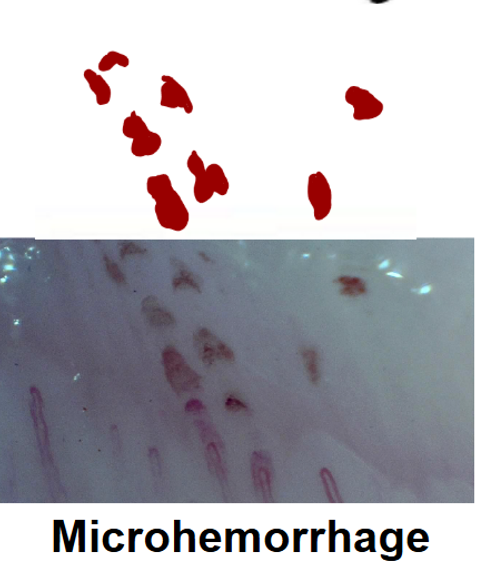
Just one example is what we can see when we look with a microscope at their fingertips, just below their nails, where your smallest blood vessels come so close to the surface you can see your red blood cells delivering oxygen to the tissue. 14/

And you can see your immune cells zipping through as they survey the tissue for infection. But in our study participants we see really important things in their capillaries. We can see swelling, where red blood cells are squeezing past a traffic jam or the path is blocked 15/

We can even see the blood leaking out when the barriers of the blood vessel walls just can’t keep the blood inside. It's important that you keep things compartmentalized. Blood is supposed to stay in blood vessels and circulate around the body. 16/
When things don't stay compartmentalized in your body where they are supposed to be, that can lead to trouble. 17/

Someone once asked me if it would be fair to say our bodies are essentially like a bag of bugs, and I said no, but it would be fair to say that you have an inner tube, from your mouth and nose out to your anus that is like a twisty balloon of bugs. 18/

You need to be able to get oxygen and nutrients across the barriers of this tube, but you want to keep out microbes and toxins, and so this is a very special living barrier guarded by cells and mucus that are protecting you and keeping things where they are supposed to be. 19/

So what happens when your barriers aren't fully intact? 20/
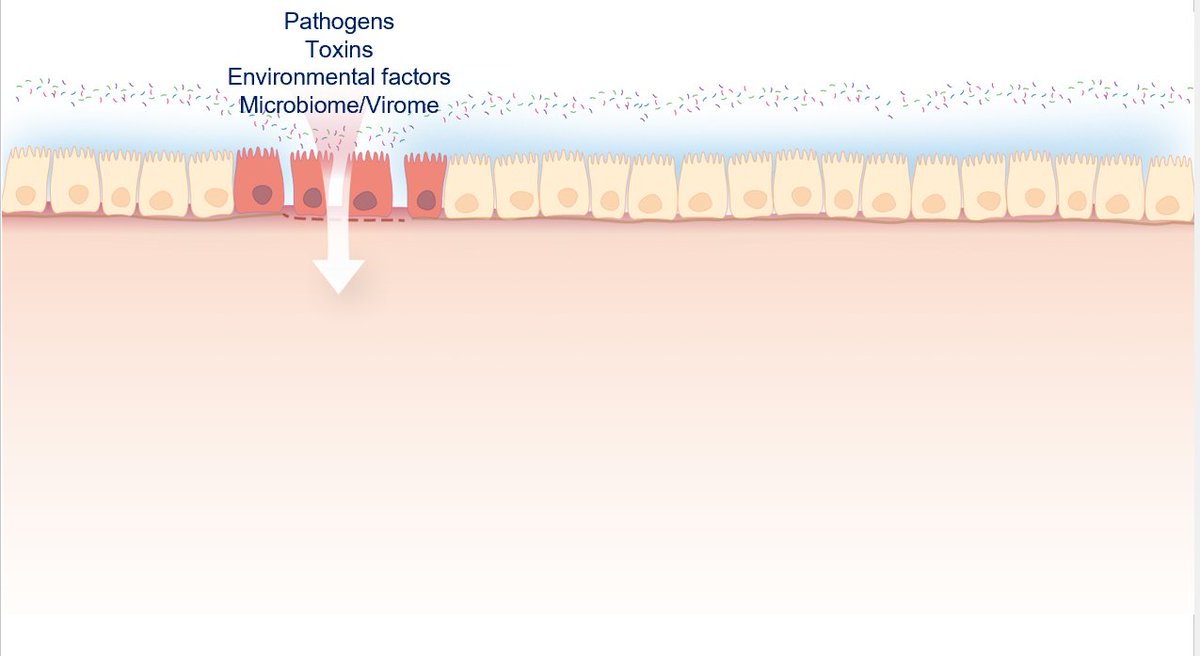
If we turn our attention back to what we saw when we looked at Jill’s blood, we found microbes that should be living their merry life in the bug balloon, except they were in her blood, where they’re not supposed to be. 21/

We also found proteins that should be locked up in her brain, but they weren’t, we could find them in her blood. We saw that her barriers weren’t intact, and weren't able to keep things compartmentalized in a safe way. 22/
We’ve spent the last 4 years collecting over 1 million data points per participant. Data that has been missing from this puzzle of why some people can’t just bounce back after an infection. Now we’re trying to figure out how it all fits together. 23/

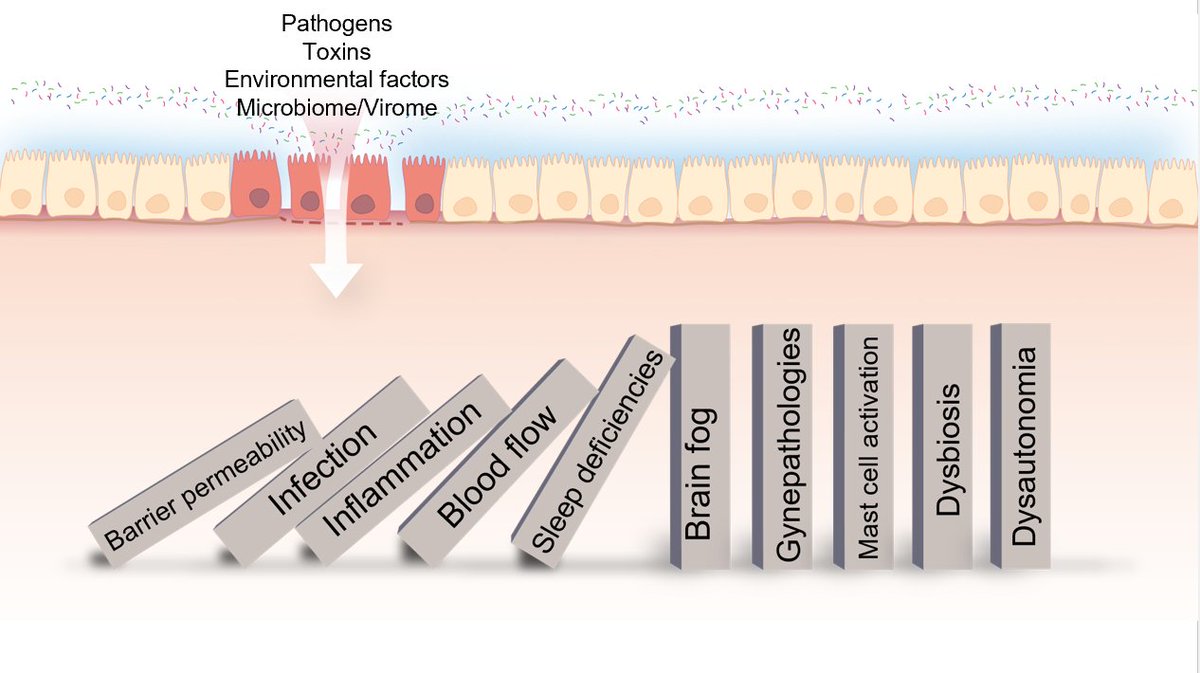
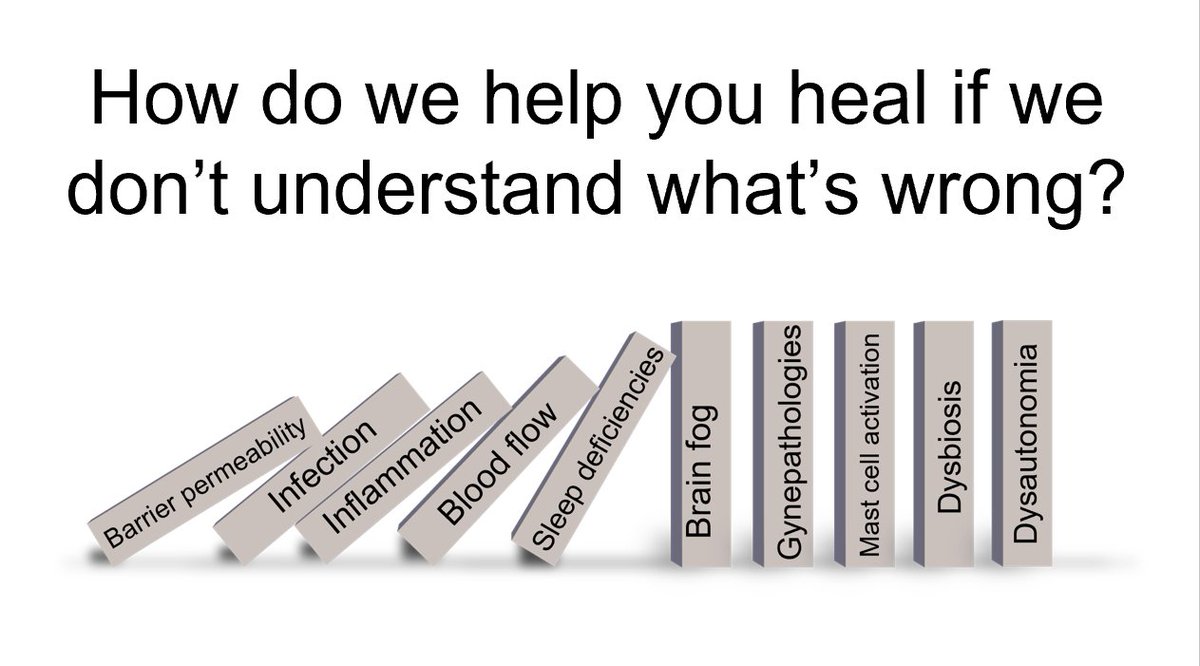
Why do so many people have shared symptoms? Seemingly unrelated parts of their body are falling apart? Like 15 different diseases that connect. I’ve started to think about the different levers that can drive disease as if they were dominoes, capable of toppling one another. 24/

For some it’s barriers, and for others it’s blood flow or inflammation or infection. And once you can see those top dominoes, you can begin to build a recovery journey that is actually personalized. 25/

How do we help you heal if we don’t UNDERSTAND what’s wrong?
Not “maybe this is all in your head.”
NOT YES/NO tests that lead to guessing and trial and error.
It's time to reframe how we ask these questions. 26/
Not “maybe this is all in your head.”
NOT YES/NO tests that lead to guessing and trial and error.
It's time to reframe how we ask these questions. 26/
Can we reframe the question from: Does Jill have Chronic Lyme Yes or NO?
To: what is making Jill so sick? What is preventing her body from being able to heal? 27/
To: what is making Jill so sick? What is preventing her body from being able to heal? 27/
For those of you thinking about somebody you love, or thinking about your own unresolved illness, I want you to know something.
WE CARE very much! We are working hard to understand what’s going on, and we think this is a solvable problem!!! 28/
WE CARE very much! We are working hard to understand what’s going on, and we think this is a solvable problem!!! 28/

We can build a future where we know how to look.
A future where we can finally say: We see what’s going happening. We know where to begin. And here is your personalized path forward.
We’re geared up.
Let’s make personalized recovery journeys a reality. 29/
A future where we can finally say: We see what’s going happening. We know where to begin. And here is your personalized path forward.
We’re geared up.
Let’s make personalized recovery journeys a reality. 29/

"Jill" came to watch me tell this story about MAESTRO through her data. I'm sharing this very special moment captured here, with her permission, as she watched me give this talk.

• • •
Missing some Tweet in this thread? You can try to
force a refresh