Will Rumen Radev, the former air force general and likely winner of Bulgaria’s parliamentary election this Sunday, known for his pro-Russian stands and opposition to military support for Ukraine, become “Europe´s new Viktor Orbán”? Short answer: No. Long answer: No, but. ⬇️ 

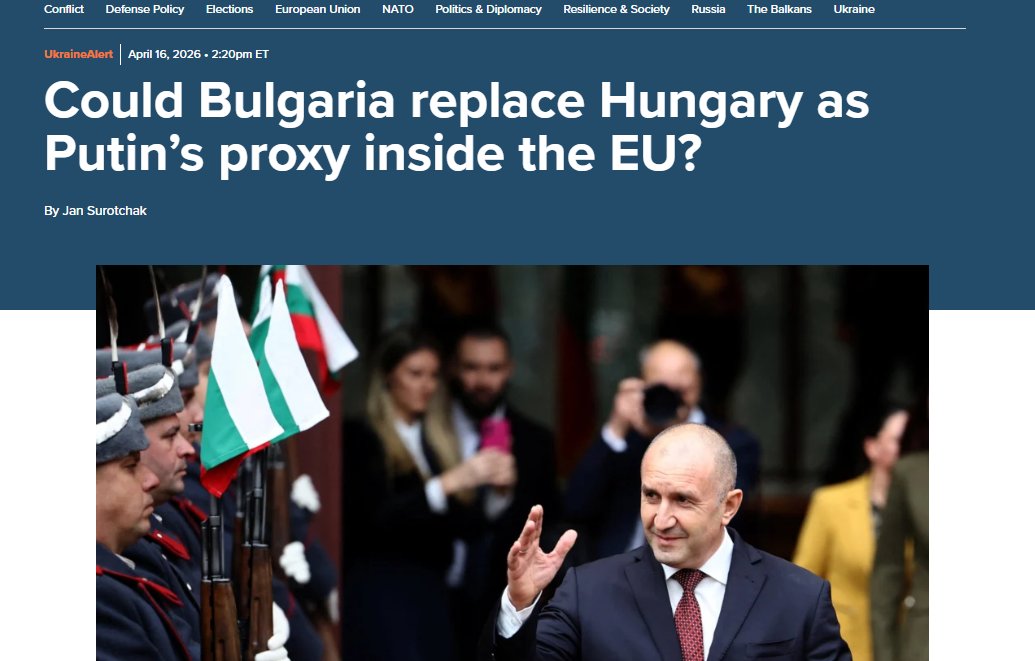
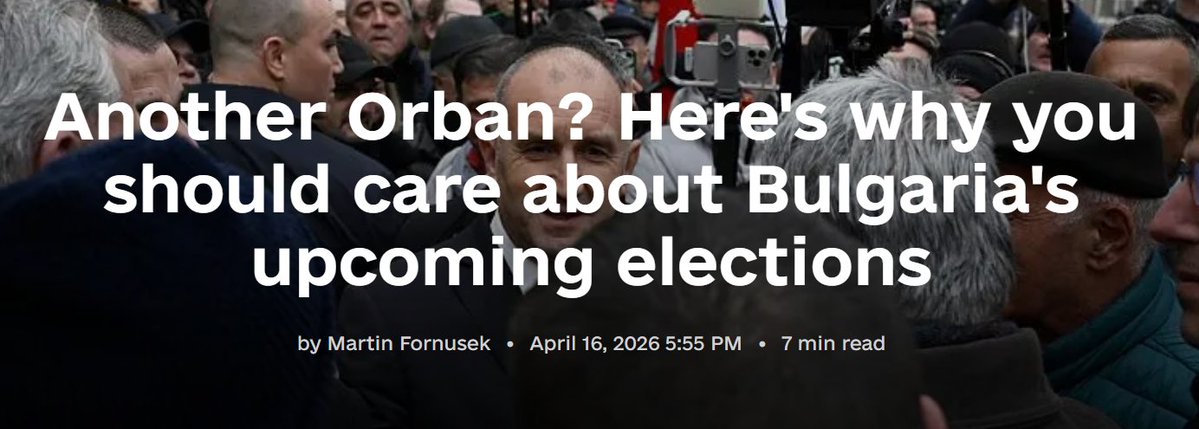
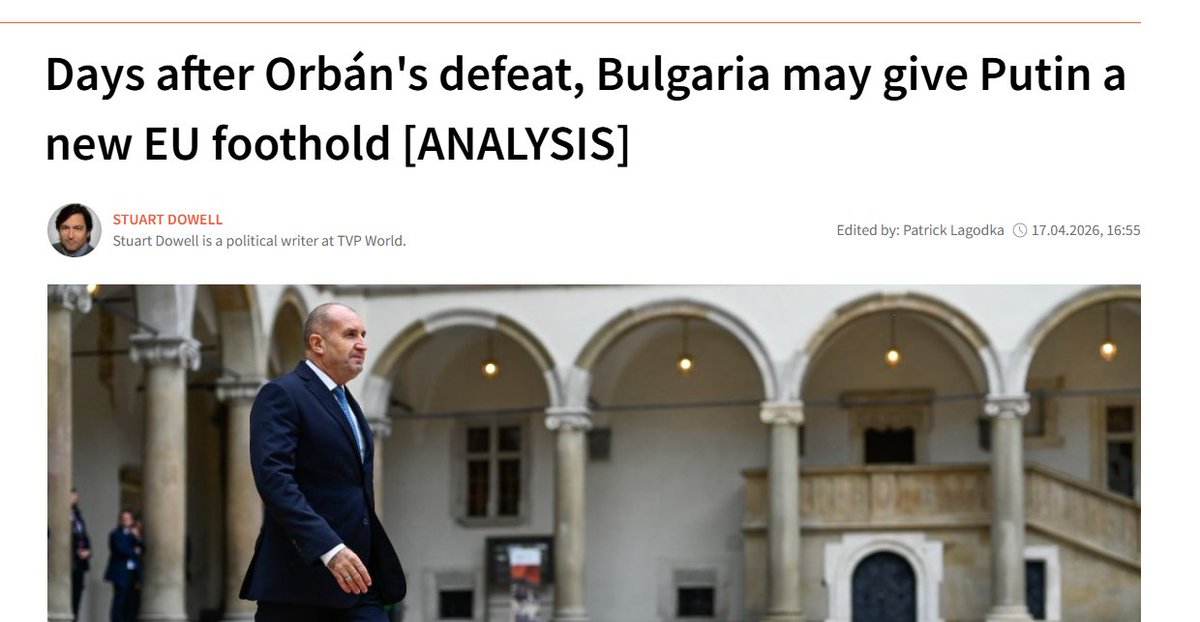
The basics: Rumen Radev, a former fighter pilot and air force general whose military training began back in the days of the Warsaw Pact, and who served as Bulgaria’s president from 2016 until January 2026, will in all likelihood win Bulgaria’s parliamentary election this Sunday.
Polls suggest that Radev’s three-party alliance, “Progressive Bulgaria,” founded just weeks ago, will emerge as the strongest force with about 30% of the vote. For years, Radev has also been Bulgaria’s most popular politician in the polls – or at least the least unpopular one.
Radevs resignation in January confirmed long-circulating rumors that he wanted to become Bugaria´s next Prime Minister and was willing to descend into the trenches of party politics he had so often derided as president.
faz.net/aktuell/politi…
faz.net/aktuell/politi…
In recent years, Radev has repeatedly made statements of the kind often downplayed as “pro-Russian” – while in substance “pro-Russian” remarks are usually little more than a euphemism for positions that condone Moscow’s imperialism and Putin’s dictatorship.
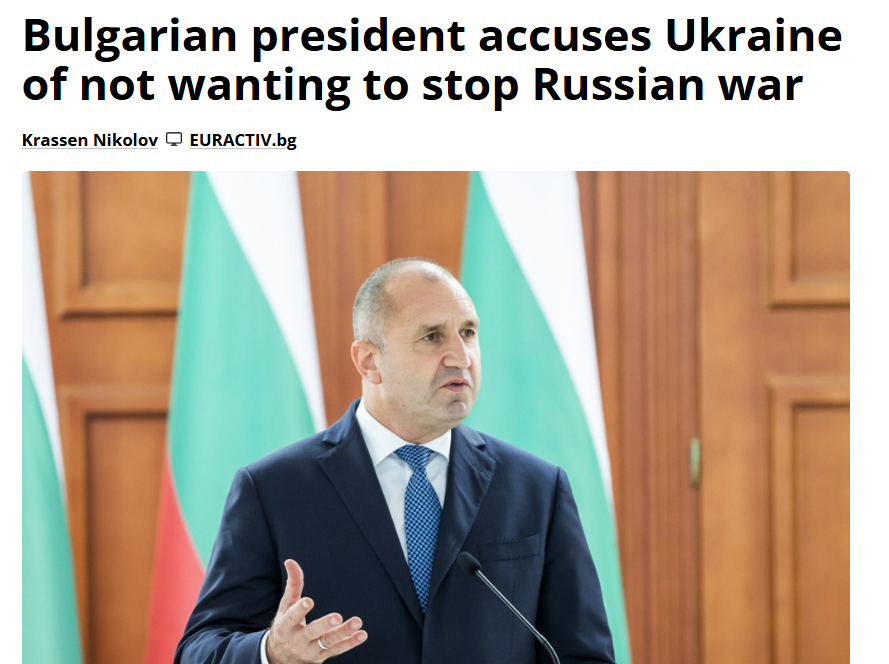
Radev’s media strategy is worth a closer look. Since his resignation, he has given just a few interviews. One he granted to German newspaper “Berliner Zeitung”, dubbed “Berlinskaya Pravda” (BP) in Germany because of its pro-Kremlin stance.

“Berliner Zeitung” is hardly read in Germany, but it does occupy the whiny ‘not everything was bad under communism’ niche with a certain success. It gives space to “alternative voices”, usually pro-Kremlin ones.
https://x.com/Andric1961/status/2035616386999828876
Radevs key message to the paper was just that: A pro-Kremlin line wrapped in alleged pragmatism: “We have to talk to Russia. (…) We have to move to the next level and think about peace.”
Unfortunately, the interviewers did not ask Radev what any journalist should have asked as a follow-up question: How exactly what he persuade Putin to “move to the next level”, stop invading Ukraine and "think about peace" ?
In Bulgaria, Radev (just as long-serving former Prime Minister and allegedly “pro-western” political veteran Boyko Borissov) gave an interview to YouTuber Martin Karbovski, whose business is spreading “alternative facts”, aka Kremlin propaganda.
Titles and questions of Karbovskis programs include “Is Russia Really the Enemy?” or “The Real Threat to Bulgaria Is Not Russia, but the EU.” You can guess where this goes. Concern trolling, Kremlin style, with a Bulgarian dialect. A business model.
Karbovski’s guests are usually “EU sceptics” and other “friends of Russia,” such as the Bulgarian nationalist leader Kostadin Kostadinov. Or Russia itself. Maria Zakharova who could spread Kremlin propaganda on Karbovski’s podcast without being troubled by inconvenient questions.
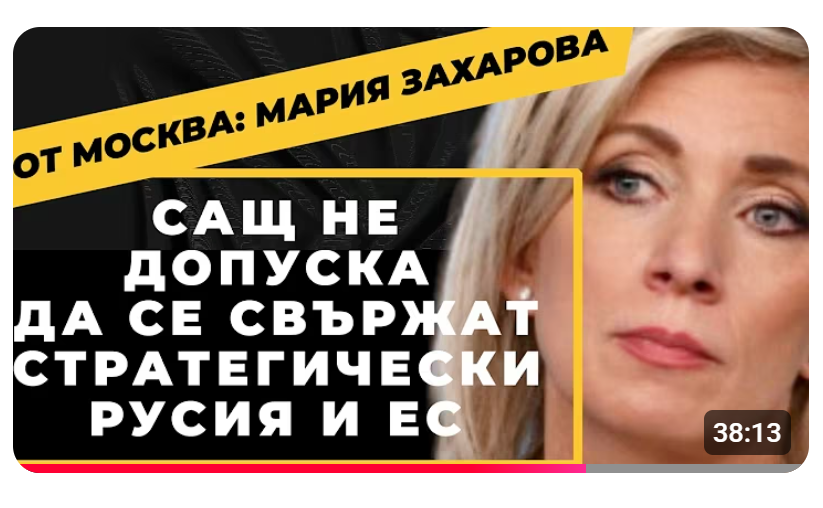
The fact that Radev gave this particular podcaster one of just two interviews during his campaign speaks volumes. It is in line with years of pro-Kremlin and Anti-Ukraine takes.
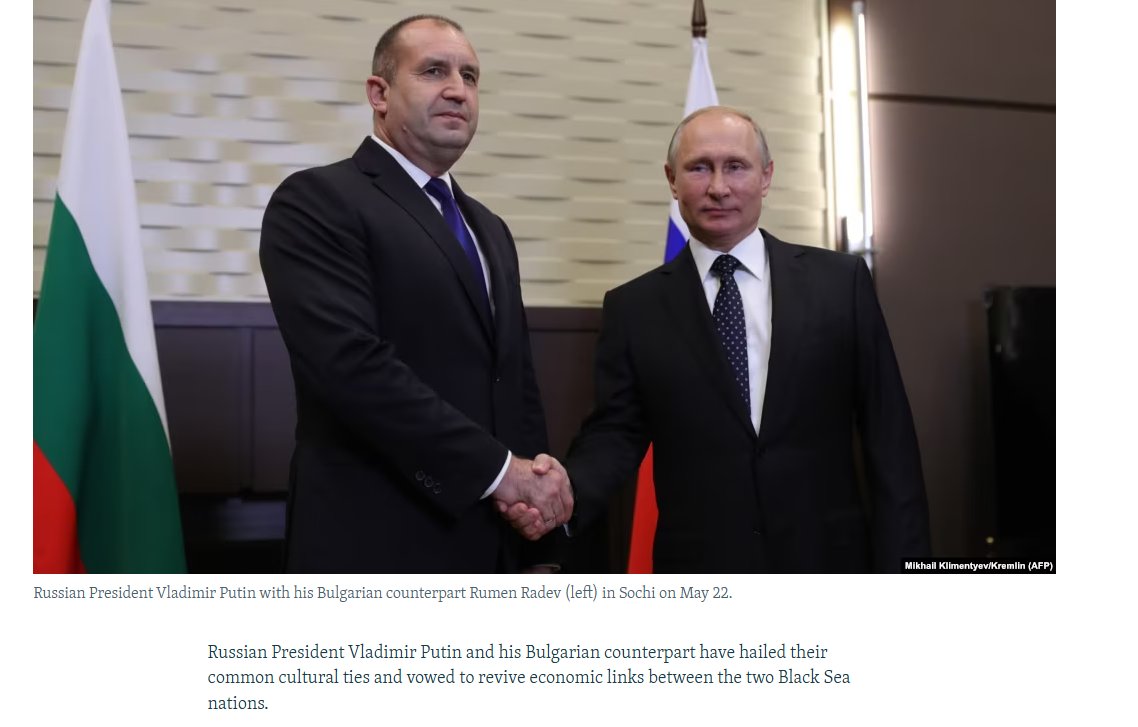
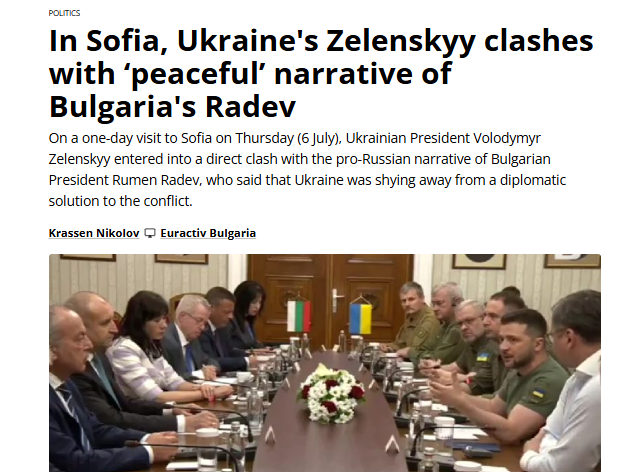
But here comes the “but”: Fears that Sofia could soon be governed by a “new Orbán” are beside the point. They miss the essence of Bulgarian politics. First, Radev doesn´t have the numbers.
Orbán ruled Hungary with a two-thirds majority. Radev’s party may well become the strongest force in the new parliament this time – but it will be far from a two-thirds majority, and even from an absolute majority of seats. It will be the strongest among the weak, not more.
To govern, Radev would need at least one coalition partner. But he has ruled out a coalition with GERB, the party of Borissov, which will most likely finish second. So Radev would most probably need two coalition partners. Which leaves few options that could actually work.
According to polls, the third-strongest force in the new parliament will probably be the pro-European “We continue the change” party of Harvard graduate Assen Vassilev. It firmly supports Bulgarian and EU backing for Ukraine.
Another factor is that foreign policy played hardly any role in the campaign. The economy and fears of inflation dominated the concerns of most voters. In Bulgaria, beating the drum for Russia may win over fringe groups, but not elections. Bulgaria is not Serbia.
So Radev, a textbook example of an opportunist, could not become the new Viktor Orbán of the EU even if he wanted to. Besides, if things go as they usually go in Bulgaria (and most likely they will), his star will fade just as quickly as it has risen.

Bulgarians love noble princes on white horses. But they also get sick of them quickly and chase them away one election later. Yes, there is such a people.(Borissov was an exception to this rule). For more on the Bulgarian elections, see Frankfurter Allgemeine/FAZ:

• • •
Missing some Tweet in this thread? You can try to
force a refresh