Michael Martens Profile picture
Apr 18 20 tweets 6 min read Read on X
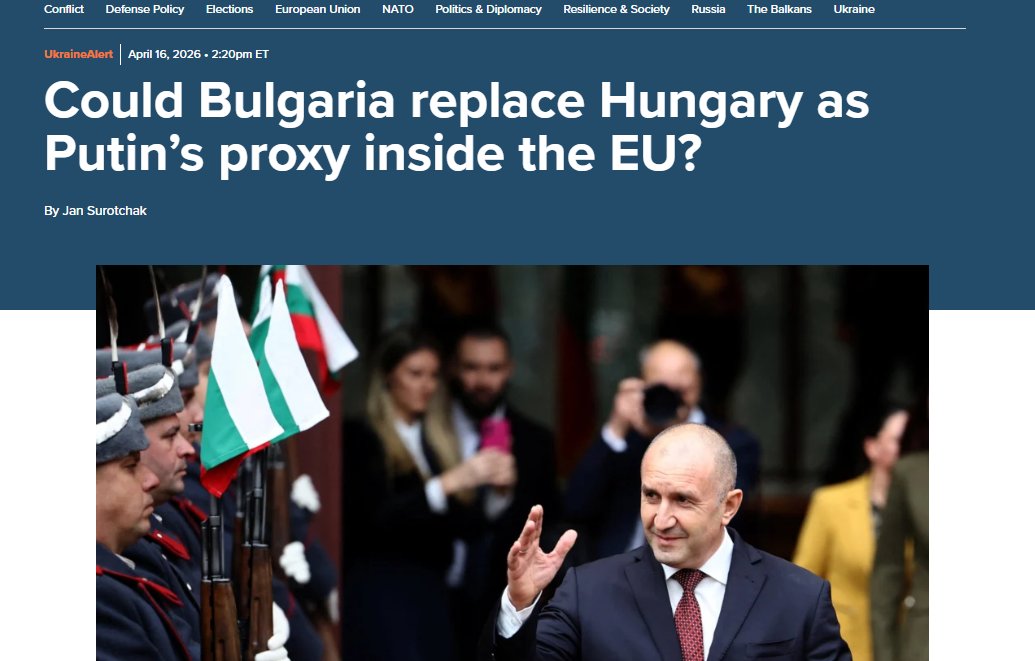
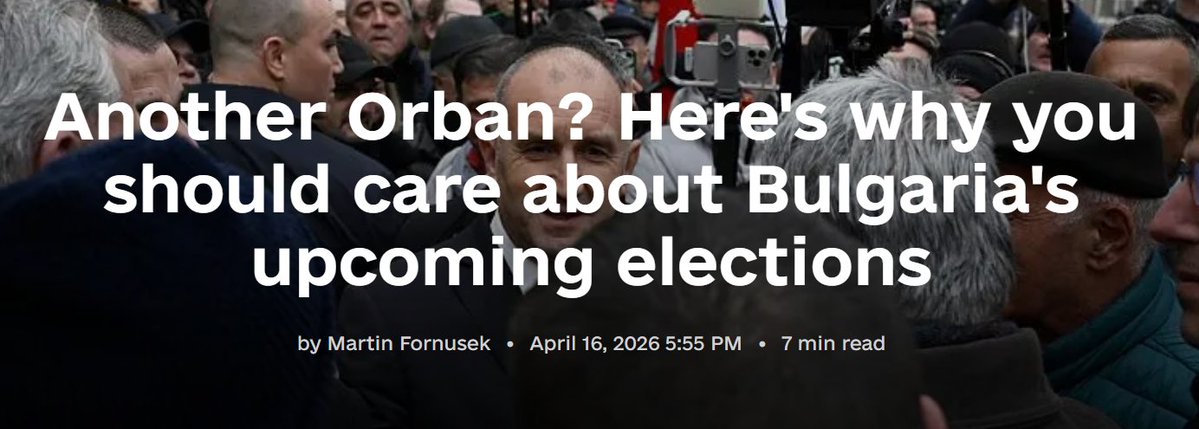
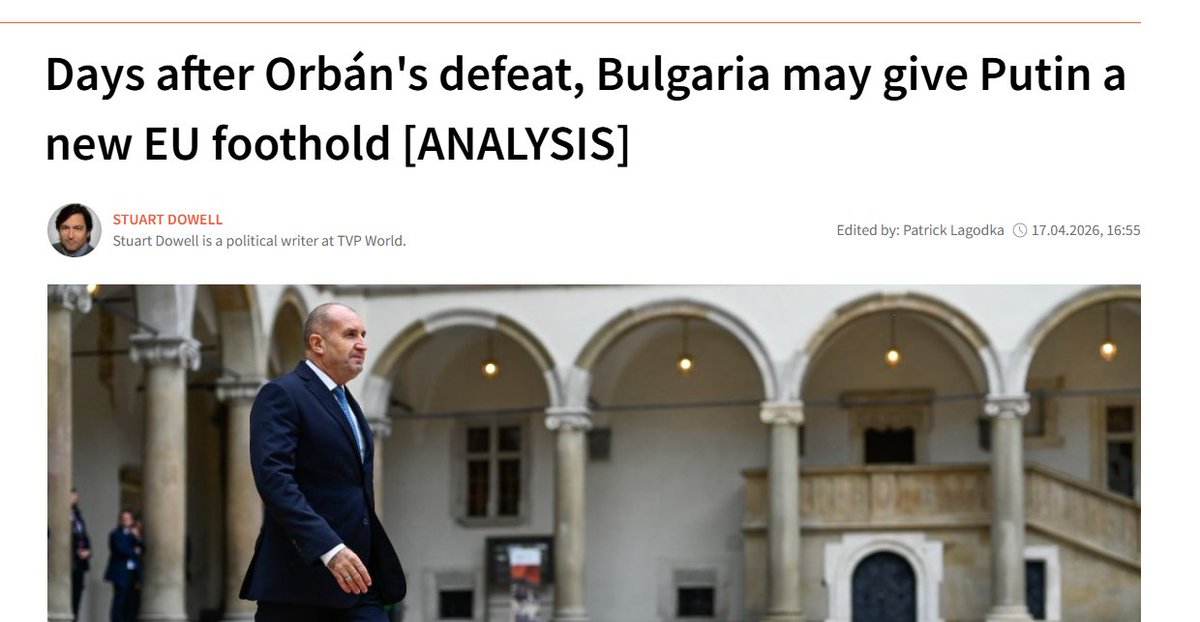
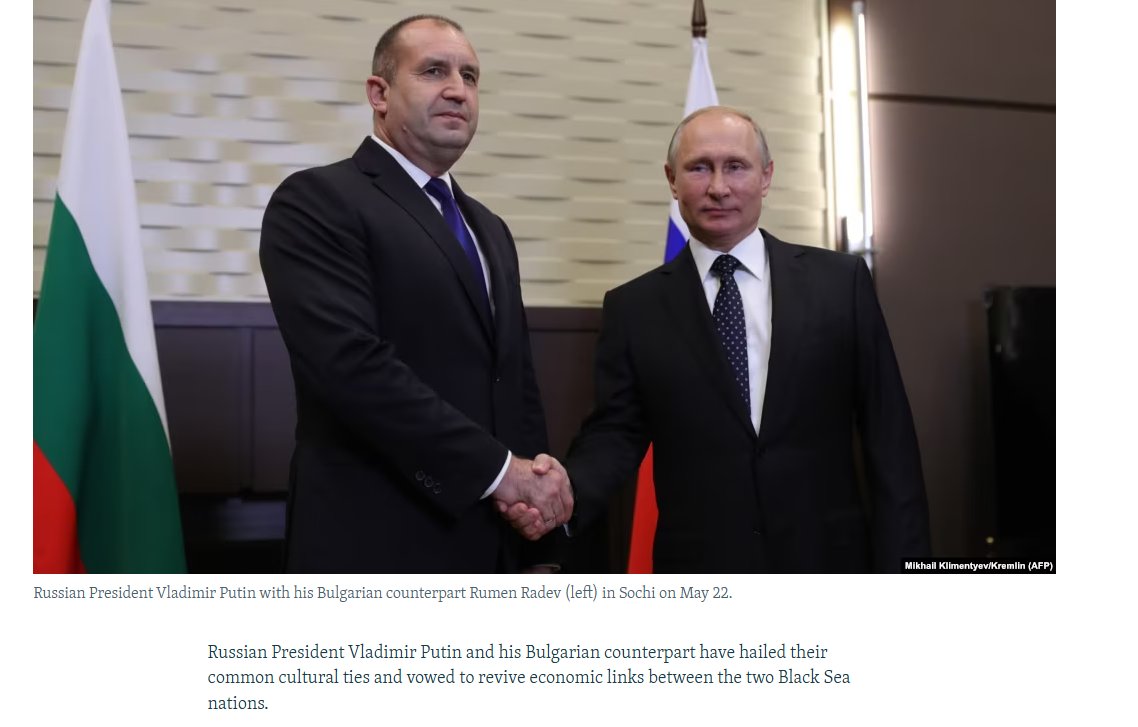
Will Rumen Radev, the former air force general and likely winner of Bulgaria’s parliamentary election this Sunday, known for his pro-Russian stands and opposition to military support for Ukraine, become “Europe´s new Viktor Orbán”? Short answer: No. Long answer: No, but. ⬇️ Image
Image
Image
Image
The basics: Rumen Radev, a former fighter pilot and air force general whose military training began back in the days of the Warsaw Pact, and who served as Bulgaria’s president from 2016 until January 2026, will in all likelihood win Bulgaria’s parliamentary election this Sunday.
Polls suggest that Radev’s three-party alliance, “Progressive Bulgaria,” founded just weeks ago, will emerge as the strongest force with about 30% of the vote. For years, Radev has also been Bulgaria’s most popular politician in the polls – or at least the least unpopular one.
Radevs resignation in January confirmed long-circulating rumors that he wanted to become Bugaria´s next Prime Minister and was willing to descend into the trenches of party politics he had so often derided as president.
faz.net/aktuell/politi…
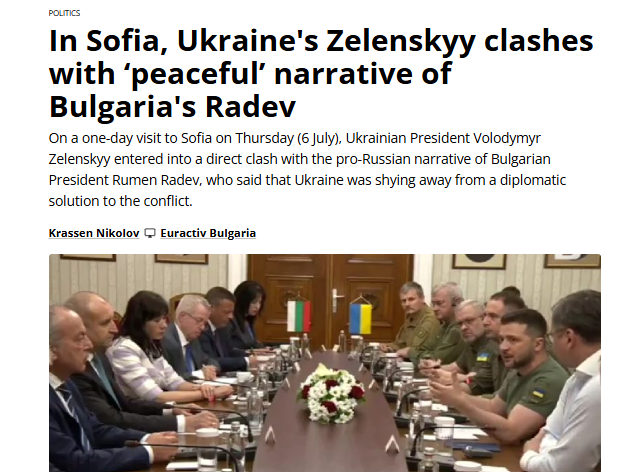
In recent years, Radev has repeatedly made statements of the kind often downplayed as “pro-Russian” – while in substance “pro-Russian” remarks are usually little more than a euphemism for positions that condone Moscow’s imperialism and Putin’s dictatorship. Image
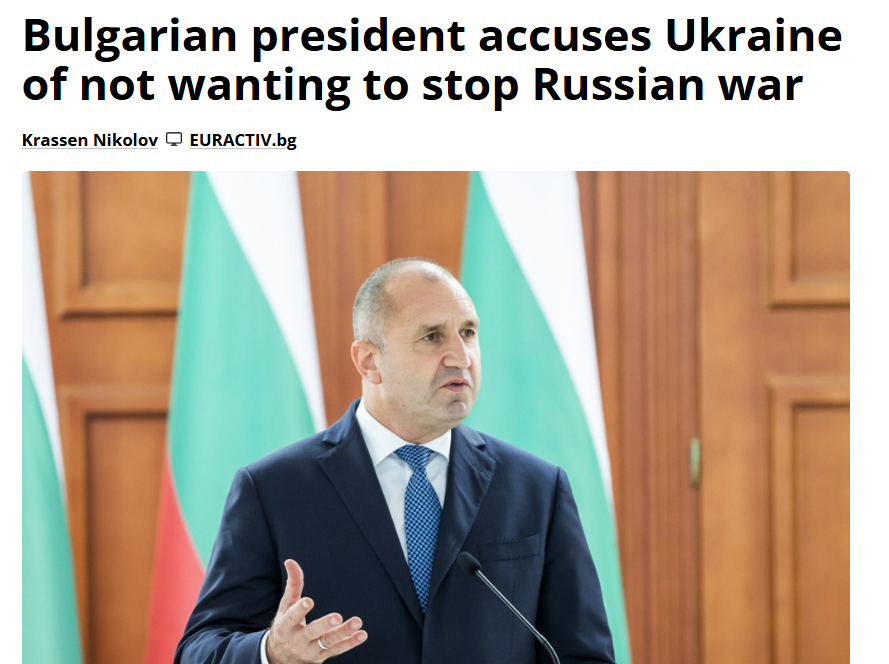
Radev’s media strategy is worth a closer look. Since his resignation, he has given just a few interviews. One he granted to German newspaper “Berliner Zeitung”, dubbed “Berlinskaya Pravda” (BP) in Germany because of its pro-Kremlin stance. Image
“Berliner Zeitung” is hardly read in Germany, but it does occupy the whiny ‘not everything was bad under communism’ niche with a certain success. It gives space to “alternative voices”, usually pro-Kremlin ones.
Radevs key message to the paper was just that: A pro-Kremlin line wrapped in alleged pragmatism: “We have to talk to Russia. (…) We have to move to the next level and think about peace.”
Unfortunately, the interviewers did not ask Radev what any journalist should have asked as a follow-up question: How exactly what he persuade Putin to “move to the next level”, stop invading Ukraine and "think about peace" ?
In Bulgaria, Radev (just as long-serving former Prime Minister and allegedly “pro-western” political veteran Boyko Borissov) gave an interview to YouTuber Martin Karbovski, whose business is spreading “alternative facts”, aka Kremlin propaganda.
Titles and questions of Karbovskis programs include “Is Russia Really the Enemy?” or “The Real Threat to Bulgaria Is Not Russia, but the EU.” You can guess where this goes. Concern trolling, Kremlin style, with a Bulgarian dialect. A business model.
Karbovski’s guests are usually “EU sceptics” and other “friends of Russia,” such as the Bulgarian nationalist leader Kostadin Kostadinov. Or Russia itself. Maria Zakharova who could spread Kremlin propaganda on Karbovski’s podcast without being troubled by inconvenient questions. Image
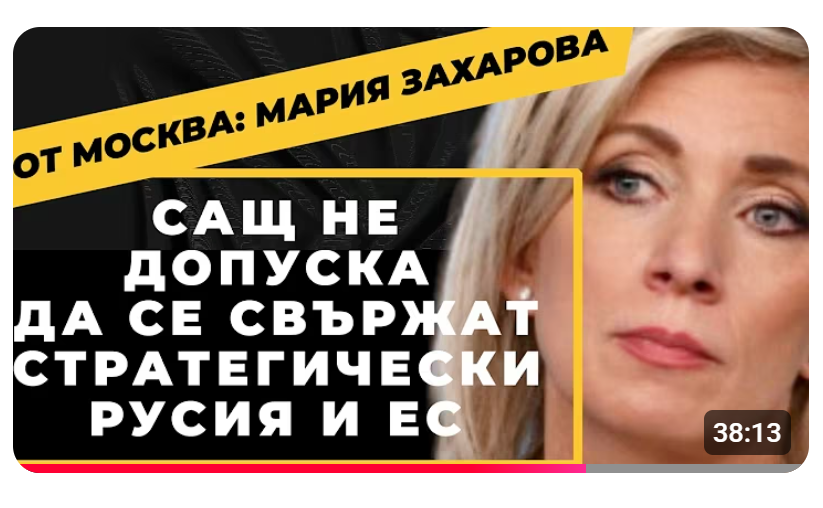
The fact that Radev gave this particular podcaster one of just two interviews during his campaign speaks volumes. It is in line with years of pro-Kremlin and Anti-Ukraine takes. Image
Image
But here comes the “but”: Fears that Sofia could soon be governed by a “new Orbán” are beside the point. They miss the essence of Bulgarian politics. First, Radev doesn´t have the numbers.
Orbán ruled Hungary with a two-thirds majority. Radev’s party may well become the strongest force in the new parliament this time – but it will be far from a two-thirds majority, and even from an absolute majority of seats. It will be the strongest among the weak, not more.
To govern, Radev would need at least one coalition partner. But he has ruled out a coalition with GERB, the party of Borissov, which will most likely finish second. So Radev would most probably need two coalition partners. Which leaves few options that could actually work.
According to polls, the third-strongest force in the new parliament will probably be the pro-European “We continue the change” party of Harvard graduate Assen Vassilev. It firmly supports Bulgarian and EU backing for Ukraine.
Another factor is that foreign policy played hardly any role in the campaign. The economy and fears of inflation dominated the concerns of most voters. In Bulgaria, beating the drum for Russia may win over fringe groups, but not elections. Bulgaria is not Serbia.
So Radev, a textbook example of an opportunist, could not become the new Viktor Orbán of the EU even if he wanted to. Besides, if things go as they usually go in Bulgaria (and most likely they will), his star will fade just as quickly as it has risen. Image
Bulgarians love noble princes on white horses. But they also get sick of them quickly and chase them away one election later. Yes, there is such a people.(Borissov was an exception to this rule). For more on the Bulgarian elections, see Frankfurter Allgemeine/FAZ: Image

• • •

Missing some Tweet in this thread? You can try to force a refresh

 

Keep Current with Michael Martens

Michael Martens Profile picture

Stay in touch and get notified when new unrolls are available from this author!

Read all threads

This Thread may be Removed Anytime!

PDF

Twitter may remove this content at anytime! Save it as PDF for later use!

Try unrolling a thread yourself!

how to unroll video
  1. Follow @ThreadReaderApp to mention us!

  2. From a Twitter thread mention us with a keyword "unroll"
@threadreaderapp unroll

Practice here first or read more on our help page!

More from @Andric1961

Apr 13
The ousting of Viktor Orbán sends shockwaves through the oxymoronic world of “illiberal democracies.” One region where the impact will be felt most strongly is the Western Balkans, where Orbán had invested substantial financial and political capital. Image
Serbian President Aleksandar Vučić, Bosnian Serb separatist leader Milorad Dodik, and Macedonian Prime Minister Hristijan Mickoski have lost their most important political ally in the European Union. And not just that.
Since his re-election in 2010, Orbán had built a network of “illiberal” think tanks & media outlets whose future is now uncertain. Of course, a network built over a decade and a half, with opaque ownership structures, will not disintegrate overnight just because Orbán lost power.
Read 21 tweets
Apr 1
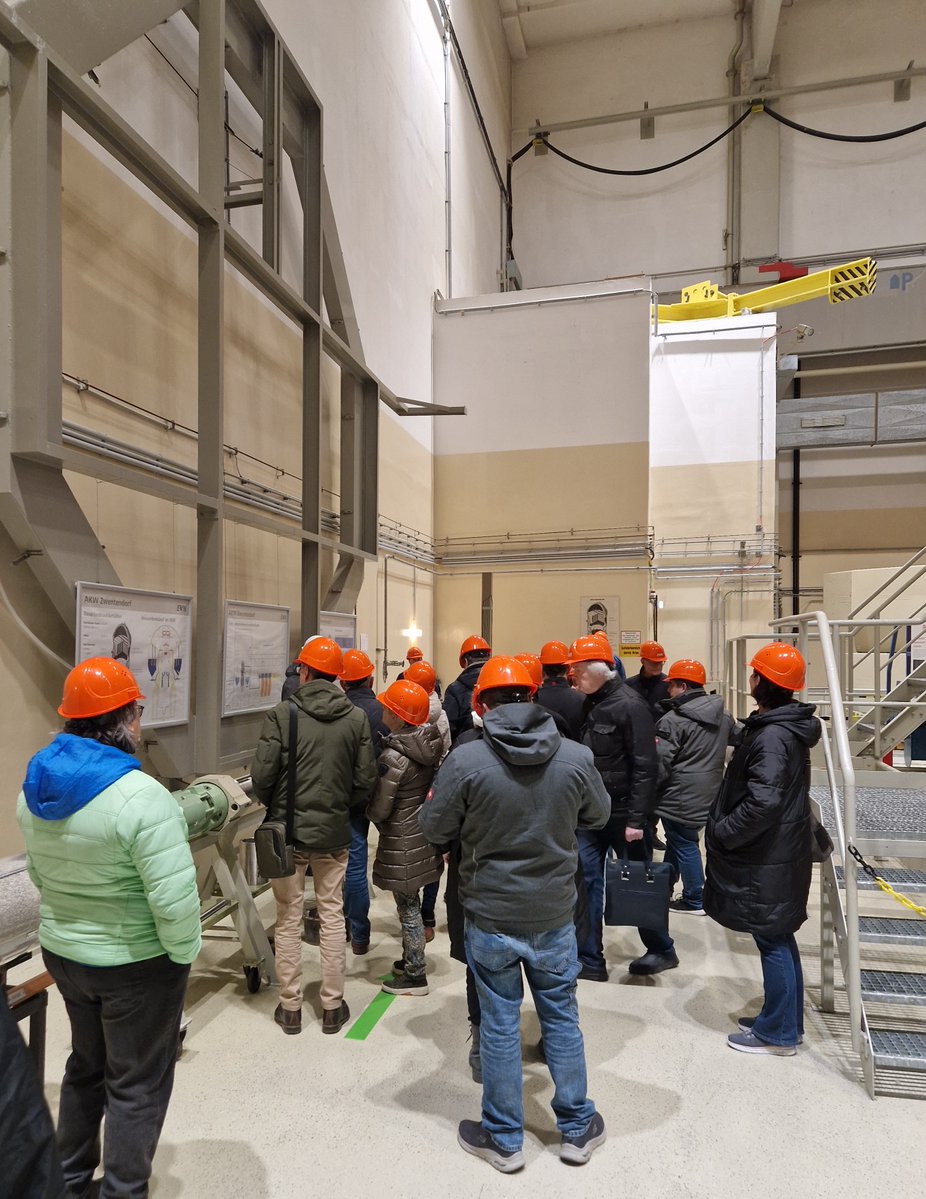
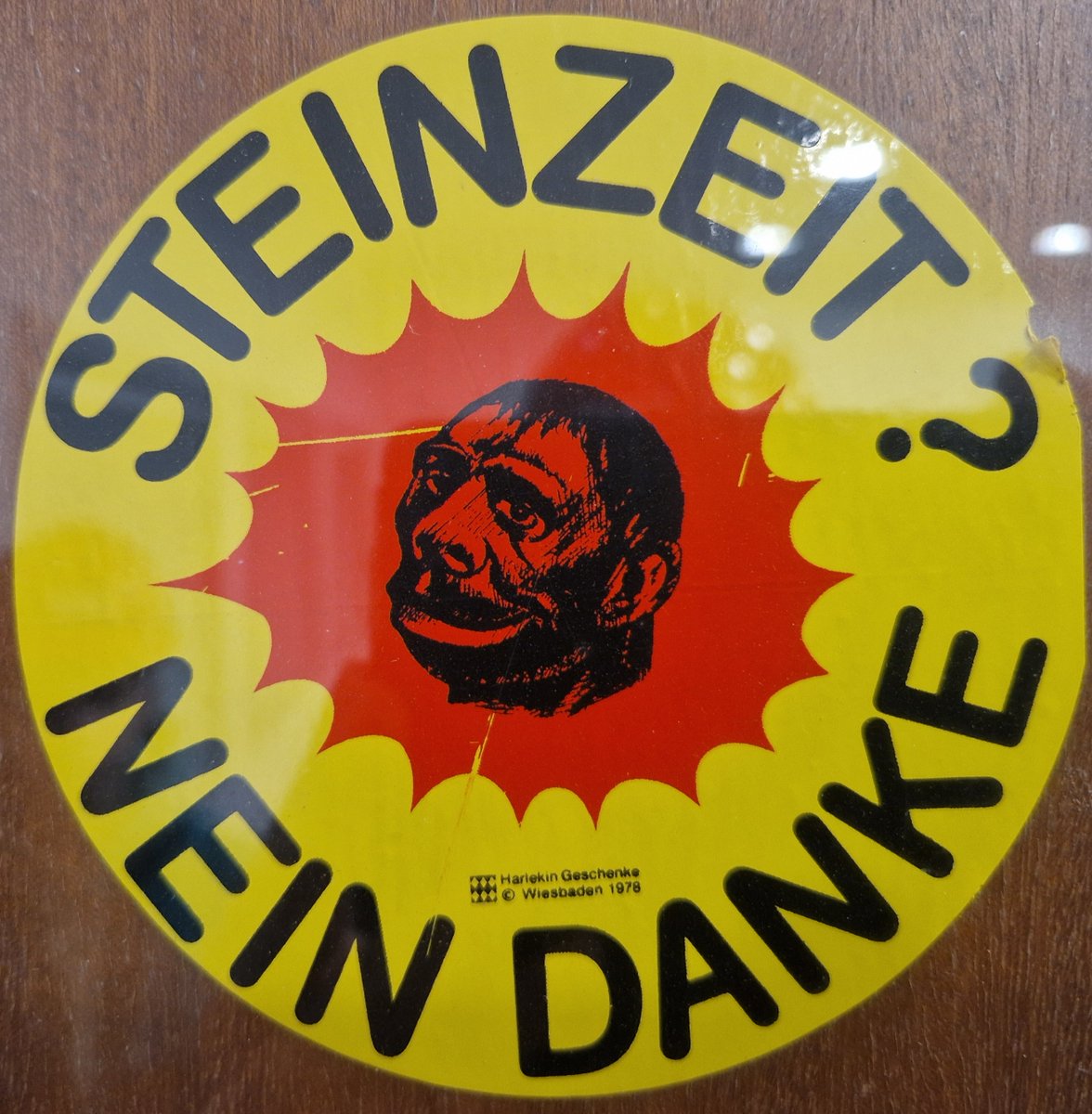
🚨BREAKING: Because of the oil price crisis and the situation in the Strait of Hormuz, Austria has decided to open its only nuclear power plant in Zwentendorf on the Danube, which was completed in 1978 but never connected to the grid due to a negative referendum the same year. ⬇️ Image
On a tour of the plant for a group of selected nuclear experts and interested citizens, organized by the Austrian government and the responsible energy company EVN, details were given on the plans for the opening of Austria´s only nuclear facility. Image
“As a small industrialized country, Austria can´t afford to do without nuclear energy in view of rising oil prices,” sources from the conservative governing party ÖVP told the group about their upcoming “Atomkraftbewusstseinskampagne” ("awareness campaign for nuclear energy") Image
Image
Image
Read 24 tweets
Feb 7
How a gang of corrupt politicians, judges, and prosecutors in Romania systematically robs Romanian and European taxpayers. A report based on the brilliant investigative work by @RecorderRomania and my own conversations in Bucharest. ⬇️
Last December, a two-hour documentary titled “Justiție capturată” (“Captured Justice”) was released by Recorder on YouTube. It has been viewed more than 5 million times so far. And it has angered millions of Romanians – for good reasons.
It should anger other Europeans as well, as it is also their money that is being stolen. The documentary shows how corrupted members of the executive and the legislative branch in Romania ensure that corruption cases end without punishment even when the evidence is clear.
Read 23 tweets
Feb 4
Women are not inferior to men – they are capable of doing everything men can do. Take the case of Kosovo, were president Vjosa Osmani convincingly demonstrates that for the sake of a political career she can be just as spineless as her male colleagues. ⬇️
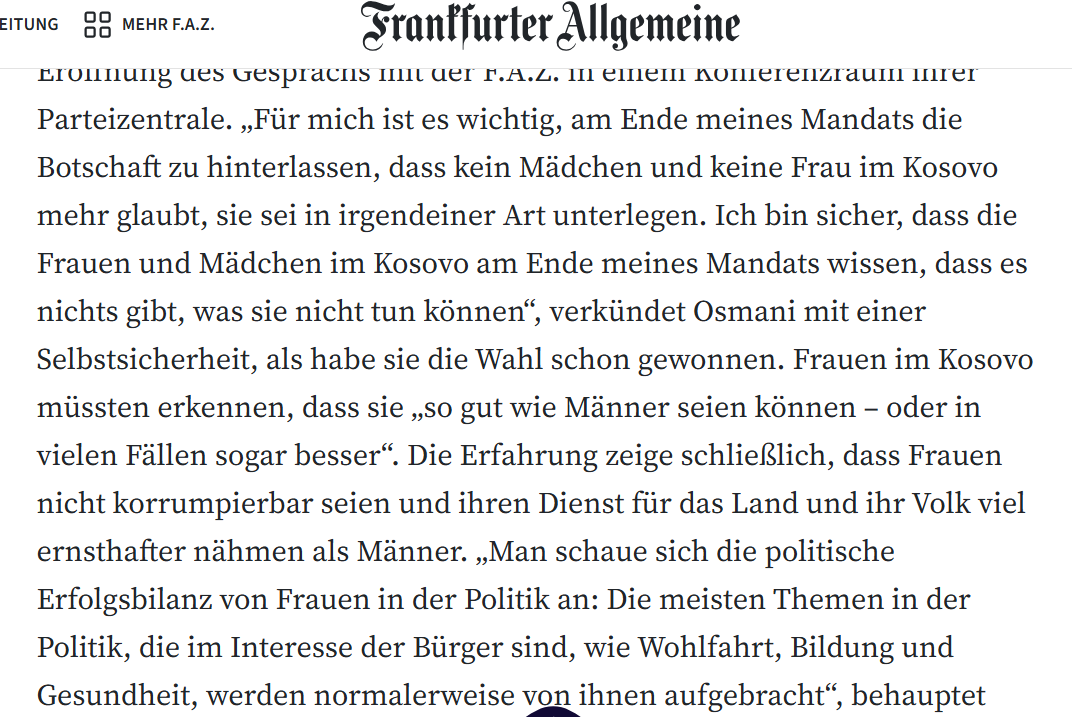
In a 2019 interview with the Frankfurter Allgemeine Zeitung (FAZ), the future Kosovar president Vjosa Osmani talked a lot about her (legitimate and important) goal to strengthen the role of women in Europe´s youngest state. Among other things, Mrs. Osmani said:
“For me, it is important that at the end of my term I leave behind the message that no girl and no woman in 🇽🇰will ever again believe she is in any way inferior. … I am sure that by the end of my term, the women and girls in 🇽🇰will know that there is nothing they cannot do.” Image
Read 25 tweets
Feb 2
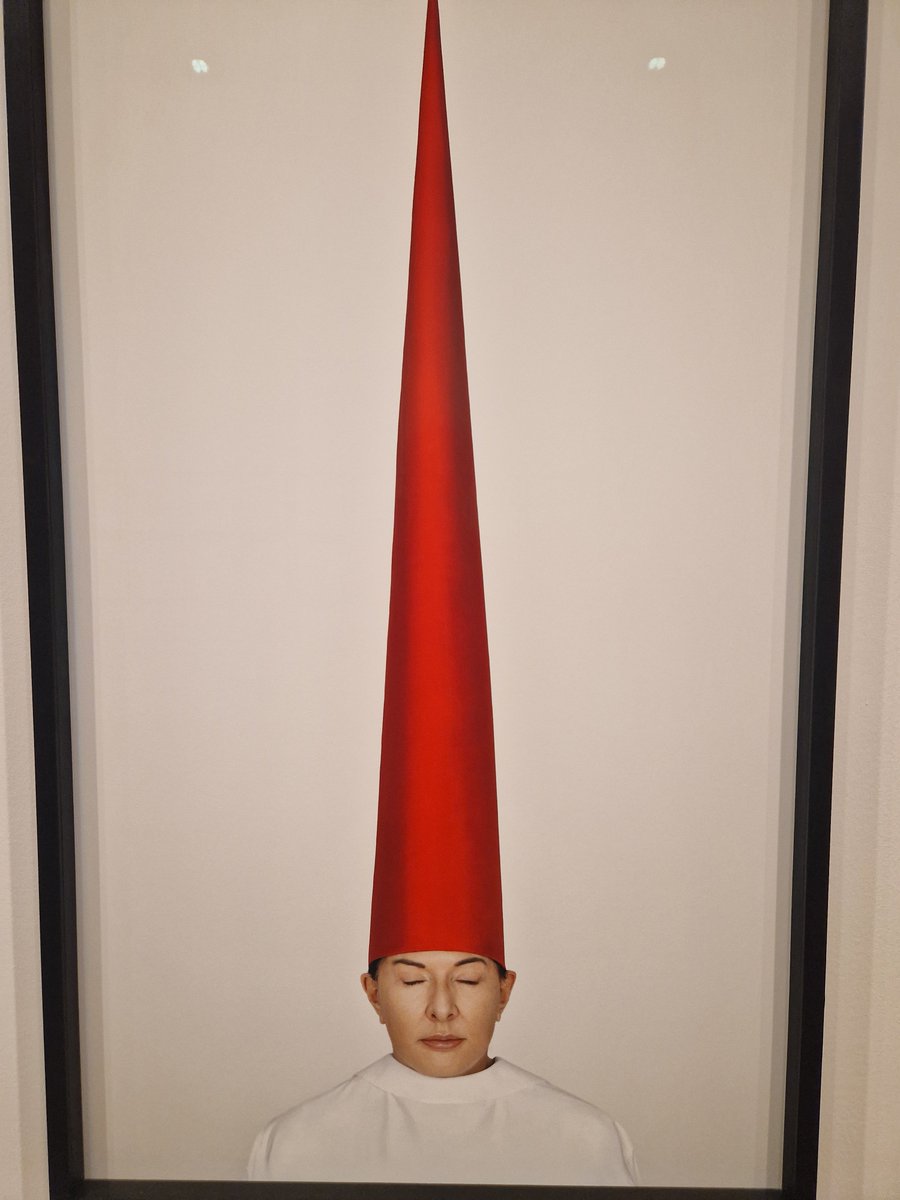
Visited the large Marina Abramović exhibition in Vienna, which was previously shown in London. While I find Abramović pretentious, I understand and respect that many people consider her work moving and important. This is about something else – about Western Balkan stereotypes. Image
While visiting the exhibition at the Albertina Modern – one of Europe’s most prestigious art museums – I started wondering: What kind of people are behind the accompanying wall texts for this exhibition? They seem to have a rather remarkable mindset.
albertina.at/en/albertina-m…
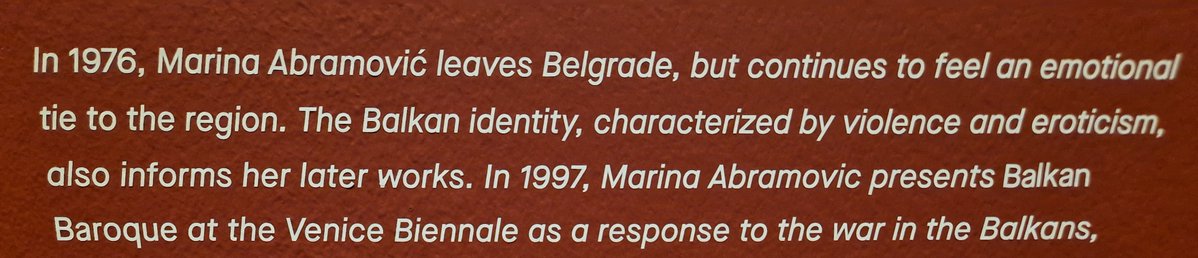
For example, they wrote the following explanation of the artist’s life and work: “In 1976 Marina Abramović leaves Belgrade, but continues to feel connected to the region. The Balkan identity, characterized by violence and eroticism, also informs her later works.” Excusez-moi? Image
Read 23 tweets
Jan 13
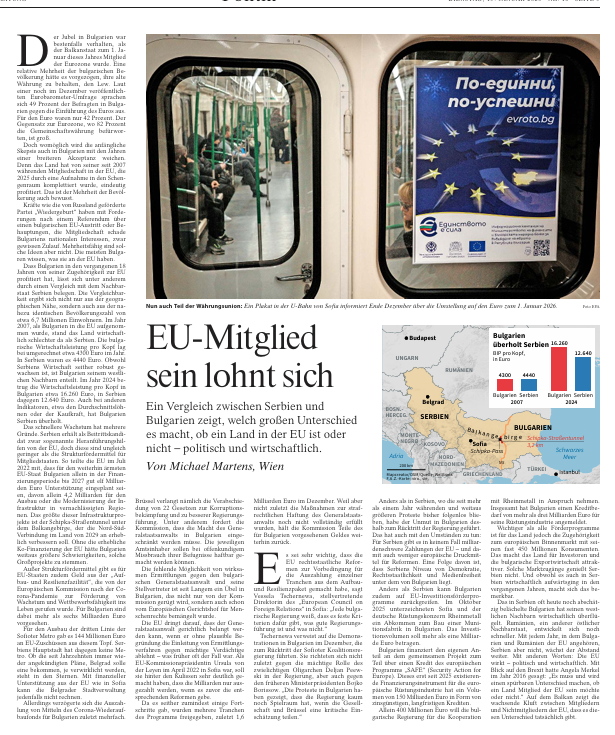
Within just a decade, Bulgaria – once lagging behind – has not only caught up with, but surpassed Serbia economically. Not because Bulgarians are smarter or more diligent than Serbs. But because it does make a measurable difference whether a country is in the EU or not.⬇️ 🧵⬇️. Image
In 2007, when Bulgaria joined the EU, the country had a lower GDP per capita than Serbia, according to World Bank data. Today, Bulgaria’s GDP per capita is more than $4,000 higher than Serbia’s. Average wages and purchasing power are also higher.
So did Bulgaria experience some economic miracle? No. Or rather: The “miracle” is called EU membership. More precisely: This is about access to billions of Euros in European funds and, more importantly, being part of a huge market of 460 million participants.
Read 24 tweets

Did Thread Reader help you today?

Support us! We are indie developers!


This site is made by just two indie developers on a laptop doing marketing, support and development! Read more about the story.

Become a Premium Member ($3/month or $30/year) and get exclusive features!

Become Premium

Don't want to be a Premium member but still want to support us?

Make a small donation by buying us coffee ($5) or help with server cost ($10)

Donate via Paypal

Or Donate anonymously using crypto!

Ethereum

0xfe58350B80634f60Fa6Dc149a72b4DFbc17D341E copy

Bitcoin

3ATGMxNzCUFzxpMCHL5sWSt4DVtS8UqXpi copy

Thank you for your support!

Follow Us!

:(