📝💡𝐖𝐞𝐞𝐤𝐥𝐲 𝐂𝐃𝐑 𝐇𝐢𝐠𝐡𝐥𝐢𝐠𝐡𝐭𝐬💡📝
📰 Here's your round-up of top #CarbonDioxideRemoval News / Developments from this week (20 April - 26 April 2026):
📺:
🧵1/
📰 Here's your round-up of top #CarbonDioxideRemoval News / Developments from this week (20 April - 26 April 2026):
📺:
🧵1/
Carbonyx raised $1.2M to convert mining waste into silica & carbonates for CDR.
betakit.com/carbonyx-raise…
@AltCarbonIndia delivered 2,500t ERW credits to Mitsui O.S.K. Lines.
altcarbon.com/press-releases…
BCarbon issued 80,000 verified CDR credits from Carbon Rho’s Red River pilot project.
decarbonfuse.com/posts/bcarbon-…
CURA Climate and TITAN Group partnered to validate low-carbon cement technology.
curaclimate.com/press/cura-and…
Mangrove Systems acquired biochar CDR platform Grain Ecosystem.
esgtoday.com/mangrove-syste…
@kita_earth & Gallagher launched risk intelligence service for CDR projects.
kita.earth/blog/kita-gall…
Capture6 secured financing to scale brine-to-freshwater while removing up to 25,000 tCO₂/yr.
linkedin.com/posts/carbonre…
Verra issued the first credits under its afforestation, reforestation, and revegetation (ARR) methodology, VM0047.
verra.org/verra-approves…
Elkem sold biocarbon assets to CHAR Technologies, entering a 5-year supply agreement for 62,500 tonnes.
biochartoday.com/news/elkem-and…
Altitude partnered with Engrow for +425,000t CDRs from Biochar Facilities in India.
altitudecarbon.com/news/altitude-…
@Isometric_HQ expanded into Environmental Attribute Certificates, becoming the first certifier to support CDR, superpollutant reduction, and EACs on a single registry.
isometric.com/writing-articl…
Chestnut Carbon doubled its footprint in Southeast U.S. to nearly 70,000 acres of restored forests.
prnewswire.com/news-releases/…
Three Tigasfera biochar facilities added to Puro.earth's supplier list.
linkedin.com/posts/announce…
Climate Impact Partners partnered with Aviva Investors on Colombian afforestation project.
climateimpact.com/news-insights/…
Climeworks & Stockholm Exergi partnered on BECCS project and targets 800,000 tCO₂/yr from 2028.
linkedin.com/posts/climewor…
Verde Resources & Oregon Biochar Solutions partnered to integrate biochar into asphalt.
biochartoday.com/news/verde-res…
NoviqTech’s Coralia and A Healthier Earth launched 2Mt biochar project generating 550k credits.
biochartoday.com/news/noviqtech…
Canadian Discovery Ltd. released the geological carbon storage atlas of Eastern Canada.
cdl.canadiandiscovery.com/news/new-atlas…
The Rainbow Biogenic carbon capture and storage methodology is open for public consultation. Deadline: 21 May 2026
docs.rainbowstandard.io/~/changes/229/…
Gold Standard has launched its first methodology for biochar-based CDR. Consultation closes: 22 May 2026
goldstandard.org/consultations/…
The UpLink–World Economic Forum Innovation Challenge is open for CDR startups. Applications close 4 June 2026.
uplink.weforum.org/systems-indust…
Italy could reach net-zero by 2050 via CDR scale-up, per new @CarbonGap & B3 Carbon report.
carbongap.org/deploying-cdr-…
CO2RE published a report on the challenges of scaling up CDR across the UK, EU, US and beyond & how they can be addressed.
co2re.org/publication/sc…
Report by @CarbonGap and Deloitte North and South Europe (NSE) highlighted untapped CDR potential in wastewater, concrete, and mining waste sectors
carbongap.org/new-report-hig…
@xprize Carbon Removal released its Post-Prize Impact Report, highlighting major progress like 2,800+ jobs created, 243,552 tonnes of CO₂ removed, and over $3.3B in capital mobilized.
xprize.org/news/post-priz…
@cdr_fyi noted gaps between projected vs real CDR performance in new article.
cdr.fyi/blog/durable-c…
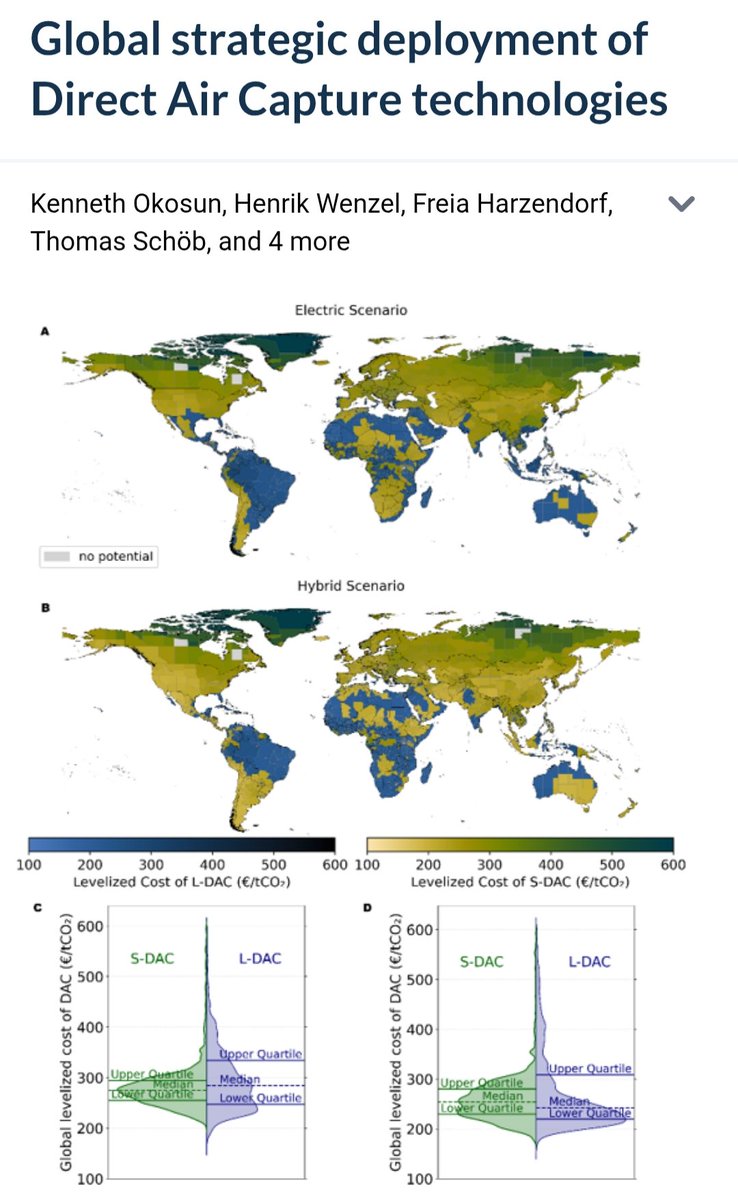
Forest-based BECCS likely to raise emissions for decades, per new study.
nature.com/articles/s4189…
Myno Carbon technical paper showed biochar improves hydrocarbon remediation and removes up to 2.08 kg CO₂e/kg.
…-corp-46516649.hubspotpagebuilder.com/biochar-for-hy…
betakit.com/carbonyx-raise…
@AltCarbonIndia delivered 2,500t ERW credits to Mitsui O.S.K. Lines.
altcarbon.com/press-releases…
BCarbon issued 80,000 verified CDR credits from Carbon Rho’s Red River pilot project.
decarbonfuse.com/posts/bcarbon-…
CURA Climate and TITAN Group partnered to validate low-carbon cement technology.
curaclimate.com/press/cura-and…
Mangrove Systems acquired biochar CDR platform Grain Ecosystem.
esgtoday.com/mangrove-syste…
@kita_earth & Gallagher launched risk intelligence service for CDR projects.
kita.earth/blog/kita-gall…
Capture6 secured financing to scale brine-to-freshwater while removing up to 25,000 tCO₂/yr.
linkedin.com/posts/carbonre…
Verra issued the first credits under its afforestation, reforestation, and revegetation (ARR) methodology, VM0047.
verra.org/verra-approves…
Elkem sold biocarbon assets to CHAR Technologies, entering a 5-year supply agreement for 62,500 tonnes.
biochartoday.com/news/elkem-and…
Altitude partnered with Engrow for +425,000t CDRs from Biochar Facilities in India.
altitudecarbon.com/news/altitude-…
@Isometric_HQ expanded into Environmental Attribute Certificates, becoming the first certifier to support CDR, superpollutant reduction, and EACs on a single registry.
isometric.com/writing-articl…
Chestnut Carbon doubled its footprint in Southeast U.S. to nearly 70,000 acres of restored forests.
prnewswire.com/news-releases/…
Three Tigasfera biochar facilities added to Puro.earth's supplier list.
linkedin.com/posts/announce…
Climate Impact Partners partnered with Aviva Investors on Colombian afforestation project.
climateimpact.com/news-insights/…
Climeworks & Stockholm Exergi partnered on BECCS project and targets 800,000 tCO₂/yr from 2028.
linkedin.com/posts/climewor…
Verde Resources & Oregon Biochar Solutions partnered to integrate biochar into asphalt.
biochartoday.com/news/verde-res…
NoviqTech’s Coralia and A Healthier Earth launched 2Mt biochar project generating 550k credits.
biochartoday.com/news/noviqtech…
Canadian Discovery Ltd. released the geological carbon storage atlas of Eastern Canada.
cdl.canadiandiscovery.com/news/new-atlas…
The Rainbow Biogenic carbon capture and storage methodology is open for public consultation. Deadline: 21 May 2026
docs.rainbowstandard.io/~/changes/229/…
Gold Standard has launched its first methodology for biochar-based CDR. Consultation closes: 22 May 2026
goldstandard.org/consultations/…
The UpLink–World Economic Forum Innovation Challenge is open for CDR startups. Applications close 4 June 2026.
uplink.weforum.org/systems-indust…
Italy could reach net-zero by 2050 via CDR scale-up, per new @CarbonGap & B3 Carbon report.
carbongap.org/deploying-cdr-…
CO2RE published a report on the challenges of scaling up CDR across the UK, EU, US and beyond & how they can be addressed.
co2re.org/publication/sc…
Report by @CarbonGap and Deloitte North and South Europe (NSE) highlighted untapped CDR potential in wastewater, concrete, and mining waste sectors
carbongap.org/new-report-hig…
@xprize Carbon Removal released its Post-Prize Impact Report, highlighting major progress like 2,800+ jobs created, 243,552 tonnes of CO₂ removed, and over $3.3B in capital mobilized.
xprize.org/news/post-priz…
@cdr_fyi noted gaps between projected vs real CDR performance in new article.
cdr.fyi/blog/durable-c…
Forest-based BECCS likely to raise emissions for decades, per new study.
nature.com/articles/s4189…
Myno Carbon technical paper showed biochar improves hydrocarbon remediation and removes up to 2.08 kg CO₂e/kg.
…-corp-46516649.hubspotpagebuilder.com/biochar-for-hy…
For more updates, subscribe to the Carbon Removal Updates Substack Newsletter:
"Unroll" @threadreaderappcarbonremovalupdates.substack.com
"Unroll" @threadreaderappcarbonremovalupdates.substack.com
• • •
Missing some Tweet in this thread? You can try to
force a refresh