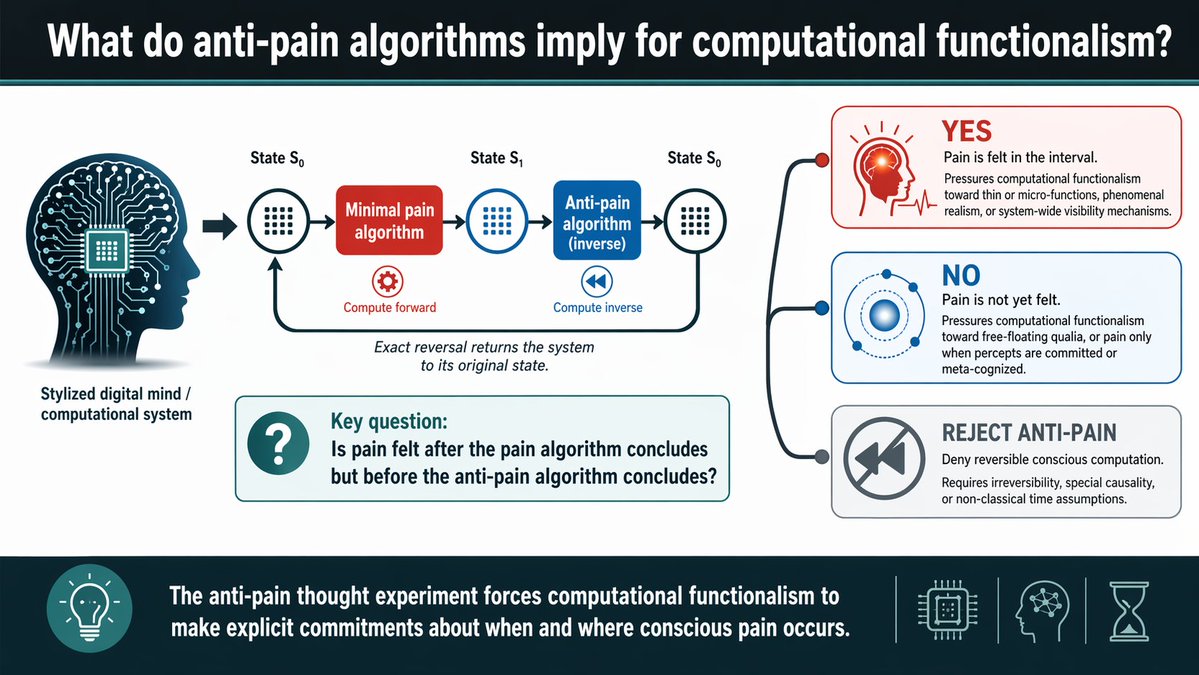
New preprint from me and @chris_percy: "What do anti-pain algorithms imply for computational functionalism?" Brain emulations meet reversible computation and really weird qualia.
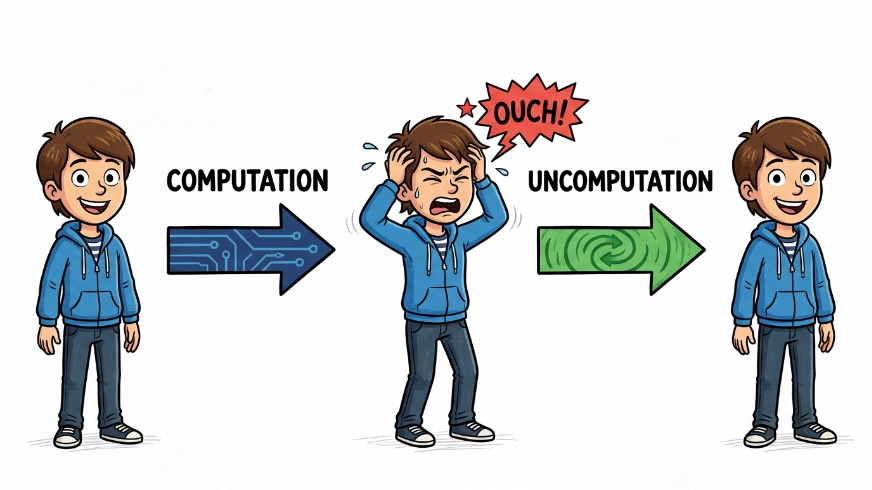
Any classical computation can be implemented as a reversible computation (Bennett), so it can be run from time t0 to time t1, and then "uncomputed" by running it backward so at time t0 we are back at the original state. Great if you care about the Landauer limit!
What if we run (a deterministic) brain emulation like this? If it has a phenomenal experience (which functionalism assumes) of pain as we go from t0 to t1, what does it experience between t1 and t2 as we uncompute? Is there "anti-pain"? Was anything felt at t1?
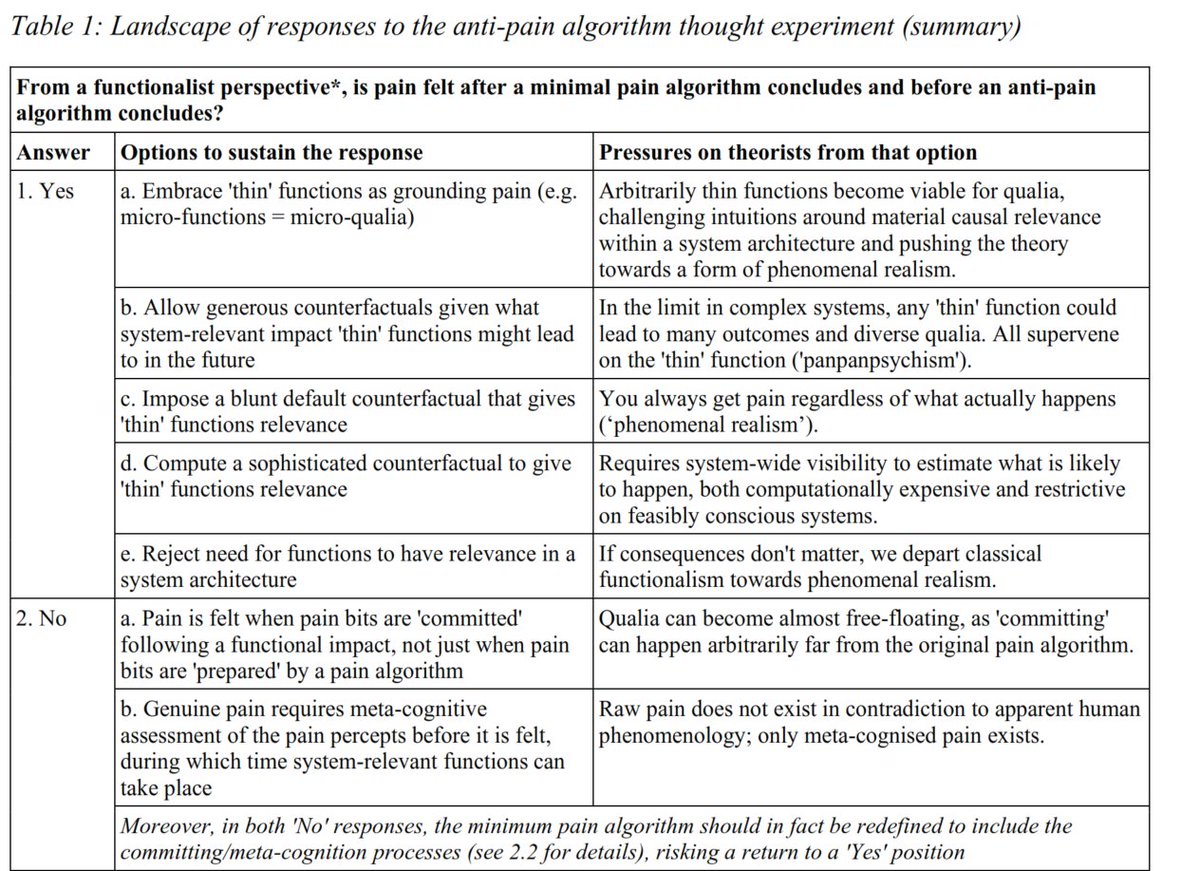
We assume some minimal algorithm that has the experience and cannot be made simpler without losing it. If every logic operation has qualia, then we end up in "pan-panpsychism" where every logic operations contains a flavour of every possible experience!
At t1 we might not even know if the uncomputation will happen, so it seems plausible that there should be pain experience. But functionalism says only the function of a computation matters: the whole exercise is just the identity function.
Maybe there is no pain at t1, just 'uncommitted pain bits' that later gets committed to a phenomenal ledger, for example if the emulation acts on them. But now qualia are almost free-floating.
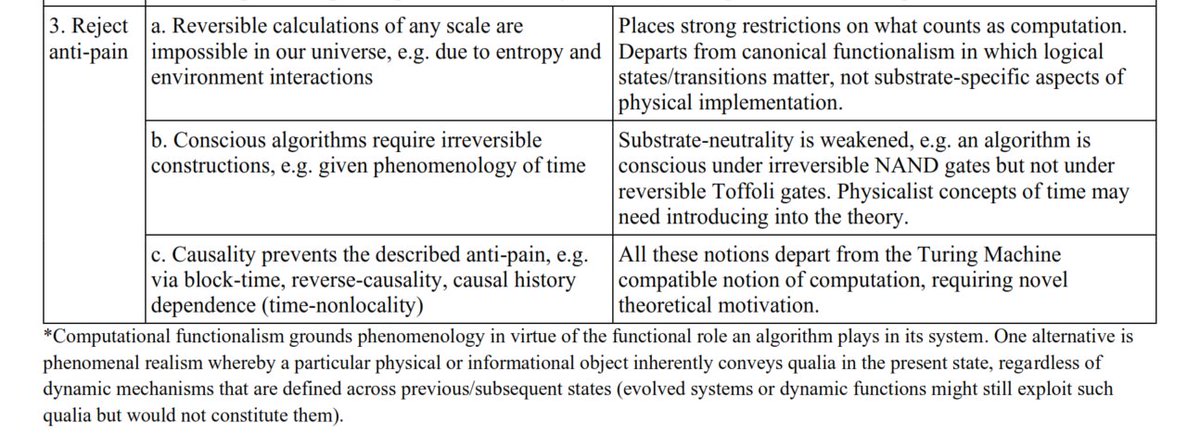
Maybe this experiment cannot be done. One could try rejecting the possibility of reversible calculations, assert that consciousness algorithms are not reversible (a substrate assumption), or claim experiences depend on causal histories rather than states.
Like any proper philosophy paper it leads to uncomfortable conclusions.
I also suspect non-functionalist models are vulnerable to similar weirdness, it is just that it is easier to envision anti-pain algorithms than e.g. all particles of a body reversing velocities and going back to a starting state, which would be the physicalist version.
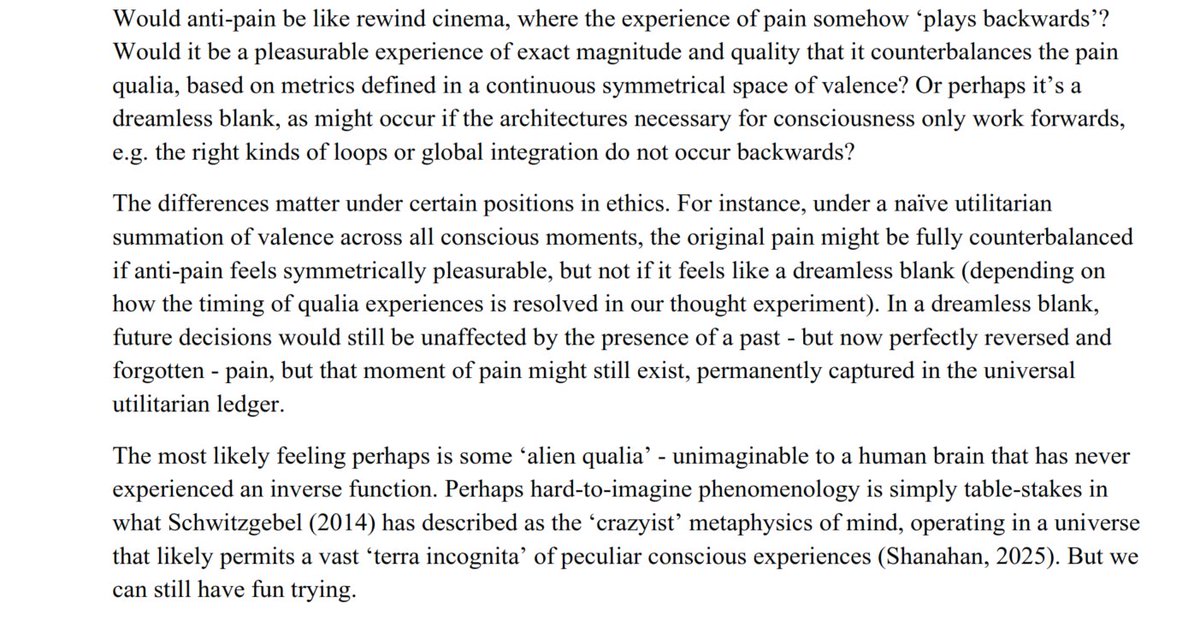
Anti-pain experiences are intriguing. What do they feel like, if they feel like anything?
• • •
Missing some Tweet in this thread? You can try to
force a refresh

At a AI safety workshop 2011 we considered who we would trust most with AGI, and had the awkward realization "Military and intelligence actually think about security and safety, unlike us academics, companies and politicians." What we missed was political leadership of military.
The problem with the Hegseth situation is that it seems to be more about getting the right kind of obeisance than thinking about what the tech actually is about. It also hints that the leadership does not care overly about crucial constitutional, legal and ethical red lines.
I am profoundly civilian. Yet professional military people I have met have always struck me as having their head screwed on right in regard to dangerous weapons, tools that can turn on them, and the need for clear chains of command that cannot be suborned.
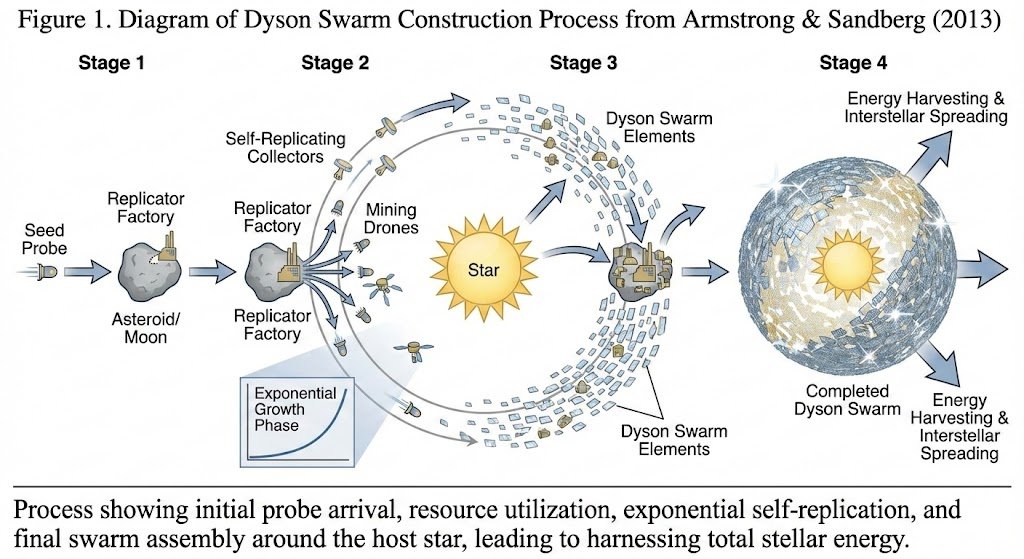
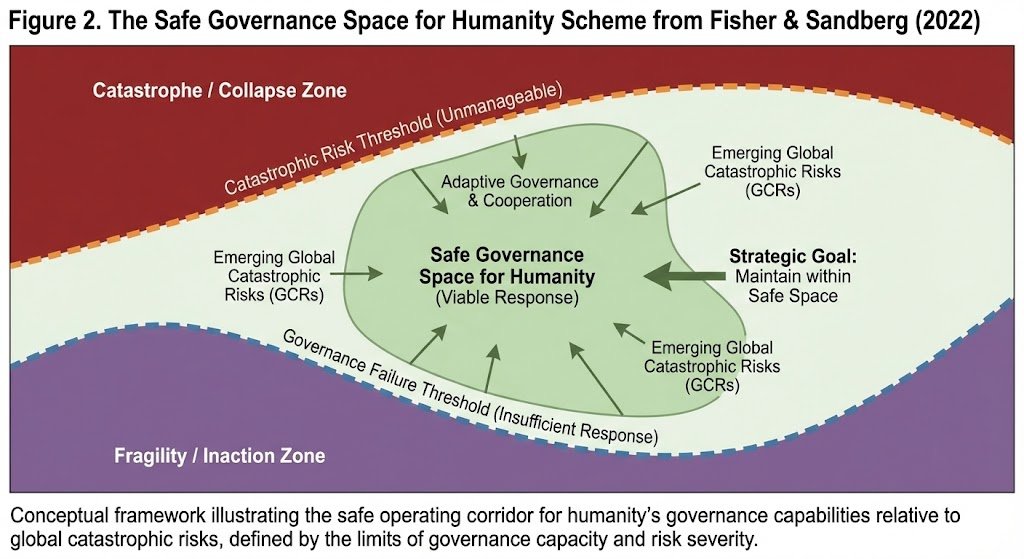
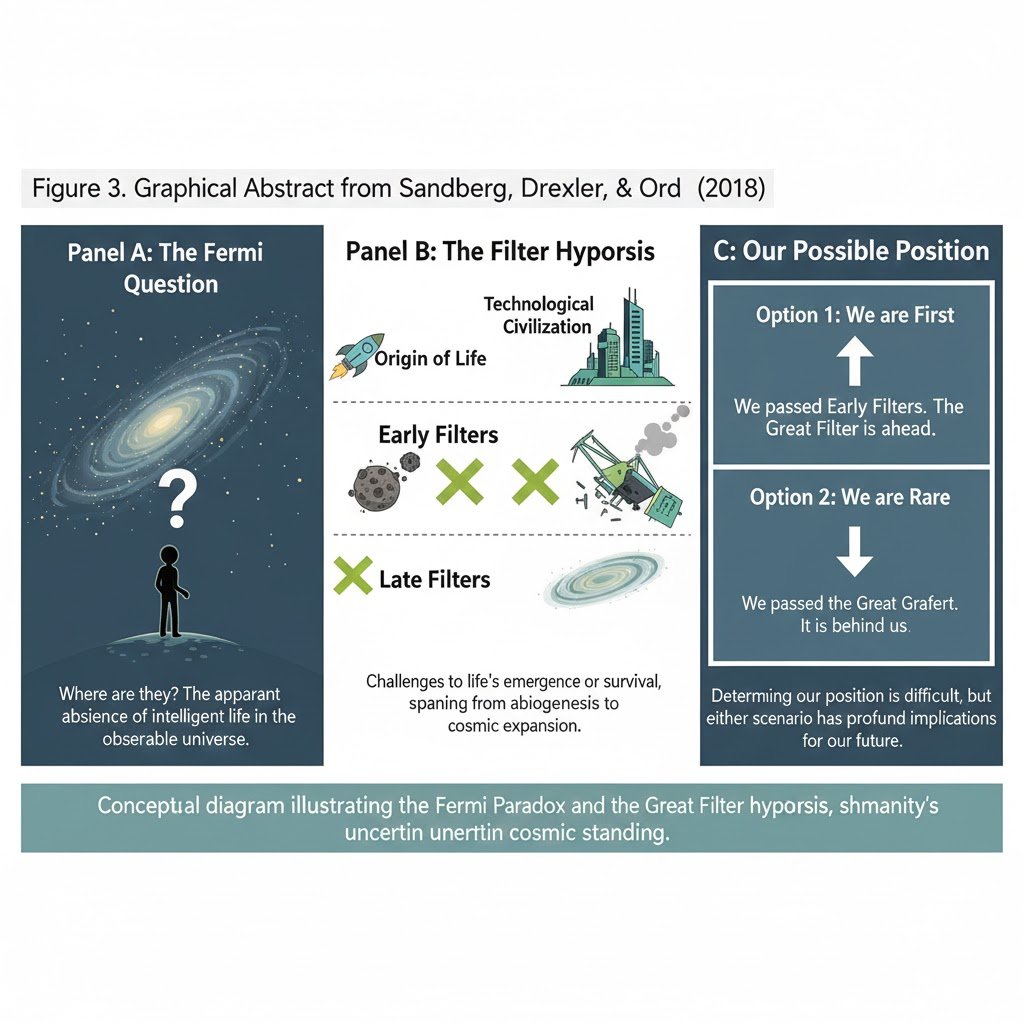
OK, color me officially impressed: Nano Banana Pro can make good diagrams based on papers. This one can go straight into my presentations.
If we want to really quibble, the doubled labels are a bit infelicitous. The arrows from the sun to elements and replicator factories are unlabeled; presumably they indicate energy flow. But I just asked for a diagram showing the process in the paper, nothing more.
It succeeded much better when there was a straightforward process to be depicted; graphical abstracts were somewhat handwavy and missed the points made.
Yesterday at @archipelacon I presented "Grand Futures: the Interplay Between Science Fiction and Planning Really Far Ahead" - how the science and science fiction of megascale engineering and longtermism have interacted with each other.
I ended up making a big diagram of who seems to have influenced who/what. Here is a current version (soon to be superseded) as PDF: tinyurl.com/megascalemap
It made me feel mildly like a conspiracy theorist linking stuff with yarn, but this is how the history of ideas actually works: smart people read each other, and respond to their cultural milleu. The challenge is to find the cool places where people have *not* interacted.
I think exposure to generative AI makes many people aware of the Library of Babel in a way they are not ready for. It is one thing to know there is a near-infinite space of possibilities, it is another thing to play around and be led by the latent manifold into the Library.
The thing that makes Borge's story so good is how it erodes meaning by infinity: everything is in there, yet nothing can be found in the noise. AI allows nearly anything to be found, but we become aware that it could have been different.
I meet people who think that getting different answers from a LLM to the same question is profoundly wrong: they assume there can only be one response to the same question. And sure, for some questions the spread of right answers is narrow.
Prediction: people will say o3 scoring 25.2% on FrontierMath is nothing, "after all it is not perfect." Conveniently forgetting that these problems are ridiculously hard (did 87.7% on GPQA Diamond). And some will keep on talking about stochastic parrots... like parrots.
The key lesson from LLMs has been that sufficiently capable token prediction can more or less do anything, and simulated reasoning allows it to carry further. A bit like how higher level pattern generators can make already general biological neural networks do useful tasks.
The recent discussion triggered by @tylercowen about what investment strategies AI doomers ought to exhibit (he thinks they should short the market, everybody else disagrees) got me thinking about my own investment approach.
It is mostly based on uncertainty. Empirically we know people are pretty bad at long-term predictions.
I also suspect I am a bit of a naïf. But here goes:
My approach to the future is to roughly assume 1/3 chance of a great future (AI, transhumanist singularity), 1/3 chance of a normal future (what most people consider reasonable), and 1/3 chance of a disastrous future. It makes sense to hedge between these futures.