Trump DOJ opposes the release of SPLC grand jury transcripts, but what the memo *doesn't* say speaks volumes. Feds don't dispute the SPLC's account of the Trump admin's "gross misrepresentations" about the informant program.
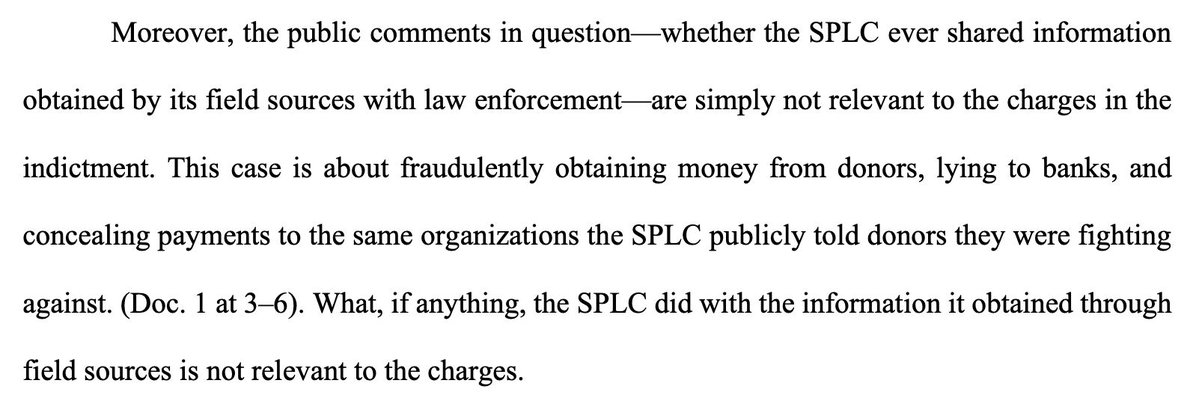
Instead, the US Attorney says that's "not relevant."
Why that matters.🧵
Instead, the US Attorney says that's "not relevant."
Why that matters.🧵
The SPLC's motion seeking the grand jury records rattled off a series of "false statements" by Trump and his surrogates about Charlottesville and the informants program.
The group said info gathered there thwarted a terrorist attack and led to arrests. allrisenews.com/p/splc-tipped-…
The group said info gathered there thwarted a terrorist attack and led to arrests. allrisenews.com/p/splc-tipped-…
Debunking Trump's revisionist history of Charlottesville, SPLC said it handed the FBI a 45-page “Event Alert” with informant-gathered information.
The dossier tipped off agents about the names, photos, criminal histories and "weapons of choice of the people there."
The dossier tipped off agents about the names, photos, criminal histories and "weapons of choice of the people there."
Given the chance to respond to any of this, the U.S. Attorney for the district prosecuting the SPLC — and no other line prosecutor — punted entirely.
Instead, the prosecutor premises arguments on hypothetically "crediting" the SPLC's account.
Instead, the prosecutor premises arguments on hypothetically "crediting" the SPLC's account.
But the SPLC argues that Trump and his surrogates "misleading" the public about basic facts of the case is relevant because the government may have misled the grand jury.
It's an argument from the first failed prosecution of James Comey.
(Comey's lawyer Abbe Lowell reps SPLC.)
It's an argument from the first failed prosecution of James Comey.
(Comey's lawyer Abbe Lowell reps SPLC.)
Here's the SPLC's original motion seeking access to the grand jury records:
storage.courtlistener.com/recap/gov.usco…
Here's the Trump DOJ's reply:
storage.courtlistener.com/recap/gov.usco…
Compare and contrast the factual and legal arguments that feds leave on the table. </end>
storage.courtlistener.com/recap/gov.usco…
Here's the Trump DOJ's reply:
storage.courtlistener.com/recap/gov.usco…
Compare and contrast the factual and legal arguments that feds leave on the table. </end>
• • •
Missing some Tweet in this thread? You can try to
force a refresh