🧵A very narrow but serious set of overlaps exists:
U.S. scientists linked to CDC and NIH viral surveillance/modeling programs co-authored key hantavirus ecology papers with researchers from China relying on Chinese surveillance data, raising biosecurity red flags.
Similarities to COVID-19 are clear.

U.S. scientists linked to CDC and NIH viral surveillance/modeling programs co-authored key hantavirus ecology papers with researchers from China relying on Chinese surveillance data, raising biosecurity red flags.
Similarities to COVID-19 are clear.
https://x.com/CaffeenHeadache/status/2052123491369943427?s=20
1/ Qualifying researcher #1: Gerardo Chowell (Georgia State University, School of Public Health).
Chowell has NIH Fogarty International Center ties for international epidemiology and population studies.
He contributes to CDC-linked pathogen modeling, including analysis of national wastewater surveillance (NWSS) viral data and service on the editorial board of CDC’s Emerging Infectious Diseases journal.
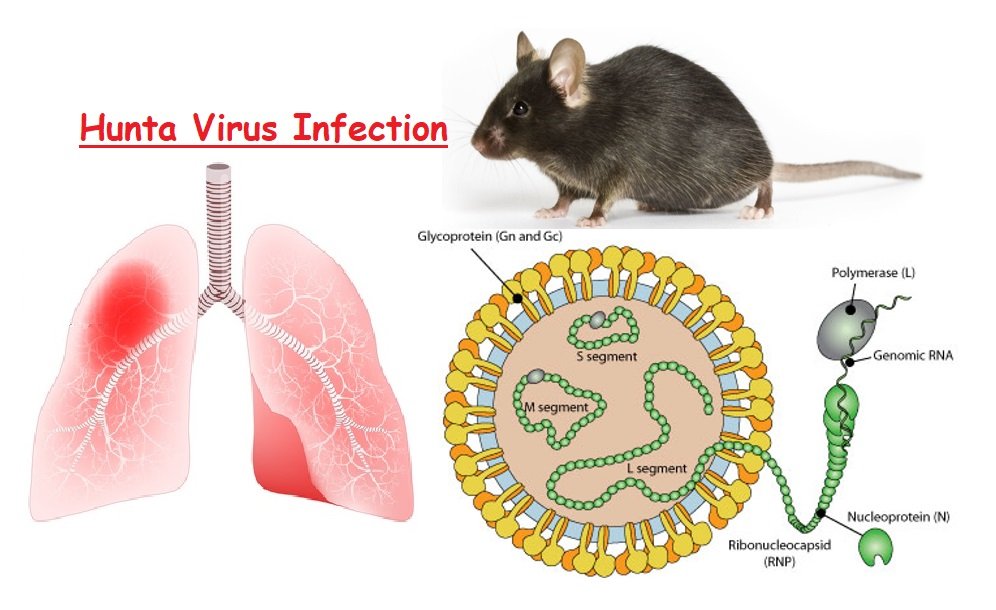
His hantavirus focus: transmission dynamics, spillover forecasting, and ecological drivers.
Chowell has NIH Fogarty International Center ties for international epidemiology and population studies.
He contributes to CDC-linked pathogen modeling, including analysis of national wastewater surveillance (NWSS) viral data and service on the editorial board of CDC’s Emerging Infectious Diseases journal.
His hantavirus focus: transmission dynamics, spillover forecasting, and ecological drivers.
2/ Chowell co-authored the 2018 PNAS paper “Urbanization prolongs hantavirus epidemics in cities.”
It analyzed 48 years of HFRS data from Hunan Province, China—linking urbanization, migration, rodent shifts, land use, and seasonality to prolonged outbreaks.
Multiple co-authors are affiliated with Hunan Provincial institutions (including data from Hunan CDC).
This work required deep access to Chinese field surveillance and rodent sampling.
It analyzed 48 years of HFRS data from Hunan Province, China—linking urbanization, migration, rodent shifts, land use, and seasonality to prolonged outbreaks.
Multiple co-authors are affiliated with Hunan Provincial institutions (including data from Hunan CDC).
This work required deep access to Chinese field surveillance and rodent sampling.
3/ Qualifying researcher #2: Ottar N. Bjørnstad (Penn State, Center for Infectious Disease Dynamics).
Bjørnstad is an NIH Fogarty Senior Research Fellow specializing in epidemic modeling that directly supports surveillance and forecasting. His hantavirus research mirrors Chowell’s—ecological spillover mechanics using real-world data.
He too is a co-author on the exact same 2018 PNAS Hunan hantavirus paper.
Bjørnstad is an NIH Fogarty Senior Research Fellow specializing in epidemic modeling that directly supports surveillance and forecasting. His hantavirus research mirrors Chowell’s—ecological spillover mechanics using real-world data.
He too is a co-author on the exact same 2018 PNAS Hunan hantavirus paper.

5/ The 2018 paper’s Chinese co-authors
Shixiong Hu, Yapin Li, and others from Hunan Province provided the core dataset from mainland Chinese public health and rodent monitoring networks.
Funding was heavily Chinese (National Natural Science Foundation of China, Hunan provincial grants).
No equivalent U.S.-only data could have produced these insights.
Shixiong Hu, Yapin Li, and others from Hunan Province provided the core dataset from mainland Chinese public health and rodent monitoring networks.
Funding was heavily Chinese (National Natural Science Foundation of China, Hunan provincial grants).
No equivalent U.S.-only data could have produced these insights.
6/ National security parallels to COVID-19 lab-leak and origin debates are striking:
CDC/NIH-supported U.S. experts modeling zoonotic hantavirus spillover using data from Chinese institutions (mainland facilities with documented biosecurity challenges).
Hantavirus work involves high-risk rodent handling, viral characterization, and BSL-3/4 practices—precisely the domain alleged in early COVID investigations.
Collaboration creates pathways for technology transfer, data access, and potential dual-use knowledge to a strategic adversary.
Any mainland China partner (not just WIV) is a quagmire.
CDC/NIH-supported U.S. experts modeling zoonotic hantavirus spillover using data from Chinese institutions (mainland facilities with documented biosecurity challenges).
Hantavirus work involves high-risk rodent handling, viral characterization, and BSL-3/4 practices—precisely the domain alleged in early COVID investigations.
Collaboration creates pathways for technology transfer, data access, and potential dual-use knowledge to a strategic adversary.
Any mainland China partner (not just WIV) is a quagmire.
7/ Bottom line:
Taxpayer-funded CDC and NIH viral surveillance programs backed researchers who built scientific bridges to mainland Chinese institutions on hantavirus ecology.
The same modeling tools, data pipelines, and spillover frameworks used here echo those central to COVID-origin questions.
In an era of great-power competition and documented Chinese biosecurity gaps, these ties aren’t “normal science”—they’re national security concerns demanding strict scrutiny, vetting, and limits. Oversight matters.
Taxpayer-funded CDC and NIH viral surveillance programs backed researchers who built scientific bridges to mainland Chinese institutions on hantavirus ecology.
The same modeling tools, data pipelines, and spillover frameworks used here echo those central to COVID-origin questions.
In an era of great-power competition and documented Chinese biosecurity gaps, these ties aren’t “normal science”—they’re national security concerns demanding strict scrutiny, vetting, and limits. Oversight matters.
8/ Citations:
pnas.org/doi/10.1073/pn…
pubmed.ncbi.nlm.nih.gov/29666240/
publichealth.gsu.edu/profile/gerard…
ento.psu.edu/directory/onb1
pnas.org/doi/10.1073/pn…
pubmed.ncbi.nlm.nih.gov/29666240/
publichealth.gsu.edu/profile/gerard…
ento.psu.edu/directory/onb1
@threadreaderapp unroll please
• • •
Missing some Tweet in this thread? You can try to
force a refresh